
Alumina and Electrolytic Aluminum: Key Insights & Industry Impact
Discover the essentials of alumina and electrolytic aluminum, their industrial applications, market trends, benefits, challenges, and future outlook in this ...

Introduction
Alumina and electrolytic aluminum form the backbone of one of the most versatile and widely used metals in the world. From aerospace engineering to everyday consumer products, understanding the relationship between these two is essential for businesses, engineers, and investors alike. The journey from raw bauxite ore to high-purity aluminum involves complex processes that impact global industries and markets significantly.
In this article, we'll dive deep into the core concepts behind alumina and electrolytic aluminum, explore their industry applications, analyze market trends, and discuss the benefits and challenges associated with these materials. Whether you are a seasoned professional or simply curious about aluminum production, this comprehensive overview will provide actionable insights and up-to-date industry knowledge.
Technology and Concept Overview
Alumina, also known as aluminum oxide (Al2O3), is the intermediate product derived from refining bauxite ore. It is a white powdery substance that serves as the essential raw material for producing electrolytic aluminum. The process begins with the Bayer method, which involves extracting alumina by digesting bauxite in sodium hydroxide under high temperature and pressure.
Following alumina extraction, the next critical step is the electrolysis of alumina in molten cryolite, which enables the production of electrolytic aluminum. This electrolytic reduction process, known as the Hall-Héroult process, involves passing an electric current through alumina dissolved in molten cryolite, resulting in pure aluminum metal deposition at the cathode and oxygen gas at the anode.
To summarize, alumina and electrolytic aluminum are intrinsically linked: alumina is the feedstock for electrolytic aluminum production. This relationship forms the foundation for the global aluminum industry.
Industry Applications & Use Cases
The versatility of alumina and electrolytic aluminum has led to widespread applications across various industries:
- Aerospace: Lightweight, corrosion-resistant aluminum alloys made from electrolytic aluminum are essential for aircraft structures, reducing weight and improving fuel efficiency.
- Automotive: Aluminum components help manufacturers meet stringent emission standards by lowering vehicle weight and enhancing performance.
- Packaging: Aluminum foil and cans, derived from electrolytic aluminum, are widely used for food and beverage packaging due to their recyclability and durability.
- Electronics: Aluminum's excellent conductivity and thermal properties make it ideal for heat sinks and casings in electronic devices.
- Construction: Aluminum is employed in window frames, roofing, and facades for its strength-to-weight ratio and weather resistance.
For example, Tesla’s increased use of electrolytic aluminum in electric vehicle frames showcases the metal’s growing role in innovative technologies. Additionally, Rio Tinto’s alumina refineries supply high-purity alumina crucial for both automotive and aerospace sectors.
Market Trends & Growth Drivers
The global market for alumina and electrolytic aluminum is experiencing robust growth, driven by escalating demand in emerging economies and sustainable manufacturing practices. According to recent reports, the aluminum market is projected to grow at a CAGR of over 5% through 2028.
Key growth drivers include:
- Increasing demand for lightweight materials: Automotive and aerospace sectors are increasingly adopting aluminum to enhance fuel efficiency and reduce emissions.
- Renewable energy expansion: Aluminum is essential for manufacturing solar panels, wind turbines, and EV batteries, boosting demand for both alumina and electrolytic aluminum.
- Recycling initiatives: Advances in aluminum recycling improve sustainability metrics, thereby supporting circular economy models.
- Technological improvements: Innovations in alumina refining and electrolysis processes are reducing energy consumption and costs.
China remains the largest producer and consumer, but growing industrialization in India and Southeast Asia also represents substantial opportunities.
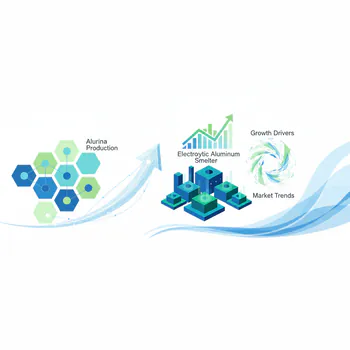
Market Trends & Growth Drivers
Benefits & Advantages
Utilizing alumina and electrolytic aluminum offers numerous benefits for businesses and end-users:
- High purity and quality: Advanced refining and electrolysis ensure aluminum with excellent mechanical and chemical properties suitable for critical applications.
- Energy efficiency: Modern electrolytic cells consume less power, improving operational economics and environmental footprints.
- Durability and corrosion resistance: Aluminum’s natural oxide layer provides long-term protection, reducing maintenance costs.
- Recyclability: Aluminum can be recycled indefinitely without quality loss, offering significant cost savings and environmental benefits.
- Competitive advantage: Companies leveraging high-quality alumina and electrolytic aluminum can innovate faster and produce lighter, stronger products.
From an investment standpoint, the strong ROI associated with aluminum’s versatility and sustainability continues to attract capital into alumina refining and aluminum smelting operations.
Challenges & Future Outlook
Despite its advantages, the alumina and electrolytic aluminum industry faces several challenges:
- Energy intensity: Electrolytic aluminum production remains highly energy-consuming, accounting for up to 3-5% of global electricity usage.
- Environmental impact: Greenhouse gas emissions, particularly perfluorocarbons (PFCs), are associated with the smelting process.
- Raw material dependence: Fluctuations in bauxite availability and alumina prices can impact production stability.
- Technological barriers: Scaling breakthrough technologies such as inert anodes or alternative refining methods requires significant investment.
However, promising innovations are underway. For instance, inert anode technology aims to drastically reduce carbon emissions during electrolysis. Furthermore, integration of renewable energy sources is becoming increasingly feasible to power aluminum smelters sustainably.
Looking ahead, the industry is poised for transformation driven by green technology adoption, circular economy principles, and growing demand for lightweight, high-performance materials. This evolution will not only address current challenges but also unlock new market opportunities worldwide.
Conclusion
In conclusion, alumina and electrolytic aluminum are fundamental to modern manufacturing and infrastructure development. Their production processes, from refining bauxite into alumina to electrolytic reduction into aluminum, underpin critical industries ranging from aerospace to renewable energy.
By understanding the market dynamics, benefits, and challenges, stakeholders can make informed decisions to capitalize on growth trends and technological advances. As the world moves toward more sustainable and efficient materials, alumina and electrolytic aluminum will continue to play a pivotal role in shaping the future of manufacturing.
For businesses and investors, staying abreast of evolving technologies and market demands will be key to thriving in this dynamic sector. The journey of alumina transforming into electrolytic aluminum is not just a chemical process but a catalyst for innovation, sustainability, and economic progress.
Need More Details on Market Players and Competitors?
Tagged in