
Autonomous Vehicle Testing: Trends, Benefits & Future Outlook
Explore the essentials of autonomous vehicle testing, its industry applications, market trends, benefits, challenges, and future outlook in this comprehensiv...

Introduction
Imagine a world where cars drive themselves safely, efficiently, and reliably. This vision is steadily becoming a reality, thanks to rapid advances in autonomous vehicle technology. However, before self-driving cars can become a common sight on our roads, they undergo rigorous and specialized processes known as autonomous vehicle testing. This testing is critical to ensure safety, functionality, and public trust in these groundbreaking systems.
In this article, we will explore the fundamentals of autonomous vehicle testing, dive into its real-world applications, examine current market trends, discuss its advantages, and look ahead at the challenges and future opportunities shaping the industry. Whether you’re a tech enthusiast, business professional, or simply curious about the future of mobility, this comprehensive guide will provide valuable insights.
Technology and Concept Overview
Autonomous vehicle testing refers to the systematic evaluation of self-driving cars and their underlying technologies to verify performance, safety, and compliance with regulations. At its core, autonomous vehicles (AVs) rely on a combination of sensors, artificial intelligence (AI), machine learning, and advanced algorithms to perceive the environment, make decisions, and control the vehicle without human intervention.
Key technologies involved include:
- Lidar and Radar Sensors: These detect objects, obstacles, and distances to surrounding elements.
- Computer Vision: Cameras process visual information to identify lane markings, traffic signals, pedestrians, and other vehicles.
- Artificial Intelligence & Machine Learning: Enable decision-making by analyzing sensor data and predicting behaviors.
- Vehicle-to-Everything (V2X) Communication: Allows AVs to communicate with infrastructure, other vehicles, and networks to improve safety.
Testing involves validating these components through simulations, closed-course testing, and real-world road trials to ensure the autonomous system can handle diverse driving scenarios.
Industry Applications & Use Cases
Autonomous vehicle testing is not just theoretical; it has tangible applications across multiple sectors. For example:
- Ride-Hailing and Mobility Services: Companies like Waymo and Cruise conduct extensive on-road testing in cities such as San Francisco and Phoenix to deploy autonomous taxis.
- Logistics and Freight: Firms like TuSimple and Embark are testing self-driving trucks on highways to increase efficiency and reduce driver shortages.
- Public Transportation: Autonomous shuttles are being piloted in urban areas, airports, and campuses to enhance last-mile connectivity.
- Agriculture and Mining: Autonomous vehicles are tested in controlled environments to perform heavy-duty tasks, improving precision and safety in these industries.
A notable success story is Waymo’s autonomous taxi service, which has completed millions of miles of testing and logged thousands of rides without human intervention, illustrating the maturity and potential of autonomous vehicle testing programs.
Market Trends & Growth Drivers
The autonomous vehicle testing market is expanding rapidly, driven by several factors. According to industry reports, the global autonomous vehicle market is expected to grow at a CAGR of over 20% through the mid-2020s. Key growth drivers include:
- Regulatory Support: Governments worldwide are establishing frameworks to safely integrate AVs onto public roads.
- Technological Innovation: Advances in AI, sensor technology, and 5G connectivity improve system capabilities and testing fidelity.
- Consumer Demand: Growing interest in safer, more efficient transportation fuels investment.
- Collaborations and Partnerships: Tech companies, automakers, and research institutions are joining forces to accelerate testing and deployment.
Moreover, simulation platforms have revolutionized testing by enabling virtual environments where millions of miles can be simulated rapidly, reducing costs and risks associated with real-world trials.
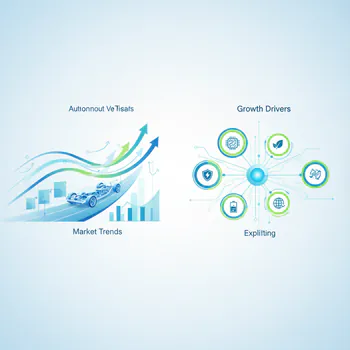
Market Trends & Growth Drivers
Benefits & Advantages
Effective autonomous vehicle testing offers significant benefits for businesses, consumers, and society at large, including:
- Enhanced Safety: Rigorous testing identifies potential failures before deployment, reducing accidents caused by human error.
- Cost Savings: Early detection of system flaws minimizes expensive recalls and liability.
- Competitive Edge: Companies with robust testing regimes can accelerate product launch timelines and gain market trust.
- Improved User Experience: Testing ensures smoother rides, better navigation, and responsive systems.
- Regulatory Compliance: Meeting or exceeding safety standards facilitates legal approval and public acceptance.
For example, Tesla’s continuous over-the-air updates are backed by extensive testing frameworks that incorporate real-world driving data, improving vehicle autonomy progressively.
Challenges & Future Outlook
Despite the promising outlook, autonomous vehicle testing faces several challenges:
- Complexity of Real-World Scenarios: Capturing the vast variability of road conditions and human behaviors is difficult.
- Regulatory Hurdles: Different regions have varying requirements, complicating global deployment.
- Ethical and Liability Concerns: Determining responsibility in accidents involving autonomous vehicles remains unresolved.
- Data Security & Privacy: Protecting sensitive data collected during testing is critical.
However, emerging solutions such as enhanced simulation technologies, AI-driven scenario generation, and standardization efforts are addressing these barriers. Looking ahead, autonomous vehicle testing is expected to increasingly leverage edge computing, 5G networks, and collaborative multi-vehicle testing to expedite validation cycles.
Industry experts predict that by the late 2020s, fully autonomous vehicles will become commonplace, supported by comprehensive, data-driven testing protocols that ensure reliability and public confidence.
Conclusion
Autonomous vehicle testing is the cornerstone of the self-driving revolution, underpinning the safety, functionality, and acceptance of autonomous vehicles. Through a combination of advanced technologies, real-world and simulated testing, and evolving market dynamics, this field is rapidly advancing toward mainstream adoption.
For businesses and stakeholders, investing in robust testing strategies offers a pathway to competitive advantage and sustainable growth. Meanwhile, ongoing innovation and regulatory collaboration will be crucial to overcoming current challenges.
As we accelerate toward a future of safer, smarter mobility, autonomous vehicle testing will remain a vital discipline—ensuring that the promise of autonomous transportation translates into everyday reality.
Need More Details on Market Players and Competitors?
Tagged in