
Desktop Laser Soldering Machine: Revolutionizing Precision Electronics
Discover how the Desktop Laser Soldering Machine transforms precision electronics manufacturing with advanced technology, practical applications, and future ...

Introduction
In today’s fast-paced electronics manufacturing landscape, precision, efficiency, and flexibility are paramount. The Desktop Laser Soldering Machine is emerging as a game-changer, enabling manufacturers and engineers to perform highly accurate soldering tasks with minimal footprint and maximum control. This innovative technology is transforming the way delicate and complex electronic assemblies are handled, particularly in industries where quality and miniaturization matter most.
In this article, we will explore what a desktop laser soldering machine is, its core technologies, practical applications, market trends, and the benefits it offers. Additionally, we will discuss the challenges it faces and the promising future outlook of this technology in various sectors.
Technology Overview: What is a Desktop Laser Soldering Machine?
A Desktop Laser Soldering Machine is a compact, precision tool that uses laser technology to melt solder and join electronic components on printed circuit boards (PCBs). Unlike traditional soldering irons or wave soldering techniques, laser soldering offers highly localized heating, reducing thermal damage to sensitive components.
Key Terms and Concepts:
- Laser Soldering: The process of using a focused laser beam to heat and melt solder for component attachment.
- Precision Control: Ability to target specific points on a PCB accurately without affecting surrounding areas.
- Compact Footprint: Smaller size compared to traditional soldering stations, suitable for benchtop or desktop use.
This technology leverages diode or fiber lasers typically operating in the near-infrared spectrum to provide controllable heat. The laser parameters—such as power, pulse duration, and beam size—can be finely tuned to match soldering requirements, ensuring high repeatability and quality.
Industry Applications & Use Cases
The versatility of the Desktop Laser Soldering Machine has made it invaluable across various industries, from consumer electronics to aerospace. Here are some notable applications:
- Electronics Manufacturing: Ideal for soldering miniature components like microchips, sensors, and connectors without damaging nearby parts.
- Medical Devices: Enables precise solder joints on sensitive devices such as pacemakers and diagnostic sensors, where reliability is critical.
- Aerospace and Defense: Used in assembling circuit boards that require high durability under harsh conditions.
- Research and Development: Offers prototyping engineers a flexible tool for quick, accurate soldering in lab environments.
Case Study: A leading smartphone manufacturer integrated desktop laser soldering machines into their production line to increase yields. This change reduced thermal stress-induced defects by 25%, leading to higher product reliability and faster throughput.
Market Trends & Growth Drivers
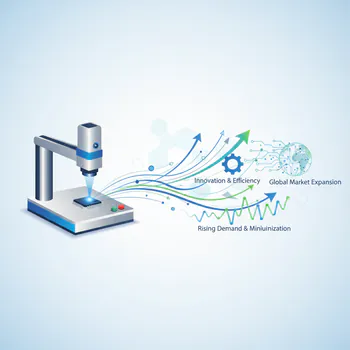
The global laser soldering market is witnessing significant growth, propelled by increased demand for miniaturized electronics and stringent quality standards. The desktop variant stands out due to its affordability and adaptability for small-to-medium batch production.
Key drivers include:
- Growing adoption of IoT and wearable devices requiring compact, precise soldering solutions.
- Rising labor costs stimulating automation and laser-based soldering to improve efficiency.
- Increasing regulatory requirements demanding consistent, high-quality solder joints.
According to market research, the desktop laser soldering machine segment is expected to grow at a CAGR of 12% over the next five years, reflecting its expanding role in electronics and medical manufacturing sectors.
Market Trends & Growth Drivers
Benefits & Advantages
The Desktop Laser Soldering Machine offers several compelling advantages over conventional soldering approaches:
- High Precision: Focused laser beams deliver pinpoint heating, minimizing damage to surrounding components and substrates.
- Non-contact Process: The laser does not physically touch the workpiece, reducing contamination and mechanical stress.
- Faster Cycle Times: Rapid, controlled heating accelerates soldering cycles, boosting production throughput.
- Compact and Flexible: Desktop models fit easily into existing workspaces and can be integrated into automated production lines.
- Cost Efficiency: Reduced rework rates and improved yield translate to higher ROI for manufacturers.
These advantages make desktop laser soldering machines ideal for industries where precision and quality cannot be compromised.
Challenges & Future Outlook
Despite its advantages, the adoption of desktop laser soldering machines faces some challenges:
- Initial Investment: Although more affordable than full-scale laser systems, desktop units still require significant capital outlay.
- Technical Expertise: Operating laser soldering machines requires trained personnel to optimize parameters and ensure safety.
- Material Compatibility: Not all solder types or PCBs react the same way to laser heat; thus, process optimization is essential.
Looking ahead, ongoing innovations like AI-driven process control, real-time quality monitoring, and integration with robotic automation promise to overcome many of these obstacles. Industry 4.0 initiatives further fuel adoption by enabling smarter, connected manufacturing environments.
Experts predict that desktop laser soldering machines will become standard tools for electronics assembly, especially as products continue to miniaturize and require higher reliability standards.
Conclusion
The Desktop Laser Soldering Machine represents a significant advancement in precision soldering technology. By combining accuracy, speed, and compactness, it addresses the evolving needs of modern electronics manufacturing and beyond. As industries push towards smaller, more complex assemblies, this technology provides a scalable, efficient solution that enhances quality and reduces production risks.
For businesses looking to improve soldering processes, investing in desktop laser soldering technology offers tangible benefits, from improved yields to faster turnaround times. Embracing this innovation today will position manufacturers to meet tomorrow’s challenges in electronics assembly and device fabrication.
Need More Details on Market Players and Competitors?
Tagged in