
Dichloro Hydrogen Silicon: Unlocking Innovations in Silicon Chemistry
Explore Dichloro Hydrogen Silicon: its chemistry, industrial applications, market trends, benefits, challenges, and future outlook in silicon-based technolog...

Introduction
In the rapidly evolving landscape of materials science and chemical engineering, substances like Dichloro Hydrogen Silicon are gaining significant attention. This compound plays a pivotal role in advancing silicon-based technologies that underpin industries ranging from electronics to pharmaceuticals. Understanding its properties and applications is essential for professionals aiming to leverage cutting-edge materials for innovation.
This article delves into the core concepts of Dichloro Hydrogen Silicon, explores its industrial applications, examines current market trends, outlines the benefits it offers, and discusses the challenges and future outlook of this versatile compound.
Technology and Concept Overview
Dichloro Hydrogen Silicon is a silicon-based chemical compound characterized by the presence of two chlorine atoms and one hydrogen atom bonded to a silicon center. Often represented chemically as HSiCl2, it belongs to the family of chlorosilanes, which are silicon analogs of chlorinated hydrocarbons. These compounds are fundamental intermediates in silicon chemistry.
Chlorosilanes like Dichloro Hydrogen Silicon are critical because they enable the synthesis of various organosilicon compounds and silicon-based polymers. These compounds serve as precursors for advanced materials such as silicones, silicon wafers, and other semiconductors. The reactivity of the Si–Cl bonds allows for controlled hydrolysis and further functionalization, making Dichloro Hydrogen Silicon a versatile building block in chemical synthesis.
Industry Applications & Use Cases
The applications of Dichloro Hydrogen Silicon span multiple high-impact industries. One of the primary uses is in the production of high-purity silicon materials, essential for the semiconductor industry. For example, chlorosilanes are often converted into polysilicon through chemical vapor deposition, a critical step in manufacturing solar cells and microchips.
In the silicone manufacturing sector, Dichloro Hydrogen Silicon serves as a precursor to various silanes that undergo polymerization to create silicone rubbers and resins. These materials are integral in automotive parts, medical devices, and consumer goods due to their thermal stability and biocompatibility.
Case in point, leading electronics manufacturers utilize derivatives of Dichloro Hydrogen Silicon to fabricate insulating layers in microelectronic circuits, enhancing device performance and reliability. Additionally, in pharmaceutical research, this compound assists in synthesizing silicon-containing drug candidates that exhibit improved bioavailability and metabolic stability.
Market Trends & Growth Drivers
The market for silicon-based chemicals like Dichloro Hydrogen Silicon is experiencing robust growth, driven by escalating demand in the semiconductor and renewable energy sectors. According to industry reports, the global chlorosilane market is projected to reach a valuation exceeding $5 billion by 2030, expanding at a compound annual growth rate (CAGR) of approximately 6%.
Key growth drivers include the proliferation of solar photovoltaic (PV) installations and the rapid advancement of microelectronics requiring high-purity silicon. Moreover, innovations in synthetic chemistry are expanding the utility of Dichloro Hydrogen Silicon in producing novel silicon-based materials, opening fresh market opportunities.
Geographically, Asia-Pacific dominates the market due to its substantial manufacturing base for electronics and growing investments in clean energy infrastructure. This trend underscores the strategic importance of Dichloro Hydrogen Silicon in regional and global supply chains.
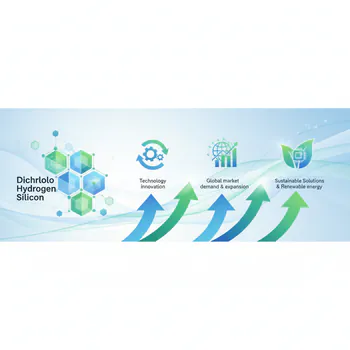
Market Trends & Growth Drivers
Benefits & Advantages
Dichloro Hydrogen Silicon offers several compelling benefits that make it an attractive choice for industrial applications. Its reactive silicon-chlorine bonds allow for efficient chemical modification, enabling synthesis of a wide range of tailored silicon compounds with specific properties.
For businesses, this translates into enhanced flexibility in product development and the ability to meet stringent performance criteria. The compound also facilitates high-purity silicon production, which is crucial for achieving superior semiconductor device performance and longevity.
From a cost perspective, the scalable synthesis and well-established processing techniques reduce production expenses, offering a favorable return on investment (ROI). Additionally, its role in enabling environmentally sustainable technologies such as solar energy contributes to long-term value creation for companies focused on green innovation.
Challenges & Future Outlook
Despite its advantages, the use of Dichloro Hydrogen Silicon is not without challenges. Handling chlorosilanes requires stringent safety protocols due to their corrosive and moisture-sensitive nature. These factors can increase operational complexity and costs.
Furthermore, environmental concerns around the release of chlorinated by-products during manufacturing necessitate investment in cleaner synthesis methods and waste management technologies. Researchers are exploring greener alternatives and catalytic processes to mitigate these issues.
Looking ahead, advancements in catalyst design, process automation, and material engineering promise to expand the usability of Dichloro Hydrogen Silicon. The integration of this compound into next-generation silicon-based nanomaterials and heterostructures is poised to revolutionize electronics, energy storage, and biomedicine.
Industry analysts predict that with continued innovation, Dichloro Hydrogen Silicon will remain a cornerstone in silicon chemistry, driving technological breakthroughs and sustainable growth in multiple sectors.
Conclusion
In summary, Dichloro Hydrogen Silicon stands as a vital chemical compound at the heart of modern silicon-based technologies. Its unique chemical properties enable diverse industrial applications, from semiconductors to silicones, underpinning critical innovations across sectors.
Market dynamics favor its growth, buoyed by expanding electronics manufacturing and renewable energy adoption. Although challenges related to handling and environmental impact exist, ongoing research and technological improvements are addressing these hurdles effectively.
For businesses and researchers alike, understanding and leveraging Dichloro Hydrogen Silicon offers valuable opportunities to innovate and maintain competitive advantage. As the demand for advanced silicon materials escalates, this compound will undoubtedly continue to shape the future of technology and industry.
Need More Details on Market Players and Competitors?
Tagged in