
Essential Role of Testing, Inspection and Certification (TIC) in Construction
Discover how Testing, Inspection and Certification (TIC) ensures safety and quality in construction and infrastructure projects. Explore trends, benefits, an...

Introduction
In the rapidly evolving world of construction and infrastructure, ensuring safety, quality, and compliance is more critical than ever. As projects become more complex and regulations tighten, Testing, Inspection and Certification (TIC) for Construction and Infrastructure emerges as a cornerstone to safeguard investments, protect lives, and boost project credibility.
This article delves deep into the significance of TIC in construction, exploring its fundamental concepts, real-world applications, market trends, benefits, and future outlook. Whether you're a developer, engineer, or stakeholder, understanding TIC is key to navigating today's construction landscape with confidence.
Technology and Concept Overview
Testing, Inspection and Certification (TIC) refers to a set of processes designed to verify that construction materials, structures, and systems meet predefined standards and regulations. These procedures ensure that every component—from steel reinforcements to electrical installations—is assessed for quality, safety, and durability before and during construction.
Testing involves evaluating physical properties such as strength, chemical composition, and durability of materials. For example, concrete compression tests validate the strength required for structural integrity.
Inspection is the systematic examination of construction processes and workmanship, typically conducted on-site. Inspectors verify adherence to design specifications, safety protocols, and regulatory codes.
Certification is the formal attestation that a product, process, or system complies with specified standards, often issued by an accredited third-party organization. Certifications serve as proof of quality assurance for clients, regulators, and insurers.
Together, these components form a comprehensive quality management framework, minimizing risks such as structural failure, cost overruns, and legal liabilities.
Industry Applications & Use Cases
The applications of TIC in construction and infrastructure are broad and varied. For instance, during the construction of bridges, rigorous material testing ensures that steel and concrete withstand environmental stress and load requirements.
One notable success story is the Hong Kong-Zhuhai-Macau Bridge project, where extensive testing and inspection protocols were employed to manage one of the world's longest sea-crossing bridges, ensuring safety and longevity under challenging marine conditions.
In building construction, TIC services verify electrical systems, fire safety equipment, and HVAC installations, promoting occupant safety and regulatory compliance. Infrastructure projects such as highways, airports, and rail networks also rely heavily on TIC to certify that paving materials, signaling systems, and structural components meet international standards.
Moreover, emerging trends like green building certifications (e.g., LEED, BREEAM) integrate TIC processes to validate environmental performance, energy efficiency, and sustainability in construction projects.
Market Trends & Growth Drivers
The global TIC market for construction and infrastructure is experiencing robust growth, driven by increasing urbanization, infrastructure modernization, and stricter regulatory frameworks. According to recent industry reports, the TIC market is projected to grow at a compound annual growth rate (CAGR) of around 6-7% over the next five years.
Key growth drivers include the rising demand for quality assurance in mega infrastructure projects, technological advancements like non-destructive testing (NDT) and digital inspection tools, and increased focus on safety standards post high-profile construction failures.
Additionally, the integration of IoT sensors and AI-powered analytics in inspection processes is revolutionizing how data is collected and interpreted, enhancing predictive maintenance and real-time quality control.
Emerging economies investing heavily in infrastructure development further expand TIC demand, as governments prioritize compliance and sustainable construction practices.
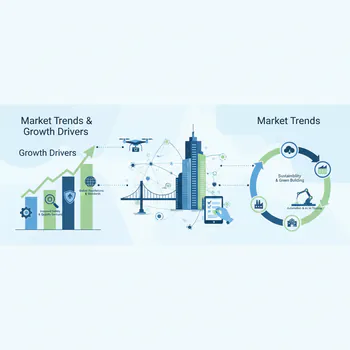
Market Trends & Growth Drivers
Benefits & Advantages
Implementing Testing, Inspection and Certification (TIC) for Construction and Infrastructure offers numerous benefits:
- Enhanced Safety: TIC mitigates risks of accidents and structural failures by ensuring compliance with safety standards.
- Improved Quality: Systematic testing and certification guarantee that materials and workmanship meet or exceed specifications.
- Cost Efficiency: Early detection of defects through inspection reduces costly rework and delays.
- Regulatory Compliance: Certifications facilitate approvals from authorities and help avoid legal penalties.
- Competitive Advantage: Projects with verified quality and safety credentials attract investors and clients seeking reliability.
- Return on Investment (ROI): Durable, well-certified infrastructure lowers maintenance costs and extends asset life cycles.
For example, in infrastructure rehabilitation projects, TIC ensures that repair materials and methods restore structural integrity efficiently, preventing premature failures.
Challenges & Future Outlook
Despite its critical role, the TIC landscape faces challenges. These include fragmented regulatory frameworks across regions, high costs associated with comprehensive testing, and a shortage of skilled inspectors familiar with evolving technologies.
Moreover, the traditional manual inspection processes are time-consuming and prone to human error.
However, innovative solutions are emerging. Drone-based inspections offer access to hard-to-reach areas with enhanced safety and speed. AI and machine learning algorithms analyze inspection data to identify patterns and predict potential failures. Blockchain technology is being explored to create tamper-proof certification records, enhancing transparency and trust.
Looking ahead, the future of TIC in construction and infrastructure lies in digital transformation and automation. Smart sensors embedded within structures will enable continuous monitoring, shifting TIC from periodic checks to real-time assurance.
As global infrastructure demands grow, TIC providers will play an increasingly vital role in delivering resilient, sustainable, and safe construction projects.
Conclusion
In summary, Testing, Inspection and Certification (TIC) for Construction and Infrastructure is indispensable for ensuring project success in today’s complex and regulated environment. By guaranteeing quality, safety, and compliance, TIC not only protects investments but also enhances public trust and operational efficiency.
For stakeholders in construction and infrastructure, embracing comprehensive TIC strategies is a smart, forward-thinking move that mitigates risks and maximizes value. With technological advancements and growing market demand, TIC is set to become even more integral to the future of construction worldwide.
Staying informed and leveraging innovative TIC solutions will empower businesses to build stronger, safer, and smarter infrastructures for generations to come.
Need More Details on Market Players and Competitors?
Tagged in