
Exploring the Source of Microelectronics: Trends, Uses & Future
Discover the source of microelectronics, its technology, applications, market trends, benefits, challenges, and future outlook in this comprehensive guide.

Introduction
Microelectronics has become the backbone of modern technology, powering everything from smartphones and medical devices to automotive systems and industrial automation. Understanding the source of microelectronics is essential for businesses and innovators aiming to harness this technology's full potential. As demand for smaller, faster, and more efficient electronic components surges, exploring where and how microelectronics originate offers valuable insight into its evolving landscape.
In this article, we'll dive into the fundamentals of microelectronics, explore its diverse industry applications, analyze current market trends, highlight benefits, and discuss future challenges and opportunities. Whether you're a business leader, engineer, or tech enthusiast, this comprehensive overview will provide a clear picture of the source of microelectronics and its impact on today's digital world.
Technology Overview: Understanding the Source of Microelectronics
At its core, microelectronics refers to the design and manufacture of very small electronic components and circuits, typically on a micrometer scale. The source of microelectronics often begins with semiconductor materials, most commonly silicon, which forms the base for integrated circuits (ICs) and microchips.
Key technologies include:
- Semiconductor fabrication: The process of creating microelectronic devices on silicon wafers through photolithography, doping, etching, and deposition.
- Integrated Circuits (ICs): Miniaturized electronic circuits combining transistors, resistors, and capacitors onto single chips.
- Microelectromechanical Systems (MEMS): Tiny mechanical devices integrated with electronics, often used in sensors and actuators.
- Photolithography: A vital manufacturing technique that transfers circuit patterns onto silicon wafers with extreme precision.
Historically, the source of microelectronics can be traced back to the invention of the transistor in the late 1940s and the development of the integrated circuit in the 1960s, which revolutionized electronics by dramatically reducing size and cost.
Industry Applications & Use Cases
The source of microelectronics fuels innovation across numerous sectors. Here are some notable real-world applications:
- Consumer Electronics: Smartphones, laptops, and wearable devices rely heavily on microelectronic components for processing power and connectivity.
- Automotive Industry: Modern vehicles use microelectronics in engine control units, safety systems like airbags and ABS, and emerging autonomous driving technologies.
- Healthcare: Medical devices such as pacemakers, diagnostic imaging equipment, and portable health monitors incorporate microelectronic chips for precise functionality.
- Industrial Automation: Microelectronics enable robotics, sensors, and control systems that optimize manufacturing efficiency and safety.
- Telecommunications: The backbone of 5G networks and fiber-optic communication depends on advanced microelectronic components.
One compelling success story is the adoption of MEMS sensors in smartphones, which has enhanced user experience by enabling features like motion detection, orientation sensing, and biometric security.
Market Trends & Growth Drivers
The global microelectronics market is experiencing robust growth, driven by increasing demand for miniaturized and energy-efficient electronic devices. According to recent industry reports, the microelectronics market is expected to grow at a CAGR of around 7% over the next five years, reaching a market value exceeding $600 billion by 2028.
Key growth drivers include:
- IoT Expansion: The proliferation of Internet of Things (IoT) devices requires vast quantities of microelectronic sensors and processors.
- Advancements in Semiconductor Technology: Innovations such as 3nm process nodes and beyond enable more powerful and compact chips.
- Automotive Electrification: Electric vehicles and autonomous cars rely heavily on microelectronics for battery management and advanced driver-assistance systems.
- Consumer Demand: Growing consumer preference for smart home devices, wearables, and portable electronics fuels market expansion.
Geographically, Asia-Pacific leads as the primary source of microelectronics manufacturing, with countries like Taiwan, South Korea, and China playing pivotal roles.
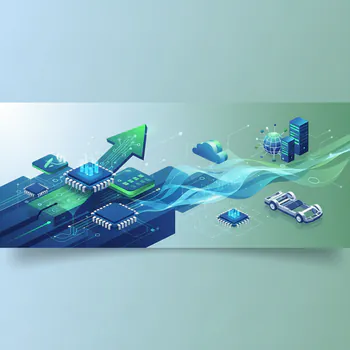
Market Trends & Growth Drivers
Benefits & Advantages of Microelectronics
Businesses and end-users reap numerous benefits from microelectronics, making it an indispensable technology. Some of the key advantages include:
- Miniaturization: The ability to pack complex circuits into tiny chips reduces device size and weight, enhancing portability.
- Energy Efficiency: Advanced microelectronic components consume less power, extending battery life in mobile devices and reducing operational costs.
- Improved Performance: Faster processing speeds and higher data throughput enable real-time applications and enhanced user experiences.
- Cost Reduction: Mass production techniques lower manufacturing costs, making sophisticated electronics affordable.
- Integration: Combining multiple functions into a single chip reduces complexity and increases reliability.
From a business perspective, leveraging microelectronics offers a compelling ROI by accelerating product development cycles and enabling innovative features that differentiate offerings in competitive markets.
Challenges & Future Outlook
Despite its advantages, the field of microelectronics faces several challenges. Manufacturing at nanometer scales requires high capital investment and sophisticated facilities, which can limit entry for smaller players. Supply chain disruptions, as witnessed during the COVID-19 pandemic, have also highlighted vulnerabilities in sourcing critical components.
Additionally, as components shrink further, issues like heat dissipation, quantum effects, and material limitations become more pronounced, demanding continuous research and innovation.
Potential solutions include:
- Advanced Materials: Exploring alternatives like graphene and gallium nitride to overcome silicon limitations.
- 3D Integration: Stacking chips vertically to enhance performance without increasing footprint.
- AI-driven Design: Utilizing artificial intelligence to optimize chip architecture and manufacturing processes.
Looking ahead, the source of microelectronics will increasingly incorporate novel materials and processes, enabling breakthroughs in quantum computing, flexible electronics, and bio-integrated devices. As industries continue to digitize and interconnect, microelectronics will remain at the heart of transformative technological progress.
Conclusion
In summary, the source of microelectronics lies in sophisticated semiconductor technologies and manufacturing techniques that have evolved over decades. Its applications span virtually every industry, driving innovation and economic growth worldwide. Market trends suggest robust expansion fueled by IoT, automotive electrification, and consumer demand.
While challenges persist, ongoing advancements promise exciting new frontiers in performance and functionality. For businesses and technology enthusiasts alike, staying informed about the dynamics of microelectronics is essential for capitalizing on its vast potential.
As we move forward, embracing emerging technologies and fostering resilient supply chains will be key to unlocking the next wave of microelectronic innovation that shapes the future of digital life.
Need More Details on Market Players and Competitors?
Tagged in