
Industrial Kilns for Ceramics and Advanced Materials: Trends & Insights
Explore industrial kilns for ceramics and advanced materials—technology, applications, market trends, benefits, challenges, and future outlook in manufacturing.

Introduction
Industrial kilns are at the heart of manufacturing processes for ceramics and advanced materials, driving innovation across multiple industries. From producing everyday ceramic tiles to fabricating cutting-edge aerospace components, these kilns enable the precise thermal treatments essential for material transformation.
Understanding the role and evolution of industrial kilns for ceramics and advanced materials is crucial for engineers, manufacturers, and business leaders aiming to enhance product quality and operational efficiency. In this article, we’ll explore the technology behind industrial kilns, their wide-ranging applications, market trends, benefits, and future outlook.
Technology and Concept Overview
Industrial kilns are high-temperature ovens used to heat materials to specific temperatures, facilitating chemical reactions, sintering, or hardening. In the context of ceramics and advanced materials, kilns enable processes such as firing clay into durable ceramics or heat treating composites and metal oxides.
Key terms and technologies associated with these kilns include:
- Sintering: A process where powdered materials are heated below melting point to bond particles into a solid mass.
- Firing: Heating ceramic bodies to induce physical and chemical changes, improving strength and durability.
- Controlled Atmosphere Kilns: Kilns that regulate oxygen levels to prevent oxidation or other unwanted reactions.
- Electric and Gas-fired Kilns: Different heat sources offering varying temperature control and efficiency.
Historically, industrial kilns have evolved from simple wood-fired designs to sophisticated, computer-controlled systems capable of precise thermal profiles required for advanced materials manufacturing.
Industry Applications & Use Cases
The versatility of industrial kilns for ceramics and advanced materials means they are pivotal in a variety of sectors:
- Ceramic Manufacturing: Used extensively for producing tiles, sanitaryware, pottery, and technical ceramics with consistent quality.
- Aerospace & Defense: Kilns process advanced composites and ceramic matrix materials that withstand extreme conditions in engines and armor.
- Electronics: Manufacture of semiconductor components and substrates employs kilns for sintering and annealing specialized ceramics.
- Automotive: Production of catalytic converters and heat-resistant parts relies on kiln-fired ceramics.
- Energy Sector: Kilns are essential in fabricating solid oxide fuel cells and insulating materials for renewable energy technologies.
For example, a leading aerospace manufacturer uses high-temperature kilns to sinter ceramic components that provide thermal protection for spacecraft. Similarly, ceramic tile producers leverage advanced kiln technology to reduce firing times and energy consumption while improving product durability.
Market Trends & Growth Drivers
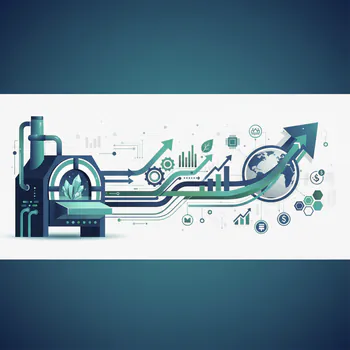
The market for industrial kilns for ceramics and advanced materials is experiencing steady growth driven by increasing demand across end-use industries. According to a recent industry report, the global kiln market is projected to grow at a CAGR of approximately 5.2% over the next five years.
Key growth drivers include:
- Rising demand for advanced ceramics: Applications in electronics, healthcare, and aerospace fuel kiln utilization.
- Technological advancements: Integration of IoT and AI for kiln process optimization enhances efficiency and product quality.
- Energy efficiency regulations: Manufacturers are adopting energy-saving kilns to reduce carbon footprints and operational costs.
- Expansion in emerging markets: Increased infrastructure development and industrialization in Asia-Pacific and Latin America.
Moreover, innovations like hybrid heating systems and modular kiln designs are opening new opportunities for specialized applications and scale flexibility.
Market Trends & Growth Drivers
Benefits & Advantages
Utilizing industrial kilns specifically engineered for ceramics and advanced materials offers several critical benefits:
- Precision Temperature Control: Ensures consistent material properties and reduced defects.
- Improved Energy Efficiency: Modern kilns minimize fuel consumption and emissions, lowering operational costs.
- Enhanced Production Capacity: Automation and optimized thermal profiles increase throughput without compromising quality.
- Versatility: Ability to process a wide range of materials from traditional ceramics to cutting-edge composites.
- Competitive Advantage: High-quality outputs and faster turnaround times bolster market positioning.
In terms of ROI, companies investing in state-of-the-art industrial kilns often see reduced material waste, lower energy bills, and improved product margins, making the capital expenditure worthwhile.
Challenges & Future Outlook
Despite their advantages, industrial kilns face certain challenges that manufacturers and researchers are actively addressing:
- High Energy Consumption: Kilns can be energy-intensive, prompting ongoing efforts to develop greener technologies.
- Material Limitations: Processing ultra-high-performance ceramics requires kilns capable of reaching extreme temperatures reliably.
- Maintenance & Durability: Kiln components are subject to wear and require regular upkeep to maintain efficiency.
Future innovations look promising, with trends such as:
- Integration of AI and Machine Learning: For predictive maintenance and real-time process adjustment.
- Hybrid Heating Technologies: Combining microwave, induction, and conventional heating to reduce cycle times.
- Advanced Insulation Materials: To improve thermal retention and reduce heat loss.
- Customization and Modular Designs: Enabling scalable solutions tailored for niche applications.
These advancements will help overcome current limitations and expand the scope of industrial kilns in emerging material technologies.
Conclusion
Industrial kilns for ceramics and advanced materials play an indispensable role in modern manufacturing, enabling the production of robust, high-performance products across industries. By providing precise thermal control and adaptable processing capabilities, these kilns help businesses meet rising quality standards and efficiency demands.
As market trends favor energy-efficient and technologically advanced kiln solutions, companies investing in innovation will gain a significant edge. Looking ahead, the integration of AI, hybrid heating, and enhanced materials science promises a future where industrial kilns become smarter, faster, and more sustainable, fueling progress in ceramics and advanced materials manufacturing.
For manufacturers and stakeholders, staying informed about these developments and leveraging cutting-edge kiln technologies will be key to maintaining competitiveness and driving growth in this dynamic sector.
Need More Details on Market Players and Competitors?
Tagged in