
Machine Learning for Business Analytics: Transforming Data into Insights
Discover how machine learning for business analytics transforms data into actionable insights, driving growth and innovation across industries.

Introduction
Machine learning for business analytics is revolutionizing how organizations interpret vast amounts of data to drive strategic decisions. As companies generate more data than ever before, traditional analysis methods struggle to keep pace, making machine learning an indispensable tool for extracting meaningful patterns and predictions.
This article explores the fundamentals of machine learning in the context of business analytics, highlights real-world applications, examines market trends, discusses key benefits, and considers challenges and future outlooks. Whether you're a business leader seeking to leverage data or a tech enthusiast curious about industry innovations, this guide provides a comprehensive overview.
Technology and Concept Overview
Understanding Machine Learning
At its core, machine learning (ML) refers to computer algorithms that improve automatically through experience by analyzing data. Unlike traditional programming, where explicit instructions are given, ML systems identify patterns and make decisions with minimal human intervention.
Key Terms and Technologies
- Supervised Learning: Algorithms trained on labeled data to predict outcomes.
- Unsupervised Learning: Discovering hidden patterns in unlabeled data.
- Reinforcement Learning: Learning optimal actions through trial and error.
- Deep Learning: A subset of ML using neural networks for complex data like images and text.
Context in Business Analytics
Business analytics involves examining data to support decision-making. Integrating machine learning enhances analytics by enabling predictive modeling, anomaly detection, and customer segmentation, which provide deeper insights beyond descriptive statistics.
Industry Applications and Use Cases
Real-World Implementations
Many leading companies have embraced machine learning for business analytics to drive operational efficiency and growth. For instance, Amazon uses ML algorithms to personalize product recommendations, increasing conversion rates and customer satisfaction.
Success Stories and Case Studies
Financial institutions like JPMorgan Chase apply ML models to detect fraudulent transactions in real-time, minimizing losses and enhancing security. Similarly, Netflix leverages predictive analytics to tailor content suggestions, significantly boosting viewer engagement.
Cross-Sector Practical Applications
- Retail: Demand forecasting and inventory optimization.
- Healthcare: Patient risk prediction and personalized treatment plans.
- Manufacturing: Predictive maintenance to reduce downtime.
- Marketing: Customer segmentation and sentiment analysis.
Market Trends and Growth Drivers
Current Market Landscape
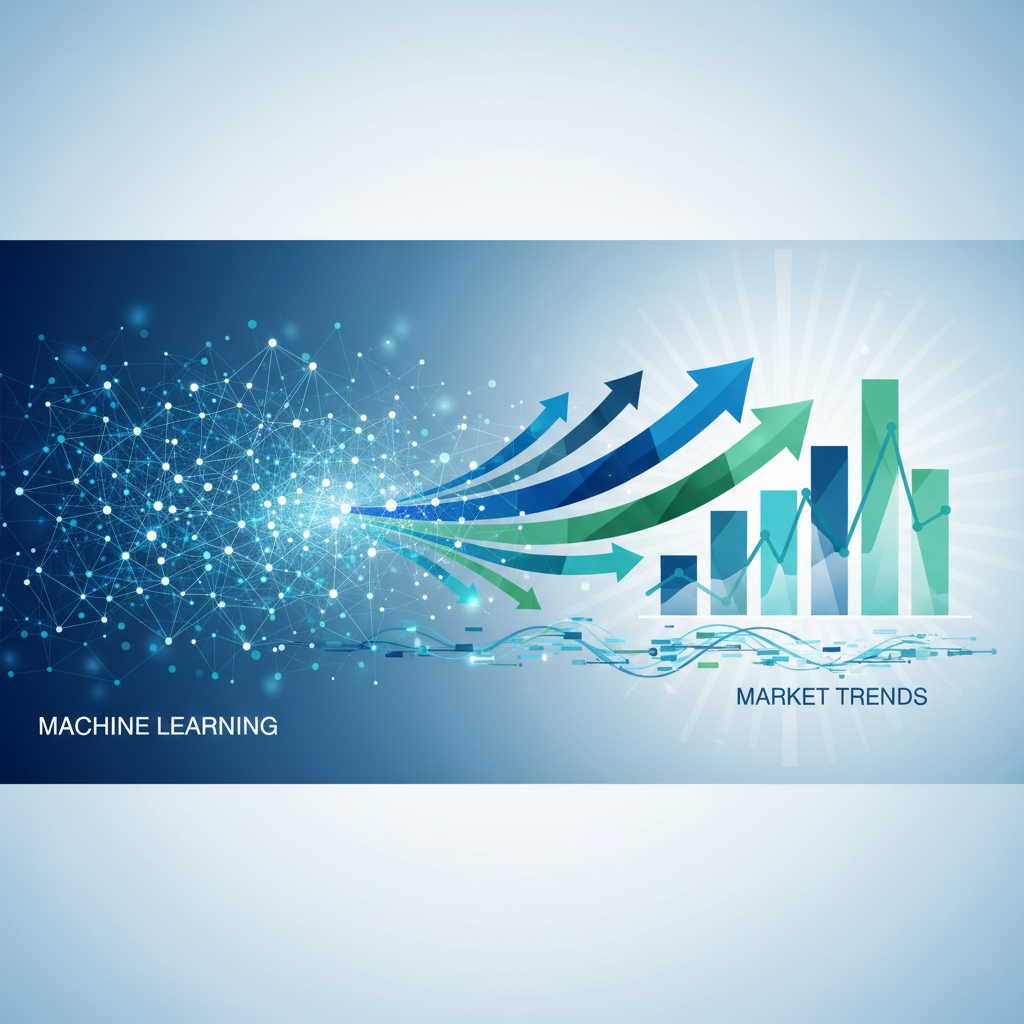
The global market for machine learning in business analytics is expanding rapidly, with estimates suggesting a compound annual growth rate (CAGR) exceeding 40% over the next five years. This surge is driven by the growing digital transformation initiatives across industries.
Growth Factors and Opportunities
Key drivers include increased data generation from IoT devices, advancements in cloud computing that facilitate scalable ML deployments, and the rising need for real-time decision-making. Moreover, democratization of ML tools enables even small businesses to harness data analytics effectively.
Industry Statistics and Projections
- According to Gartner, by 2025, 75% of enterprises will operationalize AI and ML capabilities for improved business outcomes.
- IDC forecasts that worldwide spending on AI systems will hit $97.9 billion in 2023, with a significant portion allocated to analytics solutions.
Benefits and Advantages
Key Benefits for Businesses and Users
Implementing machine learning for business analytics significantly enhances decision accuracy, uncovers hidden insights, automates routine tasks, and enables proactive strategies. This leads to improved customer experiences, optimized costs, and increased revenue.
Competitive Advantages
Companies leveraging ML-powered analytics gain a competitive edge through faster market response, personalized offerings, and predictive capabilities that anticipate trends and risks before competitors.
ROI and Value Propositions
Investments in machine learning tools often result in measurable ROI through reduced operational inefficiencies and better-targeted marketing campaigns. For example, businesses report up to a 20% increase in sales after adopting ML-based customer analytics platforms.
Challenges and Future Outlook
Current Challenges and Limitations
Despite its promise, machine learning for business analytics faces hurdles such as data quality issues, algorithmic biases, and the shortage of skilled talent needed to develop and maintain ML systems. Integration with legacy infrastructure also remains complex.
Potential Solutions and Innovations
Advancements in automated machine learning (AutoML) platforms aim to simplify model development, while explainable AI techniques improve transparency and trust. Furthermore, growing emphasis on ethical AI is addressing bias and fairness concerns.
Future Predictions and Trends
The future of machine learning in business analytics looks promising, with trends pointing toward increased adoption of edge ML for faster analytics, hybrid human-AI decision-making frameworks, and continued growth in AI-as-a-Service offerings, making ML more accessible and impactful.
Conclusion
In summary, machine learning for business analytics is a transformative technology reshaping how organizations harness data to drive informed decisions. Its applications span numerous sectors, yielding tangible benefits such as improved efficiency, competitive advantage, and higher ROI.
To stay ahead, businesses should invest in quality data infrastructure, cultivate ML expertise, and adopt ethical AI practices. Looking forward, as innovations address current challenges, machine learning is poised to become an even more integral part of business analytics, unlocking unprecedented insights and opportunities.
Tagged in