
Rugged Handheld Devices: Boosting Efficiency Across Industries
Explore how rugged handheld devices enhance efficiency across industries with durable tech, real-world applications, market trends, and future innovations.
Introduction
In today’s fast-paced and often unpredictable work environments, having reliable technology that can withstand harsh conditions is crucial. Rugged handheld devices have emerged as indispensable tools for businesses operating in demanding sectors such as logistics, manufacturing, and field services. These devices not only survive tough conditions but also deliver seamless performance, empowering workers to stay connected and productive.
This article explores the world of rugged handheld devices, explaining their core technology, real-world applications, market trends, benefits, and challenges. By the end, you’ll understand why these resilient gadgets are transforming industries and paving the way for smarter, more efficient operations.
Technology and Concept Overview
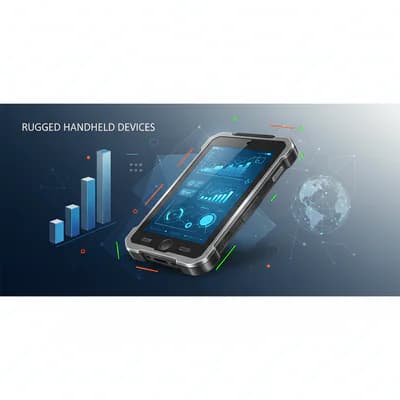
Rugged handheld devices are specially designed mobile computing tools built to operate reliably in harsh environments and conditions that would typically damage standard consumer electronics. These devices include smartphones, tablets, scanners, and barcode readers that adhere to stringent durability standards.
Key terms to know include:
- Ingress Protection (IP) Ratings: Measure resistance against dust and water; common ratings for rugged devices are IP65 to IP68.
- Military Standard (MIL-STD 810): Specifies testing for shock, vibration, temperature extremes, and humidity to ensure durability.
- Shockproof and Drop Resistance: Devices are engineered to withstand drops from heights often exceeding 1.5 meters.
Typically, rugged handhelds feature reinforced housings, hardened displays (like Gorilla Glass), enhanced battery life, and often have gloves- and wet-finger-compatible touchscreens. These features enable users to operate the devices in extreme weather, dusty factories, or on construction sites without compromising functionality.
Industry Applications & Use Cases
The versatility of rugged handheld devices makes them vital across multiple industries:
- Logistics and Warehousing: Workers use rugged handheld scanners for inventory management and real-time tracking, reducing errors and speeding up operations. For example, DHL implemented rugged tablets in their warehouses, resulting in a 20% increase in scanning speed and accuracy.
- Field Services: Technicians in utilities and telecommunications rely on these devices for diagnostics, reporting, and remote collaboration, even in remote or harsh environments.
- Manufacturing: Rugged handheld devices facilitate quality control, machinery monitoring, and maintenance schedules on noisy factory floors, boosting productivity.
- Public Safety and Emergency Services: Police, firefighters, and paramedics use rugged handhelds for communication, navigation, and incident reporting under critical conditions.
- Outdoor and Exploration Activities: Geologists, surveyors, and environmental scientists benefit from GPS-enabled rugged handhelds to collect data in extreme terrains.
One standout case is a leading oil and gas company that deployed rugged tablets across offshore platforms, enabling real-time data access that improved safety compliance and operational efficiency by 15%.
Market Trends & Growth Drivers
The global market for rugged handheld devices is witnessing robust growth. According to recent industry reports, the market is expected to expand at a CAGR of over 8% in the next five years, driven by increasing adoption in sectors requiring durable mobile computing solutions.
Key growth drivers include:
- Rising demand for workforce mobility and real-time data access in industrial environments.
- Technological advancements such as 5G connectivity, enhanced sensors, and improved battery technologies.
- Growing emphasis on operational efficiency and workplace safety, prompting investments in rugged solutions.
- Expansion of e-commerce and logistics sectors requiring rapid inventory management.
Moreover, the COVID-19 pandemic highlighted the need for remote operations and durable devices that can be disinfected regularly without damage. This factor accelerated the adoption of rugged handhelds in healthcare and supply chain management.

Market Trends & Growth Drivers
Benefits & Advantages
Investing in rugged handheld devices offers multiple benefits for businesses and end-users alike:
- Durability and Reliability: Built to survive drops, dust, water, and extreme temperatures, minimizing downtime and replacement costs.
- Enhanced Productivity: Fast data capture and processing improve task efficiency and accuracy.
- Long-Term ROI: Though often more expensive upfront, rugged devices reduce total cost of ownership by lasting longer and requiring fewer repairs.
- Improved Safety: Reliable communication and data access in hazardous environments contribute to worker safety and regulatory compliance.
- Seamless Connectivity: Integration with enterprise systems and cloud platforms ensures real-time information flow.
For example, a major retail chain reported that switching to rugged handheld scanners reduced operational errors by 30%, directly enhancing customer satisfaction and profitability.
Challenges & Future Outlook
Despite their advantages, rugged handheld devices face certain challenges. Their higher initial cost compared to consumer-grade devices can be a barrier for small businesses. Additionally, balancing ruggedness with ergonomic design remains tricky, as some devices can be bulky or heavy.
Battery life under continuous heavy use, software compatibility, and the need for regular firmware updates also pose ongoing concerns. However, manufacturers are addressing these issues by innovating lighter materials, modular designs, and AI-driven power management.
Looking ahead, the integration of next-generation technologies like augmented reality (AR), edge computing, and improved biometric security is set to redefine rugged handhelds. These advancements will enable richer data visualization and more secure operations in the field.
Furthermore, the rise of Industry 4.0 and IoT connectivity will expand the capabilities of rugged handheld devices, making them central to smart factories, autonomous logistics, and predictive maintenance.
Conclusion
Rugged handheld devices are more than just tough gadgets—they are strategic assets that drive efficiency, safety, and connectivity in challenging work environments. Their growing adoption across industries underscores a clear trend: businesses value reliable technology that supports mobility without compromising durability.
For companies looking to enhance operational resilience and empower their workforce, investing in rugged handheld technology offers substantial returns. As innovations continue to advance, these devices will become even more integral to the digital transformation of industrial sectors.
Embracing rugged handheld devices today means preparing for a future where mobility, durability, and smart technology converge to unlock new possibilities.
Need More Details on Market Players and Competitors?
Tagged in