
UHV Suspended Insulator: Key to Ultra-High Voltage Power Systems
Explore the role of UHV suspended insulators in ultra-high voltage power systems, their applications, market trends, benefits, and future outlook for reliabl...
Introduction
In the rapidly evolving landscape of electrical power transmission, UHV suspended insulators play a pivotal role. As the demand for reliable, efficient, and high-capacity power grids intensifies, ultra-high voltage (UHV) transmission has emerged as a game-changer, enabling long-distance energy transport with minimal loss. Central to this technology are the suspended insulators, critical components that ensure system safety and performance.
This article delves into the world of UHV suspended insulators, exploring their technology, applications, market trends, benefits, and future outlook. Whether you're an industry professional or an enthusiast, understanding these components will shed light on how modern power grids maintain their integrity at ultra-high voltages.
Technology Overview: What Is a UHV Suspended Insulator?
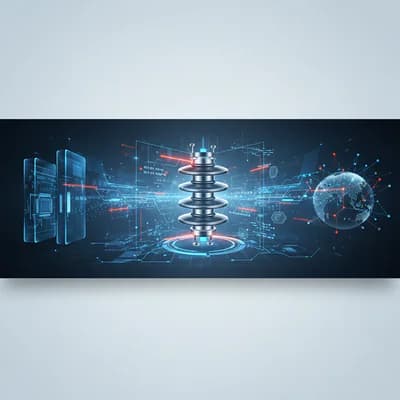
A UHV suspended insulator is an insulating device specifically designed to support overhead transmission lines that operate at ultra-high voltage levels, typically above 800 kV. Suspended insulators are used to hold the conductor cables while electrically isolating them from supporting towers or poles.
These insulators are generally composed of composite, porcelain, or glass materials. The term “suspended” refers to their hanging configuration, which allows for mechanical flexibility and ease of maintenance. In UHV systems, the insulators must withstand extreme electrical stresses, mechanical loads, and environmental conditions.
Key terms to understand include:
- Ultra-High Voltage (UHV): Transmission voltages typically above 800 kV AC or 1,100 kV DC, enabling long-distance power delivery with reduced losses.
- Insulation Strength: The ability to resist electrical breakdown, which is crucial at such high voltages.
- Mechanical Load Capacity: The insulator’s strength to bear the weight of conductors, wind, and ice load.
UHV suspended insulators are engineered with advanced materials and design features to meet these stringent requirements, ensuring stable and secure power transmission.
Industry Applications & Use Cases
The use of UHV suspended insulators spans several critical areas in power transmission:
- Long-Distance Power Transmission: Countries like China and India have implemented UHV lines to connect remote energy sources—such as hydropower and renewables—to urban demand centers.
- Interregional Grid Connectivity: UHV insulators facilitate robust grid interconnections that improve power reliability and reduce bottlenecks.
- Renewable Energy Integration: With increasing renewable capacity, UHV lines equipped with reliable insulators are essential for transporting energy generated from distant wind farms and solar arrays.
For example, China’s State Grid Corporation has successfully deployed multiple 1,100 kV AC UHV lines that rely on specially designed suspended insulators to maintain system stability. These projects illustrate how advanced insulator technology enables massive power transfers over thousands of kilometers.
Market Trends & Growth Drivers
The global market for UHV suspended insulators is witnessing dynamic growth driven by several factors:
- Expanding Power Demand: Rapid industrialization and urbanization increase electricity consumption, necessitating efficient UHV transmission.
- Grid Modernization Efforts: Utilities worldwide are upgrading infrastructure to integrate smart grid technologies and enhance grid resilience.
- Renewable Energy Expansion: The shift towards sustainable energy sources propels demand for long-distance transmission solutions supported by advanced insulators.
- Technological Advancements: Innovations in composite materials and design are improving the performance and lifespan of UHV suspended insulators.
According to industry reports, the UHV suspended insulator market is projected to grow at a compound annual growth rate (CAGR) of approximately 7-9% over the next decade. Asia Pacific dominates due to massive infrastructure projects in China and India, with North America and Europe investing steadily in smart grid upgrades.

Market Trends & Growth Drivers
Benefits & Advantages of UHV Suspended Insulators
Incorporating UHV suspended insulators offers multiple benefits for power transmission operators and end-users:
- Enhanced Electrical Insulation: Superior insulation properties reduce the risk of flashovers and outages, ensuring reliable power delivery.
- Mechanical Reliability: High tensile strength and flexibility allow insulators to withstand environmental stresses such as wind, ice, and seismic forces.
- Lower Maintenance Costs: Durability and resistance to pollution reduce the frequency and cost of maintenance cycles.
- Improved Grid Efficiency: By facilitating UHV transmission, these insulators help reduce line losses and increase energy transfer capacity.
For utilities, this translates into better return on investment (ROI) through improved asset lifespan and reduced downtime. For consumers, it means fewer blackouts and more stable electricity supply.
Challenges & Future Outlook
Despite the advantages, the deployment of UHV suspended insulators faces certain challenges:
- High Manufacturing Costs: Advanced materials and precision engineering increase initial expenditures.
- Environmental and Pollution Concerns: Insulators in polluted or coastal environments require special coatings and maintenance strategies.
- Technical Complexity: Designing insulators for ultra-high voltages demands rigorous testing and quality assurance.
However, ongoing research is addressing these issues through innovations like hydrophobic nano-coatings, composite insulator enhancements, and automated inspection technologies using drones and AI.
Looking ahead, the future of UHV suspended insulators is promising. With the global push towards carbon neutrality and smart grid integration, these insulators will become even more vital in supporting next-generation power systems. Industry experts predict greater adoption of composite materials that combine lightweight with high strength, alongside improved monitoring systems to predict and prevent failures.
Conclusion
To summarize, UHV suspended insulators are indispensable components in ultra-high voltage power transmission, enabling efficient and reliable long-distance electricity delivery. Their advanced design and materials meet the demanding electrical and mechanical requirements of UHV grids, supporting the integration of renewable energy and grid modernization efforts worldwide.
For power utilities and stakeholders, investing in high-quality UHV suspended insulators offers significant benefits, including enhanced system reliability, reduced maintenance costs, and greater operational efficiency. As the power industry evolves, embracing innovative insulator technologies will be key to meeting future energy challenges and building resilient, sustainable grids.
Stay informed about ongoing advancements and market trends in UHV suspended insulators to capitalize on emerging opportunities and drive the future of power transmission forward.
Need More Details on Market Players and Competitors?
Tagged in