
Ultra-Low Freezer: Essential Tech for Biotech & Pharma Labs
Discover how ultra-low freezers revolutionize biobanking and pharma with advanced cold storage technology, market trends, benefits, and future outlook.

Introduction
In the fast-evolving fields of biotechnology, pharmaceuticals, and medical research, preserving biological samples and sensitive materials is paramount. Enter the Ultra-Low Freezer, a specialized refrigeration unit designed to maintain temperatures significantly below conventional freezers, often reaching as low as -80°C. This capability ensures the stability and longevity of valuable samples, reagents, and vaccines.
As demand for advanced sample preservation grows, understanding the technology, applications, and trends surrounding ultra-low freezers becomes increasingly important. This article explores the core technology behind ultra-low freezers, their diverse industry applications, emerging market trends, benefits, and future outlook.
Technology and Concept Overview
An Ultra-Low Freezer (ULF) is a refrigeration system specifically engineered to sustain extremely low temperatures, typically from -40°C down to -86°C. Unlike standard laboratory freezers that operate between -20°C and -40°C, ultra-low freezers employ advanced compression and insulation technologies to reach and maintain these frigid conditions reliably.
Key components of an ultra-low freezer include:
- Compressor System: Often a cascade refrigeration system that uses two or more refrigeration cycles to achieve ultra-low temperatures.
- Insulation: High-performance vacuum panels or thick polyurethane foam minimize thermal exchange, enhancing energy efficiency.
- Temperature Control: Digital controllers with precise sensors enable consistent temperature monitoring and alarm systems for safety.
- Backup Systems: Battery backups or nitrogen backup cooling to protect samples during power outages.
Originally developed to support biological research, ultra-low freezers have become indispensable tools in various scientific fields. Their ability to prevent biochemical degradation ensures sample integrity over extended periods.
Industry Applications & Use Cases
Ultra-low freezers are widely used across the life sciences sector, including biotechnology, pharmaceutical development, clinical laboratories, and academic research. Here are some specific applications:
- Biobanking: Storage of DNA, RNA, proteins, and cell cultures for research and clinical use.
- Vaccine Preservation: Maintaining the viability of vaccines, including mRNA vaccines, which require stringent cold chain management.
- Pharmaceuticals: Storing temperature-sensitive compounds and intermediates during drug development and manufacturing.
- Clinical Trials: Ensuring sample consistency by preserving biospecimens collected from study participants.
Case Study: During the COVID-19 pandemic, ultra-low freezers played a pivotal role in the distribution and storage of mRNA vaccines like Pfizer-BioNTech’s, which required storage at around -70°C. This real-world example highlights their critical role in public health emergencies.
Market Trends & Growth Drivers
The global ultra-low freezer market is experiencing significant growth, driven by expanding biotechnology research, increasing government funding for life sciences, and the surge in personalized medicine. According to recent industry reports, the market is projected to grow at a CAGR of approximately 8-10% over the next five years.
Major growth drivers include:
- Rising Demand for Biobanking: Growing collections of biological samples necessitate reliable long-term storage.
- Vaccine Development & Distribution: The ongoing need for vaccines with cold chain requirements fuels demand.
- Technological Advancements: Innovations in energy efficiency and smart monitoring systems attract new buyers.
- Emerging Markets: Increasing research activities in Asia-Pacific and Latin America.
Leading manufacturers are investing in R&D to introduce models with improved sustainability, reduced energy consumption, and enhanced digital connectivity.
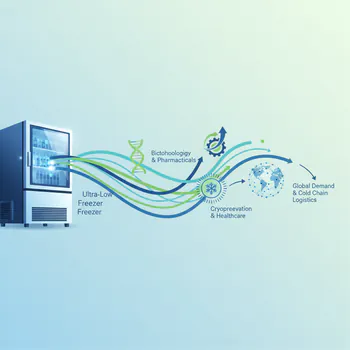
Market Trends & Growth Drivers
Benefits & Advantages
The adoption of ultra-low freezers offers multiple benefits to both research institutions and commercial enterprises:
- Sample Integrity: Maintaining ultra-low temperatures preserves biomolecules’ structural and functional properties.
- Extended Storage Duration: Enables long-term preservation without sample degradation.
- Energy Efficiency: Modern ULFs consume less power compared to older models, reducing operational costs.
- Advanced Monitoring: Real-time alerts and remote monitoring minimize risks associated with temperature fluctuations.
- Regulatory Compliance: Supports adherence to standards such as FDA and GLP for clinical and pharmaceutical research.
From a business perspective, ultra-low freezers contribute to substantial ROI by preventing costly sample loss and supporting high-quality research outputs.
Challenges & Future Outlook
Despite their advantages, ultra-low freezers face several challenges. The energy-intensive nature of maintaining -80°C temperatures leads to high electricity costs and environmental concerns. Additionally, the upfront capital investment and maintenance requirements can be prohibitive for smaller labs.
Innovations aimed at tackling these challenges include:
- Eco-Friendly Refrigerants: Transitioning to low-global warming potential refrigerants.
- Improved Insulation Materials: Utilizing vacuum panels and phase change materials to reduce energy use.
- Smart Freezers: Integration of IoT sensors and AI for predictive maintenance and optimized performance.
- Modular Designs: Scalable units that can be tailored to specific storage needs.
Looking ahead, the ultra-low freezer market is expected to evolve with a stronger focus on sustainability, automation, and connectivity. As precision medicine and biobanking expand, the demand for sophisticated ultra-low storage solutions will continue to rise.
Conclusion
The Ultra-Low Freezer remains a cornerstone technology in life sciences, enabling critical advancements in research, diagnostics, and healthcare. Its ability to reliably preserve sensitive biological materials at temperatures as low as -80°C ensures sample integrity, supports groundbreaking discoveries, and advances public health initiatives.
By understanding the technology, applications, and market dynamics of ultra-low freezers, organizations can make informed decisions to enhance their cold storage capabilities. As innovations drive greater energy efficiency and smarter monitoring, ultra-low freezers will play an even more vital role in the future of science and medicine.
Investing in cutting-edge ultra-low freezer technology today not only safeguards invaluable samples but also positions businesses and research institutions for success in an increasingly data-driven and precision-focused world.
Need More Details on Market Players and Competitors?
Tagged in