
AI Healthcare Market: Transforming Medicine with Intelligent Tech
Explore the AI healthcare market's growth, applications, benefits, and future trends transforming modern medicine and patient care worldwide.

Introduction
The AI healthcare market is revolutionizing the way medical professionals diagnose, treat, and manage patient care. With rapid advancements in artificial intelligence (AI), the healthcare industry is poised for transformative change, driving improved outcomes and operational efficiency. As AI technologies become more sophisticated, their integration into healthcare systems is not just a possibility but a necessity for staying competitive and delivering superior care.
In this article, we will explore the core concepts behind AI in healthcare, examine real-world applications, analyze market trends and growth drivers, highlight the key benefits, and discuss challenges alongside future outlooks. Whether you’re a healthcare provider, investor, or technology enthusiast, understanding the AI healthcare market landscape is crucial for navigating this dynamic field.
Technology and Concept Overview
At its core, the AI healthcare market involves the use of artificial intelligence technologies designed to simulate human intelligence and decision-making in medical contexts. Key components include machine learning, natural language processing (NLP), computer vision, and robotics, each serving unique functions within healthcare.
- Machine learning (ML) algorithms analyze large datasets to identify patterns, predict outcomes, and support clinical decision-making.
- Natural language processing (NLP) enables AI systems to understand and interpret human language, facilitating the extraction of insights from unstructured medical records and literature.
- Computer vision powers image analysis, such as interpreting radiology scans or pathology slides with high accuracy.
- Robotic process automation (RPA) and AI-driven robotics assist in surgery, administrative tasks, and patient monitoring.
Collectively, these technologies enable AI solutions to perform tasks traditionally requiring human expertise, enhancing accuracy, speed, and scalability in healthcare delivery.
Industry Applications & Use Cases
The AI healthcare market is witnessing widespread adoption across diverse medical fields. Below are some prominent applications:
- Diagnostics and Imaging: AI-powered tools like IBM Watson Health and Zebra Medical Vision analyze medical images to detect anomalies such as tumors or fractures faster than conventional methods.
- Personalized Medicine: AI algorithms analyze genetic data and patient history to tailor treatments, improving efficacy as seen in oncology with platforms like Tempus.
- Virtual Health Assistants: Chatbots and voice assistants, such as those powered by Babylon Health, offer symptom checking and appointment scheduling, enhancing patient engagement.
- Operational Efficiency: AI streamlines hospital workflows by optimizing staffing, predicting patient admissions, and automating billing processes.
- Drug Discovery: Companies like Insilico Medicine use AI to accelerate the identification of promising drug candidates, drastically reducing time and cost.
For example, Google's DeepMind collaborated with Moorfields Eye Hospital to develop AI capable of diagnosing eye diseases with accuracy comparable to expert physicians, demonstrating the market’s potential to enhance clinical care.
Market Trends & Growth Drivers
The AI healthcare market is experiencing rapid growth, driven by increasing healthcare data availability, advances in computing power, and rising demand for cost-effective care.
According to a report by MarketsandMarkets, the AI healthcare market size is projected to reach approximately $120 billion by 2028, growing at a compound annual growth rate (CAGR) exceeding 40%. Key factors fueling this growth include:
- Proliferation of Electronic Health Records (EHRs): Digital patient data fuels AI analytics.
- Greater adoption of telemedicine: Accelerated by the COVID-19 pandemic, telehealth integrates AI to enhance remote diagnostics.
- Government initiatives and funding: Support for AI research and healthcare modernization.
- Increased investment from startups and tech giants: Major players like Microsoft and Amazon are expanding AI healthcare offerings.
These trends underscore a vibrant ecosystem ripe for innovation and adoption.
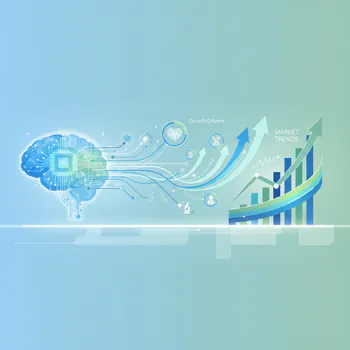
Market Trends & Growth Drivers
Benefits & Advantages
Implementing AI in healthcare offers numerous benefits for providers, payers, and patients:
- Enhanced Diagnostic Accuracy: AI reduces human error and enables earlier disease detection.
- Improved Patient Outcomes: Personalized treatment plans lead to better effectiveness and fewer side effects.
- Cost Reduction: Automating routine tasks and optimizing resource allocation decreases operational expenses.
- Scalability: AI solutions can be deployed widely, addressing shortages in healthcare workforce.
- Faster Drug Development: AI expedites research timelines, potentially bringing therapies to market quicker.
For businesses, these advantages translate into a strong return on investment (ROI) by enhancing service quality and patient satisfaction while controlling costs.
Challenges & Future Outlook
Despite promising growth, the AI healthcare market faces challenges that must be addressed:
- Data Privacy and Security: Handling sensitive patient data demands stringent compliance with regulations like HIPAA and GDPR.
- Integration with Legacy Systems: Many healthcare providers struggle to adopt AI due to outdated IT infrastructures.
- Bias and Transparency: AI models can inherit biases from training data, impacting fairness in care delivery.
- Regulatory Hurdles: Approval pathways for AI-based diagnostics and therapies remain complex and evolving.
However, ongoing research into explainable AI, federated learning, and robust cybersecurity measures offers potential solutions. The future outlook is optimistic, with trends pointing toward increased AI-human collaboration and the emergence of AI-powered predictive healthcare ecosystems.
Conclusion
The AI healthcare market stands at the forefront of a new era in medicine, driven by powerful technologies that enhance diagnosis, treatment, and operational efficiency. As the market continues its robust growth trajectory, stakeholders must balance innovation with ethical considerations and infrastructure readiness.
Businesses and healthcare providers wishing to capitalize on AI’s potential should focus on strategic investment in scalable technologies, fostering interdisciplinary collaboration, and prioritizing patient-centric solutions. Looking ahead, AI’s integration into healthcare promises not only to transform clinical practice but also to make quality healthcare more accessible and personalized worldwide.
Need More Details on Market Players and Competitors?
Tagged in