
Unlocking Growth with SaaS-based Business Analytics Solutions
Discover how SaaS-based Business Analytics empowers companies with scalable, real-time data insights to drive growth and innovation across industries.
Introduction
In today's data-driven world, making informed business decisions is more critical than ever. Companies across industries are inundated with vast amounts of data but often struggle to translate that data into actionable insights. This is where SaaS-based Business Analytics comes into play, revolutionizing how organizations access, analyze, and leverage data.
This article explores the transformative impact of SaaS-based Business Analytics, detailing its core concepts, practical applications, market trends, benefits, challenges, and future outlook. Whether you're a business leader, analyst, or technology enthusiast, understanding this approach is key to staying competitive in the digital age.
Technology and Concept Overview
SaaS-based Business Analytics refers to business intelligence (BI) and data analytics services delivered through Software as a Service (SaaS) platforms. Unlike traditional on-premise software, SaaS analytics solutions operate entirely in the cloud, accessible via web browsers without the need for complex installations or infrastructure management.
At its core, this technology combines data collection, processing, visualization, and advanced analytics capabilities such as machine learning and predictive modeling. Key terms to understand include:
- Software as a Service (SaaS): A software delivery model where applications are hosted by a vendor or service provider and made available to users over the internet.
- Business Analytics: The skills, technologies, and practices for continuous iterative exploration and investigation of past business performance to gain insight and drive business planning.
- Cloud Computing: The delivery of computing services—including servers, storage, databases, networking, software—over the internet (“the cloud”).
The rise of cloud computing and SaaS has democratized business analytics by lowering costs, increasing scalability, and enabling real-time data access.
Industry Applications & Use Cases
SaaS-based Business Analytics has wide-reaching applications across various industries. For example, in retail, companies use SaaS analytics platforms to monitor customer behavior, optimize inventory, and personalize marketing campaigns. A notable success story is Shopify, which integrates SaaS analytics to provide merchants with insights that drive sales growth.
In healthcare, organizations leverage SaaS analytics for patient data management, outcome prediction, and operational efficiency. Mount Sinai Health System implemented a SaaS-based analytics solution to improve patient care by analyzing clinical and operational data in real-time.
The financial sector uses these platforms to detect fraud, assess credit risk, and comply with regulations, with firms like Intuit benefiting from SaaS analytics to streamline financial services.
Manufacturing companies apply SaaS-based analytics to optimize supply chains, predict machine maintenance, and enhance quality control, as seen with Siemens leveraging cloud analytics to drive Industry 4.0 initiatives.
Market Trends & Growth Drivers
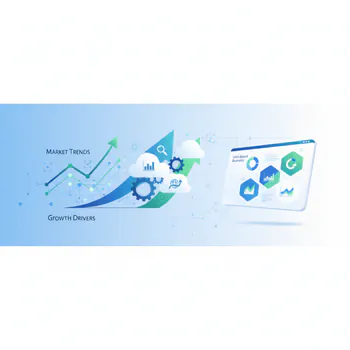
The global market for SaaS-based Business Analytics is growing rapidly, driven by the increasing demand for real-time data insights and the adoption of cloud technologies. According to a recent report by Gartner, the SaaS BI and analytics market is expected to exceed $30 billion by 2025, growing at a compound annual growth rate (CAGR) of over 15%.
Several factors fuel this growth, including the surge in big data generation, advancements in AI and machine learning, and the rising need for agility in decision-making. Additionally, the COVID-19 pandemic accelerated digital transformation efforts, pushing businesses to adopt cloud solutions that support remote work and decentralized data access.
Emerging trends such as augmented analytics—where AI automates data preparation and insight generation—are further enhancing the capabilities of SaaS platforms, making business analytics more accessible to non-technical users.
Market Trends & Growth Drivers
Benefits & Advantages
SaaS-based Business Analytics offers numerous benefits for businesses and users alike. First and foremost, it eliminates the need for costly hardware and IT maintenance, reducing upfront investment and total cost of ownership.
Its cloud-native architecture ensures scalability, allowing companies to easily adjust their analytics capacity based on changing needs. This flexibility supports faster deployment and continuous updates that keep the software current without disruption.
Moreover, these platforms provide user-friendly dashboards and visualization tools, empowering decision-makers at all levels to interpret data without deep technical expertise. The enhanced collaboration features enable teams across departments and geographies to share insights seamlessly.
From an ROI perspective, organizations adopting SaaS-based analytics report improved operational efficiency, better customer targeting, and accelerated innovation cycles, translating into tangible revenue growth.
Challenges & Future Outlook
Despite its advantages, SaaS-based Business Analytics faces challenges such as data security concerns, compliance with data privacy regulations (like GDPR and CCPA), and integration complexity with legacy systems. Ensuring data quality and governance across diverse sources also remains a key hurdle.
Innovations in encryption, federated learning, and AI-driven data cleansing are emerging as potential solutions to these issues. Vendors are increasingly focusing on hybrid models that combine on-premise and cloud analytics to address compliance and latency requirements.
Looking ahead, the future of SaaS-based Business Analytics is promising. We anticipate more intelligent, automated analytics powered by AI, deeper integration with Internet of Things (IoT) data, and greater personalization to specific industry needs. As data continues to grow exponentially, leveraging SaaS analytics will become indispensable for businesses striving to maintain a competitive edge.
Conclusion
In summary, SaaS-based Business Analytics is transforming how organizations harness data to drive strategic decisions. By providing scalable, cost-effective, and accessible analytics solutions, it empowers businesses to unlock insights that were once out of reach.
To capitalize on this trend, companies should evaluate SaaS analytics platforms aligned with their data strategy, prioritize data security, and invest in upskilling their workforce to interpret analytic outputs effectively.
As this technology continues to evolve, embracing SaaS-based Business Analytics will be crucial for businesses aiming to innovate, grow, and thrive in the increasingly competitive digital economy.
Need More Details on Market Players and Competitors?
Tagged in