
Webbing Cutting Machines: Revolutionizing Precision and Efficiency
Discover how webbing cutting machines enhance precision and efficiency across industries. Explore technology, applications, market trends, and future outlook...

Introduction
In today's fast-paced manufacturing environment, precision and speed are more critical than ever. Among the essential tools driving efficiency in textile and industrial sectors are webbing cutting machines. These machines are transforming how industries handle webbing materials, offering unmatched accuracy and productivity.
This article delves into the world of webbing cutting machines, exploring their technology, industry applications, market trends, benefits, and future outlook. Whether you're a manufacturer, supplier, or industry enthusiast, understanding these machines is key to staying ahead in competitive markets.
Technology and Concept Overview
Webbing cutting machines are specialized mechanical or automated devices designed to cut webbing materials—such as nylon, polyester, polypropylene, and cotton—into precise lengths and shapes. Webbing refers to woven fabric strips commonly used in seat belts, backpacks, harnesses, and industrial straps.
These machines utilize various cutting mechanisms, including:
- Hot knife cutting: Uses a heated blade to simultaneously cut and seal synthetic webbing, preventing fraying.
- Cold blade cutting: Employs sharp blades to slice webbing without heat, suitable for natural fibers.
- Ultrasonic cutting: Utilizes high-frequency vibrations to cut and seal synthetic materials efficiently.
Modern webbing cutting machines are often CNC-controlled, enabling programmable precision and integration with production lines. This technology ensures consistent cuts, reduces waste, and increases throughput.
Industry Applications & Use Cases
Webbing cutting machines have widespread applications across multiple industries due to their versatility and precision. Some key sectors include:
- Automotive: Producing seat belts and safety harness components where exact length and strength are critical.
- Outdoor and Sporting Goods: Manufacturing straps for backpacks, tents, and climbing gear.
- Furniture: Cutting webbing for upholstery and support straps.
- Medical: Creating adjustable straps for braces, supports, and medical equipment.
- Military and Safety Equipment: Preparing heavy-duty webbing for tactical gear and load-bearing applications.
For instance, a leading backpack manufacturer implemented an automated webbing cutting system that reduced material waste by 15% and increased production speed by 30%. Similarly, automotive suppliers rely on ultrasonic cutting machines to meet stringent safety standards with minimal production downtime.
Market Trends & Growth Drivers
The global market for webbing cutting machines is witnessing steady growth, driven by expanding demand in automotive safety, outdoor gear, and industrial applications. According to recent industry reports, the market is projected to grow at a CAGR of approximately 6-7% over the next five years.
Key growth drivers include:
- Rising demand for high-strength synthetic webbing materials in safety and industrial sectors.
- Automation and Industry 4.0 adoption, which pushes manufacturers toward programmable, integrated cutting solutions.
- Increasing focus on reducing material waste, driving the need for precise cutting technologies.
- Emergence of eco-friendly materials requiring specialized cutting techniques.
Regions such as North America, Europe, and Asia-Pacific are the primary markets, with Asia-Pacific experiencing rapid industrialization and manufacturing growth, boosting demand significantly.
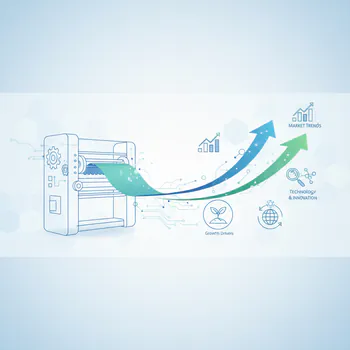
Market Trends & Growth Drivers
Benefits & Advantages
Investing in advanced webbing cutting machines offers numerous benefits for businesses, including:
- Improved Cutting Accuracy: Reduces errors and ensures uniform product quality.
- Enhanced Productivity: Automated cutting accelerates production cycles and lowers manual labor requirements.
- Material Savings: Precision cutting minimizes waste, enhancing ROI.
- Versatility: Ability to handle a variety of webbing materials and thicknesses.
- Safety Enhancements: Automated and enclosed cutting reduces operator risk.
For example, companies utilizing hot knife cutting machines benefit from sealed edges that prevent fraying, thus increasing the durability and lifespan of webbing products. Additionally, the ability to program batch cuts allows manufacturers to scale efficiently without sacrificing quality.
Challenges & Future Outlook
Despite their advantages, webbing cutting machines face challenges such as:
- Initial Capital Investment: Advanced automated machines require significant upfront costs.
- Material Compatibility: Some machines are limited to specific webbing types.
- Maintenance and Technical Expertise: Complex machinery demands skilled operators and regular upkeep.
Emerging solutions aim to address these challenges through modular designs, AI-driven diagnostics, and multi-material compatibility. Furthermore, ongoing innovations like laser cutting integration and IoT-enabled monitoring are set to redefine industry standards.
Looking ahead, the future of webbing cutting machines is promising. As industries prioritize sustainability, efficiency, and customization, these machines will evolve to meet diverse production needs. We can expect smarter, faster, and more adaptable cutting systems powered by artificial intelligence and advanced sensors.
Conclusion
Webbing cutting machines are indispensable tools that enhance precision, productivity, and quality across various industries. Their ability to deliver consistent, high-quality cuts while reducing waste makes them a strategic investment for manufacturers aiming to stay competitive.
By understanding the technology, applications, market dynamics, and future trends, businesses can leverage these machines to unlock operational efficiencies and drive innovation. As automation and material science advance, webbing cutting machines will continue to play a pivotal role in shaping the manufacturing landscape.
For companies looking to optimize their production lines, adopting state-of-the-art webbing cutting technology is not just an option—it’s a necessity for future growth and success.
Need More Details on Market Players and Competitors?
Tagged in