
Electronic Parts Catalog Software Market - Global Industry Size & Growth Analysis 2024-2030
Global Electronic Parts Catalog Software Market is segmented by Application (Automotive, Manufacturing, Retail, Wholesale), Type (3D Catalogs, Interactive Catalogs, Searchable Databases), and Geography (North America, LATAM, West Europe, Central & Eastern Europe, Northern Europe, Southern Europe, East Asia, Southeast Asia, South Asia, Central Asia, Oceania, MEA)
Pricing
Report Overview
INDUSTRY OVERVIEW
The Electronic Parts Catalog Software market is experiencing robust growth, projected to achieve a compound annual growth rate CAGR of 9 % during the forecast period. Valued at 1.3 billion, the market is expected to reach 2.2 billion by 2030, with a year-on-year growth rate of N/A. This upward trajectory is driven by factors such as evolving consumer preferences, technological advancements, and increased investment in innovation, positioning the market for significant expansion in the coming years. Companies should strategically focus on enhancing their offerings and exploring new market opportunities to capitalize on this growth potential.
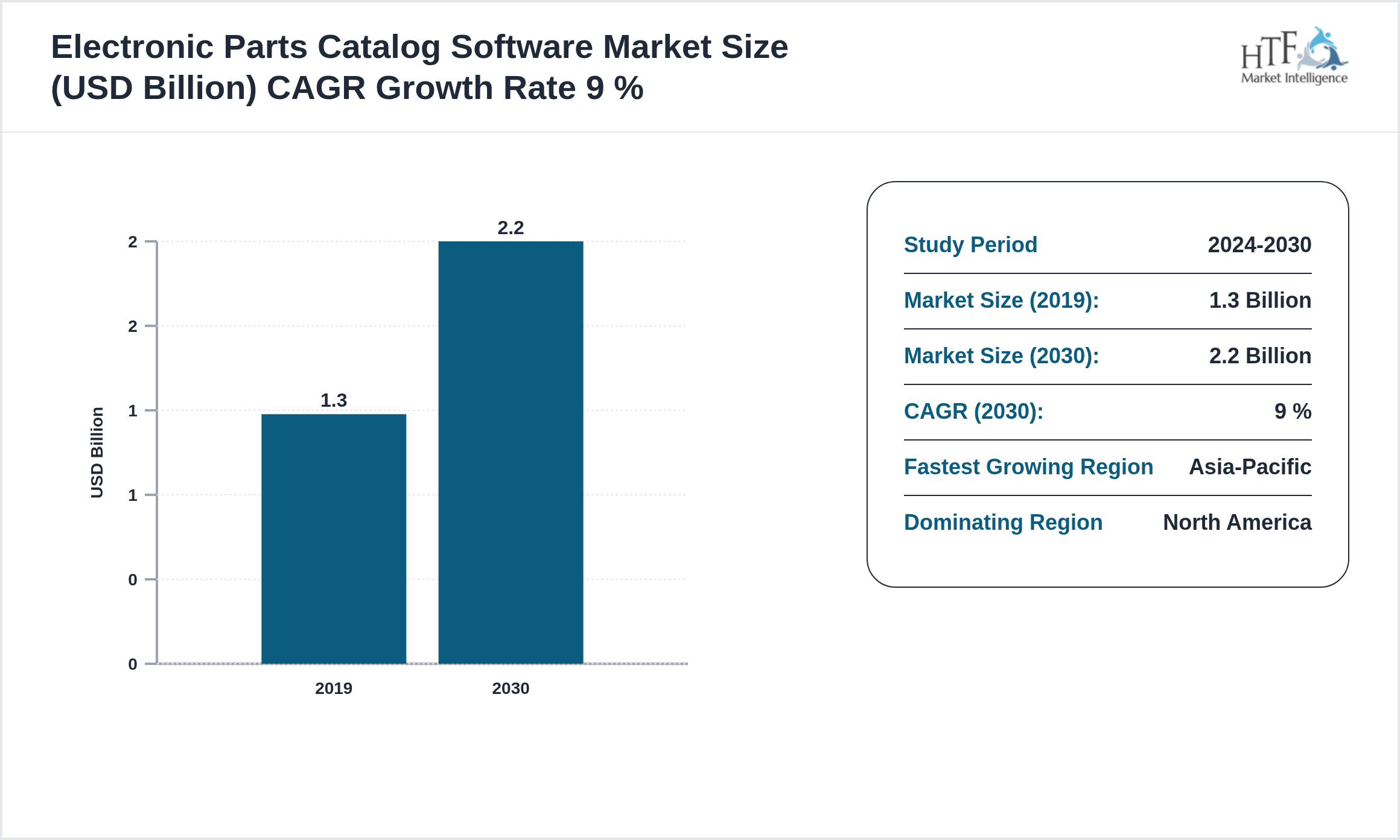
Source: HTF Market Intelligence (HTF MI)
Electronic parts catalog software is designed to help businesses manage, display, and sell parts efficiently through digital catalogs. The software often includes search capabilities, pricing, and detailed information about parts, helping customers find the exact product they need. It is widely used in industries such as automotive, manufacturing, and wholesale distribution. The software helps businesses reduce errors, improve order accuracy, and provide a better customer experience.
Geographic Analysis of Electronic Parts Catalog Software
The Electronic Parts Catalog Software market exhibits significant regional variation, shaped by different economic conditions and consumer behaviors.
Currently, North America dominates the market due to high consumption, population growth, and sustained economic progress. Meanwhile, Asia-Pacific is experiencing the fastest growth, driven by large-scale infrastructure investments, industrial development, and rising consumer demand.
- North America
- LATAM
- West Europe
- Central & Eastern Europe
- Northern Europe
- Southern Europe
- East Asia
- Southeast Asia
- South Asia
- Central Asia
- Oceania
- MEA
Regulatory Landscape
Key Highlights
• The Electronic Parts Catalog Software is growing at a CAGR of 9 % during the forecasted period of 2024 to 2030
• Year-on-year growth for the market is N/A.
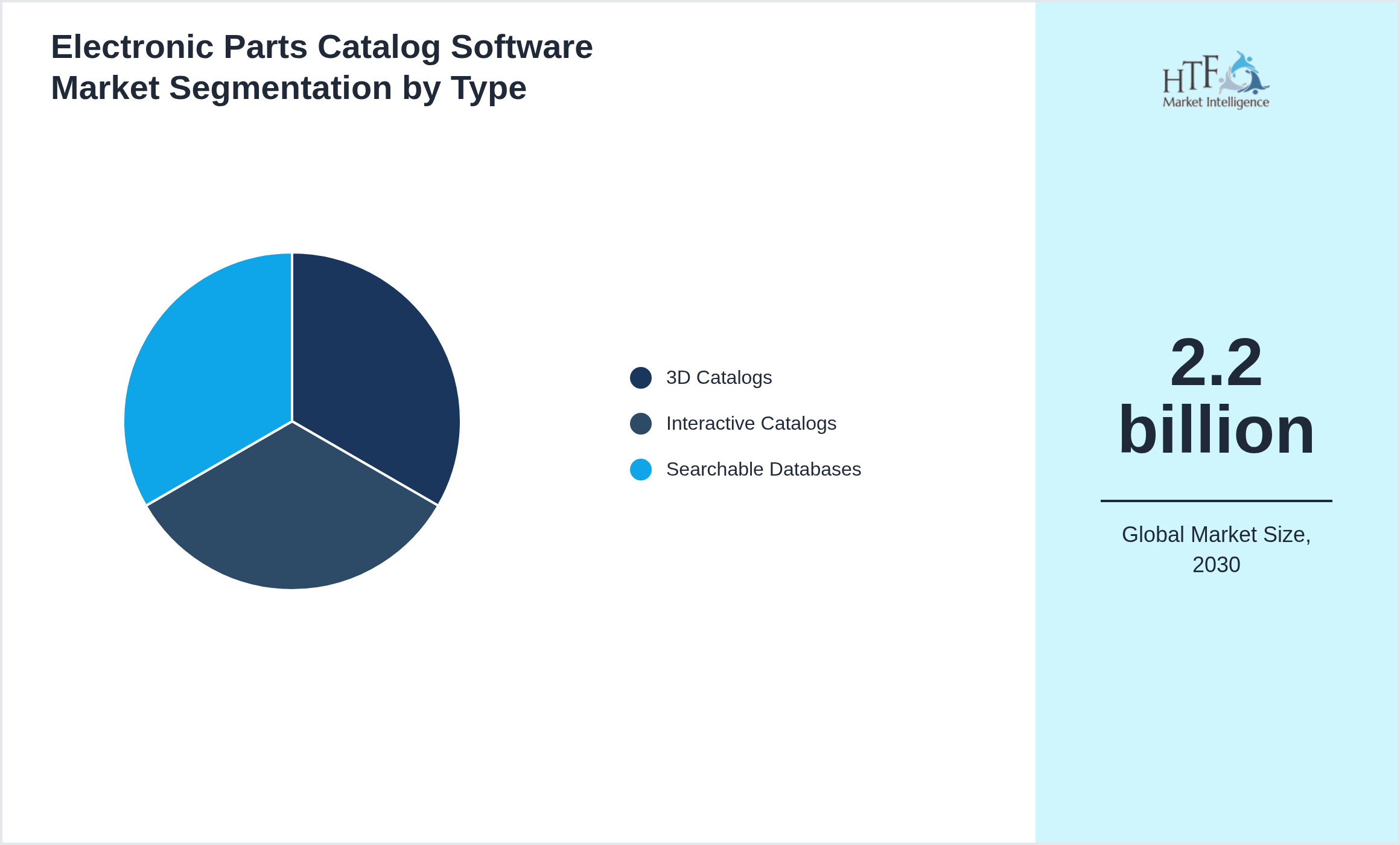
• Based on type, the market is bifurcated into 3D Catalogs, Interactive Catalogs, Searchable Databases
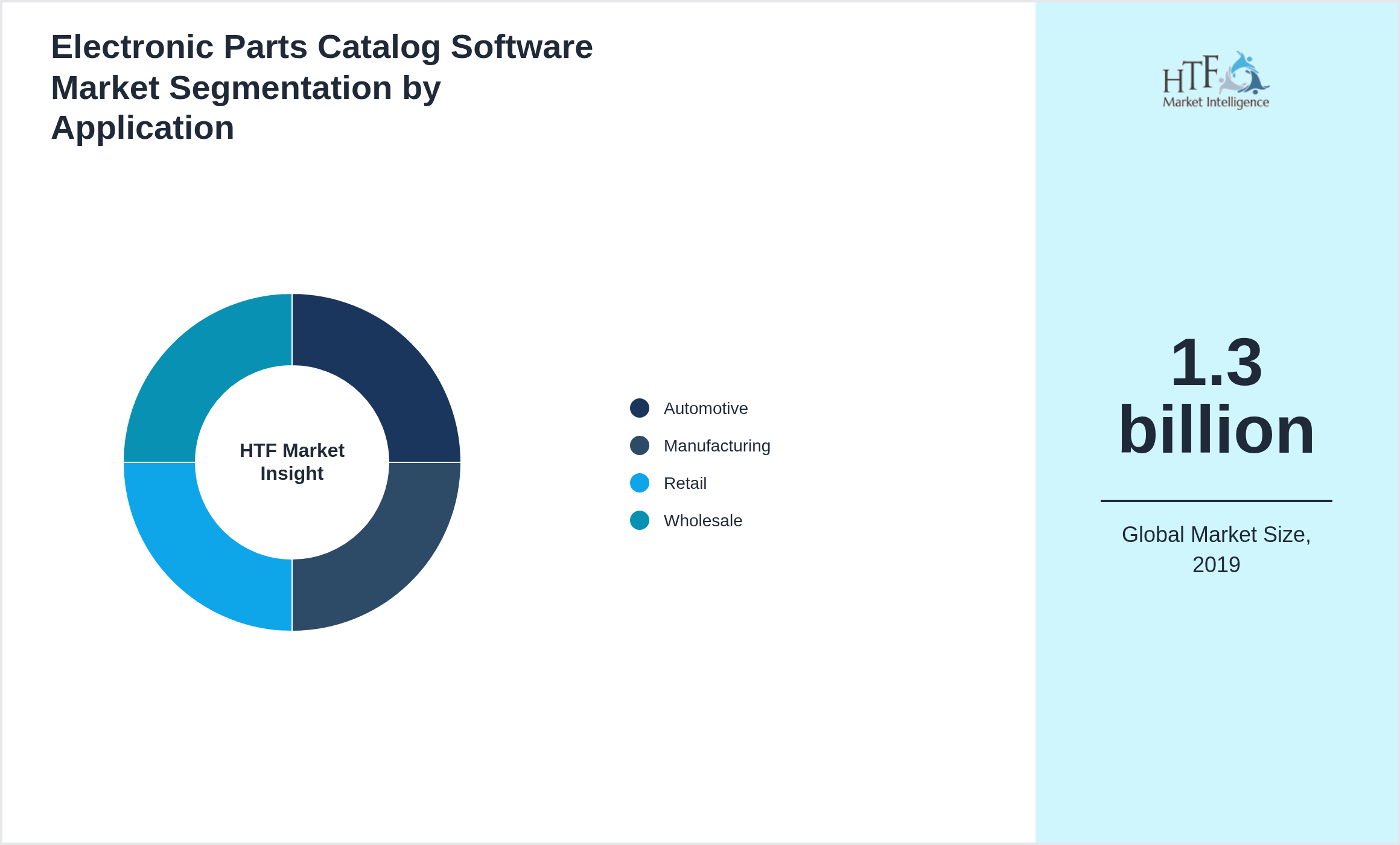
• Based on application, the market is segmented into Automotive, Manufacturing, Retail, Wholesale
• Global import/export in terms of K tons, K units, and metric tons will be provided if applicable, based on industry best practices.
Market Segmentation Analysis
Segmentation by Type
- • 3D Catalogs
- • Interactive Catalogs
- • Searchable Databases
Segmentation by Application
- • Automotive
- • Manufacturing
- • Retail
- • Wholesale
Key Players
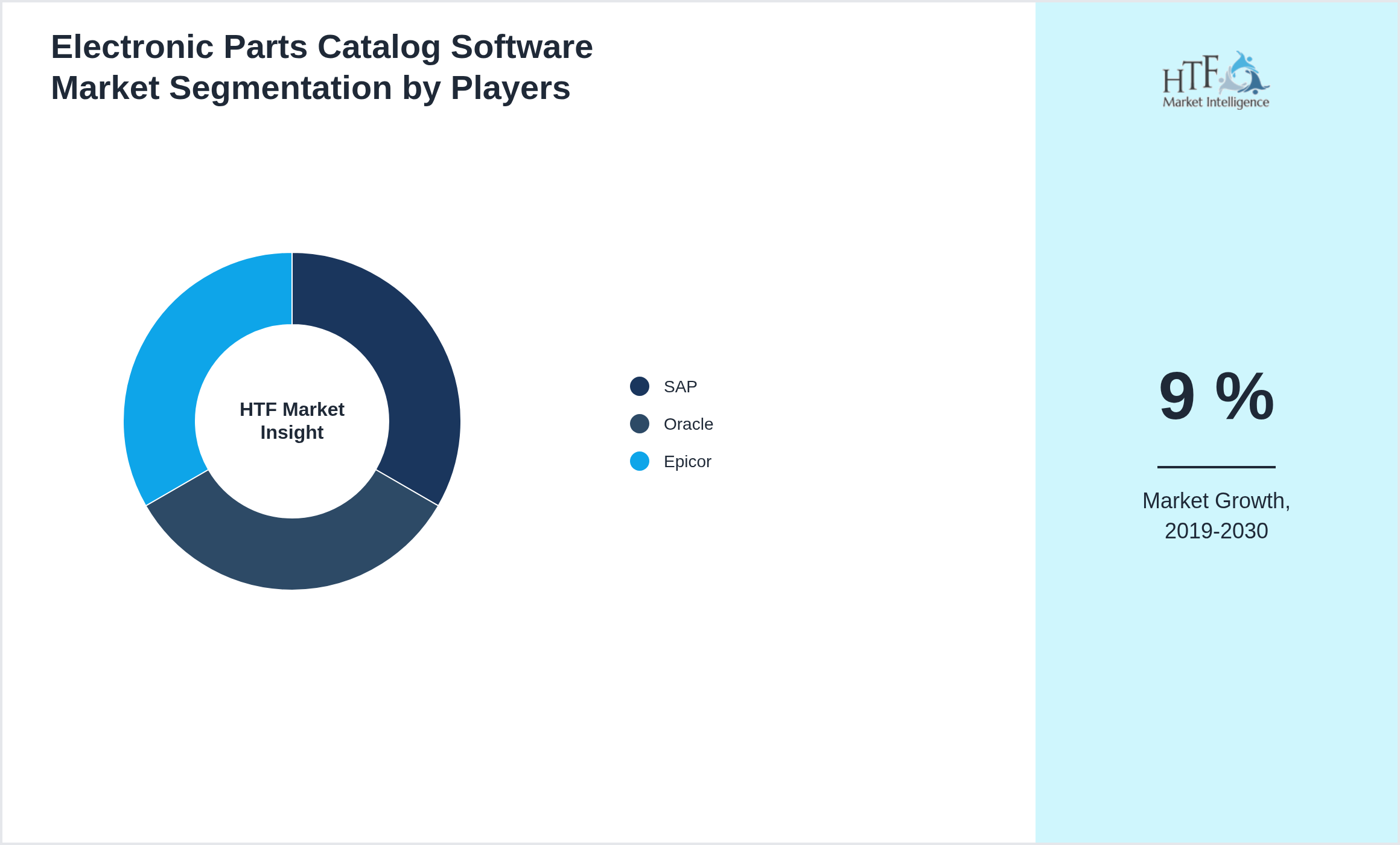
Several key players in the Electronic Parts Catalog Software market are strategically focusing on expanding their operations in developing regions to capture a larger market share, particularly as the year-on-year growth rate for the market stands at N/A. The companies featured in this profile were selected based on insights from primary experts, evaluating their market penetration, product offerings, and geographical reach. By targeting emerging markets, these companies aim to leverage new opportunities, enhance their competitive advantage, and drive revenue growth. This approach not only aligns with their overall business objectives but also positions them to respond effectively to the evolving demands of consumers in these regions.
- • SAP
- • Oracle
- • Epicor
Research Methodology
The comprehensive market research is provided that combines both secondary and primary methodologies. The secondary research involves rigorous analysis of existing data sources, such as industry reports, market databases, and competitive landscapes, to provide a robust foundation of market knowledge. This is complemented by our primary research services to gather firsthand data through surveys, interviews, and focus groups tailored specifically to your business needs. By integrating these approaches, we offer a thorough understanding of market trends, consumer behavior, and competitive dynamics, enabling us to make well-informed strategic decisions.
Market Dynamics
Market dynamics refer to the forces that influence the supply and demand of products and services within a market. These forces include factors such as consumer preferences, technological advancements, regulatory changes, economic conditions, and competitive actions. Understanding market dynamics is crucial for businesses as it helps them anticipate changes, identify opportunities, and mitigate risks.
By analyzing market dynamics, companies can better understand market trends, predict potential shifts, and develop strategic responses. This analysis enables businesses to align their product offerings, pricing strategies, and marketing efforts with evolving market conditions, ultimately leading to more informed decision-making and a stronger competitive position in the marketplace.
Market Driver
- • Opportunities in expanding software solutions for emerging industries
- • providing enhanced features such as real-time tracking
- • or creating industry-specific versions for niche markets
- • Use of AI and machine learning to enhance search capabilities
- • integration with cloud and ERP systems
- • incorporation of 3D models and augmented reality for parts visualization
- • Opportunities in expanding software solutions for emerging industries
- • providing enhanced features such as real-time tracking
- • or creating industry-specific versions for niche markets
Challenge
- • Integration complexities with existing systems
- • data management issues
- • need for constant updates to catalog information
- • competitive market
Regional Analysis
Market Entropy
Merger & Acquisition
Regulatory Landscape
Patent Analysis
Investment and Funding Scenario
Regional Outlook
The North America region holds the largest market share in 2019 and is expected to grow at a good CAGR. The Asia-Pacific Region is the fastest-growing region due to increasing development and disposable income.
- North America
- LATAM
- West Europe
- Central & Eastern Europe
- Northern Europe
- Southern Europe
- East Asia
- Southeast Asia
- South Asia
- Central Asia
- Oceania
- MEA
|
Report Features |
Details |
|
Base Year |
2019 |
|
Based Year Market Size (2019) |
1.3 billion |
|
Historical Period Market Size (2024) |
USD Million ZZ |
|
CAGR (2019 to 2030) |
9 % |
|
Forecast Period |
2026 to 2030 |
|
Forecasted Period Market Size (2030) |
2.2 billion |
|
Scope of the Report |
By Type, By Application, By Region |
|
Quantitative Units |
Revenue in USD million/billion, volume in kilotons, and CAGR from 2019 to 2030 |
|
Year-on-Year Growth |
N/A |
|
Companies Covered |
SAP, Oracle, Epicor |
|
Customization Scope |
15% Free Customization (For EG) |
|
Delivery Format |
PDF and Excel through Email
|
Regulatory Framework
The Information and Communications Technology (ICT) industry is primarily regulated by the Federal Communications Commission (FCC) in the United States, along with other national and international regulatory bodies. The FCC oversees the allocation of spectrum, ensures compliance with telecommunications laws, and fosters fair competition within the sector. It also establishes guidelines for data privacy, cybersecurity, and service accessibility, which are crucial for maintaining industry standards and protecting consumer interests.
Globally, various regulatory agencies, such as the European Telecommunications Standards Institute (ETSI) and the International Telecommunication Union (ITU), play significant roles in standardizing practices and facilitating international cooperation. These bodies work together to create a cohesive regulatory framework that addresses emerging technologies, cross-border data flow, and infrastructure development. Their regulations aim to ensure the ICT industry's growth is both innovative and compliant with global standards, promoting a secure and competitive market environment.