
Automotive Oil Transfer Pump Market - Global Share, Size & Changing Dynamics 2024-2030
Global Automotive Oil Transfer Pump Market is segmented by Application (Automotive, Fuel Transfer, Industrial, Marine, Agriculture), Type (Gear, Vane, Screw, Piston, Diaphragm), and Geography (North America, LATAM, West Europe, Central & Eastern Europe, Northern Europe, Southern Europe, East Asia, Southeast Asia, South Asia, Central Asia, Oceania, MEA)
Pricing
Report Overview
Industry Overview
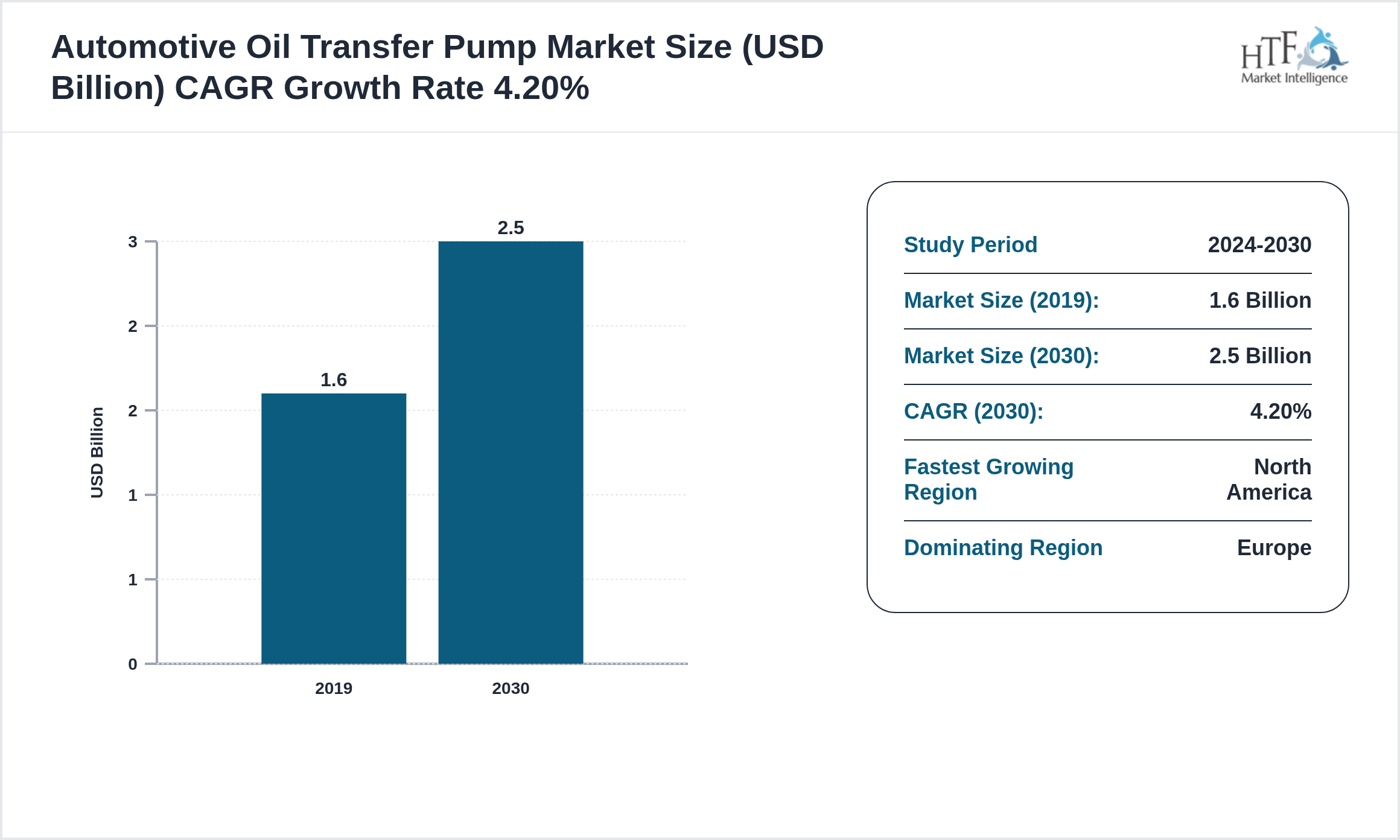
The Automotive Oil Transfer Pump market is witnessing significant growth and is expected to expand at a CAGR of 4.20% during the forecast period from 2019 to 2030. This growth is primarily driven by increasing technological advancements, rising consumer demand, and expanding applications across various industries. Businesses are increasingly adopting innovative solutions to improve operational efficiency, enhance customer experiences, and gain a competitive advantage, further fueling market expansion.
Source: HTF Market Intelligence (HTF MI)
The automotive oil transfer pump market deals with the production and use of pumps designed to transfer oil and other lubricants in vehicles. These pumps are essential for maintaining the engine's lubrication system and ensuring smooth operation. The market is expected to expand between 2023 and 2030 due to the continuous growth in vehicle production, particularly in emerging markets. Factors like the increasing demand for high-performance and fuel-efficient vehicles, along with advancements in pump technology, will contribute to this growth. The development of electric and hybrid vehicles, which still require oil pumps for various components, also supports market demand. Moreover, innovations in pump efficiency, durability, and cost-effectiveness are expected to drive growth. The automotive oil transfer pump market is poised to experience significant expansion as vehicle manufacturers adopt new technologies to enhance vehicle performance and efficiency.
The research study Automotive Oil Transfer Pump Market gives readers information on tactical business choices and strategic planning that affect and stabilize the growth prediction in the Automotive Oil Transfer Pump market. However, a few disruptive trends will have opposite and significant effects on the distribution among players and the growth of the Automotive Oil Transfer Pump market. To give further advice on why certain developments in the Automotive Oil Transfer Pump market would have a significant impact and specifically why these trends can be taken into account when determining the market's trajectory and industry participants' strategic plans.
Key Highlights
• The Automotive Oil Transfer Pump is growing at a CAGR of 4.20% during the forecasted period of 2019 to 2030
• Year-on-year growth for the market is 6.10%.
• Europe dominated the market share in 2019
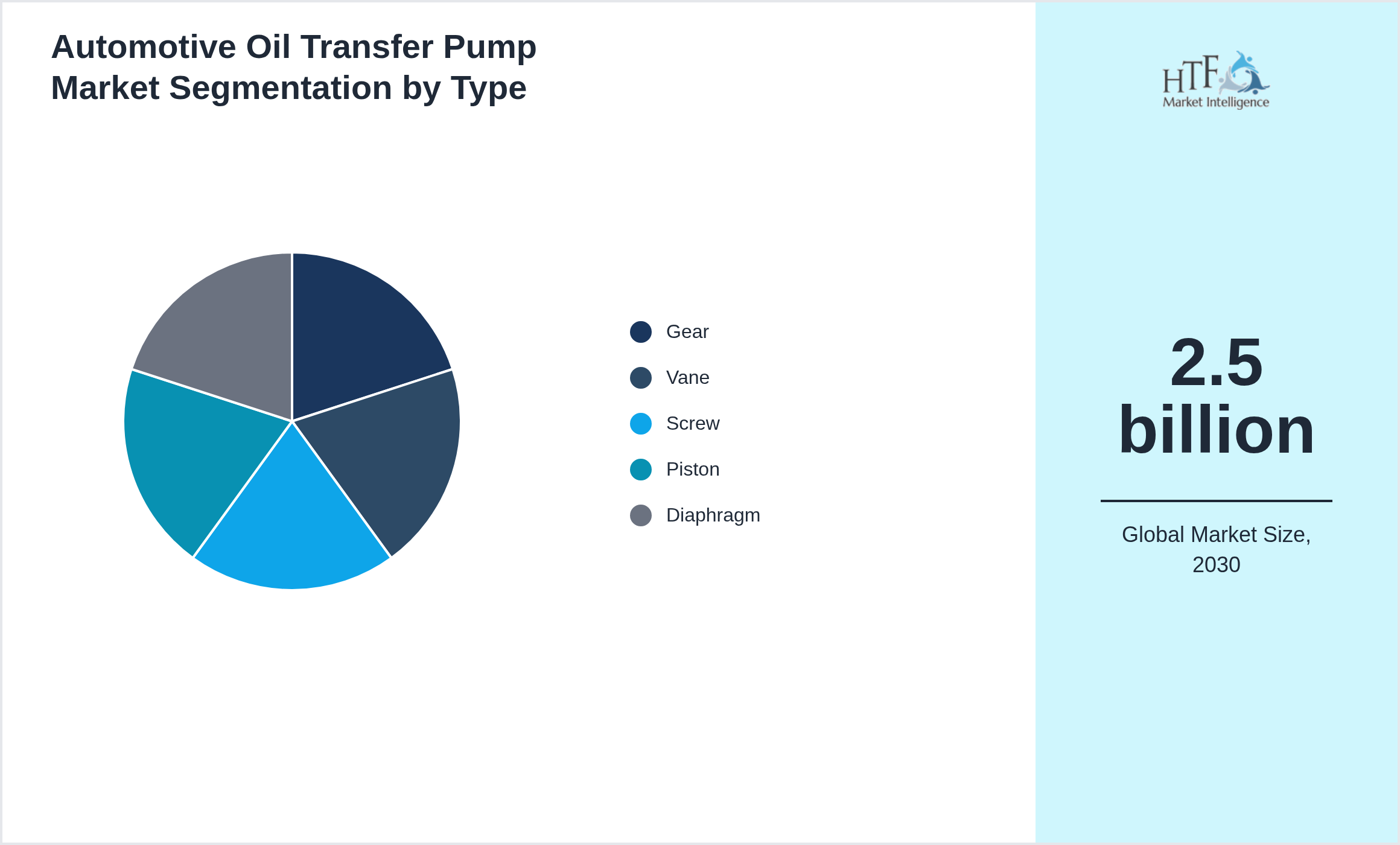
• Based on type, the market is bifurcated into the Gear, Vane, Screw, Piston, Diaphragm segment, which dominated the market share during the forecasted period
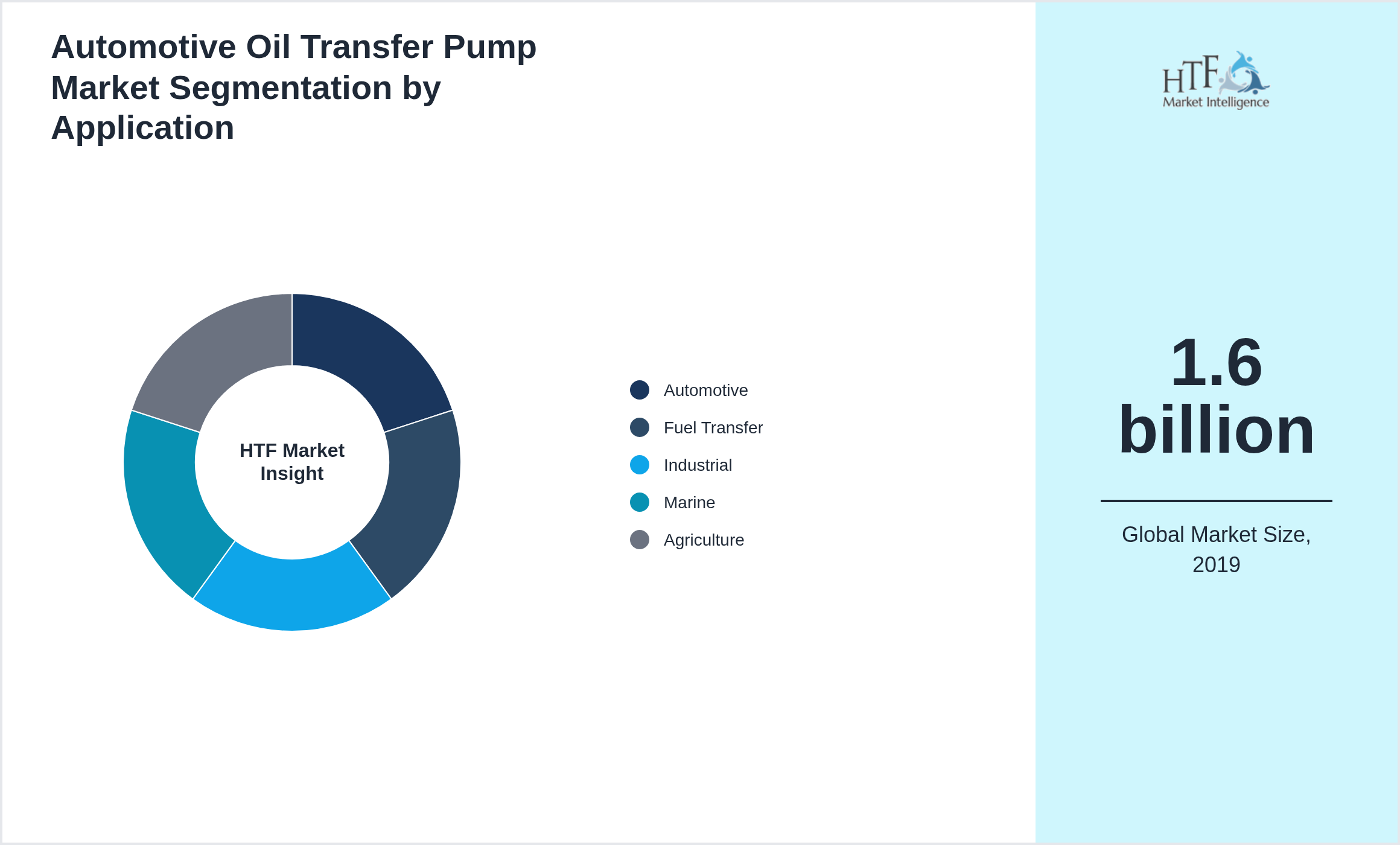
• Based on application, the market is segmented into Application Automotive, Fuel Transfer, Industrial, Marine, Agriculture as the fastest-growing segment.
• North America, LATAM, West Europe, Central & Eastern Europe, Northern Europe, Southern Europe, East Asia, Southeast Asia, South Asia, Central Asia, Oceania, MEA import/export in terms of K tons, K units, and metric tons will be provided if applicable, based on industry best practices.
Market Dynamics Highlighted
What Growth Drivers are Powering Demand in the Automotive Oil Transfer Pump Market?
- • Increasing vehicle production
- • Growing demand for engine efficiency
- • Rising demand for aftermarket components
- • Technological advancements
- • Advancements in pump technology
- • Growing demand for hybrid and electric vehicles
- • Increasing demand for high-performance engines
- • Rising focus on engine durability
Why does the Automotive Oil Transfer Pump Market Face Growth Challenges?
Automotive Oil Transfer Pump Market Segment Highlighted
Segmentation by Type
- • Gear
- • Vane
- • Screw
- • Piston
- • Diaphragm
Segmentation by Application
- • Automotive
- • Fuel Transfer
- • Industrial
- • Marine
- • Agriculture
Key Players
The companies featured in this profile were selected based on insights from primary experts, evaluating their market penetration, product offerings, and geographical reach. By targeting emerging markets, these companies aim to leverage new opportunities, enhance their competitive advantage, and drive revenue growth. This approach not only aligns with their overall business objectives but also positions them to respond effectively to the evolving demands of consumers in these regions. Several key players in the Automotive Oil Transfer Pump market are strategically focusing on expanding their operations in developing regions to capture a larger market share, particularly as the year-on-year growth rate for the market stands at 6.10%.
- • Bosch
Regional Insight
The Europe dominant region currently dominates the market share, fueled by increasing consumption, population growth, and sustained economic progress, which collectively enhance market demand. Conversely, the North America is growing rapidly, driven by significant infrastructure investments, industrial expansion, and rising consumer demand.
- North America
- LATAM
- West Europe
- Central & Eastern Europe
- Northern Europe
- Southern Europe
- East Asia
- Southeast Asia
- South Asia
- Central Asia
- Oceania
- MEA
Market Entropy
Merger & Acquisition
Patent Analysis
Investment and Funding Scenario
Report Infographics
| Report Features | Details |
| Base Year | 2019 |
| Based Year Market Size (2019) | 1.6 billion |
| Historical Period | 2024 to 2019 |
| CAGR (2019 to 2030) | 4.20% |
| Forecast Period | 2026 to 2030 |
| Forecasted Period Market Size (2030) | 2.5 billion |
| Scope of the Report |
By Type, By Application, By Region |
| Companies Covered | Bosch |
| Customization Scope | 15% Free Customization
Want to Buy Specific Sections of This Report?
|
| Delivery Format | PDF and Excel through Email |
The Top-Down and Bottom-Up Approaches
The top-down approach begins with a broad theory or hypothesis and breaks it down into specific components for testing. This structured, deductive process involves developing a theory, creating hypotheses, collecting and analyzing data, and drawing conclusions for Automotive Oil Transfer Pump Market. It is particularly useful when there is substantial theoretical knowledge, but it can be rigid and may overlook new phenomena developing in Automotive Oil Transfer Pump Industry.
Conversely, the bottom-up approach starts with specific data or observations, from which broader generalizations and theories were developed in Automotive Oil Transfer Pump Industry. This inductive process involves collecting detailed data, analyzing it for patterns, developing hypotheses, formulating theories, and validating them with additional data identified for Automotive Oil Transfer Pump Market. While this approach is flexible and encourages the discovery of new phenomena, it can be time-consuming and less structured.
Regulatory Framework
The healthcare sector is overseen by various regulatory bodies that ensure the safety, quality, and efficacy of health services and products. In the United States, the U.S. Department of Health and Human Services (HHS) plays a crucial role in protecting public health and providing essential human services. Within HHS, the Food and Drug Administration (FDA) regulates food, drugs, and medical devices, ensuring they meet safety and efficacy standards. The Centers for Disease Control and Prevention (CDC) focuses on disease control and prevention, conducting research, and providing health information to protect public health.
Multidisciplinary researcher with 10+ years of experience uncovering insights across diverse domains focused on uncovering insights that drive informed decisions.