
Dog Flea and Tick Treatment Market - Global Share, Size & Changing Dynamics 2021-2034
Global Dog Flea and Tick Treatment Market is segmented by Application (Companion Dogs, Veterinary Clinics), Type (Oral Treatments, Topical Spot‑Ons, Collars), and Geography (North America, LATAM, West Europe, Central & Eastern Europe, Northern Europe, Southern Europe, East Asia, Southeast Asia, South Asia, Central Asia, Oceania, MEA)
Pricing
Report Overview
Industry Overview
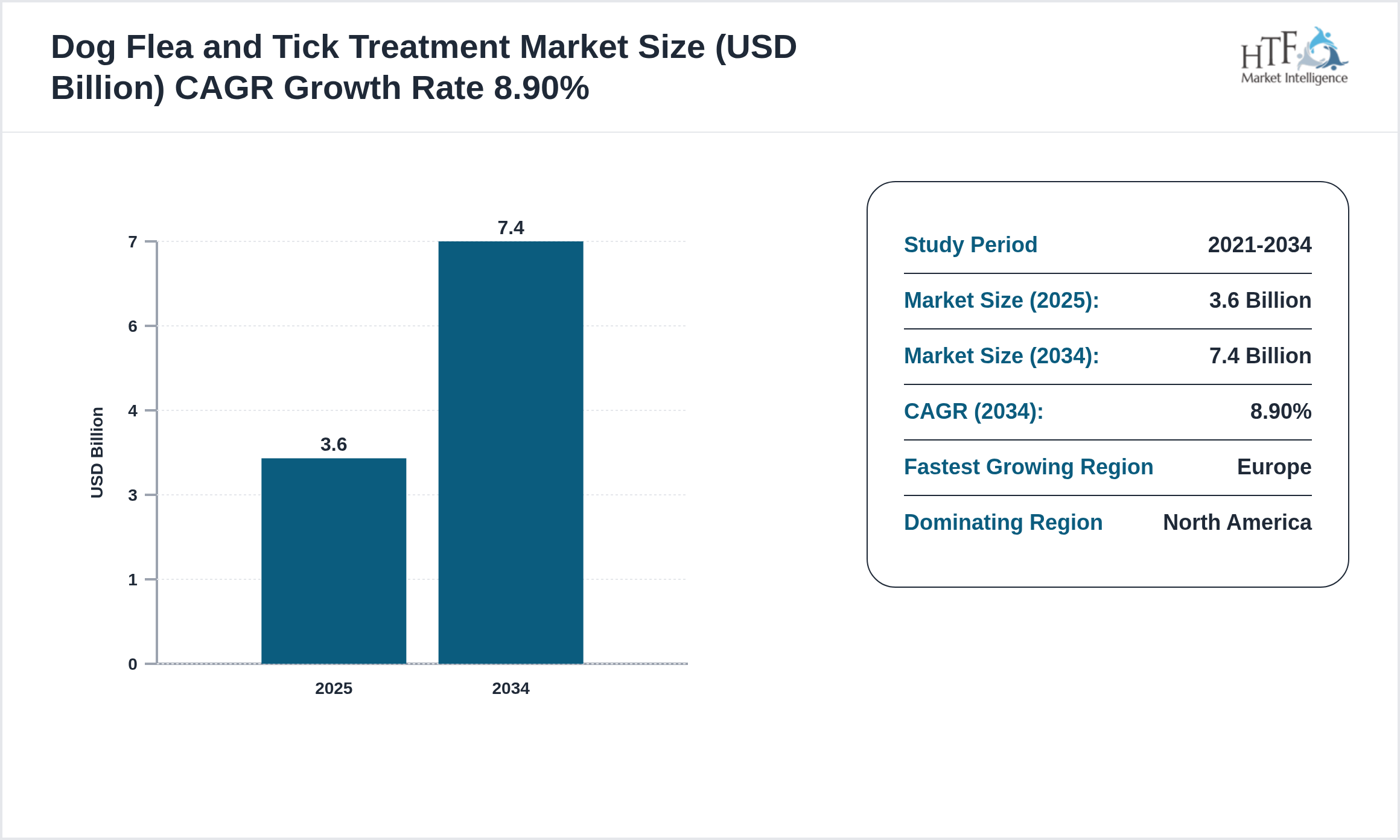
The Dog Flea and Tick Treatment market is witnessing significant growth and is expected to expand at a CAGR of 8.90% during the forecast period from 2025 to 2034. This growth is primarily driven by increasing technological advancements, rising consumer demand, and expanding applications across various industries. Businesses are increasingly adopting innovative solutions to improve operational efficiency, enhance customer experiences, and gain a competitive advantage, further fueling market expansion.
Source: HTF Market Intelligence (HTF MI)
The Global Dog Flea and Tick Treatment Market includes veterinary pharmaceuticals, topical solutions, oral tablets, collars, and sprays designed to prevent and treat ectoparasite infestations in dogs. It covers prescription and over-the-counter products, veterinary distribution, and regulatory compliance while excluding human anti-parasitic treatments. Growth is driven by increasing pet ownership, awareness of zoonotic diseases, and veterinary healthcare expansion. Demand-side dynamics involve efficacy, safety, and application convenience. Supply-side transformation includes advanced formulation technologies, extended-duration products, and global distribution networks. Technological evolution focuses on long-acting systemic treatments, novel active ingredients, and combination therapies targeting multiple parasites
The research study Dog Flea and Tick Treatment Market gives readers information on tactical business choices and strategic planning that affect and stabilize the growth prediction in the Dog Flea and Tick Treatment market. However, a few disruptive trends will have opposite and significant effects on the distribution among players and the growth of the Dog Flea and Tick Treatment market. To give further advice on why certain developments in the Dog Flea and Tick Treatment market would have a significant impact and specifically why these trends can be taken into account when determining the market's trajectory and industry participants' strategic plans.
Key Highlights
• The Dog Flea and Tick Treatment is growing at a CAGR of 8.90% during the forecasted period of 2025 to 2034
• Year-on-year growth for the market is 7.60%.
• North America dominated the market share in 2025
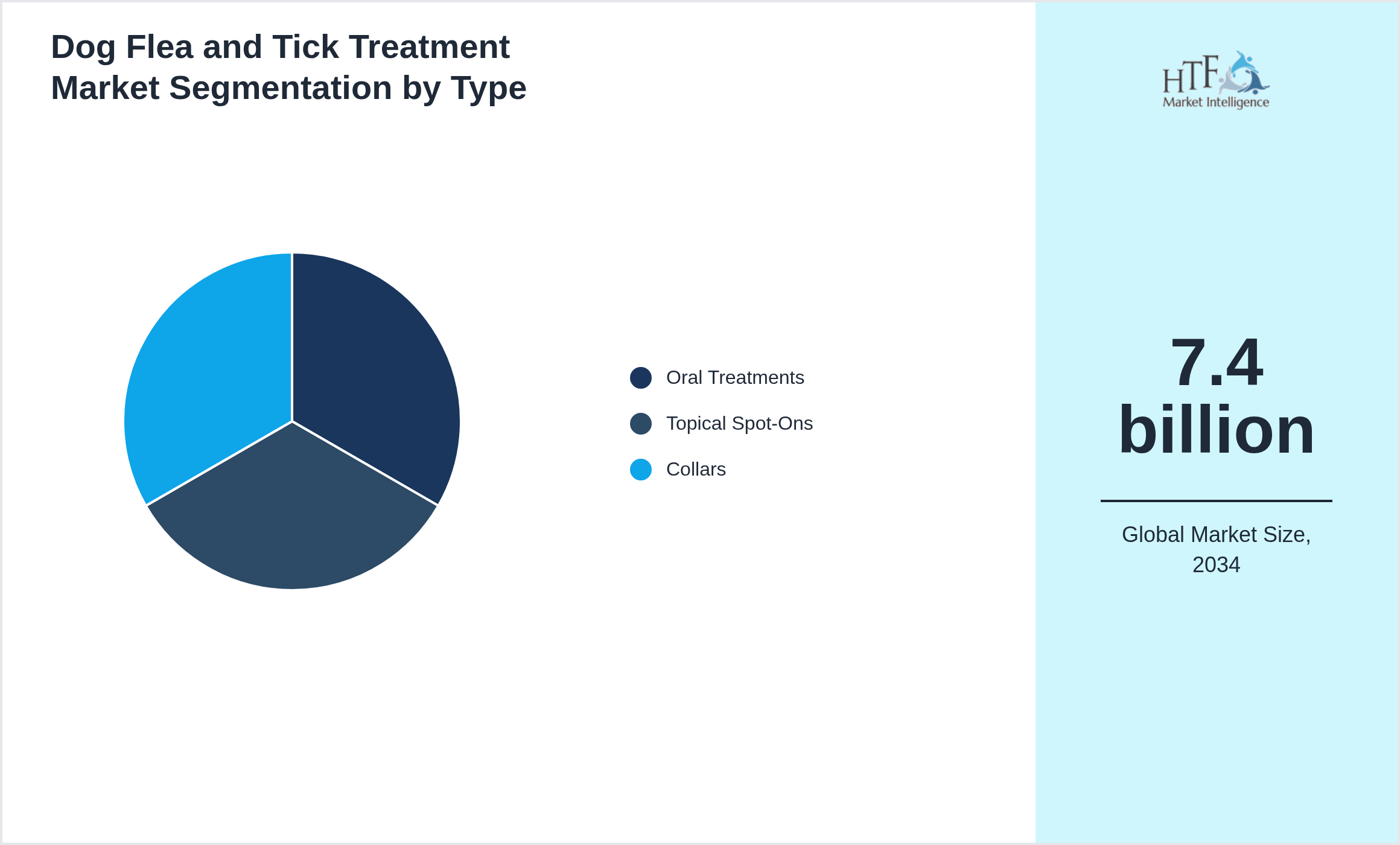
• Based on type, the market is bifurcated into the Oral Treatments, Topical Spot‑Ons, Collars segment, which dominated the market share during the forecasted period
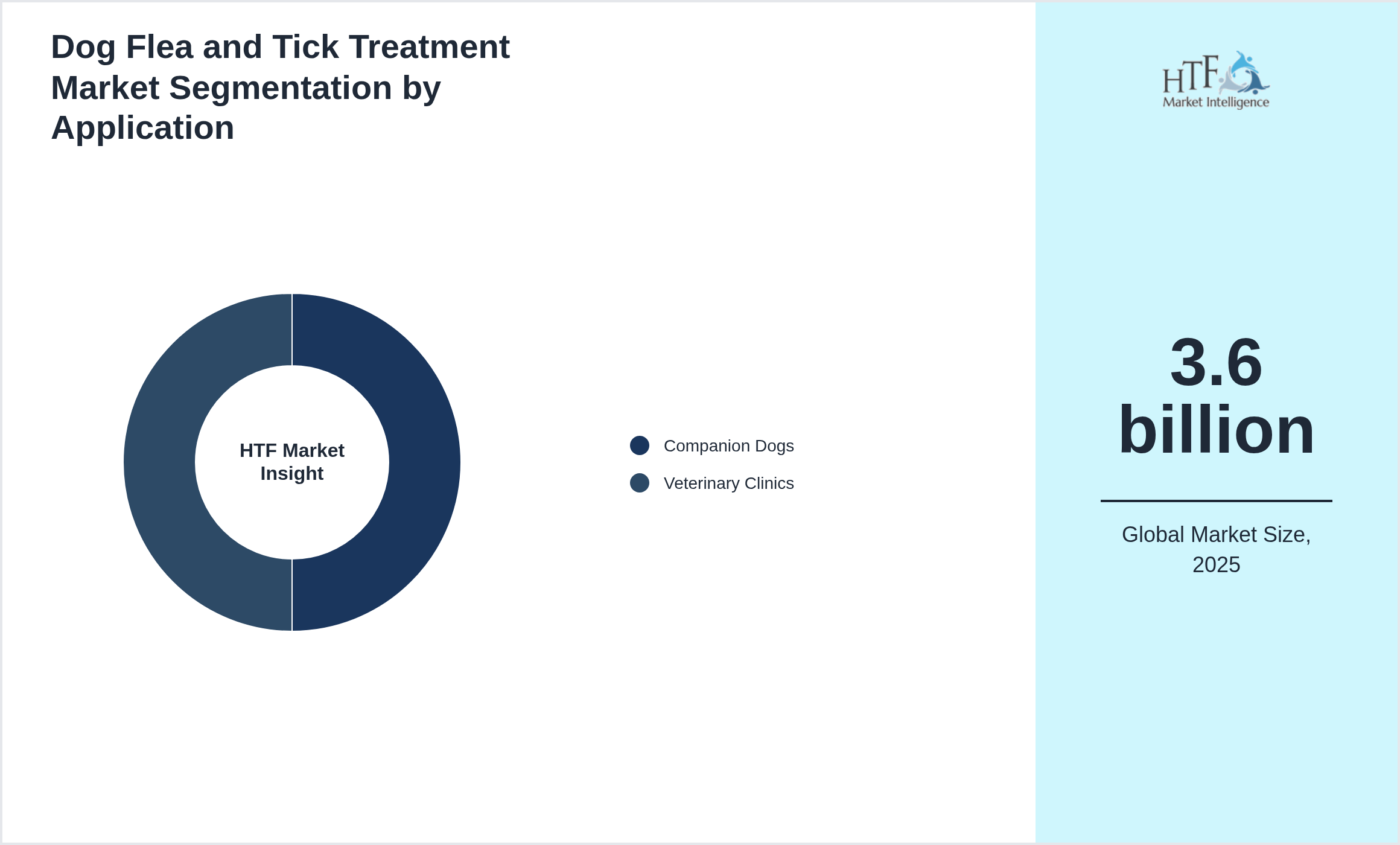
• Based on application, the market is segmented into Application Companion Dogs, Veterinary Clinics as the fastest-growing segment.
• North America, LATAM, West Europe, Central & Eastern Europe, Northern Europe, Southern Europe, East Asia, Southeast Asia, South Asia, Central Asia, Oceania, MEA import/export in terms of K tons, K units, and metric tons will be provided if applicable, based on industry best practices.
Market Dynamics Highlighted
What Growth Drivers are Powering Demand in the Dog Flea and Tick Treatment Market?
- • The market is driven by rising pet ownership increased awareness of pet health and growing veterinary care expenditure. Concerns over zoonotic diseases and prevention of parasite-borne illnesses boost demand for effective flea and tick treatments. Rising disposable income urbanization and humanization of pets encourage owners to invest in premium and convenient preventive products. Advancements in active ingredients topical applications oral treatments and long-lasting formulations further accelerate growth. Increasing availability through e-commerce and retail channels enhances accessibility worldwide.
- • Trends indicate a shift toward oral chewables spot-on treatments and eco-friendly natural formulations. Integration of veterinary telemedicine for prescription guidance and subscription-based delivery models are emerging. Combination products targeting multiple parasites and age groups are increasingly adopted. Personalized dosing based on pet size breed and lifestyle is gaining popularity. Enhanced focus on safety minimal side effects and veterinary endorsements is shaping purchasing behavior.
Why does the Dog Flea and Tick Treatment Market Face Growth Challenges?
Dog Flea and Tick Treatment Market Segment Highlighted
Segmentation by Type
- • Oral Treatments
- • Topical Spot‑Ons
- • Collars
Segmentation by Application
- • Companion Dogs
- • Veterinary Clinics
Key Players
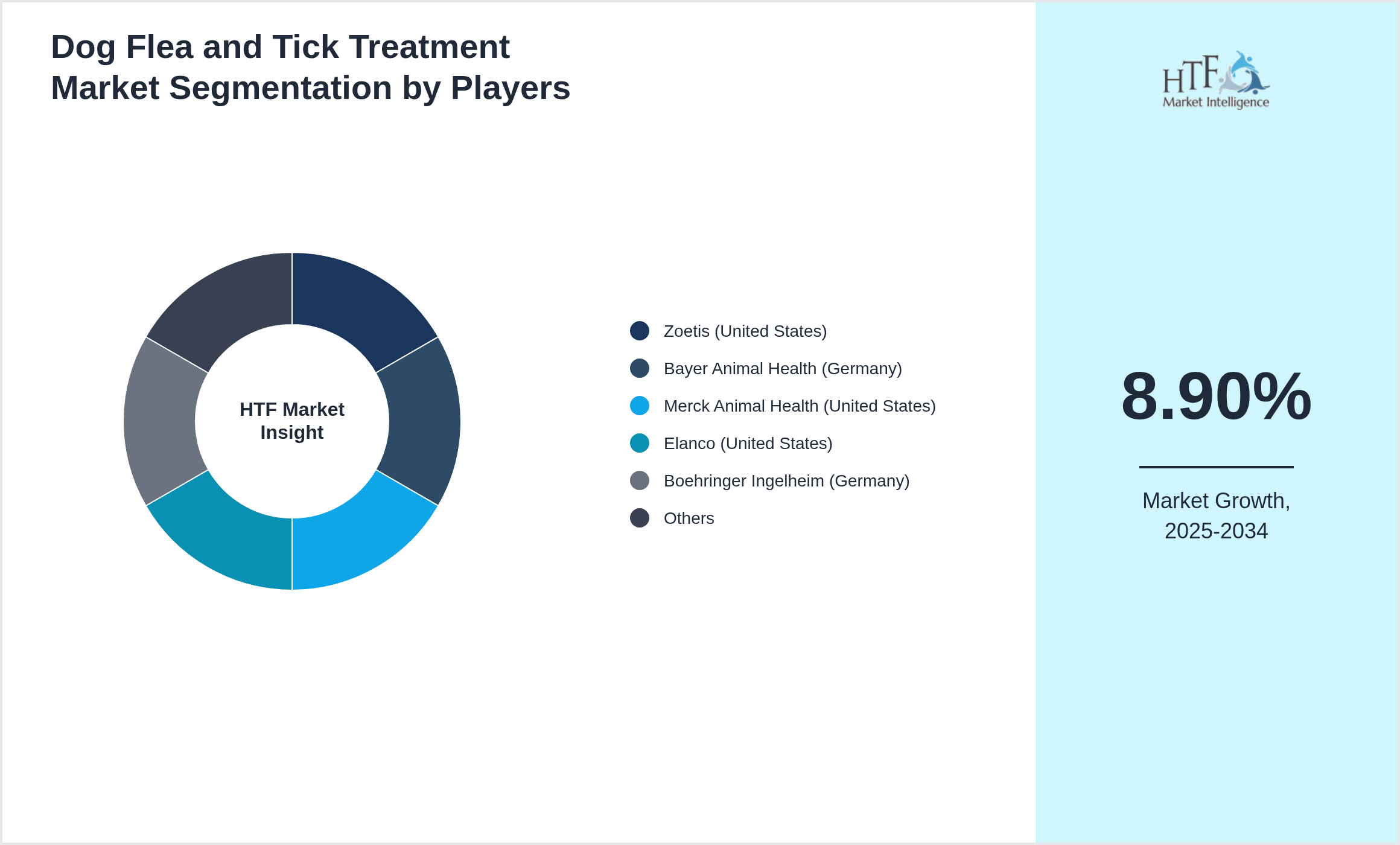
The companies featured in this profile were selected based on insights from primary experts, evaluating their market penetration, product offerings, and geographical reach. By targeting emerging markets, these companies aim to leverage new opportunities, enhance their competitive advantage, and drive revenue growth. This approach not only aligns with their overall business objectives but also positions them to respond effectively to the evolving demands of consumers in these regions. Several key players in the Dog Flea and Tick Treatment market are strategically focusing on expanding their operations in developing regions to capture a larger market share, particularly as the year-on-year growth rate for the market stands at 7.60%.
- • Zoetis (United States)
- • Bayer Animal Health (Germany)
- • Merck Animal Health (United States)
- • Elanco (United States)
- • Boehringer Ingelheim (Germany)
- • Virbac (France)
- • Dechra Pharmaceuticals (United Kingdom)
- • Ceva (France)
- • Vetoquinol (France)
- • Novartis (Switzerland)
- • PetArmor (United States)
- • Adams (United States)
- • Frontline (United States)
- • Seresto (United States)
- • NexGard (United States)
Regional Insight
The North America dominant region currently dominates the market share, fueled by increasing consumption, population growth, and sustained economic progress, which collectively enhance market demand. Conversely, the Europe is growing rapidly, driven by significant infrastructure investments, industrial expansion, and rising consumer demand.
- North America
- LATAM
- West Europe
- Central & Eastern Europe
- Northern Europe
- Southern Europe
- East Asia
- Southeast Asia
- South Asia
- Central Asia
- Oceania
- MEA
- • North America dominates due to high pet ownership veterinary service penetration and consumer awareness of animal health solutions
- • Europe shows strong demand in Germany France and the UK with regulated veterinary markets and increasing preventive care adoption
- • Asia-Pacific is growing rapidly especially in China Japan and Australia with rising pet adoption and urban veterinary services expansion
- • Global market growth is supported by innovation in oral topical and long-lasting preventive treatment formulations strengthening brand and commercial opportunities
Market Entropy
Merger & Acquisition
- • Feb 2024: Zoetis acquired ParasiteCare Labs to expand flea and tick treatment products globally.
- • Aug 2024: Elanco partnered with VetHealth Systems to integrate broad‑spectrum parasite control.
- • Mar 2025: Bayer Animal Health merged with PetProtect Solutions to strengthen regional veterinary portfolios.
Patent Analysis
- • Dog Flea and Tick Treatment companies actively pursue patents for long-duration parasitic control formulations oral chewable delivery systems bio-based repellents controlled-release topical treatments and veterinary diagnostic technologies designed to improve pet safety and treatment effectiveness. Trademark registrations are widely used to establish consumer trust for veterinary healthcare brands natural treatment lines and preventive pet wellness solutions across retail and e-commerce channels. Copyright protection increasingly covers digital veterinary guidance platforms pet care educational content AI-driven treatment recommendation applications and online subscription-based pet healthcare ecosystems. Industry participants also secure intellectual property rights related to smart pet monitoring devices and personalized parasite management programs integrated with connected wearable technologies. Regulatory compliance and anti-counterfeit packaging innovations further drive trademark and patent activity within the segment
Investment and Funding Scenario
- • Dog flea and tick treatment markets have seen venture funding for novel topical and systemic products acquisitions by major pet care companies to expand portfolio offerings commercial loans to scale contract manufacturing and seed funding for biotech startups developing safer long‑duration treatments
Report Infographics
| Report Features | Details |
| Base Year | 2025 |
| Based Year Market Size (2025) | 3.6 billion |
| Historical Period | 2021 to 2025 |
| CAGR (2025 to 2034) | 8.90% |
| Forecast Period | 2026 to 2034 |
| Forecasted Period Market Size (2034) | 7.4 billion |
| Scope of the Report |
By Type, By Application, By Region |
| Companies Covered | Zoetis (United States), Bayer Animal Health (Germany), Merck Animal Health (United States), Elanco (United States), Boehringer Ingelheim (Germany), Virbac (France), Dechra Pharmaceuticals (United Kingdom), Ceva (France), Vetoquinol (France), Novartis (Switzerland), PetArmor (United States), Adams (United States), Frontline (United States), Seresto (United States), NexGard (United States) |
| Customization Scope | 15% Free Customization
Want to Buy Specific Sections of This Report?
|
| Delivery Format | PDF and Excel through Email |
The Top-Down and Bottom-Up Approaches
The top-down approach begins with a broad theory or hypothesis and breaks it down into specific components for testing. This structured, deductive process involves developing a theory, creating hypotheses, collecting and analyzing data, and drawing conclusions for Dog Flea and Tick Treatment Market. It is particularly useful when there is substantial theoretical knowledge, but it can be rigid and may overlook new phenomena developing in Dog Flea and Tick Treatment Industry.
Conversely, the bottom-up approach starts with specific data or observations, from which broader generalizations and theories were developed in Dog Flea and Tick Treatment Industry. This inductive process involves collecting detailed data, analyzing it for patterns, developing hypotheses, formulating theories, and validating them with additional data identified for Dog Flea and Tick Treatment Market. While this approach is flexible and encourages the discovery of new phenomena, it can be time-consuming and less structured.
Regulatory Framework
The healthcare sector is overseen by various regulatory bodies that ensure the safety, quality, and efficacy of health services and products. In the United States, the U.S. Department of Health and Human Services (HHS) plays a crucial role in protecting public health and providing essential human services. Within HHS, the Food and Drug Administration (FDA) regulates food, drugs, and medical devices, ensuring they meet safety and efficacy standards. The Centers for Disease Control and Prevention (CDC) focuses on disease control and prevention, conducting research, and providing health information to protect public health.
Multidisciplinary researcher with 10+ years of experience uncovering insights across diverse domains focused on uncovering insights that drive informed decisions.