
Published: Oct 10, 2025
•ID: 4327462
•101 PagesAI in
Energy
Global AI in Energy Market Roadmap to 2030
Global AI in Energy Market is segmented by Application (Energy Management, Grid Optimization, Forecasting), Type (Software/Hardware), and Geography (North America, LATAM, West Europe, Central & Eastern Europe, Northern Europe, Southern Europe, East Asia, Southeast Asia, South Asia, Central Asia, Oceania, MEA)
Report ID:
HTF4327462
Published:
CAGR:
25%
Market Size (2023):
$8.0 Billion
Forecast (2030):
$35 Billion
Pricing
Report Overview
AI in Energy Industry Overview
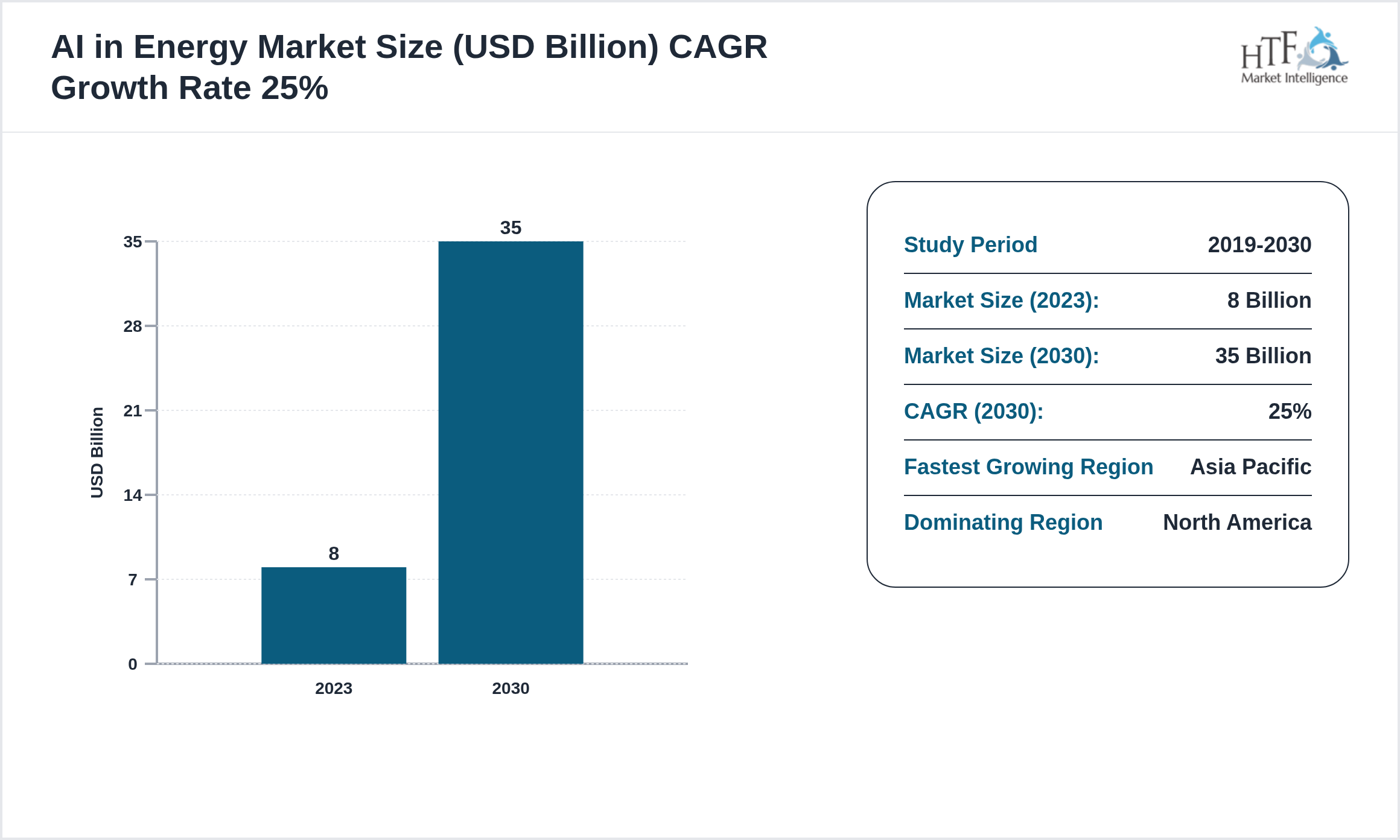
The AI in Energy market was valued at 8.0 Billion in 2023 and is expected to reach 35 Billion by 2019, growing at a compound annual growth rate (CAGR) of 25% over the forecast period.
AI in energy refers to the use of AI technologies to optimize energy production, distribution, and consumption. It includes predictive maintenance, demand forecasting, grid optimization, and energy efficiency solutions. AI helps reduce costs, improve sustainability, and ensure efficient energy management.
Source: HTF Market Intelligence (HTF MI)
Key Highlights of the AI in Energy
• The AI in Energy is growing at a CAGR of 25% during the forecasted period of 2023 to 2030
• Year-on-year growth for the market is N/A.
• North America dominated the market share of 8.0 Billion% in 2023
• Based on type, the market is bifurcated into Software/Hardware segments that dominated the market share during the forecasted period
• Based on application, the market is segmented into Application Energy Management, Grid Optimization, Forecasting as the fastest-growing segment
• AI in Energy import/export in terms of K tons, K units, and metric tons will be provided if applicable, based on industry best practices.
Market Entropy
Marger & Acquisition
Regulatory Landscape
Patent Analysis
Need More Details on Market Players and Competitors?
Investment Funding
Regional Analysis
Competitive Innovation Radar
Dynamics Overview
The market dynamics are influenced by a complex interplay of factors that drive and shape industry behavior. Key elements include supply and demand dynamics, where shifts in consumer preferences or production capabilities impact pricing and market stability. Competitive forces play a crucial role, with companies adjusting their strategies based on competitor actions, pricing, and innovation. Economic conditions like inflation rates, currency fluctuations, and overall economic growth also affect market performance and consumer purchasing power.
Additionally, technological advancements introduce new products and services, disrupting existing market structures and creating growth opportunities. Regulatory changes and policies can alter market dynamics by influencing operational practices and market entry. Understanding these market dynamics requires continuous monitoring and analysis to anticipate trends, identify opportunities, and develop strategies that align with evolving market conditions. Effective management of these dynamics is essential for maintaining competitive advantage and achieving business success.
Influencing Trend:
- • AI-powered energy storage
- • predictive maintenance
- • machine learning for demand forecasting
- • real-time optimization
- • High initial investment
- • cybersecurity concerns
- • integration with legacy systems
- • Investment in smart grid technologies
- • AI in energy efficiency
- • energy storage optimization
- • High initial investment
- • cybersecurity concerns
- • integration with legacy systems
Need More Details on Market Players and Competitors?
Key Players
Several key players in the AI in Energy market are strategically focusing on expanding their operations in developing regions to capture a larger market share, particularly as the year-on-year growth rate for the market stands at N/A. The companies featured in this profile were selected based on insights from primary experts, evaluating their market penetration, product offerings, and geographical reach. By targeting emerging markets, these companies aim to leverage new opportunities, enhance their competitive advantage, and drive revenue growth. This approach not only aligns with their overall business objectives but also positions them to respond effectively to the evolving demands of consumers in these regions.
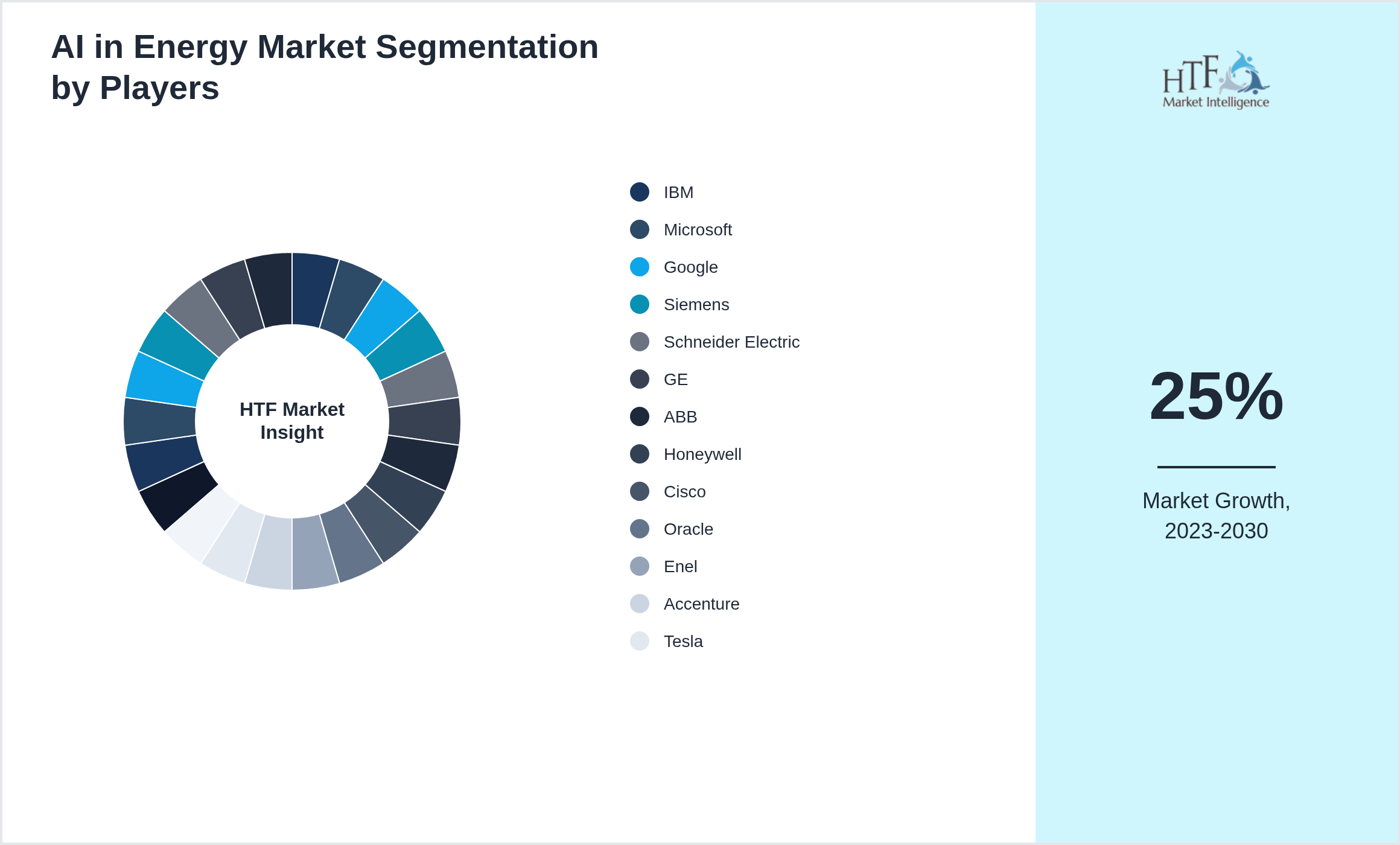
This report also splits the market by players:
- • IBM
- • Microsoft
- • Siemens
- • Schneider Electric
- • GE
- • ABB
- • Honeywell
- • Cisco
- • Oracle
- • Enel
- • Accenture
- • Tesla
- • EnergyHub
- • NextEra Energy
- • Hitachi
- • Intel
- • First Solar
- • AES
- • SolarEdge
- • Cisco
- • etc.
Regional Insight
The Asia Pacific is the fastest-growing region, fueled by a rapidly increasing population and expanding economic sectors. Factors such as urbanization, improved infrastructure, and government support for industrial development are key drivers. Additionally, the region's young workforce and rising consumer demand are accelerating growth. In contrast, North America remains the dominant region, leading the market with well-established industries, technological advancements, and a strong global foothold.
- North America
- LATAM
- West Europe
- Central & Eastern Europe
- Northern Europe
- Southern Europe
- East Asia
- Southeast Asia
- South Asia
- Central Asia
- Oceania
- MEA
Loading map...
Market Segmentation Overview
Segmentation by Type
- • Software/Hardware
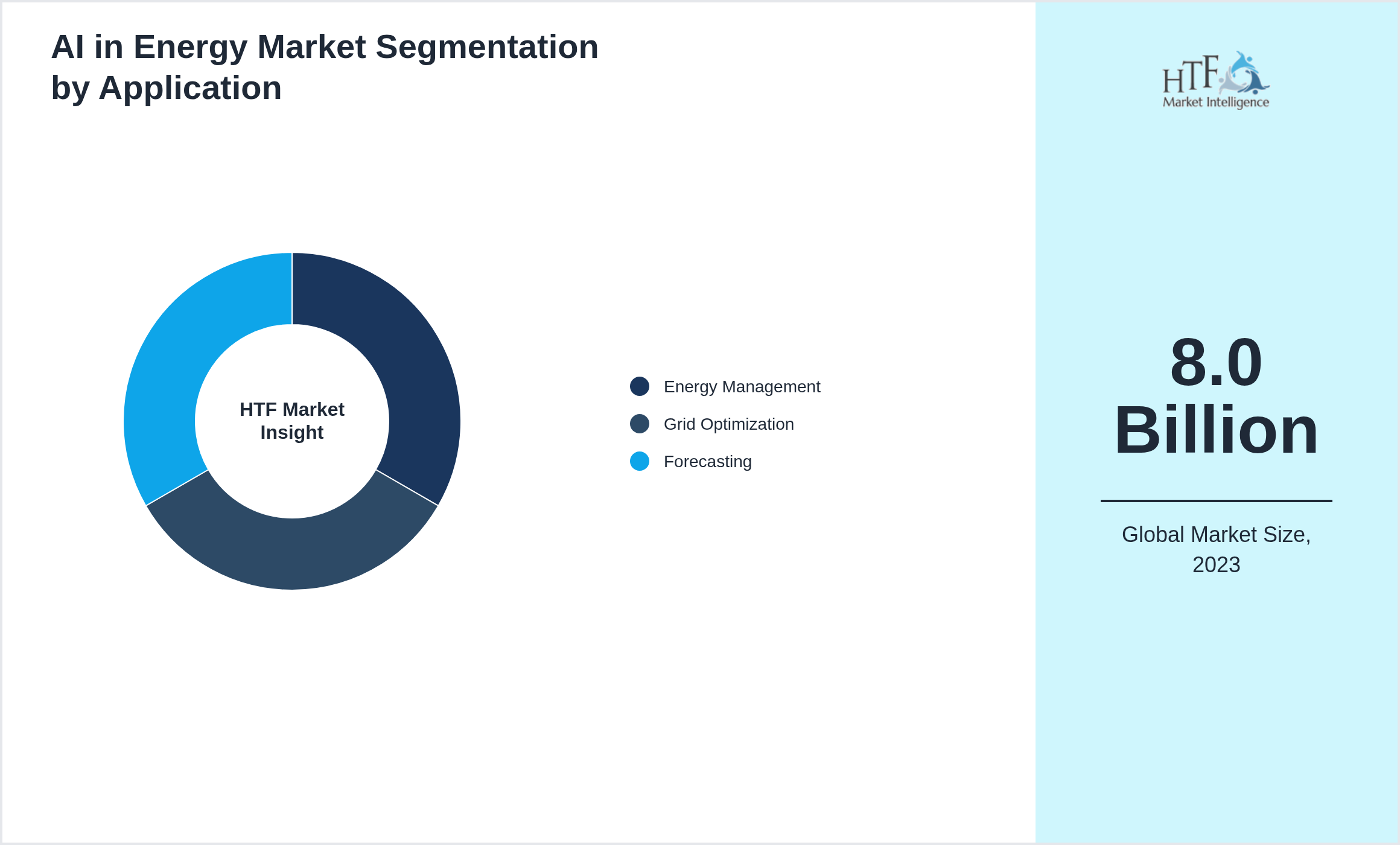
Segmentation by Application
- • Energy Management
- • Grid Optimization
- • Forecasting
Report Infographics:}">
| Report Features | Details |
| Base Year | 2023 |
| Based Year Market Size 2023 | 8.0 Billion |
| Historical Period | 2019 |
| CAGR (2023 to 2030) | 25% |
| Forecast Period | 2030 |
| Forecasted Period Market Size (2030) | 35 Billion |
| Scope of the Report | By Type, By Application, By Sales Channel, By Region |
| Quantitative Units |
Revenue in USD million/billion, volume in kilotons, and CAGR from 2023 to 2030 |
| Companies Covered | IBM, Microsoft, Google, Siemens, Schneider Electric, GE, ABB, Honeywell, Cisco, Oracle, Enel, Accenture, Tesla, EnergyHub, NextEra Energy, Hitachi, Intel, First Solar, AES, SolarEdge, Cisco, etc. |
| Customization Scope | 15% Free Customization (For example)
Want to Buy Specific Sections of This Report?
|
| Delivery Format | PDF and Excel through Email |
Consumer Behavior Analysis
Conduct consumer behavior analysis by examining the factors that influence purchasing decisions. The data starts by collecting data from surveys, focus groups, social media, and transactional records to understand consumer preferences and buying patterns. Then segment consumers based on behaviors such as purchase frequency and brand loyalty, allowing us to tailor strategies for different groups.
The psychographic analysis delves into consumers' attitudes, values, and lifestyles to gain deeper insights into their motivations. Also, tracks emerging trends to anticipate shifts in consumer behavior and uses predictive modeling to forecast future preferences. This comprehensive approach enables the providing of actionable insights that help businesses better understand their customers, optimize marketing efforts, and enhance product development.
Import and Export Data
The data is collected, imported, and exported through a comprehensive approach that ensures accuracy and depth. We source information from government databases, which provide official trade statistics and customs data, as well as industry reports and trade journals for detailed market insights. Company filings and financial disclosures also contribute valuable data on import and export activities. To aggregate and normalize this data to maintain consistency and accuracy. To ensure reliability, cross-verify information across multiple sources and analyze trends to understand market dynamics. The key findings are compiled into detailed reports that offer insights into trade volumes, key markets, and emerging trends, accompanied by actionable recommendations. This thorough process allows for the delivery of precise and valuable trade data that supports strategic decision-making for the clients.
Research Methodology
The research delivers comprehensive market insights that combine both secondary and primary methodologies. The secondary research involves rigorous analysis of existing data sources, such as industry reports, market databases, and competitive landscapes, to provide a robust foundation of market knowledge. This is complemented by our primary research services, where we gather firsthand data through surveys, interviews, and focus groups tailored specifically to your business needs. Integrating these approaches offers a thorough understanding of market trends, consumer behavior, and competitive dynamics, enabling you to make well-informed strategic decisions.