
Corporate Energy Buyers Market - Global Industry Size & Growth Analysis 2020-2033
Global Corporate Energy Buyers Market is segmented by Application (Large Enterprises, Industrial Facilities, Commercial Buildings, Manufacturing Plants, Retail Chains), Type (Direct Power Purchase Agreements, Renewable PPAs, Energy Management Services, Demand Response Services, Virtual Power Purchasing), and Geography (North America, LATAM, West Europe, Central & Eastern Europe, Northern Europe, Southern Europe, East Asia, Southeast Asia, South Asia, Central Asia, Oceania, MEA)
Pricing
Report Overview
Report Outlook
Corporate energy buyers market involves organizations procuring energy directly from utilities, energy service companies, or via renewable energy power purchase agreements (PPAs). These buyers aim to optimize energy costs, meet sustainability goals, and secure reliable power supply. The market is growing due to corporate commitments to carbon reduction, cost-effective energy solutions, and regulatory support for renewable energy adoption. Energy management services, demand response, and direct procurement strategies are key components.
The Corporate Energy Buyers market is experiencing robust growth, projected to achieve a compound annual growth rate CAGR of 11.20% during the forecast period. Valued at 9.1 billion, the market is expected to reach 19.3 billion by 2033, with a year-on-year growth rate of 8.90%.
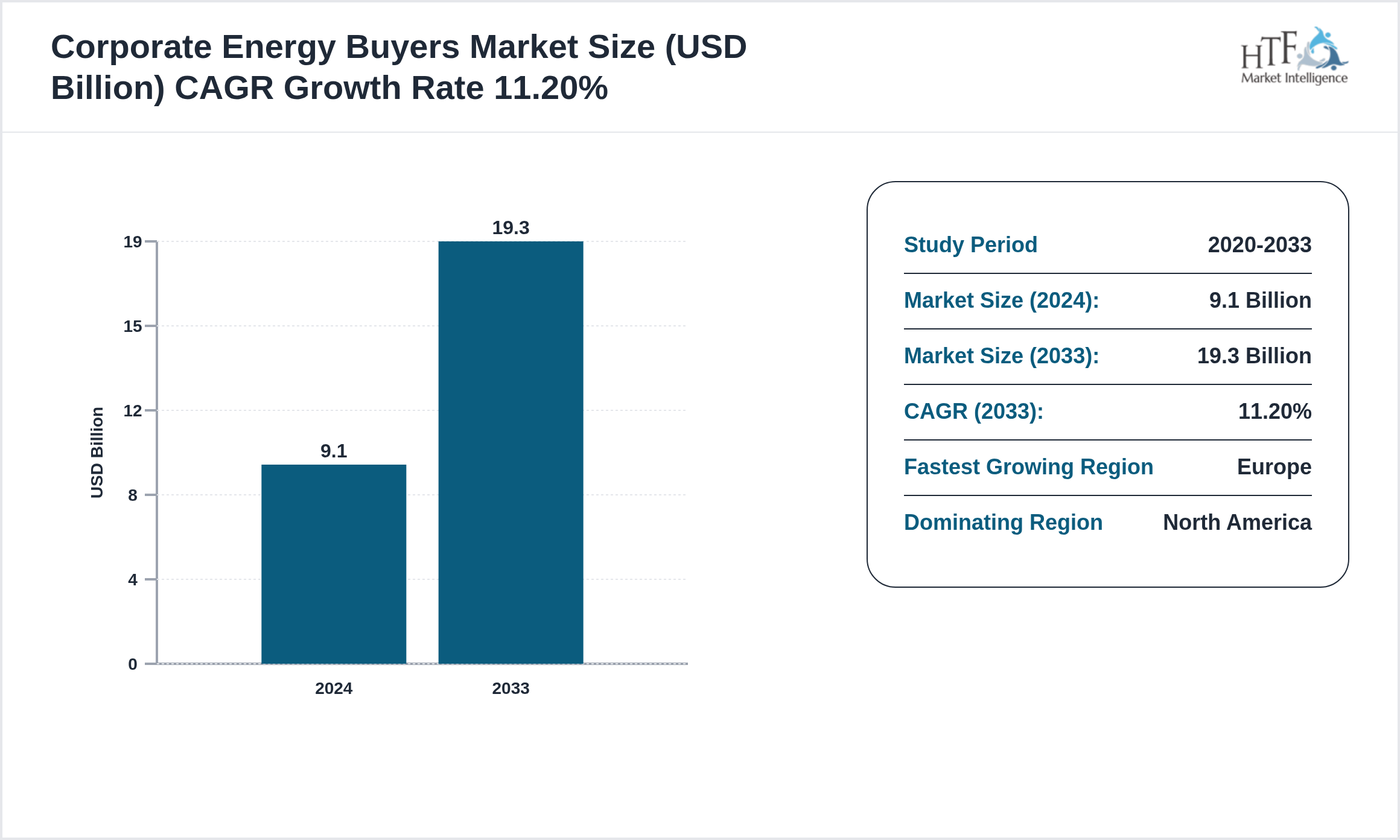
This Corporate Energy Buyers market research report provides a thorough analysis of the Corporate Energy Buyers, offering a detailed examination of key trends, drivers, and challenges shaping the industry. The Corporate Energy Buyers report begins with an overview of the market's current landscape, including size, growth potential, and competitive dynamics.
For the complete company list, please ask for sample pages.
Competitive landscape
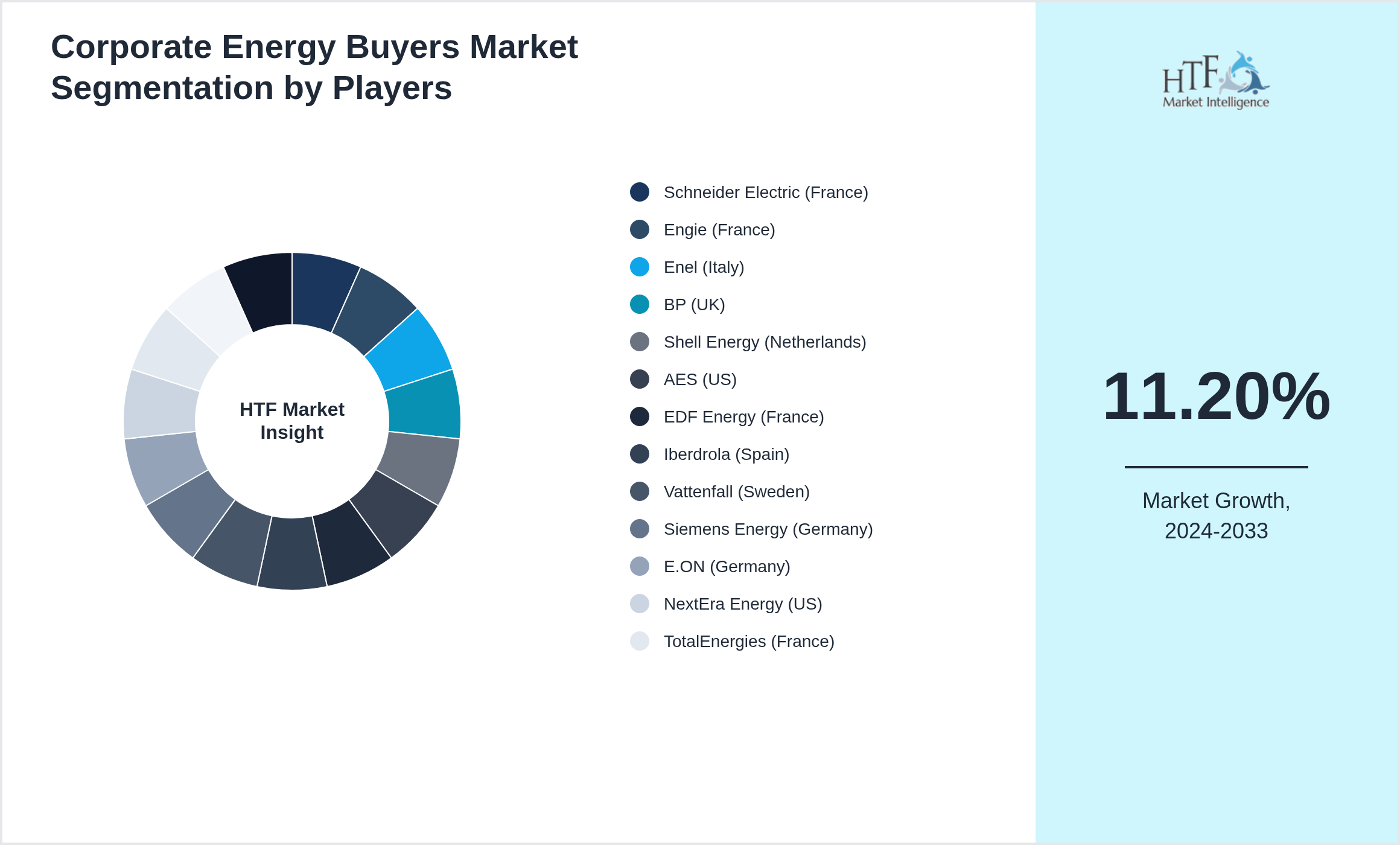
The key players in the Corporate Energy Buyers are intensifying their focus on research and development (R&D) activities to innovate and stay competitive. Major companies, such as
- • Schneider Electric (France)
- • Engie (France)
- • Enel (Italy)
- • BP (UK)
- • Shell Energy (Netherlands)
- • AES (US)
- • EDF Energy (France)
- • Iberdrola (Spain)
- • Vattenfall (Sweden)
- • Siemens Energy (Germany)
- • E.ON (Germany)
- • NextEra Energy (US)
- • TotalEnergies (France)
- • Duke Energy (US)
- • Dominion Energy (US)
- • Schneider Electric (France)
- • Engie (France)
- • Enel (Italy)
- • BP (UK)
- • Shell Energy (Netherlands)
- • AES (US)
- • EDF Energy (France)
- • Iberdrola (Spain)
- • Vattenfall (Sweden)
- • Siemens Energy (Germany)
- • E.ON (Germany)
- • NextEra Energy (US)
- • TotalEnergies (France)
- • Duke Energy (US)
- • Dominion Energy (US)
Regional Insight
The North America leads the market share, largely due to rising consumption, a growing population, and strong economic momentum that boosts demand. In contrast, the Europe is emerging as the fastest-growing area, driven by rapid infrastructure development, the expansion of industrial sectors, and heightened consumer demand, making it a critical factor for future market growth.
Download the full report to explore critical industry dynamics:
The Corporate Energy Buyers report also splits the market by region:
- North America
- LATAM
- West Europe
- Central & Eastern Europe
- Northern Europe
- Southern Europe
- East Asia
- Southeast Asia
- South Asia
- Central Asia
- Oceania
- MEA
Market Segmentation Overview
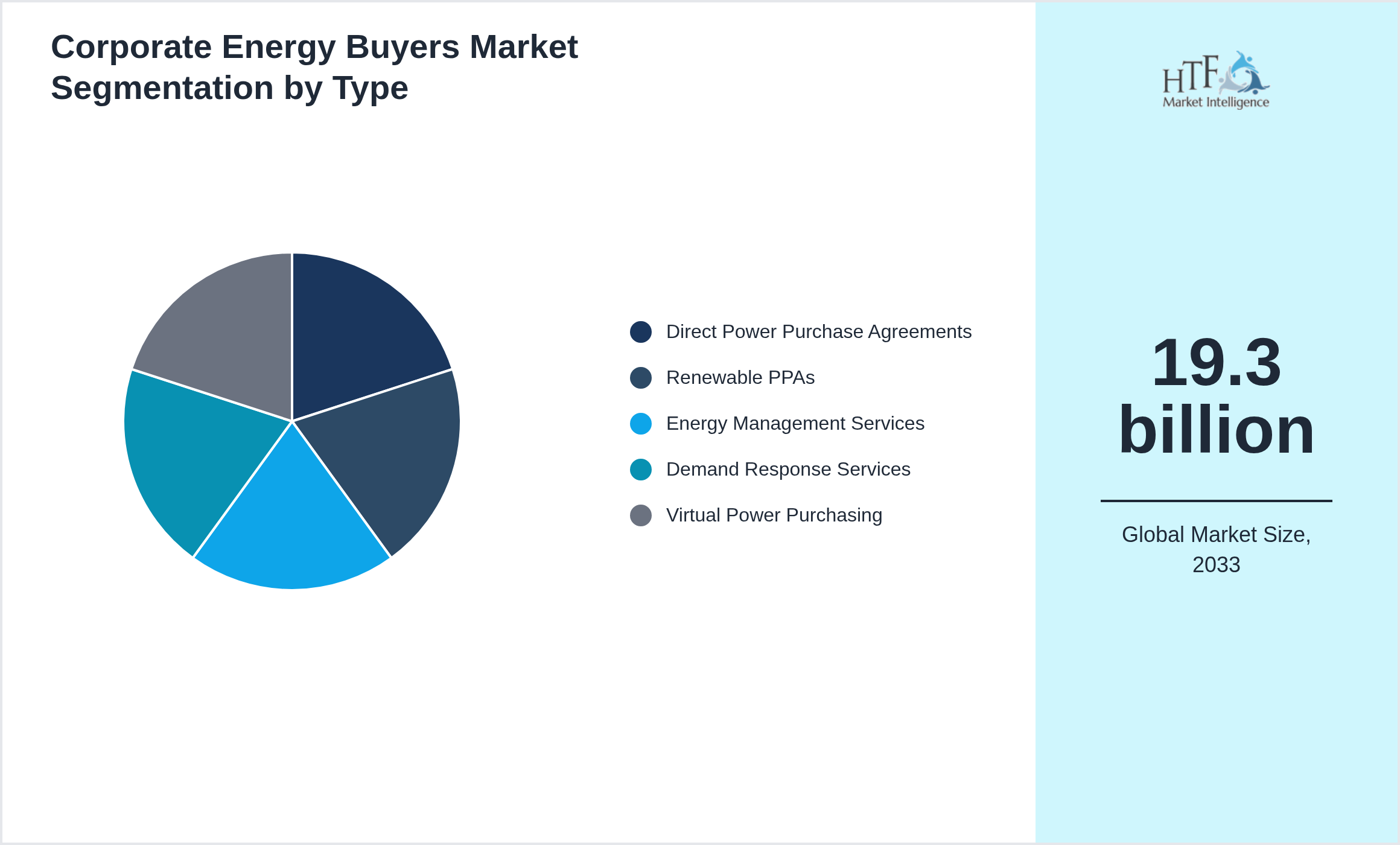
Segmentation by Type
- • Direct Power Purchase Agreements
- • Renewable PPAs
- • Energy Management Services
- • Demand Response Services
- • Virtual Power Purchasing
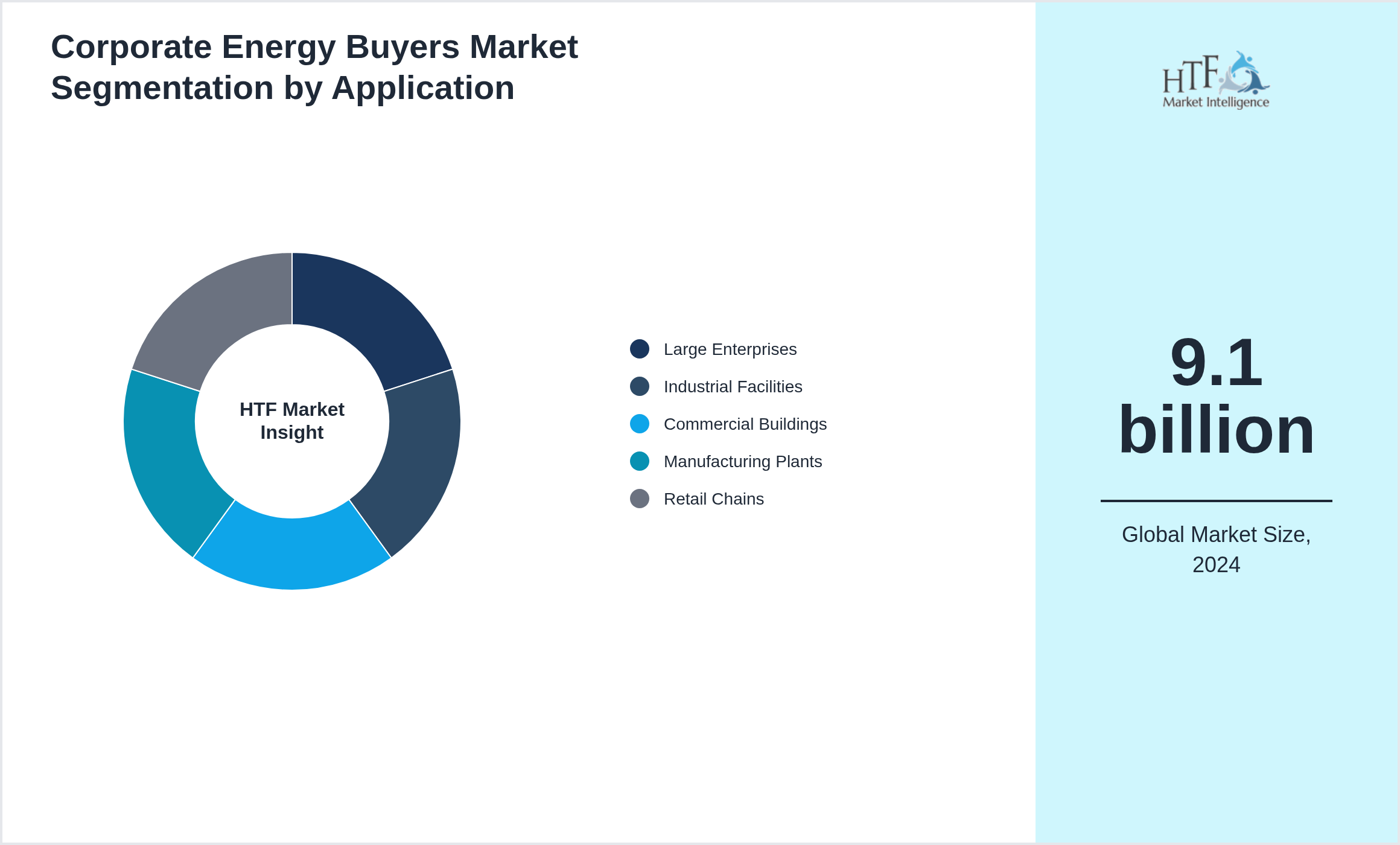
Segmentation by Application
- • Large Enterprises
- • Industrial Facilities
- • Commercial Buildings
- • Manufacturing Plants
- • Retail Chains
Corporate Energy Buyers Market Dynamics
Influencing Trend:
Market Growth Drivers:
Challenges:
Opportunities:
Research Methodology
The research methodology for this involves several key steps to ensure comprehensive and accurate insights. First, the objectives of the research are clearly defined, focusing on aspects such as market size, growth trends, and competitive dynamics. Data collection is conducted through both primary and secondary methods. Primary research includes interviews with industry experts, surveys, and focus groups to gather first-hand information, while secondary research involves analyzing existing reports, government publications, and company filings.
The collected data is then subjected to rigorous analysis, with quantitative methods used to evaluate market size and trends and qualitative methods applied to understand industry dynamics and consumer behavior. Findings are compiled into a detailed report featuring key insights, data visualizations, and strategic recommendations. Validation is achieved through data verification and peer reviews to ensure accuracy.
Finally, the research concludes with actionable insights and recommendations, along with suggestions for future studies to address emerging trends and gaps. This methodology provides a structured approach to understanding the {keywords} and guiding strategic decisions.
Corporate Growth Milestones
Merger & Acquisition
Patent Analysis
Investment and Funding Scenario
SWOT Analysis
SWOT analysis in the healthcare industry involves a structured assessment of strengths, weaknesses, opportunities, and threats to identify strategic advantages and areas for improvement.
• Strengths: Evaluates internal factors such as advanced technology, skilled personnel, and a strong brand reputation. For example, a hospital with cutting-edge medical equipment and specialized staff is considered to have a strong competitive edge.
• Weaknesses: Identifies internal limitations like outdated facilities, regulatory compliance issues, or high operational costs. Weaknesses could include inefficient processes or a lack of innovation.
• Opportunities: Assesses external factors that could drive growth, such as emerging medical technologies, expanding markets, or favorable government policies. Opportunities might involve partnerships or new service lines.
• Threats: Examines external challenges such as increasing competition, changing regulations, or economic downturns. Threats might include new entrants with disruptive technologies or stricter regulatory requirements.
Market Highlights
|
Report Features |
Details |
|
Base Year |
2024 |
|
Base-Year Market Size |
9.1 billion |
|
Historical Period |
2020 |
|
CAGR (2024 to 2033) |
11.20% |
|
Forecast Period |
2033 |
|
Forecasted Period Market Size (2033) |
19.3 billion |
|
Scope of the Report |
By Type: Direct Power Purchase Agreements, Renewable PPAs, Energy Management Services, Demand Response Services, Virtual Power Purchasing, By Application: Large Enterprises, Industrial Facilities, Commercial Buildings, Manufacturing Plants, Retail Chains, Sales Channel |
|
Regions Covered |
North America, LATAM, West Europe, Central & Eastern Europe, Northern Europe, Southern Europe, East Asia, Southeast Asia, South Asia, Central Asia, Oceania, MEA |
|
Companies Covered |
Schneider Electric (France), Engie (France), Enel (Italy), BP (UK), Shell Energy (Netherlands), AES (US), EDF Energy (France), Iberdrola (Spain), Vattenfall (Sweden), Siemens Energy (Germany), E.ON (Germany), NextEra Energy (US), TotalEnergies (France), Duke Energy (US), Dominion Energy (US) |
|
Customization Scope |
15% Free Customization (For EG) |
|
Delivery Format |
PDF and Excel through Email |
Report Importance
Understanding the future market is essential for investors and existing businesses to make informed decisions and strategic plans. Market reports that offer forecasts and future trends provide critical insights into potential opportunities and challenges that lie ahead. These reports help investors evaluate the long-term viability of their investments by highlighting projected market growth, emerging trends, and potential risks. For existing businesses, such reports offer valuable information on evolving consumer preferences, technological advancements, and competitive dynamics, enabling them to adapt their strategies and remain competitive. By analyzing future market conditions, companies can make proactive decisions, optimize resource allocation, and identify areas for innovation. Ultimately, such reports serve as a strategic tool for planning, risk management, and capitalizing on new growth opportunities, ensuring informed decision-making and sustained business success.