
Published: Oct 23, 2025
•ID: 4390315
•125 PagesSynthetic Natural
Gas (SNG)
Synthetic Natural Gas (SNG) Market - Global Share, Size & Changing Dynamics 2020-2033
Global Synthetic Natural Gas (SNG) Market is segmented by Application (Power Generation, Industrial Fuel, Residential Gas Supply, Transportation, Chemical Feedstock), Type (Coal-to-SNG, Biomass-to-SNG, Gas-to-SNG, Industrial SNG, Renewable SNG), and Geography (North America, LATAM, West Europe, Central & Eastern Europe, Northern Europe, Southern Europe, East Asia, Southeast Asia, South Asia, Central Asia, Oceania, MEA)
Report ID:
HTF4390315
Published:
CAGR:
11.80%
Market Size (2025):
$5.4 billion
Forecast (2033):
$9.8 billion
Pricing
Report Overview
Synthetic Natural Gas (SNG) Market Overview
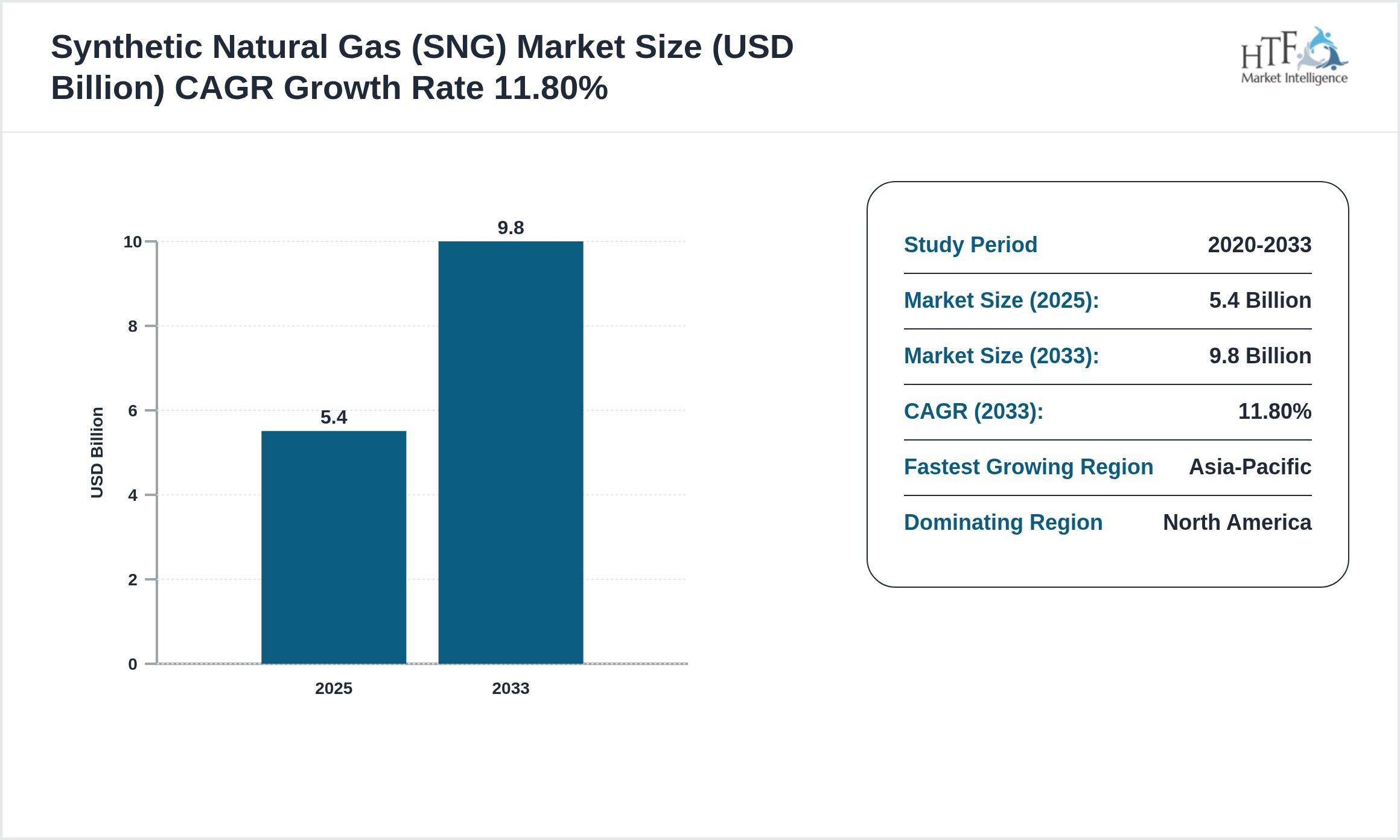
The Synthetic Natural Gas (SNG) is growing at 11.80% and is expected to reach 9.8 billion by 2033. Below are some of the dynamics shaping the Synthetic Natural Gas (SNG).
The synthetic natural gas market involves producing methane from coal, biomass, or other feedstocks. SNG is used for power generation, industrial processes, residential gas supply, and transportation. The market is expanding due to rising demand for cleaner alternatives to conventional natural gas, energy security considerations, and government regulations promoting low-emission fuels.
Key Highlights
· The Synthetic Natural Gas (SNG) is growing at a CAGR of 11.80% during the forecasted period of 2020 to 2033
· Year-on-year growth for the market is {YOY_GROWTH}
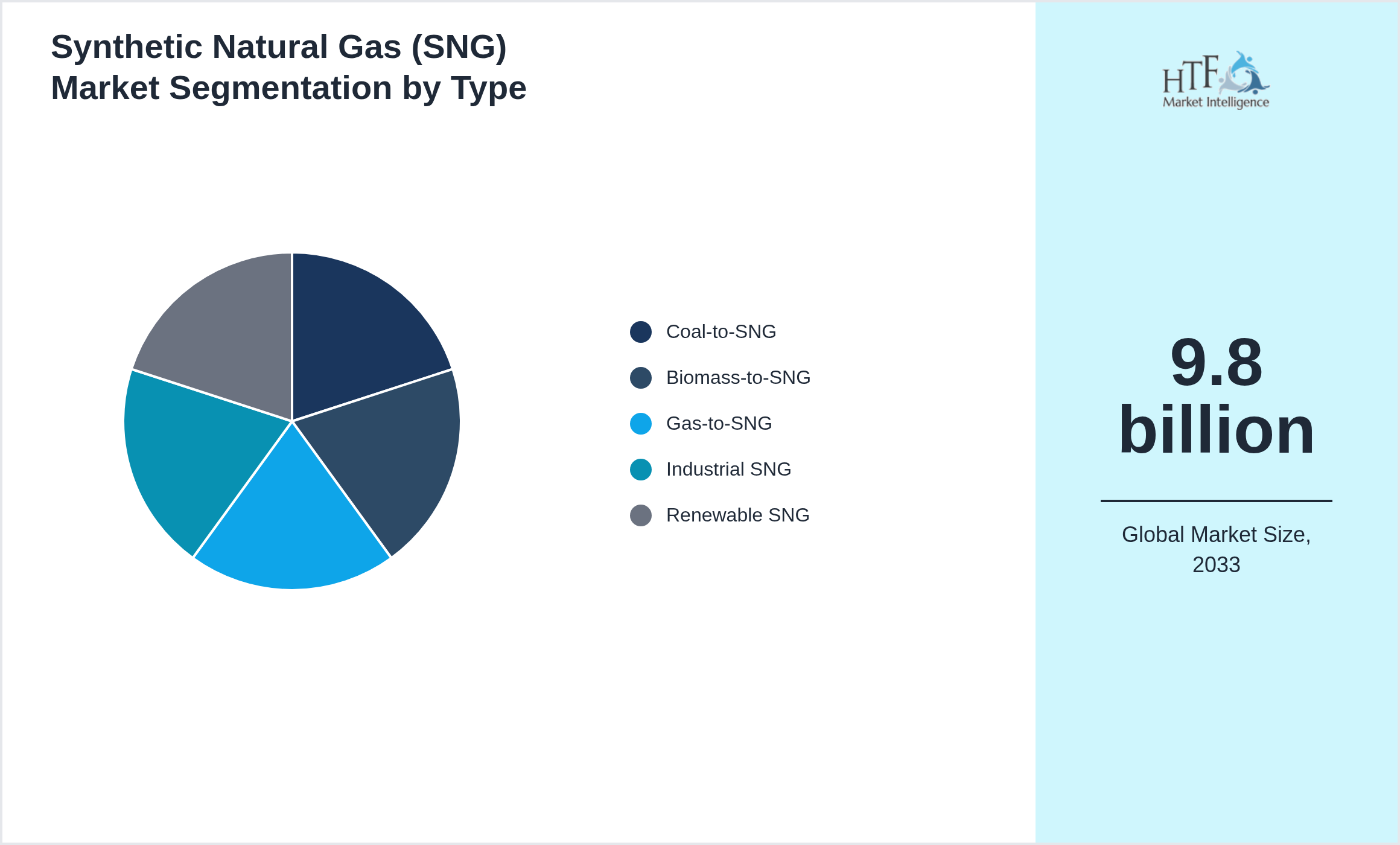
· Based on type, the market is bifurcated into Coal-to-SNG, Biomass-to-SNG, Gas-to-SNG, Industrial SNG, Renewable SNGsegments that dominated the market share during the forecasted period
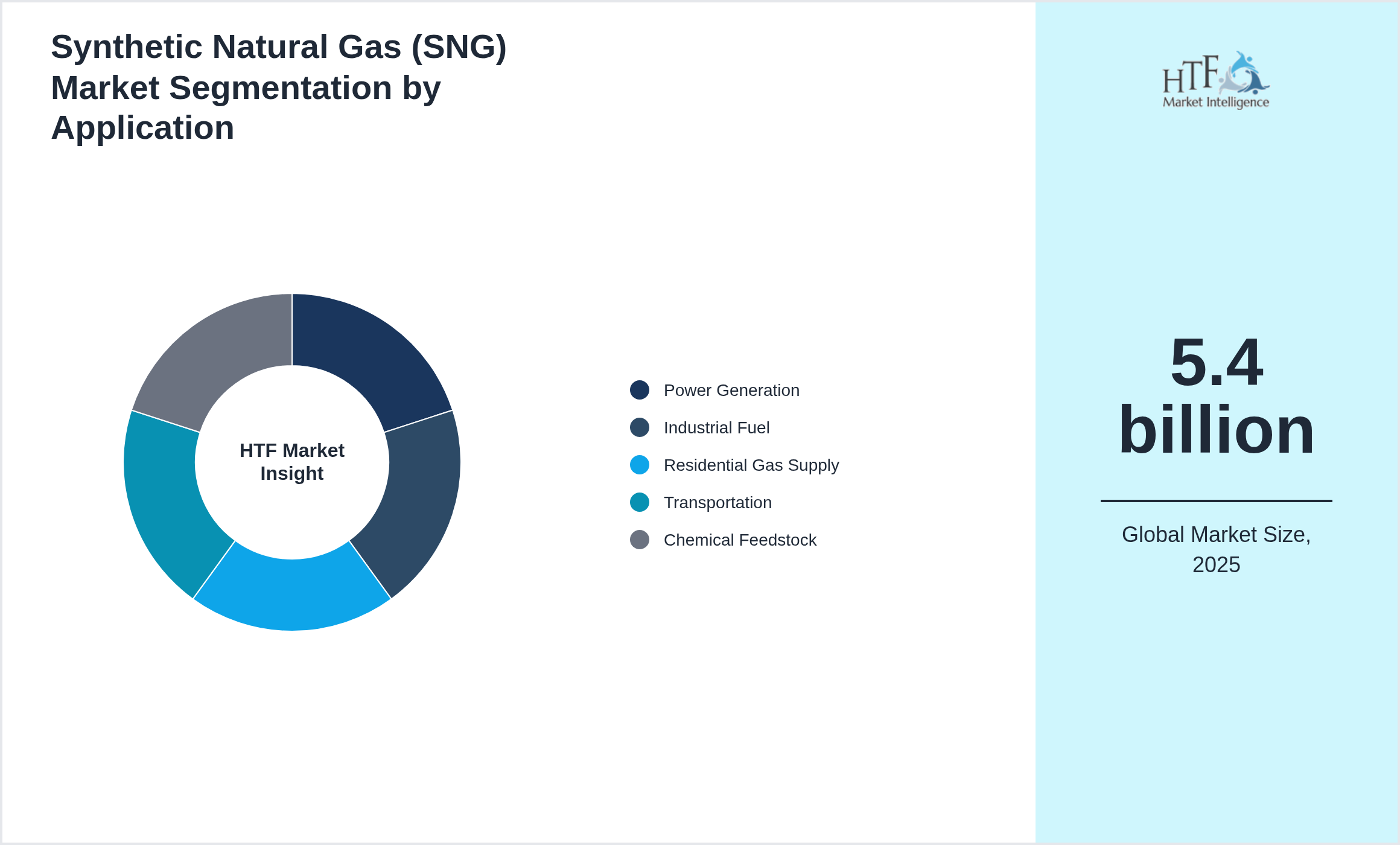
· Based on application, the market is segmented into Power Generation, Industrial Fuel, Residential Gas Supply, Transportation, Chemical Feedstock
· North America, LATAM, West Europe, Central & Eastern Europe, Northern Europe, Southern Europe, East Asia, Southeast Asia, South Asia, Central Asia, Oceania, MEA import/export in terms of K tons, K units, and metric tons will be provided if applicable, based on industry best practices.
Source: HTF Market Intelligence (HTF MI)
The segmentation research also examines different market categories to determine clients' wants. The competitive analysis highlights the advantages and disadvantages of the main rivals. Key facts and insights are presented at the end of the study, followed by conclusions and suggestions that offer doable tactics to direct future company choices.
Schedule a personalized consultation with our industry analysts
Need More Details on Market Players and Competitors?
Regional Coverage
The North America leads the market share, largely due to rising consumption, a growing population, and strong economic momentum that boosts demand. In contrast, the Asia-Pacific is emerging as the fastest-growing area, driven by rapid infrastructure development, the expansion of industrial sectors, and heightened consumer demand, making it a critical factor for future market growth. The regions covered in our report are
This report also splits the market by region:
- North America
- LATAM
- West Europe
- Central & Eastern Europe
- Northern Europe
- Southern Europe
- East Asia
- Southeast Asia
- South Asia
- Central Asia
- Oceania
- MEA
Loading map...
Synthetic Natural Gas (SNG) Dynamics
GROWTH DRIVERS: The Synthetic Natural Gas (SNG) is propelled by several key drivers, including the demand from diverse industrial sectors such as automotive, construction, and pharmaceuticals. Technological advancements and continuous innovation in chemical processes enhance efficiency and open new market opportunities. Economic growth, particularly in emerging markets, along with rapid urbanization and population growth, increases the need for chemicals in infrastructure and consumer goods. Additionally, stricter environmental regulations and the push for sustainable products drive the development of green chemicals. Global trade, raw material availability, and investments in research and development further shape the industry's growth, while supportive government policies and evolving consumer trends also play crucial roles.
- • Rising Demand For Cleaner Gas Alternatives
- • Growth In Industrial Fuel Consumption
- • Need For Energy Security
- • Increasing Investment In Gas Infrastructure
- • Regulatory Push For Low-Emission Fuels
- • Expansion In Renewable SNG
- • Growth In Power Generation Applications
- • Development Of Industrial-Scale SNG Plants
- • Adoption In Transport Sector
- • Increased Investment In Low-Emission Technologies
- • High Capital Investment
- • Feedstock Availability
- • Operational Complexity
- • Regulatory Compliance
- • Market Competition
- • Development Of Renewable SNG
- • Integration With Carbon Capture Technologies
- • Growth In Industrial Applications
- • Use In Residential Gas Distribution
- • Expansion Of Hybrid SNG Solutions
Regulatory Framework
Several regulatory bodies oversee the chemical industry globally to ensure safety, environmental protection, and compliance with standards. Notable among these are the Environmental Protection Agency (EPA) in the United States, the European Chemicals Agency (ECHA) in the European Union, and the Occupational Safety and Health Administration (OSHA) in the United States. Other significant entities include the Health and Safety Executive (HSE) in the United Kingdom, the National Institute of Chemical Safety (NICS) in South Korea, and the Ministry of Environmental Protection (MEP) in China.
Additionally, the National Industrial Chemicals Notification and Assessment Scheme (NICNAS) in Australia, the Japan Chemical Industry Association (JCIA), the Canadian Environmental Protection Act (CEPA), and the Central Pollution Control Board (CPCB) in India play crucial roles. These organizations establish regulations, conduct inspections, and enforce compliance to ensure the safe production, handling, and disposal of chemicals.
Market Segmentation Analysis
Segmentation by Type
- • Coal-to-SNG
- • Biomass-to-SNG
- • Gas-to-SNG
- • Industrial SNG
- • Renewable SNG
Segmentation by Application
- • Power Generation
- • Industrial Fuel
- • Residential Gas Supply
- • Transportation
- • Chemical Feedstock
Competitive landscape
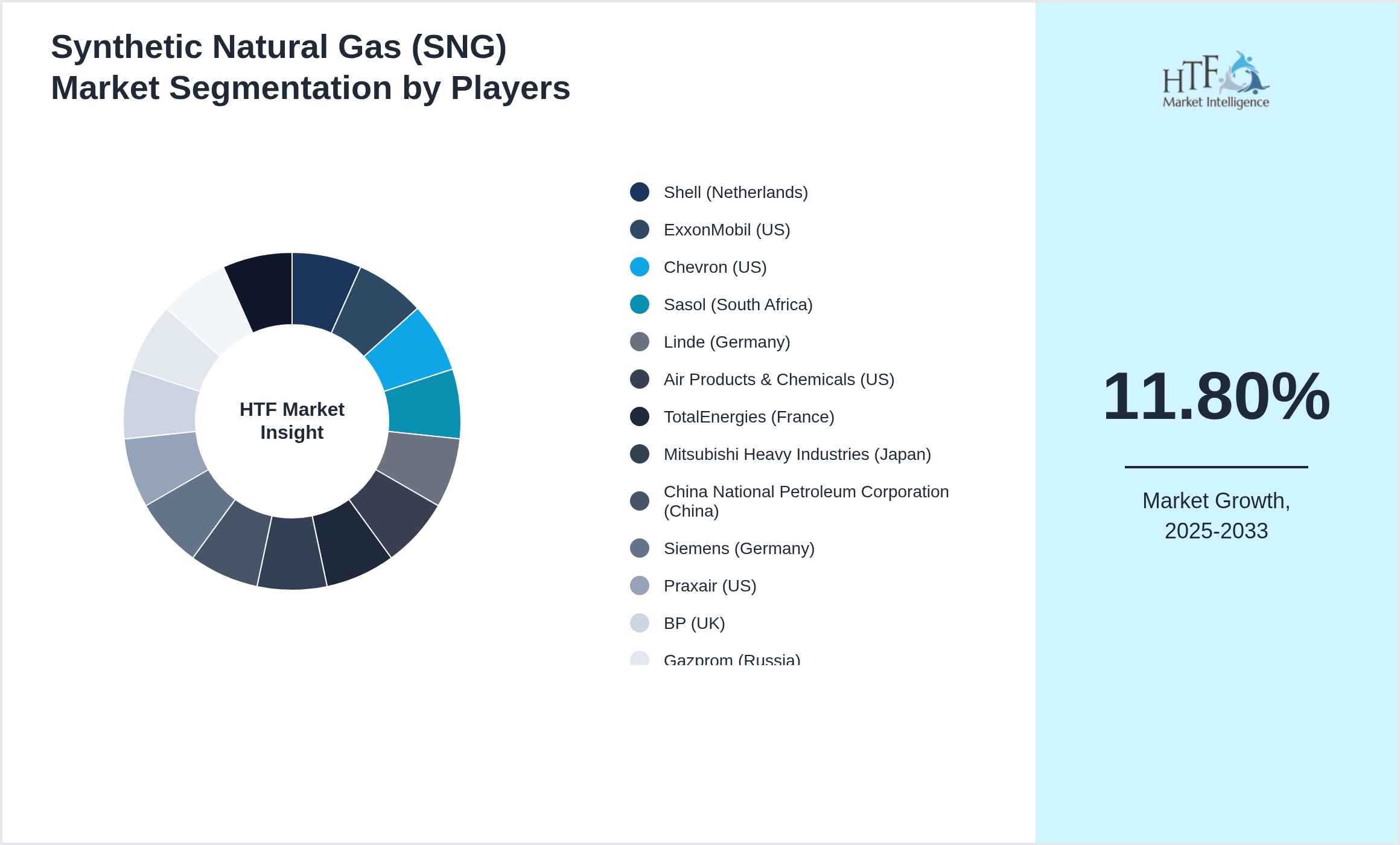
The key players in the Synthetic Natural Gas (SNG) are intensifying their focus on research and development (R&D) activities to innovate and stay competitive. Major companies, such as Shell (Netherlands), ExxonMobil (US), Chevron (US), Sasol (South Africa), Linde (Germany), Air Products & Chemicals (US), TotalEnergies (France), Mitsubishi Heavy Industries (Japan), China National Petroleum Corporation (China), Siemens (Germany), Praxair (US), BP (UK), Gazprom (Russia), Equinor (Norway), IHI Corporation (Japan), are heavily investing in R&D to develop new products and improve existing ones. This strategic emphasis on innovation is driving significant advancements in chemical manufacturing processes and the introduction of sustainable and eco-friendly products.
Moreover, these established industry leaders are actively pursuing acquisitions of smaller companies to expand their regional presence and enhance their market share. These acquisitions not only help in diversifying their product portfolios but also provide access to new technologies and markets. This consolidation trend is a critical factor in the growth of the Synthetic Natural Gas (SNG), as it enables larger companies to streamline operations, reduce costs, and increase their competitive edge.
For the complete companies list, please ask for sample pages
Need More Details on Market Players and Competitors?
In addition to R&D and acquisitions, there is a notable shift towards green investments among key players in the Synthetic Natural Gas (SNG). Companies are increasingly committing resources to sustainable practices and the development of environmentally friendly products. This green investment is in response to growing consumer demand for sustainable solutions and stringent environmental regulations. By prioritizing sustainability, these companies are not only contributing to environmental protection but also positioning themselves as leaders in the green chemistry movement, thereby fueling market growth.
The companies highlighted in this profile were selected based on insights from primary experts and an evaluation of their market penetration, product offerings, and geographical reach.
- • Shell (Netherlands)
- • ExxonMobil (US)
- • Chevron (US)
- • Sasol (South Africa)
- • Linde (Germany)
- • Air Products & Chemicals (US)
- • TotalEnergies (France)
- • Mitsubishi Heavy Industries (Japan)
- • China National Petroleum Corporation (China)
- • Siemens (Germany)
- • Praxair (US)
- • BP (UK)
- • Gazprom (Russia)
- • Equinor (Norway)
- • IHI Corporation (Japan)
Regional Analysis
Market Entropy
Merger & Acquisition
Regulatory Landscape
Patent Analysis
Investment and Funding Scenario
Report Infographics
| Report Features | Details |
| Base Year | 2025 |
| Based Year Market Size 2025 | 5.4 billion |
| Historical Period | 2020 to 2025 |
| CAGR 2025 to 2033 | 11.80% |
| Forecast Period | 2026 to 2033 |
| Forecasted Period Market Size 2033 | 9.8 billion |
| Scope of the Report | Coal-to-SNG, Biomass-to-SNG, Gas-to-SNG, Industrial SNG, Renewable SNG, Power Generation, Industrial Fuel, Residential Gas Supply, Transportation, Chemical Feedstock |
| Companies Covered | Shell (Netherlands), ExxonMobil (US), Chevron (US), Sasol (South Africa), Linde (Germany), Air Products & Chemicals (US), TotalEnergies (France), Mitsubishi Heavy Industries (Japan), China National Petroleum Corporation (China), Siemens (Germany), Praxair (US), BP (UK), Gazprom (Russia), Equinor (Norway), IHI Corporation (Japan) |
| Customization Scope | 15% Free Customization |
| Delivery Format | PDF and Excel through Email |