
Wildlife Park Market - Global Growth Opportunities 2020-2033
Global Wildlife Park Market is segmented by Application (Tourism, Education, Conservation, Entertainment, Research), Type (Safari Parks, Zoos, Conservation Parks, Theme-Based Wildlife Parks, Marine Parks), and Geography (North America, LATAM, West Europe, Central & Eastern Europe, Northern Europe, Southern Europe, East Asia, Southeast Asia, South Asia, Central Asia, Oceania, MEA)
Pricing
Report Overview
Industry Overview
The Wildlife Park is at USD 74.1 billion in 2024 and is expected to reach 122.8 billion by 2033. The Wildlife Park is driven by increasing demand in end-use industries, technological advancements, research and development (R&D), economic growth, and global trade.
The wildlife park market includes zoos, safari parks, and conservation-based attractions focused on wildlife preservation and education. These parks serve tourism, research, and conservation purposes. Market growth is driven by eco-tourism trends, rising environmental awareness, and family-oriented travel experiences worldwide.
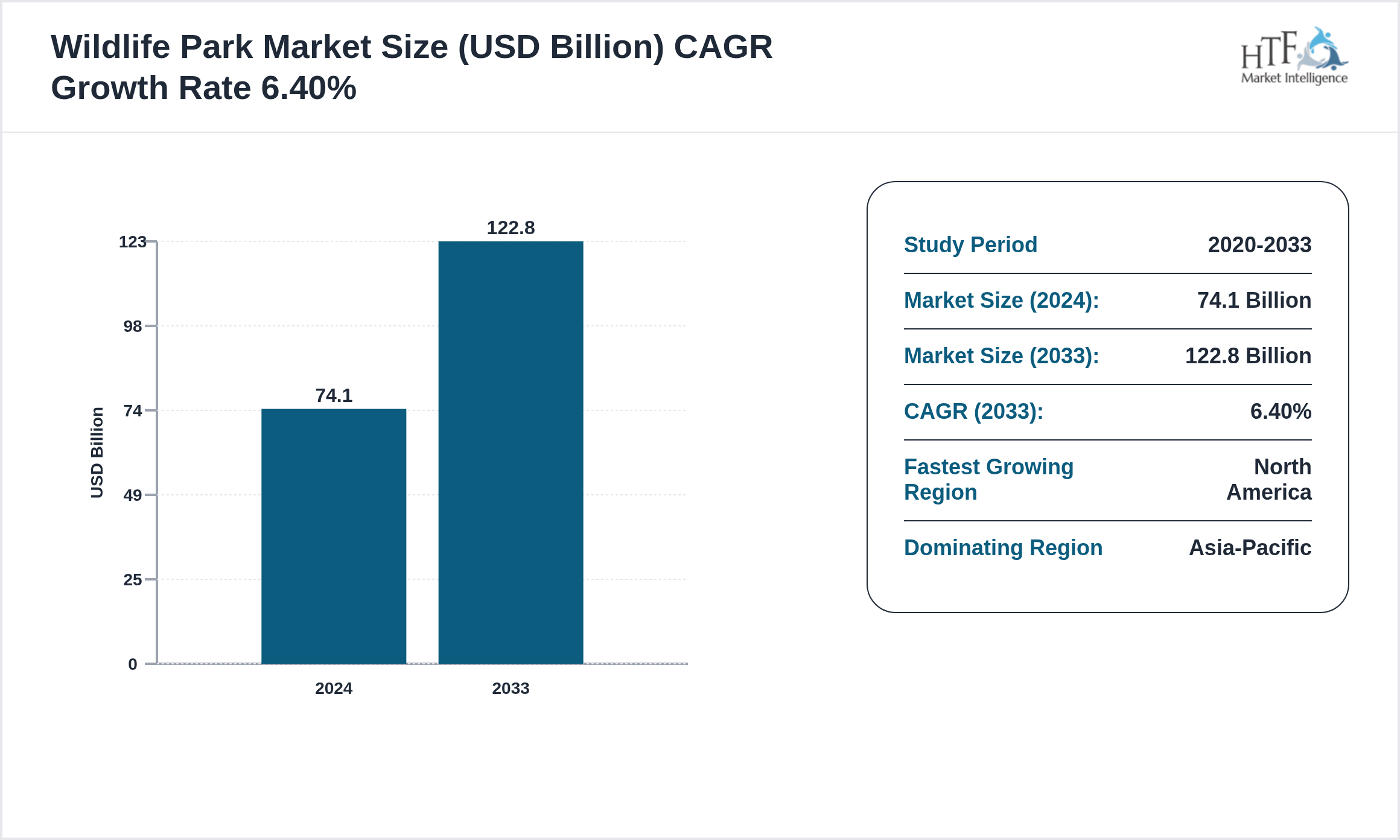
Source: HTF Market Intelligence (HTF MI)
Competitive landscape
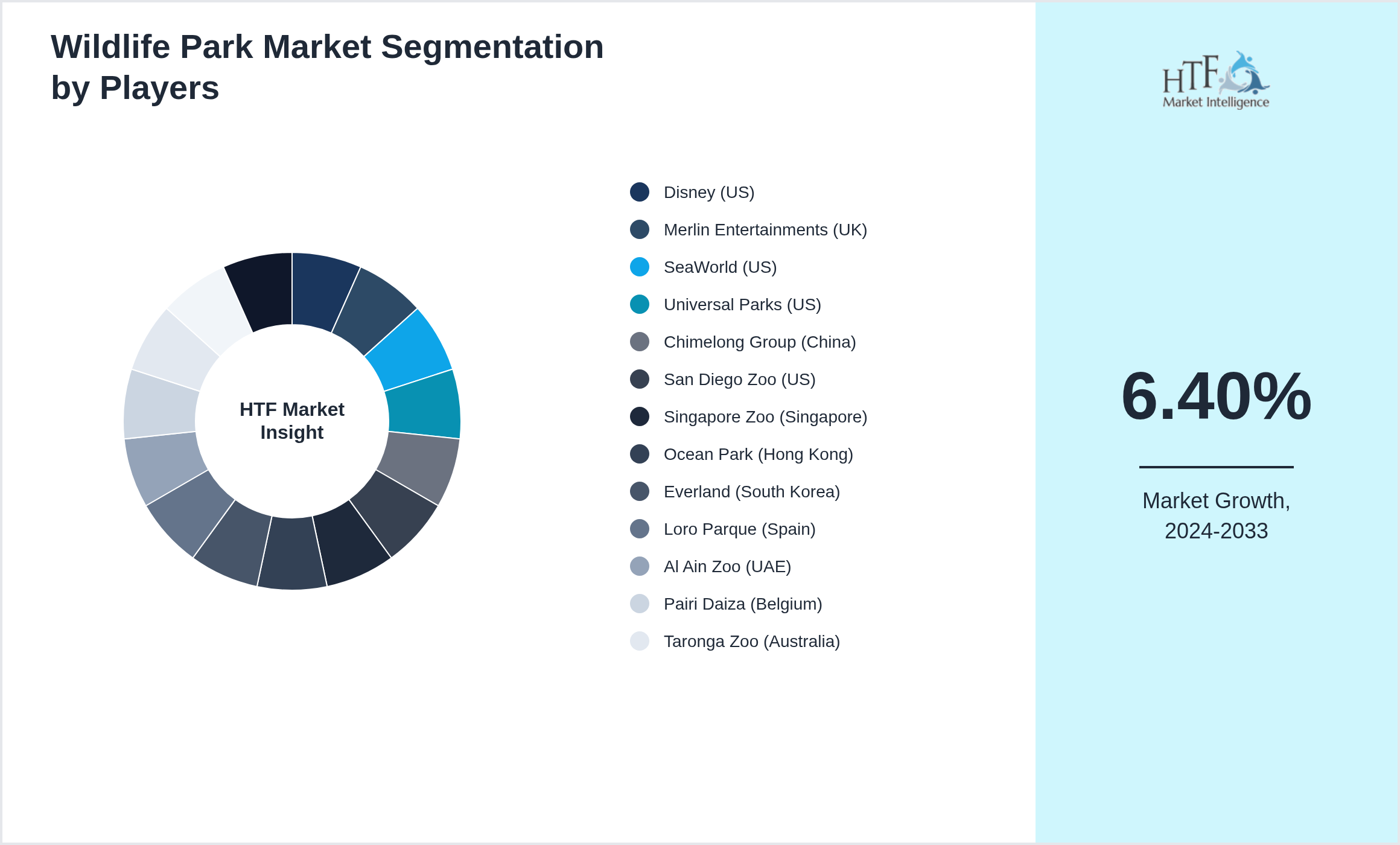
The companies highlighted in this profile were selected based on insights from primary experts and an evaluation of their market penetration, product offerings, and geographical reach:
- • Disney (US)
- • Merlin Entertainments (UK)
- • SeaWorld (US)
- • Universal Parks (US)
- • Chimelong Group (China)
- • San Diego Zoo (US)
- • Singapore Zoo (Singapore)
- • Ocean Park (Hong Kong)
- • Everland (South Korea)
- • Loro Parque (Spain)
- • Al Ain Zoo (UAE)
- • Pairi Daiza (Belgium)
- • Taronga Zoo (Australia)
- • Bronx Zoo (US)
- • Wildlife Reserves India (India)
Market Drivers:
Challenge Factor:
Opportunities:
Important Trend:
Regulatory Framework
- • Innovation focuses on faster sequencing and AI-based interpretation
- • Startups improve bioinformatics pipelines
- • Differentiation emphasizes diagnostic accuracy
- • Cost reduction expands access
- • Lab automation improves throughput
Regional Insight
The Asia-Pacific leads the market share, largely due to rising consumption, a growing population, and strong economic momentum that boosts demand. In contrast, the North America is emerging as the fastest-growing area, driven by rapid infrastructure development, the expansion of industrial sectors, and heightened consumer demand, making it a critical factor for future market growth. The regions covered in the report are
- North America
- LATAM
- West Europe
- Central & Eastern Europe
- Northern Europe
- Southern Europe
- East Asia
- Southeast Asia
- South Asia
- Central Asia
- Oceania
- MEA
Regional Analysis
- • Europe: Strong clinical and research adoption led by Germany and the UK
- • Middle East: Precision medicine initiatives accelerate uptake
- • Africa: Limited but expanding through academic research
Market Segmentation
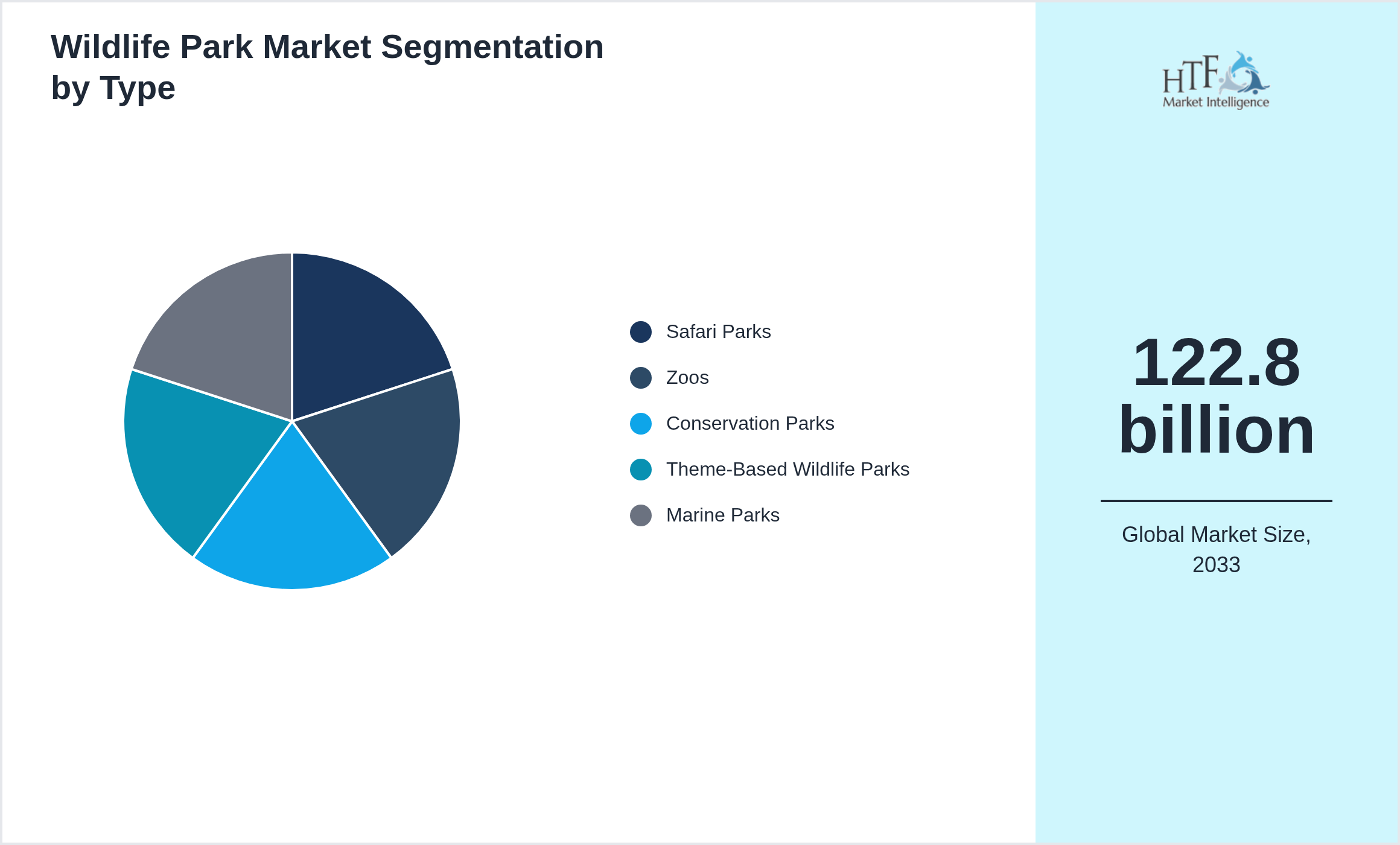
Segmentation by Type
- • Safari Parks
- • Zoos
- • Conservation Parks
- • Theme-Based Wildlife Parks
- • Marine Parks
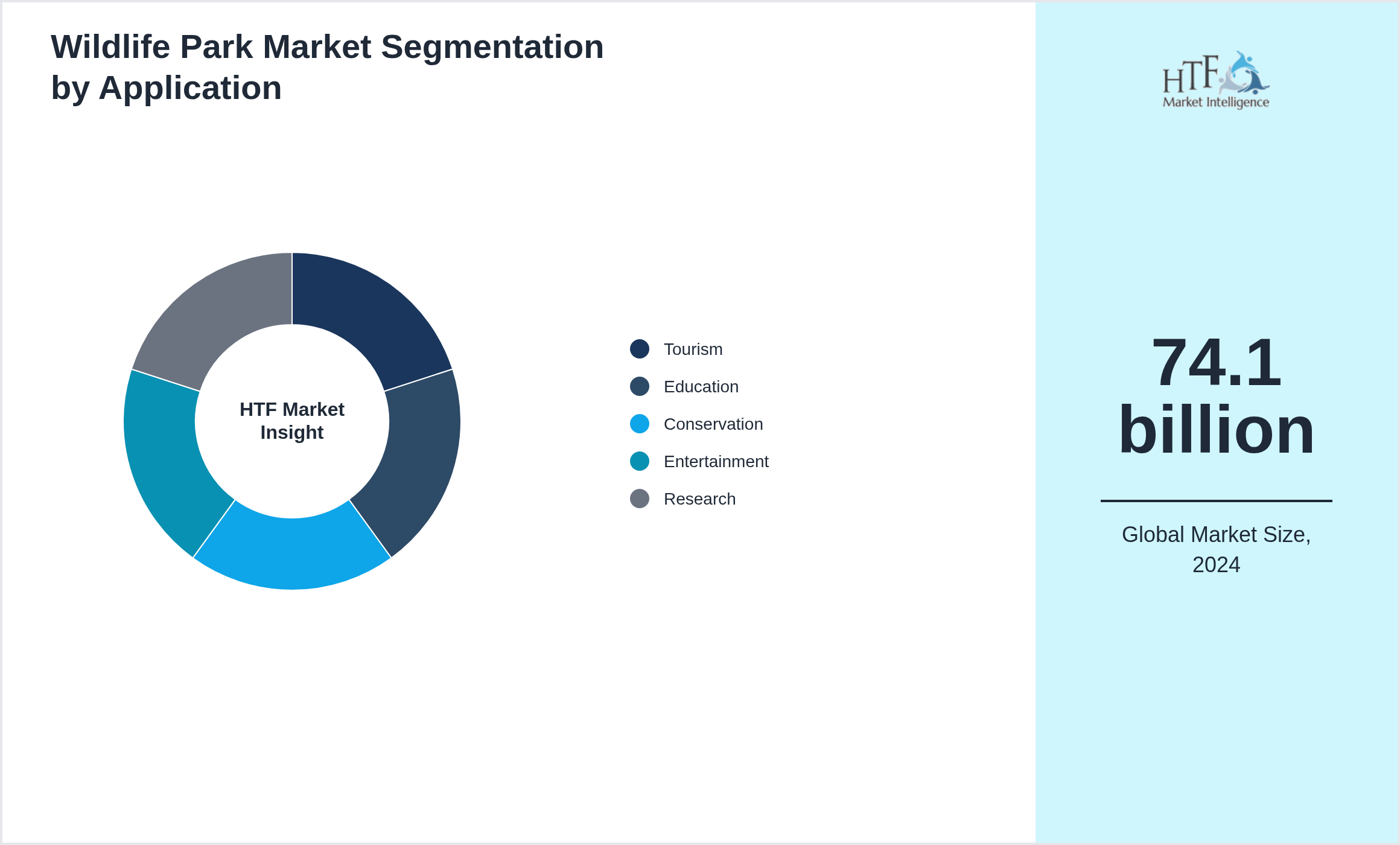
Segmentation by Application
- • Tourism
- • Education
- • Conservation
- • Entertainment
- • Research
Key Development Activities
Market Entropy
- • Jan 2025 – EcoSafari Developments partnered with National Parks Authority to develop a new wildlife park focused on conservation tourism and experiential education.
Merger & Acquisition
- • Apr 2025 – A tourism and leisure group acquired a regional wildlife park to expand eco-tourism and experiential attractions.
Regulatory Landscape
- • Innovation focuses on faster sequencing and AI-based interpretation
- • Startups improve bioinformatics pipelines
- • Differentiation emphasizes diagnostic accuracy
- • Cost reduction expands access
- • Lab automation improves throughput
Patent Analysis
- • 2022: Reimbursement uncertainty slowed adoption
- • Equipment costs increased risk
- • Demand remained research-driven
- • 2023: Clinical validation improved confidence
- • Competition increased
- • Cost efficiency improved
- • 2024: Market stabilized with clinical integration
- • Risk moderated
- • Adoption expanded
Investment and Funding Scenario
- • Venture funding targets genomics analytics firms
- • Strategic investments from diagnostics companies
- • Public research grants support expansion
- • M&A activity increases
Report Details
| Report Features | Details |
| Base Year | 2024 |
| Based Year Market Size (2024) | 74.1 billion |
| Historical Period | 2020 to 2024 |
| CAGR (2024 to 2033) | 6.40% |
| Forecast Period | 2026 to 2033 |
| Forecasted Period Market Size (2033) | 122.8 billion |
| Scope of the Report | Safari Parks, Zoos, Conservation Parks, Theme-Based Wildlife Parks, Marine Parks, Tourism, Education, Conservation, Entertainment, Research |
| Companies Covered | Disney (US), Merlin Entertainments (UK), SeaWorld (US), Universal Parks (US), Chimelong Group (China), San Diego Zoo (US), Singapore Zoo (Singapore), Ocean Park (Hong Kong), Everland (South Korea), Loro Parque (Spain), Al Ain Zoo (UAE), Pairi Daiza (Belgium), Taronga Zoo (Australia), Bronx Zoo (US), Wildlife Reserves India (India) |
| Customization Scope | 15% Free Customization |
| Delivery Format | PDF and Excel through Email |
Research Methodology
The research methodology involves several key steps to ensure comprehensive and accurate insights. First, the objectives of the research are clearly defined, focusing on aspects such as market size, growth trends, and competitive dynamics. Data collection is conducted through both primary and secondary methods. Primary research includes interviews with industry experts, surveys, and focus groups to gather firsthand information, while secondary research involves analyzing existing reports, government publications, and company filings.
The collected data is then subjected to rigorous analysis, with quantitative methods used to evaluate market size and trends and qualitative methods applied to understand industry dynamics and consumer behavior. Findings are compiled into a detailed report featuring key insights, data visualizations, and strategic recommendations. Validation is achieved through data verification and peer reviews to ensure accuracy.
Finally, the research concludes with actionable insights and recommendations, along with suggestions for future studies to address emerging trends and gaps. This methodology provides a structured approach to understanding the {keywords} and guiding strategic decisions.