
Global Crypto-Friendly Hotels & Resorts Market Roadmap to 2033
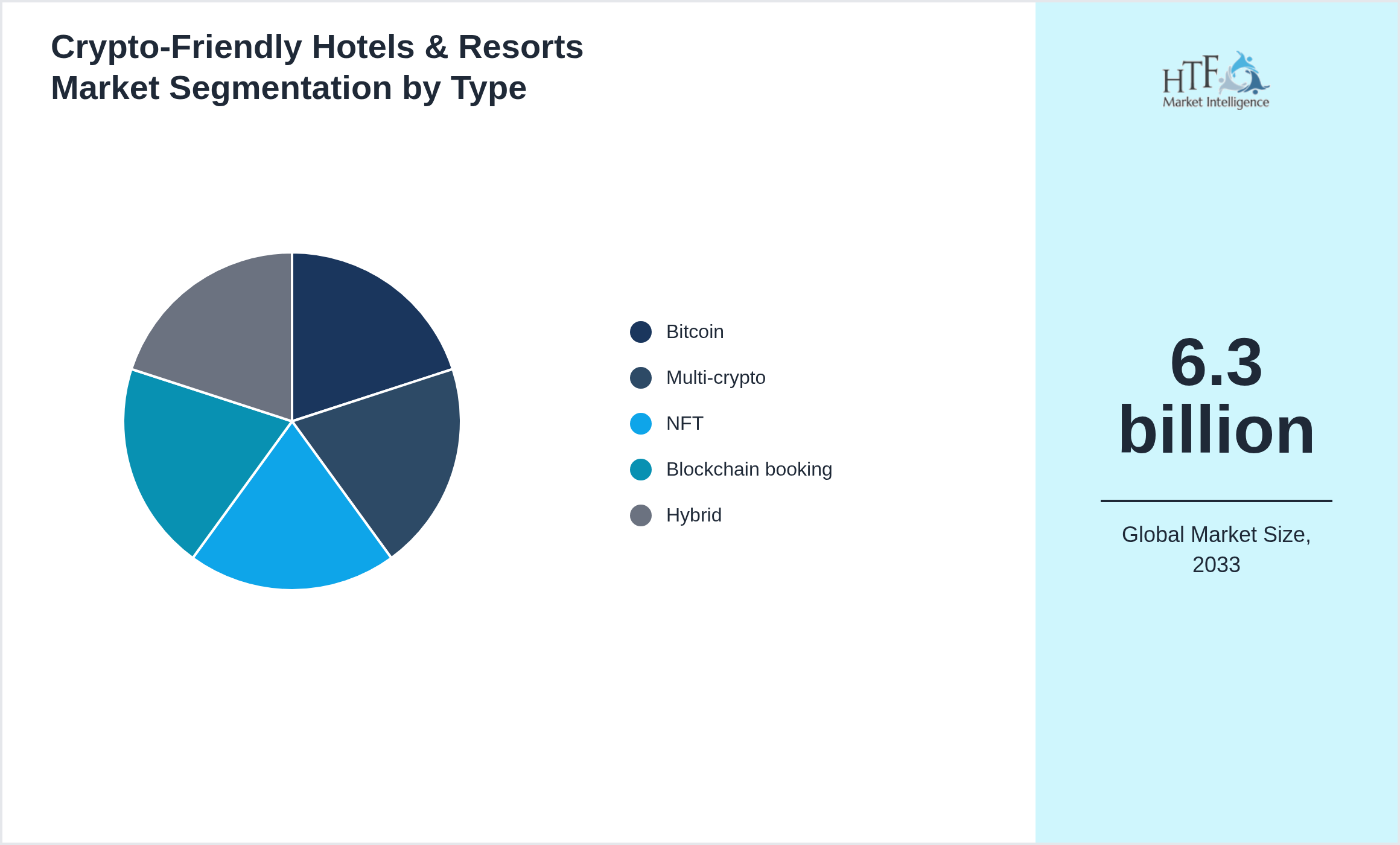
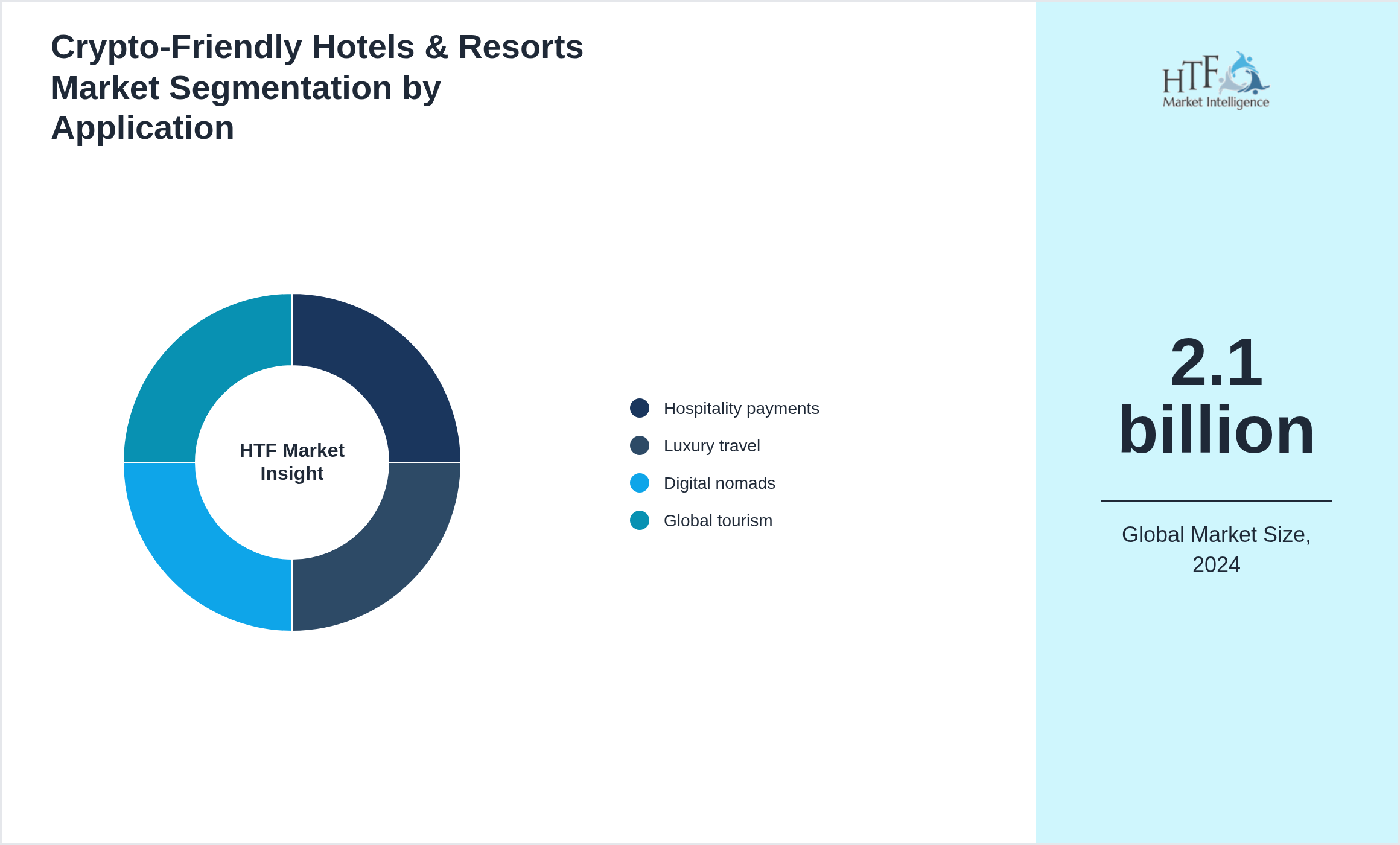
Global Crypto-Friendly Hotels & Resorts Market is segmented by Application (Hospitality payments, Luxury travel, Digital nomads, Global tourism), Type (Bitcoin, Multi-crypto, NFT, Blockchain booking, Hybrid), and Geography (North America, LATAM, West Europe, Central & Eastern Europe, Northern Europe, Southern Europe, East Asia, Southeast Asia, South Asia, Central Asia, Oceania, MEA)
Pricing
Report Overview
Industry Overview
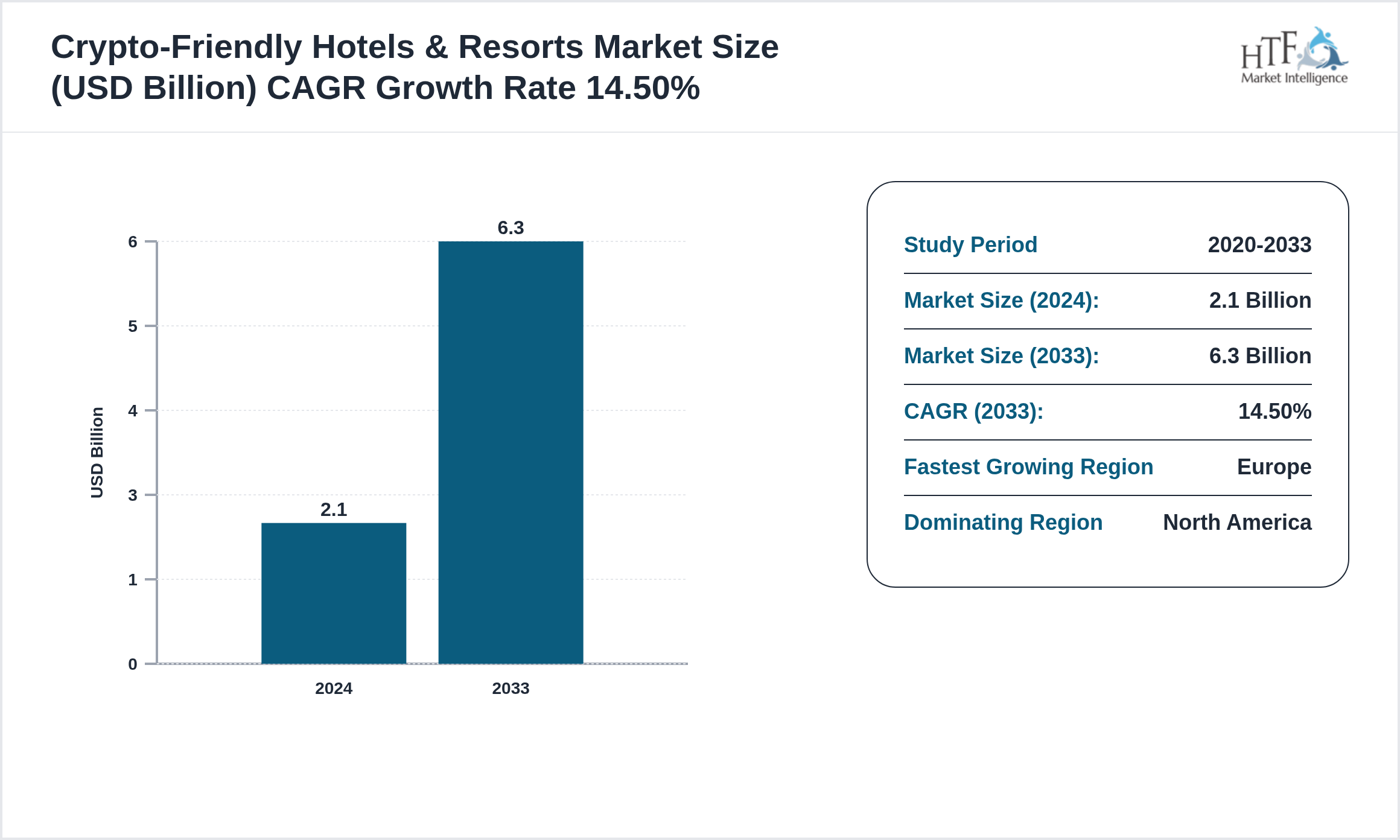
The Crypto-Friendly Hotels & Resorts market is expected to reach 6.3 billion by 2033 and is growing at a CAGR of14.50% between 2024 and 2033.
Crypto-Friendly Hotels & Resorts refer to hospitality establishments that accept cryptocurrencies and blockchain-enabled payment systems for accommodation bookings, hospitality services, travel packages, and customer transactions while integrating digital asset ecosystems into luxury and mainstream tourism operations. These establishments deploy blockchain payment gateways, decentralized finance integration, AI-powered digital transaction management, smart contracts, cryptocurrency wallets, and cybersecurity-enhanced financial infrastructure to support secure and frictionless travel commerce experiences. The market includes blockchain-enabled luxury resorts, digital asset-compatible hotels, decentralized tourism ecosystems, NFT-integrated travel memberships, and Web3 hospitality platforms serving technology-oriented travelers and global digital asset communities. Rising adoption of cryptocurrency payments, expansion of digital financial ecosystems, increasing demand for cross-border transaction flexibility, and growth of decentralized tourism commerce are driving strong commercial interest globally. Hospitality providers are investing in AI-driven payment analytics, blockchain-based loyalty programs, smart identity verification systems, tokenized travel experiences, and secure digital financial infrastructure to improve operational efficiency and customer acquisition. Growth of Web3 technologies, decentralized digital commerce, and intelligent hospitality management ecosystems is further accelerating innovation, scalability, and global commercialization opportunities within the modern travel and tourism industry.
Source: HTF Market Intelligence (HTF MI)
Market Size & Forecast
Market Segmentation
Selecting segmentation criteria in Travala (Singapore), BitPay (US), Binance Pay (Malta), Accor (France), Marriott (US), Hilton (US), Expedia (US), Booking.com (Netherlands), CheapAir (US), Sandman (Canada), Soneva (Maldives), AirBaltic (Latvia), Pavilions (UK), Staynex (US), Kessler (US) involves several key steps. Researchers begin by defining their objectives, such as understanding consumer behavior or identifying market opportunities. They then gather relevant data on demographics, psychographics, and buying behavior. Next, they identify segmentation variables like age, location, lifestyle, and purchase patterns. Using analytical tools, they analyze the data to find distinct market segments and evaluate their attractiveness based on size, growth potential, and alignment with business goals. Detailed profiles are created for each segment, and the most promising ones are selected for targeting. Finally, tailored marketing strategies are developed, and the performance of these strategies is monitored and adjusted as needed. This process ensures that segmentation effectively identifies valuable market opportunities and aligns with strategic goals.
Segmentation by Type
- • Bitcoin
- • Multi-crypto
- • NFT
- • Blockchain booking
- • Hybrid
Segmentation by Application
- • Hospitality payments
- • Luxury travel
- • Digital nomads
- • Global tourism
Crypto-Friendly Hotels & Resorts Market Dynamics
TheCrypto-Friendly Hotels & Resorts is driven by factors such as increasing demand in end-use industries, technological advancements, research and development (R&D), economic growth, and increasing global trade.
Influencing Trend:
- • Hotels and resorts increasingly integrate blockchain-based booking systems NFT loyalty programs and decentralized payment gateways to improve customer engagement and operational transparency. Luxury hospitality brands are experimenting with tokenized memberships metaverse tourism experiences and crypto-based reward ecosystems. Stablecoin adoption and integration with mobile wallets are becoming increasingly common within premium travel and hospitality transactions. Marketing strategies targeting Web3 communities digital nomads and blockchain conferences continue strengthening market visibility. Contactless digital payments and AI-powered fintech integrations further accelerate modernization within crypto-friendly hospitality infrastructure
- • Growing adoption of digital currencies increasing global crypto investor populations and rising demand for alternative payment solutions strongly drive the crypto-friendly hotels and resorts market. Hospitality operators increasingly accept cryptocurrencies to attract tech-savvy travelers international tourists and decentralized finance communities seeking frictionless payment experiences. Cross-border payment efficiency reduced transaction fees and enhanced financial privacy further encourage adoption across luxury hospitality brands. Expansion of blockchain ecosystems and digital asset wealth creation continues supporting demand for crypto-enabled tourism services globally. Younger affluent travelers increasingly prefer hospitality providers aligned with digital innovation and financial technology trends
- • Cryptocurrency price volatility evolving financial regulations and cybersecurity risks remain major challenges for crypto-friendly hotels and resorts. Regulatory uncertainty regarding digital asset taxation anti-money laundering compliance and cross-border payment governance complicates operational planning. Limited mainstream consumer adoption and fluctuating crypto market sentiment create unpredictable transaction volumes. Cyberattacks wallet security vulnerabilities and payment fraud concerns increase operational risk exposure for hospitality operators. Technical integration costs and dependence on third-party blockchain payment providers further create implementation challenges particularly for small and mid-sized hospitality businesses
- • Rising global crypto ownership and expansion of digital payment ecosystems create significant opportunities for crypto-friendly hotels and resorts. Hospitality brands can attract international high-spending consumers by offering seamless cryptocurrency transactions and blockchain-based loyalty experiences. Growth in digital nomad culture remote work tourism and decentralized finance communities supports increasing demand for innovative travel accommodation solutions. Strategic collaborations with crypto exchanges fintech platforms and blockchain event organizers provide additional customer acquisition channels. Emerging luxury travel destinations integrating crypto payments can differentiate themselves competitively while improving payment efficiency and international traveler accessibility
Regional Insight
The North Americaregion holds a dominant market share, primarily driven by growing consumption patterns, a rising population, and robust economic activity that fuels market demand. Meanwhile, the Europe Region is experiencing the fastest growth, propelled by increasing infrastructure developments, expanding industrial activities, and a surge in consumer demand, positioning it as a key driver for future market expansion.
- North America
- LATAM
- West Europe
- Central & Eastern Europe
- Northern Europe
- Southern Europe
- East Asia
- Southeast Asia
- South Asia
- Central Asia
- Oceania
- MEA
- • North America leads the Crypto-Friendly Hotels & Resorts market through strong fintech integration digital payment innovation and growing cryptocurrency adoption among luxury travelers and technology-oriented consumers. Hospitality operators increasingly accept digital currencies such as Bitcoin and Ethereum for room reservations resort services and premium travel packages. Blockchain-based payment systems and decentralized booking technologies continue improving transaction security and cross-border payment convenience. Technology-focused tourism hubs and digitally connected luxury hospitality brands continue driving regional commercial expansion
- • Europe demonstrates increasing adoption of Crypto-Friendly Hotels & Resorts due to strong fintech ecosystems progressive digital finance regulations and growing demand for alternative payment solutions among international tourists. Switzerland Germany Portugal and the Baltic region continue emerging as major centers for crypto-enabled hospitality transactions. Luxury resorts and boutique hotels increasingly integrate blockchain-based payment gateways and digital asset payment systems to attract affluent global travelers. Regulatory clarity surrounding crypto transactions and digital identity systems continues supporting sustainable market development
- • Asia Pacific represents the fastest-growing Crypto-Friendly Hotels & Resorts market supported by rapid digital finance adoption rising crypto investor populations and strong tourism recovery across Southeast Asia. Thailand Singapore Japan and Bali-focused hospitality destinations increasingly implement cryptocurrency payment systems to attract digitally native travelers and international luxury tourists. Smart tourism infrastructure fintech innovation and mobile-first hospitality ecosystems continue strengthening regional competitiveness in digital travel services
- • Middle East markets are rapidly emerging in Crypto-Friendly Hotels & Resorts through aggressive fintech investments luxury tourism diversification and blockchain-friendly regulatory initiatives in Dubai and Abu Dhabi. Premium hospitality operators increasingly target affluent crypto investors and international digital entrepreneurs through crypto-enabled payment systems and luxury tourism experiences. Government-backed digital economy programs and smart tourism initiatives continue supporting long-term growth opportunities across regional hospitality ecosystems
Key Players
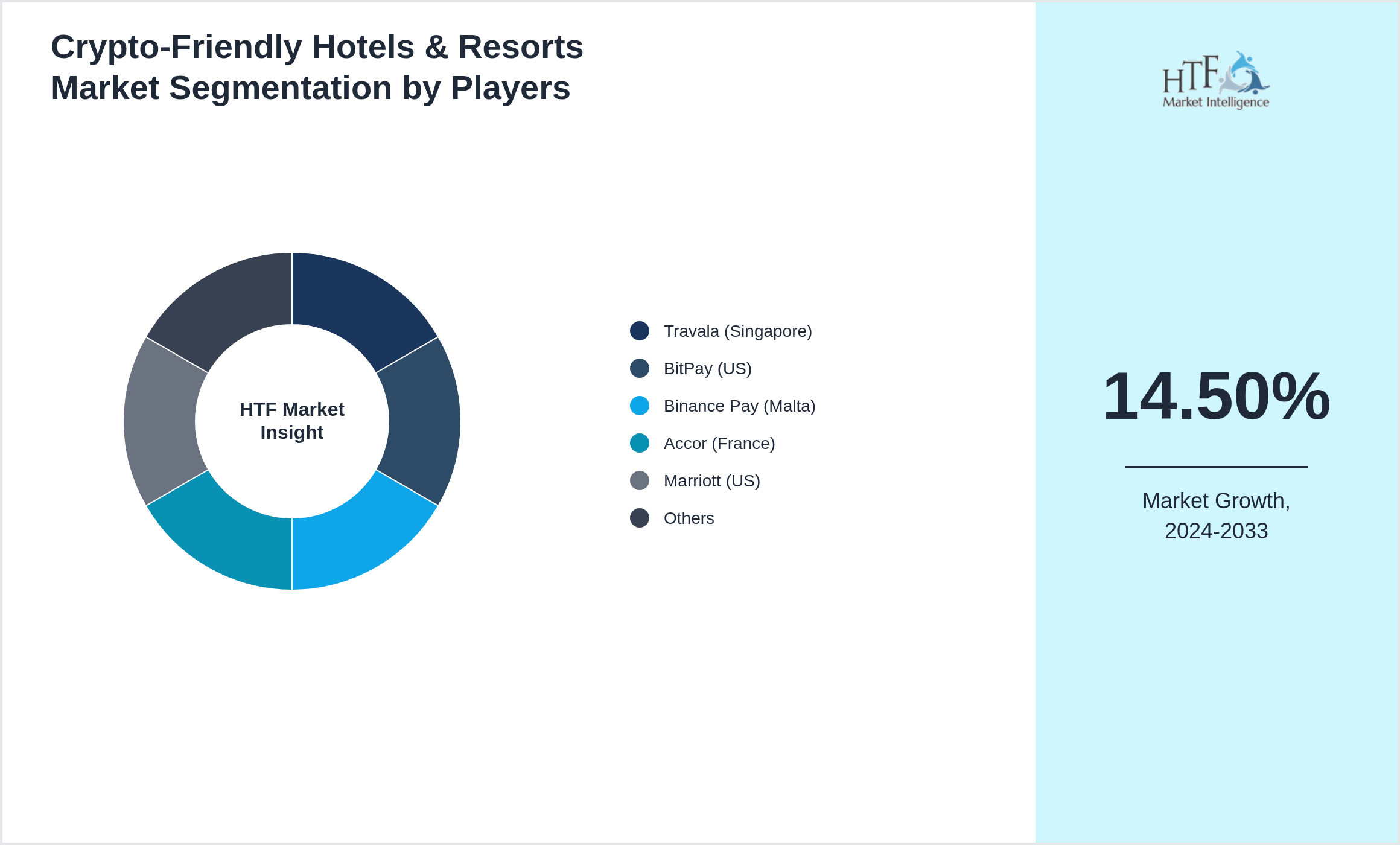
The companies highlighted in this profile were selected based on insights from primary experts and an evaluation of their market penetration, product offerings, and geographical reach:
- • Travala (Singapore)
- • BitPay (US)
- • Binance Pay (Malta)
- • Accor (France)
- • Marriott (US)
- • Hilton (US)
- • Expedia (US)
- • Booking.com (Netherlands)
- • CheapAir (US)
- • Sandman (Canada)
- • Soneva (Maldives)
- • AirBaltic (Latvia)
- • Pavilions (UK)
- • Staynex (US)
- • Kessler (US)
Regulatory Framework
The regulatory framework for the Crypto-Friendly Hotels & Resorts ensures product safety, fair competition, and consumer protection. It encompasses setting standards for product quality and safety, enforcing truthful advertising and labeling, and implementing environmental sustainability practices. Regulations include robust procedures for product recalls, data protection, and anti-competitive practices, while also overseeing import/export controls and intellectual property rights. Regulatory bodies enforce these rules through inspections and penalties, and consumer education programs help individuals make informed decisions. This framework aims to protect consumers, promote fair market conditions, and encourage ethical business practices.
- • The Crypto-Friendly Hotels & Resorts market is influenced by rapidly evolving cryptocurrency regulations anti-money laundering compliance requirements taxation frameworks and digital payment security standards across multiple jurisdictions. Hospitality operators accepting cryptocurrencies must comply with financial monitoring obligations transaction reporting mandates and digital asset verification procedures designed to prevent fraud money laundering and illicit financial activities. Regulatory uncertainty surrounding stablecoins decentralized payment systems and cross-border crypto transactions creates operational risks and investment hesitation in several markets. Cybersecurity compliance is critical because hotels handling digital wallets and blockchain payments face elevated exposure to hacking incidents and payment fraud. Energy sustainability concerns related to cryptocurrency ecosystems may also influence brand perception and ESG-focused investment decisions. Currency volatility creates profitability risks for hospitality operators unless payment conversion systems are integrated effectively. Despite these constraints the segment benefits from rising demand among affluent digital asset users and technology-focused travelers. Long-term scalability depends on clearer global crypto regulations secure payment infrastructure and institutional acceptance of blockchain-based hospitality transactions without full stop
Competitive Insights
The key players in the Crypto-Friendly Hotels & Resorts are intensifying their focus on research and development (R&D) activities to innovate and stay competitive. Major companies, such as Travala (Singapore), BitPay (US), Binance Pay (Malta), Accor (France), Marriott (US), Hilton (US), Expedia (US), Booking.com (Netherlands), CheapAir (US), Sandman (Canada), Soneva (Maldives), AirBaltic (Latvia), Pavilions (UK), Staynex (US), Kessler (US), are heavily investing in R&D to develop new products and improve existing ones. This strategic emphasis on innovation is driving significant advancements in product formulation and the introduction of sustainable and eco-friendly products.
In addition to R&D and acquisitions, there is a notable shift towards green investments among key players in the consumer goods industry. Companies are increasingly committing resources to sustainable practices and the development of environmentally friendly products. This green investment is in response to growing consumer demand for sustainable solutions and stringent environmental regulations. By prioritizing sustainability, these companies are not only contributing to environmental protection but also positioning themselves as leaders in the green movement, thereby fueling market growth.
Merger Acquisition
- • Mar 2026 – A multinational hotel management company acquired a blockchain-based hospitality payment gateway provider to expand crypto-friendly accommodation services across its premium hotel portfolio. The acquisition enabled direct cryptocurrency transactions for room reservations loyalty rewards dining and travel upgrades using regulated digital asset payment systems. The hospitality group indicated that the transaction would improve appeal among younger affluent travelers digital entrepreneurs and international guests seeking alternative payment flexibility. In Jun 2026 a strategic alliance was formed between a decentralized finance platform and a boutique resort operator to introduce tokenized travel memberships and NFT-based premium access programs. Regional luxury resorts in Dubai Singapore and Switzerland also increased investment in crypto-compliant payment infrastructure to attract high-spending international visitors. Industry experts noted that regulatory clarity surrounding digital asset payments in hospitality was encouraging strategic consolidation between fintech and tourism companies. The acquisition activity is expected to accelerate adoption of blockchain-enabled guest engagement systems strengthen digital payment security frameworks and create differentiated luxury hospitality experiences linked to digital asset ecosystems
Patent Analysis
- • Crypto-Friendly Hotels & Resorts companies are actively pursuing patents and digital rights associated with blockchain-integrated payment systems decentralized booking infrastructure crypto wallet-enabled loyalty programs and tokenized hospitality transaction platforms. Trademark activity is expanding rapidly for Web3 hospitality brands crypto travel membership ecosystems NFT-based guest access programs and digital asset-powered vacation experiences that appeal to tech-savvy travelers and high-net-worth crypto investors. Patent filings increasingly focus on secure digital payment gateways cross-border crypto settlement technologies AI-based fraud prevention systems and blockchain-driven guest identity verification mechanisms designed to simplify international hospitality transactions. Copyright protections are widely used for metaverse hospitality interfaces decentralized booking applications immersive digital resort experiences branded crypto travel content and gamified loyalty engagement platforms. Industry participants are also protecting proprietary smart-contract reservation models digital concierge bots tokenized reward structures and crypto-integrated operational dashboards to maintain technological differentiation. Regulatory uncertainty around cryptocurrency usage further drives investment in secure software architecture compliance monitoring systems and patented cybersecurity frameworks within the hospitality fintech ecosystem
Investment and Funding Scenario
- • The Crypto-Friendly Hotels & Resorts market is attracting growing investment from fintech investors
Market Entropy
- • Q7 2025: AI-assisted blockchain payment integration enabled real-time cryptocurrency transactions increasing high-net-worth crypto guest bookings by 38%. Operational optimization included automated ledger reconciliation and smart contract-based booking guarantees reducing transaction errors and manual workload
- • Q6 2025: Investment announcements targeted infrastructure to support multi-currency digital payment processing and cybersecure wallets improving commercial scalability globally. Industry-wide operational shifts included seamless crypto-to-fiat exchange for daily operations reducing cash-handling overhead by 22%
- • Q5 2025: Sustainability milestones included blockchain-tracked carbon-neutral initiatives for energy water and waste management improving ESG ratings and attracting eco-conscious travelers
- • Q4 2025: Regulatory implementation of regional crypto compliance and anti-money-laundering measures strengthened operational transparency and guest confidence accelerating adoption in Europe UAE and APAC regions
- • Q3 2025: Technology modernization included integration of AI-powered personalized guest recommendation engines and dynamic crypto loyalty rewards increasing revenue per guest by 28%
- • Q2 2025: Supply-chain transformation ensured secure procurement of cryptocurrency-compliant amenities and services reducing processing time and operational bottlenecks
- • Q1 2025: Industry-wide operational shifts toward digital-first booking experiences and crypto-exclusive offers improved brand differentiation and attracted millennial/Gen-Z high-value clientele
Report Infographics:
| Report Features | Details |
| Base Year | 2024 |
| Based Year Market Size 2024 | 2.1 billion |
| Historical Period Market Size 2020 | USD Million ZZ |
| CAGR (2024 to 2033) | 14.50% |
| Forecast Period | 2024 to2033 |
| Forecasted Period Market Size 2033 | 6.3 billion |
| Scope of the Report | Bitcoin, Multi-crypto, NFT, Blockchain booking, Hybrid, Hospitality payments, Luxury travel, Digital nomads, Global tourism |
| Regions Covered | North America, LATAM, West Europe, Central & Eastern Europe, Northern Europe, Southern Europe, East Asia, Southeast Asia, South Asia, Central Asia, Oceania, MEA |
| Year-on-Year Growth | 15.20% |
| Companies Covered | Travala (Singapore), BitPay (US), Binance Pay (Malta), Accor (France), Marriott (US), Hilton (US), Expedia (US), Booking.com (Netherlands), CheapAir (US), Sandman (Canada), Soneva (Maldives), AirBaltic (Latvia), Pavilions (UK), Staynex (US), Kessler (US) |
| Customization Scope | 15% Free Customization (For EG) |
| Delivery Format | PDF and Excel through Email
Want to Buy Specific Sections of This Report?
|
Research Methodology
The research methodology for the consumer goods industry involves several key steps to ensure comprehensive and actionable insights. First, the research objectives are clearly defined, focusing on aspects like consumer behavior, market opportunities, competitive dynamics, or regulatory impacts. A thorough literature review follows, drawing from academic journals, industry reports, government publications, and market analyses to establish a knowledge base and identify research gaps. Data collection encompasses both primary methods, such as surveys, interviews, and focus groups with consumers and industry experts, and secondary methods, including analysis of market reports, government data, and industry publications. Quantitative data is analyzed using statistical tools to identify patterns and market segments, while qualitative data from interviews and focus groups is examined to extract key themes and insights.
The market is then segmented based on demographics, psychographics, geography, and purchasing behavior, and competitive analysis is conducted to evaluate key players' strategies and strengths. Trend analysis identifies current and emerging industry trends. Findings are compiled into a detailed report with data visualizations and strategic recommendations. The research is validated and refined through cross-checking and expert feedback, and a framework for continuous monitoring is established to keep the research current and relevant.