
Cycling Cameras Market - Global Size & Outlook 2020-2033
Global Cycling Cameras Market is segmented by Application (Road Cycling, Mountain Biking, Commuting, Races & Competitions, Vlogging), Type (Front-mounted, Rear-mounted, Helmet-mounted, Handlebar-mounted, GPS-enabled), and Geography (North America, LATAM, West Europe, Central & Eastern Europe, Northern Europe, Southern Europe, East Asia, Southeast Asia, South Asia, Central Asia, Oceania, MEA)
Pricing
Report Overview
Industry Overview
The Cycling Cameras market is expected to reach 2.6 billion by 2033 and is growing at a CAGR of10.50% between 2024 and 2033.
Cycling Cameras refer to compact, ruggedized video recording and monitoring devices specifically designed for bicycles, mountain bikes, electric bikes, and professional cycling applications to enhance rider safety, route recording, sports broadcasting, navigation support, and accident evidence collection. These cameras integrate high-resolution imaging sensors, stabilization systems, GPS tracking, AI-enabled motion detection, wireless connectivity, night vision capabilities, and cloud synchronization technologies for real-time recording and performance monitoring. The market includes helmet-mounted cameras, handlebar cameras, rear-view cycling cameras, AI-assisted blind spot monitoring systems, connected mobile applications, and cloud-integrated cycling analytics platforms used by recreational cyclists, professional athletes, delivery riders, law enforcement agencies, and urban mobility operators. Rising urban cycling adoption, increasing road safety awareness, growth in cycling tourism, and expanding social media sports content creation are fueling demand globally. Manufacturers are investing in lightweight hardware engineering, waterproof construction, AI-driven incident recognition, voice-enabled controls, extended battery performance, and integrated smart navigation functionalities to improve operational efficiency, rider convenience, and commercial scalability across connected mobility ecosystems
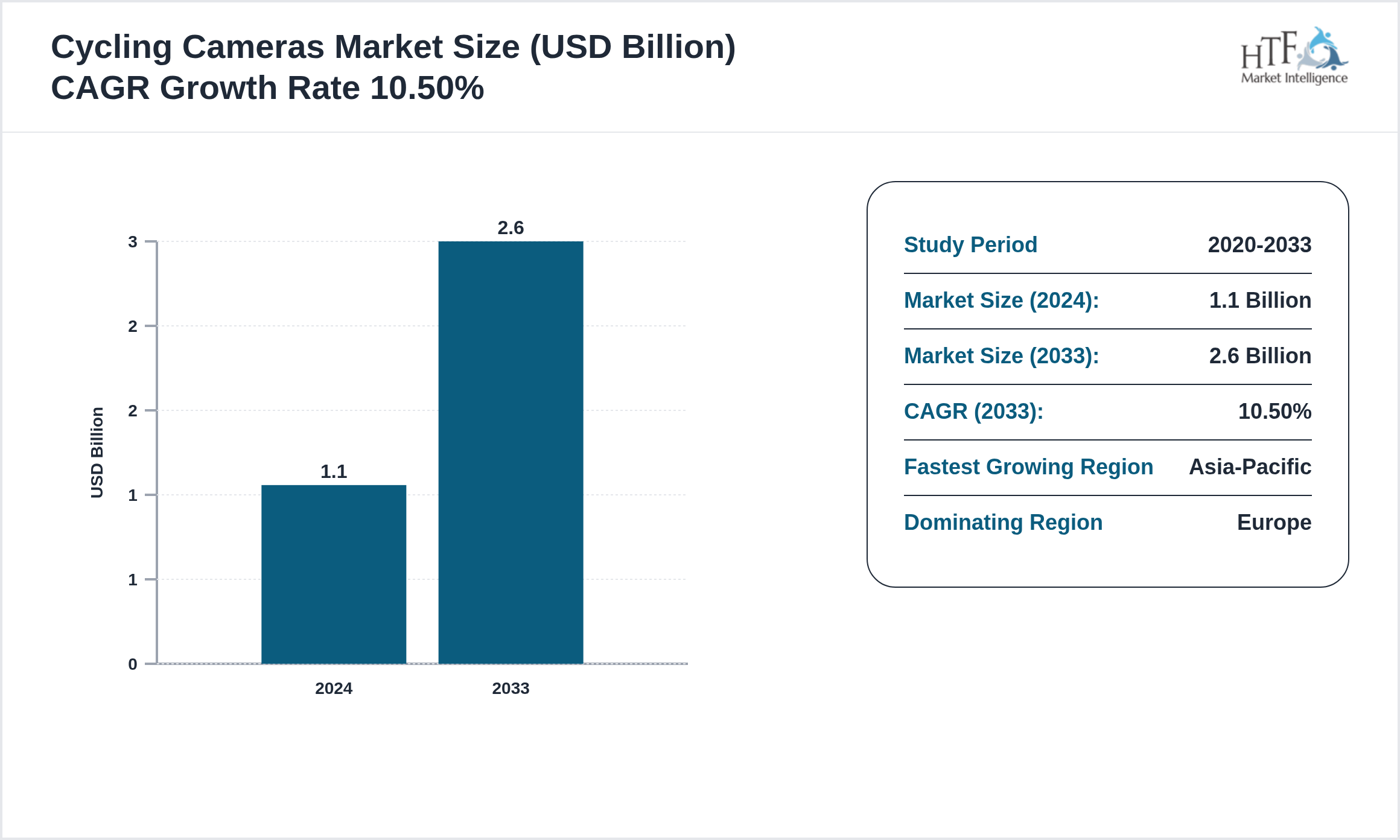
Source: HTF Market Intelligence (HTF MI)
Market Size & Forecast
Market Segmentation
Selecting segmentation criteria in Garmin (US), GoPro (US), Cateye (JP), Wahoo (US), Bryton (TW), Sigma (DE), Lezyne (US), Bontrager (US), iGPSPORT (CN), Xiaomi (CN), Vantrue (CN), Victure (CN), Apeman (CN), Campark (CN), DJI (CN) involves several key steps. Researchers begin by defining their objectives, such as understanding consumer behavior or identifying market opportunities. They then gather relevant data on demographics, psychographics, and buying behavior. Next, they identify segmentation variables like age, location, lifestyle, and purchase patterns. Using analytical tools, they analyze the data to find distinct market segments and evaluate their attractiveness based on size, growth potential, and alignment with business goals. Detailed profiles are created for each segment, and the most promising ones are selected for targeting. Finally, tailored marketing strategies are developed, and the performance of these strategies is monitored and adjusted as needed. This process ensures that segmentation effectively identifies valuable market opportunities and aligns with strategic goals.
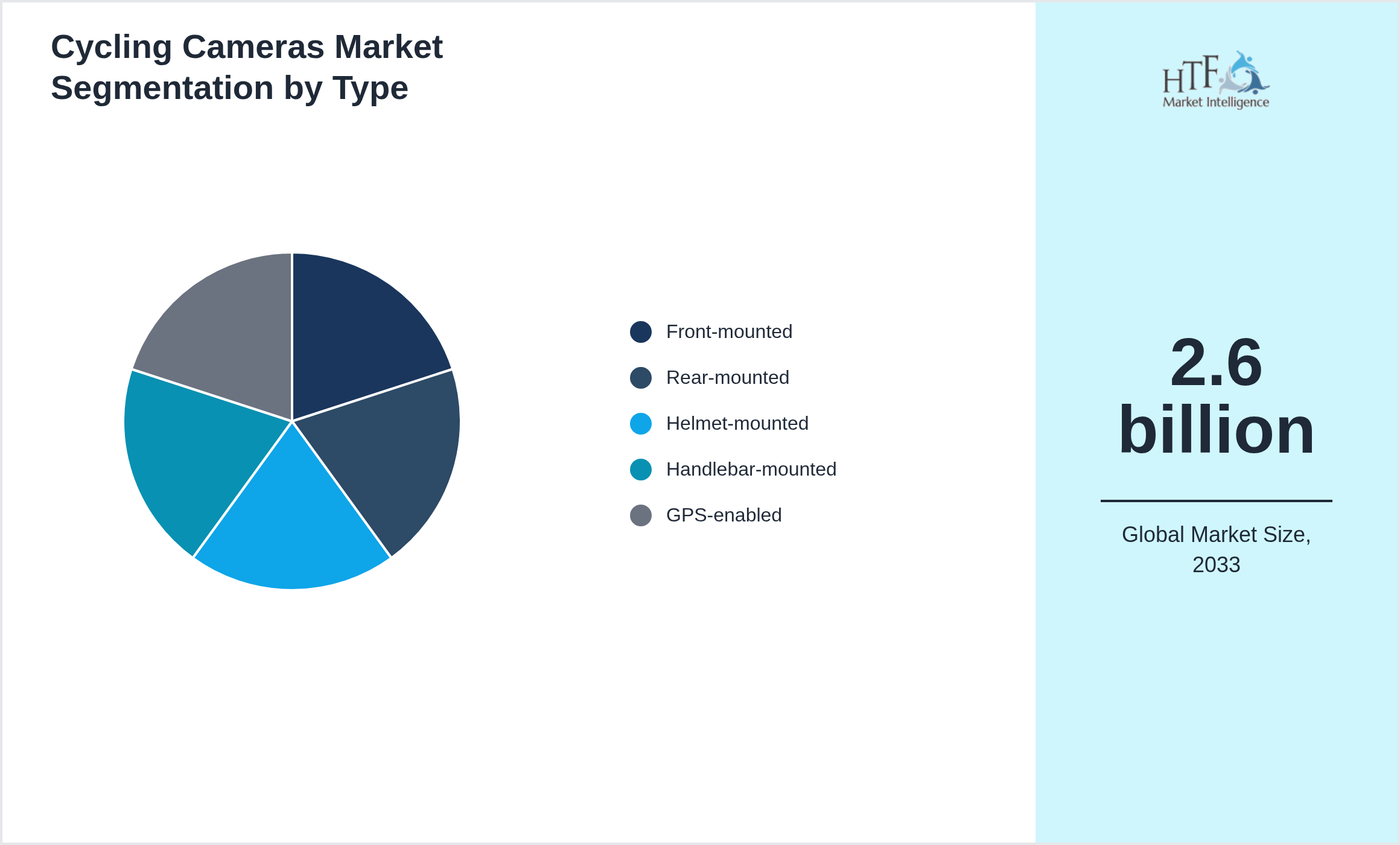
Segmentation by Type
- • Front-mounted
- • Rear-mounted
- • Helmet-mounted
- • Handlebar-mounted
- • GPS-enabled
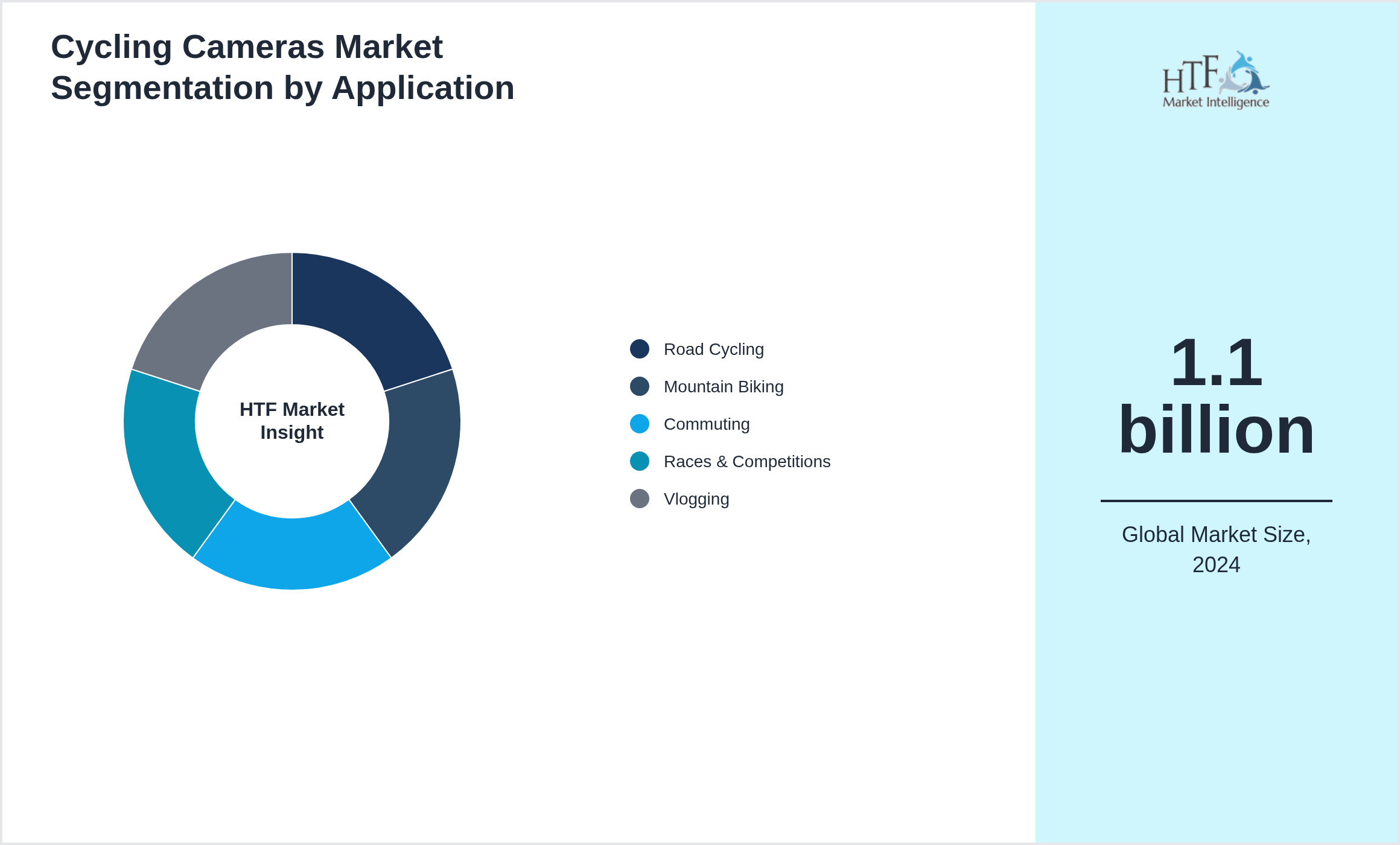
Segmentation by Application
- • Road Cycling
- • Mountain Biking
- • Commuting
- • Races & Competitions
- • Vlogging
Cycling Cameras Market Dynamics
TheCycling Cameras is driven by factors such as increasing demand in end-use industries, technological advancements, research and development (R&D), economic growth, and increasing global trade.
Influencing Trend:
- • AI-powered image stabilization ultra-wide-angle recording and cloud-connected cycling cameras are major trends transforming the market. Manufacturers increasingly integrate GPS tracking collision detection and real-time emergency alert systems into compact camera devices. Demand for 4K video quality low-light performance enhancement and voice-controlled functionality continues growing among professional cyclists and adventure riders. Smart connectivity with fitness applications wearable devices and cycling analytics platforms further improves user engagement. Sustainable battery technologies aerodynamic camera designs and wireless charging capabilities are emerging as premium product differentiators across advanced consumer segments
- • Rising participation in cycling activities increasing road safety concerns and growing popularity of sports recording technologies significantly drive the cycling cameras market. Urban commuters and professional cyclists increasingly adopt helmet-mounted and handlebar-mounted cameras for accident documentation navigation support and performance recording. Expansion of cycling tourism competitive sports events and fitness-focused lifestyles further strengthens product demand globally. Demand for lightweight waterproof and vibration-resistant recording devices continues increasing among outdoor sports enthusiasts. Government investments in cycling infrastructure and smart mobility initiatives further support long-term market expansion
- • High product costs limited battery life and harsh outdoor operating conditions create major challenges for cycling camera manufacturers. Intense competition from action cameras and smartphone-based recording solutions pressures product differentiation. Data privacy concerns and regional surveillance regulations complicate commercial adoption in certain markets. Frequent exposure to vibrations weather conditions and physical impacts increases durability and maintenance requirements. Rapid technological advancements and short replacement cycles further increase research and development expenses while balancing lightweight design recording quality and affordability remains operationally demanding
- • Growing adoption of connected cycling ecosystems and increasing awareness regarding cyclist safety create strong opportunities for cycling camera manufacturers. Expansion of e-bikes smart transportation infrastructure and cycling-based fitness programs supports long-term business growth. Emerging markets with rising urbanization and increasing recreational sports participation offer substantial untapped demand potential. Product innovation in AI-based hazard detection live streaming functionality and integrated navigation systems enables premium positioning strategies. Partnerships with cycling clubs sports retailers and insurance companies further strengthen commercial expansion opportunities and recurring accessory sales
Regional Insight
The Europeregion holds a dominant market share, primarily driven by growing consumption patterns, a rising population, and robust economic activity that fuels market demand. Meanwhile, the Asia-Pacific Region is experiencing the fastest growth, propelled by increasing infrastructure developments, expanding industrial activities, and a surge in consumer demand, positioning it as a key driver for future market expansion.
- North America
- LATAM
- West Europe
- Central & Eastern Europe
- Northern Europe
- Southern Europe
- East Asia
- Southeast Asia
- South Asia
- Central Asia
- Oceania
- MEA
- • North America maintains a strong Cycling Cameras market supported by rising cycling participation smart mobility trends and increasing demand for rider safety monitoring systems. The United States and Canada witness growing use of rear-view cycling cameras AI-powered incident recording systems and GPS-enabled action cameras among urban commuters and professional cyclists. Europe represents a highly mature market due to advanced cycling infrastructure and strong recreational biking culture across the Netherlands Germany France and Denmark. Government investments in bicycle-friendly urban transport systems and road safety regulations continue accelerating adoption of smart cycling accessories. Asia Pacific records rapid growth driven by expanding electric bicycle penetration rising cycling tourism and large-scale electronics manufacturing ecosystems. China Taiwan and Japan play major roles in production and innovation of compact cycling camera systems with advanced stabilization and connectivity features. Competitive pricing and export-focused manufacturing continue strengthening regional market dominance. Middle East markets are gradually expanding through fitness-oriented urban communities premium cycling clubs and smart transportation initiatives supporting outdoor recreational technologies
Key Players
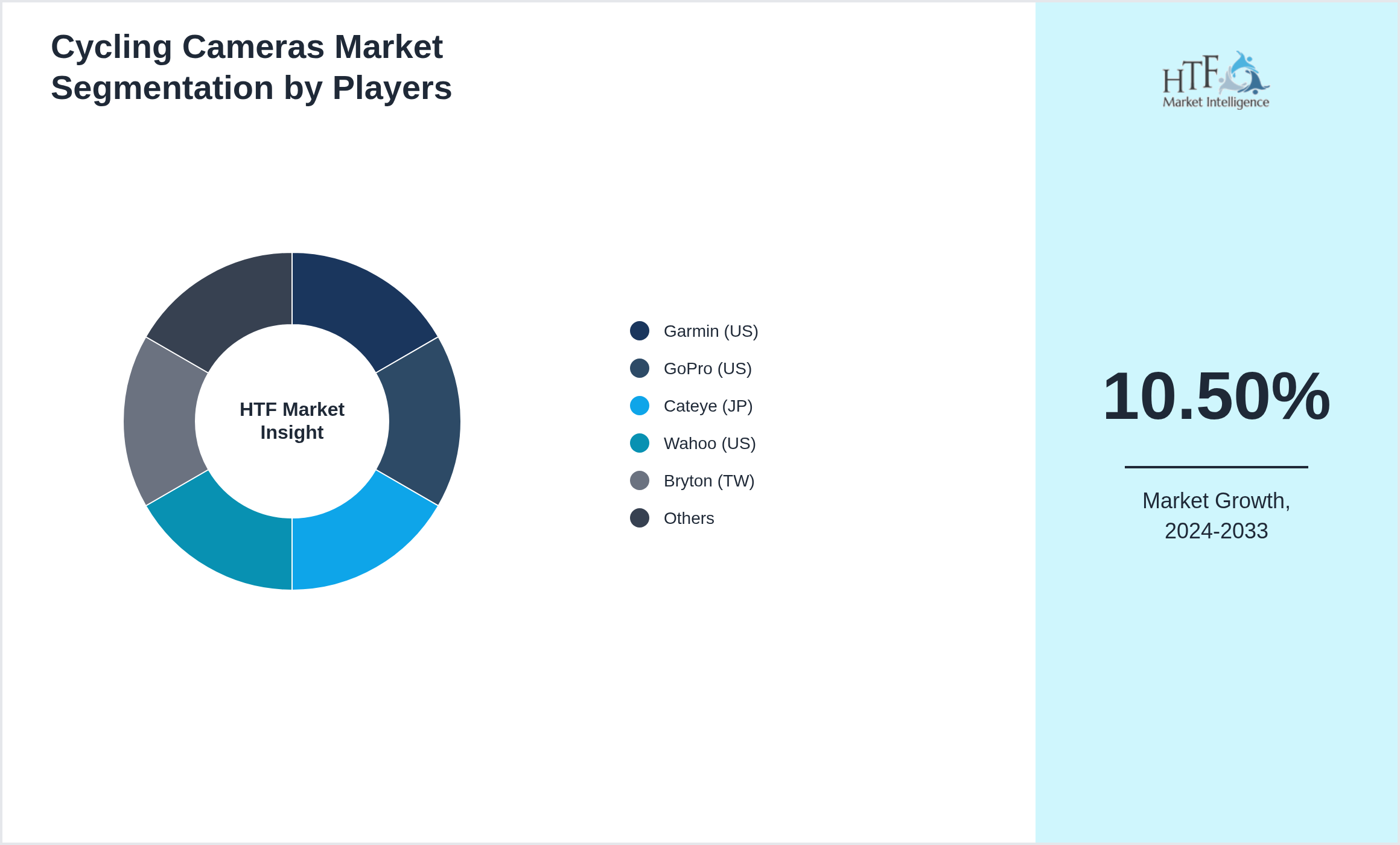
The companies highlighted in this profile were selected based on insights from primary experts and an evaluation of their market penetration, product offerings, and geographical reach:
- • Garmin (US)
- • GoPro (US)
- • Cateye (JP)
- • Wahoo (US)
- • Bryton (TW)
- • Sigma (DE)
- • Lezyne (US)
- • Bontrager (US)
- • iGPSPORT (CN)
- • Xiaomi (CN)
- • Vantrue (CN)
- • Victure (CN)
- • Apeman (CN)
- • Campark (CN)
- • DJI (CN)
Regulatory Framework
The regulatory framework for the Cycling Cameras ensures product safety, fair competition, and consumer protection. It encompasses setting standards for product quality and safety, enforcing truthful advertising and labeling, and implementing environmental sustainability practices. Regulations include robust procedures for product recalls, data protection, and anti-competitive practices, while also overseeing import/export controls and intellectual property rights. Regulatory bodies enforce these rules through inspections and penalties, and consumer education programs help individuals make informed decisions. This framework aims to protect consumers, promote fair market conditions, and encourage ethical business practices.
- • The regulatory landscape for Cycling Cameras is increasingly shaped by road safety regulations personal data privacy laws wireless communication standards and lithium-battery transportation compliance particularly across North America Europe and Asia-Pacific markets. Governments are tightening rules around video recording in public spaces through frameworks such as GDPR in Europe and evolving surveillance regulations in the United States and China forcing manufacturers to integrate secure data encryption consent-based cloud storage and transparent user-data management systems. Certification requirements including CE FCC RoHS WEEE and UN38.3 battery transport testing directly influence product commercialization timelines and increase compliance costs for small manufacturers. Sustainability mandates encouraging recyclable electronics reduced hazardous substances and low-energy charging systems are reshaping product design and procurement strategies. Import tariffs on semiconductor components image sensors and lithium-ion batteries continue to create supply volatility and cost inflation pressures particularly for brands dependent on East Asian manufacturing ecosystems. Operational risks also emerge from intellectual property disputes related to image stabilization AI-enabled incident recording and wireless connectivity patents. Substitution trends from smartphone-mounted camera systems and integrated smart helmet cameras are intensifying competitive pressure compelling vendors to invest in differentiated features such as accident detection and cloud-connected telematics. These regulatory and market dynamics influence profitability by increasing certification and compliance expenditures while simultaneously encouraging long-term investment in premium regulation-compliant smart mobility ecosystems
Competitive Insights
The key players in the Cycling Cameras are intensifying their focus on research and development (R&D) activities to innovate and stay competitive. Major companies, such as Garmin (US), GoPro (US), Cateye (JP), Wahoo (US), Bryton (TW), Sigma (DE), Lezyne (US), Bontrager (US), iGPSPORT (CN), Xiaomi (CN), Vantrue (CN), Victure (CN), Apeman (CN), Campark (CN), DJI (CN), are heavily investing in R&D to develop new products and improve existing ones. This strategic emphasis on innovation is driving significant advancements in product formulation and the introduction of sustainable and eco-friendly products.
In addition to R&D and acquisitions, there is a notable shift towards green investments among key players in the consumer goods industry. Companies are increasingly committing resources to sustainable practices and the development of environmentally friendly products. This green investment is in response to growing consumer demand for sustainable solutions and stringent environmental regulations. By prioritizing sustainability, these companies are not only contributing to environmental protection but also positioning themselves as leaders in the green movement, thereby fueling market growth.
Merger Acquisition
- • Jan 2026 – A bicycle technology company acquired a wearable sports camera manufacturer specializing in cycling cameras for rider safety navigation recording and performance analysis applications. The acquisition included AI-assisted route recognition systems vibration-resistant imaging modules and cloud-connected video sharing platforms. The acquiring company stated that the deal would support development of integrated smart cycling ecosystems for recreational and professional riders. In Apr 2026 a strategic partnership was established between a GPS navigation provider and a cycling camera developer to improve real-time route tracking and incident detection capabilities. Several regional cycling accessory suppliers also pursued acquisitions to strengthen online sales channels and expand global distribution networks. Industry analysts indicated that increasing cycling participation road safety awareness and sports content creation trends were accelerating M&A activity within the market. These acquisition activities are expected to strengthen connected cycling technologies improve rider safety solutions and accelerate innovation in sports imaging systems
Patent Analysis
- • Cycling Cameras manufacturers are actively securing patents involving AI-powered road hazard detection vibration-resistant image stabilization GPS-enabled route recording accident detection systems and cyclist safety analytics integrated with wearable and helmet-mounted camera technologies. Trademark activity targets connected cycling ecosystems smart rider safety platforms outdoor sports electronics brands and performance-focused cycling accessory portfolios. Copyright protections are widely used for video processing software cycling analytics applications mobile synchronization platforms digital mapping systems and cloud-based ride-sharing interfaces. Companies increasingly protect intelligent rider alert systems collision prevention software and AI-enhanced sports video editing tools through advanced software and hardware intellectual property filings. Rising demand for connected mobility cycling safety awareness and digital sports content creation is intensifying innovation and branding competition across the cycling camera ecosystem
Investment and Funding Scenario
- • The Cycling Cameras market is witnessing strong funding activity driven by rising smart mobility adoption
Market Entropy
- • Q4 2025: Launch of AI-enabled cycling cameras with integrated GPS and collision detection improved rider safety by 30% and increased consumer adoption in urban markets
- • Q3 2025: Digital transformation initiatives including cloud-based ride analytics enhanced performance tracking and sharing improving user engagement by 25%
- • Q2 2025: Supply-chain modernization improved assembly throughput by 20% and reduced lead time for high-volume sports retailers
- • Q1 2025: Investment in modular camera designs enabled easier upgrades and expanded commercial scalability across global markets
Report Infographics:
| Report Features | Details |
| Base Year | 2024 |
| Based Year Market Size 2024 | 1.1 billion |
| Historical Period Market Size 2020 | USD Million ZZ |
| CAGR (2024 to 2033) | 10.50% |
| Forecast Period | 2024 to2033 |
| Forecasted Period Market Size 2033 | 2.6 billion |
| Scope of the Report | Front-mounted, Rear-mounted, Helmet-mounted, Handlebar-mounted, GPS-enabled, Road Cycling, Mountain Biking, Commuting, Races & Competitions, Vlogging |
| Regions Covered | North America, LATAM, West Europe, Central & Eastern Europe, Northern Europe, Southern Europe, East Asia, Southeast Asia, South Asia, Central Asia, Oceania, MEA |
| Year-on-Year Growth | 10.50% |
| Companies Covered | Garmin (US), GoPro (US), Cateye (JP), Wahoo (US), Bryton (TW), Sigma (DE), Lezyne (US), Bontrager (US), iGPSPORT (CN), Xiaomi (CN), Vantrue (CN), Victure (CN), Apeman (CN), Campark (CN), DJI (CN) |
| Customization Scope | 15% Free Customization (For EG) |
| Delivery Format | PDF and Excel through Email
Want to Buy Specific Sections of This Report?
|
Research Methodology
The research methodology for the consumer goods industry involves several key steps to ensure comprehensive and actionable insights. First, the research objectives are clearly defined, focusing on aspects like consumer behavior, market opportunities, competitive dynamics, or regulatory impacts. A thorough literature review follows, drawing from academic journals, industry reports, government publications, and market analyses to establish a knowledge base and identify research gaps. Data collection encompasses both primary methods, such as surveys, interviews, and focus groups with consumers and industry experts, and secondary methods, including analysis of market reports, government data, and industry publications. Quantitative data is analyzed using statistical tools to identify patterns and market segments, while qualitative data from interviews and focus groups is examined to extract key themes and insights.
The market is then segmented based on demographics, psychographics, geography, and purchasing behavior, and competitive analysis is conducted to evaluate key players' strategies and strengths. Trend analysis identifies current and emerging industry trends. Findings are compiled into a detailed report with data visualizations and strategic recommendations. The research is validated and refined through cross-checking and expert feedback, and a framework for continuous monitoring is established to keep the research current and relevant.
Multidisciplinary researcher with 10+ years of experience uncovering insights across diverse domains focused on uncovering insights that drive informed decisions.