
Automatic Biomass Briquette Machine Market Is Expected to Soar
Global Automatic Biomass Briquette Machine Market is segmented by Application (Biomass energy, Industrial fuel, Domestic fuel, Power plants, Pellet production), Type (Screw press, Hydraulic press, Roller press, Drum type, Multi-feed), and Geography (North America, LATAM, West Europe, Central & Eastern Europe, Northern Europe, Southern Europe, East Asia, Southeast Asia, South Asia, Central Asia, Oceania, MEA)
Pricing
Report Overview
Key Values Provided by a Automatic Biomass Briquette Machine Market
The Automatic Biomass Briquette Machine market was valued at 0.28 billion in 2024 and is expected to reach 0.65 billion by 2020, growing at a compound annual growth rate (CAGR) of 10.20% over the forecast period.
Automatic Biomass Briquette Machine refers to industrial equipment used for compressing agricultural waste, forestry residue, biomass materials, and organic industrial byproducts into dense fuel briquettes for renewable energy generation and sustainable fuel applications. These machines integrate automated feeding systems, hydraulic compression technologies, AI-assisted process controls, IoT-enabled monitoring infrastructure, and energy optimization mechanisms to improve briquette production efficiency and operational scalability. The market includes screw briquette machines, hydraulic biomass compactors, automated pelletization systems, industrial renewable fuel processing equipment, and smart biomass energy production infrastructure serving power generation, industrial heating, residential fuel, and waste recycling sectors. Rising demand for renewable energy solutions, increasing biomass utilization initiatives, carbon emission reduction goals, and sustainable waste management practices are fueling market expansion globally. Manufacturers are investing in predictive maintenance systems, energy-efficient compression technologies, cloud-based production analytics, low-emission biomass processing systems, and intelligent automation platforms to optimize production performance. Integration of circular economy strategies and decentralized renewable energy ecosystems is further enhancing commercial adoption, energy sustainability, and industrial biomass utilization efficiency.
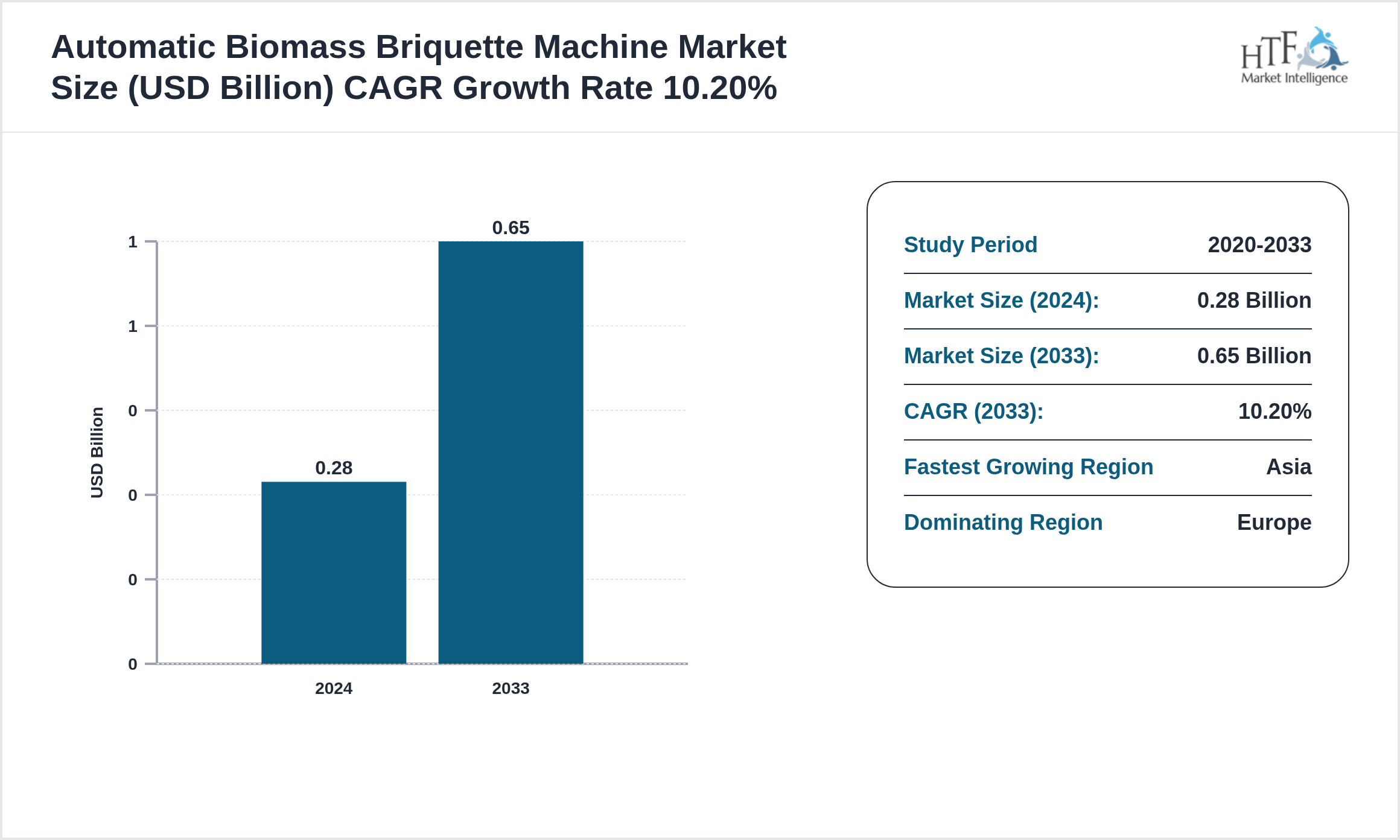
Source: HTF Market Intelligence (HTF MI)
A Automatic Biomass Briquette Machine market research study provides invaluable data-driven insights that allow businesses to make informed decisions based on accurate market trends, customer behaviors, and competitor analysis. These reports help organizations better understand the evolving needs of their target audience, enabling more customer-focused strategies.
Market Dynamics
Influencing Trend:
- • Automation energy-efficient compression systems and IoT-enabled process monitoring are key trends transforming the Automatic Biomass Briquette Machine market. Manufacturers increasingly integrate AI-based operational optimization predictive maintenance systems and smart temperature controls to improve productivity and reduce downtime. Compact modular machine designs and fully automated feeding systems gain popularity among small and medium-scale enterprises. Sustainable manufacturing practices and energy-saving hydraulic technologies are increasingly adopted to enhance operational efficiency. Export-oriented manufacturers focus on high-output production systems capable of processing diverse biomass materials while meeting environmental compliance standards and improving combustion efficiency
- • Growing demand for renewable energy alternatives rising industrial fuel costs and increasing agricultural waste utilization are major factors driving the Automatic Biomass Briquette Machine market. Industries and rural communities increasingly adopt biomass briquetting systems to convert agricultural residues sawdust and organic waste into cost-effective fuel sources. Government incentives supporting waste-to-energy initiatives and carbon emission reduction programs further strengthen market demand. Expanding industrial heating applications growing awareness regarding sustainable fuel alternatives and rising fossil fuel prices continue accelerating adoption across manufacturing food processing and power generation industries globally
- • High initial installation costs inconsistent biomass feedstock availability and maintenance complexity create major challenges for the Automatic Biomass Briquette Machine market. Variations in moisture content and raw material quality significantly affect briquette performance and operational efficiency. Limited technical expertise and insufficient after-sales support infrastructure in developing regions slow adoption rates among small enterprises. Rising electricity costs and wear-related component replacement expenses increase long-term operational costs for end users. Competition from alternative renewable energy technologies and fluctuating government policy support further create uncertainty for investment and large-scale production expansion
- • Increasing global focus on renewable energy generation and circular economy models creates substantial opportunities for Automatic Biomass Briquette Machine manufacturers. Emerging economies with abundant agricultural waste resources offer strong untapped market potential for decentralized fuel production systems. Industrial users seeking cost-effective alternatives to coal and furnace oil create recurring demand for biomass briquetting technologies. Expansion of rural electrification projects biomass pellet exports and government-backed clean energy programs further enhance long-term business opportunities. Technological advancements enabling multi-feedstock processing and lower energy consumption support premium product positioning and wider adoption across commercial and industrial sectors
The Europe Dominant Region currently dominates the market share, fueled by increasing consumption, population growth, and sustained economic progress, which collectively enhance market demand. Conversely, the {FASTEST GROWING REGION} is rapidly becoming the fastest-growing region, driven by significant infrastructure investments, industrial expansion, and rising consumer demand.
- North America
- LATAM
- West Europe
- Central & Eastern Europe
- Northern Europe
- Southern Europe
- East Asia
- Southeast Asia
- South Asia
- Central Asia
- Oceania
- MEA
Competitive Insights
The key players in the Automatic Biomass Briquette Machine are intensifying their focus on research and development (R&D) activities to innovate and stay competitive. Major companies, such as RUF (EU), Gemco (Asia), ABC Machinery (Asia), Bliss Industries (NA), Zhengzhou Vipeak (Asia), Ecostan (EU), Daxin (Asia), Imola (EU), La Meccanica (EU), Zhongzhou (Asia), Zhengzhou Taida (Asia), Kamas Industries (NA), Wood Pellet Equipment (EU), Jiangsu Liangyou (Asia), Zhejiang Yulong (Asia), are heavily investing in R&D to develop new products and improve existing ones. This strategic emphasis on innovation drives significant advancements in product formulation and the introduction of sustainable and eco-friendly products.
Moreover, these established industry leaders are actively pursuing acquisitions of smaller companies to expand their regional presence and enhance their market share. These acquisitions not only help in diversifying their product portfolios but also provide access to new technologies and markets. This consolidation trend is a critical factor in the growth of the consumer goods industry, as it enables larger companies to streamline operations, reduce costs, and increase their competitive edge.
The companies highlighted in this profile were selected based on insights from primary experts and an evaluation of their market penetration, product offerings, and geographical reach:
- • RUF (EU)
- • Gemco (Asia)
- • ABC Machinery (Asia)
- • Bliss Industries (NA)
- • Zhengzhou Vipeak (Asia)
- • Ecostan (EU)
- • Daxin (Asia)
- • Imola (EU)
- • La Meccanica (EU)
- • Zhongzhou (Asia)
- • Zhengzhou Taida (Asia)
- • Kamas Industries (NA)
- • Wood Pellet Equipment (EU)
- • Jiangsu Liangyou (Asia)
- • Zhejiang Yulong (Asia)
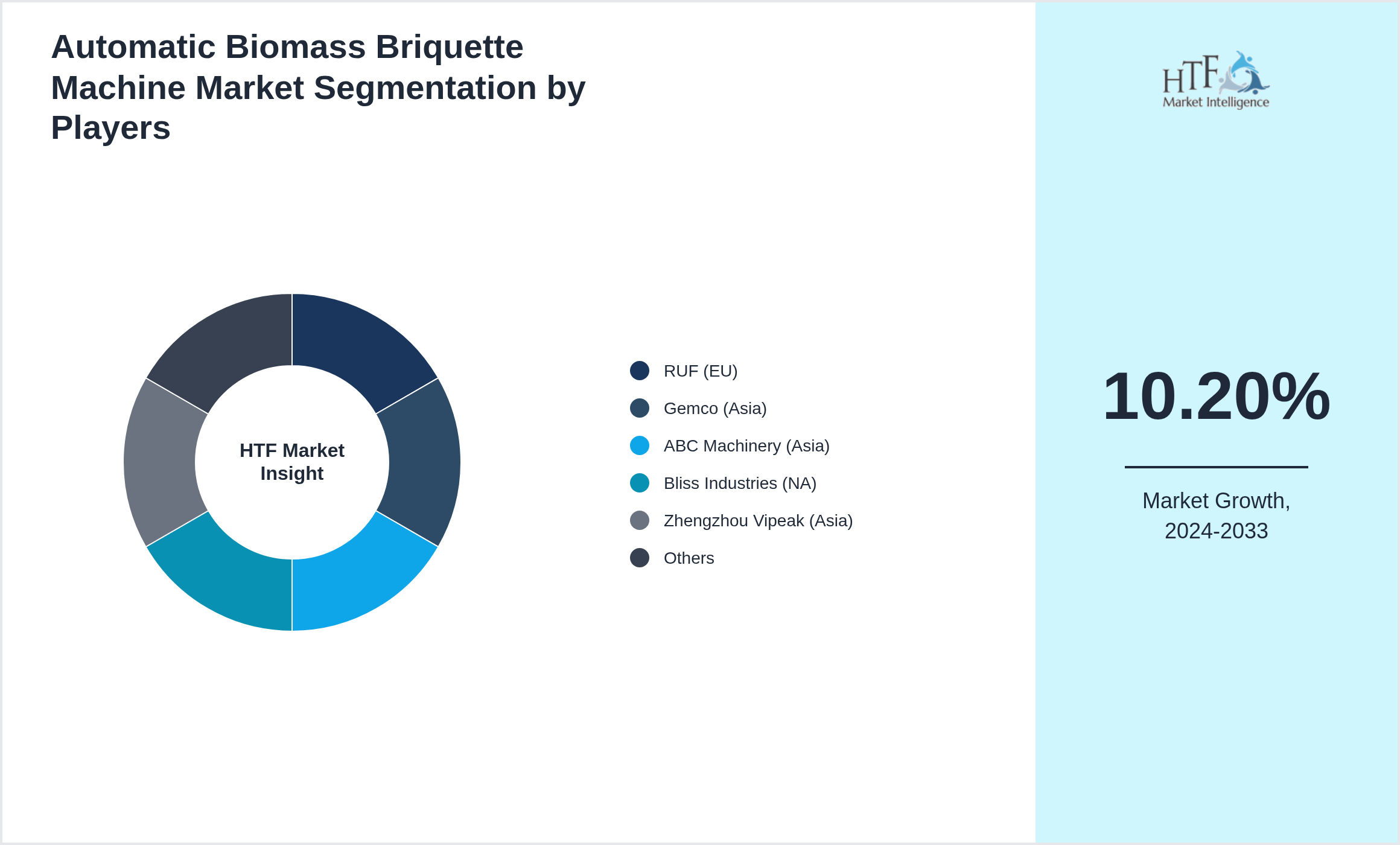
Key Highlights
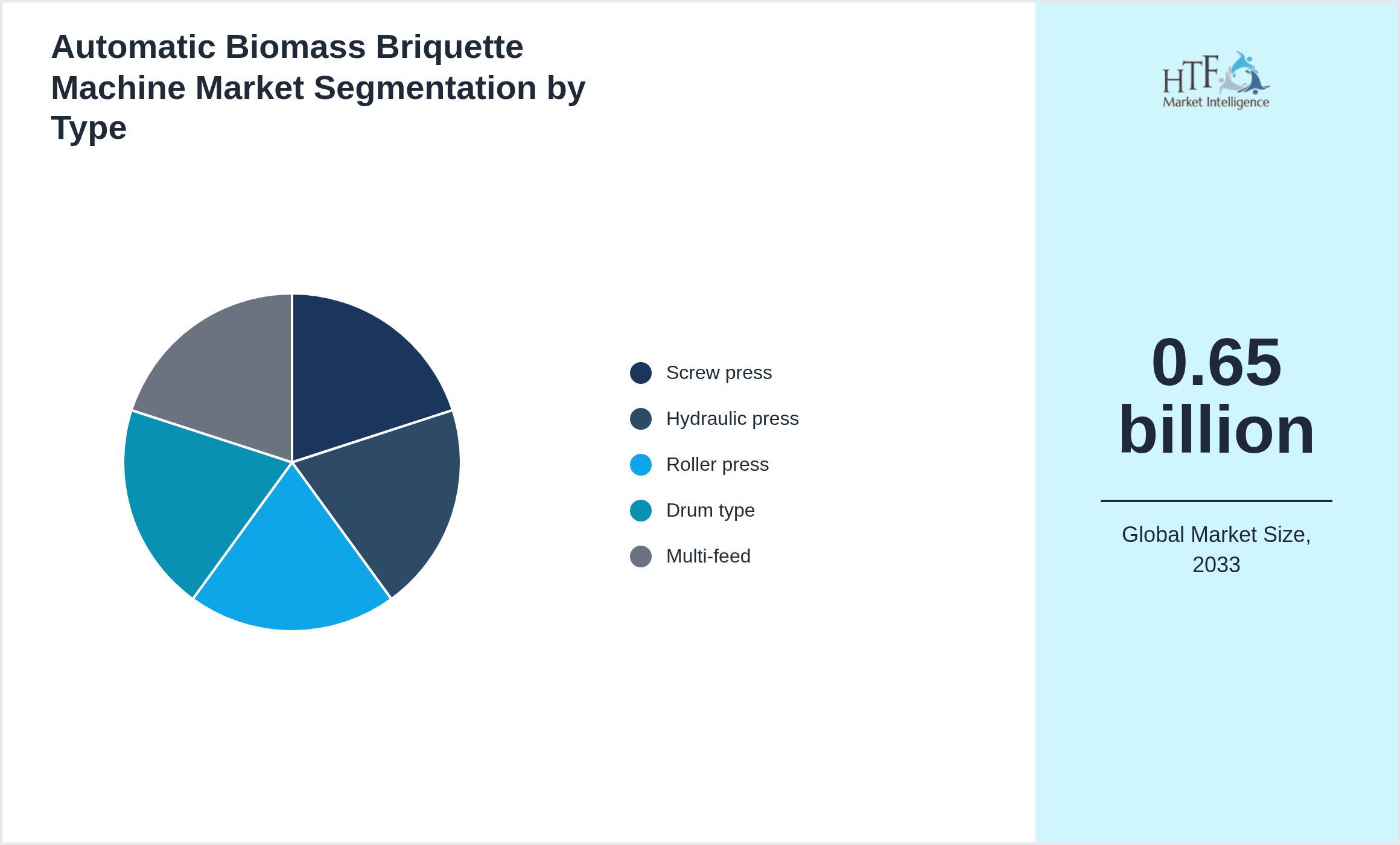
Segmentation by Type
- • Screw press
- • Hydraulic press
- • Roller press
- • Drum type
- • Multi-feed
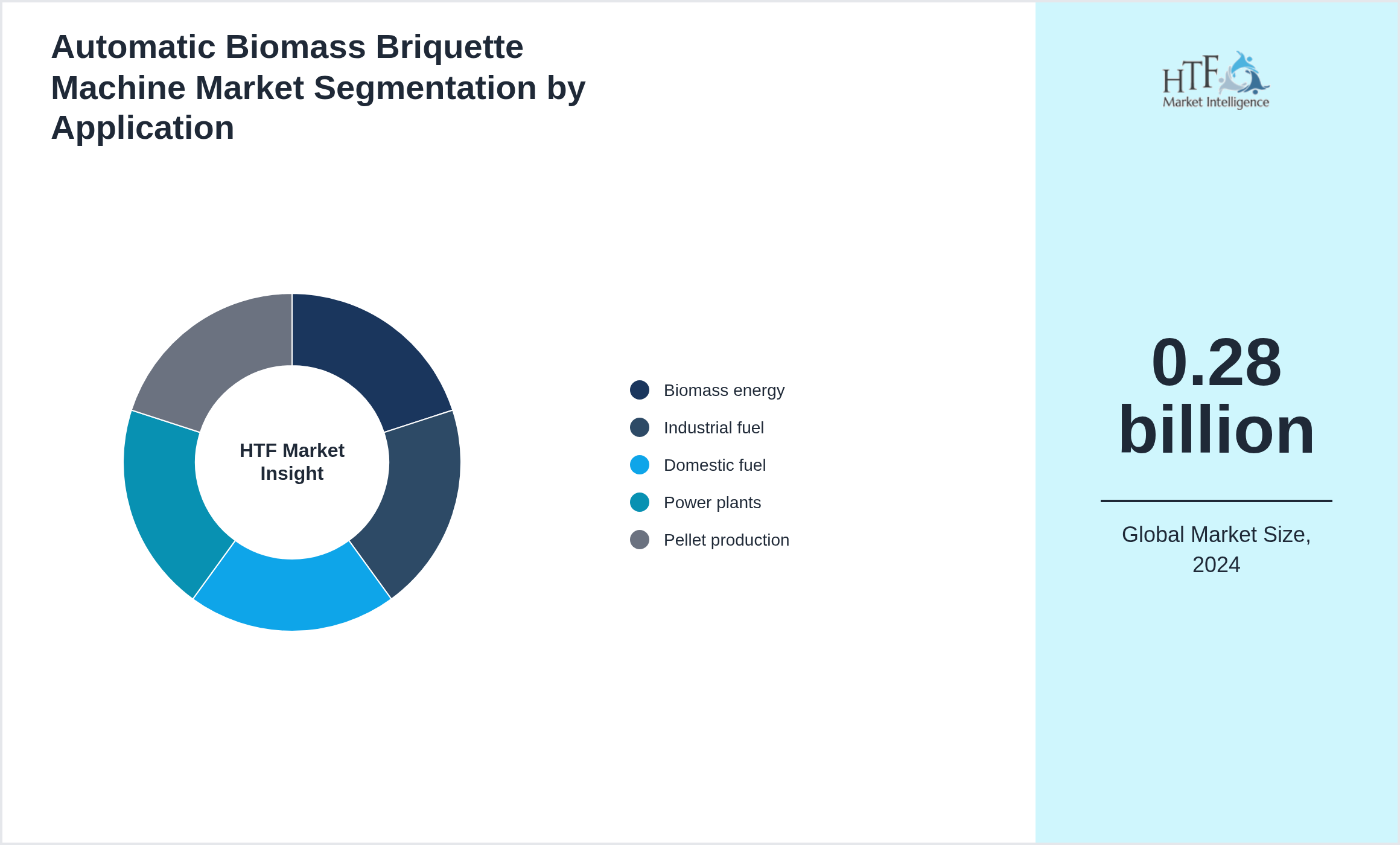
Segmentation by Application
- • Biomass energy
- • Industrial fuel
- • Domestic fuel
- • Power plants
- • Pellet production
Market Entropy
- • Q7 2025: Launch of AI-controlled briquetting systems improved output density by 28% and reduced fuel waste in biomass-to-energy applications
- • Q6 2025: Production modernization with automated feed and compression modules increased throughput by 25%
- • Q5 2025: Investment in modular plant solutions enhanced commercial scalability across small and medium-scale power plants
- • Q4 2025: Sustainability milestones included reduced emissions and energy consumption per ton of briquette produced
- • Q3 2025: Regulatory approvals for industrial biomass energy compliance accelerated adoption in Europe and APAC regions
- • Q2 2025: Operational optimization with predictive maintenance and IoT-enabled monitoring improved uptime by 22%
- • Q1 2025: Supply-chain transformation improved availability of agricultural residues and feedstock logistics reducing downtime and operational costs
Merger & Acquisition
- • Mar 2026 – A renewable energy equipment manufacturer acquired a biomass densification machinery company specializing in automatic biomass briquette machines to expand its sustainable fuel processing portfolio. The acquisition included automated feeding systems high-pressure compaction technologies and smart moisture control solutions used in industrial biomass fuel production. The acquiring company announced that the integration would support growing demand for alternative solid fuels in industrial heating and power generation applications. In Aug 2026 a strategic joint venture was established between an agricultural waste management company and a briquette machinery producer to develop decentralized biomass processing facilities across emerging markets. The collaboration focused on waste-to-energy conversion rural energy accessibility and carbon emission reduction initiatives. Several regional equipment suppliers also pursued acquisitions to strengthen fabrication capacity and improve after-sales service networks. Rising investment in renewable energy infrastructure and industrial decarbonization strategies significantly increased merger and acquisition activity across the biomass equipment industry. Analysts expect continued consolidation as governments and private investors prioritize clean energy transition technologies and circular economy initiatives
Regulatory Landscape
- • The regulatory landscape for the Automatic Biomass Briquette Machine market is heavily influenced by environmental sustainability mandates renewable energy transition policies and industrial emission standards across Asia-Pacific Europe and North America. Governments are encouraging biomass fuel adoption through carbon reduction targets subsidies for waste-to-energy technologies and restrictions on coal-based heating systems which directly improves demand visibility for briquette machinery manufacturers. Compliance with industrial machinery safety standards energy-efficiency certifications and workplace emission norms increases production costs but enhances long-term investment attractiveness for compliant suppliers. Import duties on fabricated steel components motors and automation systems create cost inflation pressures particularly for export-oriented equipment manufacturers dependent on global supply chains. Resource dependency on agricultural residue sawdust and forestry waste also creates supply variability especially during seasonal shortages or climate disruptions. Regulatory pressure on particulate emissions and combustion efficiency encourages manufacturers to integrate smart automation moisture control and low-emission processing systems improving scalability and operational efficiency while raising capital expenditure requirements for smaller participants
Patent Analysis
- • Automatic Biomass Briquette Machine industry participants are increasingly strengthening patent portfolios related to waste-to-energy processing systems automated biomass compression technologies energy-efficient briquetting machinery and AI-integrated production control platforms supporting renewable energy generation. Patent activity is focused on high-pressure compaction systems moisture control technologies multi-feedstock processing equipment low-emission combustion optimization and smart automation systems designed to improve biomass fuel consistency and industrial productivity. Companies are also filing patents for IoT-enabled monitoring systems predictive maintenance technologies and integrated waste recycling architectures that support circular economy objectives and sustainable industrial fuel production. Trademark registrations continue to rise around renewable energy machinery brands biomass processing platforms and eco-friendly fuel manufacturing solutions targeting agricultural and industrial customers. Copyright protections are increasingly applied to machine control software energy optimization algorithms industrial process dashboards and remote monitoring systems used in automated briquette manufacturing operations. Industry participants additionally secure proprietary digital production intelligence platforms and AI-driven efficiency analytics through software copyrights and industrial licensing agreements
Investment and Funding Scenario
- • Investment and funding activity in the Automatic Biomass Briquette Machine market is increasing due to rising demand for renewable energy alternatives
Competitive Innovation Radar
- • Competition in consumer-grade robot dogs is rapidly shifting toward AI-powered mobility systems
The Top-Down and Bottom-Up Approaches
The top-down approach begins with a broad theory or hypothesis and breaks it down into specific components for testing. This structured, deductive process involves developing a theory, creating hypotheses, collecting and analyzing data, and drawing conclusions. It is particularly useful when there is substantial theoretical knowledge, but it can be rigid and may overlook new phenomena.
Conversely, the bottom-up approach starts with specific data or observations, from which broader generalizations and theories are developed. This inductive process involves collecting detailed data, analyzing it for patterns, developing hypotheses, formulating theories, and validating them with additional data. While this approach is flexible and encourages the discovery of new phenomena, it can be time-consuming and less structured.
Swot and Pestel Analysis
SWOT Analysis
A SWOT analysis evaluates a company’s internal strengths and weaknesses, as well as external opportunities and threats. This Automatic Biomass Briquette Machine analysis helps businesses identify their competitive advantages, address internal challenges, and seize external opportunities while mitigating potential risks. It is performed to gain a comprehensive understanding of the organization's position in the market, align strategies with its strengths, and effectively navigate competitive landscapes.
PESTEL Analysis
Political, economic, social, technological, environmental, and legal factors impacting the business environment. This analysis helps organizations anticipate external changes, adapt strategies to macroeconomic trends, and ensure compliance with regulatory requirements. It is crucial for understanding the external forces that could influence business operations and for planning long-term strategies that align with evolving market conditions.
Report Infographics:
| Report Features | Details |
| Base Year | 2024 |
| Based Year Market Size 2024 | 0.28 billion |
| Historical Period | 2020 |
| CAGR (2024 to 2033) | 10.20% |
| Forecast Period | 2033 |
| Forecasted Period Market Size (2033) | 0.65 billion |
| Scope of the Report | By Type, By Application, By Sales Channel, By Region |
| Quantitative Units |
Revenue in USD million/billion, volume in kilotons, and CAGR from 2024 to 2033 |
| Companies Covered | RUF (EU), Gemco (Asia), ABC Machinery (Asia), Bliss Industries (NA), Zhengzhou Vipeak (Asia), Ecostan (EU), Daxin (Asia), Imola (EU), La Meccanica (EU), Zhongzhou (Asia), Zhengzhou Taida (Asia), Kamas Industries (NA), Wood Pellet Equipment (EU), Jiangsu Liangyou (Asia), Zhejiang Yulong (Asia) |
| Customization Scope | 15% Free Customization (For example)
Want to Buy Specific Sections of This Report?
|
| Delivery Format | PDF and Excel through Email |