
Global Chimney Cowl Market Scope & Changing Dynamics 2024-2033
Global Chimney Cowl Market is segmented by Application (Residential chimneys, Industrial chimneys, Commercial buildings, Boilers, Fireplaces), Type (Wind directional, Rainproof, Bird guard, Stainless steel, Galvanized steel), and Geography (North America, LATAM, West Europe, Central & Eastern Europe, Northern Europe, Southern Europe, East Asia, Southeast Asia, South Asia, Central Asia, Oceania, MEA)
Pricing
Report Overview
Key Values Provided by a Chimney Cowl Market
The Chimney Cowl market was valued at 0.18 billion in 2024 and is expected to reach 0.42 billion by 2020, growing at a compound annual growth rate (CAGR) of 10.00% over the forecast period.
Chimney Cowl refers to protective ventilation and airflow management components installed on chimney tops to improve draft efficiency, prevent downdrafts, block debris intrusion, enhance smoke extraction, and protect heating systems from environmental exposure. These systems are manufactured using stainless steel, aluminum, heat-resistant alloys, and aerodynamic engineering technologies designed for residential, commercial, industrial, and energy infrastructure applications. The market includes rotating chimney cowls, anti-downdraft systems, bird guard cowls, rainproof chimney covers, smart airflow management systems, and energy-efficient ventilation accessories supporting fireplaces, industrial furnaces, boilers, and heating installations. Increasing demand for energy-efficient building infrastructure, rising residential renovation activities, expansion of industrial heating systems, and growing awareness regarding indoor air quality are supporting strong market growth. Manufacturers are integrating corrosion-resistant materials, AI-assisted airflow simulation technologies, sustainable manufacturing processes, and modular installation systems to improve durability and operational performance. Growth of green building initiatives, smart ventilation ecosystems, and advanced thermal management infrastructure is further driving innovation and commercial scalability across construction and industrial sectors.
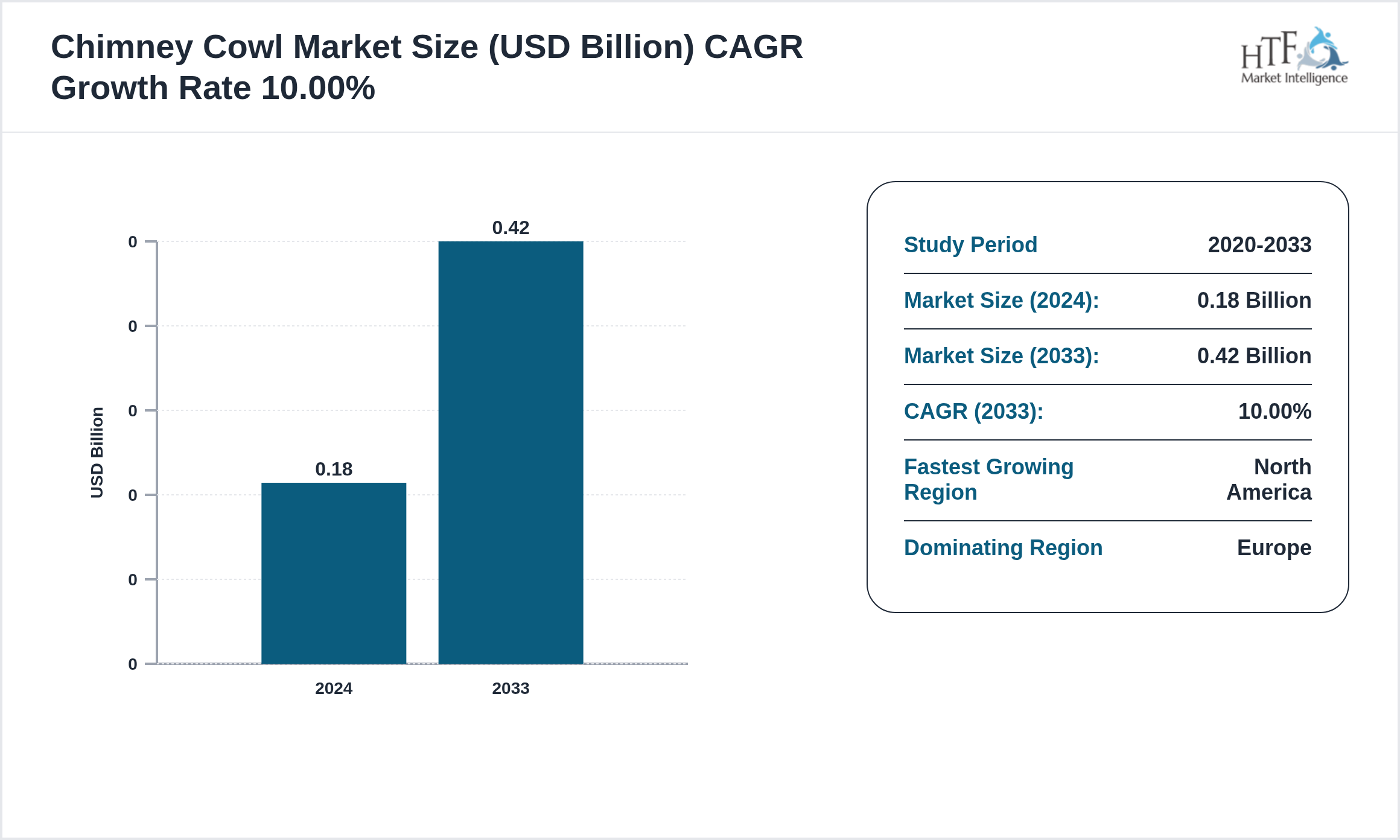
Source: HTF Market Intelligence (HTF MI)
A Chimney Cowl market research study provides invaluable data-driven insights that allow businesses to make informed decisions based on accurate market trends, customer behaviors, and competitor analysis. These reports help organizations better understand the evolving needs of their target audience, enabling more customer-focused strategies.
Market Dynamics
Influencing Trend:
- • Stainless steel designs anti-downdraft engineering and weather-resistant materials are key trends shaping the Chimney Cowl market. Manufacturers increasingly focus on aerodynamic product structures that improve ventilation efficiency while reducing smoke backflow. Smart ventilation monitoring systems and modular chimney accessories gain traction within premium residential and commercial applications. Sustainable and corrosion-resistant materials with longer operational life are becoming preferred choices among consumers and contractors. Online retail expansion and customized cowl solutions compatible with modern architectural designs continue influencing purchasing behavior across developed and urbanizing regions
- • Rising residential construction activities increasing demand for energy-efficient heating systems and growing awareness regarding smoke ventilation safety are major drivers supporting the Chimney Cowl market. Consumers increasingly adopt chimney cowls to improve airflow efficiency prevent downdrafts and protect chimneys from rainwater birds and debris accumulation. Expansion of wood-burning stoves fireplaces and industrial exhaust systems further accelerates product demand globally. Regulatory emphasis on fire safety compliance and efficient smoke extraction systems also strengthens adoption across residential hospitality and commercial infrastructure sectors
- • Fluctuating steel and metal prices seasonal demand variations and competition from low-cost regional manufacturers create significant challenges for the Chimney Cowl market. Installation complexity and compatibility issues with older chimney systems increase operational difficulties for service providers. Harsh weather conditions and prolonged exposure to smoke and moisture may reduce product lifespan and increase replacement frequency. Strict fire safety regulations and certification requirements elevate manufacturing and compliance costs. Counterfeit products and price-sensitive consumer behavior further pressure profit margins particularly within highly competitive residential construction markets
- • Expanding residential renovation projects growing installation of biomass heating systems and increasing adoption of eco-friendly fireplaces create strong growth opportunities for chimney cowl manufacturers. Emerging housing markets and hospitality infrastructure expansion further strengthen demand for advanced ventilation accessories. Product innovation in noise reduction self-rotating ventilation systems and energy-efficient airflow management supports premium pricing opportunities. E-commerce platforms and direct-to-consumer sales models enable wider product accessibility and international market penetration. Strategic partnerships with construction contractors HVAC system providers and chimney installation companies further enhance recurring revenue opportunities
The Europe Dominant Region currently dominates the market share, fueled by increasing consumption, population growth, and sustained economic progress, which collectively enhance market demand. Conversely, the {FASTEST GROWING REGION} is rapidly becoming the fastest-growing region, driven by significant infrastructure investments, industrial expansion, and rising consumer demand.
- North America
- LATAM
- West Europe
- Central & Eastern Europe
- Northern Europe
- Southern Europe
- East Asia
- Southeast Asia
- South Asia
- Central Asia
- Oceania
- MEA
Competitive Insights
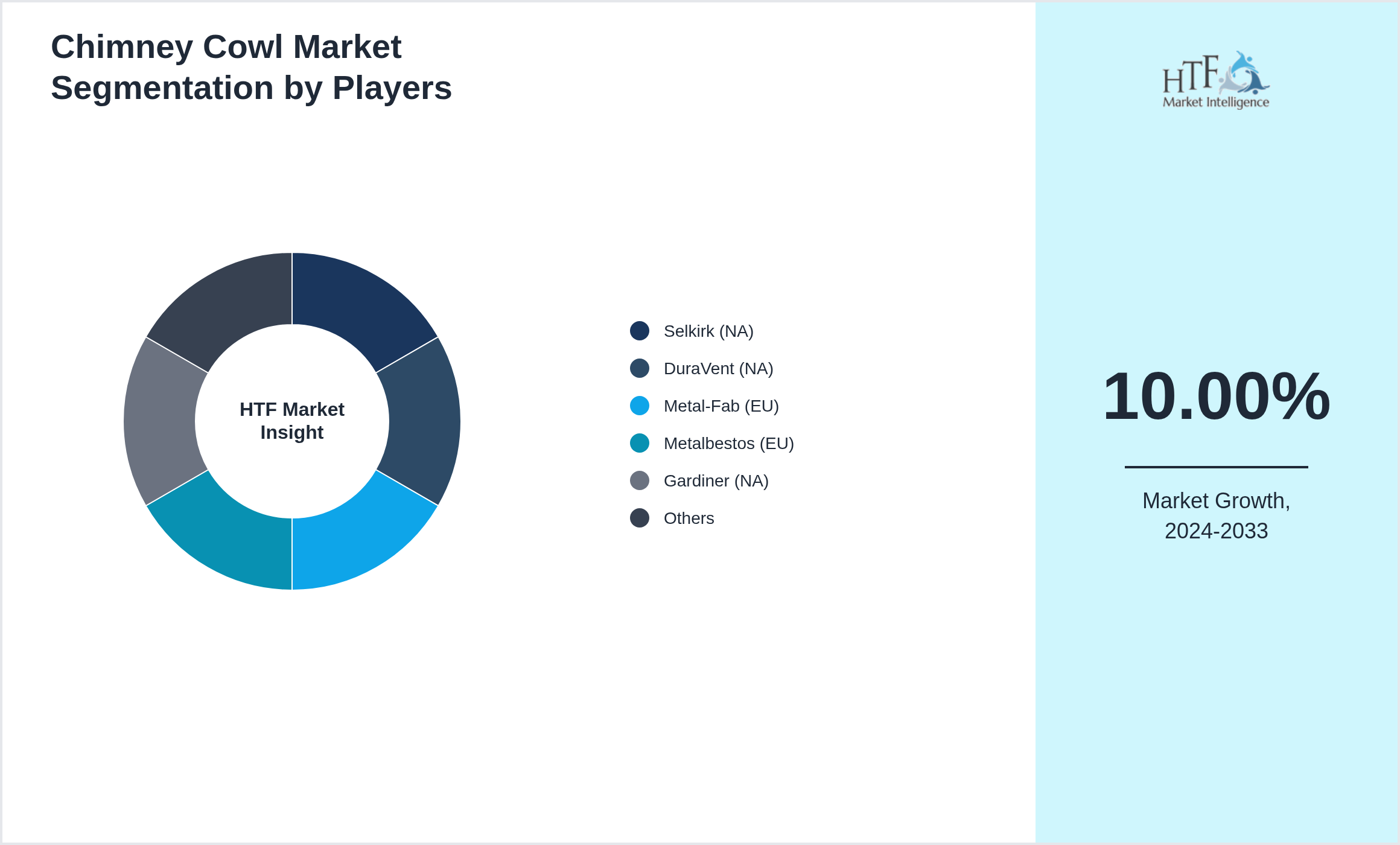
The key players in the Chimney Cowl are intensifying their focus on research and development (R&D) activities to innovate and stay competitive. Major companies, such as Selkirk (NA), DuraVent (NA), Metal-Fab (EU), Metalbestos (EU), Gardiner (NA), Twin Wall (EU), Eco Chimney (EU), Chimney Caps & Cowls (NA), Harmer & Sons (EU), Metal Tech (EU), Termatek (EU), Bowman Chimney (NA), Schiedel (EU), Solarboss (NA), Fluecote (EU), are heavily investing in R&D to develop new products and improve existing ones. This strategic emphasis on innovation drives significant advancements in product formulation and the introduction of sustainable and eco-friendly products.
Moreover, these established industry leaders are actively pursuing acquisitions of smaller companies to expand their regional presence and enhance their market share. These acquisitions not only help in diversifying their product portfolios but also provide access to new technologies and markets. This consolidation trend is a critical factor in the growth of the consumer goods industry, as it enables larger companies to streamline operations, reduce costs, and increase their competitive edge.
The companies highlighted in this profile were selected based on insights from primary experts and an evaluation of their market penetration, product offerings, and geographical reach:
- • Selkirk (NA)
- • DuraVent (NA)
- • Metal-Fab (EU)
- • Metalbestos (EU)
- • Gardiner (NA)
- • Twin Wall (EU)
- • Eco Chimney (EU)
- • Chimney Caps & Cowls (NA)
- • Harmer & Sons (EU)
- • Metal Tech (EU)
- • Termatek (EU)
- • Bowman Chimney (NA)
- • Schiedel (EU)
- • Solarboss (NA)
- • Fluecote (EU)
Key Highlights
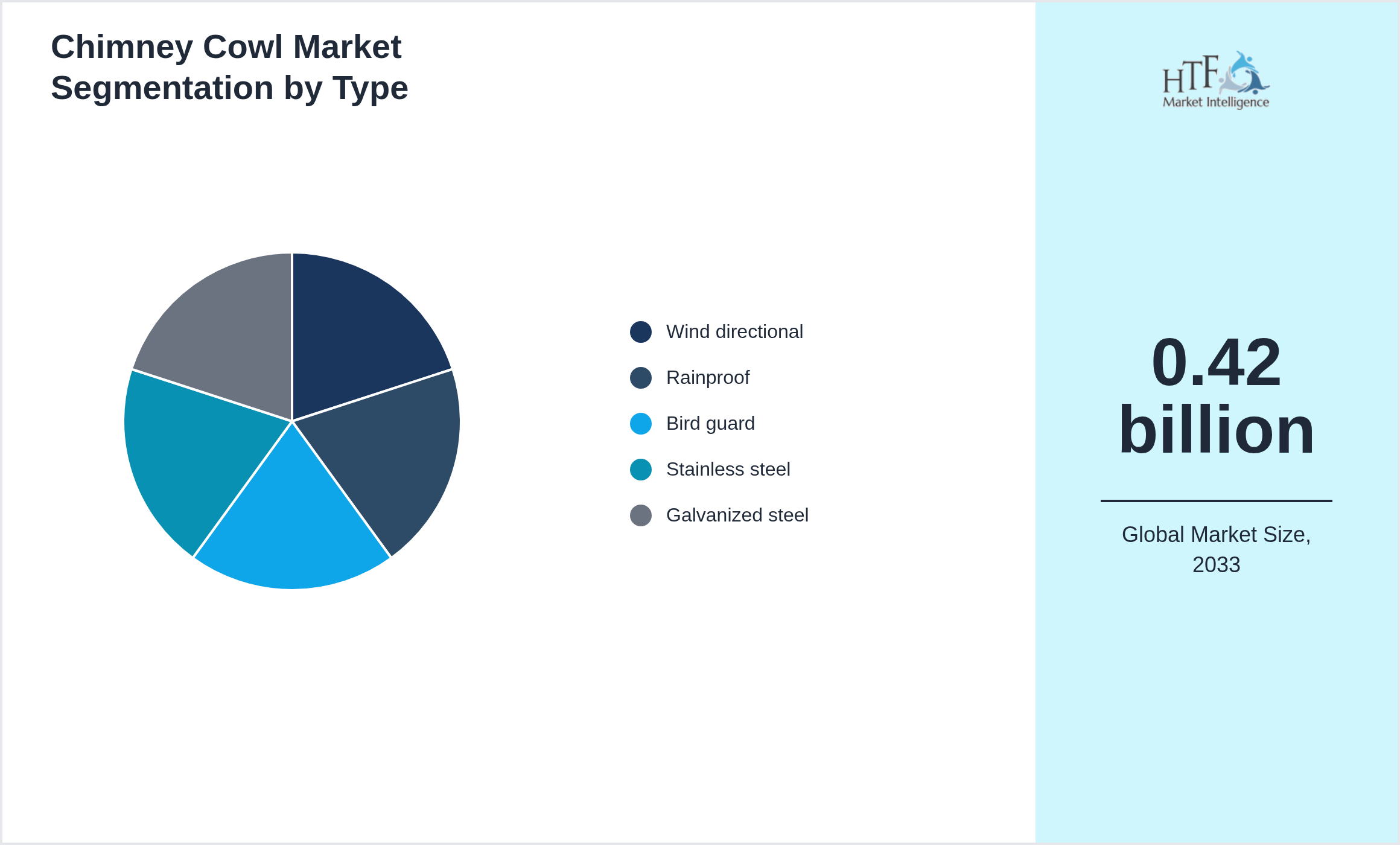
Segmentation by Type
- • Wind directional
- • Rainproof
- • Bird guard
- • Stainless steel
- • Galvanized steel
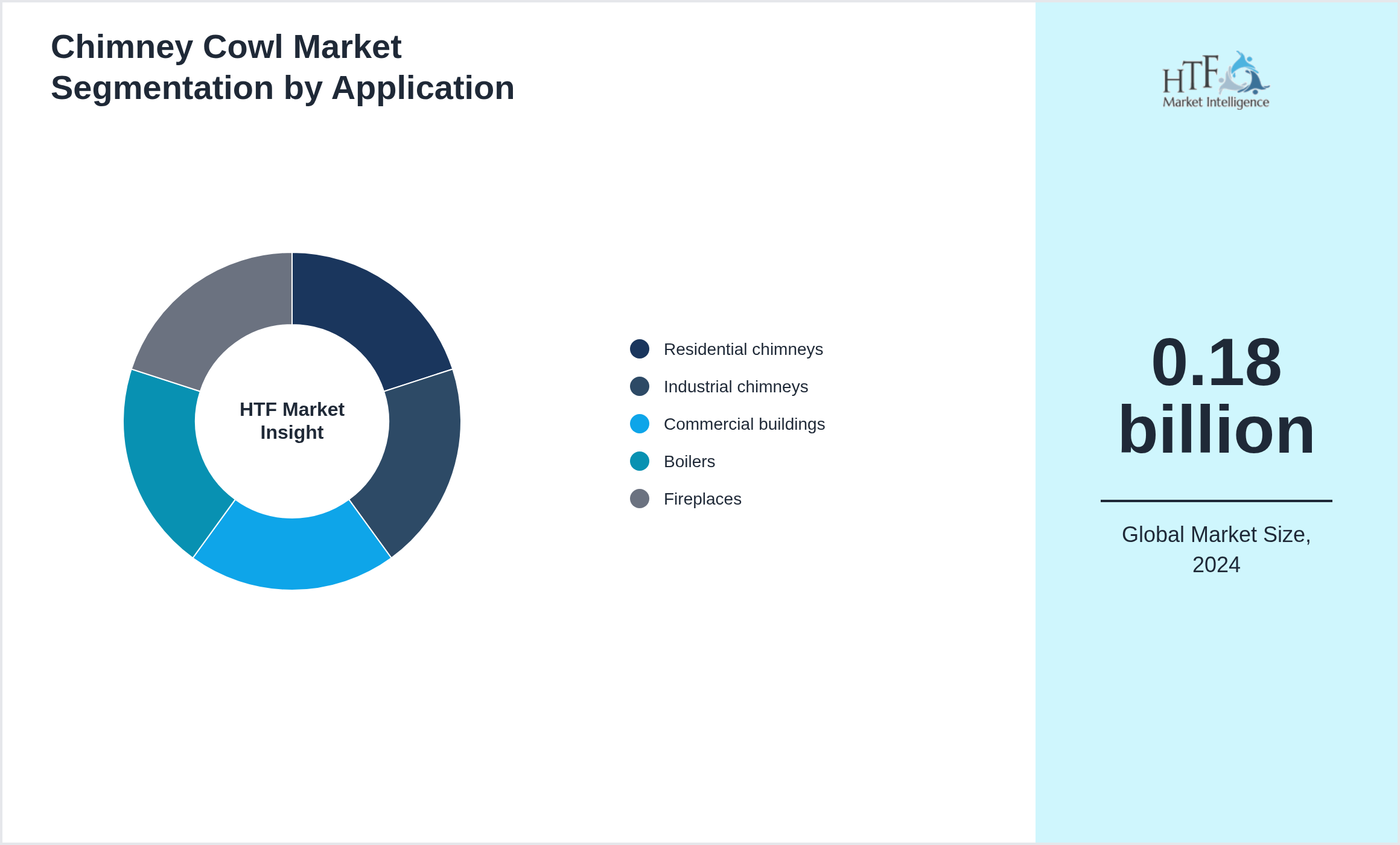
Segmentation by Application
- • Residential chimneys
- • Industrial chimneys
- • Commercial buildings
- • Boilers
- • Fireplaces
Market Entropy
- • Q7 2025: Introduction of AI-assisted aerodynamic design reduced backflow by 20% and improved operational efficiency in industrial and residential chimneys
- • Q6 2025: Investment in modular cowl production enhanced commercial scalability and deployment speed
- • Q5 2025: Production modernization with automated sheet metal forming improved yield by 25%
- • Q4 2025: Regulatory compliance with fire safety and emission standards accelerated adoption in industrial and residential projects
- • Q3 2025: Sustainability milestones included recyclable materials and reduced carbon footprint per unit
- • Q2 2025: Supply-chain optimization improved availability of corrosion-resistant alloys and coatings
- • Q1 2025: Operational shifts toward pre-fabricated cowl units reduced installation time and improved safety performance
Merger & Acquisition
- • Jan 2026 – A European ventilation systems manufacturer acquired a regional chimney cowl and flue accessory producer to strengthen its residential airflow management portfolio and improve penetration in the retrofit construction market. The acquisition included patented anti-downdraft chimney cowl designs and corrosion-resistant stainless-steel fabrication technologies suitable for commercial and residential heating systems. The acquiring company announced plans to integrate smart airflow optimization components into future chimney ventilation products to improve energy efficiency and indoor air quality standards. In Apr 2026 a strategic partnership was formed between a roofing systems provider and a chimney cowl manufacturer to deliver bundled ventilation and weatherproofing solutions for modern smart homes. Several small manufacturers in North America and Europe also consolidated operations to improve raw material sourcing efficiency and reduce production costs amid rising steel prices. Industry participants indicated that stricter building ventilation regulations and increasing adoption of energy-efficient heating systems were accelerating investment activity. The transaction is expected to strengthen aftermarket installation services improve product innovation and intensify competition across the architectural ventilation equipment sector
Regulatory Landscape
- • The Chimney Cowl market operates under strict building safety regulations fire protection standards and energy-efficiency codes applicable to residential commercial and industrial infrastructure projects. Governments increasingly enforce ventilation efficiency requirements and anti-downdraft standards to reduce indoor pollution risks and improve heating system performance particularly in colder European and North American regions. Stainless steel usage regulations corrosion-resistance specifications and product durability certifications influence material sourcing and manufacturing costs. Trade regulations on metal imports especially aluminum and steel tariffs significantly affect profitability due to raw material dependency. Sustainability compliance is becoming more important as green building certification frameworks promote energy-saving ventilation accessories in new construction projects. Manufacturers investing in weather-resistant coatings recyclable materials and automated fabrication technologies are better positioned to scale production and secure long-term infrastructure contracts. However rising construction compliance costs fluctuating metal prices and substitution trends toward advanced HVAC ventilation systems may pressure traditional chimney cowl suppliers forcing product innovation and premium positioning strategies
Patent Analysis
- • Chimney Cowl manufacturers and ventilation solution providers continue to strengthen intellectual property portfolios through trademark registrations focused on energy-efficient roofing accessories anti-downdraft systems weather-resistant ventilation products and premium architectural chimney protection brands. Patent activity within the market increasingly revolves around aerodynamic airflow optimization systems rotating anti-backflow cowls corrosion-resistant metal coatings heat-regulating vent technologies bird-proof mesh engineering and smart ventilation monitoring mechanisms designed to improve safety and fuel efficiency in residential and industrial heating systems. Companies are investing heavily in patented stainless-steel fabrication methods and modular installation technologies that reduce maintenance requirements while improving structural durability in extreme climatic conditions. Copyright protections are becoming more relevant for CAD product designs digital installation manuals BIM integration files online product configurators and branded e-commerce catalogues used by construction suppliers and HVAC distributors. Industry participants also secure digital trademarks for smart chimney monitoring apps integrated with IoT-based airflow sensors and predictive maintenance analytics. Increasing environmental regulations regarding smoke emissions and energy efficiency encourage innovation in low-emission chimney systems creating opportunities for proprietary airflow technologies and advanced combustion-support solutions protected through intellectual property filings
Investment and Funding Scenario
- • The Chimney Cowl market is attracting growing investment due to rising demand for residential ventilation efficiency
Competitive Innovation Radar
- • The market for photodetector chips used in automotive LiDAR is being transformed through semiconductor miniaturization
The Top-Down and Bottom-Up Approaches
The top-down approach begins with a broad theory or hypothesis and breaks it down into specific components for testing. This structured, deductive process involves developing a theory, creating hypotheses, collecting and analyzing data, and drawing conclusions. It is particularly useful when there is substantial theoretical knowledge, but it can be rigid and may overlook new phenomena.
Conversely, the bottom-up approach starts with specific data or observations, from which broader generalizations and theories are developed. This inductive process involves collecting detailed data, analyzing it for patterns, developing hypotheses, formulating theories, and validating them with additional data. While this approach is flexible and encourages the discovery of new phenomena, it can be time-consuming and less structured.
Swot and Pestel Analysis
SWOT Analysis
A SWOT analysis evaluates a company’s internal strengths and weaknesses, as well as external opportunities and threats. This Chimney Cowl analysis helps businesses identify their competitive advantages, address internal challenges, and seize external opportunities while mitigating potential risks. It is performed to gain a comprehensive understanding of the organization's position in the market, align strategies with its strengths, and effectively navigate competitive landscapes.
PESTEL Analysis
Political, economic, social, technological, environmental, and legal factors impacting the business environment. This analysis helps organizations anticipate external changes, adapt strategies to macroeconomic trends, and ensure compliance with regulatory requirements. It is crucial for understanding the external forces that could influence business operations and for planning long-term strategies that align with evolving market conditions.
Report Infographics:
| Report Features | Details |
| Base Year | 2024 |
| Based Year Market Size 2024 | 0.18 billion |
| Historical Period | 2020 |
| CAGR (2024 to 2033) | 10.00% |
| Forecast Period | 2033 |
| Forecasted Period Market Size (2033) | 0.42 billion |
| Scope of the Report | By Type, By Application, By Sales Channel, By Region |
| Quantitative Units |
Revenue in USD million/billion, volume in kilotons, and CAGR from 2024 to 2033 |
| Companies Covered | Selkirk (NA), DuraVent (NA), Metal-Fab (EU), Metalbestos (EU), Gardiner (NA), Twin Wall (EU), Eco Chimney (EU), Chimney Caps & Cowls (NA), Harmer & Sons (EU), Metal Tech (EU), Termatek (EU), Bowman Chimney (NA), Schiedel (EU), Solarboss (NA), Fluecote (EU) |
| Customization Scope | 15% Free Customization (For example)
Want to Buy Specific Sections of This Report?
|
| Delivery Format | PDF and Excel through Email |