
Global Transcranial Magnetic Stimulation (TMS) System Market Scope & Changing Dynamics 2024-2033
Global Transcranial Magnetic Stimulation (TMS) System Market is segmented by Application (Depression, Alzheimer’s Disease, Parkinson’s Disease, Epilepsy, Migraine, Obsessive-Compulsive Disorder (OCD), Smoking cessation, Others), Type (Deep Transcranial Magnetic Stimulation, Repetitive Transcranial Magnetic Stimulation, Others), and Geography (North America, LATAM, West Europe, Central & Eastern Europe, Northern Europe, Southern Europe, East Asia, Southeast Asia, South Asia, Central Asia, Oceania, MEA)
Pricing
Report Overview
INDUSTRY OVERVIEW
The Transcranial Magnetic Stimulation (TMS) System is growing at 11.40% and is expected to reach 3.8 billion by 2033. The below-mentioned are some of the dynamics shaping the Transcranial Magnetic Stimulation (TMS) System.
A TMS system is a non-invasive neuromodulation device that uses rapidly changing magnetic fields (via a coil placed on the scalp) to induce small electrical currents in targeted brain regions. It is primarily used for treatment-resistant depression and other neuropsychiatric conditions under supervised protocols. Systems include pulse generators coils cooling positioning and software to deliver repeatable stimulation patterns safely.
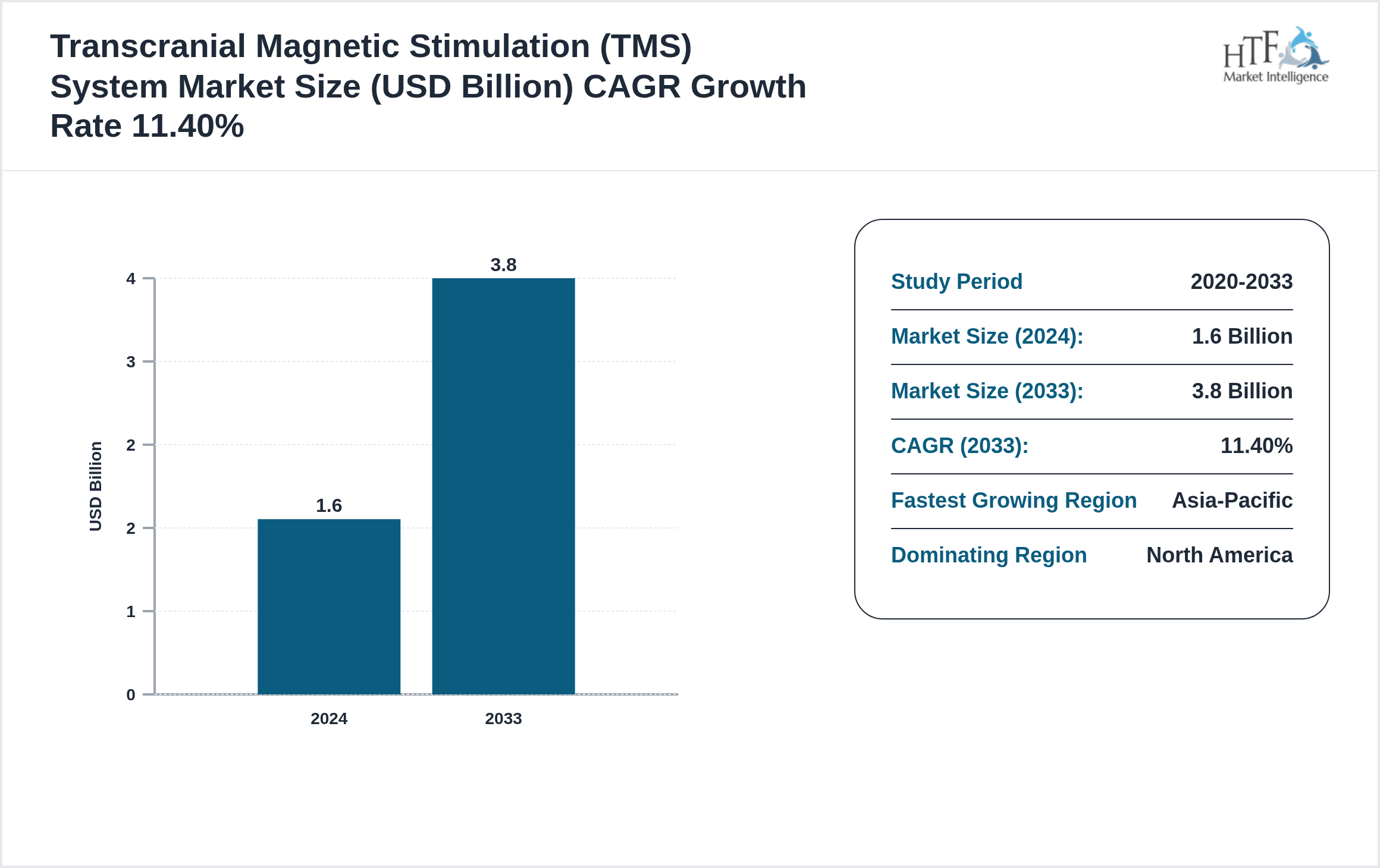
Source: HTF Market Intelligence (HTF MI)
Understand Key Market Dynamics
Market Dynamics
Market Drivers:
The key drivers in the market include technological advancements, increasing demand by consumers for innovative products, and government-friendly policies.
- • Rising mental health burden demand for non-drug therapies improved reimbursement better clinical evidence growth of outpatient neuro clinics treatment-resistant depression prevalence and technology advances reducing session time.
Some of the restraints to market growth may include regulatory challenges, high production costs, and disruptions in the supply chain.
- • Reimbursement variability high equipment cost clinician training needs mixed patient response rates contraindications/safety screening competition from other neuromodulation regulatory pathways for new claims.
Among the trending ones are sustainability, digital transformation, and the increasing importance of data analytics.
- • Theta-burst protocols accelerated treatment schedules better coil designs neuronavigation integration real-world outcomes tracking combination therapy studies expansion into new indications clinic network rollouts.
These include emerging markets, innovation in product development, and strategic partnerships.
- • Expansion into APAC/MEA clinics home-adjacent service models software analytics for outcomes leasing models for clinics new indication trials partnerships with psychiatry networks service/coil replacement revenues.
Regulation Shaping the Healthcare Industry
The healthcare industry is significantly influenced by a complex framework of regulations designed to ensure patient safety, the efficacy of treatments, and the overall quality of care. Key regulatory areas include drug approval processes, medical device standards, and healthcare data protection. These regulations aim to maintain high standards for clinical practices and safeguard public health.
Get More Details on the Transcranial Magnetic Stimulation (TMS) System Market Study
SWOT Analysis in the Healthcare Industry
SWOT analysis in the healthcare industry involves a structured assessment of strengths, weaknesses, opportunities, and threats to identify strategic advantages and areas for improvement.
• Strengths: Evaluates internal factors such as advanced technology, skilled personnel, and strong brand reputation. For example, a hospital with cutting-edge medical equipment and specialized staff is considered to have a strong competitive edge.
• Weaknesses: Identifies internal limitations like outdated facilities, regulatory compliance issues, or high operational costs. Weaknesses could include inefficient processes or lack of innovation.
• Opportunities: Assesses external factors that could drive growth, such as emerging medical technologies, expanding markets, or favorable government policies. Opportunities might involve partnerships or new service lines.
• Threats: Examines external challenges such as increasing competition, changing regulations, or economic downturns. Threats might include new entrants with disruptive technologies or stricter regulatory requirements.
Market Segmentation
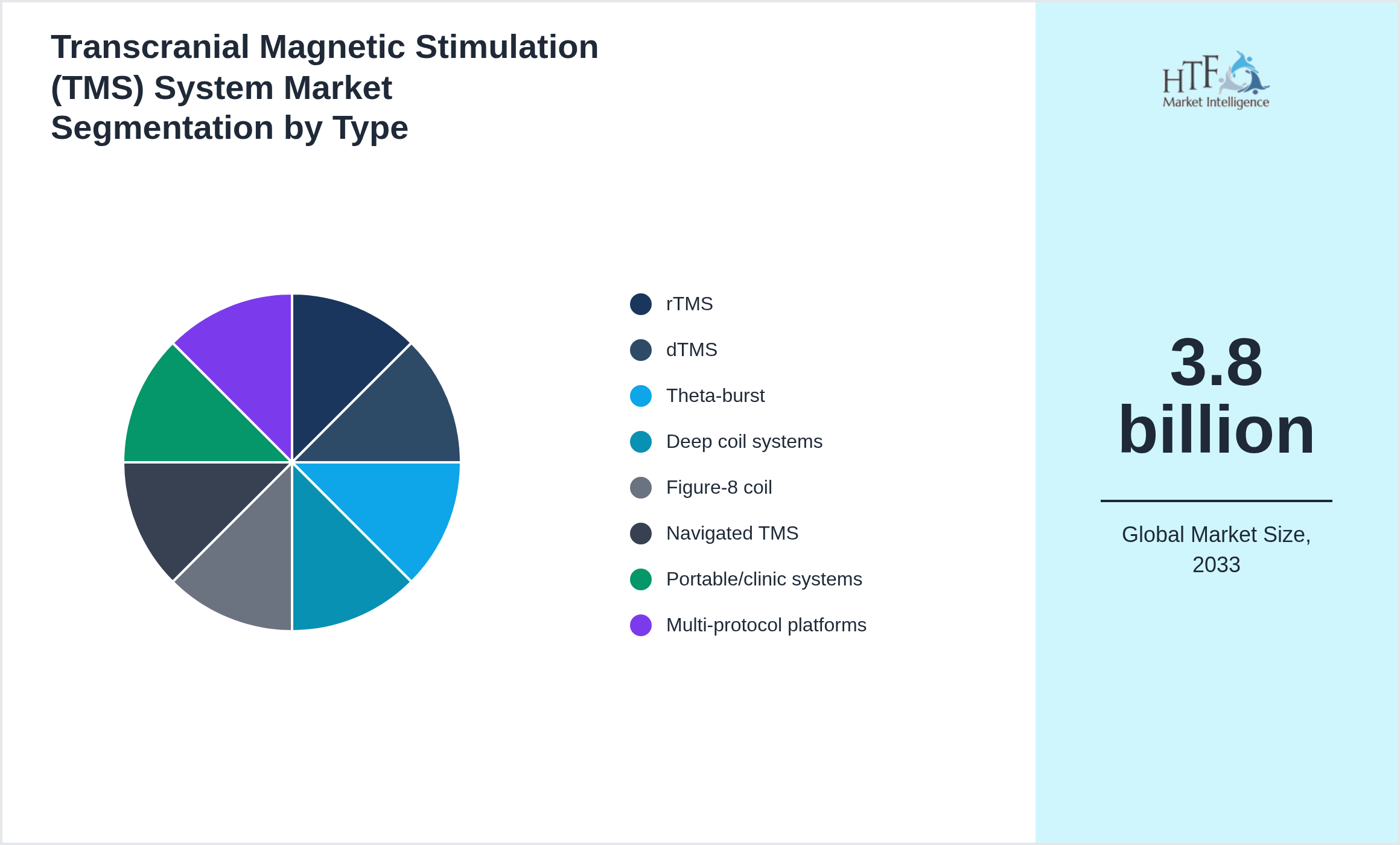
Segmentation by Type
- • Deep Transcranial Magnetic Stimulation
- • Repetitive Transcranial Magnetic Stimulation
- • Others
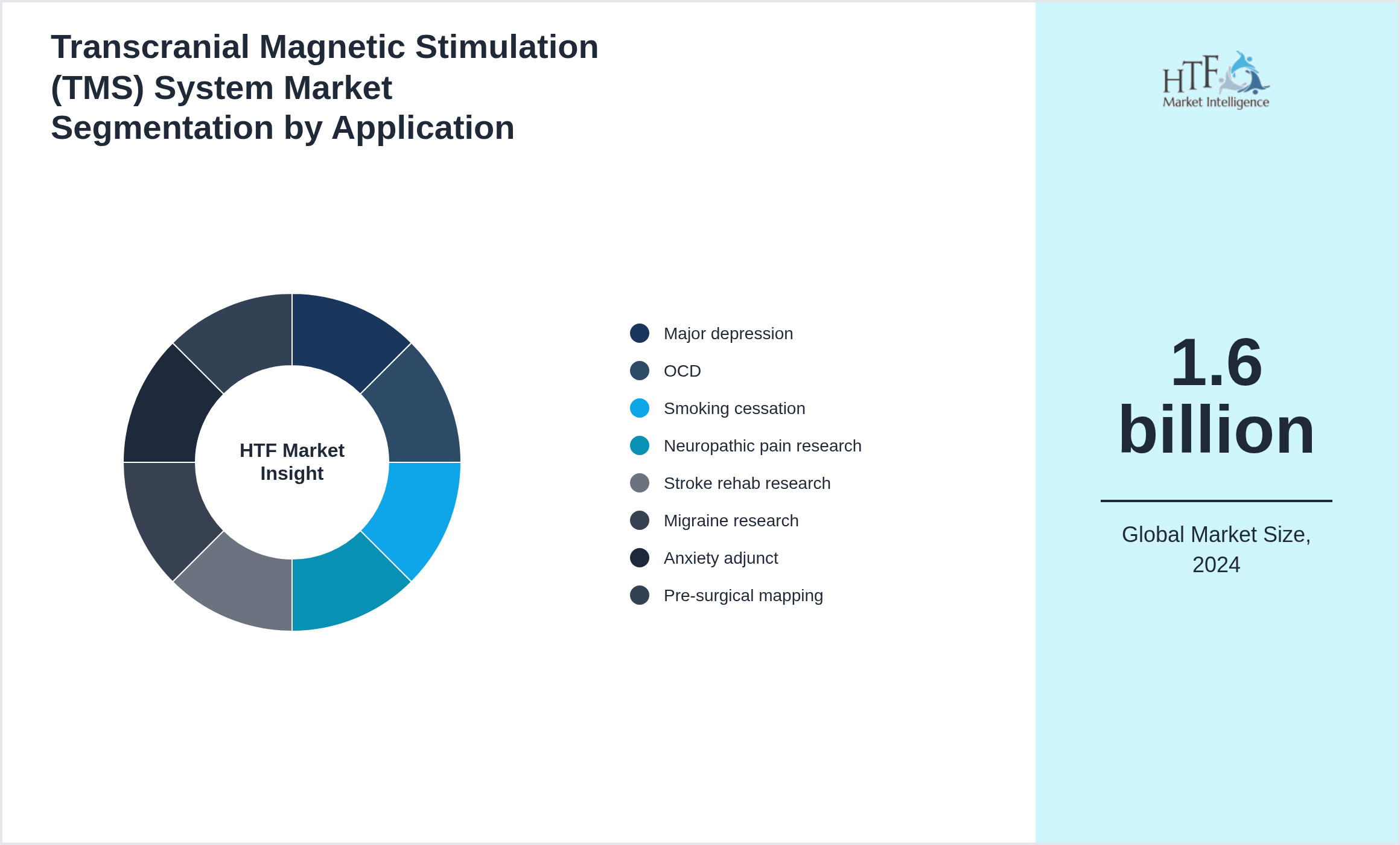
Segmentation by Application
- • Depression
- • Alzheimer’s Disease
- • Parkinson’s Disease
- • Epilepsy
- • Migraine
- • Obsessive-Compulsive Disorder (OCD)
- • Smoking cessation
- • Others
Regional Outlook
The North America currently holds a significant share of the market, primarily due to several key factors: increasing consumption rates, a burgeoning population, and robust economic momentum. These elements collectively drive demand, positioning this region as a leader in the market. On the other hand, Asia-Pacific is rapidly emerging as the fastest-growing area within the industry. This remarkable growth can be attributed to swift infrastructure development, the expansion of various industrial sectors, and a marked increase in consumer demand. These dynamics make this region a crucial player in shaping future market growth. In our report, we cover a comprehensive analysis of the regions and countries, including
- North America
- LATAM
- West Europe
- Central & Eastern Europe
- Northern Europe
- Southern Europe
- East Asia
- Southeast Asia
- South Asia
- Central Asia
- Oceania
- MEA
The company consistently allocates significant resources to expand its research capabilities, develop new medical technologies, and enhance its pharmaceutical portfolio. Johnson & Johnson's investments in R&D, coupled with strategic acquisitions and partnerships, reinforce its position as a major contributor to advancements in healthcare. This focus on innovation and market expansion underscores the critical importance of the North American region in the global healthcare landscape.
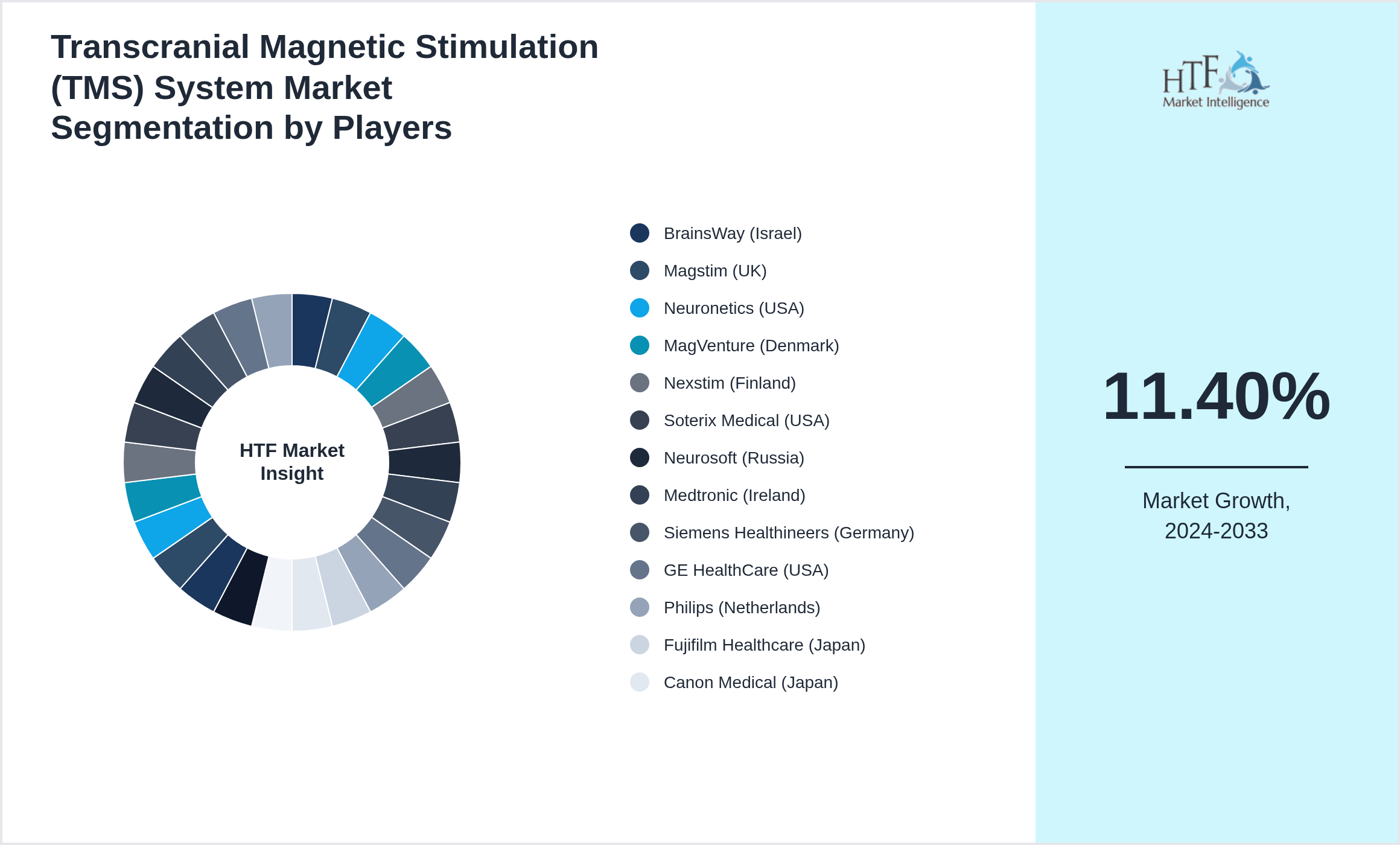
- • BrainsWay (Israel)
- • Magstim (UK)
- • Neuronetics (USA)
- • MagVenture (Denmark)
- • Nexstim (Finland)
- • Soterix Medical (USA)
- • Neurosoft (Russia)
- • Medtronic (Ireland)
- • Siemens Healthineers (Germany)
- • GE HealthCare (USA)
- • Philips (Netherlands)
- • Fujifilm Healthcare (Japan)
- • Canon Medical (Japan)
- • Elekta (Sweden)
- • Compumedics (Australia)
- • Nihon Kohden (Japan)
- • Cadwell (USA)
- • Natus (USA)
- • NeuroPace (USA)
- • Abbott Neuromodulation (USA)
- • Boston Scientific (USA)
- • LivaNova (UK)
- • Salience Health (USA)
- • Welcony (China)
- • Yiruide (China)
- • Inspire Medical (USA)
Key Development Activities
Regional Analysis
- • US leads clinical adoption EU strong in mental health clinics APAC growing in Korea Japan Australia China. Expansion supported by depression/PTSD research and outpatient therapy scaling.
Market Entropy
- • Apr 2025 – TMS systems saw wider clinical adoption with improved protocol management safety monitoring and clinic workflow tools.
Merger & Acquisition
- • In January 2024 a neuro-medical device company acquired a TMS system developer to strengthen non-invasive brain stimulation portfolios. The acquisition expanded clinical IP software-guided treatment protocols and global regulatory coverage for depression and neurological therapy markets.
Regulatory Landscape
- • Medical device regulation requires safety EMC clinical evidence and quality systems. Approvals often involve FDA/CE pathways labeling adverse event reporting and operator training. Reimbursement and clinical guideline updates strongly affect demand.
Patent Analysis
- • Patents cover coil geometry pulse shaping cooling neuronavigation integration and protocols for targeting and dosing. Software IP includes session planning monitoring and patient response analytics. New filings emphasize comfort faster sessions and precision.
Investment and Funding Scenario
- • Funding includes medtech strategics neurotech VCs and clinic roll-up platforms. Growth supports improved coils portable systems and data-driven protocols. Reimbursement expansion and real-world evidence programs attract capital partnerships with hospitals drive pilots.
Primary and Secondary Research
Primary research involves the collection of original data directly from sources in the healthcare industry. Approaches include the survey of health professionals, interviews with patients, focus groups, and clinical trials. This gives an overview of the current practice, the needs of the patient, and the interest in emerging trends. Firsthand information on the efficacy of new treatments, an assessment of market demand, and insight into changes in regulation can be sought only with primary research.
Secondary Research: This is the investigation of existing information from a variety of sources, which may include industry reports, academic journals, government publications, and market research studies. Alfred secondary research empowers them to understand trends within industries, historical data, and competitive landscapes. It gives a wide view of the market dynamics and validates findings obtained from primary research. By combining both primary and secondary together, health organizations will be empowered to develop comprehensive strategies and make informed decisions based on a strong foundation built on data.
Report Infographics
|
Report Features |
Details |
|
Base Year |
2024 |
|
Based Year Market Size (BASE_YEAR) |
1.6 billion |
|
Historical Period |
2020 to 2024 |
|
CAGR (2024 to 2033) |
11.40% |
|
Forecast Period |
2024 to 2033 |
|
Forecasted Period Market Size (2033) |
3.8 billion |
|
Scope of the Report |
Deep Transcranial Magnetic Stimulation, Repetitive Transcranial Magnetic Stimulation, Others, Depression, Alzheimer’s Disease, Parkinson’s Disease, Epilepsy, Migraine, Obsessive-Compulsive Disorder (OCD), Smoking cessation, Others |
|
Regions Covered |
North America, LATAM, West Europe, Central & Eastern Europe, Northern Europe, Southern Europe, East Asia, Southeast Asia, South Asia, Central Asia, Oceania, MEA |
|
Companies Covered |
BrainsWay (Israel), Magstim (UK), Neuronetics (USA), MagVenture (Denmark), Nexstim (Finland), Soterix Medical (USA), Neurosoft (Russia), Medtronic (Ireland), Siemens Healthineers (Germany), GE HealthCare (USA), Philips (Netherlands), Fujifilm Healthcare (Japan), Canon Medical (Japan), Elekta (Sweden), Compumedics (Australia), Nihon Kohden (Japan), Cadwell (USA), Natus (USA), NeuroPace (USA), Abbott Neuromodulation (USA), Boston Scientific (USA), LivaNova (UK), Salience Health (USA), Welcony (China), Yiruide (China), Inspire Medical (USA) |
|
Customization Scope |
15% Free Customization (For EG) |
|
Delivery Format |
PDF and Excel through Email |
Research enthusiast focused on transforming data uncovering into actionable insights through data-driven decision-making.