
Global Clean Beauty Ingredients Market Size, Growth & Revenue 2024-2034
Global Clean Beauty Ingredients Market is segmented by Product Type (Botanical Extracts, Natural Oils, Vitamins & Antioxidants, Minerals, Others), Application (Skincare, Haircare, Makeup, Personal Care, Fragrance), End-Use Industry (Cosmetics, Personal Care Products, Aromatherapy, Wellness & Spa Products), Distribution Channel (Online Retail, Specialty Stores, Pharmacies & Drugstores), and Geography (North America, LATAM, West Europe, Central & Eastern Europe, Northern Europe, Southern Europe, East Asia, Southeast Asia, South Asia, Central Asia, Oceania, MEA)
Pricing
Report Overview
Executive Summary
- •The Clean Beauty Ingredients Market is defined by the production and supply of natural, organic, and sustainable ingredients used in cosmetics and personal care formulations. It excludes synthetic chemicals and harmful substances, focusing instead on botanical extracts, natural oils, vitamins, antioxidants, and minerals. This market serves applications spanning skincare, haircare, makeup, personal care, and fragrance, targeting consumers prioritizing health, safety, and environmental responsibility. The global scope incorporates diverse geographic regions with varying consumer preferences and regulatory standards, emphasizing transparency and clean label claims. The market's growth is propelled by rising awareness of ingredient safety, demand for cruelty-free and eco-friendly products, and advancements in green chemistry and extraction technologies. Industry players are increasingly investing in R&D and certification to meet stringent standards and evolving consumer expectations. The market outlook reflects a robust expansion driven by ethical sourcing, innovation, and consumer education, making clean beauty ingredients a cornerstone for the future of the cosmetic industry.
- •Key market highlights include a projected CAGR of 10.6% from 2024 to 2034, expanding the market size from USD 15.6 billion in 2024 to USD 43.2 billion by 2034. North America remains the dominating region due to established consumer bases and regulatory support, while Asia-Pacific emerges as the fastest-growing market driven by increasing urbanization and rising disposable incomes. Botanical extracts dominate the product type segment, supported by consumer preference for natural formulations, whereas vitamins & antioxidants represent the fastest-growing type owing to their multifunctional benefits. Skincare leads the application segment, followed by haircare, reflecting consumer focus on health and wellness. Market dynamics are shaped by innovation in ingredient sourcing, evolving regulatory landscapes, and shifting consumer values emphasizing sustainability and transparency.
- •The Clean Beauty Ingredients Market holds strategic importance across cosmetics, personal care, and wellness industries by enabling companies to meet evolving consumer demands for safe and ethical products. It offers a value proposition centered on health, environmental stewardship, and product efficacy, fostering brand loyalty and differentiation. Stakeholders including ingredient suppliers, formulators, retailers, and regulatory bodies benefit from market growth through innovation, compliance facilitation, and market expansion. The transition towards clean beauty ingredients aligns with global sustainability goals and consumer lifestyle shifts, positioning the market as a critical driver for future industry transformation and economic opportunity worldwide.

Competitive Landscape
The competitive environment of the Clean Beauty Ingredients Market is characterized by intense rivalry among global and regional players focusing on innovation, sustainability, and strategic partnerships. Industry participants leverage advanced extraction and formulation technologies to develop high-efficacy, natural ingredients that comply with evolving regulatory standards and consumer expectations. Market positioning often hinges on certifications such as organic, vegan, and cruelty-free labels, enhancing brand credibility and differentiation. Companies adopt competitive strategies including mergers and acquisitions, joint ventures, and geographic expansion to consolidate market share and access new consumer bases. Pricing strategies balance premium positioning with accessibility to capture diverse market segments. Distribution channels are optimized through digital platforms and specialty retailers to enhance reach and consumer engagement. Continuous R&D investment, agile supply chain management, and proactive regulatory compliance remain critical to maintaining competitive advantages. Future trends indicate increased collaboration across the value chain and integration of biotechnology for sustainable ingredient production, shaping the market’s competitive dynamics.
Companies Shaping the Clean Beauty Ingredients Market
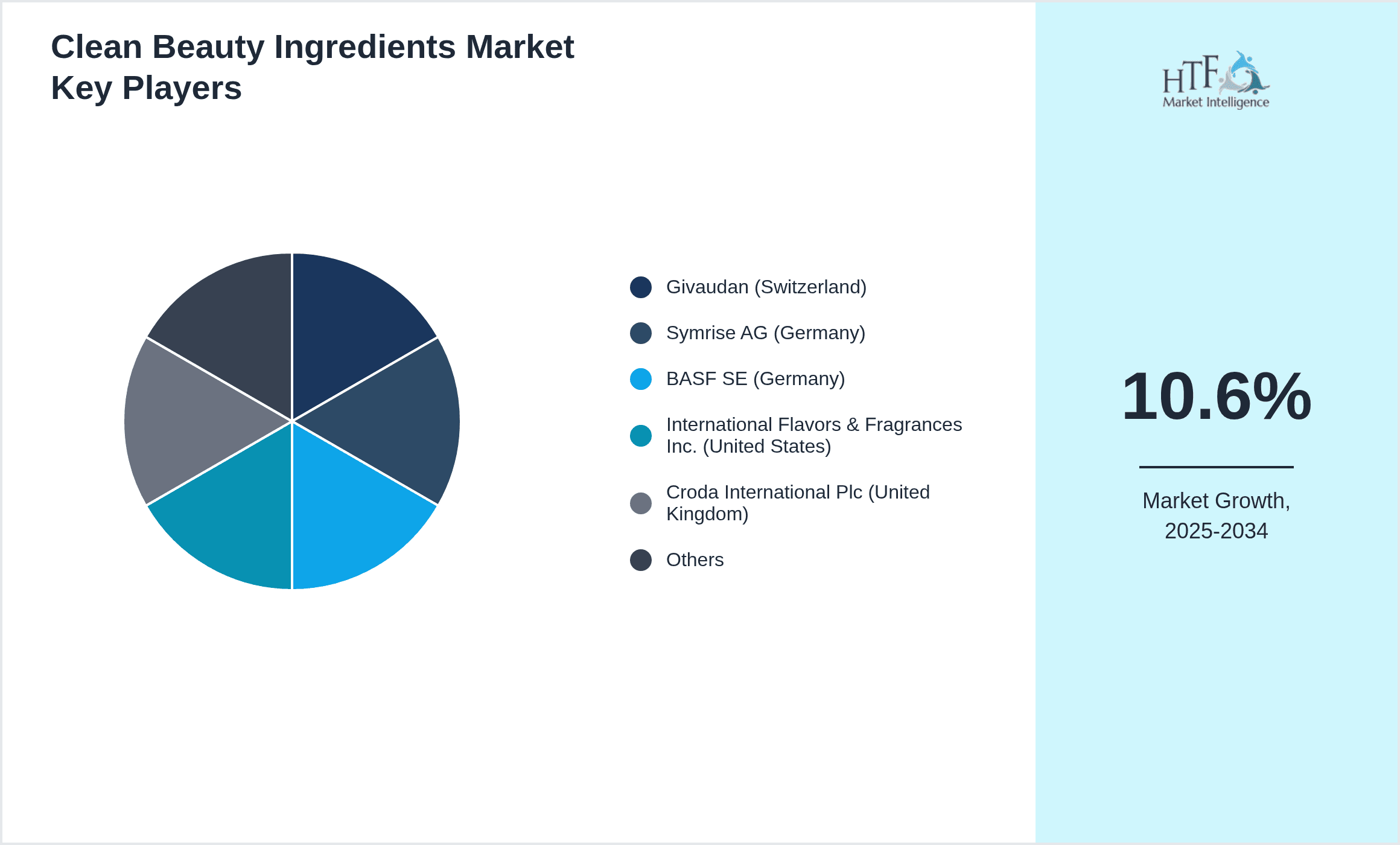
- •Givaudan (Switzerland)
- •Symrise AG (Germany)
- •BASF SE (Germany)
- •International Flavors & Fragrances Inc. (United States)
- •Croda International Plc (United Kingdom)
- •Clariant AG (Switzerland)
- •Dow Inc. (United States)
- •Ashland Global Holdings Inc. (United States)
- •Evonik Industries AG (Germany)
- •Mane (France)
- •Tate & Lyle PLC (United Kingdom)
- •Sensient Technologies Corporation (United States)
- •Inolex (United States)
- •Azelis (Belgium)
- •Kerry Group (Ireland)
- •Solvay SA (Belgium)
- •Lonza Group AG (Switzerland)
- •Neem Biotech (United States)
- •Mibelle Group (Switzerland)
- •Corbion NV (Netherlands)
- •Greentech (France)
- •DIC Corporation (Japan)
- •Vantage Specialty Chemicals (United States)
- •Naturex (France)
- •Azelis Americas (United States)
Market Breakdown
- •By Product Type
- ◦Botanical Extracts
- ◦Natural Oils
- ◦Vitamins & Antioxidants
- ◦Minerals
- ◦Others
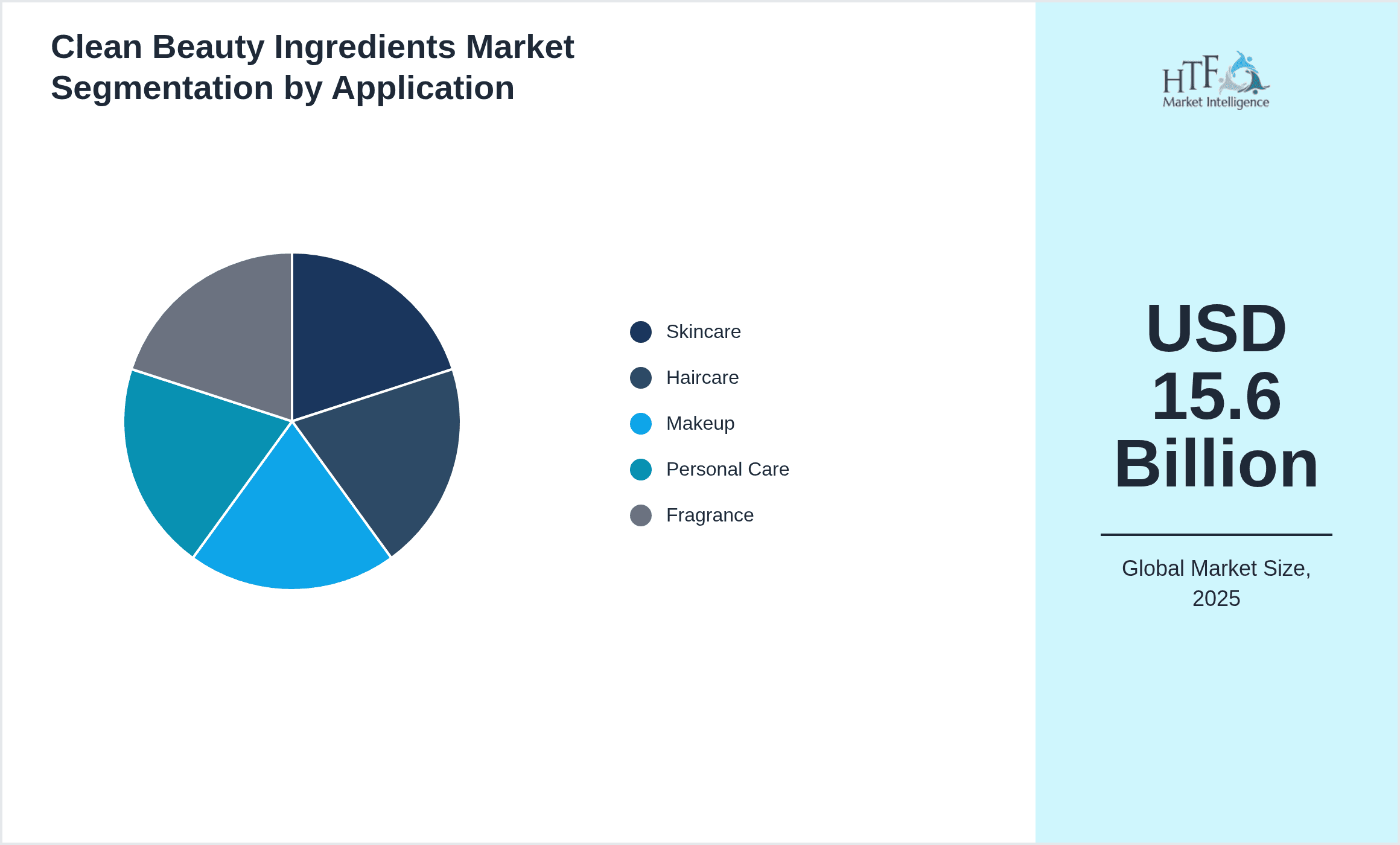
- •By Application
- ◦Skincare
- ◦Haircare
- ◦Makeup
- ◦Personal Care
- ◦Fragrance
- •By End-Use Industry
- ◦Cosmetics
- ◦Personal Care Products
- ◦Aromatherapy
- ◦Wellness & Spa Products
- •By Distribution Channel
- ◦Online Retail
- ◦Specialty Stores
- ◦Pharmacies & Drugstores
Growth Dynamics
The Clean Beauty Ingredients Market is propelled by increasing consumer awareness regarding the health and environmental impact of cosmetic products. Rising demand for natural, organic, and non-toxic formulations drives manufacturers to innovate and expand their clean ingredient portfolios. Furthermore, the growth of e-commerce platforms facilitates consumer access and education about clean beauty options globally. Urbanization and rising disposable incomes, especially in Asia-Pacific and Latin America, supplement market expansion. Additionally, stringent regulations and certifications encourage transparent sourcing and ingredient safety, reinforcing consumer trust and boosting adoption across demographics. The convergence of wellness trends with beauty routines further amplifies demand for multifunctional clean ingredients, fostering sustained market growth.

Market Trends
The Clean Beauty Ingredients Market is witnessing a significant trend towards biotechnology-driven ingredients that offer sustainable and scalable alternatives to traditional natural extracts. Innovations in fermentation and bioconversion enable the production of high-purity antioxidants and vitamins, enhancing efficacy and reducing environmental footprint. Additionally, brands emphasize transparency through blockchain and digital traceability, allowing consumers to verify ingredient origins and certifications. Clean label formulations with minimal ingredient lists and multifunctionality are gaining traction, reflecting consumer preference for simplicity and effectiveness. The rise of male grooming and inclusive beauty products also broadens application horizons. Sustainability commitments, including biodegradable packaging and carbon-neutral sourcing, complement ingredient trends, collectively transforming the market landscape.
Market Opportunities
Emerging markets in Asia-Pacific and Latin America present substantial growth opportunities due to increasing urbanization, rising middle-class populations, and growing consumer interest in clean and natural beauty products. The expansion of digital retail channels enhances market penetration and consumer engagement. Moreover, innovation in ingredient extraction methods and green chemistry can lower production costs and improve scalability, enabling broader adoption by mainstream brands. Opportunities also exist in developing multifunctional ingredients that address efficacy and sustainability simultaneously. Collaborations between ingredient manufacturers and cosmetic formulators to co-create novel clean formulations can unlock new market segments. Additionally, regulatory harmonization and certification standard advancements can facilitate global trade and consumer confidence, further expanding market potential.
Market Challenges
Challenges in the Clean Beauty Ingredients Market include sourcing consistent, high-quality natural raw materials amid environmental constraints and seasonal variability. The higher cost of clean and certified ingredients compared to synthetic alternatives can limit adoption, particularly among price-sensitive consumers. Regulatory complexity and varying certification requirements across regions pose compliance challenges for manufacturers and suppliers. Furthermore, the lack of standardized definitions for 'clean' and 'natural' beauty ingredients leads to consumer confusion and potential greenwashing, undermining market credibility. Supply chain disruptions and sustainability concerns related to ingredient extraction and transportation add operational risks. Finally, intense competition and rapid innovation cycles pressure companies to continuously invest in R&D and marketing to maintain differentiation.
Regulatory Framework
From 2020 to 2024, the Clean Beauty Ingredients Market has been influenced by evolving regulatory frameworks emphasizing ingredient safety, transparency, and environmental stewardship. The European Union implemented the updated Cosmetics Regulation (EC) No 1223/2009 amendments, strengthening banned substance lists and mandating rigorous safety assessments for natural ingredients. The U.S. FDA increased scrutiny on labeling claims to prevent misleading marketing related to 'clean' and 'natural' terms. Additionally, global adoption of ISO standards for organic and natural cosmetic ingredients has harmonized quality benchmarks. Governments have introduced policies incentivizing sustainable sourcing and production practices to reduce environmental impact. These regulations require manufacturers to ensure compliance through comprehensive documentation, testing, and certification, impacting formulation and supply chain strategies. Overall, the regulatory landscape fosters consumer trust and elevates industry standards while posing compliance challenges for market participants.
Market Intelligence
- •15th March 2024, Givaudan launched a new line of sustainably sourced botanical extracts designed specifically for anti-aging skincare applications. These ingredients leverage green extraction technologies to preserve bioactive compounds, targeting premium and clean beauty brands seeking efficacy combined with sustainability. The launch aims to expand Givaudan’s portfolio in natural cosmetic ingredients and respond to growing demand for high-performance clean formulations globally, particularly in North America and Europe. Strategic collaboration with certified organic farms ensures traceability and ethical sourcing, enhancing product transparency and consumer confidence. This initiative positions Givaudan as a leader in innovation within the clean beauty ingredients market and supports global sustainability goals. Source: Givaudan Official Press Release
- •10th November 2023, Symrise AG introduced a novel range of vitamins and antioxidants derived from fermentation processes, providing clean, vegan-certified ingredients with enhanced stability and bioavailability for skincare and haircare products. This advancement addresses consumer demand for multifunctional, natural ingredients with proven efficacy, enabling formulators to create effective clean beauty products without synthetic additives. The innovation underscores Symrise’s commitment to sustainability and technological leadership in the cosmetic ingredients sector. Early partnerships with leading personal care brands aim to accelerate market adoption and expand the global footprint, especially in Asia-Pacific markets exhibiting rapid growth. Source: Symrise Corporate Announcement
- •22nd January 2024, Croda International Plc announced a strategic partnership with a biotech startup to co-develop sustainable, lab-grown natural oils for cosmetic applications. This collaboration focuses on reducing environmental impact and supply chain risks associated with traditional plant-based oils. The initiative integrates biotechnology innovations with Croda’s formulation expertise, targeting increasing demand for scalable, traceable clean beauty ingredients. The partnership is expected to accelerate product development cycles and open new market opportunities in North America and Europe while enhancing sustainability credentials. Source: Croda Press Release
- •5th September 2023, BASF SE completed the acquisition of a natural ingredient producer specializing in organic minerals and plant extracts, expanding its portfolio to better serve the clean beauty segment. This acquisition enhances BASF’s ability to offer comprehensive, certified natural ingredient solutions that meet stringent clean beauty standards. It strengthens BASF’s market position in North America and Europe and facilitates entry into emerging markets with growing demand for natural cosmetics. The consolidation supports innovation pipelines and supply chain integration, offering customers improved product quality and sustainability benefits. Source: BASF Official News
Regional Outlook
The North America currently holds a significant share of the market, primarily due to several key factors: increasing consumption rates, a burgeoning population, and robust economic momentum. These elements collectively drive demand, positioning this region as a leader in the market. On the other hand, Asia-Pacific is rapidly emerging as the fastest-growing area within the industry. This remarkable growth can be attributed to swift infrastructure development, the expansion of various industrial sectors, and a marked increase in consumer demand. These dynamics make this region a crucial player in shaping future market growth.
In our report, we cover a comprehensive analysis of the following regions and countries:
- North America
- LATAM
- West Europe
- Central & Eastern Europe
- Northern Europe
- Southern Europe
- East Asia
- Southeast Asia
- South Asia
- Central Asia
- Oceania
- MEA
| Feature | Details |
|---|---|
| Base Year Market Size | USD 15.6 Billion |
| Forecast Year Market Size | USD 43.2 Billion |
| CAGR | 10.6% |
| Forecast Period | 2026 to 2033 |
| YoY Growth | 10.1% |
| Scope of Report | Market is segmented by Product Type (Botanical Extracts, Natural Oils, Vitamins & Antioxidants, Minerals, Others), Application (Skincare, Haircare, Makeup, Personal Care, Fragrance), End-Use Industry (Cosmetics, Personal Care Products, Aromatherapy, Wellness & Spa Products), Distribution Channel (Online Retail, Specialty Stores, Pharmacies & Drugstores) |
| Regions Covered | North America, LATAM, West Europe, Central & Eastern Europe, Northern Europe, Southern Europe, East Asia, Southeast Asia, South Asia, Central Asia, Oceania, MEA |
| Key Companies | Givaudan (Switzerland), Symrise AG (Germany), BASF SE (Germany), International Flavors & Fragrances Inc. (United States), Croda International Plc (United Kingdom), Clariant AG (Switzerland), Dow Inc. (United States), Ashland Global Holdings Inc. (United States), Evonik Industries AG (Germany), Mane (France), Tate & Lyle PLC (United Kingdom), Sensient Technologies Corporation (United States), Inolex (United States), Azelis (Belgium), Kerry Group (Ireland), Solvay SA (Belgium), Lonza Group AG (Switzerland), Neem Biotech (United States), Mibelle Group (Switzerland), Corbion NV (Netherlands), Greentech (France), DIC Corporation (Japan), Vantage Specialty Chemicals (United States), Naturex (France), Azelis Americas (United States) |
Global Clean Beauty Ingredients Market Size, Growth & Revenue 2024-2034 - Table of Contents
Frequently Asked Questions (FAQ):
The Compact Track Loaders market is projected to grow at a CAGR of 6.8% from 2025 to 2030, driven by increasing demand in construction and agricultural sectors.
North America currently leads the market with approximately 45% market share, followed by Europe at 28% and Asia-Pacific at 22%. The remaining regions account for 5% of the global market.
Key growth drivers include increasing construction activities, rising demand for versatile equipment in agriculture, technological advancements in track loader design, and growing preference for compact equipment in urban construction projects.