
Hyoscyamine Sulfate Injection Market - Global Share, Size & Changing Dynamics 2020-2033
Global Hyoscyamine Sulfate Injection Market is segmented by Application (GI spasm relief, ER, Surgery prep, GI clinic, Hospital, Acute care, Pain management, Anesthesia support), Type (Injectable, Solution, Sterile, Generic, Branded, Low dose, High dose, Emergency), and Geography (North America, LATAM, West Europe, Central & Eastern Europe, Northern Europe, Southern Europe, East Asia, Southeast Asia, South Asia, Central Asia, Oceania, MEA)
Pricing
Report Overview
INDUSTRY OVERVIEW
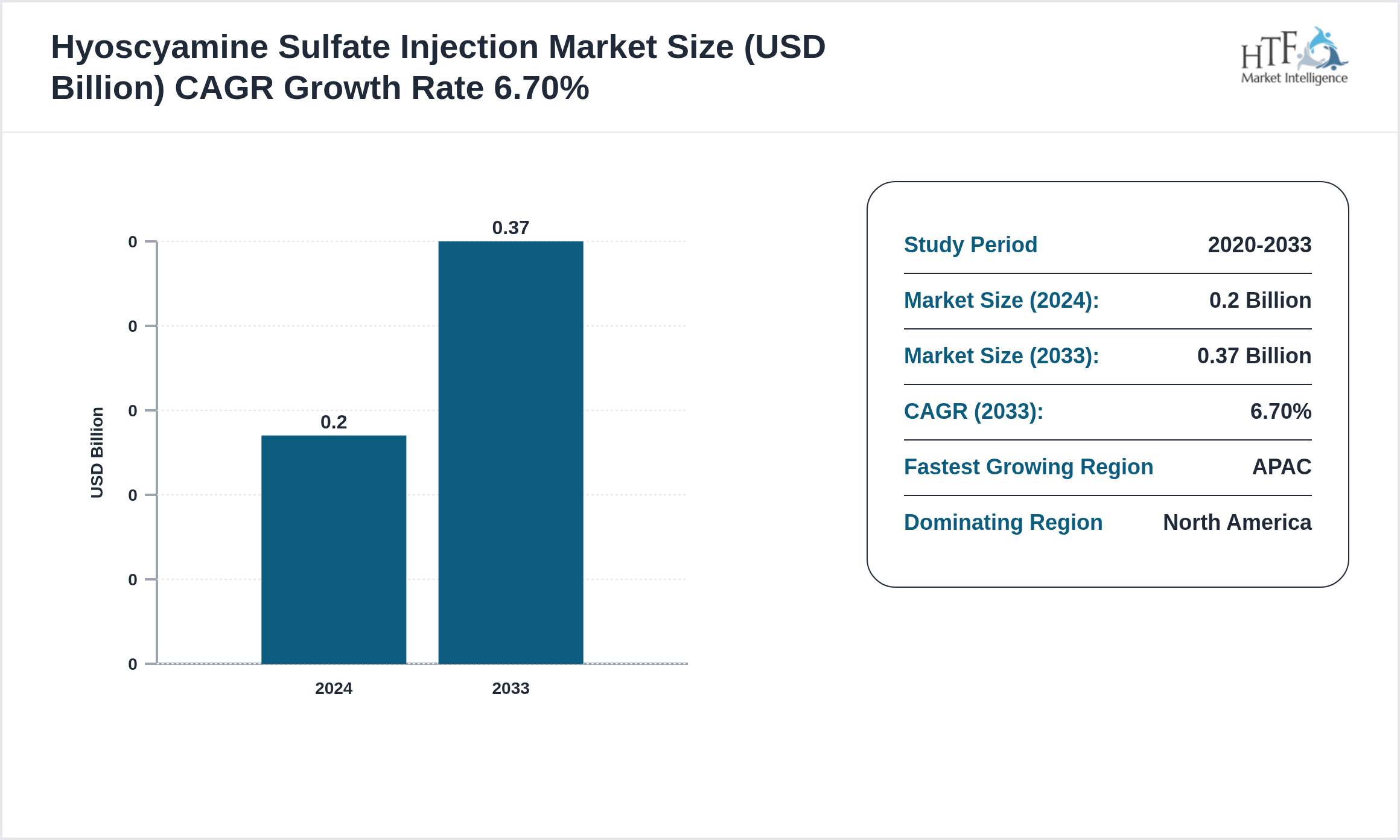
The Hyoscyamine Sulfate Injection is growing at 6.70% and is expected to reach 0.37 billion by 2033. The below-mentioned are some of the dynamics shaping the Hyoscyamine Sulfate Injection.
Hyoscyamine sulfate injection is a parenteral anticholinergic medication used to treat severe gastrointestinal urinary and biliary tract spasms. It works by inhibiting muscarinic receptors thereby reducing smooth muscle contractions and secretions. Injectable formulations are used in emergency or perioperative settings where rapid onset is required. Hyoscyamine sulfate is also employed in managing irritable bowel syndrome peptic ulcers and certain cardiac conditions involving vagal stimulation
Source: HTF Market Intelligence (HTF MI)
Understand Key Market Dynamics
Market Dynamics
Market Drivers:
The key drivers in the market include technological advancements, increasing demand by consumers for innovative products, and government-friendly policies.
- • Increasing demand for reliability efficiency and scalable solutions across commercial and industrial sectors is a key growth driver. Digital transformation initiatives automation adoption and smart infrastructure development are accelerating market penetration. Favorable government initiatives modernization of legacy systems and increased spending on advanced technologies further support demand. Growing awareness of sustainability safety and long-term cost savings continues to drive adoption worldwide
Some of the restraints to market growth may include regulatory challenges, high production costs, and disruptions in the supply chain.
- • The market encounters challenges such as high deployment costs technical complexity and interoperability issues with existing systems. Regulatory uncertainty certification requirements and compliance burdens may slow commercialization. Global supply chain risks component shortages and cost volatility affect operations. Intense competition margin pressure rapid innovation cycles and lack of skilled professionals pose ongoing operational challenges
Among the trending ones are sustainability, digital transformation, and the increasing importance of data analytics.
- • Ongoing trends include rapid digitalization adoption of AI-enabled platforms and integration of IoT for real-time monitoring. Companies are focusing on lightweight designs energy efficiency and environmentally responsible materials. Subscription-based services predictive analytics and remote management capabilities are gaining popularity. Collaboration between technology providers and end users is accelerating innovation and shortening product development cycles
These include emerging markets, innovation in product development, and strategic partnerships.
- • Growth opportunities are expanding in developing regions due to rising industrial activity and infrastructure investments. Demand for customized application-specific and sustainable solutions supports innovation-led growth. Aftermarket services upgrades and digital add-ons offer recurring revenue potential. Increased funding for research adoption of next-generation technologies and expansion into niche applications provide strong long-term market prospects
Regulation Shaping the Healthcare Industry
The healthcare industry is significantly influenced by a complex framework of regulations designed to ensure patient safety, the efficacy of treatments, and the overall quality of care. Key regulatory areas include drug approval processes, medical device standards, and healthcare data protection. These regulations aim to maintain high standards for clinical practices and safeguard public health.
Get More Details on the Hyoscyamine Sulfate Injection Market Study
SWOT Analysis in the Healthcare Industry
SWOT analysis in the healthcare industry involves a structured assessment of strengths, weaknesses, opportunities, and threats to identify strategic advantages and areas for improvement.
• Strengths: Evaluates internal factors such as advanced technology, skilled personnel, and strong brand reputation. For example, a hospital with cutting-edge medical equipment and specialized staff is considered to have a strong competitive edge.
• Weaknesses: Identifies internal limitations like outdated facilities, regulatory compliance issues, or high operational costs. Weaknesses could include inefficient processes or lack of innovation.
• Opportunities: Assesses external factors that could drive growth, such as emerging medical technologies, expanding markets, or favorable government policies. Opportunities might involve partnerships or new service lines.
• Threats: Examines external challenges such as increasing competition, changing regulations, or economic downturns. Threats might include new entrants with disruptive technologies or stricter regulatory requirements.
Market Segmentation
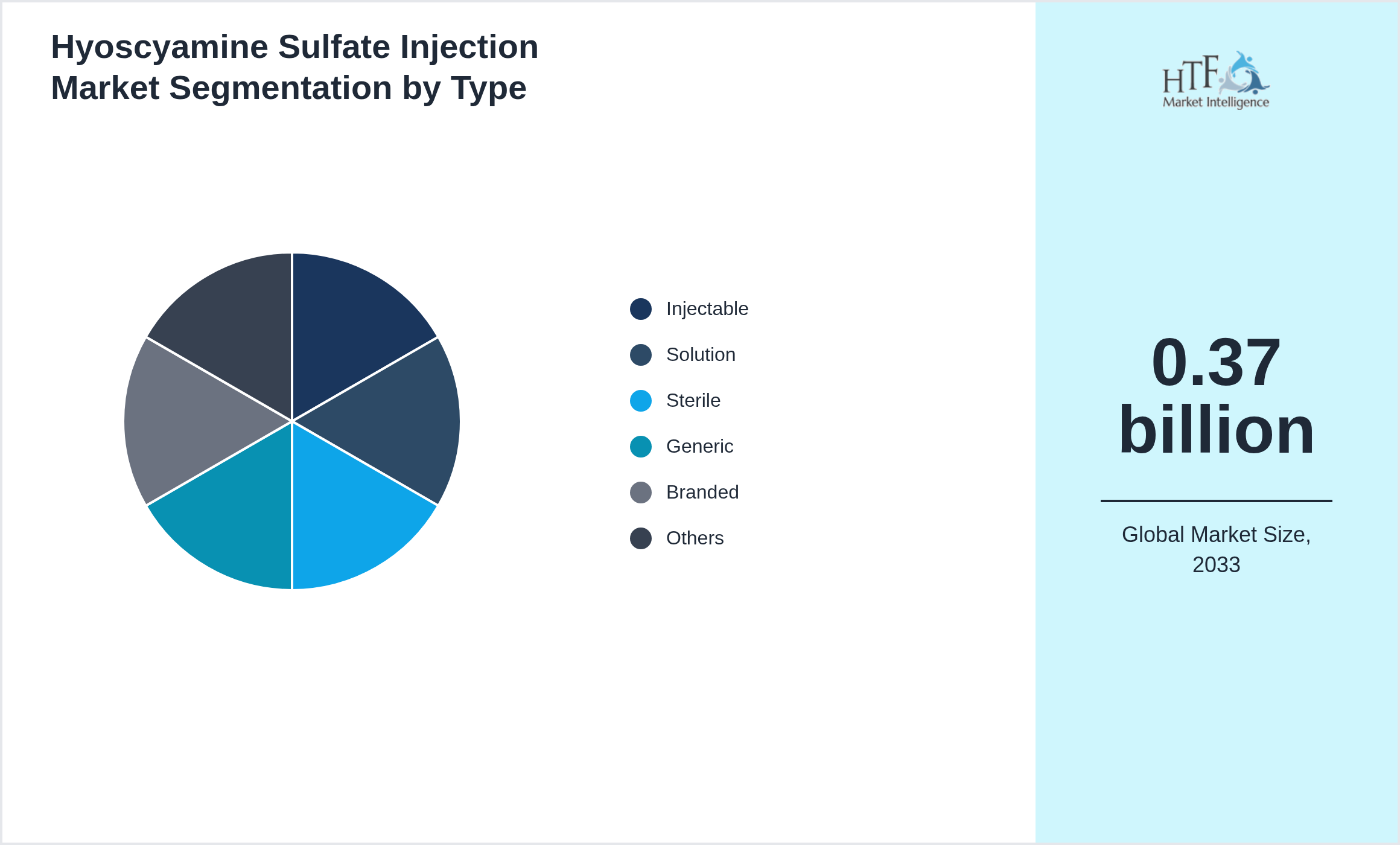
Segmentation by Type
- • Injectable
- • Solution
- • Sterile
- • Generic
- • Branded
- • Low dose
- • High dose
- • Emergency
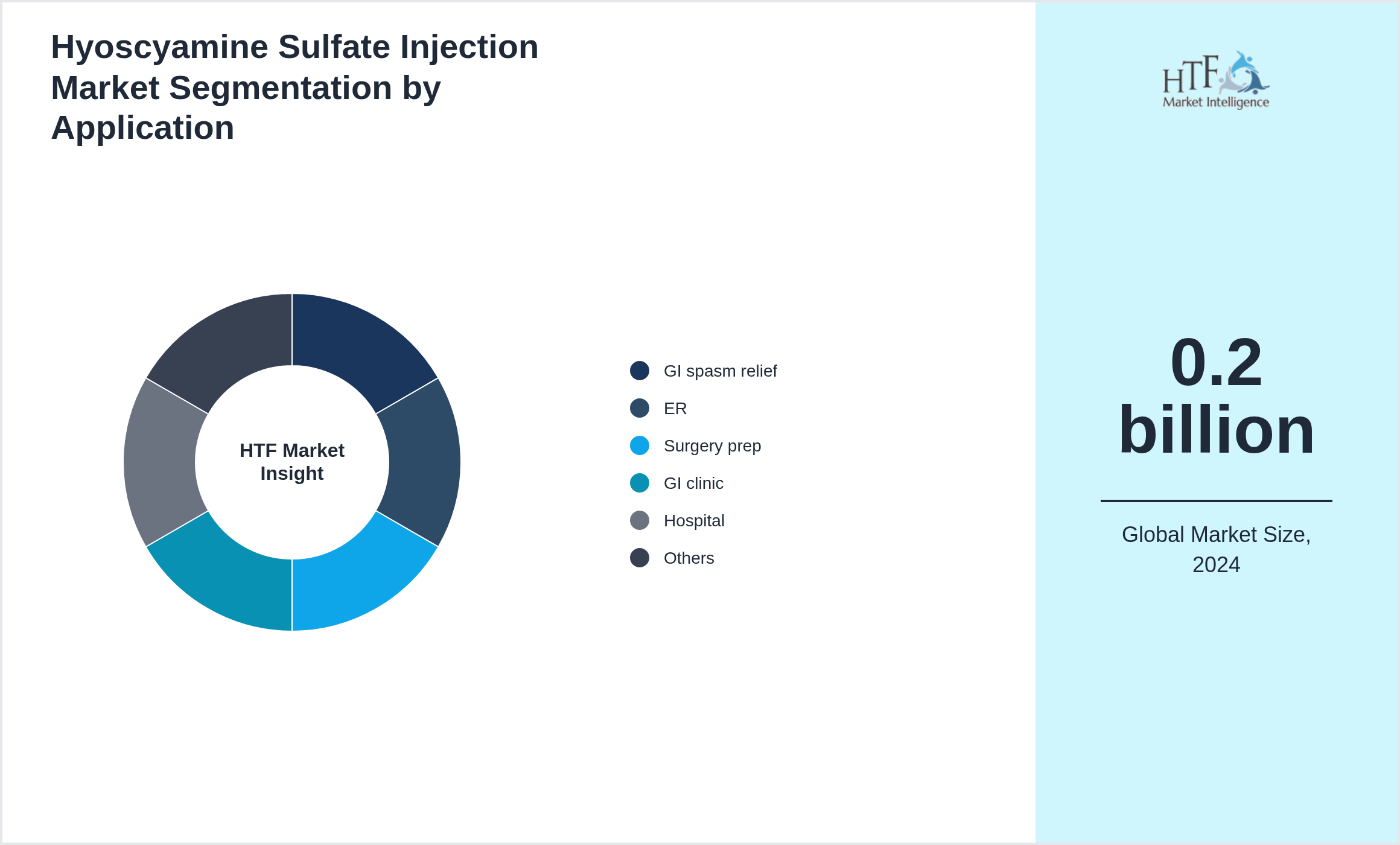
Segmentation by Application
- • GI spasm relief
- • ER
- • Surgery prep
- • GI clinic
- • Hospital
- • Acute care
- • Pain management
- • Anesthesia support
Regional Outlook
The North America currently holds a significant share of the market, primarily due to several key factors: increasing consumption rates, a burgeoning population, and robust economic momentum. These elements collectively drive demand, positioning this region as a leader in the market. On the other hand, APAC is rapidly emerging as the fastest-growing area within the industry. This remarkable growth can be attributed to swift infrastructure development, the expansion of various industrial sectors, and a marked increase in consumer demand. These dynamics make this region a crucial player in shaping future market growth. In our report, we cover a comprehensive analysis of the regions and countries, including
- North America
- LATAM
- West Europe
- Central & Eastern Europe
- Northern Europe
- Southern Europe
- East Asia
- Southeast Asia
- South Asia
- Central Asia
- Oceania
- MEA
The company consistently allocates significant resources to expand its research capabilities, develop new medical technologies, and enhance its pharmaceutical portfolio. Johnson & Johnson's investments in R&D, coupled with strategic acquisitions and partnerships, reinforce its position as a major contributor to advancements in healthcare. This focus on innovation and market expansion underscores the critical importance of the North American region in the global healthcare landscape.
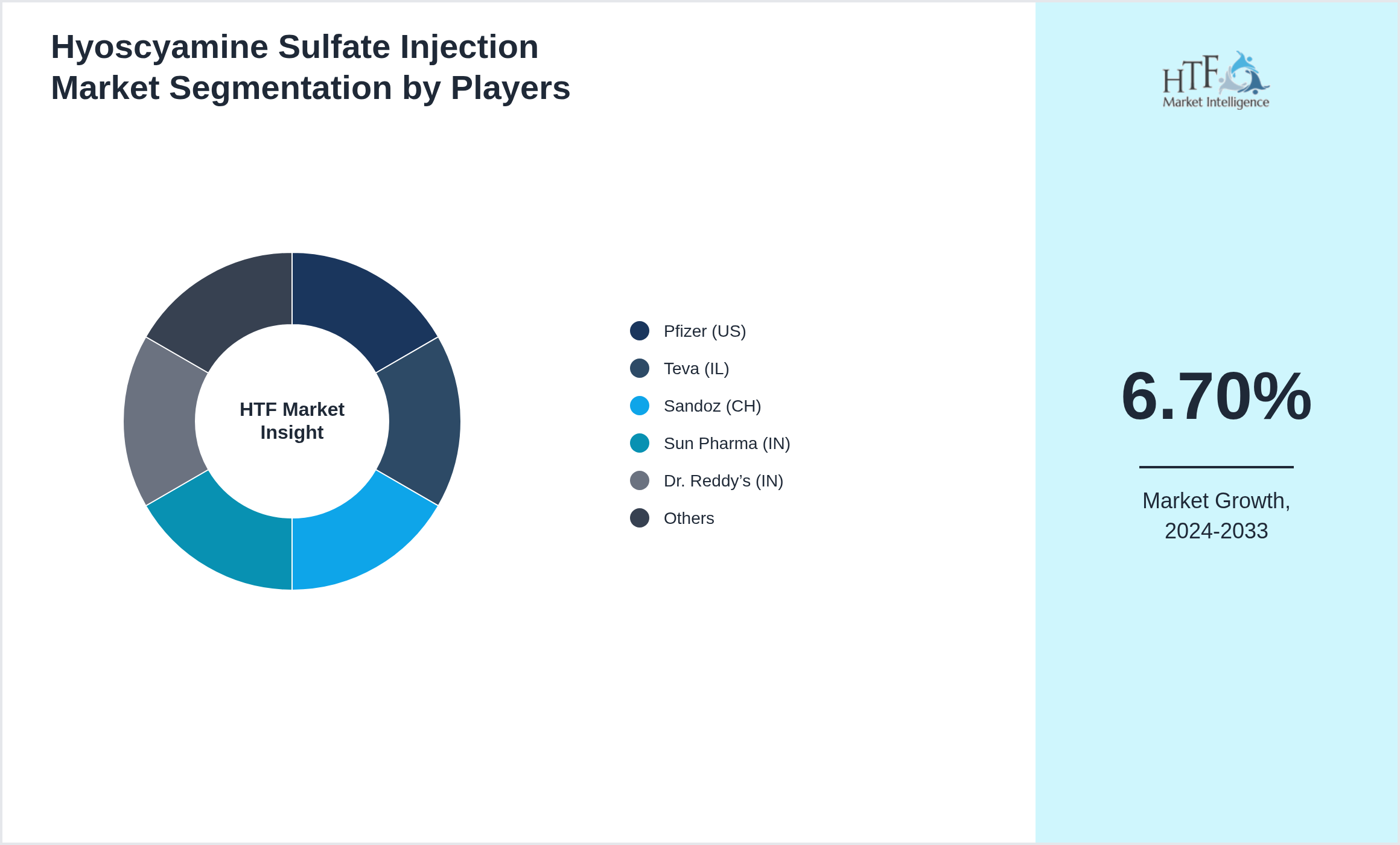
- • Pfizer (US)
- • Teva (IL)
- • Sandoz (CH)
- • Sun Pharma (IN)
- • Dr. Reddy’s (IN)
- • Cipla (IN)
- • Mylan (US)
- • Hospira (US)
- • Endo (US)
- • Mallinckrodt (US)
- • Viatris (US)
- • AstraZeneca (UK)
- • GSK (UK)
- • Torrent (IN)
- • Alembic (IN)
- • Zydus (IN)
- • Intas (IN)
- • Lupin (IN)
- • Aurobindo (IN)
- • Hikma (JO)
- • Fresenius (DE)
- • Baxter (US)
- • Fresenius Kabi (DE)
- • Pfizer (US)
Key Development Activities
Regional Analysis
- • Regional consumption patterns highlight rapid growth in Asia-Pacific and emerging markets supported by industrialization and urban growth. Mature markets show demand linked to upgrades replacements and regulatory-driven adoption of higher-performance and compliant solutions
Market Entropy
- • Sep 2025: Injectable anticholinergics remain niche but critical in acute settings; procurement prioritizes reliable sterile fill-finish and compliant packaging integrity
Merger & Acquisition
- • Aug 2025: Hikma Pharmaceuticals acquired InjectaCare to strengthen sterile injectable GI drugs. Dec 2025: Pfizer divested legacy injectables to Fresenius Kabi to optimize hospital portfolios.
Regulatory Landscape
- • Policymakers are harmonizing standards across regions to simplify trade while increasing penalties for non-compliance. Environmental and worker safety regulations are expanding in scope driving demand for compliant solutions and increasing operational accountability across value chains
Patent Analysis
- • Innovation activity emphasizes durability efficiency and adaptability across applications. Patent ownership is used strategically for licensing and partnerships. Asia leads in filing volume while North America and Europe maintain leadership in high-impact innovation domains
Investment and Funding Scenario
- • Investment flows prioritize technologies that enhance efficiency reduce environmental footprint and ensure long-term regulatory compliance. Corporate investments focus on vertical integration while financial investors support scalable platforms with predictable demand and cash flows
Primary and Secondary Research
Primary research involves the collection of original data directly from sources in the healthcare industry. Approaches include the survey of health professionals, interviews with patients, focus groups, and clinical trials. This gives an overview of the current practice, the needs of the patient, and the interest in emerging trends. Firsthand information on the efficacy of new treatments, an assessment of market demand, and insight into changes in regulation can be sought only with primary research.
Secondary Research: This is the investigation of existing information from a variety of sources, which may include industry reports, academic journals, government publications, and market research studies. Alfred secondary research empowers them to understand trends within industries, historical data, and competitive landscapes. It gives a wide view of the market dynamics and validates findings obtained from primary research. By combining both primary and secondary together, health organizations will be empowered to develop comprehensive strategies and make informed decisions based on a strong foundation built on data.
Report Infographics
|
Report Features |
Details |
|
Base Year |
2024 |
|
Based Year Market Size (BASE_YEAR) |
0.2 billion |
|
Historical Period |
2020 to 2024 |
|
CAGR (2024 to 2033) |
6.70% |
|
Forecast Period |
2024 to 2033 |
|
Forecasted Period Market Size (2033) |
0.37 billion |
|
Scope of the Report |
Injectable, Solution, Sterile, Generic, Branded, Low dose, High dose, Emergency, GI spasm relief, ER, Surgery prep, GI clinic, Hospital, Acute care, Pain management, Anesthesia support |
|
Regions Covered |
North America, LATAM, West Europe, Central & Eastern Europe, Northern Europe, Southern Europe, East Asia, Southeast Asia, South Asia, Central Asia, Oceania, MEA |
|
Companies Covered |
Pfizer (US), Teva (IL), Sandoz (CH), Sun Pharma (IN), Dr. Reddy’s (IN), Cipla (IN), Mylan (US), Hospira (US), Endo (US), Mallinckrodt (US), Viatris (US), AstraZeneca (UK), GSK (UK), Torrent (IN), Alembic (IN), Zydus (IN), Intas (IN), Lupin (IN), Aurobindo (IN), Hikma (JO), Fresenius (DE), Baxter (US), Fresenius Kabi (DE), Pfizer (US) |
|
Customization Scope |
15% Free Customization (For EG) |
|
Delivery Format |
PDF and Excel through Email |