
Global Low-Cost Property Market Scope & Changing Dynamics 2024-2033
Global Low-Cost Property Market is segmented by Application (Housing, Social infrastructure, Urban development, Investment, Leasing, Community, Affordable rental, Government schemes), Type (Affordable housing, Urban, Suburban, Mixed-use, Residential, Single-family, Multi-family, Modular), and Geography (North America, LATAM, West Europe, Central & Eastern Europe, Northern Europe, Southern Europe, East Asia, Southeast Asia, South Asia, Central Asia, Oceania, MEA)
Pricing
Report Overview
Industry Overview
The North America, LATAM, West Europe, Central & Eastern Europe, Northern Europe, Southern Europe, East Asia, Southeast Asia, South Asia, Central Asia, Oceania, MEA Low-Cost Property market was valued at 1.1 billion in 2024 and is expected to reach 2.0 billion by 2020, growing at a compound annual growth rate (CAGR) of 6.20% over the forecast period.
Low-cost property consists of affordable real estate units developed to meet housing needs of low-income or economically weaker sections. These properties emphasize cost efficiency standardized designs and basic amenities while complying with housing regulations. Often supported by government incentives or subsidies low-cost properties play a key role in urban housing development social inclusion and addressing housing shortages in rapidly growing cities
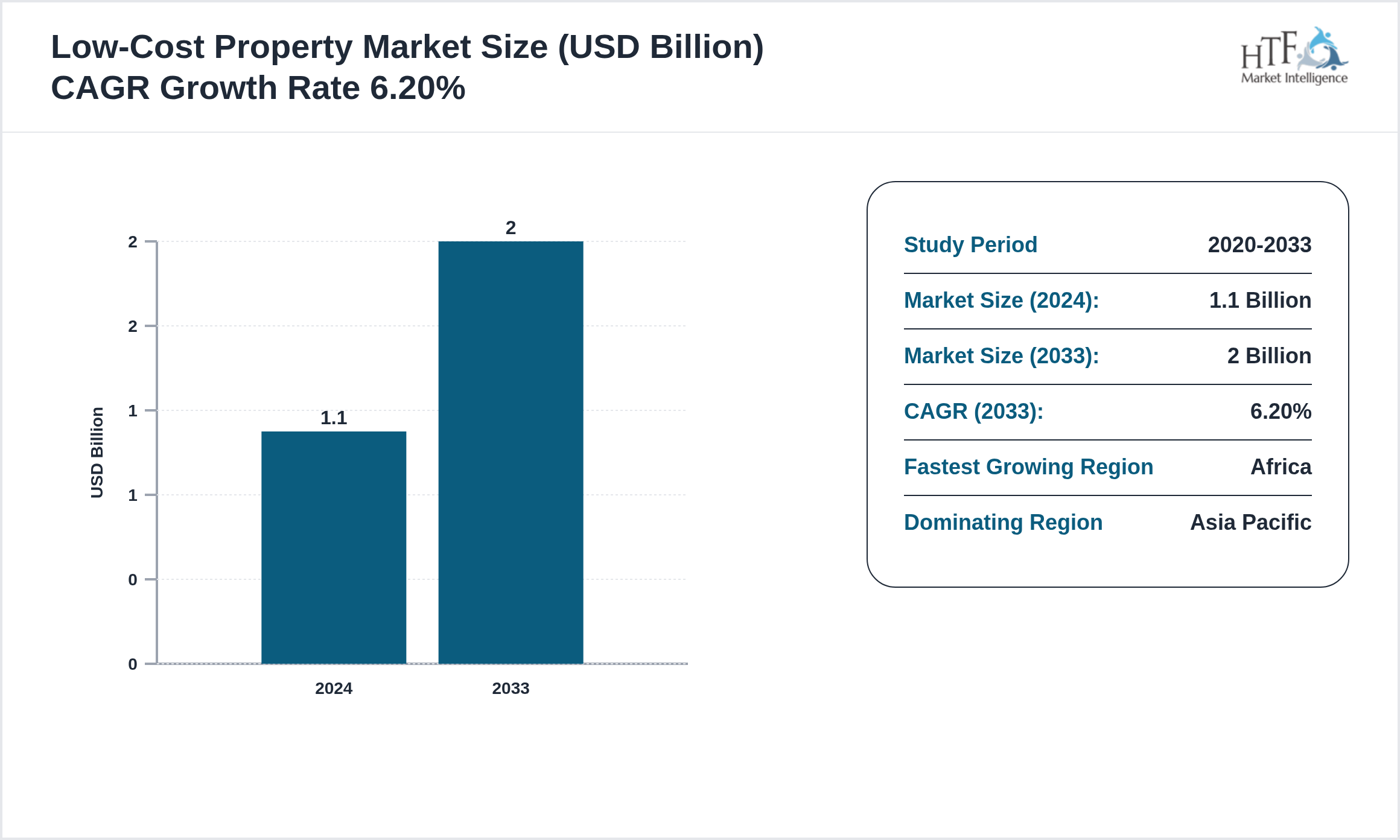
Source: HTF Market Intelligence (HTF MI)
The North America, LATAM, West Europe, Central & Eastern Europe, Northern Europe, Southern Europe, East Asia, Southeast Asia, South Asia, Central Asia, Oceania, MEA insurance industry is a cornerstone of economic stability, offering risk management solutions across various sectors, including life, health, property, and casualty. The industry is undergoing a transformative phase, driven by technological advancements such as artificial intelligence, automation, and digital platforms. These innovations are reshaping customer expectations, pushing insurers to enhance user experiences through personalized policies and faster claims processing.
Low-Cost Property Market Dynamics
Influencing Trend:
- • The market is witnessing trends such as integration of AI IoT automation and advanced analytics to enhance productivity and decision-making. Sustainability-driven innovations energy-efficient designs lightweight materials and eco-friendly processes are gaining traction. Customization modular solutions and smart connected systems are becoming mainstream. Strategic partnerships digital platforms and rapid innovation cycles are reshaping competitive dynamics and accelerating technology adoption
- • Market growth is driven by rising demand for operational efficiency cost reduction and improved performance across industries. Rapid technological advancement increasing automation and digital transformation are accelerating adoption. Supportive government policies infrastructure development and rising public and private investments further boost demand. Expansion of end-use industries urbanization globalization and growing preference for advanced sustainable and high-quality solutions continue to strengthen long-term market growth worldwide
- • Key challenges include high initial investment costs complex system integration and shortage of skilled professionals. Regulatory compliance changing standards and approval timelines may delay commercialization. Supply chain disruptions fluctuating raw material prices and logistics constraints impact margins. Intense competition pricing pressure rapid technological obsolescence data security concerns and limited awareness in developing regions may restrict adoption and profitability
- • Strong growth opportunities exist in emerging economies due to rapid industrialization infrastructure expansion and favorable government initiatives. Increasing demand for sustainable smart and cost-effective solutions enables product differentiation and innovation. Expansion into untapped applications aftermarket services and digital offerings provides new revenue streams. Rising R&D investments technology convergence and adoption across new end-use sectors create long-term growth prospects for established players and new entrants
If you need any specifications, please suggest
Regional Insight
The Asia Pacific currently holds a significant share of the market, primarily due to several key factors: increasing consumption rates, a burgeoning population, and robust economic momentum. These elements collectively drive demand, positioning this region as a leader in the market. On the other hand, Africa is rapidly emerging as the fastest-growing area within the industry. This remarkable growth can be attributed to swift infrastructure development, the expansion of various industrial sectors, and a marked increase in consumer demand. These dynamics make this region a crucial player in shaping future market growth. In our report, we cover a comprehensive analysis of the regions and countries, including
- North America
- LATAM
- West Europe
- Central & Eastern Europe
- Northern Europe
- Southern Europe
- East Asia
- Southeast Asia
- South Asia
- Central Asia
- Oceania
- MEA
Market Segmentation
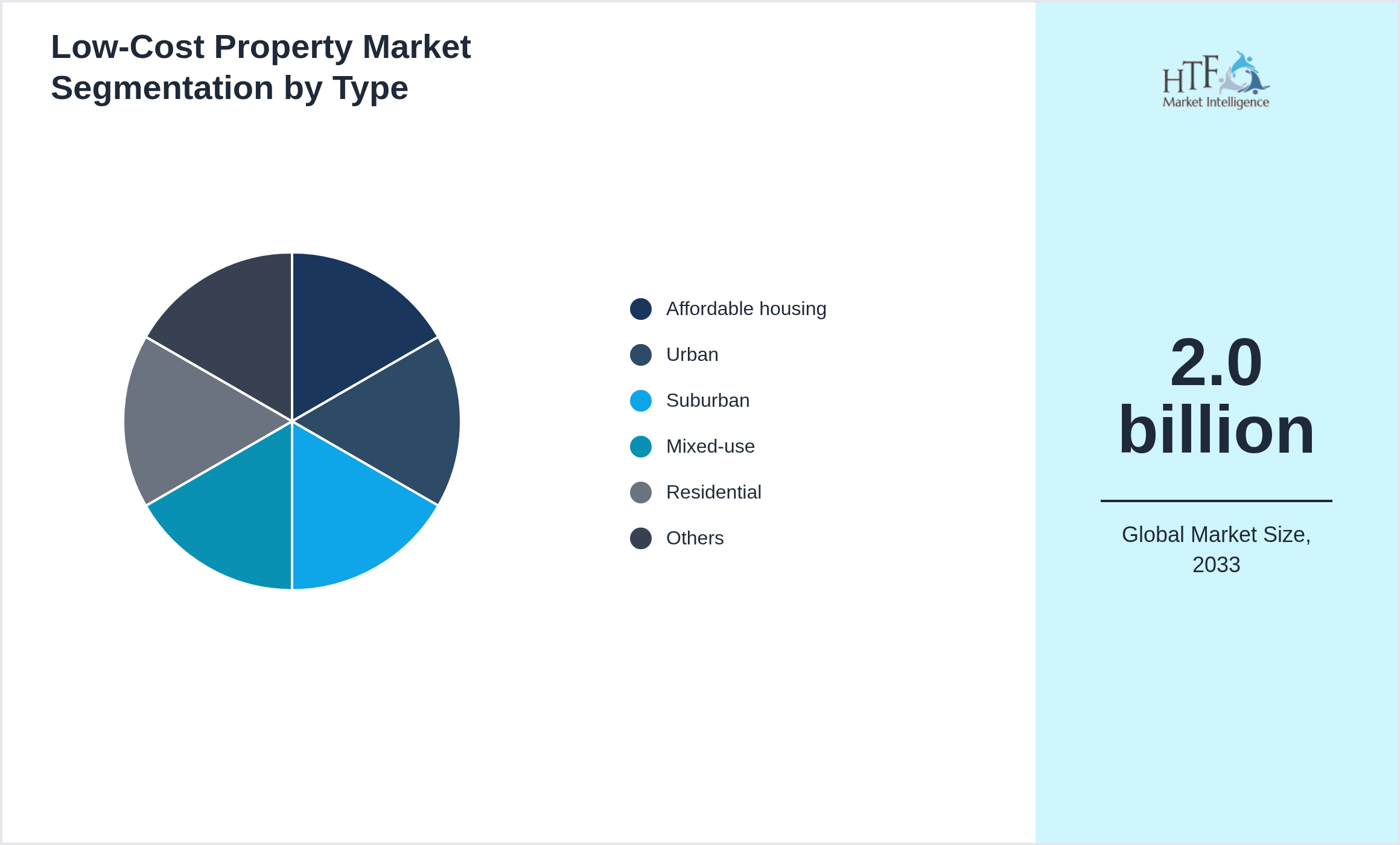
Segmentation by Type
- • Affordable housing
- • Urban
- • Suburban
- • Mixed-use
- • Residential
- • Single-family
- • Multi-family
- • Modular
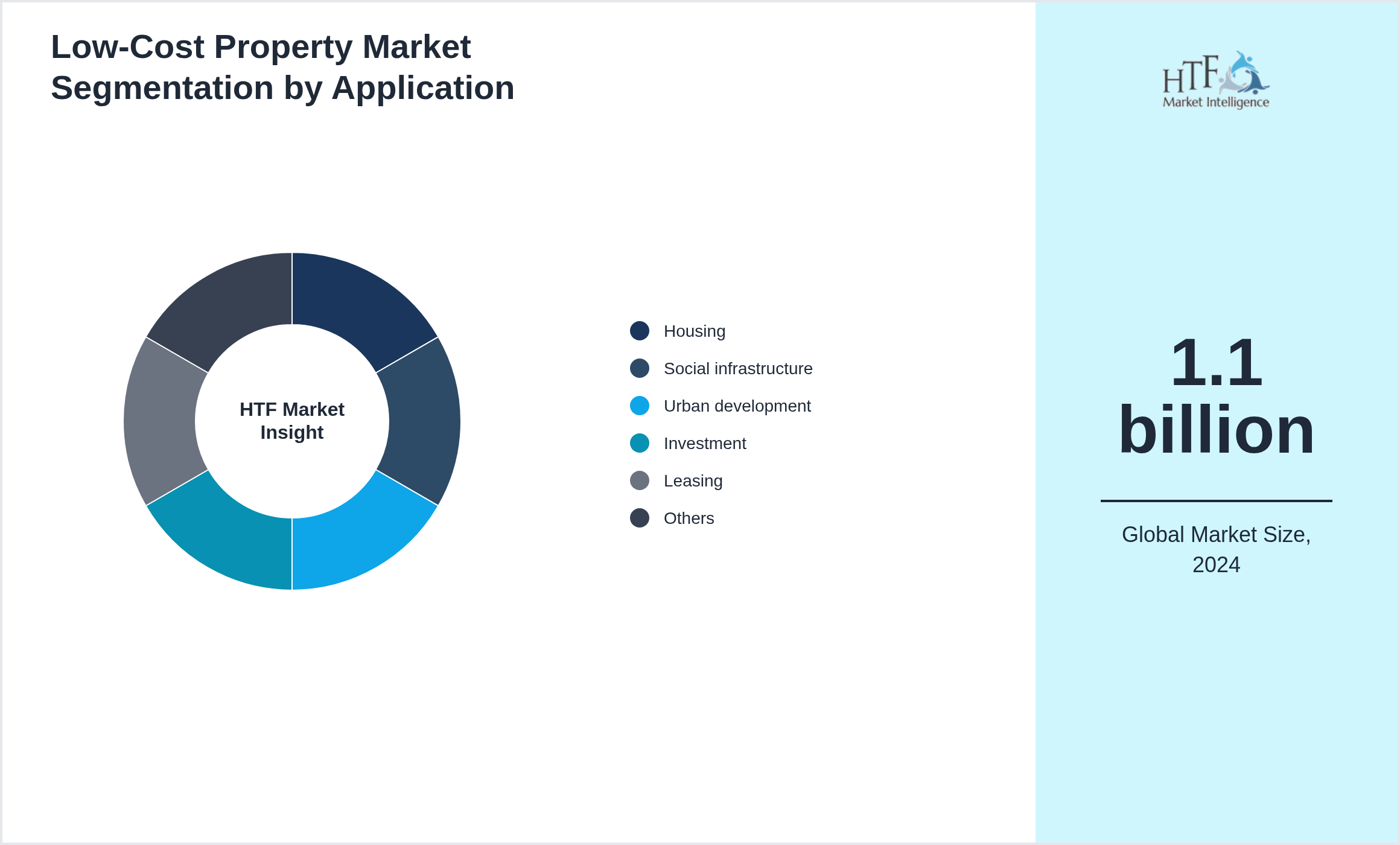
Segmentation by Application
Segmentation by Application
- • Housing
- • Social infrastructure
- • Urban development
- • Investment
- • Leasing
- • Community
- • Affordable rental
- • Government schemes
Key Players
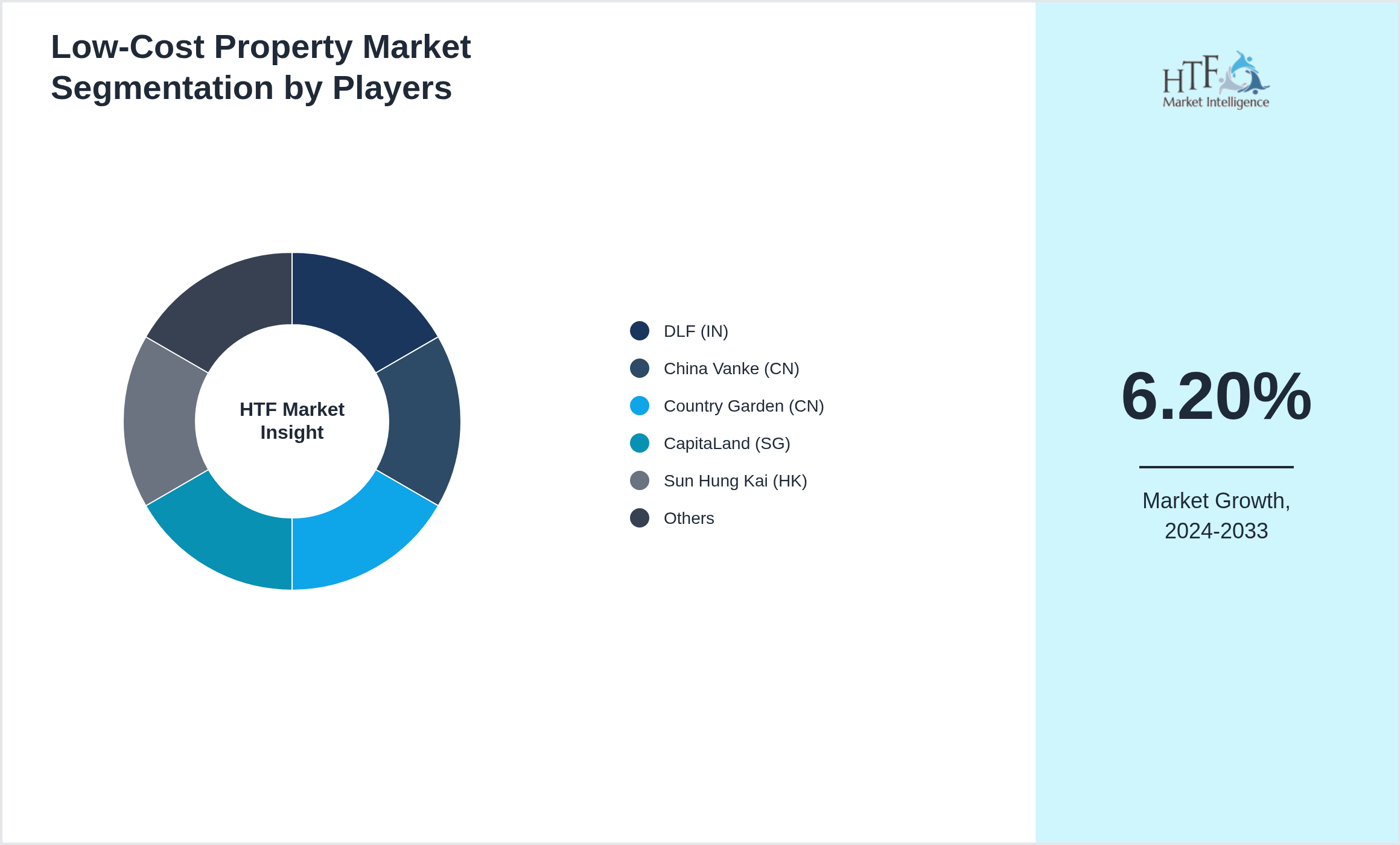
The companies highlighted in this profile were selected based on insights from primary experts and an evaluation of their market penetration, product offerings, and geographical reach.
- • DLF (IN)
- • China Vanke (CN)
- • Country Garden (CN)
- • CapitaLand (SG)
- • Sun Hung Kai (HK)
- • Lendlease (AU)
- • Brookfield (CA)
- • Henderson Land (HK)
- • Mapletree (SG)
- • City Developments (SG)
- • Oxford Properties (CA)
- • Goodman Group (AU)
- • GIC (SG)
- • Jones Lang LaSalle (US)
- • CBRE (US)
- • Knight Frank (UK)
- • Colliers (US)
- • Savills (UK)
- • Mitsubishi Estate (JP)
- • Swire Properties (HK)
- • Tishman Speyer (US)
- • Prologis (US)
- • Hines (US)
- • AvalonBay (US)
- • Essex Property (US)
{
Market Entropy
- • In Aug 2025 low-cost housing projects launched under affordability initiatives. Demand remained strong among first-time buyers and urban workforce segments
Marger & Acquisition
- • In July 2023 a housing developer acquired a low-cost property firm to expand affordable housing supply in urban areas.
Regulatory Landscape
- • Governments are aligning regulations with global standards on emissions worker safety and product performance. Compliance costs are increasing but regulatory clarity is improving market transparency. Tax incentives and grants support R&D green manufacturing and domestic supply chain resilience
Patent Analysis
- • Innovation activity is shifting from basic design patents to system-level and software-integrated patents. Companies focus on automation predictive analytics and efficiency gains. Patent collaborations between corporates and universities are increasing particularly in the US and Europe
Investment Funding
- • Investment activity favors scalable business models with proven demand visibility. Private equity targets consolidation plays while venture funding supports automation and smart solutions. Public funding supports pilot projects sustainability upgrades and technology transfer initiatives
Regional Analysis
- • North America maintains dominance through advanced infrastructure strong purchasing power and continuous technology upgrades. Europe emphasizes circular economy adoption while Asia-Pacific experiences accelerated demand from infrastructure development export manufacturing growth and rising domestic consumption
Market Highlights
|
Report Features |
Details |
|
Base Year |
2024 |
|
Based Year Market Size |
1.1 billion |
|
Historical Period |
2020 |
|
CAGR (2024to 2033) |
6.20% |
|
Forecast Period |
2033 |
|
Forecasted Period Market Size (2033) |
2.0 billion |
|
Scope of the Report |
By |
|
Companies Covered |
DLF (IN), China Vanke (CN), Country Garden (CN), CapitaLand (SG), Sun Hung Kai (HK), Lendlease (AU), Brookfield (CA), Henderson Land (HK), Mapletree (SG), City Developments (SG), Oxford Properties (CA), Goodman Group (AU), GIC (SG), Jones Lang LaSalle (US), CBRE (US), Knight Frank (UK), Colliers (US), Savills (UK), Mitsubishi Estate (JP), Swire Properties (HK), Tishman Speyer (US), Prologis (US), Hines (US), AvalonBay (US), Essex Property (US) |
|
Companies Covered |
DLF (IN), China Vanke (CN), Country Garden (CN), CapitaLand (SG), Sun Hung Kai (HK), Lendlease (AU), Brookfield (CA), Henderson Land (HK), Mapletree (SG), City Developments (SG), Oxford Properties (CA), Goodman Group (AU), GIC (SG), Jones Lang LaSalle (US), CBRE (US), Knight Frank (UK), Colliers (US), Savills (UK), Mitsubishi Estate (JP), Swire Properties (HK), Tishman Speyer (US), Prologis (US), Hines (US), AvalonBay (US), Essex Property (US) |
|
Customization Scope |
15% Free Customization (For EG) |
|
Delivery Format |
PDF and Excel through Email |
Research Methodology
The research methodology for studying the insurance industry combines both qualitative and quantitative approaches. It begins with secondary research, gathering data from industry reports, government publications, and regulatory filings to understand market trends and dynamics. This is followed by primary research, involving interviews and surveys with industry stakeholders, such as insurers and regulators, to capture insights on market challenges and customer behavior. Quantitative analysis includes examining market size, growth rates, and segmentation by product type and geography. Competitive analysis and trend evaluation are conducted to assess key players and emerging industry shifts, culminating in forecasts and actionable insights for strategic planning.