
Global Smart Property Market Size, Growth & Revenue 2024-2033
Global Smart Property Market is segmented by Application (Energy efficiency, Security, Automation, Monitoring, Office, Residential, Retail, Urban management), Type (Residential, Commercial, Mixed-use, Industrial, IoT-enabled, Green, Luxury, Modular), and Geography (North America, LATAM, West Europe, Central & Eastern Europe, Northern Europe, Southern Europe, East Asia, Southeast Asia, South Asia, Central Asia, Oceania, MEA)
Pricing
Report Overview
Industry Overview
The North America, LATAM, West Europe, Central & Eastern Europe, Northern Europe, Southern Europe, East Asia, Southeast Asia, South Asia, Central Asia, Oceania, MEA Smart Property market was valued at 1.0 billion in 2024 and is expected to reach 1.9 billion by 2020, growing at a compound annual growth rate (CAGR) of 6.50% over the forecast period.
Smart property integrates digital technologies such as IoT sensors automation systems smart meters and AI-enabled controls to enhance efficiency security and user comfort. Features include smart lighting climate control access management and energy optimization. Smart properties improve operational efficiency reduce energy consumption and enhance occupant experience making them increasingly attractive in residential commercial and mixed-use real estate developments
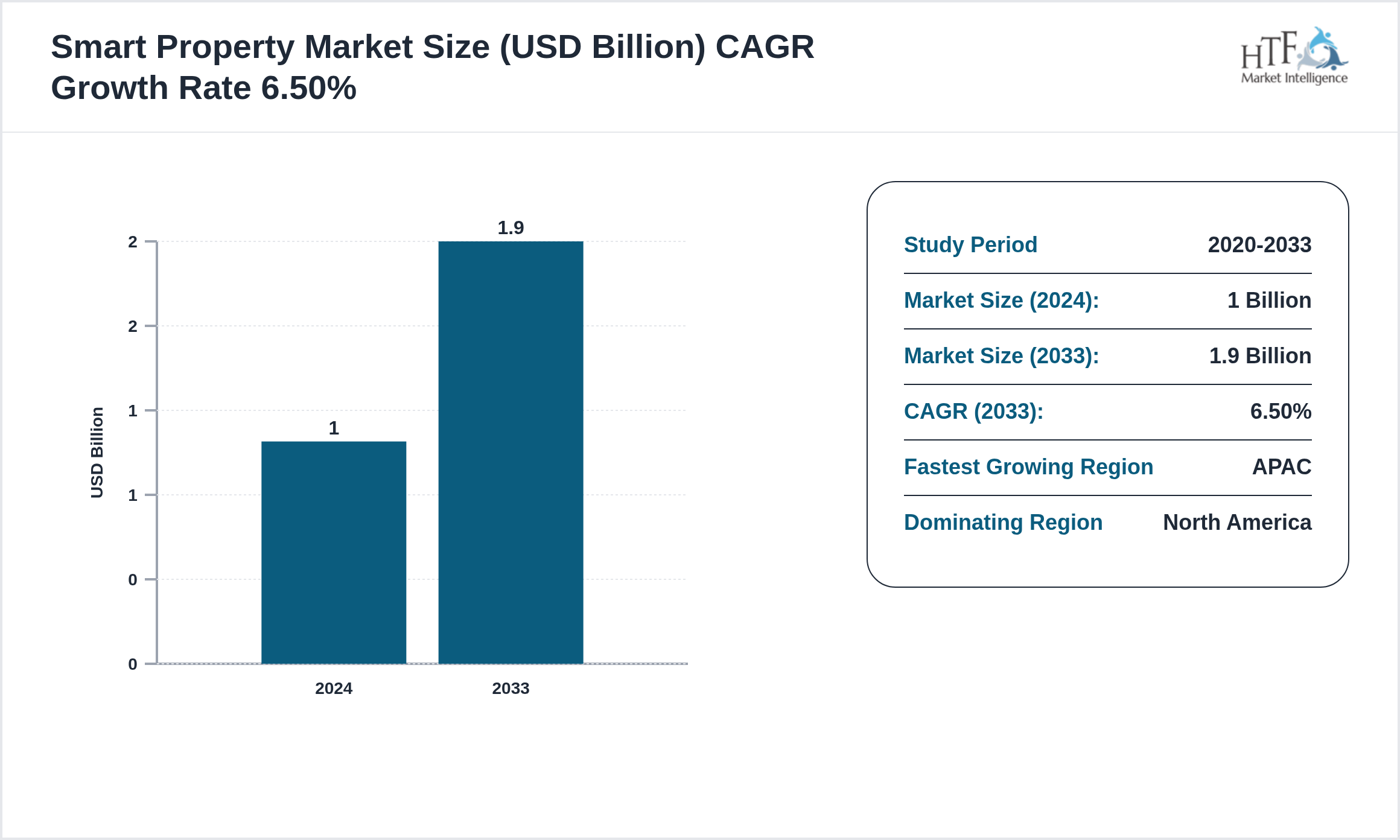
Source: HTF Market Intelligence (HTF MI)
The North America, LATAM, West Europe, Central & Eastern Europe, Northern Europe, Southern Europe, East Asia, Southeast Asia, South Asia, Central Asia, Oceania, MEA insurance industry is a cornerstone of economic stability, offering risk management solutions across various sectors, including life, health, property, and casualty. The industry is undergoing a transformative phase, driven by technological advancements such as artificial intelligence, automation, and digital platforms. These innovations are reshaping customer expectations, pushing insurers to enhance user experiences through personalized policies and faster claims processing.
Smart Property Market Dynamics
Influencing Trend:
- • Ongoing trends include rapid digitalization adoption of AI-enabled platforms and integration of IoT for real-time monitoring. Companies are focusing on lightweight designs energy efficiency and environmentally responsible materials. Subscription-based services predictive analytics and remote management capabilities are gaining popularity. Collaboration between technology providers and end users is accelerating innovation and shortening product development cycles
- • Increasing demand for reliability efficiency and scalable solutions across commercial and industrial sectors is a key growth driver. Digital transformation initiatives automation adoption and smart infrastructure development are accelerating market penetration. Favorable government initiatives modernization of legacy systems and increased spending on advanced technologies further support demand. Growing awareness of sustainability safety and long-term cost savings continues to drive adoption worldwide
- • The market encounters challenges such as high deployment costs technical complexity and interoperability issues with existing systems. Regulatory uncertainty certification requirements and compliance burdens may slow commercialization. Global supply chain risks component shortages and cost volatility affect operations. Intense competition margin pressure rapid innovation cycles and lack of skilled professionals pose ongoing operational challenges
- • Growth opportunities are expanding in developing regions due to rising industrial activity and infrastructure investments. Demand for customized application-specific and sustainable solutions supports innovation-led growth. Aftermarket services upgrades and digital add-ons offer recurring revenue potential. Increased funding for research adoption of next-generation technologies and expansion into niche applications provide strong long-term market prospects
If you need any specifications, please suggest
Regional Insight
The North America currently holds a significant share of the market, primarily due to several key factors: increasing consumption rates, a burgeoning population, and robust economic momentum. These elements collectively drive demand, positioning this region as a leader in the market. On the other hand, APAC is rapidly emerging as the fastest-growing area within the industry. This remarkable growth can be attributed to swift infrastructure development, the expansion of various industrial sectors, and a marked increase in consumer demand. These dynamics make this region a crucial player in shaping future market growth. In our report, we cover a comprehensive analysis of the regions and countries, including
- North America
- LATAM
- West Europe
- Central & Eastern Europe
- Northern Europe
- Southern Europe
- East Asia
- Southeast Asia
- South Asia
- Central Asia
- Oceania
- MEA
Market Segmentation
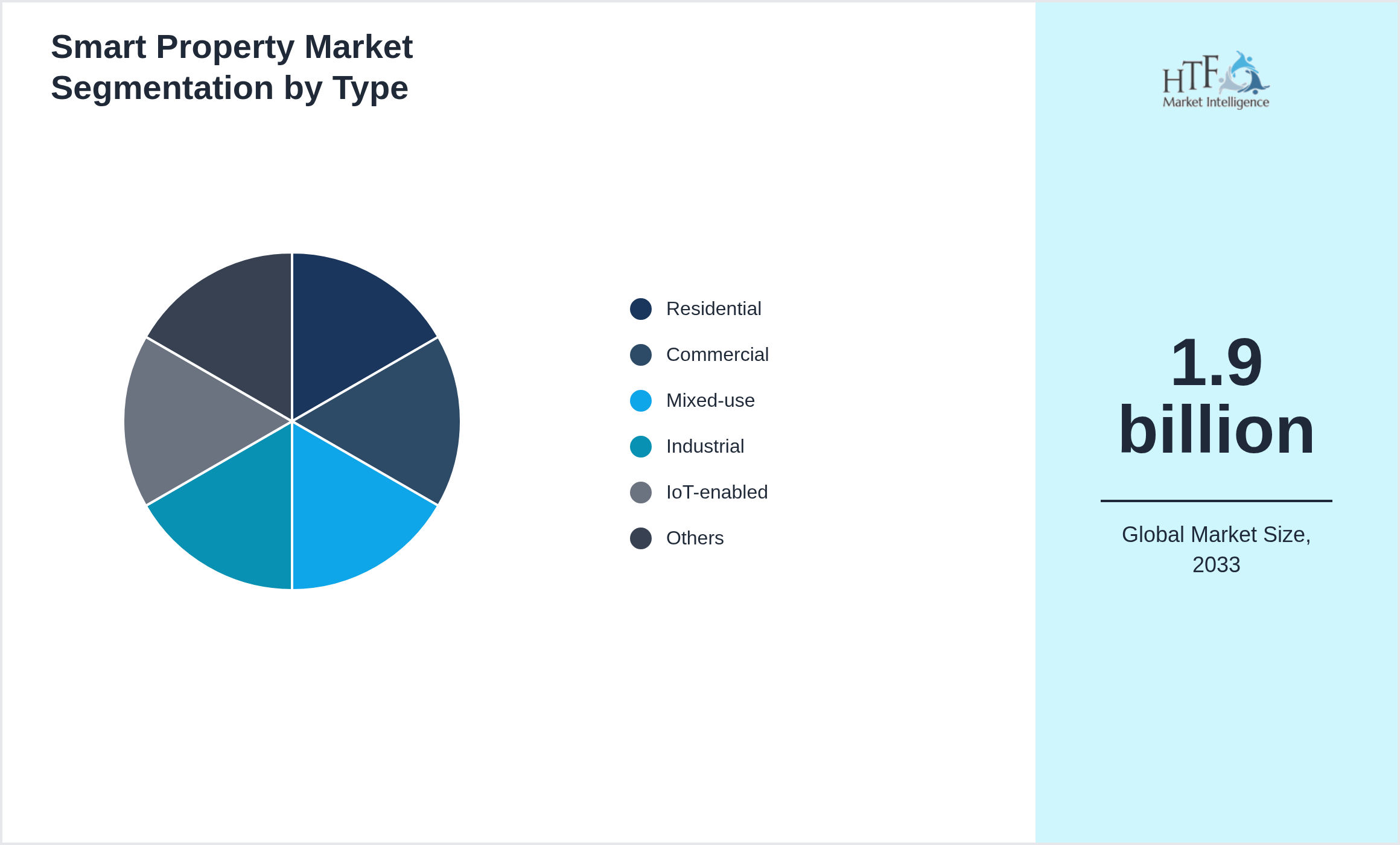
Segmentation by Type
- • Residential
- • Commercial
- • Mixed-use
- • Industrial
- • IoT-enabled
- • Green
- • Luxury
- • Modular
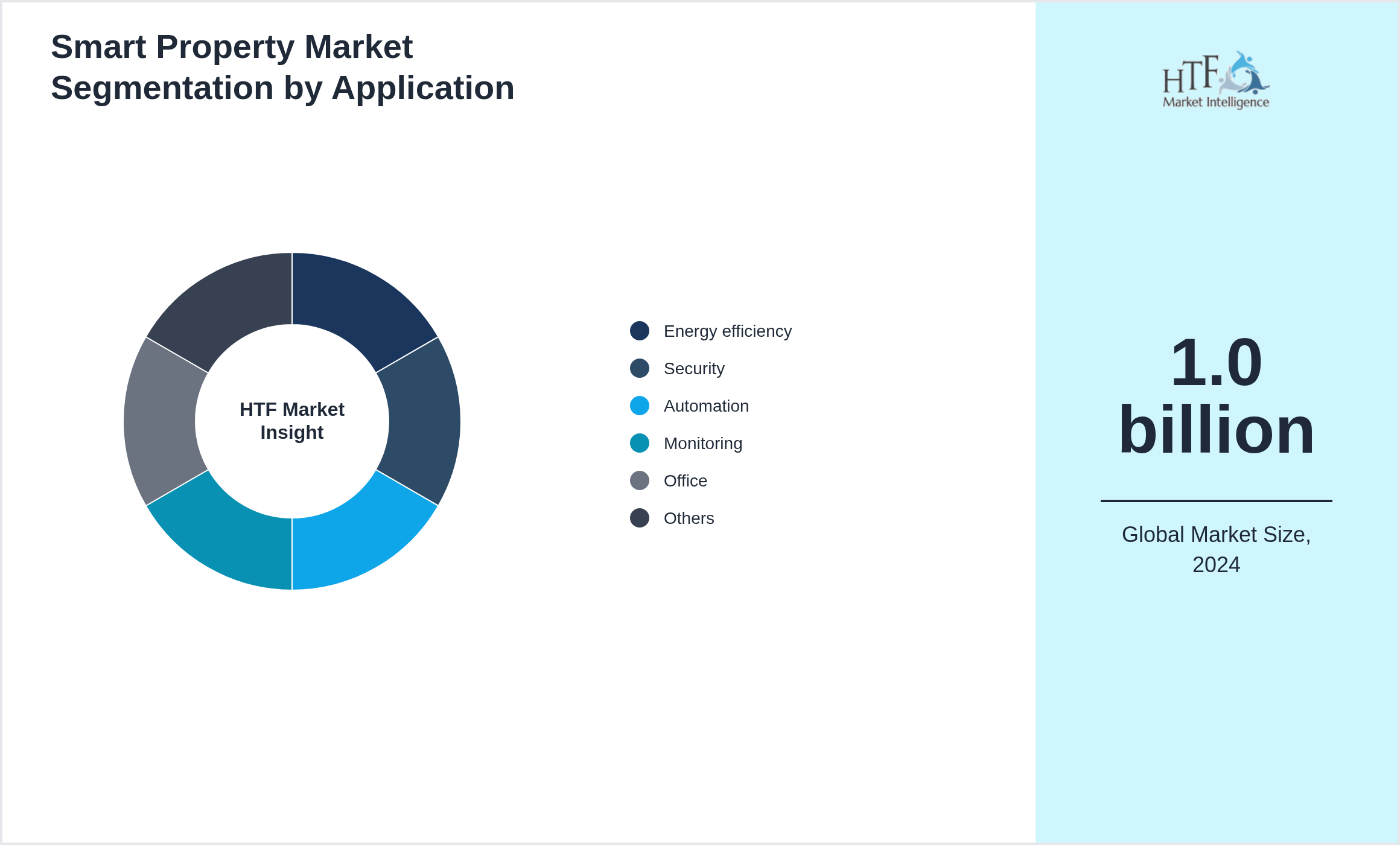
Segmentation by Application
Segmentation by Application
- • Energy efficiency
- • Security
- • Automation
- • Monitoring
- • Office
- • Residential
- • Retail
- • Urban management
Key Players
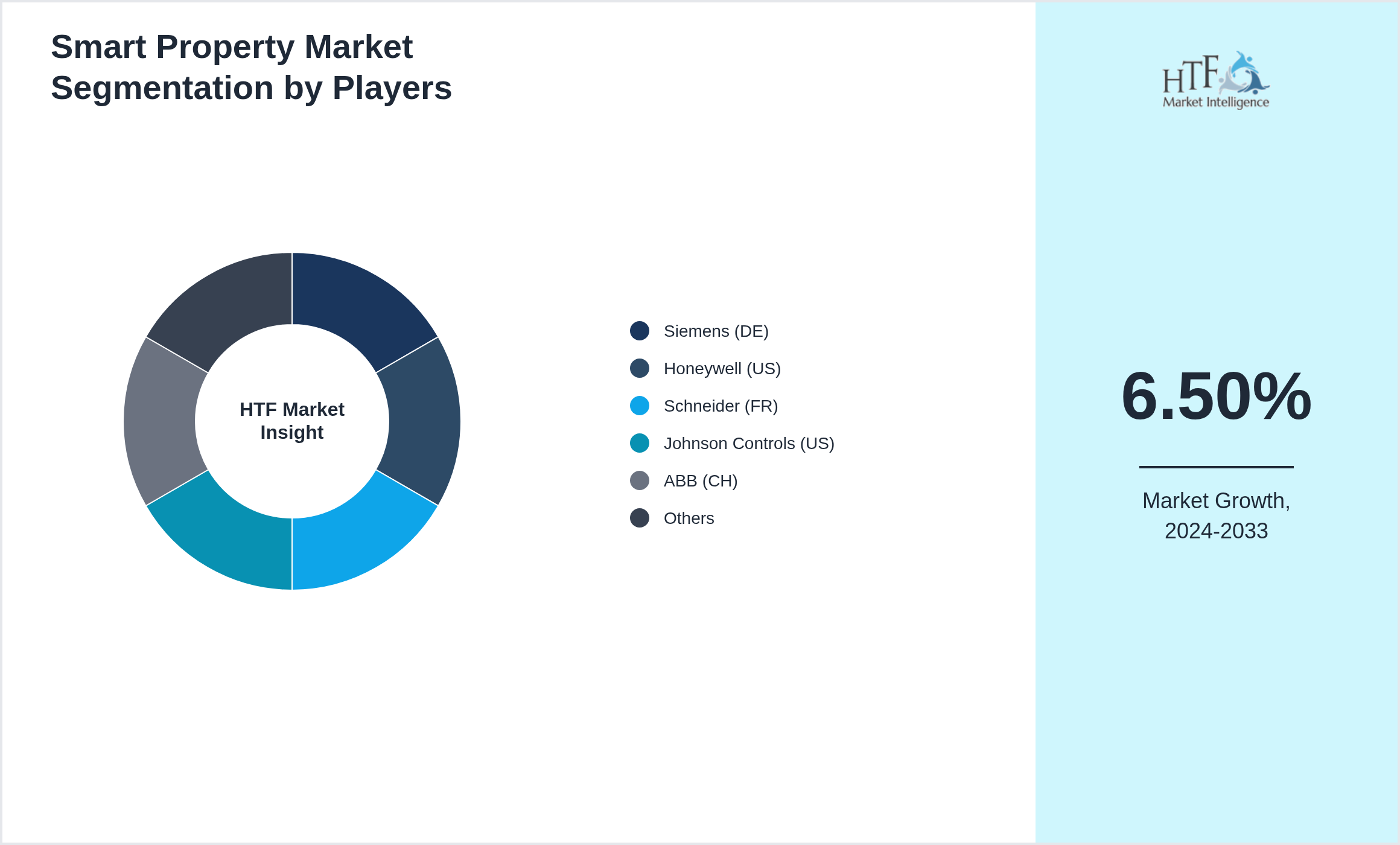
The companies highlighted in this profile were selected based on insights from primary experts and an evaluation of their market penetration, product offerings, and geographical reach.
- • Siemens (DE)
- • Honeywell (US)
- • Schneider (FR)
- • Johnson Controls (US)
- • ABB (CH)
- • Cisco (US)
- • Huawei (CN)
- • Bosch (DE)
- • LG (KR)
- • Samsung (KR)
- • Delta (TW)
- • Legrand (FR)
- • Hitachi (JP)
- • Mitsubishi (JP)
- • Johnson Controls (US)
- • Carrier (US)
- • Honeywell Building Solutions (US)
- • Siemens Smart Infrastructure (DE)
- • ABB (CH)
- • Schneider Electric (FR)
- • Cisco (US)
- • IBM (US)
- • Oracle (US)
- • Google Nest (US)
- • Microsoft (US)
{
Market Entropy
- • In Sep 2025 smart property launches integrated IoT energy management and security systems. Demand increased from tech-savvy urban buyers
Marger & Acquisition
- • In April 2024 a proptech-enabled developer acquired a smart property solutions firm to integrate automation and energy management.
Regulatory Landscape
- • Regulatory bodies are enforcing stricter quality audits environmental limits and worker safety standards. Digital reporting certification renewal and sustainability disclosures are becoming mandatory increasing compliance costs but improving overall industry discipline
Patent Analysis
- • Patent portfolios are expanding around automation advanced materials and integrated systems. Innovation cycles are shortening encouraging continuous filing activity. Cross-licensing and technology sharing agreements are increasingly common among global players
Investment Funding
- • Investment strategies focus on productivity improvement automation adoption and emissions reduction. M&A activity targets regional expansion and capability enhancement. Venture capital supports niche innovation while corporates invest in strategic capacity and technology upgrades
Regional Analysis
- • Regional demand patterns reflect strong Asia-Pacific volume growth steady North American value growth and Europe’s focus on compliance-driven modernization. Supply chains are being regionalized to reduce risk improve delivery timelines and align with local regulatory requirements
Market Highlights
|
Report Features |
Details |
|
Base Year |
2024 |
|
Based Year Market Size |
1.0 billion |
|
Historical Period |
2020 |
|
CAGR (2024to 2033) |
6.50% |
|
Forecast Period |
2033 |
|
Forecasted Period Market Size (2033) |
1.9 billion |
|
Scope of the Report |
By |
|
Companies Covered |
Siemens (DE), Honeywell (US), Schneider (FR), Johnson Controls (US), ABB (CH), Cisco (US), Huawei (CN), Bosch (DE), LG (KR), Samsung (KR), Delta (TW), Legrand (FR), Hitachi (JP), Mitsubishi (JP), Johnson Controls (US), Carrier (US), Honeywell Building Solutions (US), Siemens Smart Infrastructure (DE), ABB (CH), Schneider Electric (FR), Cisco (US), IBM (US), Oracle (US), Google Nest (US), Microsoft (US) |
|
Companies Covered |
Siemens (DE), Honeywell (US), Schneider (FR), Johnson Controls (US), ABB (CH), Cisco (US), Huawei (CN), Bosch (DE), LG (KR), Samsung (KR), Delta (TW), Legrand (FR), Hitachi (JP), Mitsubishi (JP), Johnson Controls (US), Carrier (US), Honeywell Building Solutions (US), Siemens Smart Infrastructure (DE), ABB (CH), Schneider Electric (FR), Cisco (US), IBM (US), Oracle (US), Google Nest (US), Microsoft (US) |
|
Customization Scope |
15% Free Customization (For EG) |
|
Delivery Format |
PDF and Excel through Email |
Research Methodology
The research methodology for studying the insurance industry combines both qualitative and quantitative approaches. It begins with secondary research, gathering data from industry reports, government publications, and regulatory filings to understand market trends and dynamics. This is followed by primary research, involving interviews and surveys with industry stakeholders, such as insurers and regulators, to capture insights on market challenges and customer behavior. Quantitative analysis includes examining market size, growth rates, and segmentation by product type and geography. Competitive analysis and trend evaluation are conducted to assess key players and emerging industry shifts, culminating in forecasts and actionable insights for strategic planning.