
Mocha Coffee Market - Global Industry Size & Growth Analysis 2020-2033
Global Mocha Coffee Market is segmented by Application (Cafes, Retail, Online, Vending, Food service), Type (Ready-to-drink, Instant mocha, Premium roast, Cold mocha, Vegan mocha), and Geography (North America, LATAM, West Europe, Central & Eastern Europe, Northern Europe, Southern Europe, East Asia, Southeast Asia, South Asia, Central Asia, Oceania, MEA)
Pricing
Report Overview
Mocha Coffee Industry Overview
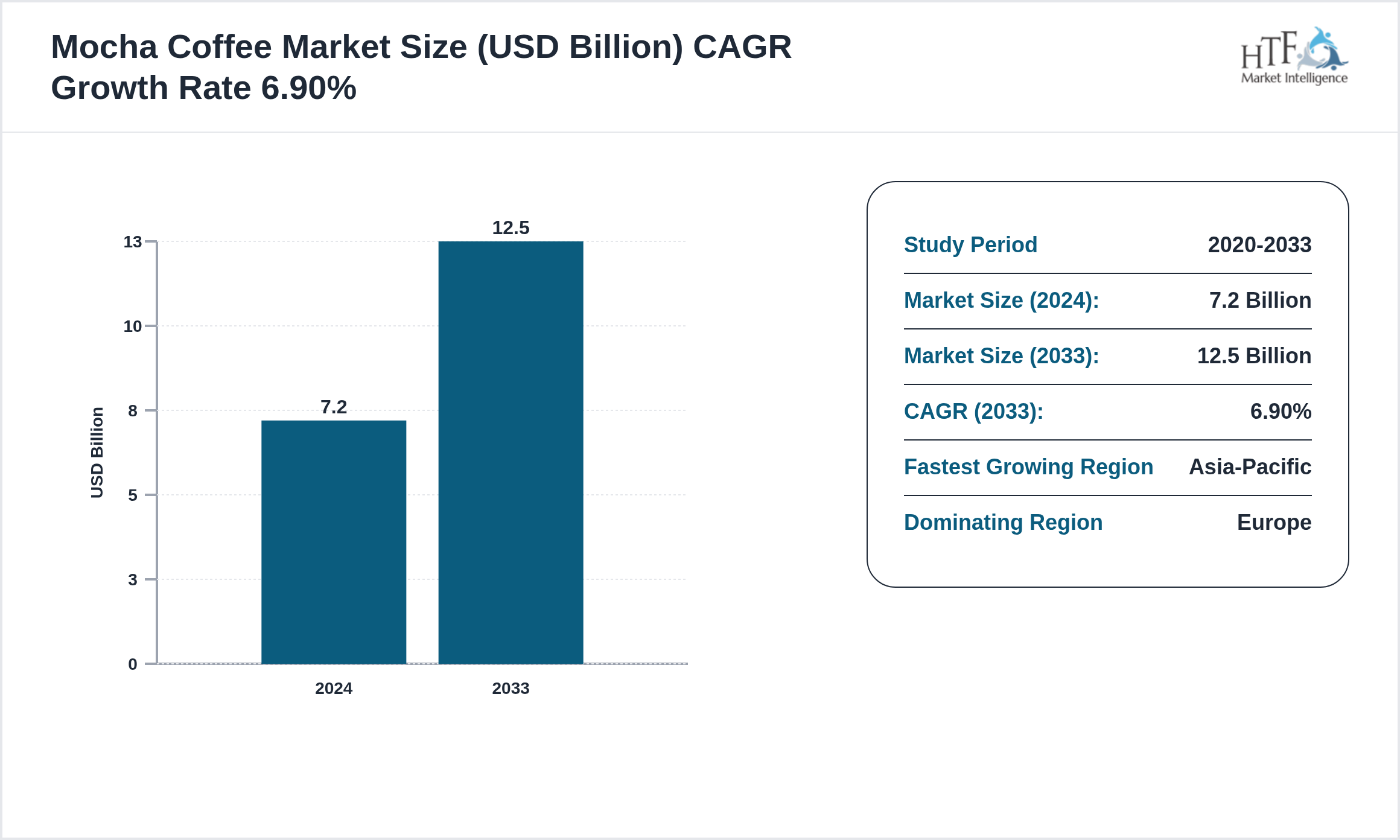
The Mocha Coffee market is experiencing robust growth, projected to achieve a compound annual growth rate CAGR of 6.90% during the forecast period. Valued at 7.2 billion, the market is expected to reach 12.5 billion by 2033, with a year-on-year growth rate of {YOY_GROWTH}.
Mocha coffee is a popular beverage that blends espresso with chocolate (cocoa or chocolate syrup) and steamed milk, offering a rich, sweet flavor profile. Originating from the Yemeni port of Mocha, known historically for its chocolate-toned coffee beans, the drink has become a global favorite across cafés and home brewing. Mocha variations include white mocha, iced mocha, and specialty chocolate-infused blends. Rising café culture, premium beverage trends, and demand for indulgent flavors drive market growth. Innovations include plant-based milk mochas, low-sugar versions, ready-to-drink cans, and artisanal chocolate pairings. Mocha coffee appeals to consumers seeking both caffeine and dessert-like taste experiences.
Key Highlights of the Mocha Coffee
• The Mocha Coffee is growing at a CAGR of 6.90% during the forecasted period of 2024 to 2033
• Year-on-year growth for the market is {YOY_GROWTH}
• Asia-Pacific is the largest market in 2024
• Based on type, the market is bifurcated into Ready-to-drink, Instant mocha, Premium roast, Cold mocha, Vegan mocha segments, which dominated the market share during the forecasted period.
Patent Analysis
- • Patents in AI pricing route optimization real-time matching.
Investment and Funding Scenario
- • Strong VC funding; logistics tech consolidation.
Market Segmentation
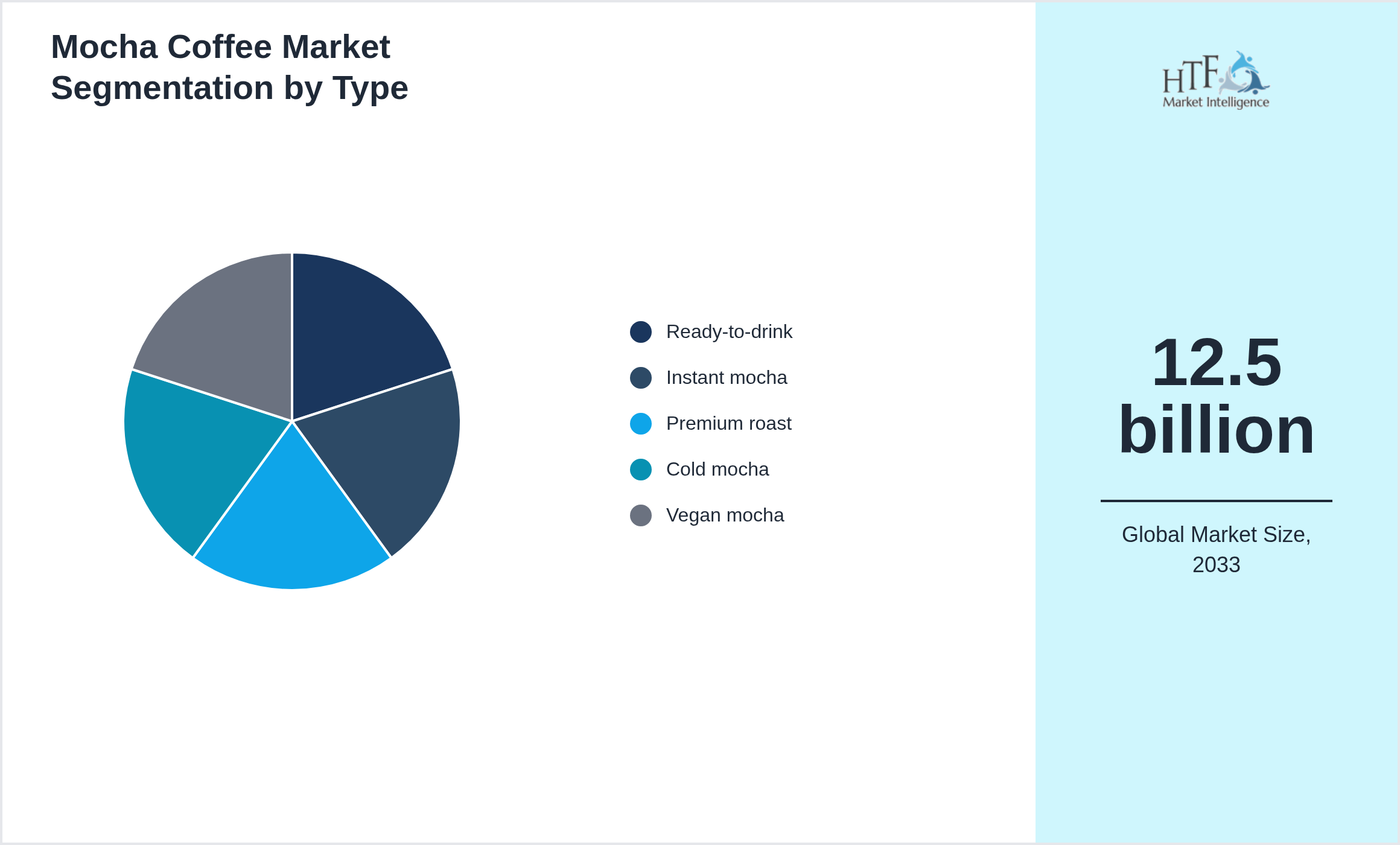
Segmentation by Type
- • Ready-to-drink
- • Instant mocha
- • Premium roast
- • Cold mocha
- • Vegan mocha
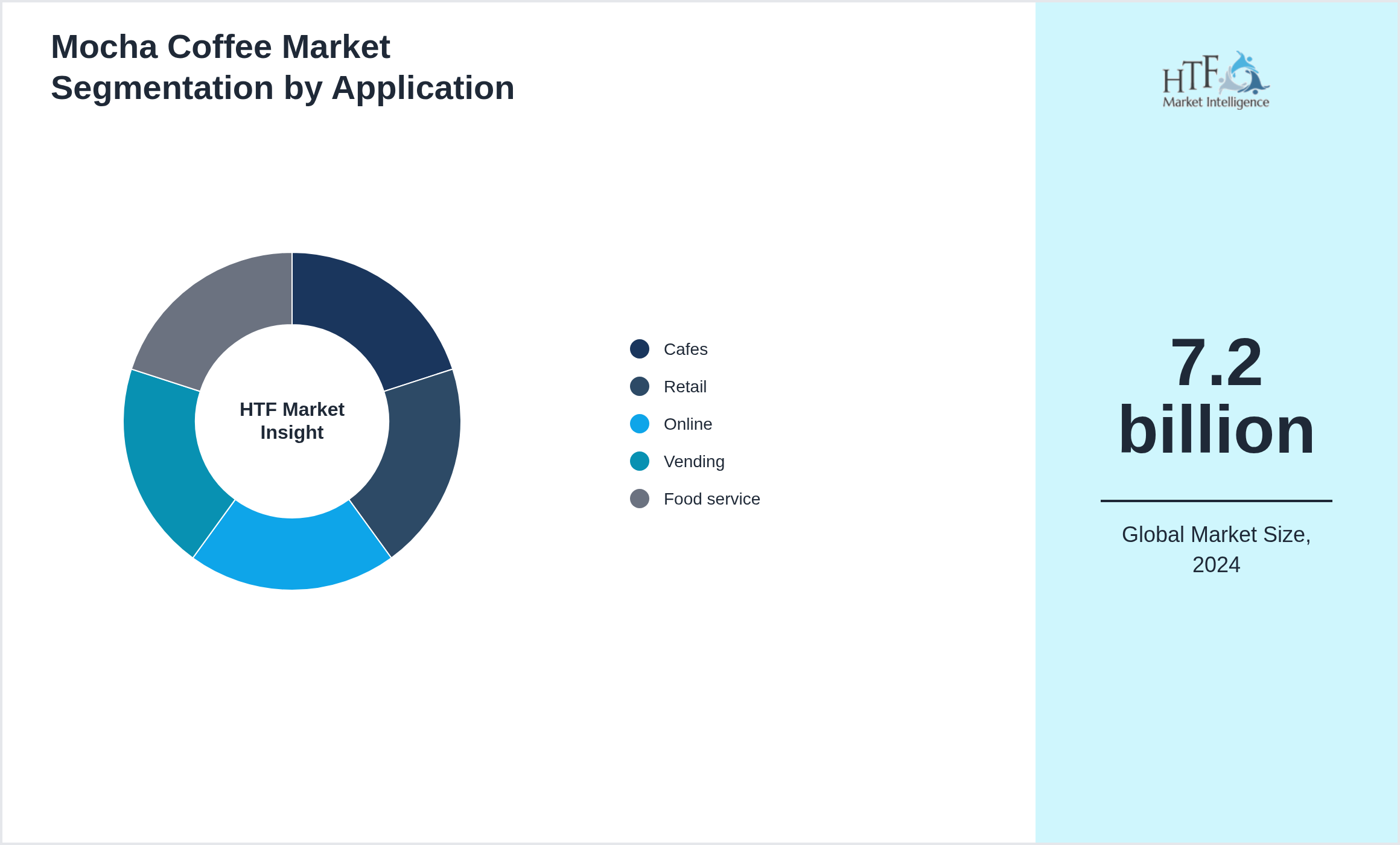
Segmentation by Application
- • Cafes
- • Retail
- • Online
- • Vending
- • Food service
{SIDE_TAG The report also splits the market by region.
- North America
- LATAM
- West Europe
- Central & Eastern Europe
- Northern Europe
- Southern Europe
- East Asia
- Southeast Asia
- South Asia
- Central Asia
- Oceania
- MEA
Regional Insights
The Mocha Coffee market exhibits significant regional variation, shaped by different economic conditions and consumer behaviors.
Currently, Europe dominates the market due to high consumption, population growth, and sustained economic progress. Meanwhile, Asia-Pacific is experiencing the fastest growth, driven by large-scale infrastructure investments, industrial development, and rising consumer demand.
Key Regional Analysis
- • Dominant: North America. Growth: Asia-Pacific. Hotspots: US India.
Mergers, Acquisitions & Strategic Partnerships
- • Sep 2025: JDE Peet’s acquired MochaCraft Roasters to expand flavored coffee portfolios. Dec 2025: Nestlé purchased CafeMocha Innovations to strengthen RTD mocha beverages and café channel product development with improved margin mix.
Regulatory Landscape
- • Transport regulations data privacy and digital contracts apply.
Key Players
The companies highlighted in this profile were selected based on insights from primary experts and an evaluation of their market penetration, product offerings, and geographical reach:
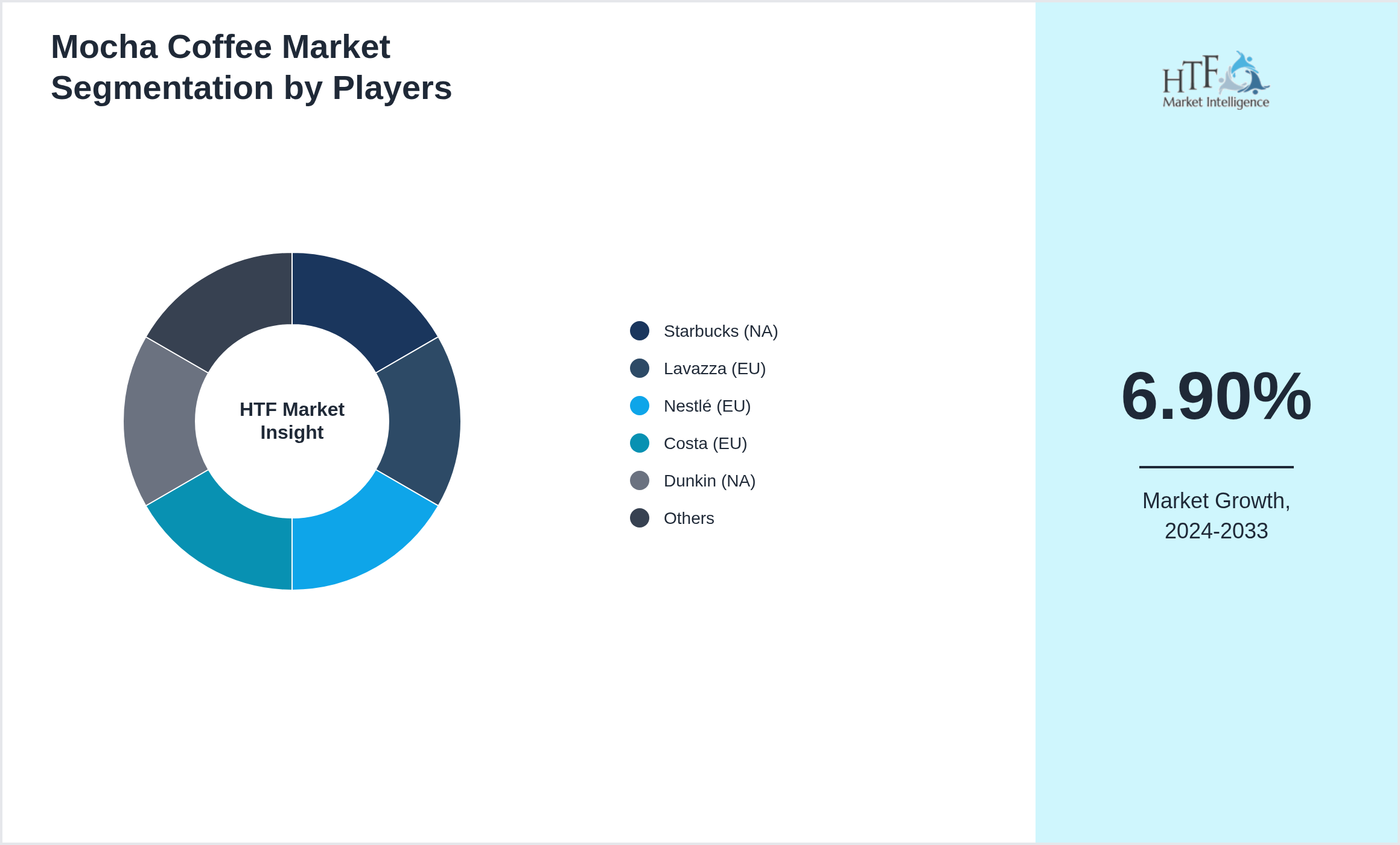
- • Starbucks (NA)
- • Lavazza (EU)
- • Nestlé (EU)
- • Costa (EU)
- • Dunkin (NA)
- • McCafé (NA)
- • Illy (EU)
- • Tim Hortons (NA)
- • Coffee Bean (NA)
- • Gloria Jean’s (AU)
- • CCD (APAC)
- • Barista (APAC)
- • Peet’s (NA)
- • Nespresso (EU)
- • Strauss Coffee (EU)
- • JDE Peet’s (EU)
Companies within the industry are increasingly concentrating on broadening their market presence through a variety of strategic initiatives. These include mergers and acquisitions, as well as green investments, particularly in underdeveloped regions. Such strategies are proving instrumental in enabling these companies to capture a larger share of the market. By consolidating resources and expanding their geographical footprint, they not only enhance their competitive edge but also contribute to sustainable development in emerging markets. This approach not only fosters growth but also aligns with global trends toward environmental responsibility and corporate sustainability.
Competitive Landscape
The competitive landscape is shaped by a mix of global leaders and regional players, with large companies like Starbucks (NA), Lavazza (EU), Nestlé (EU), Costa (EU), Dunkin (NA), McCafé (NA), Illy (EU), Tim Hortons (NA), Coffee Bean (NA), Gloria Jean’s (AU), CCD (APAC), Barista (APAC), Peet’s (NA), Nespresso (EU), Strauss Coffee (EU), JDE Peet’s (EU) dominating the market through their extensive resources, innovation, and established brand presence. However, emerging players are disrupting the market with niche products and innovative technologies, challenging the incumbents. Pricing strategies vary, with larger firms benefiting from economies of scale while smaller players offer value-added services or customization.
Get the full report to explore critical industry dynamics.
Price Trend Analysis
Price trend analysis is the study of historical pricing data to identify patterns and predict future price movements in Mocha Coffee Market. It provides businesses with insights into how prices for goods or services change over time due to factors like demand and supply levels in Mocha Coffee Industry, economic conditions, and external influences such as inflation or raw material costs.
Price trend analysis is also essential for forecasting. It allows companies to predict future price fluctuations and plan accordingly, whether for purchasing, production, or sales strategies. This is particularly important for Mocha Coffee industries where price volatility is common, such as commodities or seasonal products.
Furthermore, analyzing price trends in Mocha Coffee Industry offers valuable insights for Mocha Coffee stakeholders. Businesses can gain a clearer view of consumer behavior, competitor pricing tactics, and overall market health. This helps in making informed decisions about product positioning, promotions, and inventory management.
Mocha Coffee Market Dynamics
Market dynamics refer to the forces that influence the supply and demand of products and services within a market. These forces include factors such as consumer preferences, technological advancements, regulatory changes, economic conditions, and competitive actions. Understanding market dynamics is crucial for businesses, as it helps them anticipate changes, identify opportunities, and mitigate risks.
What Is Driving Growth in the Mocha Coffee Market?
- • café culture growth
- • flavored coffee demand
- • premium beverage preference
- • urban lifestyle adoption
- • café chain expansion
What are the Latest Trends in the Mocha Coffee Market?
- • specialty mocha blends
- • plant-based milk pairing
- • ready-to-drink formats
- • artisanal syrups
- • low-sugar recipes
Where are the Biggest Growth Opportunities in the Mocha Coffee Market?
- • premium café menus
- • home brewing products
- • online coffee retail
- • emerging urban markets
- • private label beverages
Why does the Mocha Coffee Market face Growth Challenges?
- • fluctuating coffee prices
- • taste standardization
- • shelf-life issues
- • intense competition
- • changing consumer preferences
Major Industry Advancements
- • In Aug 2025mocha coffee consumption increased with premium café offerings and ready-to-drink variants. Producers focused on balanced flavor profilesclean ingredient labelingand convenient packaging to attract younger consumers
|
Report Features |
Details |
|
Base Year |
2026 |
|
Based Year Market Size (2024) |
7.2 billion |
|
Historical Period Market Size (2020) |
USD Million ZZ |
|
CAGR (2026 to 2033) |
6.90% |
|
Forecast Period |
2026 to 2033 |
|
Forecasted Period Market Size (2033) |
12.5 billion |
|
Scope of the Report |
By Type: Ready-to-drink, Instant mocha, Premium roast, Cold mocha, Vegan mocha, By Application: Cafes, Retail, Online, Vending, Food service |
|
Regions Covered |
North America, LATAM, West Europe, Central & Eastern Europe, Northern Europe, Southern Europe, East Asia, Southeast Asia, South Asia, Central Asia, Oceania, MEA |
|
Year-on-Year Growth |
4.90% |
|
Companies Covered |
Starbucks (NA), Lavazza (EU), Nestlé (EU), Costa (EU), Dunkin (NA), McCafé (NA), Illy (EU), Tim Hortons (NA), Coffee Bean (NA), Gloria Jean’s (AU), CCD (APAC), Barista (APAC), Peet’s (NA), Nespresso (EU), Strauss Coffee (EU), JDE Peet’s (EU) |
|
Customization Scope |
15% Free Customization (For example) |
|
Delivery Format |
PDF and Excel through Email |
Data Collection Method
Data triangulation is a method used to analyze markets by gathering and comparing information from multiple sources or utilizing different research approaches to examine the same topic. This technique involves integrating data from various sources, such as surveys, interviews, and industry reports, or combining both qualitative and quantitative methods. By employing data triangulation, researchers can cross-verify information, reduce biases, and achieve a more accurate and comprehensive understanding of market dynamics.
Research Process
The research process is a systematic approach to gathering and analyzing information to address specific questions or hypotheses. It typically begins with identifying a problem or research question that needs exploration. Once the question is defined, researchers review existing literature to gain a deeper understanding of the subject and identify gaps that need addressing.
Next, researchers develop a research plan or methodology, outlining how data will be collected and analyzed. This may involve choosing between qualitative, quantitative, or mixed methods depending on the nature of the research. Data collection methods can include surveys, experiments, observations, or secondary data analysis.
Once data is collected, the next step is analyzing the information using appropriate tools or techniques, such as statistical software for quantitative data or thematic analysis for qualitative data. This analysis helps draw conclusions and identify patterns relevant to the research question.
Finally, the findings are interpreted and communicated through reports, presentations, or publications. The results are often compared against the initial hypotheses, and limitations or further areas of study are highlighted. This structured process ensures that research is rigorous, transparent, and reliable, contributing valuable insights to the field of study.
Research enthusiast focused on transforming data uncovering into actionable insights through data-driven decision-making.