
DNA Test Kit Market - Global Share, Size & Changing Dynamics 2020-2033
Global DNA Test Kit Market is segmented by Application (Consumer ancestry, Preventive health, Clinical adjunct, Research panels, Fitness/wellness, Veterinary, Travel/ID), Type (Ancestry, Health risk, Carrier screening, Trait/wellness, Paternity, Pharmacogenomics, Pet DNA, COVID-era kits, Saliva-based, Blood spot), and Geography (North America, LATAM, West Europe, Central & Eastern Europe, Northern Europe, Southern Europe, East Asia, Southeast Asia, South Asia, Central Asia, Oceania, MEA)
Pricing
Report Overview
Key Values Provided by a DNA Test Kit Market
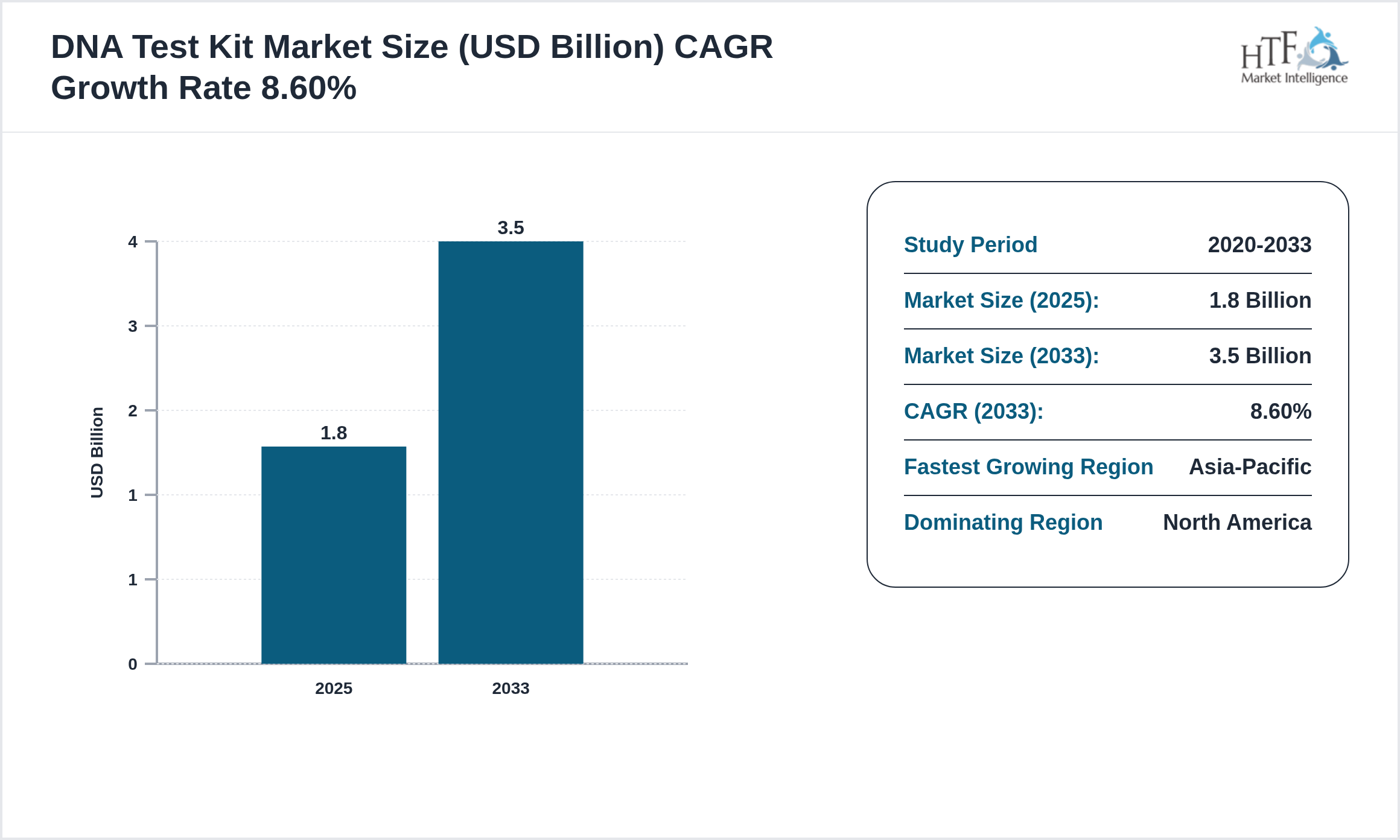
The DNA Test Kit market was valued at 1.8 billion in 2025 and is expected to reach 3.5 billion by 2020, growing at a compound annual growth rate (CAGR) of 8.60% over the forecast period.
The DNA Test Kit Market includes home-based and professional genetic testing kits for ancestry health and personalized insights. Increasing consumer interest in health ancestry tracking and direct-to-consumer genetic services drives growth.
Source: HTF Market Intelligence (HTF MI)
A DNA Test Kit market research study provides invaluable data-driven insights that allow businesses to make informed decisions based on accurate market trends, customer behaviors, and competitor analysis. These reports help organizations better understand the evolving needs of their target audience, enabling more customer-focused strategies.
Market Dynamics
Influencing Trend:
- • Personalized wellness and nutrition plans based on DNA results are trending.
- • Integration of genetic data with mobile health apps is growing.
- • Low-cost kits are increasing market penetration.
- • Privacy-focused DNA testing services are gaining traction.
- • Partnerships with research institutions for voluntary data sharing are emerging.
- • Rising consumer interest in ancestry and genealogy is boosting demand.
- • Increasing adoption of at-home health testing is fueling growth.
- • Expanding awareness about genetic predisposition to diseases is driving sales.
- • E-commerce and direct-to-consumer marketing are improving accessibility.
- • Technological advancements in genomic analysis are enhancing accuracy.
- • Privacy and data security concerns can limit adoption.
- • Regulatory restrictions on genetic testing can slow market expansion.
- • High competition from established brands can reduce market share.
- • Risk of inaccurate results can harm trust.
- • Ethical concerns over genetic data usage can impact brand image.
- • Expanding into emerging markets with growing health awareness offers opportunities.
- • Collaborating with healthcare providers can increase credibility.
- • Developing kits for rare disease screening can tap niche markets.
- • Offering subscription-based genetic updates can provide recurring revenue.
- • Customizing tests for regional ancestry can attract localized audiences.
The North America Dominant Region currently dominates the market share, fueled by increasing consumption, population growth, and sustained economic progress, which collectively enhance market demand. Conversely, the {FASTEST GROWING REGION} is rapidly becoming the fastest-growing region, driven by significant infrastructure investments, industrial expansion, and rising consumer demand.
- North America
- LATAM
- West Europe
- Central & Eastern Europe
- Northern Europe
- Southern Europe
- East Asia
- Southeast Asia
- South Asia
- Central Asia
- Oceania
- MEA
Competitive Insights
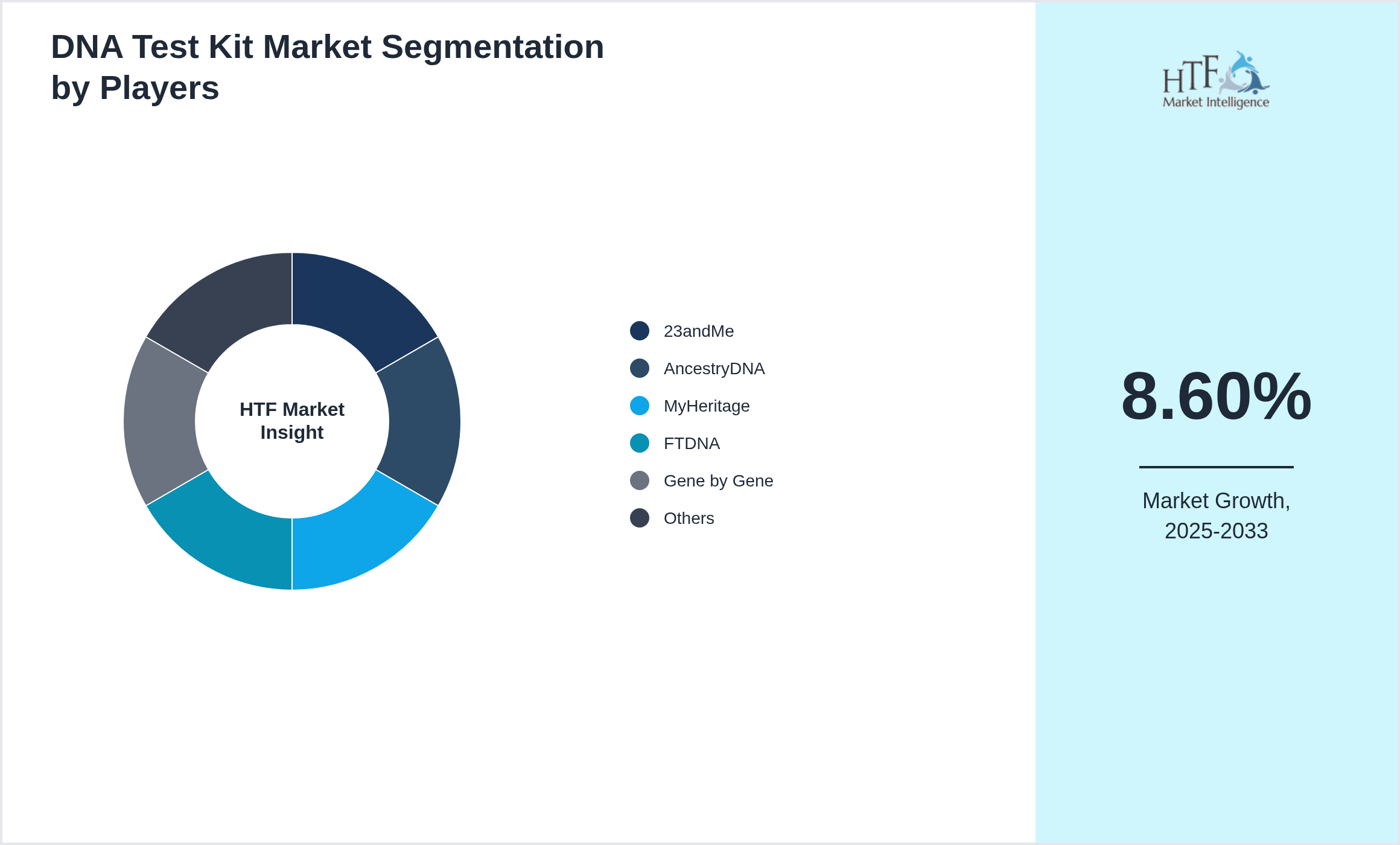
The key players in the DNA Test Kit are intensifying their focus on research and development (R&D) activities to innovate and stay competitive. Major companies, such as 23andMe, AncestryDNA, MyHeritage, FTDNA, Gene by Gene, Helix, Living DNA, Nebula Genomics, Veritas Genetics, Invitae, are heavily investing in R&D to develop new products and improve existing ones. This strategic emphasis on innovation drives significant advancements in product formulation and the introduction of sustainable and eco-friendly products.
Moreover, these established industry leaders are actively pursuing acquisitions of smaller companies to expand their regional presence and enhance their market share. These acquisitions not only help in diversifying their product portfolios but also provide access to new technologies and markets. This consolidation trend is a critical factor in the growth of the consumer goods industry, as it enables larger companies to streamline operations, reduce costs, and increase their competitive edge.
The companies highlighted in this profile were selected based on insights from primary experts and an evaluation of their market penetration, product offerings, and geographical reach:
- • 23andMe
- • AncestryDNA
- • MyHeritage
- • FTDNA
- • Gene by Gene
- • Helix
- • Living DNA
- • Nebula Genomics
- • Veritas Genetics
- • Invitae
Key Highlights
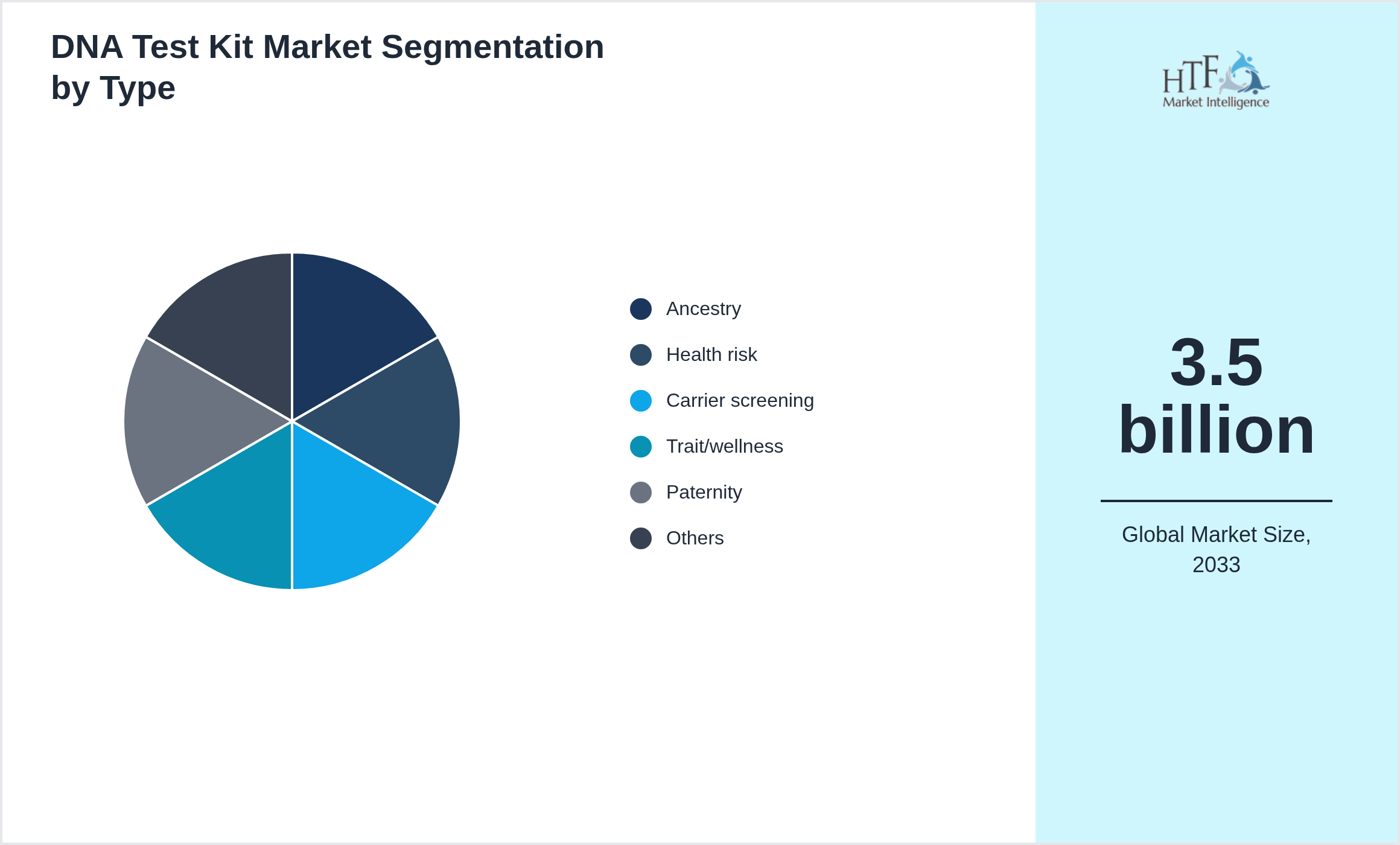
Segmentation by Type
- • Ancestry
- • Health risk
- • Carrier screening
- • Trait/wellness
- • Paternity
- • Pharmacogenomics
- • Pet DNA
- • COVID-era kits
- • Saliva-based
- • Blood spot
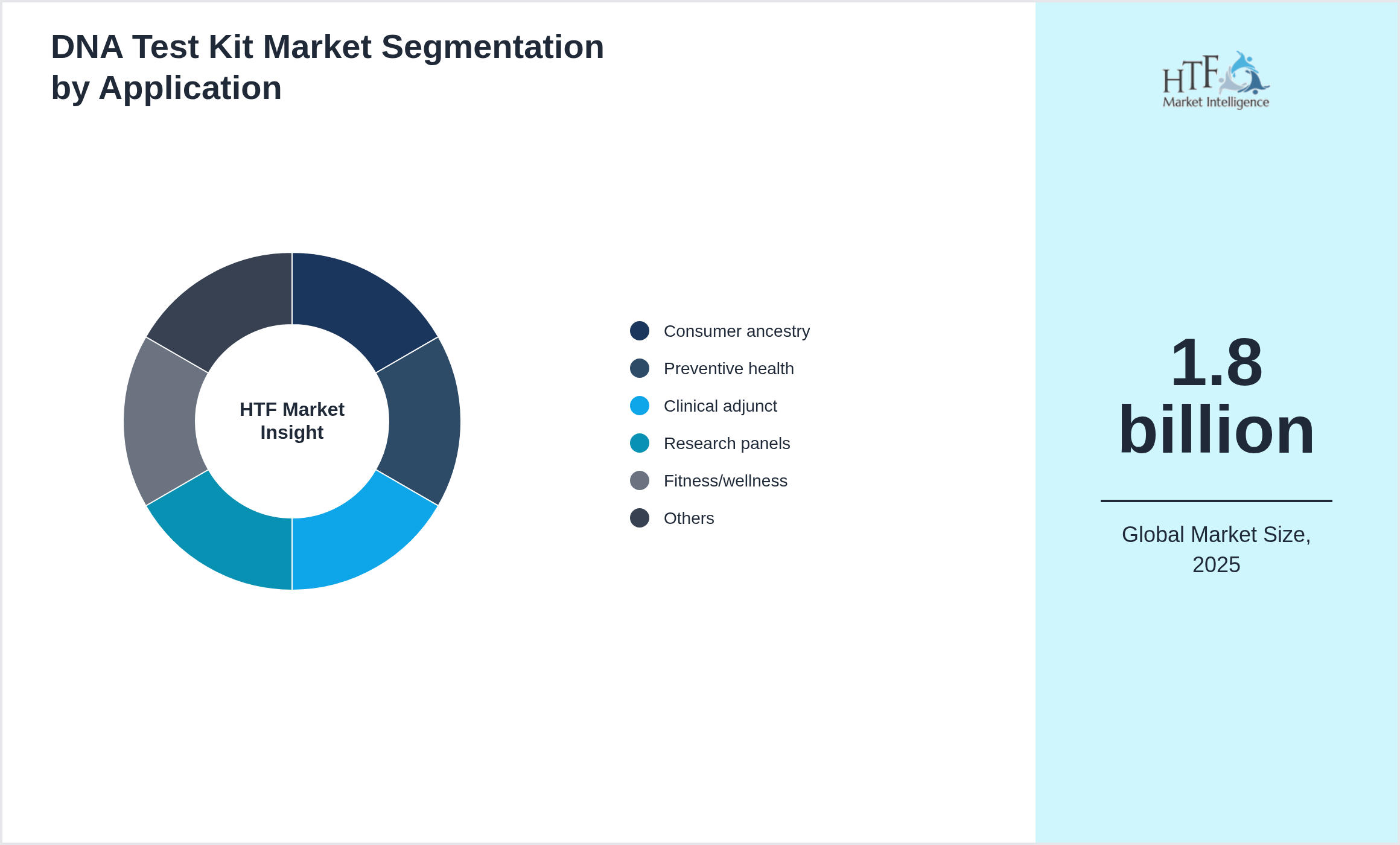
Segmentation by Application
- • Consumer ancestry
- • Preventive health
- • Clinical adjunct
- • Research panels
- • Fitness/wellness
- • Veterinary
- • Travel/ID
Market Entropy
- • The DNA test kit market saw high competitive volatility from 2022 to 2024
- • Rising consumer interest in ancestry and health risk profiling drove growth
- • Data privacy concerns shaped brand trust strategies
- • Direct-to-consumer models disrupted traditional medical channels
- • Technological advancements improved accuracy and reduced costs.
Merger & Acquisition
- • From 2023 to 2025 M&A centered on genomics companies with proprietary technology
- • Strategic acquisitions strengthened data analytics and bioinformatics capabilities
- • Partnerships with healthcare providers integrated testing into preventive care
- • Investments supported expansion into non-invasive prenatal testing
- • Cross-border mergers expanded presence in Asia-Pacific and Europe.
Regulatory Landscape
- • Regulated under IVD/medical device and genetic data privacy frameworks
- • Compliance with FDA/CE-IVD where applicable and GDPR/consent rules for genetic data is required.
Patent Analysis
- • Patent filings emphasize sample-preservation chemistry
- • SNP-panel selection
- • and secure genomics data pipelines
- • Innovations include saliva-stabilization buffers
- • ancestry/health analytics algorithms
- • and privacy-preserving data models
- • The focus is on sample integrity
- • analytic validity
- • and consumer privacy
Investment and Funding Scenario
- • Investment is strong in clinical/consumer genomics with VC and strategic pharma backers funding platform improvements and expanded panels
- • Funding supports CLIA/ISO lab builds
- • data-security
- • and regulatory compliance
- • M&A often integrates testing IP into larger diagnostics portfolios
Competitive Innovation Radar
- • Consumer-genomics firms
- • clinical labs
- • and specialty testing providers compete on panel breadth
- • interpretation quality
- • and data governance
- • Partnerships with health providers and research consortia enhance utility
- • Differentiation relies on algorithm quality
- • data privacy
- • and actionable reporting
The Top-Down and Bottom-Up Approaches
The top-down approach begins with a broad theory or hypothesis and breaks it down into specific components for testing. This structured, deductive process involves developing a theory, creating hypotheses, collecting and analyzing data, and drawing conclusions. It is particularly useful when there is substantial theoretical knowledge, but it can be rigid and may overlook new phenomena.
Conversely, the bottom-up approach starts with specific data or observations, from which broader generalizations and theories are developed. This inductive process involves collecting detailed data, analyzing it for patterns, developing hypotheses, formulating theories, and validating them with additional data. While this approach is flexible and encourages the discovery of new phenomena, it can be time-consuming and less structured.
Swot and Pestel Analysis
SWOT Analysis
A SWOT analysis evaluates a company’s internal strengths and weaknesses, as well as external opportunities and threats. This DNA Test Kit analysis helps businesses identify their competitive advantages, address internal challenges, and seize external opportunities while mitigating potential risks. It is performed to gain a comprehensive understanding of the organization's position in the market, align strategies with its strengths, and effectively navigate competitive landscapes.
PESTEL Analysis
Political, economic, social, technological, environmental, and legal factors impacting the business environment. This analysis helps organizations anticipate external changes, adapt strategies to macroeconomic trends, and ensure compliance with regulatory requirements. It is crucial for understanding the external forces that could influence business operations and for planning long-term strategies that align with evolving market conditions.
Report Infographics:
| Report Features | Details |
| Base Year | 2025 |
| Based Year Market Size 2025 | 1.8 billion |
| Historical Period | 2020 |
| CAGR (2025 to 2033) | 8.60% |
| Forecast Period | 2033 |
| Forecasted Period Market Size (2033) | 3.5 billion |
| Scope of the Report | By Type, By Application, By Sales Channel, By Region |
| Quantitative Units |
Revenue in USD million/billion, volume in kilotons, and CAGR from 2025 to 2033 |
| Companies Covered | 23andMe, AncestryDNA, MyHeritage, FTDNA, Gene by Gene, Helix, Living DNA, Nebula Genomics, Veritas Genetics, Invitae |
| Customization Scope | 15% Free Customization (For example)
Want to Buy Specific Sections of This Report?
|
| Delivery Format | PDF and Excel through Email |
Multidisciplinary researcher with 10+ years of experience uncovering insights across diverse domains focused on uncovering insights that drive informed decisions.