
Global Tributyl Citrate (CAS 77-94-1) Market Scope & Changing Dynamics 2025-2032
Global Tributyl Citrate (CAS 77-94-1) Market is segmented by Application (PVC Plasticizer, Food Packaging, Pharmaceuticals, Cosmetics, Adhesives), Type (Industrial Grade, Food Grade, Pharmaceutical Grade, Plasticizer Grade, Eco-grade), and Geography (North America, LATAM, West Europe, Central & Eastern Europe, Northern Europe, Southern Europe, East Asia, Southeast Asia, South Asia, Central Asia, Oceania, MEA)
Pricing
Report Overview
Industry Overview
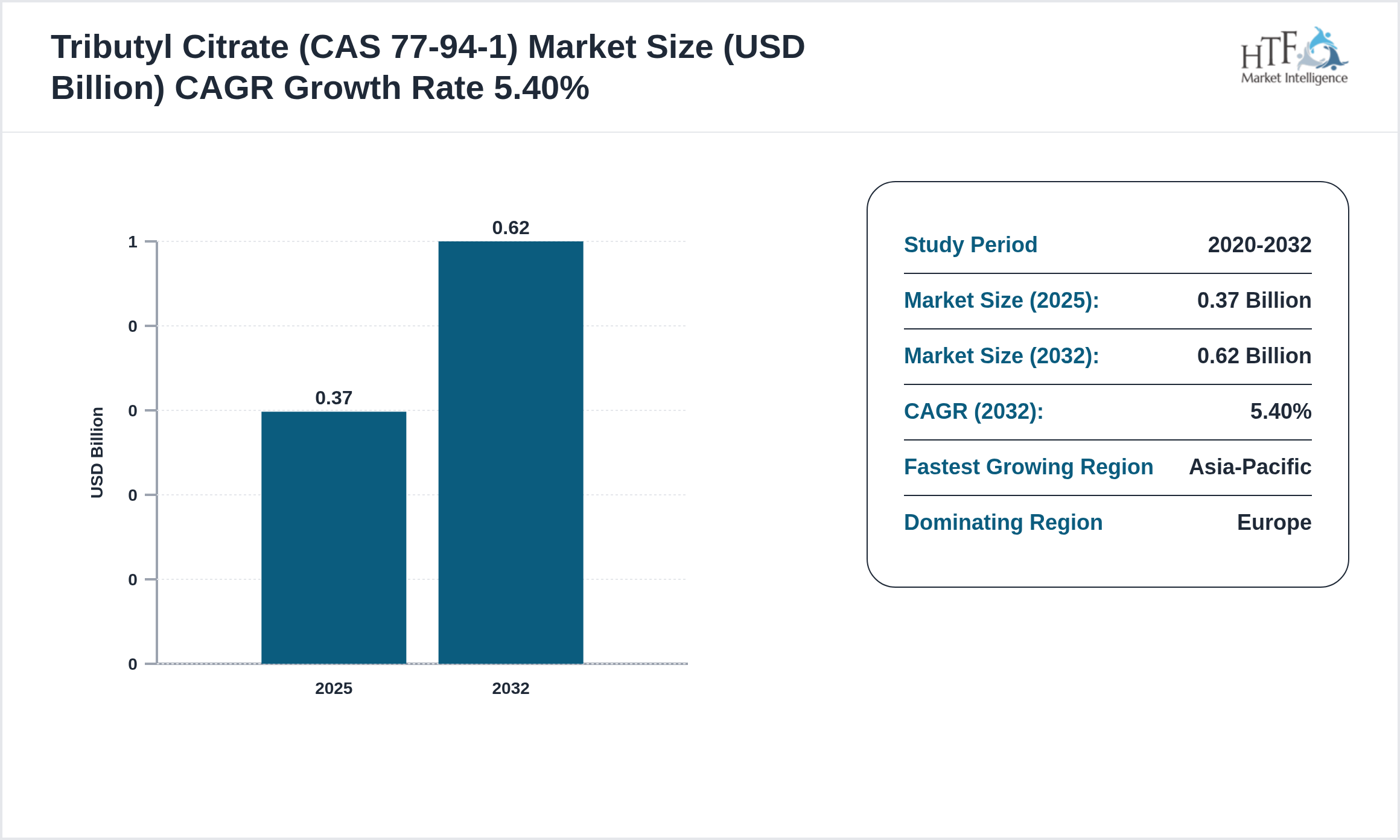
The Tributyl Citrate (CAS 77-94-1) is at USD 370 million in 2025 and is expected to reach 620 million by 2032. The Tributyl Citrate (CAS 77-94-1) is driven by increasing demand in end-use industries, technological advancements, research and development (R&D), economic growth, and global trade.
Tributyl citrate (TBC) is a biodegradable plasticizer derived from citric acid. It's used in food packaging filmsPVCadhesivescosmeticsmedical devicesand coated fabrics. TBC replaces phthalates (DEHPDBP) in numerous applications due to low toxicitygood thermal stabilityand migration resistance. Regulatory support in the EU and North America favors TBC in children’s toysmedical vialsand food contact materials. Growing demand from flexible PVC producers and healthcare sectors is driving market growth.
Source: HTF Market Intelligence (HTF MI)
Competitive landscape
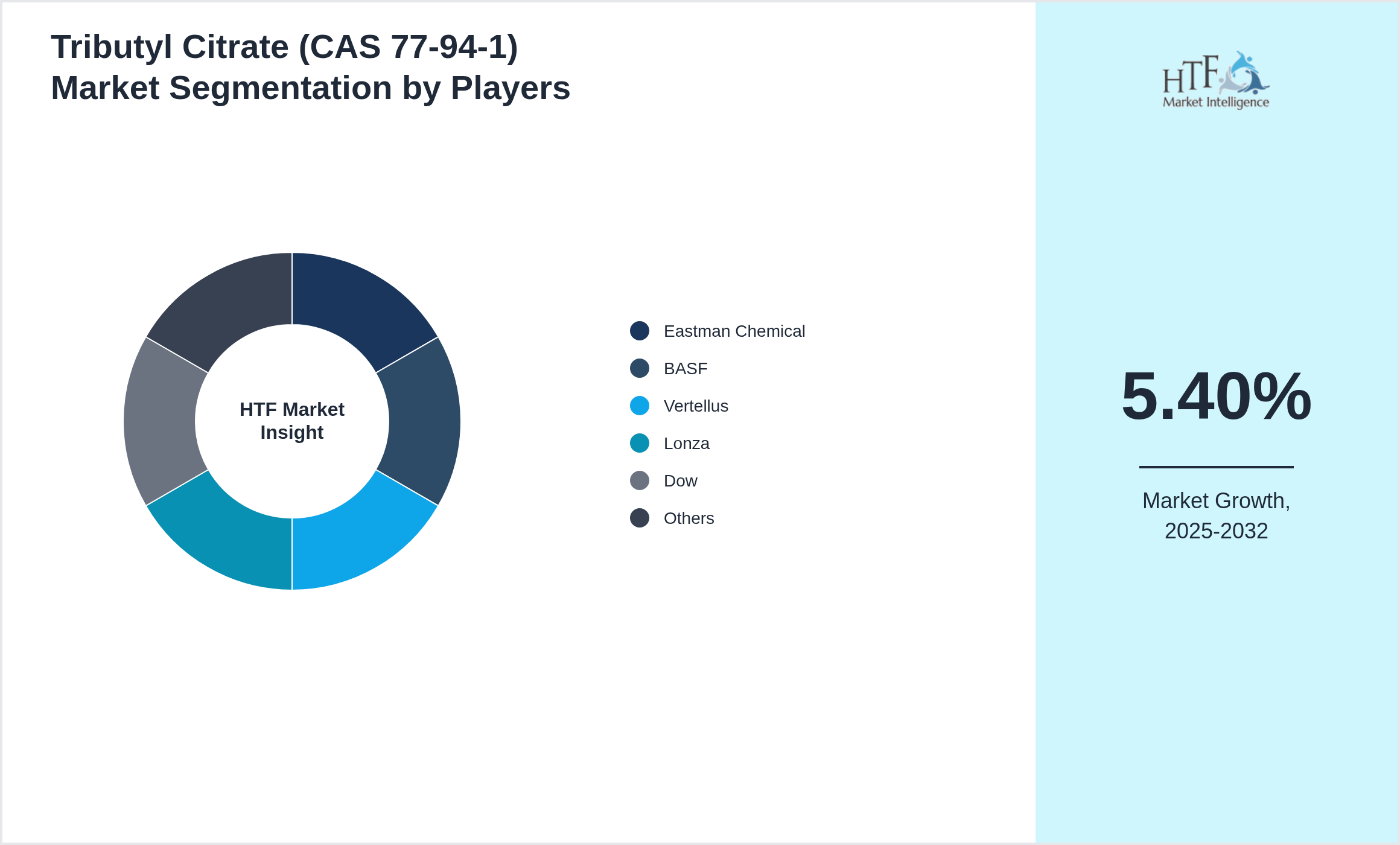
The companies highlighted in this profile were selected based on insights from primary experts and an evaluation of their market penetration, product offerings, and geographical reach:
- • Eastman Chemical
- • BASF
- • Vertellus
- • Lonza
- • Dow
- • Croda International
- • Danisco
- • Parchem
- • Jiangsu Guotai
- • Shandong Yankuang
- • Weifang ICC
- • Hebei Guan
- • Changzhou TBC
- • Avantor
- • Merck
- • Sigma-Aldrich
- • ChemSystems
- • Alfa Aesar
- • TCI Chemicals
- • Spectrum Chemical
- • Penta-bead
- • Keyuan
- • Finechem
- • Shanghai Greentech
- • Stepan
Market Drivers:
Challenge Factor:
Opportunities:
Important Trend:
Regulatory Framework
- • As a plasticizer and food additive
- • tributyl citrate must be GRAS-listed in the U.S. and EFSA-approved in the EU.
- • Used in cosmetics and packaging
- • it must comply with REACH and FDA CFR 21.
- • Labeling and purity specifications are regulated under USP or food-grade standards.
- • Environmental safety during production is subject to emission control laws.
Regional Insight
The Europe leads the market share, largely due to rising consumption, a growing population, and strong economic momentum that boosts demand. In contrast, the Asia-Pacific is emerging as the fastest-growing area, driven by rapid infrastructure development, the expansion of industrial sectors, and heightened consumer demand, making it a critical factor for future market growth. The regions covered in the report are
- North America
- LATAM
- West Europe
- Central & Eastern Europe
- Northern Europe
- Southern Europe
- East Asia
- Southeast Asia
- South Asia
- Central Asia
- Oceania
- MEA
Regional Analysis
- • Asia-Pacific holds the largest market share due to significant demand from plasticizer and personal care sectors in China
- • India
- • and Southeast Asia.
- • Its non-toxic and biodegradable profile supports use in food packaging and pharmaceuticals.
- • North America follows with steady demand from the U.S. in coatings
- • inks
- • and cosmetics.
- • Europe supports adoption due to environmental and regulatory acceptance in Germany
- • France
- • and Italy.
- • Latin America and the Middle East are growing with demand for phthalate-free plasticizers in consumer goods.
- • Sustainability trends and migration compliance are key market drivers globally.
Market Segmentation
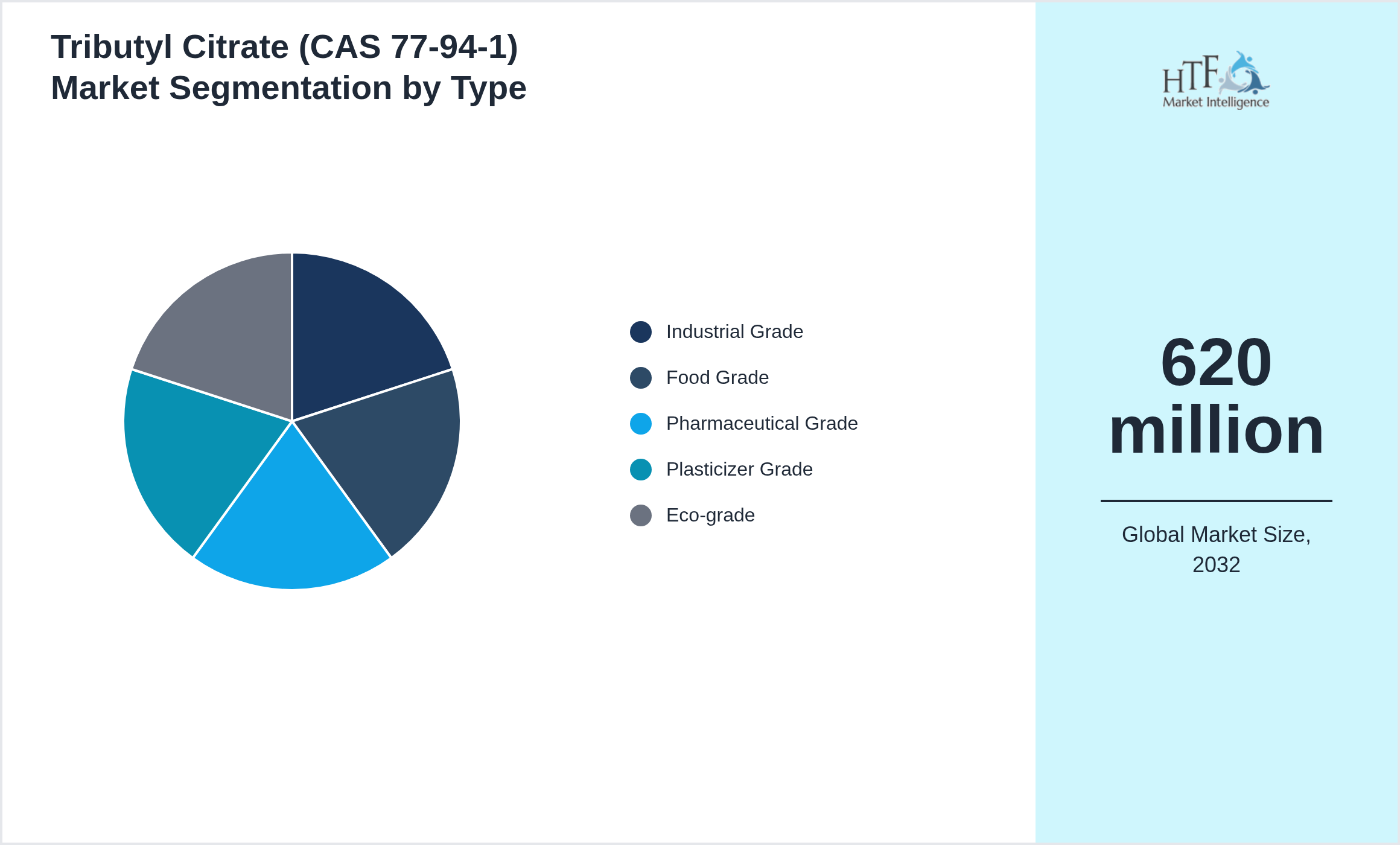
Segmentation by Type
- • Industrial Grade
- • Food Grade
- • Pharmaceutical Grade
- • Plasticizer Grade
- • Eco-grade
Segmentation by Application
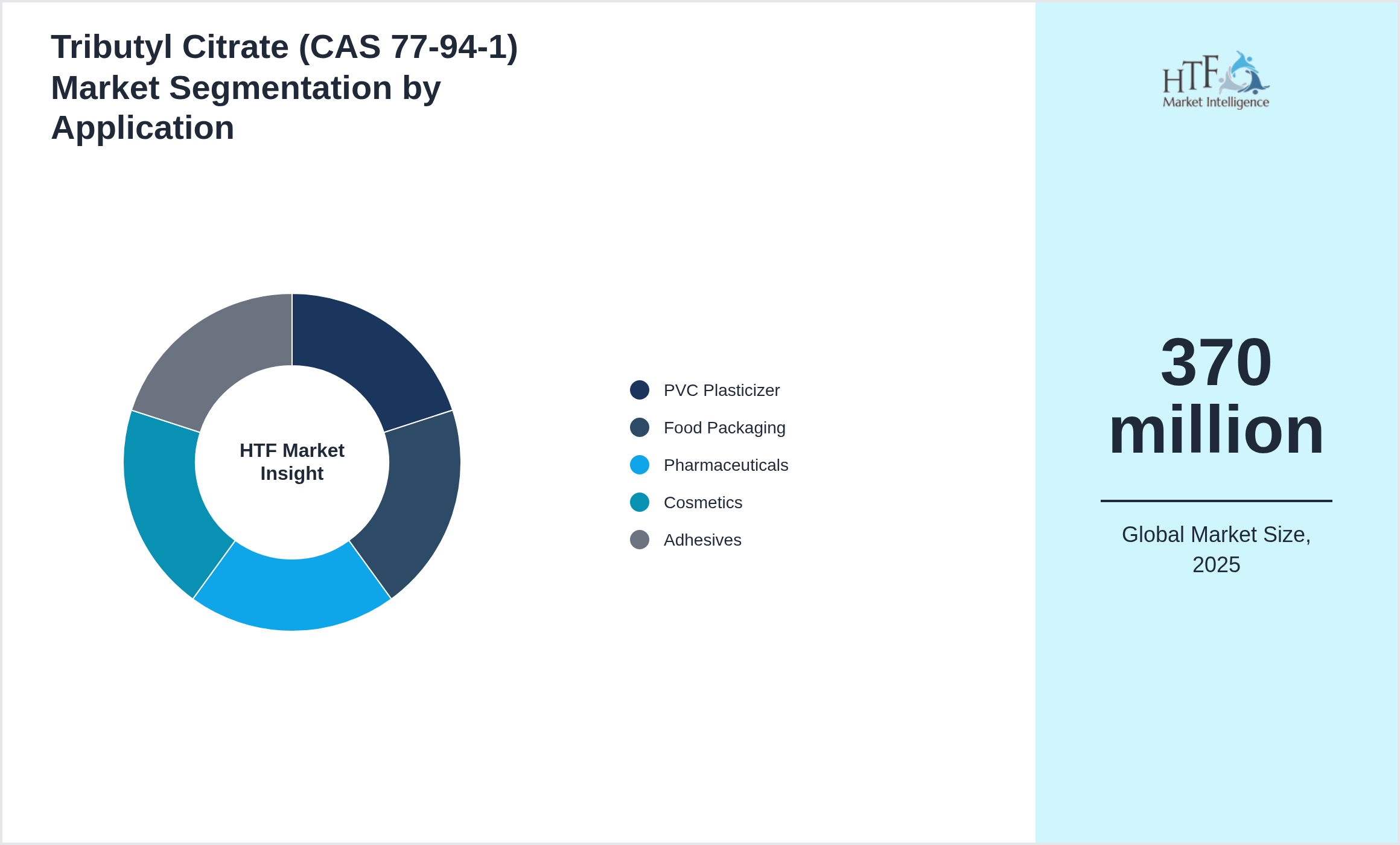
- • PVC Plasticizer
- • Food Packaging
- • Pharmaceuticals
- • Cosmetics
- • Adhesives
Key Development Activities
Market Entropy
- • The Tributyl Citrate Market in 2025 reflects moderate entropysupported by demand as a non-phthalate plasticizer in food packagingtoysand medical devices. While several chemical firms dominate large-volume productioneco-label certifications and bio-based sourcing are allowing new entrants to compete on sustainability. Shifts in regulatory standards are also causing market adjustments. Although volume remains centralizedproduct differentiation is expanding competition.
Merger & Acquisition
- • No large-scale M&A reported; market led by players like Jungbunzlauer and Vertellus. The sector grows through organic investments in non-phthalate plasticizers. Product diversification into food-contact and pharma applications drives internal expansion.
Regulatory Landscape
- • As a plasticizer and food additive
- • tributyl citrate must be GRAS-listed in the U.S. and EFSA-approved in the EU.
- • Used in cosmetics and packaging
- • it must comply with REACH and FDA CFR 21.
- • Labeling and purity specifications are regulated under USP or food-grade standards.
- • Environmental safety during production is subject to emission control laws.
Patent Analysis
- • Patents focus on green synthesis
- • plasticizer performance
- • and migration resistance in PVC and biomedical applications.
- • Bio-based derivatization and safe cosmetic formulations are growing innovation areas.
- • Major IP owners include Jungbunzlauer and Vertellus.
- • Applications in pharma coatings and food contact materials drive unique filings.
- • China and Europe lead in number of relevant patent submissions.
Investment and Funding Scenario
- • Investment is focused on producing bio-based
- • phthalate-free plasticizers for personal care and packaging.
- • Manufacturers in Asia are expanding capacity to meet growing demand from cosmetics and flexible PVC industries.
- • VC interest is minimal
- • with funding primarily from chemical giants and sustainability-linked loans.
- • Green chemistry initiatives and REACH compliance are key capital drivers.
- • There is increasing support for domestic production in Europe and India.
Report Details
| Report Features | Details |
| Base Year | 2025 |
| Based Year Market Size (2025) | 370 million |
| Historical Period | 2020 to 2025 |
| CAGR (2025 to 2032) | 5.40% |
| Forecast Period | 2026 to 2032 |
| Forecasted Period Market Size (2032) | 620 million |
| Scope of the Report | Industrial Grade, Food Grade, Pharmaceutical Grade, Plasticizer Grade, Eco-grade, PVC Plasticizer, Food Packaging, Pharmaceuticals, Cosmetics, Adhesives |
| Companies Covered | Eastman Chemical, BASF, Vertellus, Lonza, Dow, Croda International, Danisco, Parchem, Jiangsu Guotai, Shandong Yankuang, Weifang ICC, Hebei Guan, Changzhou TBC, Avantor, Merck, Sigma-Aldrich, ChemSystems, Alfa Aesar, TCI Chemicals, Spectrum Chemical, Penta-bead, Keyuan, Finechem, Shanghai Greentech, Stepan |
| Customization Scope | 15% Free Customization |
| Delivery Format | PDF and Excel through Email |
Research Methodology
The research methodology involves several key steps to ensure comprehensive and accurate insights. First, the objectives of the research are clearly defined, focusing on aspects such as market size, growth trends, and competitive dynamics. Data collection is conducted through both primary and secondary methods. Primary research includes interviews with industry experts, surveys, and focus groups to gather firsthand information, while secondary research involves analyzing existing reports, government publications, and company filings.
The collected data is then subjected to rigorous analysis, with quantitative methods used to evaluate market size and trends and qualitative methods applied to understand industry dynamics and consumer behavior. Findings are compiled into a detailed report featuring key insights, data visualizations, and strategic recommendations. Validation is achieved through data verification and peer reviews to ensure accuracy.
Finally, the research concludes with actionable insights and recommendations, along with suggestions for future studies to address emerging trends and gaps. This methodology provides a structured approach to understanding the {keywords} and guiding strategic decisions.