
Global Influencer Marketing Platform Market Size, Growth & Revenue 2025-2034
Global Influencer Marketing Platform Market is segmented by Product Type (Social Media Influencer Platforms, Affiliate Marketing Platforms, Content Marketing Platforms, Influencer Analytics Tools, Influencer Campaign Management), Application (Brand Awareness, Customer Engagement, Product Launch, Sales Conversion, Content Marketing), End-Use Industry (Retail & E-commerce, Fashion & Beauty, Technology, Entertainment & Media), Distribution Channel (Direct Sales, Online Marketplaces, Agency Partnerships), and Geography (North America, LATAM, West Europe, Central & Eastern Europe, Northern Europe, Southern Europe, East Asia, Southeast Asia, South Asia, Central Asia, Oceania, MEA)
Pricing
Report Overview
Executive Summary
- •The global influencer marketing platform market represents a dynamic and rapidly evolving segment within the broader digital marketing ecosystem. These platforms are designed to streamline and optimize the collaboration between brands and social media influencers, enabling targeted marketing campaigns that resonate with specific audiences. The market covers a broad spectrum of applications including brand awareness enhancement, customer engagement strategies, product launches, sales conversions, and comprehensive content marketing initiatives. Key stakeholders include marketing agencies, brands across industries such as retail, fashion, technology, and entertainment, as well as independent influencers and content creators. The value chain integrates technology providers offering specialized analytics and campaign management tools, influencer agencies facilitating talent discovery and contracts, and end-users focusing on ROI-driven marketing outcomes. Market growth is driven by the increasing adoption of social media advertising, rising influencer popularity, and the demand for measurable marketing effectiveness. This comprehensive report analyzes historical data from 2020, the base year 2025, and projects growth through 2034, highlighting competitive dynamics, regional performance, and strategic opportunities globally.
- •The market exhibited a robust expansion from USD 4.3 billion in 2020 to USD 9.8 billion in 2025, driven by digital transformation and the shift towards influencer-led marketing models. The projected CAGR of 17.5% through 2034 underscores sustained demand across regions, particularly in North America and Asia-Pacific. Advancements in influencer analytics and campaign management tools have enhanced platform capabilities, enabling deeper insights and optimized marketing spend. Key market highlights include the dominance of social media influencer platforms in market share and the fastest growth observed in influencer analytics tools, reflecting the increasing importance of data-driven marketing decisions. The market’s value proposition lies in providing brands with scalable, efficient, and transparent influencer engagement solutions that bridge traditional marketing gaps and enable authentic consumer connections.
- •Strategically, influencer marketing platforms serve as critical enablers for digital marketing success, offering stakeholders improved targeting, campaign agility, and performance measurement. The integration of AI and machine learning technologies is expected to further enhance platform intelligence, facilitating better influencer matching and predictive analytics. The market’s growth trajectory is supported by expanding social media penetration, increasing influencer monetization, and evolving consumer behavior favoring peer recommendations. This report provides valuable insights for investors, marketers, and platform developers seeking to capitalize on the growing influencer marketing ecosystem, ensuring informed decision-making and strategic planning aligned with emerging trends and regional market dynamics.

Competitive Landscape
The global influencer marketing platform market is characterized by intense competition among established digital marketing technology providers, specialized influencer networks, and emerging startups innovating in analytics and campaign automation. Market players deploy diverse strategies including product innovation, strategic partnerships, mergers and acquisitions, and geographic expansion to strengthen their market presence. The competitive environment is shaped by the rapid pace of technological adoption, with AI-driven influencer identification and real-time campaign performance monitoring becoming key differentiators. Companies prioritize building comprehensive ecosystems that integrate influencer discovery, contract management, performance analytics, and payment solutions to offer end-to-end services. Pricing strategies vary from subscription-based models to performance-linked fees, catering to different client segments ranging from SMEs to large enterprises. Distribution channels leverage both direct enterprise sales and digital marketplaces, while regional competition intensifies as players localize offerings to meet regulatory and cultural nuances. Future competitive trends indicate increased consolidation and the emergence of niche platforms focusing on micro and nano influencers, enhancing market segmentation and specialization.
Leading Companies in Influencer Marketing Platform Market
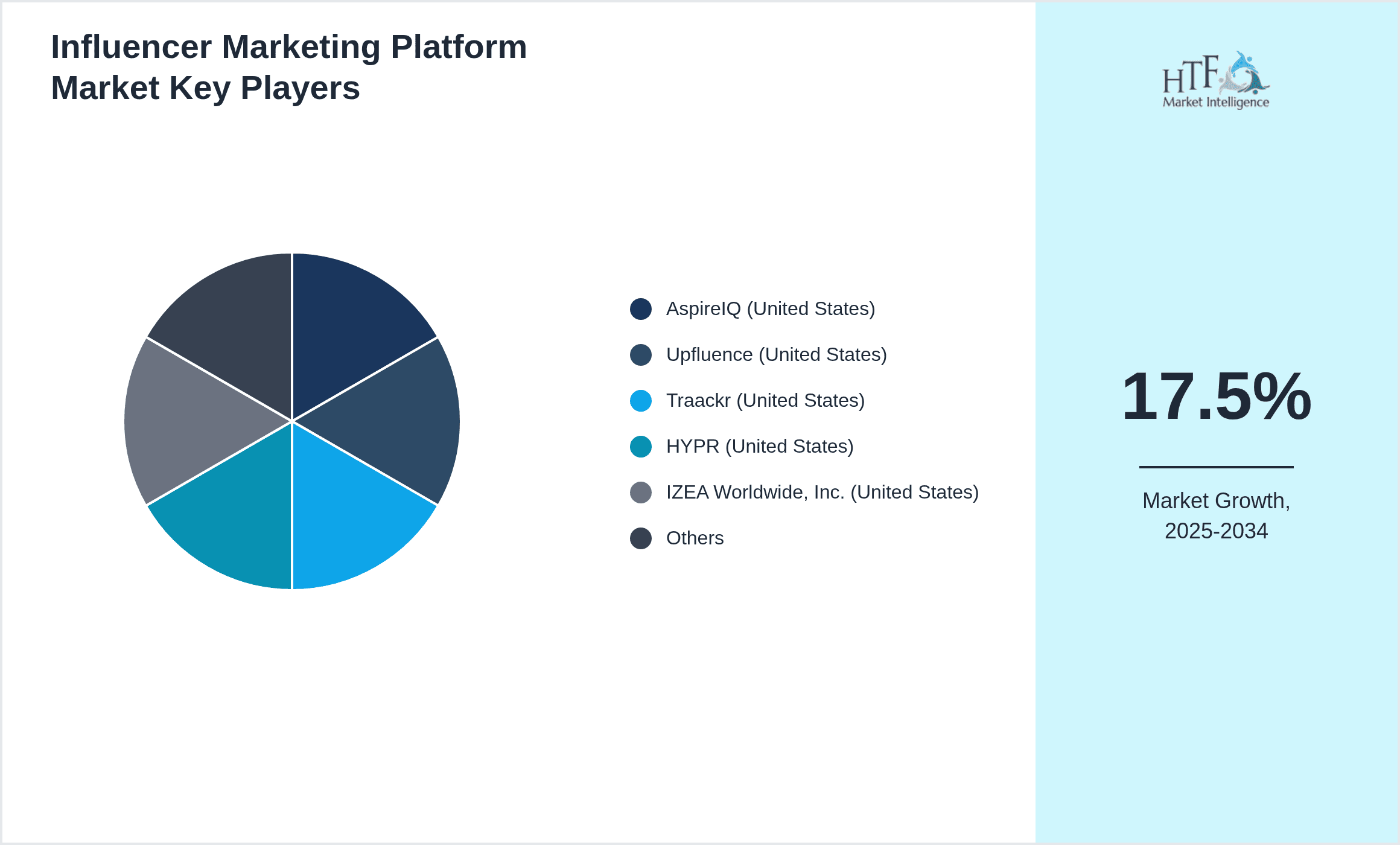
- •AspireIQ (United States)
- •Upfluence (United States)
- •Traackr (United States)
- •HYPR (United States)
- •IZEA Worldwide, Inc. (United States)
- •Mavrck (United States)
- •CreatorIQ (United States)
- •Klear (Israel)
- •Heepsy (Spain)
- •Julius (United States)
- •NinjaOutreach (United States)
- •Brandwatch (United Kingdom)
- •Socialbakers (Czech Republic)
- •Tagger Media (United States)
- •Influencity (Spain)
- •Onalytica (United Kingdom)
- •BuzzSumo (United Kingdom)
- •ZINE (United States)
- •Captiv8 (United States)
- •Revfluence (United States)
- •Sideqik (United States)
- •Impact (United States)
- •Heepsy (Spain)
- •Creator.co (United States)
- •Iconosquare (France)
Market Breakdown
- •By Product Type
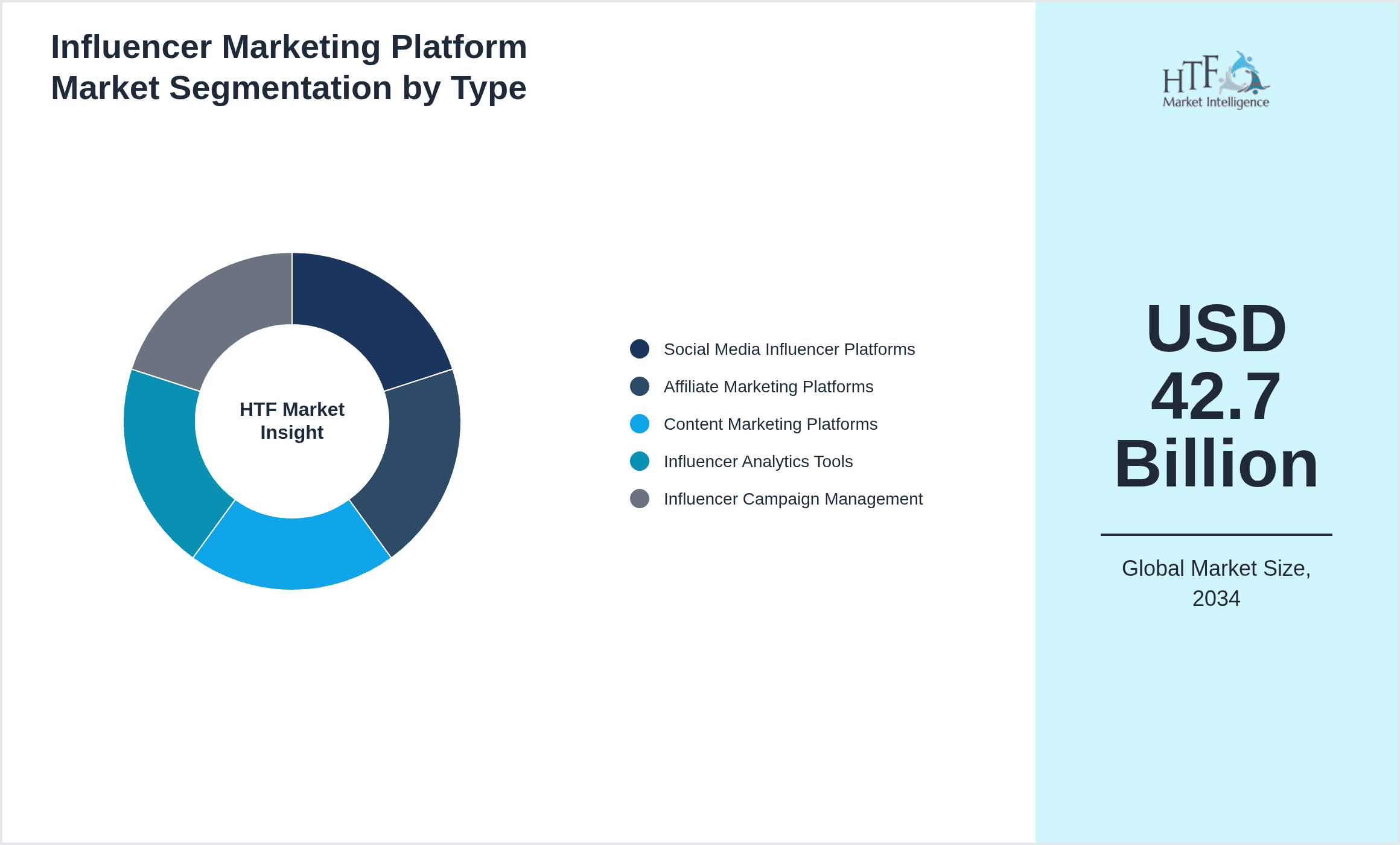
- ◦Social Media Influencer Platforms
- ◦Affiliate Marketing Platforms
- ◦Content Marketing Platforms
- ◦Influencer Analytics Tools
- ◦Influencer Campaign Management
- •By Application
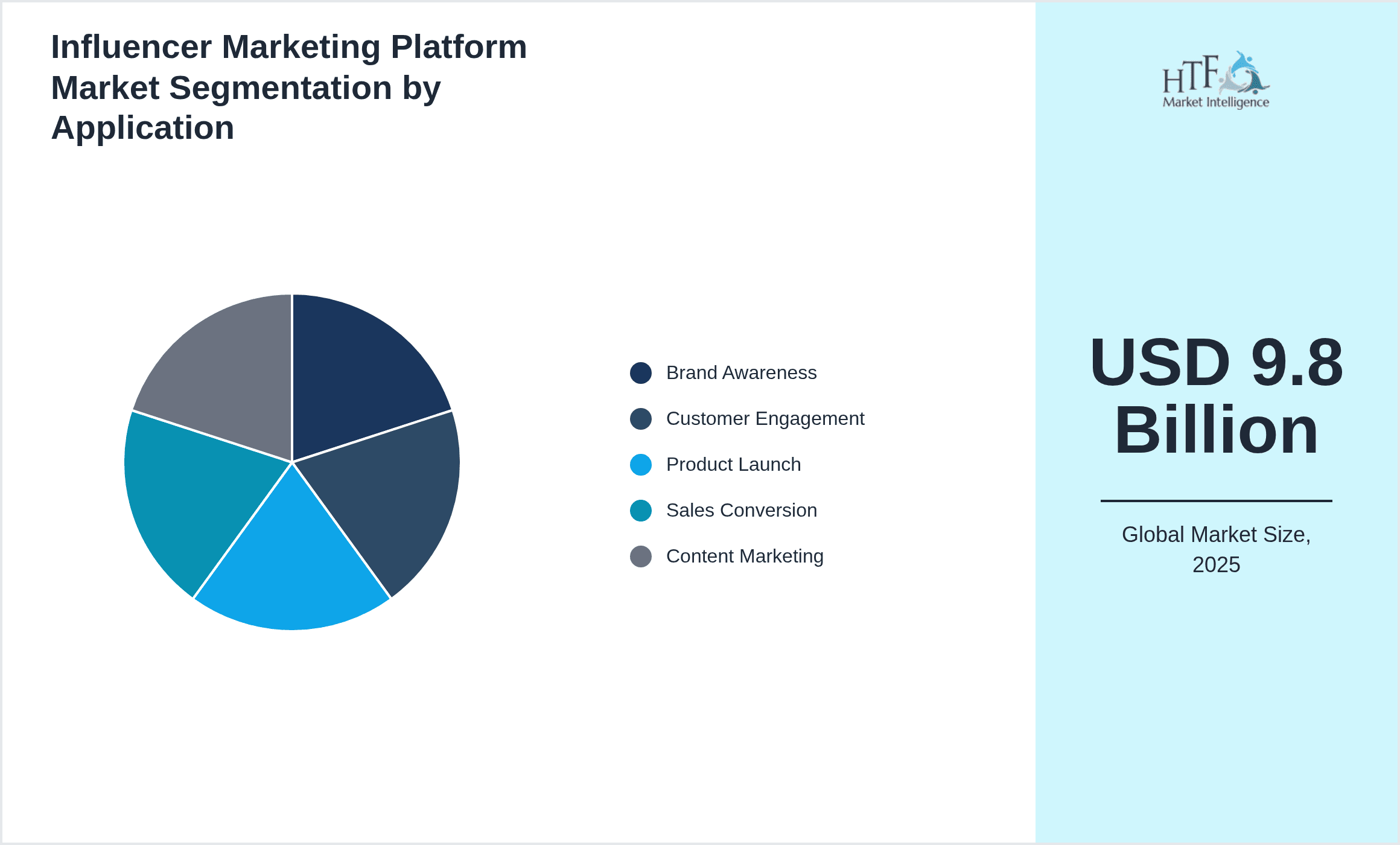
- ◦Brand Awareness
- ◦Customer Engagement
- ◦Product Launch
- ◦Sales Conversion
- ◦Content Marketing
- •By End-Use Industry
- ◦Retail & E-commerce
- ◦Fashion & Beauty
- ◦Technology
- ◦Entertainment & Media
- •By Distribution Channel
- ◦Direct Sales
- ◦Online Marketplaces
- ◦Agency Partnerships
Growth Dynamics
- •Rising social media penetration worldwide is a primary growth driver, expanding the influencer base and audience reach significantly. Platforms such as Instagram, TikTok, and YouTube enable influencers to engage millions, driving demand for sophisticated influencer marketing solutions. This trend accelerates brand investments in influencer campaigns to leverage authentic consumer connections and enhance marketing ROI.
- •Technological advancements, particularly AI and machine learning, empower platforms to deliver precise influencer identification, audience analytics, and campaign optimization. These innovations reduce manual effort, improve targeting accuracy, and facilitate data-driven decision-making, thereby increasing platform adoption and market growth.
- •The shift in consumer behavior favoring peer recommendations and authentic content over traditional advertising fuels influencer marketing platform demand. Brands seek to capitalize on this trust dynamic by collaborating with influencers who can create relatable, engaging content that resonates with target demographics.
- •Expanding e-commerce and direct-to-consumer business models rely heavily on influencer marketing to drive traffic and conversions. Platforms offering integrated affiliate marketing and analytics capabilities enable brands to track sales attribution effectively, further propelling market expansion.
- •Growing marketing budgets dedicated to digital and social media advertising encourage adoption of influencer marketing platforms. Enterprises increasingly allocate funds toward measurable, scalable influencer campaigns that complement broader marketing strategies and enhance customer acquisition and retention.
- •Government initiatives promoting digital entrepreneurship and social commerce in emerging markets create new growth avenues. Supportive policies and infrastructure development facilitate influencer platform penetration in regions like Asia-Pacific and Latin America, driving global market growth.
- •Increasing collaboration between traditional advertising agencies and influencer marketing platforms fosters integrated campaign solutions. This synergy enables multi-channel marketing approaches, enhancing campaign effectiveness and platform demand across industries.
Market Trends
- •The rise of nano and micro-influencers is reshaping influencer marketing strategies, as brands seek higher engagement rates and niche audience connections. Platforms are adapting by enabling granular influencer discovery and campaign customization to leverage these segments effectively.
- •Integration of advanced analytics and real-time performance tracking is becoming standard, allowing marketers to measure ROI accurately and optimize campaigns dynamically. This trend enhances transparency and accountability in influencer partnerships.
- •Video content, especially short-form videos on platforms like TikTok and Instagram Reels, is dominating influencer marketing content formats. Influencer marketing platforms are focusing on tools that support video campaign creation, distribution, and measurement to capitalize on this trend.
- •Sustainability and social responsibility themes are increasingly influencing influencer campaigns, with brands partnering with influencers who advocate for ethical practices. Platforms facilitate this by providing filters and analytics to align influencer values with brand missions.
- •Cross-platform influencer campaigns leveraging multiple social channels are gaining traction, requiring platforms to offer seamless integration and unified analytics. This trend supports comprehensive audience reach and diversified content strategies.
- •Emerging markets in Asia-Pacific and Latin America are witnessing rapid influencer marketing adoption due to increasing internet penetration and mobile usage. Platforms expanding in these regions tailor solutions to local languages and cultural preferences to gain competitive advantage.
- •The adoption of blockchain technology for influencer payments and contract management is an emerging trend, enhancing transparency, fraud prevention, and timely compensation. Platforms integrating blockchain offer differentiated value propositions in competitive markets.
Market Opportunities
- •Expanding the integration of AI-driven predictive analytics offers substantial opportunities for platforms to enhance influencer campaign targeting, engagement forecasting, and ROI optimization. This capability can attract more enterprise clients seeking data-backed marketing solutions.
- •Untapped emerging markets in Africa and parts of the Middle East present significant growth potential due to rising social media users and digital adoption. Tailoring influencer marketing platforms to these regions’ unique cultural and regulatory contexts can unlock new revenue streams.
- •Developing multi-lingual platform capabilities and localized influencer databases enables brands to execute region-specific campaigns, expanding market reach and effectiveness. This approach addresses the diverse language and cultural needs of global audiences.
- •Strategic partnerships with e-commerce and retail platforms create synergistic opportunities, blending influencer marketing with direct sales channels. Such integrations enhance conversion tracking and streamline consumer journeys, benefiting both brands and platforms.
- •Offering enhanced fraud detection and verification features addresses growing concerns about influencer authenticity and fake followers. Platforms that guarantee verified influencer profiles can build greater trust with brand clients, driving platform preference.
- •Expanding influencer campaign management features such as automated contract handling, payment processing, and compliance monitoring can improve user experience and operational efficiency, attracting more clients and influencers to the platform.
- •Increasing demand for sustainability-focused influencer campaigns opens avenues for platforms to develop dedicated tools and metrics that align with environmental and social governance goals, differentiating offerings in a competitive landscape.
Market Challenges
- •Complexities in accurately measuring influencer marketing ROI pose significant challenges, as attribution models vary and data fragmentation persists. This affects marketer confidence and platform adoption rates, necessitating continuous innovation in analytics capabilities.
- •Regulatory uncertainties and evolving compliance requirements across different regions complicate influencer marketing operations. Platforms must navigate advertising disclosure laws, data privacy regulations, and content standards to avoid legal risks and maintain credibility.
- •High competition among numerous influencer marketing platforms leads to market saturation and pricing pressures, making differentiation and customer retention increasingly difficult. Providers must innovate continuously to sustain growth and profitability.
- •Issues related to influencer fraud, including fake followers, engagement manipulation, and misrepresentation, undermine platform integrity and brand trust. Developing robust verification mechanisms is resource-intensive but essential for market sustainability.
- •Rapid changes in social media algorithms and platform policies can disrupt influencer reach and campaign effectiveness, affecting platform reliability and client satisfaction. Staying agile and adaptive is critical for platform providers.
- •Talent management challenges arise as influencer expectations evolve regarding compensation, creative freedom, and platform features. Balancing influencer and brand demands requires sophisticated platform governance and relationship management tools.
- •Data security and privacy concerns related to handling sensitive campaign and influencer information necessitate stringent cybersecurity measures. Platforms must invest in protection frameworks to prevent breaches and build user confidence.
Regulatory Framework
- •From 2020 to 2025, key regulations such as the Federal Trade Commission (FTC) guidelines in the United States mandated clear disclosure of sponsored content by influencers, compelling platforms to incorporate compliance features. These rules significantly impacted campaign transparency and marketing practices.
- •The European Union’s General Data Protection Regulation (GDPR) enforced stringent data privacy requirements from 2018 onwards, affecting influencer marketing platforms’ data handling and user consent processes. Platforms had to enhance security protocols and consent management tools to comply effectively.
- •The Advertising Standards Authority (ASA) in the United Kingdom updated influencer marketing codes between 2020 and 2025, emphasizing authenticity and truthful advertising. Platforms integrated monitoring mechanisms to ensure influencer content adherence, reducing regulatory risks.
- •Several countries introduced localized regulations addressing influencer marketing, including content labeling, age restrictions for certain promotions, and advertising bans on sensitive products. Platforms adapted by customizing compliance modules per regional legal frameworks, enhancing market acceptance.
- •Government initiatives aimed at promoting responsible digital marketing practices included incentives for transparency and penalties for violations. These frameworks encouraged platforms to prioritize ethical standards, fostering consumer trust and industry credibility globally.
Market Intelligence
- •15th February 2025, AspireIQ launched an AI-powered influencer discovery tool designed to enhance targeting accuracy by analyzing multi-dimensional audience data. This innovation enables brands to identify niche influencers aligned with campaign goals, improving engagement and ROI. The tool integrates with existing campaign management modules, streamlining workflow and reporting. AspireIQ aims to leverage this offering to expand its enterprise client base and capture greater market share in North America and Asia-Pacific. Source: AspireIQ Official Press Release.
- •10th May 2025, Upfluence introduced a blockchain-based payment system to ensure transparent and timely compensation for influencers. This system reduces payment disputes and enhances trust between influencers and brands. The platform also offers immutable contract records, simplifying compliance and audit processes. Upfluence expects this advancement to differentiate its offering in the competitive landscape, targeting industries with stringent regulatory requirements. Source: Upfluence Company Website.
- •22nd August 2025, Traackr announced a strategic partnership with a leading e-commerce platform to integrate influencer campaign analytics directly with sales data. This collaboration allows brands to measure direct sales impact from influencer activities, facilitating data-driven marketing strategies. The initiative is slated to roll out in Europe and Asia-Pacific, reinforcing Traackr’s position as a market innovator. This partnership exemplifies growing convergence between influencer marketing and e-commerce ecosystems. Source: Industry Publication.
- •5th November 2025, HYPR completed the acquisition of a niche influencer analytics startup specializing in sentiment analysis and audience profiling. This acquisition enhances HYPR’s analytics capabilities, enabling clients to evaluate influencer-brand fit more comprehensively. The integration of advanced sentiment metrics supports more nuanced campaign design and risk mitigation. HYPR anticipates accelerated platform adoption among enterprise clients seeking sophisticated influencer insights. Source: HYPR Press Release.
- •Source: Official press releases, Company websites, Industry publications
Regional Outlook
The North America currently holds a significant share of the market, primarily due to several key factors: increasing consumption rates, a burgeoning population, and robust economic momentum. These elements collectively drive demand, positioning this region as a leader in the market. On the other hand, Asia-Pacific is rapidly emerging as the fastest-growing area within the industry. This remarkable growth can be attributed to swift infrastructure development, the expansion of various industrial sectors, and a marked increase in consumer demand. These dynamics make this region a crucial player in shaping future market growth.
In our report, we cover a comprehensive analysis of the following regions and countries:
- North America
- LATAM
- West Europe
- Central & Eastern Europe
- Northern Europe
- Southern Europe
- East Asia
- Southeast Asia
- South Asia
- Central Asia
- Oceania
- MEA
| Feature | Details |
|---|---|
| Base Year Market Size | USD 9.8 Billion |
| Forecast Year Market Size | USD 42.7 Billion |
| CAGR | 17.5% |
| Forecast Period | 2026 to 2033 |
| YoY Growth | 17.5% |
| Scope of Report | Market is segmented by Product Type (Social Media Influencer Platforms, Affiliate Marketing Platforms, Content Marketing Platforms, Influencer Analytics Tools, Influencer Campaign Management), Application (Brand Awareness, Customer Engagement, Product Launch, Sales Conversion, Content Marketing), End-Use Industry (Retail & E-commerce, Fashion & Beauty, Technology, Entertainment & Media), Distribution Channel (Direct Sales, Online Marketplaces, Agency Partnerships) |
| Regions Covered | North America, LATAM, West Europe, Central & Eastern Europe, Northern Europe, Southern Europe, East Asia, Southeast Asia, South Asia, Central Asia, Oceania, MEA |
| Key Companies | AspireIQ (United States), Upfluence (United States), Traackr (United States), HYPR (United States), IZEA Worldwide, Inc. (United States) |
Global Influencer Marketing Platform Market Size, Growth & Revenue 2025-2034 - Table of Contents
Frequently Asked Questions (FAQ):
The Compact Track Loaders market is expected to see value worth 5.3 Billion in 2025.
North America currently leads the market with approximately 45% market share, followed by Europe at 28% and Asia-Pacific at 22%. The remaining regions account for 5% of the global market.
Key growth drivers include increasing construction activities, rising demand for versatile equipment in agriculture, technological advancements in track loader design, and growing preference for compact equipment in urban construction projects.