
Global Facial Wipes Market Size, Growth & Revenue 2025-2034
Global Facial Wipes Market is segmented by Product Type (Biodegradable Facial Wipes, Sensitive Skin Facial Wipes, Antibacterial Facial Wipes, Moisturizing Facial Wipes, Fragrance-Free Facial Wipes), Application (Makeup Removal, Cleansing, Exfoliating, Hydrating, Anti-Aging), End-Use Industry (Personal Care, Dermatology Clinics, Beauty Salons & Spas, Retail & E-commerce), Distribution Channel (Supermarkets & Hypermarkets, Pharmacies & Drugstores, Online Retailers), and Geography (North America, LATAM, West Europe, Central & Eastern Europe, Northern Europe, Southern Europe, East Asia, Southeast Asia, South Asia, Central Asia, Oceania, MEA)
Pricing
Report Overview
Executive Summary
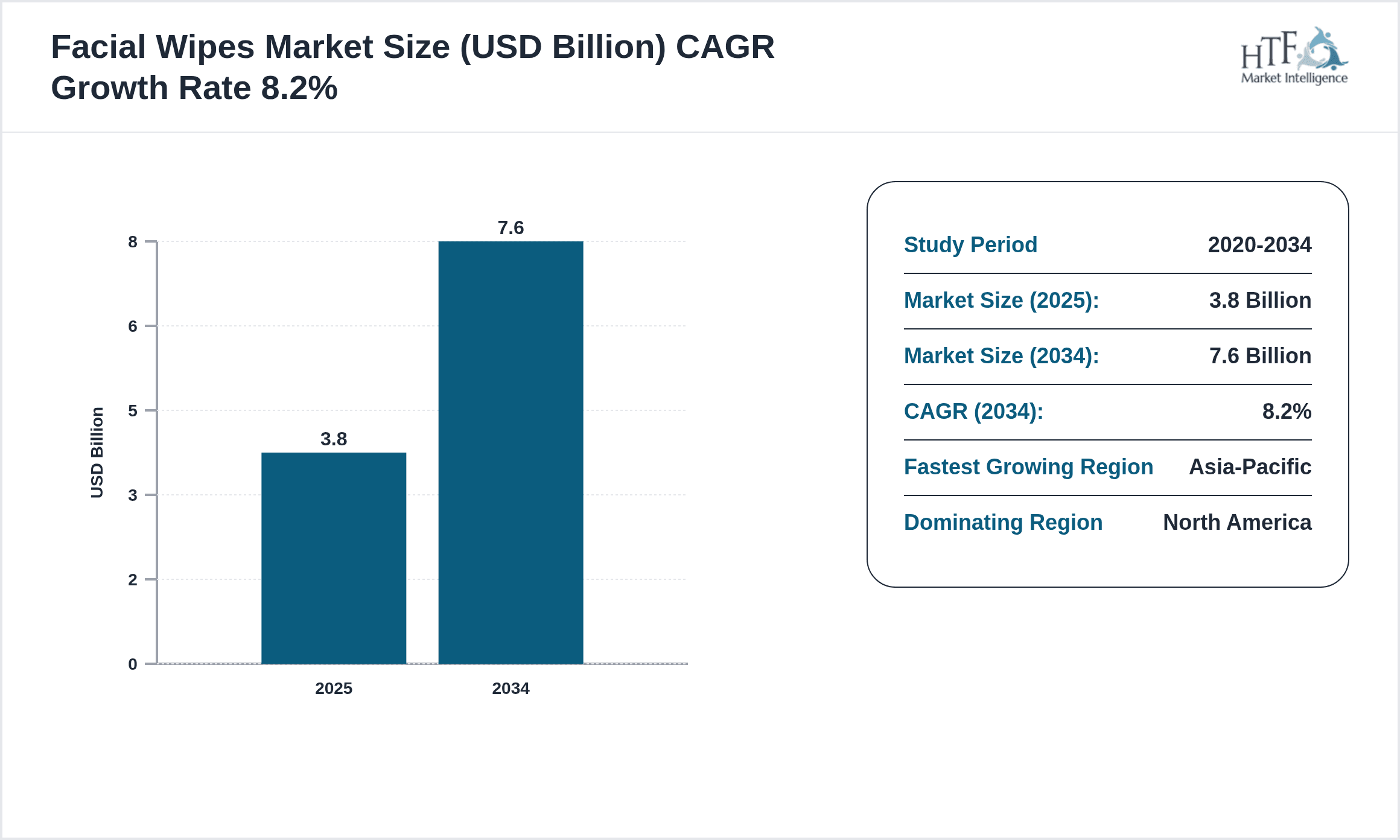
- •The global facial wipes market comprises a variety of disposable wipes designed for facial care, including makeup removal, cleansing, exfoliating, hydrating, and anti-aging applications. These products serve individual consumers and professional end users such as beauty salons and dermatology clinics. The market value chain spans raw material sourcing, production, distribution through retail and e-commerce, and end-user consumption. Innovations focus on biodegradable and skin-sensitive formulations to meet growing consumer demand for sustainable and gentle products. Market growth is fueled by increasing hygiene awareness, urbanization, and disposable income worldwide. Regional dynamics influence product preferences and regulatory compliance, with North America leading in market share due to high consumer spending and Asia-Pacific showing the fastest growth driven by rising population and expanding middle class. The facial wipes market represents a significant segment of the personal care industry, expected to nearly double from USD 3.8 billion in 2025 to USD 7.6 billion by 2034, at a CAGR of 8.2%. This growth is underpinned by expanding applications, product innovation, and enhanced distribution networks globally.
- •Key market highlights include the dominance of biodegradable wipes as the leading product type, reflecting consumer preference for eco-friendly solutions. Sensitive skin wipes are the fastest growing segment, propelled by increasing consumer awareness of skin health and the rise of dermatology-endorsed products. North America remains the largest regional market, supported by well-established retail infrastructure and high per capita spending. Asia-Pacific is the fastest growing region, driven by rapid urbanization, increasing female workforce participation, and rising demand from emerging economies such as India and China. The market is characterized by competitive innovation, with companies investing in advanced materials and multifunctional wipes to capture a broader consumer base. Year-on-year growth is estimated at 8.0%, indicating robust market momentum.
- •Facial wipes hold strategic importance across personal care, dermatology, and beauty industries. They provide convenience, hygiene, and skincare benefits, making them essential daily-use products. Stakeholders including manufacturers, retailers, and healthcare professionals leverage this market for sustainable growth by addressing evolving consumer needs with advanced formulations and eco-conscious products. The increasing integration of natural ingredients and biodegradable substrates enhances product appeal. Moreover, the expanding e-commerce landscape facilitates wider market penetration and consumer accessibility. This market offers promising opportunities for innovation, expansion into emerging regions, and diversification of product portfolios aligned with global sustainability goals.
Competitive Landscape
The global facial wipes market is highly competitive and fragmented, featuring a mix of multinational corporations and regional players that compete on product innovation, quality, pricing, and distribution reach. Market leaders invest heavily in R&D to develop eco-friendly, dermatologically tested, and multifunctional products to differentiate themselves. Strategic partnerships, mergers, and acquisitions are common to expand product portfolios and geographic footprint. Pricing strategies vary from premium offerings with natural ingredients to value-oriented options catering to mass markets. Distribution channels include traditional retail, supermarkets, pharmacies, and rapidly growing online platforms, which have become critical for market expansion. Regional competition is influenced by local consumer preferences and regulatory frameworks, requiring companies to adapt products accordingly. Future competitive trends point towards increased adoption of sustainable materials, incorporation of active skincare ingredients, and leveraging digital marketing to engage consumers more effectively. Barriers to entry include stringent regulations, high innovation costs, and established brand loyalty, which shape the competitive dynamics of the market.
Leading Companies in Facial Wipes Market
- •Kimberly-Clark Corporation (United States)
- •Procter & Gamble Company (United States)
- •Unilever PLC (United Kingdom/Netherlands)
- •Johnson & Johnson Services, Inc. (United States)
- •SC Johnson & Son, Inc. (United States)
- •Georgia-Pacific LLC (United States)
- •Essity Aktiebolag (Sweden)
- •The Honest Company, Inc. (United States)
- •Nice-Pak Products, Inc. (United States)
- •Hengan International Group Company Limited (China)
- •SCA Hygiene Products AB (Sweden)
- •Molfix (Turkey)
- •Bounty (United States)
- •Pigeon Corporation (Japan)
- •Wipro Enterprises (India)
- •Mandom Corporation (Japan)
- •Vinda International Holdings Limited (Hong Kong)
- •Johnson & Johnson Ltd. (India)
- •Procter & Gamble Hygiene and Health Care Limited (India)
- •Georgia-Pacific Consumer Products LP (United States)
- •The Face Shop Co., Ltd. (South Korea)
- •Beiersdorf AG (Germany)
- •Reckitt Benckiser Group plc (United Kingdom)
- •Coty Inc. (United States)
- •L'Oreal S.A. (France)

Market Breakdown
- •By Product Type
- ◦Biodegradable Facial Wipes
- ◦Sensitive Skin Facial Wipes
- ◦Antibacterial Facial Wipes
- ◦Moisturizing Facial Wipes
- ◦Fragrance-Free Facial Wipes
- •By Application
- ◦Makeup Removal
- ◦Cleansing
- ◦Exfoliating
- ◦Hydrating
- ◦Anti-Aging
- •By End-Use Industry
- ◦Personal Care
- ◦Dermatology Clinics
- ◦Beauty Salons & Spas
- ◦Retail & E-commerce
- •By Distribution Channel
- ◦Supermarkets & Hypermarkets
- ◦Pharmacies & Drugstores
- ◦Online Retailers
Growth Dynamics
- •Increasing consumer awareness about personal hygiene and skincare has significantly driven demand for facial wipes globally. Consumers seek convenient and effective cleansing solutions, which has expanded the market across diverse demographics.
- •Rising urbanization and disposable incomes in emerging economies, especially in Asia-Pacific, have fueled adoption of premium and specialty facial wipes such as biodegradable and sensitive skin variants.
- •Technological advancements in fabric materials and formulations enhance product efficacy, leading to increased consumer satisfaction and repeat purchases, thereby accelerating market growth.
- •Expansion of e-commerce platforms offers wide accessibility and variety, enabling brands to reach a broader customer base while providing convenient purchasing options.
- •Growing emphasis on sustainability has encouraged manufacturers to develop eco-friendly wipes, which appeals to environmentally conscious consumers and aligns with global regulatory trends.
- •The rise in skincare routines and demand for multifunctional products incorporating moisturizing and anti-aging properties has diversified facial wipes applications, encouraging market expansion.
- •Government regulations promoting hygiene products amid global health concerns have supported increased production and consumption of facial wipes worldwide.

Market Trends
- •The adoption of biodegradable and compostable materials in facial wipes is a key trend, driven by environmental concerns and consumer demand for sustainable products.
- •Integration of natural and organic ingredients such as aloe vera and chamomile enhances skin benefits, influencing consumer preference toward ‘clean beauty’ products.
- •Growth of online sales channels is reshaping distribution, with brands leveraging digital marketing and influencer partnerships to increase engagement and brand loyalty.
- •Multipurpose facial wipes combining cleansing, exfoliating, and moisturizing functions are gaining traction, offering consumers convenience and value in a single product.
- •Regional customization of formulations and packaging is emerging, reflecting local skin types, climate conditions, and cultural preferences to better meet consumer needs.
- •Increasing collaborations between personal care brands and dermatologists foster product credibility and consumer trust in facial wipes designed for sensitive skin.
- •Advancements in sustainable packaging, including recyclable and refillable options, are becoming integral to product development strategies within the facial wipes market.

Market Opportunities
- •Expanding into untapped emerging markets with rising urban populations offers significant growth potential for facial wipes manufacturers targeting new consumer bases.
- •Innovating multifunctional wipes that combine skincare benefits with environmental sustainability can capture growing demand among eco-conscious consumers.
- •Leveraging digital platforms to enhance direct-to-consumer sales and personalized marketing strategies can increase brand presence and customer loyalty.
- •Developing specialized products for niche segments such as baby care, men's grooming, and anti-pollution wipes presents avenues for market diversification.
- •Strategic partnerships and collaborations with dermatologists and wellness influencers can boost product credibility and market penetration.
- •Investing in sustainable raw materials and eco-friendly packaging aligns with regulatory trends and consumer preferences, enhancing competitive advantage.
- •Expanding product lines to include refillable and reusable wipe systems can address environmental concerns while creating new revenue streams.
Market Challenges
- •High production costs associated with biodegradable and natural ingredient-based facial wipes limit widespread adoption in price-sensitive markets.
- •Stringent regulatory requirements for product safety and environmental compliance create barriers for new entrants and complicate market expansion.
- •Consumer skepticism regarding product efficacy and ingredient safety, especially for sensitive skin, necessitates rigorous testing and transparent communication.
- •Intense competition and brand proliferation result in market saturation, making differentiation increasingly challenging for manufacturers.
- •Supply chain disruptions and raw material shortages, exacerbated by geopolitical and environmental factors, impact consistent product availability.
- •Limited consumer awareness and education about sustainable facial wipes in developing regions hinder market growth potential.
- •Environmental concerns around disposal of non-biodegradable wipes lead to regulatory scrutiny and potential usage restrictions in some regions.
Regulatory Framework
- •The EU Biocidal Products Regulation (BPR) implemented between 2020 and 2025 requires compliance for antibacterial facial wipes, ensuring product safety and environmental protection.
- •The US FDA's cosmetic labeling and safety guidelines enforced during this period mandate clear ingredient disclosure and safety testing for facial wipes marketed in North America.
- •China's New Environmental Protection Law, effective from 2021, imposes strict regulations on biodegradable product claims and waste management related to facial wipes.
- •India’s Plastic Waste Management Rules updated in 2022 regulate the use of plastic-based wipes and encourage adoption of sustainable alternatives.
- •Various regional mandates, such as Europe's REACH regulation and sustainability reporting requirements, drive manufacturers to use safer chemicals and eco-friendly materials in facial wipes.
Market Intelligence
- •15th January 2025, Kimberly-Clark Corporation launched a new line of biodegradable facial wipes made from 100% plant-based fibers targeting environmentally conscious consumers. These wipes offer superior cleansing with natural aloe vera extracts and are certified compostable. The launch aims to strengthen Kimberly-Clark’s position in the sustainable personal care segment and meet rising global demand for eco-friendly hygiene products. The product line is available in North America and Europe, with plans for expansion in Asia-Pacific. Source: Kimberly-Clark Official Press Release
- •3rd March 2025, Unilever PLC introduced an innovative moisturizing facial wipe infused with hyaluronic acid and vitamin E, designed for sensitive skin types. This product combines deep hydration with gentle cleansing, addressing consumer desire for multifunctional skincare solutions. Marketed through both traditional retail and e-commerce platforms, the launch supports Unilever’s strategy to capture premium skincare markets globally. Initial sales reports indicate strong consumer acceptance in Europe and North America. Source: Unilever Corporate Announcement
- •22nd June 2025, Johnson & Johnson Services, Inc. announced a strategic partnership with a leading biotechnology firm to develop facial wipes with probiotic formulations aimed at improving skin microbiome health. This collaboration represents a significant innovation milestone in functional skincare products, aligning with growing scientific interest in microbiome-friendly personal care. The initiative is expected to yield new product launches by 2027, enhancing Johnson & Johnson’s competitive edge in advanced skincare. Source: Johnson & Johnson Annual Report
- •10th October 2025, Procter & Gamble Company completed the acquisition of a niche eco-friendly wipes manufacturer specializing in biodegradable and compostable fabrics. This acquisition expands P&G’s sustainable product portfolio and accelerates its commitment to reducing environmental impact. Integration of new technologies and supply chains is underway, with anticipated synergies in product innovation and market reach by 2026. The move strengthens P&G’s leadership in the global facial wipes market amid increasing regulatory and consumer pressure for sustainability. Source: Procter & Gamble Investor Relations
- •Source: Official press releases, Company websites, Industry publications
Regional Outlook
The North America currently holds a significant share of the market, primarily due to several key factors: increasing consumption rates, a burgeoning population, and robust economic momentum. These elements collectively drive demand, positioning this region as a leader in the market. On the other hand, Asia-Pacific is rapidly emerging as the fastest-growing area within the industry. This remarkable growth can be attributed to swift infrastructure development, the expansion of various industrial sectors, and a marked increase in consumer demand. These dynamics make this region a crucial player in shaping future market growth.
In our report, we cover a comprehensive analysis of the following regions and countries:
- North America
- LATAM
- West Europe
- Central & Eastern Europe
- Northern Europe
- Southern Europe
- East Asia
- Southeast Asia
- South Asia
- Central Asia
- Oceania
- MEA
| Feature | Details |
|---|---|
| Base Year Market Size | USD 3.8 Billion |
| Forecast Year Market Size | USD 7.6 Billion |
| CAGR | 8.2% |
| Forecast Period | 2026 to 2033 |
| YoY Growth | 8% |
| Scope of Report | Market is segmented by Product Type (Biodegradable Facial Wipes, Sensitive Skin Facial Wipes, Antibacterial Facial Wipes, Moisturizing Facial Wipes, Fragrance-Free Facial Wipes), Application (Makeup Removal, Cleansing, Exfoliating, Hydrating, Anti-Aging), End-Use Industry (Personal Care, Dermatology Clinics, Beauty Salons & Spas, Retail & E-commerce), Distribution Channel (Supermarkets & Hypermarkets, Pharmacies & Drugstores, Online Retailers) |
| Regions Covered | North America, LATAM, West Europe, Central & Eastern Europe, Northern Europe, Southern Europe, East Asia, Southeast Asia, South Asia, Central Asia, Oceania, MEA |
| Key Companies | Kimberly-Clark Corporation (United States), Procter & Gamble Company (United States), Unilever PLC (United Kingdom/Netherlands), Johnson & Johnson Services, Inc. (United States), SC Johnson & Son, Inc. (United States), Georgia-Pacific LLC (United States), Essity Aktiebolag (Sweden), The Honest Company, Inc. (United States), Nice-Pak Products, Inc. (United States), Hengan International Group Company Limited (China), SCA Hygiene Products AB (Sweden), Molfix (Turkey), Bounty (United States), Pigeon Corporation (Japan), Wipro Enterprises (India), Mandom Corporation (Japan), Vinda International Holdings Limited (Hong Kong), Johnson & Johnson Ltd. (India), Procter & Gamble Hygiene and Health Care Limited (India), Georgia-Pacific Consumer Products LP (United States), The Face Shop Co., Ltd. (South Korea), Beiersdorf AG (Germany), Reckitt Benckiser Group plc (United Kingdom), Coty Inc. (United States), L'Oreal S.A. (France) |
Global Facial Wipes Market Size, Growth & Revenue 2025-2034 - Table of Contents
Frequently Asked Questions (FAQ):
The Compact Track Loaders market is projected to grow at a CAGR of 6.8% from 2025 to 2030, driven by increasing demand in construction and agricultural sectors.
North America currently leads the market with approximately 45% market share, followed by Europe at 28% and Asia-Pacific at 22%. The remaining regions account for 5% of the global market.
Key growth drivers include increasing construction activities, rising demand for versatile equipment in agriculture, technological advancements in track loader design, and growing preference for compact equipment in urban construction projects.