
Global Mobile Phone Holder Market - Outlook 2020-2034
Global Mobile Phone Holder Market is segmented by Product Type (Clamp Holders, Magnetic Holders, Ring Holders, Pop Sockets, Adjustable Holders), Application (Car Mounts, Desk Holders, Wall Mounts, Bike Mounts, Others), End-Use Industry (Automotive, Consumer Electronics, Retail, Outdoor & Sports), Distribution Channel (Online Retail, Specialty Stores, Automotive Dealerships), and Geography (North America, LATAM, West Europe, Central & Eastern Europe, Northern Europe, Southern Europe, East Asia, Southeast Asia, South Asia, Central Asia, Oceania, MEA)
Pricing
Report Overview
Executive Summary
- •The global Mobile Phone Holder market represents a rapidly evolving segment of the mobile accessories industry, offering essential solutions for securing smartphones across multiple environments including vehicles, offices, homes, and outdoor locations. This market comprises various product types such as clamp holders, magnetic holders, ring holders, pop sockets, and adjustable holders, serving applications like car mounts, desk holders, wall mounts, and bike mounts. The value chain integrates raw material suppliers, manufacturers, distributors, and end-users, spanning consumer electronics, automotive, and retail industries. Increasing smartphone adoption worldwide, coupled with heightened consumer demand for convenience and safety, has propelled market growth. Technological innovations, including enhanced materials and ergonomic designs, contribute to product differentiation. Regulatory emphasis on road safety and hands-free device usage further supports market expansion. North America currently dominates due to high smartphone penetration and mature automotive infrastructure, while Asia-Pacific is the fastest growing region driven by rising middle-class populations and expanding automotive sectors. The market is poised for sustained growth fueled by digitalization trends, e-commerce proliferation, and increasing aftermarket demand. Strategic investments and collaborations among key players aim to address evolving consumer needs and regulatory landscapes, positioning the Mobile Phone Holder market as a vital component of the global mobile accessories ecosystem.
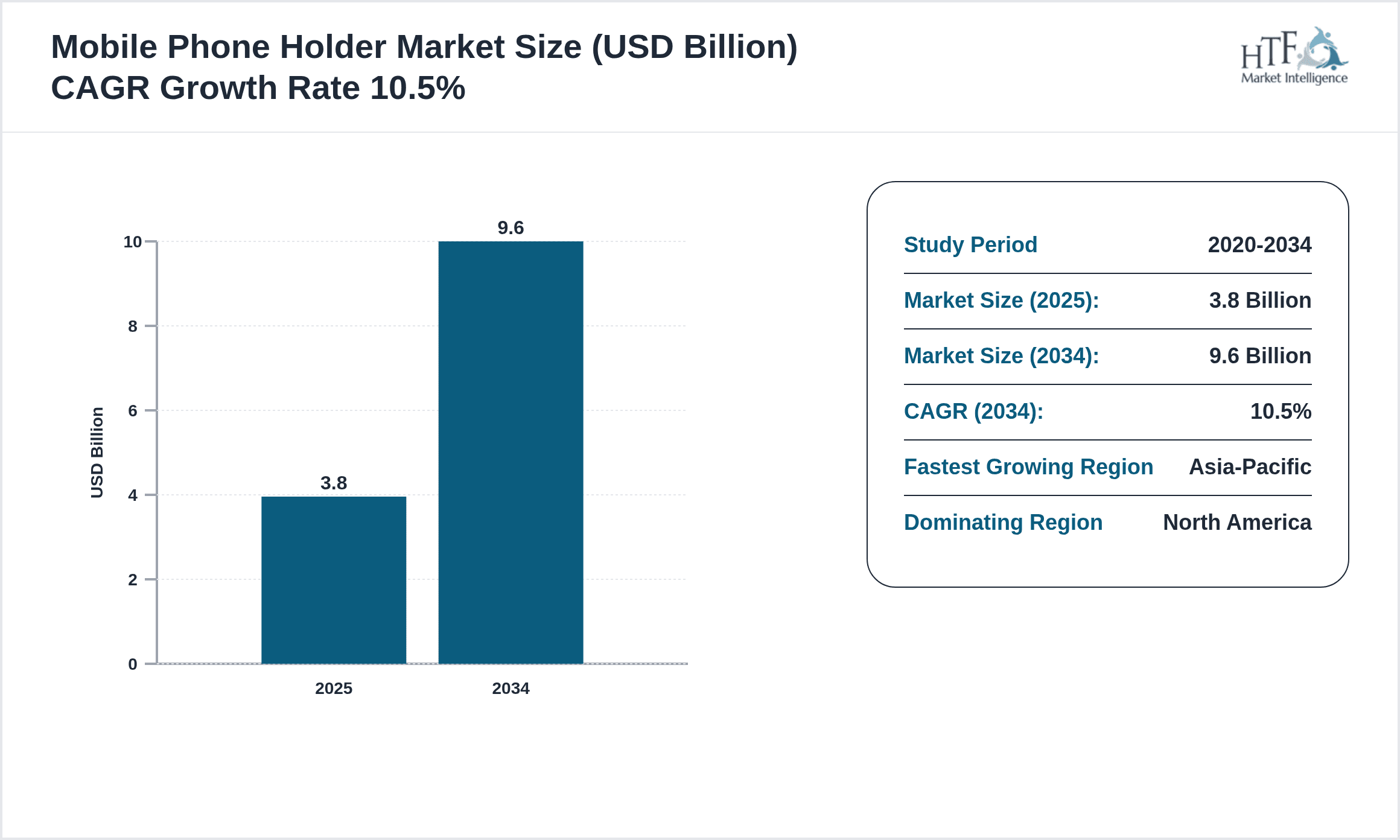
- •Recent market data indicates that the Mobile Phone Holder market was valued at USD 3.8 Billion in 2025, with historical figures around USD 1.9 Billion in 2020. Forecasts project the market to reach approximately USD 9.6 Billion by 2034, signifying a robust CAGR of 10.5%. Year-on-year growth remains consistent at about 10.0%, underscoring steady demand and technological advancements. North America retains the largest share, while Asia-Pacific exhibits the highest growth potential, fueled by urbanization and rising smartphone usage. Clamp holders lead product types by volume and revenue, whereas magnetic holders are the fastest growing segment due to their convenience and innovative designs. These metrics reflect the market’s dynamic nature and its strategic importance to automotive, consumer electronics, and retail industries worldwide.
- •The Mobile Phone Holder market offers significant value propositions to stakeholders including manufacturers, retailers, automotive OEMs, and end-users. For manufacturers, innovation in design and materials presents opportunities to differentiate products and enhance user experience. Retailers benefit from growing consumer demand for mobile accessories that provide convenience and safety. Automotive OEMs integrate these holders into infotainment and navigation systems, improving driver safety and satisfaction. End-users gain improved device accessibility and hands-free operation, aligning with lifestyle trends emphasizing mobility and connectivity. Overall, the market’s strategic importance lies in its ability to enhance smartphone usability while supporting regulatory compliance and evolving consumer preferences globally.
Competitive Landscape
The global Mobile Phone Holder market features a highly competitive landscape characterized by numerous players ranging from multinational corporations to emerging regional manufacturers. Market dynamics are influenced by rapid technological innovation, aggressive product development, and strategic partnerships aimed at enhancing product portfolios and geographic reach. Companies continuously invest in research and development to improve functionality, design aesthetics, and material quality, responding to evolving consumer demands and regulatory requirements. Pricing strategies vary, with premium product segments emphasizing advanced features such as wireless charging compatibility and multi-angle adjustability, while the mass market focuses on affordability and durability. Distribution channels span online platforms, specialty stores, and automotive dealerships, facilitating extensive market penetration. Mergers and acquisitions serve as key growth strategies to consolidate market position and diversify offerings. Competitive advantages hinge on brand reputation, innovation capabilities, global supply chain management, and customer service excellence. Regional competition is marked by North America and Europe’s mature markets, while Asia-Pacific’s rapid growth stimulates new entrants and localized competition. Future trends suggest increasing emphasis on sustainability, smart integration, and personalized user experiences, shaping the competitive contours of the Mobile Phone Holder market.
Leading Companies in Mobile Phone Holder Market
- •Belkin International, Inc. (United States)
- •Scosche Industries, Inc. (United States)
- •Spigen, Inc. (South Korea)
- •iOttie (United States)
- •Anker Innovations Limited (China)
- •Mpow (United States)
- •Otter Products, LLC (United States)
- •Ringke (South Korea)
- •TechMatte, Inc. (United States)
- •Ugreen Group Limited (China)
- •Baseus (China)
- •Joyroom (China)
- •Aukey (China)
- •WizGear (United States)
- •VRS Design (South Korea)
- •Cygnett (Australia)
- •Nite Ize, Inc. (United States)
- •Moshi (United States)
- •PopSockets LLC (United States)
- •RhinoShield (Hong Kong)
- •Twelve South (United States)
- •ESR (China)
- •iSimple (United States)
- •Nomad (United States)
- •Moshi (United States)
Market Breakdown
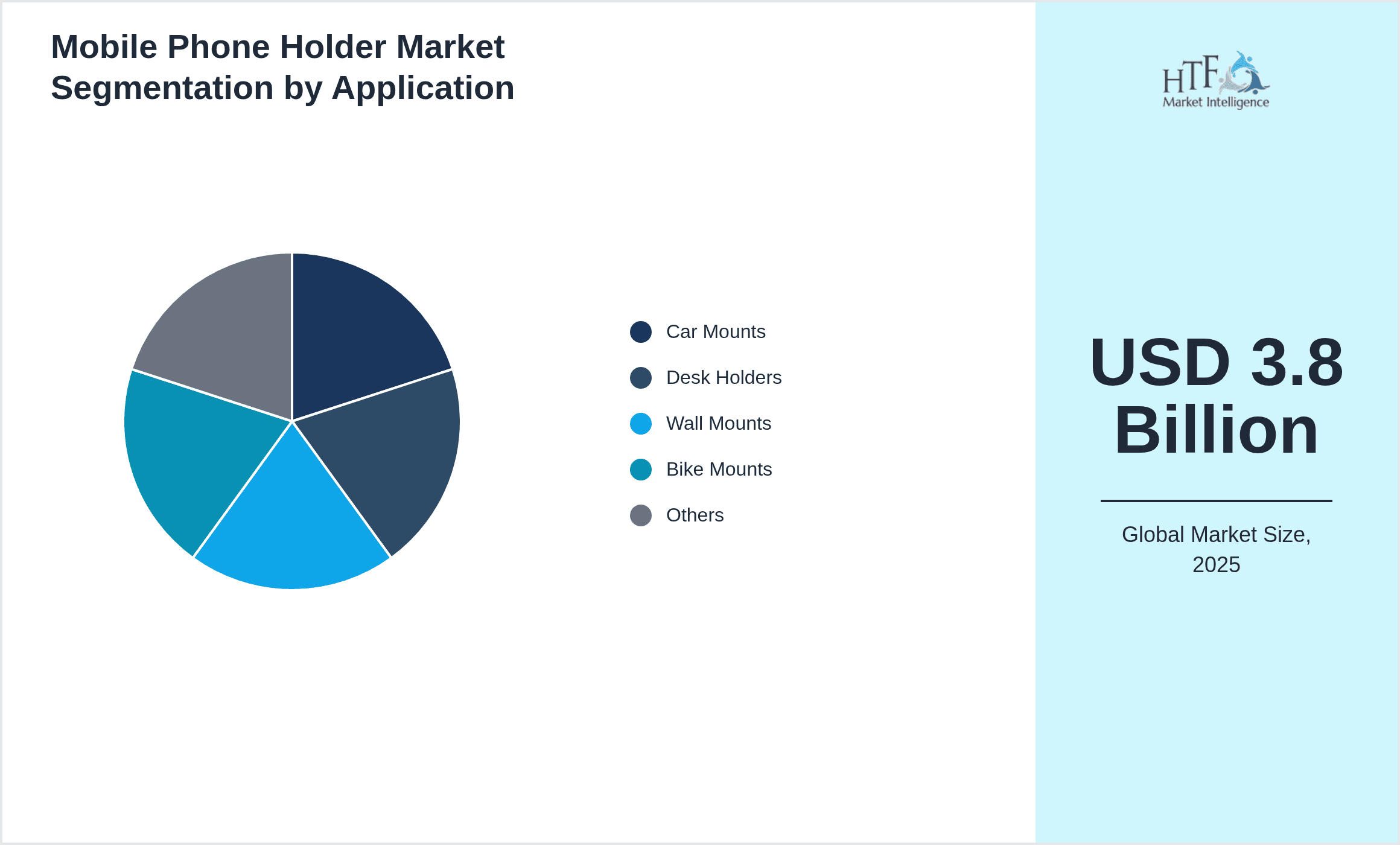
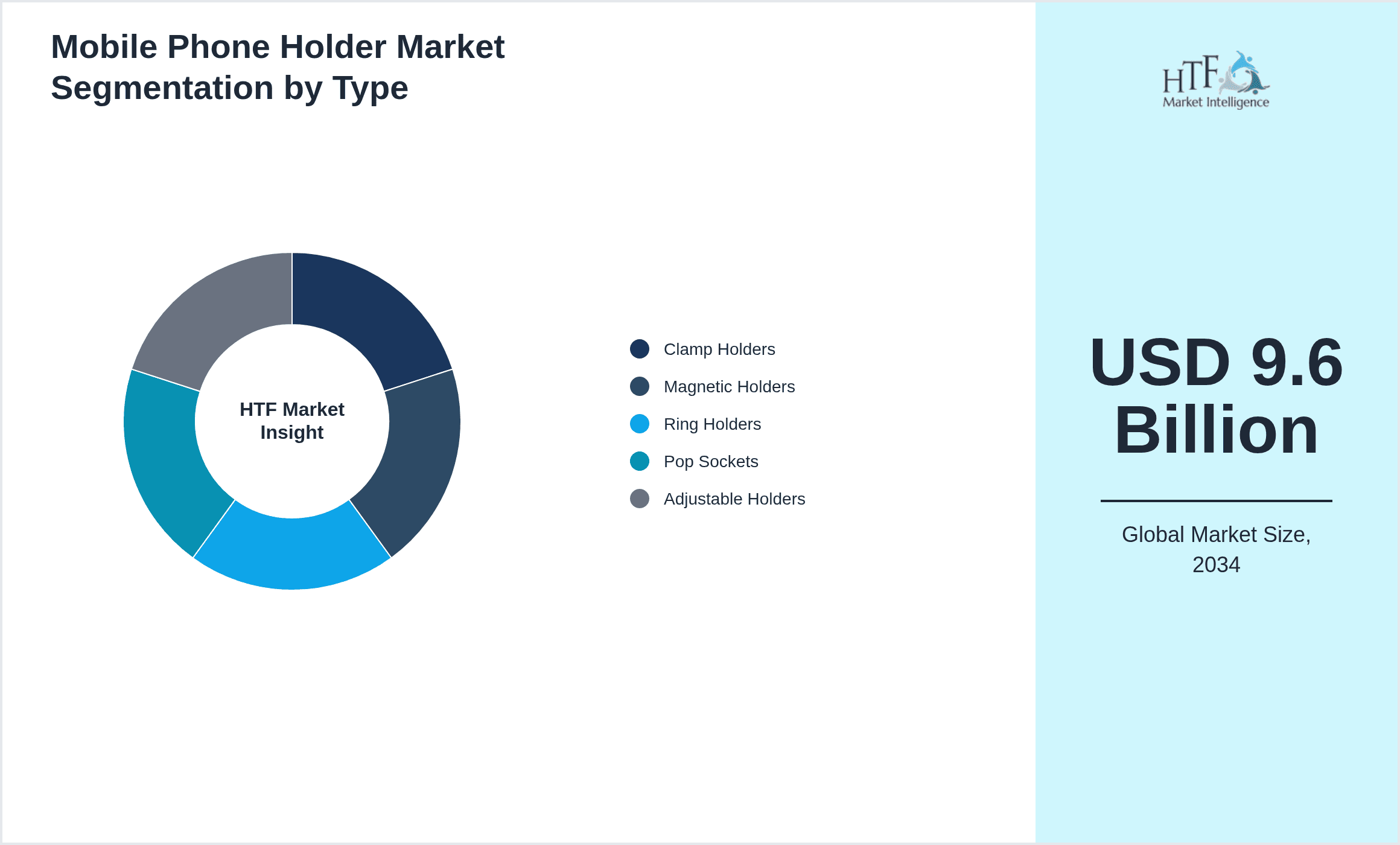
- •By Product Type
- ◦Clamp Holders
- ◦Magnetic Holders
- ◦Ring Holders
- ◦Pop Sockets
- ◦Adjustable Holders
- •By Application
- ◦Car Mounts
- ◦Desk Holders
- ◦Wall Mounts
- ◦Bike Mounts
- ◦Others
- •By End-Use Industry
- ◦Automotive
- ◦Consumer Electronics
- ◦Retail
- ◦Outdoor & Sports
- •By Distribution Channel
- ◦Online Retail
- ◦Specialty Stores
- ◦Automotive Dealerships
Growth Dynamics
- •The increasing penetration of smartphones globally drives demand for mobile phone holders, particularly as consumers seek convenient and safe ways to access their devices during commuting and work. Enhanced vehicle infotainment systems integrate seamlessly with phone holders, boosting adoption in automotive applications.
- •Technological advancements such as wireless charging enabled holders and multi-functional designs with adjustable angles and secure grip mechanisms contribute significantly to market growth by catering to evolving consumer preferences.
- •Rising awareness of road safety regulations mandating hands-free device use while driving fosters demand for car mount holders, with governments in North America and Europe enforcing compliance strictly, benefiting market expansion.
- •The surge in e-commerce platforms facilitates easy availability and diverse product offerings, enabling manufacturers and retailers to reach wider audiences and drive sales growth effectively across regions.
- •Increasing urbanization and rising disposable incomes in emerging economies, especially within Asia-Pacific, create new customer bases for mobile phone holders, supporting rapid regional market growth.
- •Collaborations between technology firms and accessory manufacturers lead to innovative product development, enhancing user experience and creating competitive differentiation in the mobile phone holder market.
- •Sustainability trends encourage manufacturers to use eco-friendly materials and recyclable components in phone holders, attracting environmentally conscious consumers and opening new market segments.
Market Trends
- •Magnetic holders with strong neodymium magnets are gaining popularity due to their ease of use and sleek design, leading to a shift away from traditional clamp holders in premium segments.
- •Integration of phone holders with wireless charging technology is a significant trend, allowing users to charge devices conveniently without additional cables, enhancing functionality and user appeal.
- •Customization and personalization trends are influencing product designs, with manufacturers offering holders in various colors, materials, and styles to cater to diverse consumer tastes and lifestyles.
- •Growth of smart vehicles and connected car technologies drives the demand for integrated phone holders that support voice commands, augmented reality navigation, and enhanced driver safety features.
- •The rise of online influencer marketing and social media advertising boosts product visibility and consumer engagement, accelerating market penetration for innovative phone holder designs.
- •Sustainability-focused trends prompt brands to adopt biodegradable materials and reduce plastic usage in packaging, aligning with consumer expectations and regulatory pressures.
- •Expansion of multi-functional holders that combine phone mounting with additional features such as storage spaces or charging docks is shaping future product development strategies.
Market Opportunities
- •Expanding smartphone usage in emerging markets offers significant growth potential for mobile phone holders tailored to local preferences and affordability, addressing untapped consumer segments.
- •Innovating holders compatible with foldable and flexible smartphones presents opportunities to capture new market niches as these devices gain popularity globally.
- •Collaborations with automotive manufacturers to develop integrated mobile phone holders for electric and autonomous vehicles can open new revenue streams and strengthen market presence.
- •Leveraging e-commerce and direct-to-consumer sales channels enables manufacturers to reach broader audiences efficiently, reducing reliance on traditional retail and enhancing profitability.
- •Developing eco-friendly and sustainable product lines can attract environmentally conscious consumers, differentiating brands in a competitive market and complying with evolving regulations.
- •Expanding product portfolios to include multifunctional holders with integrated wireless charging, LED lighting, or voice assistant compatibility can meet growing consumer demand for convenience and innovation.
- •Targeting niche segments such as outdoor enthusiasts and cyclists with specialized bike mount holders offers additional avenues for market expansion and brand loyalty.
Market Challenges
- •High competition from numerous manufacturers results in pricing pressures and challenges in maintaining profit margins, especially in commoditized product segments.
- •Rapid technological changes require continuous innovation and substantial R&D investment, posing challenges for smaller players to remain competitive and relevant.
- •Compliance with diverse regulatory standards across regions, particularly related to automotive safety and wireless charging certifications, adds complexity and cost to product development and market entry.
- •Supply chain disruptions and raw material price volatility, exacerbated by global economic uncertainties, impact production costs and delivery timelines adversely.
- •Consumer preference shifts towards integrated devices and wireless technologies may reduce demand for standalone phone holders if manufacturers fail to innovate accordingly.
- •Counterfeit products and low-quality imports flood markets, damaging brand reputation and eroding consumer trust in legitimate manufacturers.
- •Environmental concerns and regulatory pressures necessitate adoption of sustainable materials and manufacturing processes, which may increase operational costs and require strategic adjustments.
Regulatory Framework
- •Between 2020 and 2025, several regions implemented regulations mandating hands-free mobile device usage in vehicles, such as the United States’ Federal Communications Commission (FCC) guidelines and the European Union’s General Safety Regulation, compelling manufacturers to design compliant mobile phone holders.
- •Wireless charging standards, including the Qi certification developed by the Wireless Power Consortium, became mandatory for holders integrating charging features, ensuring interoperability and safety across devices and manufacturers.
- •Environmental regulations such as the European Union’s Restriction of Hazardous Substances Directive (RoHS) and Waste Electrical and Electronic Equipment Directive (WEEE) influenced material selection and end-of-life disposal practices for mobile phone holders.
- •Several countries introduced safety standards for automotive accessories, requiring mobile phone holders to meet crash safety and secure mounting criteria, impacting design specifications and testing requirements.
- •Government incentives promoting sustainable manufacturing encouraged adoption of eco-friendly materials and processes in mobile phone holder production, aligning with global environmental goals and consumer expectations.
Market Intelligence
- •15th January 2025, Belkin International, Inc. launched a new wireless charging magnetic phone holder compatible with the latest smartphone models, featuring enhanced magnetic strength and adjustable viewing angles. The product targets automotive and home applications, aiming to improve user convenience and safety. This launch aligns with increasing consumer demand for multifunctional and aesthetically appealing accessories, positioning Belkin as a key innovator in the mobile phone holder market. The product's compatibility with Qi wireless charging standards ensures broad device support, enhancing its market appeal. Source: Belkin Official Press Release.
- •10th March 2025, Anker Innovations Limited introduced an eco-friendly line of mobile phone holders made from biodegradable materials, addressing sustainability trends and regulatory requirements. The new product range targets environmentally conscious consumers and expands Anker's portfolio in the mobile accessories segment. Marketing campaigns emphasize reduced plastic use and recyclable packaging, expected to boost brand reputation and market share in regions with strong environmental policies. This initiative exemplifies the industry's shift towards sustainable innovation, influencing competitive dynamics. Source: Anker Innovations News.
- •5th June 2025, iOttie announced a strategic partnership with a leading automotive manufacturer to develop integrated phone holders for electric vehicles, featuring wireless charging and smart connectivity. This collaboration aims to enhance in-car user experience and safety by embedding holders into vehicle dashboards. The initiative reflects growing industry focus on connectivity and digitalization within automotive interiors, anticipated to drive future market growth. iOttie's technology leadership and partnership approach position it favorably against competitors. Source: iOttie Corporate Announcement.
- •20th August 2025, Spigen, Inc. completed the acquisition of a regional mobile accessories manufacturer to strengthen its presence in Southeast Asia and diversify its product offerings. The acquisition includes advanced clamp and magnetic holder technologies, enhancing Spigen's competitive capabilities in the fast-growing Asia-Pacific market. This strategic move supports Spigen's global expansion plans and addresses rising demand in emerging markets, contributing to its revenue growth and innovation pipeline. Source: Spigen Press Release.
Regional Outlook
The North America currently holds a significant share of the market, primarily due to several key factors: increasing consumption rates, a burgeoning population, and robust economic momentum. These elements collectively drive demand, positioning this region as a leader in the market. On the other hand, Asia-Pacific is rapidly emerging as the fastest-growing area within the industry. This remarkable growth can be attributed to swift infrastructure development, the expansion of various industrial sectors, and a marked increase in consumer demand. These dynamics make this region a crucial player in shaping future market growth.
In our report, we cover a comprehensive analysis of the following regions and countries:
- North America
- LATAM
- West Europe
- Central & Eastern Europe
- Northern Europe
- Southern Europe
- East Asia
- Southeast Asia
- South Asia
- Central Asia
- Oceania
- MEA
| Feature | Details |
|---|---|
| Base Year Market Size | USD 3.8 Billion |
| Forecast Year Market Size | USD 9.6 Billion |
| CAGR | 10.5% |
| Forecast Period | 2026 to 2033 |
| YoY Growth | 10% |
| Scope of Report | Market is segmented by Product Type (Clamp Holders, Magnetic Holders, Ring Holders, Pop Sockets, Adjustable Holders), Application (Car Mounts, Desk Holders, Wall Mounts, Bike Mounts, Others), End-Use Industry (Automotive, Consumer Electronics, Retail, Outdoor & Sports), Distribution Channel (Online Retail, Specialty Stores, Automotive Dealerships) |
| Regions Covered | North America, LATAM, West Europe, Central & Eastern Europe, Northern Europe, Southern Europe, East Asia, Southeast Asia, South Asia, Central Asia, Oceania, MEA |
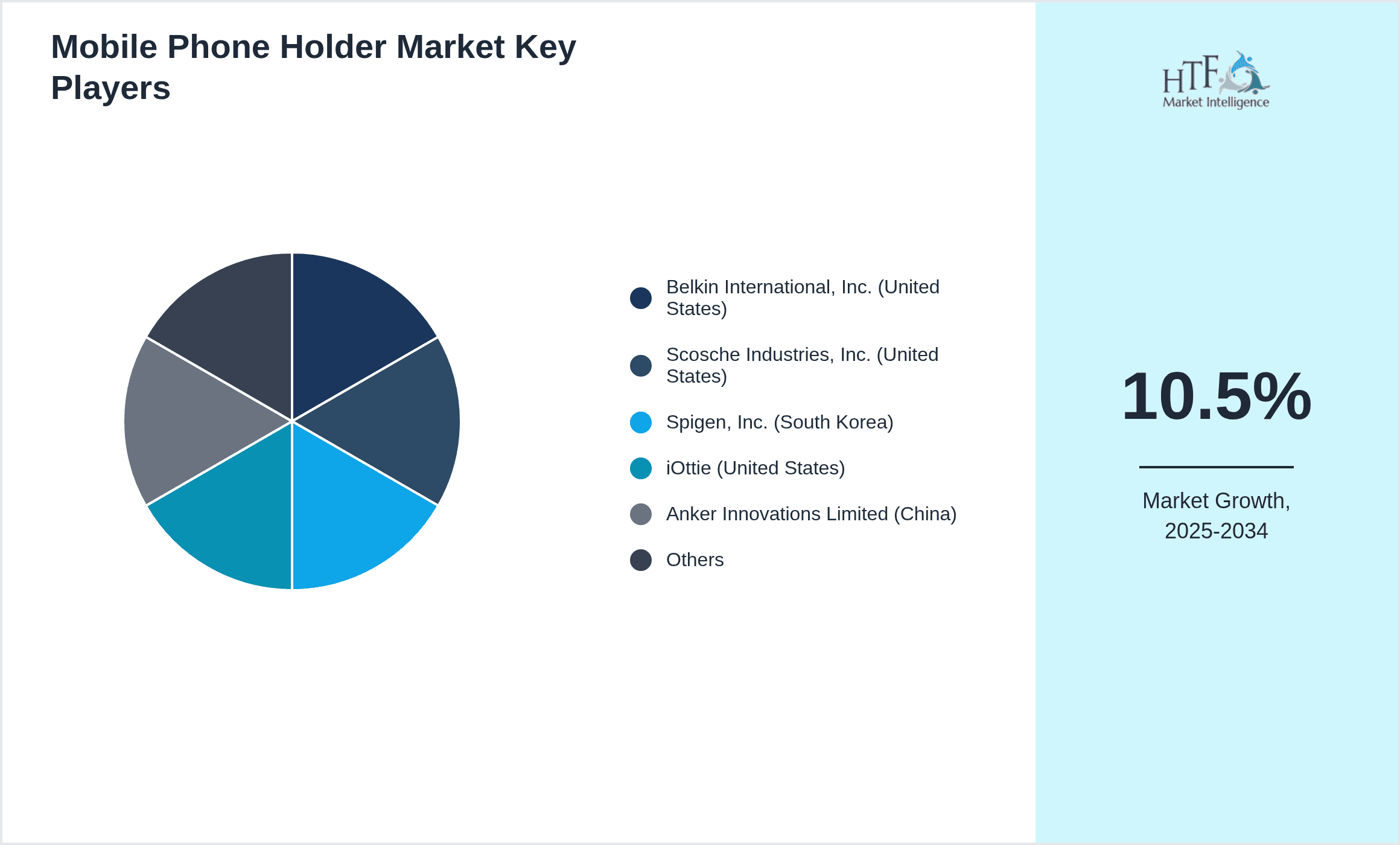
| Key Companies | Belkin International, Inc. (United States), Scosche Industries, Inc. (United States), Spigen, Inc. (South Korea), iOttie (United States), Anker Innovations Limited (China) |
Global Mobile Phone Holder Market - Outlook 2020-2034 - Table of Contents
Multidisciplinary researcher with 10+ years of experience uncovering insights across diverse domains focused on uncovering insights that drive informed decisions.
Frequently Asked Questions (FAQ):
The Compact Track Loaders market is projected to grow at a CAGR of 6.8% from 2025 to 2030, driven by increasing demand in construction and agricultural sectors.
North America currently leads the market with approximately 45% market share, followed by Europe at 28% and Asia-Pacific at 22%. The remaining regions account for 5% of the global market.
Key growth drivers include increasing construction activities, rising demand for versatile equipment in agriculture, technological advancements in track loader design, and growing preference for compact equipment in urban construction projects.