
Global Organophosphate Insecticides Market Size, Growth & Revenue 2025-2034
Global Organophosphate Insecticides Market is segmented by Product Type (Chlorpyrifos, Diazinon, Malathion, Parathion, Phorate), Application (Agriculture, Public Health, Residential Pest Control, Forestry, Veterinary), End-Use Industry (Crop Protection, Vector Control, Home and Garden, Animal Health), Distribution Channel (Direct Sales, Distributors and Dealers, E-commerce Platforms), and Geography (North America, LATAM, West Europe, Central & Eastern Europe, Northern Europe, Southern Europe, East Asia, Southeast Asia, South Asia, Central Asia, Oceania, MEA)
Pricing
Report Overview
Executive Summary
- •The global Organophosphate Insecticides market is a critical segment within the agrochemical industry, primarily driven by the need to protect crops from pest infestations and enhance agricultural productivity. This market comprises chemical compounds that inhibit the nervous system of insects, providing broad-spectrum pest control across multiple applications including agriculture, public health, residential pest management, forestry, and veterinary sectors. The market has witnessed steady growth due to increasing demand for food security, rising prevalence of vector-borne diseases, and expansion of farming activities in emerging economies. However, stringent regulatory frameworks and environmental concerns have necessitated innovation in safer formulations and integrated pest management strategies. The market is characterized by key product types such as Chlorpyrifos, Diazinon, Malathion, Parathion, and Phorate, each with distinct efficacy and usage profiles. Regionally, North America dominates the market due to advanced agricultural practices and established regulatory mechanisms, while Asia-Pacific is the fastest-growing region owing to expanding agricultural land and increased pest control awareness. The forecast period through 2034 is expected to witness moderate growth driven by technological advancements, regulatory adaptation, and increasing adoption of sustainable pest control methods. This comprehensive report covers market segmentation, growth drivers, challenges, competitive landscape, and future opportunities, providing actionable insights for stakeholders, including manufacturers, investors, and policymakers.
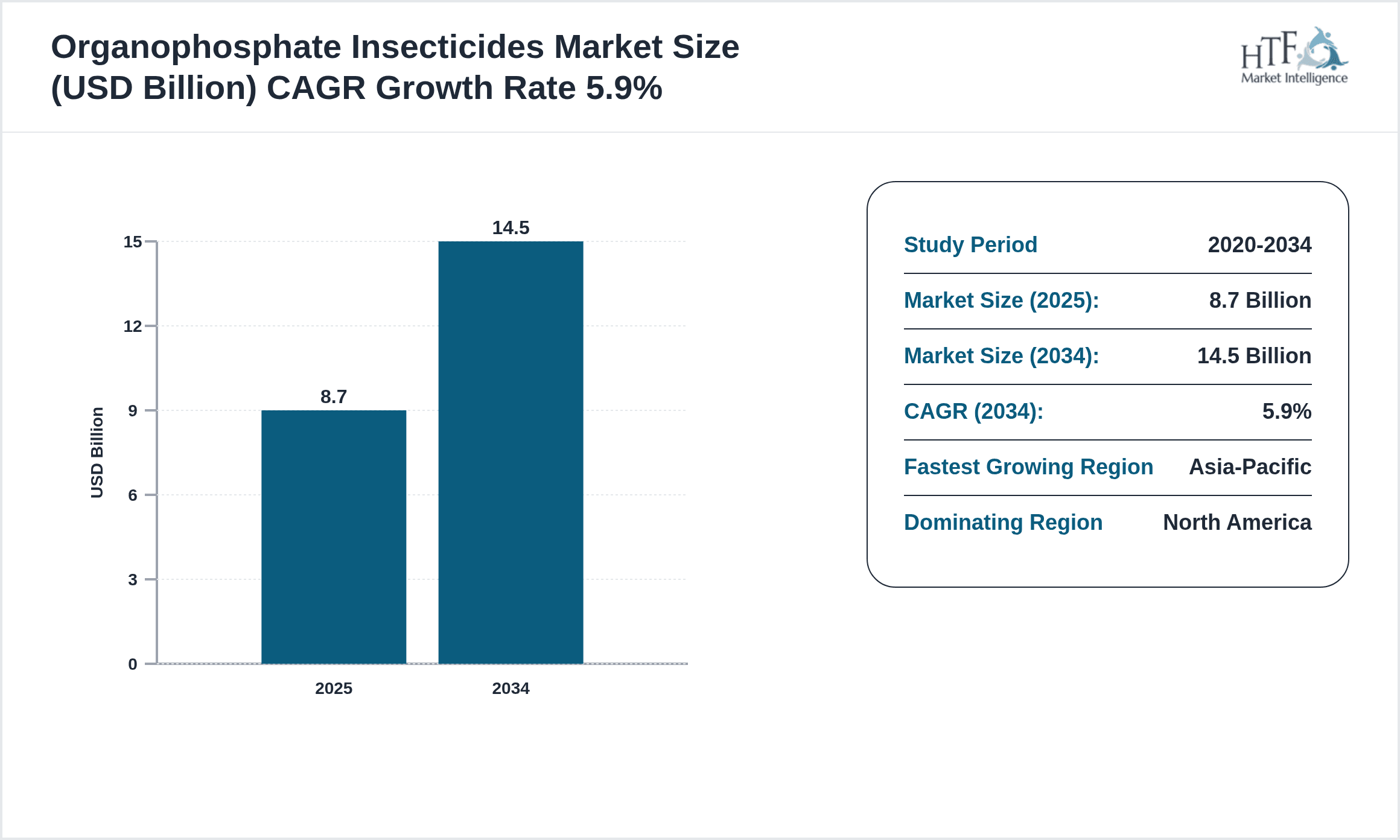
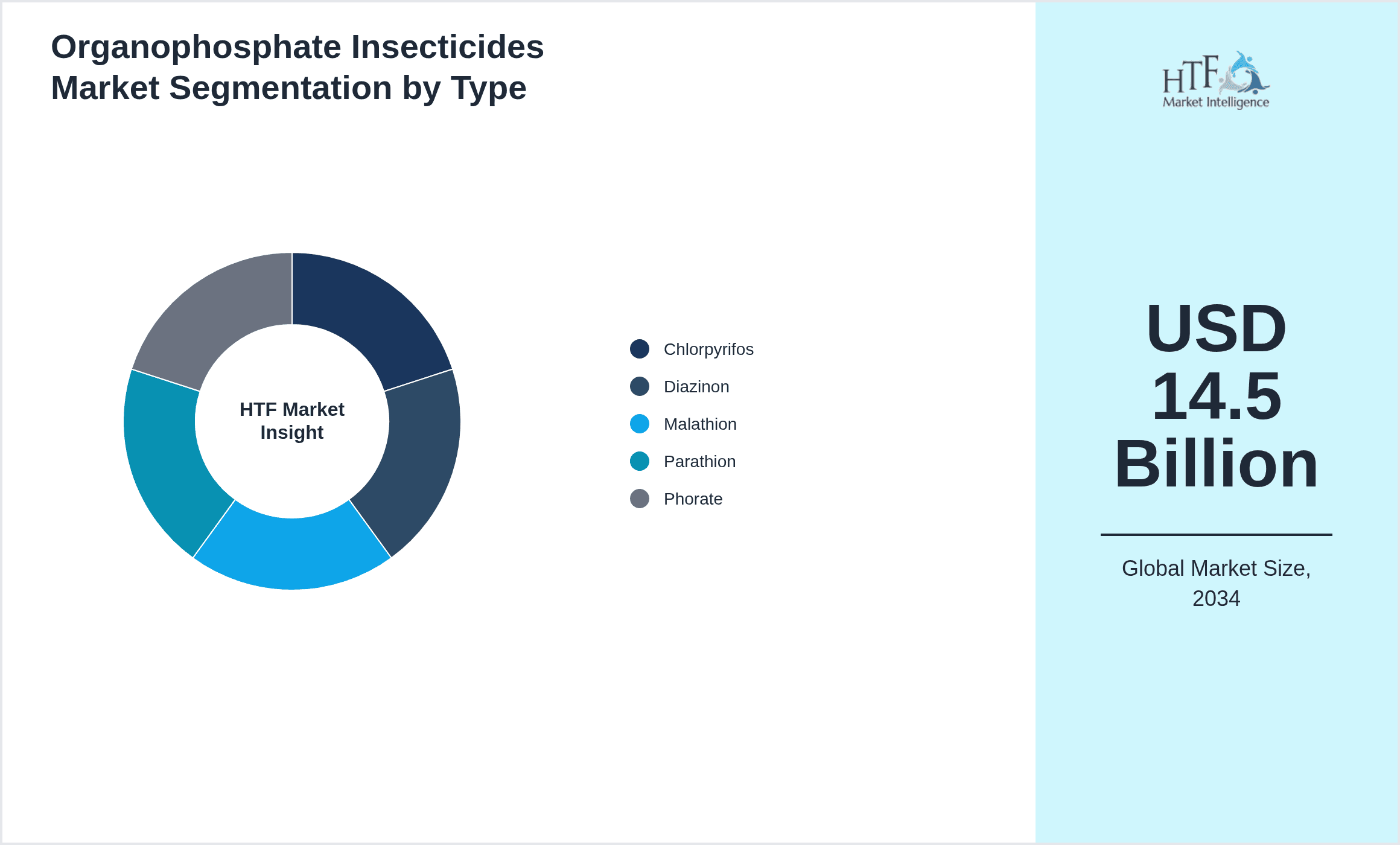
- •Key market highlights include a base market size of USD 8.7 Billion in 2025, projected to reach USD 14.5 Billion by 2034, reflecting a CAGR of 5.9%. The market growth is supported by rising demand in Asia-Pacific and North America, with Chlorpyrifos leading the product segment and Phorate emerging as the fastest growing type due to its high effectiveness and expanding applications. Regulatory challenges and environmental concerns remain significant, pushing the industry towards innovation and sustainable practices. The growing emphasis on food security and vector control continues to propel market demand globally.
- •Organophosphate insecticides hold strategic importance across agriculture, public health, and residential sectors by enabling effective pest control and contributing to increased crop yields and disease prevention. Their role in enhancing food production and controlling vector-borne illnesses such as malaria makes them indispensable to multiple stakeholders. Manufacturers benefit from technological advancements and regulatory compliance innovations, while end-users gain from improved pest management solutions. The market’s evolving landscape necessitates continuous adaptation to environmental standards and consumer preferences, underscoring its dynamic nature and long-term growth potential.
Competitive Landscape
The global organophosphate insecticides market exhibits a competitive environment characterized by the presence of multinational agrochemical corporations, regional manufacturers, and emerging players focusing on product innovation and portfolio diversification. Competitive strategies include aggressive R&D investments to develop environmentally safer and more effective formulations, strategic partnerships, and mergers & acquisitions to expand geographic footprint and product offerings. Market leaders differentiate themselves through proprietary technologies, patent-protected chemistries, and robust distribution networks. Pricing strategies are influenced by raw material costs, regulatory compliance expenses, and competitive pressure from alternative pest control solutions such as neonicotinoids and biopesticides. The market faces barriers to entry including stringent regulatory approvals and high capital investments. Regional competition varies, with North America and Europe emphasizing sustainability and regulatory adherence, while Asia-Pacific sees rapid expansion driven by large-scale farming and increasing pest control needs. Future trends suggest increasing focus on integrated pest management, digital agriculture, and precision application technologies, intensifying competition and innovation pace within the sector.
Key Players in Organophosphate Insecticides Market
- •BASF SE (Germany)
- •Syngenta AG (Switzerland)
- •Dow AgroSciences LLC (United States)
- •FMC Corporation (United States)
- •Nufarm Limited (Australia)
- •Adama Agricultural Solutions Ltd. (Israel)
- •UPL Limited (India)
- •Sumitomo Chemical Co., Ltd. (Japan)
- •Corteva Agriscience (United States)
- •Bayer CropScience AG (Germany)
- •Jiangsu Yangnong Chemical Group Co., Ltd. (China)
- •Mitsui Chemicals Agro, Inc. (Japan)
- •Nippon Soda Co., Ltd. (Japan)
- •Sumitomo Chemical India Pvt Ltd (India)
- •Sharda Cropchem Limited (India)
- •Kumiai Chemical Industry Co., Ltd. (Japan)
- •Tianjin Zhongxin Pharmaceutical Group Corporation Limited (China)
- •Helena Agri-Enterprises, LLC (United States)
- •Valent U.S.A. LLC (United States)
- •Nufarm Americas Inc. (United States)
- •Gowan Company (United States)
- •UPL Europe Ltd. (United Kingdom)
- •Sino-Agri United Company Limited (China)
- •AMVAC Chemical Corporation (United States)
- •Rallis India Limited (India)

Market Breakdown
- •By Product Type
- ◦Chlorpyrifos
- ◦Diazinon
- ◦Malathion
- ◦Parathion
- ◦Phorate
- •By Application
- ◦Agriculture
- ◦Public Health
- ◦Residential Pest Control
- ◦Forestry
- ◦Veterinary
- •By End-Use Industry
- ◦Crop Protection
- ◦Vector Control
- ◦Home and Garden
- ◦Animal Health
- •By Distribution Channel
- ◦Direct Sales
- ◦Distributors and Dealers
- ◦E-commerce Platforms
Growth Dynamics
The global organophosphate insecticides market growth is primarily driven by the increasing demand for sustainable agricultural practices aimed at maximizing crop yields amid rising global population pressures. Technological advancements in formulation and delivery methods have improved efficacy while reducing environmental impact, thereby encouraging adoption. Furthermore, government initiatives to control vector-borne diseases such as malaria and dengue fever bolster public health applications of these insecticides. The expansion of the agriculture sector in emerging economies, particularly within Asia-Pacific, provides significant growth avenues. However, regulatory restrictions and growing environmental concerns necessitate ongoing innovation and strategic adaptation to maintain market momentum. Investment in integrated pest management and precision agriculture technologies also supports market expansion, enabling targeted application and reducing chemical usage.
Market Trends
A notable trend in the organophosphate insecticides market is the shift towards safer and more selective formulations to mitigate environmental and health risks associated with traditional compounds. Industry players are increasingly investing in bio-based and lower-toxicity alternatives while enhancing product specificity through nano-formulations and encapsulation technologies. Additionally, there is growing integration of digital agriculture tools such as drones and IoT sensors to optimize pesticide application, reduce wastage, and improve efficacy. The market is also witnessing consolidation as companies pursue mergers and acquisitions to enhance innovation capabilities and global reach. Lastly, increased consumer awareness regarding pesticide residues on food products is driving demand for compliance with stricter safety standards and transparent supply chains.

Market Opportunities
Emerging economies present significant opportunities for the organophosphate insecticides market due to expanding agricultural activities and increasing pest infestation risks. There is potential for growth through the development of environmentally friendly formulations that comply with evolving regulatory frameworks, especially in regions with stringent pesticide use policies. Additionally, expanding applications beyond traditional agriculture into public health and veterinary sectors offer diversification avenues. Investment in precision agriculture and digital pest control technologies can enhance product efficacy and reduce environmental footprint, creating value-added solutions. Collaborations between manufacturers and research institutions can accelerate innovation and market penetration. Finally, increasing awareness and education about integrated pest management practices present opportunities to promote safer and more effective insecticide use.
Market Challenges
The organophosphate insecticides market faces significant challenges including stringent regulatory restrictions due to environmental toxicity and human health concerns, leading to bans or phasedown of certain compounds in key markets. Public perception and rising demand for organic and biopesticide alternatives also pressure traditional organophosphate usage. Additionally, the development of insect resistance reduces efficacy and necessitates continuous innovation. High costs associated with regulatory compliance and reformulation add financial burdens for manufacturers. Supply chain disruptions and fluctuating raw material prices further complicate market stability. Ensuring safe handling and minimizing non-target species impact remain operational challenges. These factors collectively impede market growth and require strategic approaches to overcome.
Regulatory Framework
Between 2020 and 2025, the regulatory landscape for organophosphate insecticides has undergone significant transformation globally, with major markets implementing stricter standards to mitigate environmental and health risks. The European Union reinforced the EU's Sustainable Use Directive, emphasizing reduction in pesticide use and promoting integrated pest management. The United States Environmental Protection Agency (EPA) updated risk assessments for key organophosphates like Chlorpyrifos, imposing tighter residue limits and usage restrictions. In Asia-Pacific, countries such as India and China enhanced registration requirements and safety protocols to align with international best practices. These regulations demand comprehensive toxicity data, environmental impact assessments, and worker safety measures. Compliance costs have increased, prompting reformulation and innovation towards safer alternatives. Additionally, labeling requirements and monitoring mechanisms have been strengthened to ensure transparency and consumer safety. Governments continue to encourage adoption of sustainable pest control methods through subsidies and educational programs, balancing agricultural productivity with environmental stewardship.
Market Intelligence
- •15th January 2025, BASF SE launched a new bio-enhanced Chlorpyrifos formulation designed to reduce environmental impact while maintaining pest control efficacy. The product incorporates encapsulation technology to enable slow-release and targeted action, minimizing non-target exposure. This innovation is targeted at large-scale agricultural operations in North America and Europe, aiming to comply with tightening regulatory frameworks and consumer demand for sustainable inputs. BASF’s strategic objective is to reinforce its market leadership by offering advanced formulations that align with evolving safety standards and environmental concerns. The launch is expected to stimulate market uptake and encourage adoption of safer organophosphate insecticides globally.
- •10th April 2025, Syngenta AG introduced a precision agriculture platform integrating drone-based pesticide application with real-time pest monitoring. This technology enables optimized organophosphate insecticide use, reducing chemical volumes and enhancing application accuracy. The platform is positioned to address regulatory pressures and environmental concerns while improving farmer profitability through reduced input costs. Syngenta’s innovation reflects a broader industry trend towards digitalization and sustainable pest management practices. Early trials in Asia-Pacific demonstrated a 20% reduction in pesticide use without compromising crop protection, indicating significant market potential.
- •22nd July 2025, FMC Corporation announced a strategic partnership with a leading agricultural technology startup to co-develop next-generation organophosphate insecticides with improved safety profiles and targeted delivery systems. The collaboration aims to accelerate innovation cycles and expand product offerings tailored to emerging markets in Latin America and Africa. FMC’s initiative aligns with its long-term growth strategy focusing on sustainability and regulatory compliance. The partnership is expected to enhance FMC’s competitive positioning and foster adoption of safer pest control solutions globally.
- •5th October 2025, Corteva Agriscience completed the acquisition of a regional biopesticide manufacturer to strengthen its integrated pest management portfolio. This acquisition expands Corteva’s presence in Asia-Pacific and Latin America by complementing traditional organophosphate insecticides with bio-based alternatives. The move addresses rising regulatory challenges and consumer demand for environmentally friendly products. Corteva plans to leverage its extensive distribution network to accelerate market penetration and innovation adoption. This consolidation reflects ongoing M&A trends in the agrochemical sector aimed at portfolio diversification and sustainability leadership.
- •Source: Official company press releases, Industry publications, Market research databases
Regional Outlook
The North America currently holds a significant share of the market, primarily due to several key factors: increasing consumption rates, a burgeoning population, and robust economic momentum. These elements collectively drive demand, positioning this region as a leader in the market. On the other hand, Asia-Pacific is rapidly emerging as the fastest-growing area within the industry. This remarkable growth can be attributed to swift infrastructure development, the expansion of various industrial sectors, and a marked increase in consumer demand. These dynamics make this region a crucial player in shaping future market growth.
In our report, we cover a comprehensive analysis of the following regions and countries:
- North America
- LATAM
- West Europe
- Central & Eastern Europe
- Northern Europe
- Southern Europe
- East Asia
- Southeast Asia
- South Asia
- Central Asia
- Oceania
- MEA
| Feature | Details |
|---|---|
| Base Year Market Size | USD 8.7 Billion |
| Forecast Year Market Size | USD 14.5 Billion |
| CAGR | 5.9% |
| Forecast Period | 2026 to 2033 |
| YoY Growth | 5.9% |
| Scope of Report | Market is segmented by Product Type (Chlorpyrifos, Diazinon, Malathion, Parathion, Phorate), Application (Agriculture, Public Health, Residential Pest Control, Forestry, Veterinary), End-Use Industry (Crop Protection, Vector Control, Home and Garden, Animal Health), Distribution Channel (Direct Sales, Distributors and Dealers, E-commerce Platforms) |
| Regions Covered | North America, LATAM, West Europe, Central & Eastern Europe, Northern Europe, Southern Europe, East Asia, Southeast Asia, South Asia, Central Asia, Oceania, MEA |
| Key Companies | BASF SE (Germany), Syngenta AG (Switzerland), Dow AgroSciences LLC (United States), FMC Corporation (United States), Nufarm Limited (Australia), Adama Agricultural Solutions Ltd. (Israel), UPL Limited (India), Sumitomo Chemical Co., Ltd. (Japan), Corteva Agriscience (United States), Bayer CropScience AG (Germany), Jiangsu Yangnong Chemical Group Co., Ltd. (China), Mitsui Chemicals Agro, Inc. (Japan), Nippon Soda Co., Ltd. (Japan), Sumitomo Chemical India Pvt Ltd (India), Sharda Cropchem Limited (India), Kumiai Chemical Industry Co., Ltd. (Japan), Tianjin Zhongxin Pharmaceutical Group Corporation Limited (China), Helena Agri-Enterprises, LLC (United States), Valent U.S.A. LLC (United States), Nufarm Americas Inc. (United States), Gowan Company (United States), UPL Europe Ltd. (United Kingdom), Sino-Agri United Company Limited (China), AMVAC Chemical Corporation (United States), Rallis India Limited (India) |
Global Organophosphate Insecticides Market Size, Growth & Revenue 2025-2034 - Table of Contents
Frequently Asked Questions (FAQ):
The Compact Track Loaders market is projected to grow at a CAGR of 6.8% from 2025 to 2030, driven by increasing demand in construction and agricultural sectors.
North America currently leads the market with approximately 45% market share, followed by Europe at 28% and Asia-Pacific at 22%. The remaining regions account for 5% of the global market.
Key growth drivers include increasing construction activities, rising demand for versatile equipment in agriculture, technological advancements in track loader design, and growing preference for compact equipment in urban construction projects.