
Global Industrial Submersible Pumps Market Size, Growth & Revenue 2025-2034
Global Industrial Submersible Pumps Market is segmented by Type (Vertical Pumps, Horizontal Pumps, Mixed Flow Pumps, Axial Flow Pumps, Radial Flow Pumps), Application (Water Treatment, Oil & Gas, Mining, Construction, Chemical Processing), End-Use Industry (Industrial Manufacturing, Energy & Power, Municipal Services, Mining & Metals), Distribution Channel (Direct Sales, Distributors, Online Sales), and Geography (North America, LATAM, West Europe, Central & Eastern Europe, Northern Europe, Southern Europe, East Asia, Southeast Asia, South Asia, Central Asia, Oceania, MEA)
Pricing
Report Overview
Executive Summary
- •The global industrial submersible pumps market comprises pumps specifically designed to operate underwater for moving fluids in a variety of industrial settings such as water treatment, mining, oil & gas, chemical processing, and construction. These pumps provide critical functionality by offering efficient fluid transfer with minimal maintenance, noise, and space requirements. Their ability to handle abrasive and corrosive fluids in challenging environments makes them indispensable across industries. The market scope includes various pump designs including vertical, horizontal, mixed flow, axial flow, and radial flow types, each serving distinct operational needs. This market is vital for supporting infrastructure development, environmental management, and resource extraction, reflecting its broad industrial significance and growth potential globally.
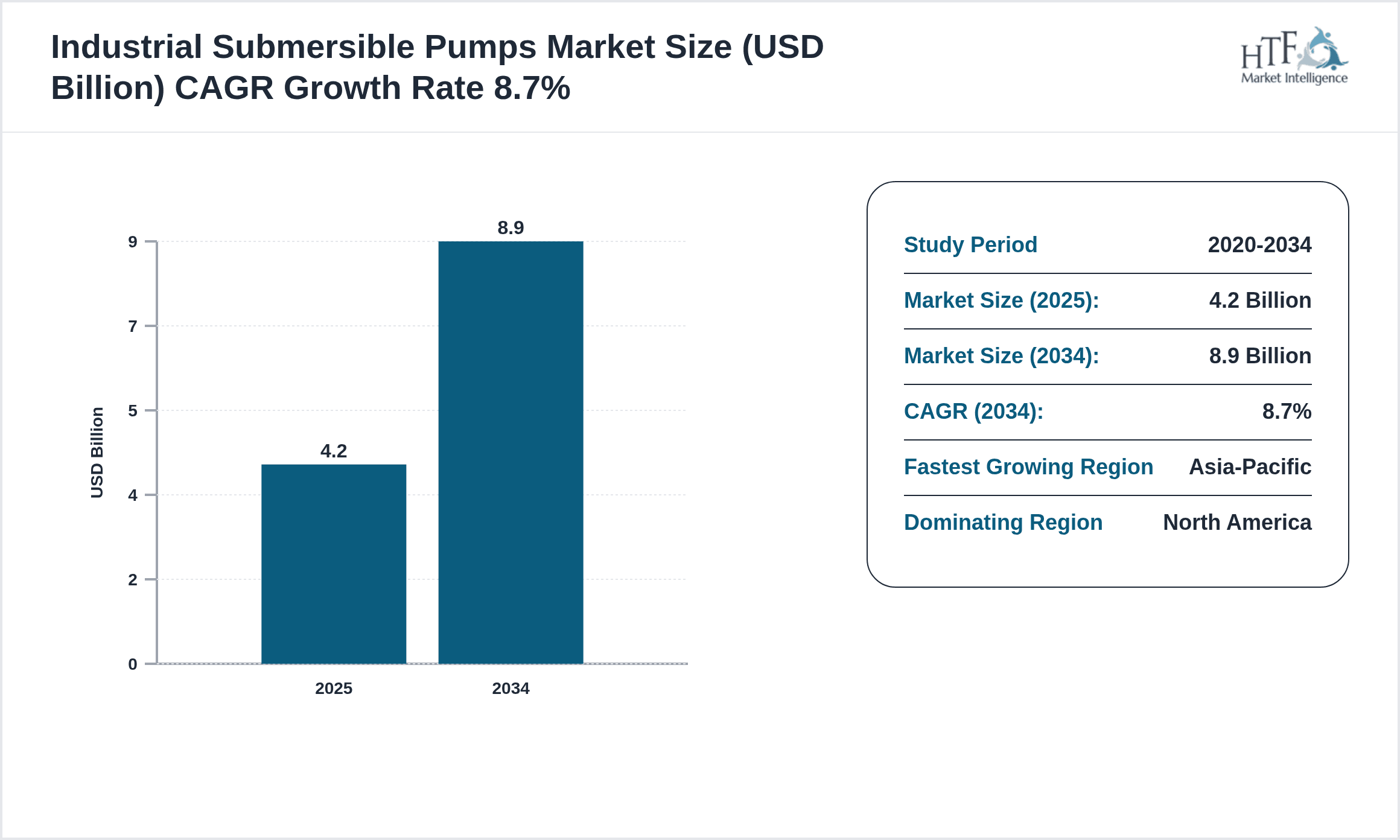
- •In 2025, the market size is estimated at USD 4.2 Billion, projected to reach USD 8.9 Billion by 2034, representing a CAGR of 8.7%. North America leads the market in terms of revenue share, while Asia-Pacific is the fastest-growing region driven by industrial expansion and infrastructure projects. Vertical pumps dominate the product segment due to their versatility and efficiency, whereas mixed flow pumps exhibit the highest growth rate owing to increasing adoption in mining and water management. Key applications such as water treatment and oil & gas contribute significantly to market demand, underscoring the strategic importance of submersible pumps in global industrial operations.
- •Industrial submersible pumps hold strategic value for industries by enabling efficient liquid handling solutions essential for operational continuity and environmental compliance. Their integration supports cost-effective water and waste management, resource extraction, and complex chemical processes, thereby enhancing productivity and sustainability. Stakeholders such as manufacturers, end-users in industrial sectors, and regulatory bodies benefit from the technological advancements and robust performance characteristics of these pumps. The market's expansion aligns with global trends toward industrial modernization, energy efficiency, and environmental stewardship, making it a focal point for innovation and investment worldwide.
Competitive Landscape
The industrial submersible pumps market exhibits intense competition with companies leveraging product innovation, strategic partnerships, and geographic expansion to strengthen their positions. Market leaders focus on developing energy-efficient and corrosion-resistant pump technologies to meet evolving industry standards. Collaboration with end-users enables customization and enhances market responsiveness. Mergers and acquisitions facilitate portfolio diversification and entry into emerging markets. Adoption of digital technologies such as IoT-enabled monitoring and predictive maintenance improves operational efficiency and customer retention. Companies prioritize sustainability by designing pumps that reduce energy consumption and environmental impact, aligning with global regulations. Regional players capitalize on localized demand and cost advantages, intensifying market fragmentation. The competitive landscape demands continuous innovation, agile supply chains, and strategic marketing to capture growth opportunities and mitigate risks in this dynamic market environment.
Leading Companies in Industrial Submersible Pumps Market
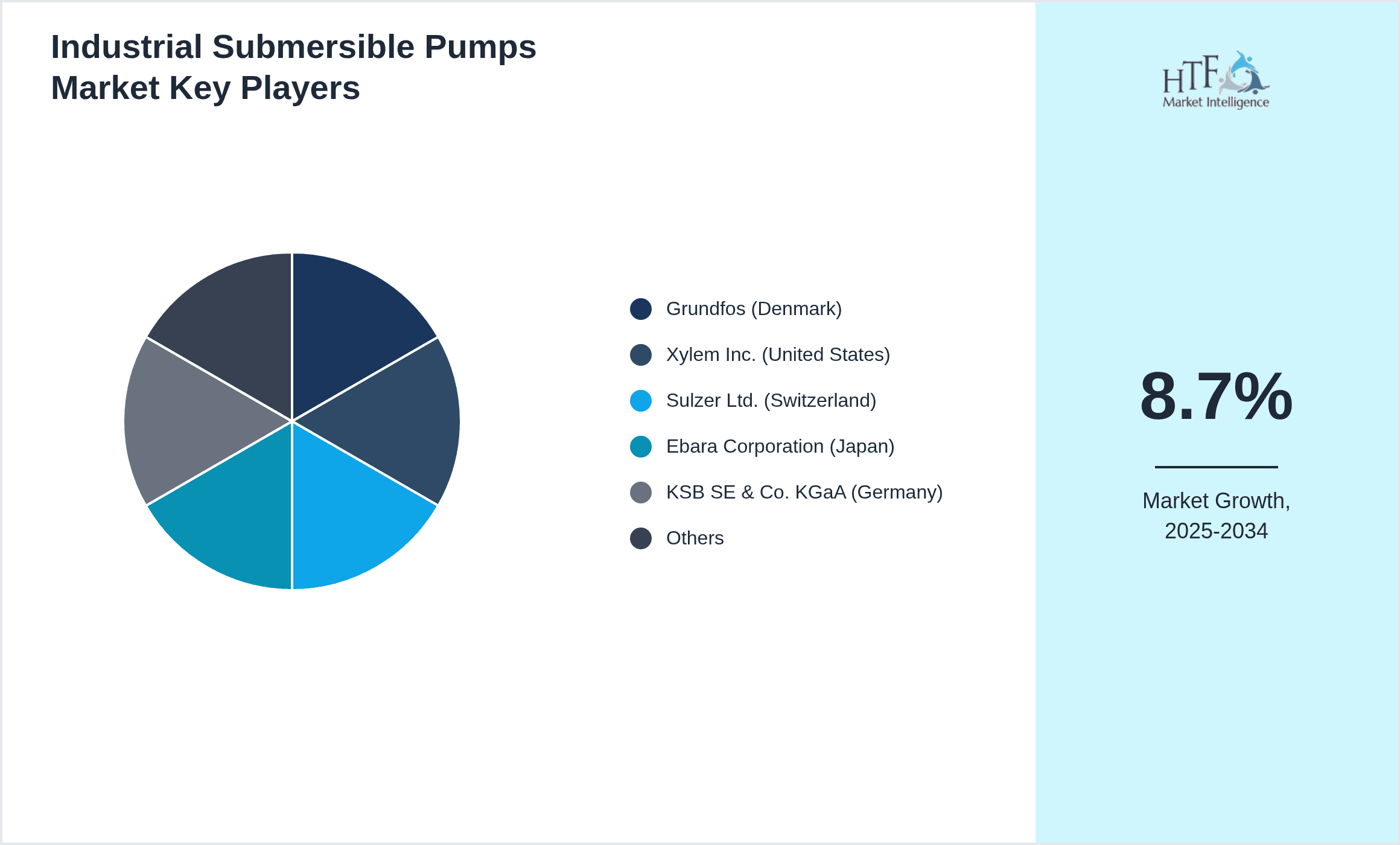
- •Grundfos (Denmark)
- •Xylem Inc. (United States)
- •Sulzer Ltd. (Switzerland)
- •Ebara Corporation (Japan)
- •KSB SE & Co. KGaA (Germany)
- •Flowserve Corporation (United States)
- •ITT Inc. (United States)
- •Weir Group PLC (United Kingdom)
- •Pentair plc (United States)
- •Atlas Copco AB (Sweden)
- •SPX Flow, Inc. (United States)
- •Tsurumi Manufacturing Co., Ltd. (Japan)
- •Wilo SE (Germany)
- •Sulzer Pumps India Ltd. (India)
- •Toyo Pumps (Japan)
- •CAPRARI S.p.A (Italy)
- •Pentair Water India Pvt Ltd. (India)
- •Evoqua Water Technologies LLC (United States)
- •Shakti Pumps (India)
- •DAB Pumps S.p.A. (Italy)
Market Breakdown
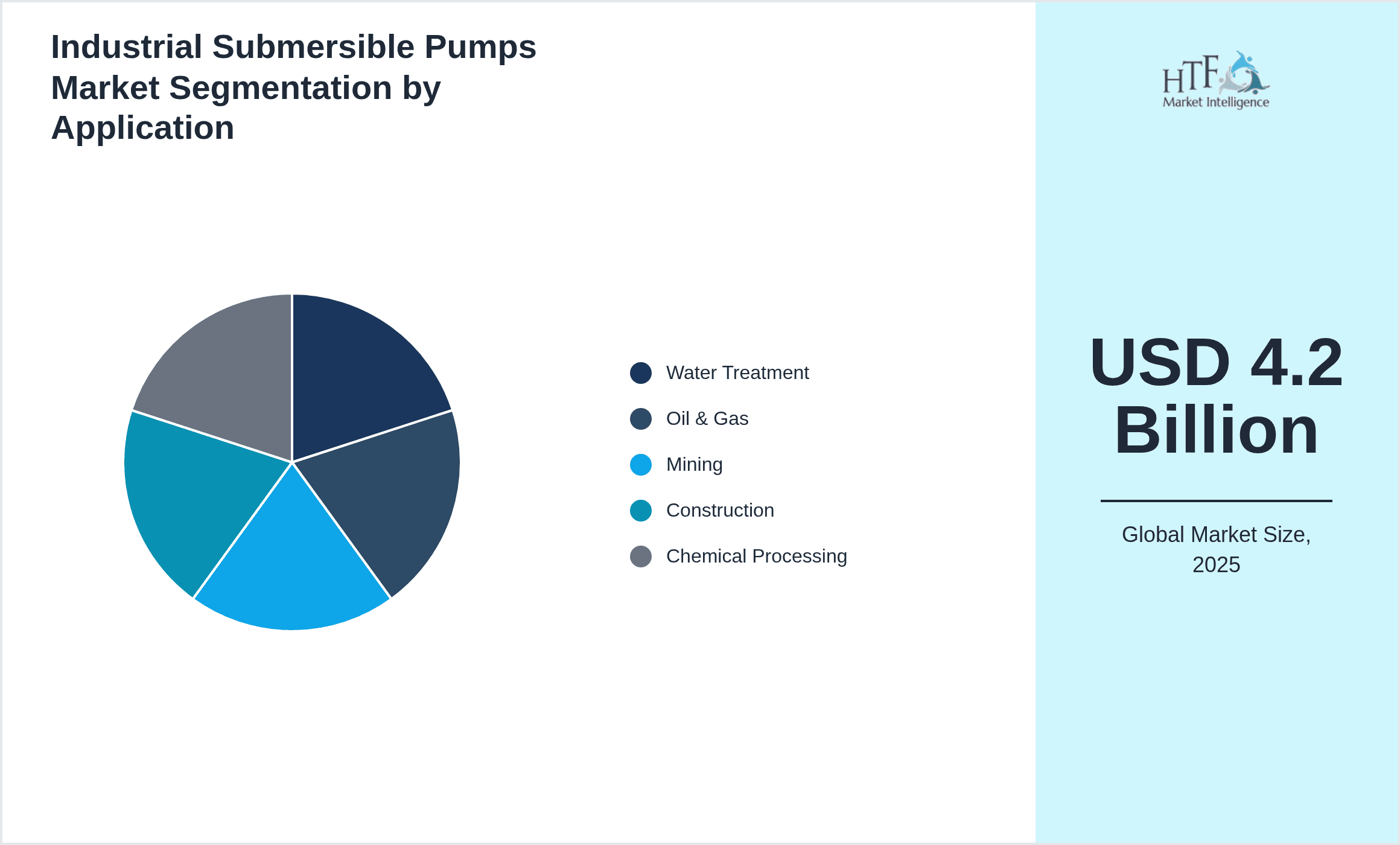
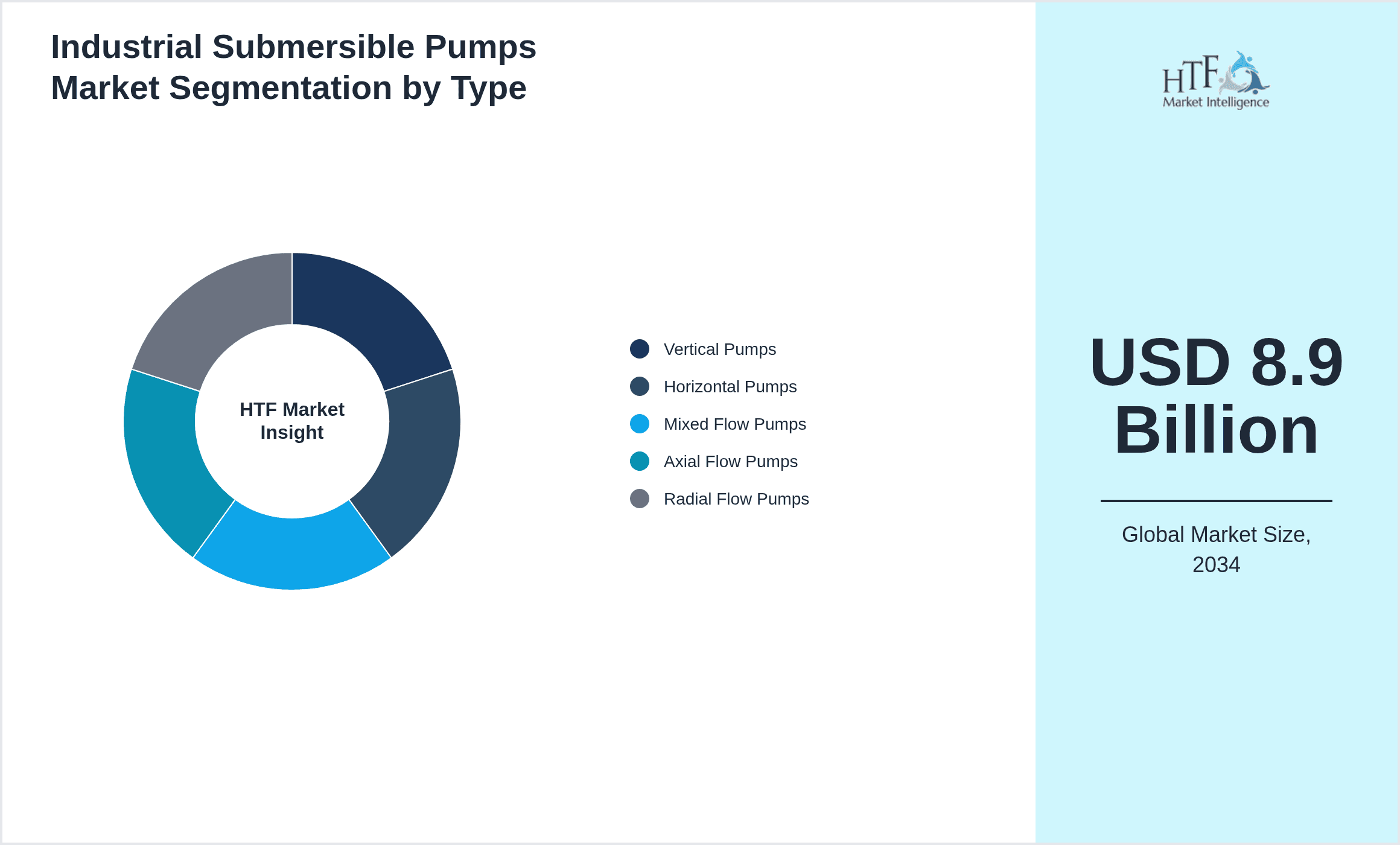
- •By Type
- ◦Vertical Pumps
- ◦Horizontal Pumps
- ◦Mixed Flow Pumps
- ◦Axial Flow Pumps
- ◦Radial Flow Pumps
- •By Application
- ◦Water Treatment
- ◦Oil & Gas
- ◦Mining
- ◦Construction
- ◦Chemical Processing
- •By End-Use Industry
- ◦Industrial Manufacturing
- ◦Energy & Power
- ◦Municipal Services
- ◦Mining & Metals
- •By Distribution Channel
- ◦Direct Sales
- ◦Distributors
- ◦Online Sales
Growth Dynamics
Rising industrialization across emerging economies accelerates the demand for industrial submersible pumps, especially in sectors like mining and water treatment. For example, Asia-Pacific's infrastructural growth has amplified the need for efficient liquid handling solutions. Technological advancements in pump design, including energy efficiency and durability improvements, enhance operational reliability. Increasing environmental regulations worldwide mandate the use of eco-friendly pumps, driving innovation and adoption. Furthermore, expanding oil & gas activities in North America and Middle East stimulate demand, supported by government infrastructure investments. The integration of smart monitoring systems elevates maintenance efficiency and reduces downtime, positively impacting market growth.
Market Trends
The industrial submersible pumps market is witnessing a shift toward digitalization with the integration of IoT and AI for predictive maintenance and real-time performance monitoring. Companies are investing in developing pumps with enhanced corrosion resistance and energy-saving features to comply with stringent environmental regulations. The adoption of modular pump designs facilitates easier installation and maintenance, reducing operational costs. Recent launches of smart pumps with remote diagnostics capabilities underscore this trend. There is increased focus on sustainable materials and manufacturing practices to reduce carbon footprint. Collaborative initiatives between pump manufacturers and end-users aim to co-develop customized solutions tailored to specific industrial requirements.
Market Opportunities
Expanding urbanization and industrial growth in developing regions present substantial opportunities for industrial submersible pump manufacturers. Rising investments in water infrastructure and wastewater treatment plants globally create high demand for efficient pumping solutions. The growing adoption of renewable energy sources drives the need for specialized pumps in hydropower and bioenergy applications. Emerging applications in chemical and pharmaceutical industries offer avenues for product differentiation. Strategic partnerships and acquisitions provide opportunities to enhance technological capabilities and enter untapped markets. Additionally, advancement in materials science enables the development of pumps capable of handling highly corrosive fluids, further broadening application scope and growth potential.
Market Challenges
High initial capital expenditure for advanced industrial submersible pumps limits adoption among small and medium enterprises, particularly in price-sensitive regions. Technical challenges related to maintenance in harsh environments, such as abrasive slurry handling in mining, increase operational costs. Supply chain disruptions caused by geopolitical tensions and raw material shortages impact manufacturing timelines and costs. Regulatory compliance complexities across different regions necessitate continuous product adaptation, creating hurdles for global players. Competition from alternative pumping technologies and local manufacturers intensifies pricing pressures. Moreover, lack of skilled workforce for installation and maintenance restricts efficient utilization of sophisticated pump systems, posing significant barriers to market growth.
Regulatory Framework
Recent regulations focus on energy efficiency and environmental impact reduction, with standards such as the European Union’s Ecodesign Directive mandating minimum efficiency requirements for pumps. The American National Standards Institute has updated guidelines for pump safety and performance, influencing product development. In Asia-Pacific, countries have introduced stricter wastewater discharge norms requiring advanced pumping technologies. Compliance with RoHS and REACH directives ensures material safety and environmental protection. These regulations collectively drive innovation toward sustainable and energy-efficient industrial submersible pumps while compelling manufacturers to maintain rigorous quality control and certification processes to access global markets.
Market Intelligence
- •
- •
- •
- •
- •
Regional Outlook
The North America currently holds a significant share of the market, primarily due to several key factors: increasing consumption rates, a burgeoning population, and robust economic momentum. These elements collectively drive demand, positioning this region as a leader in the market. On the other hand, Asia-Pacific is rapidly emerging as the fastest-growing area within the industry. This remarkable growth can be attributed to swift infrastructure development, the expansion of various industrial sectors, and a marked increase in consumer demand. These dynamics make this region a crucial player in shaping future market growth.
In our report, we cover a comprehensive analysis of the following regions and countries:
- North America
- LATAM
- West Europe
- Central & Eastern Europe
- Northern Europe
- Southern Europe
- East Asia
- Southeast Asia
- South Asia
- Central Asia
- Oceania
- MEA
| Feature | Details |
|---|---|
| Base Year Market Size | USD 4.2 Billion |
| Forecast Year Market Size | USD 8.9 Billion |
| CAGR | 8.7% |
| Forecast Period | 2026 to 2033 |
| YoY Growth | 8.4% |
| Scope of Report | Market is segmented by Type (Vertical Pumps, Horizontal Pumps, Mixed Flow Pumps, Axial Flow Pumps, Radial Flow Pumps), Application (Water Treatment, Oil & Gas, Mining, Construction, Chemical Processing), End-Use Industry (Industrial Manufacturing, Energy & Power, Municipal Services, Mining & Metals), Distribution Channel (Direct Sales, Distributors, Online Sales) |
| Regions Covered | North America, LATAM, West Europe, Central & Eastern Europe, Northern Europe, Southern Europe, East Asia, Southeast Asia, South Asia, Central Asia, Oceania, MEA |
| Key Companies | Grundfos (Denmark), Xylem Inc. (United States), Sulzer Ltd. (Switzerland), Ebara Corporation (Japan), KSB SE & Co. KGaA (Germany), Flowserve Corporation (United States), ITT Inc. (United States), Weir Group PLC (United Kingdom), Pentair plc (United States), Atlas Copco AB (Sweden), SPX Flow, Inc. (United States), Tsurumi Manufacturing Co., Ltd. (Japan), Wilo SE (Germany), Sulzer Pumps India Ltd. (India), Toyo Pumps (Japan), CAPRARI S.p.A (Italy), Pentair Water India Pvt Ltd. (India), Evoqua Water Technologies LLC (United States), Shakti Pumps (India), DAB Pumps S.p.A. (Italy) |
Global Industrial Submersible Pumps Market Size, Growth & Revenue 2025-2034 - Table of Contents
Research enthusiast focused on transforming data uncovering into actionable insights through data-driven decision-making.
Frequently Asked Questions (FAQ):
The Market market is expected to see significant growth and value in 2025.
North America currently leads the market, followed by Europe and Asia-Pacific.
Key growth drivers include increasing activities, rising demand for innovative solutions, technological advancements, and growing preference for efficient products.