
Global Steam Iron Market Size, Growth & Revenue 2024-2034
Global Steam Iron Market is segmented by Product Type (Corded Steam Irons, Cordless Steam Irons, Handheld Steamers, Steam Presses, Vertical Steam Irons), Application (Household, Commercial, Industrial, Hospitality, Retail), End-Use Industry (Textile Manufacturing, Hospitality Industry, Retail Stores, Laundry Services), Distribution Channel (Online Retail, Specialty Stores, Supermarkets/Hypermarkets), and Geography (North America, LATAM, West Europe, Central & Eastern Europe, Northern Europe, Southern Europe, East Asia, Southeast Asia, South Asia, Central Asia, Oceania, MEA)
Pricing
Report Overview
Executive Summary
- •The global Steam Iron market is defined by the manufacture and distribution of electric steam-based fabric care appliances, including corded and cordless steam irons, handheld steamers, steam presses, and vertical steam irons. This market serves various applications such as household, commercial, industrial, hospitality, and retail sectors, offering solutions that enhance fabric maintenance through efficient wrinkle removal technologies. Innovations focus on ergonomic designs, energy efficiency, and multifunctionality to meet evolving consumer expectations and sustainability standards. The market's global scope integrates diverse regional demands and technological trends, with a strong presence in Asia-Pacific, Europe, and North America. Key drivers include rising disposable incomes, urbanization, and increased consumer awareness regarding fabric care. Furthermore, advancements in smart technology integration enable enhanced user experiences. The market faces challenges such as product cost sensitivity and competition from alternative fabric care methods but holds substantial growth potential from emerging markets and eco-friendly product developments.
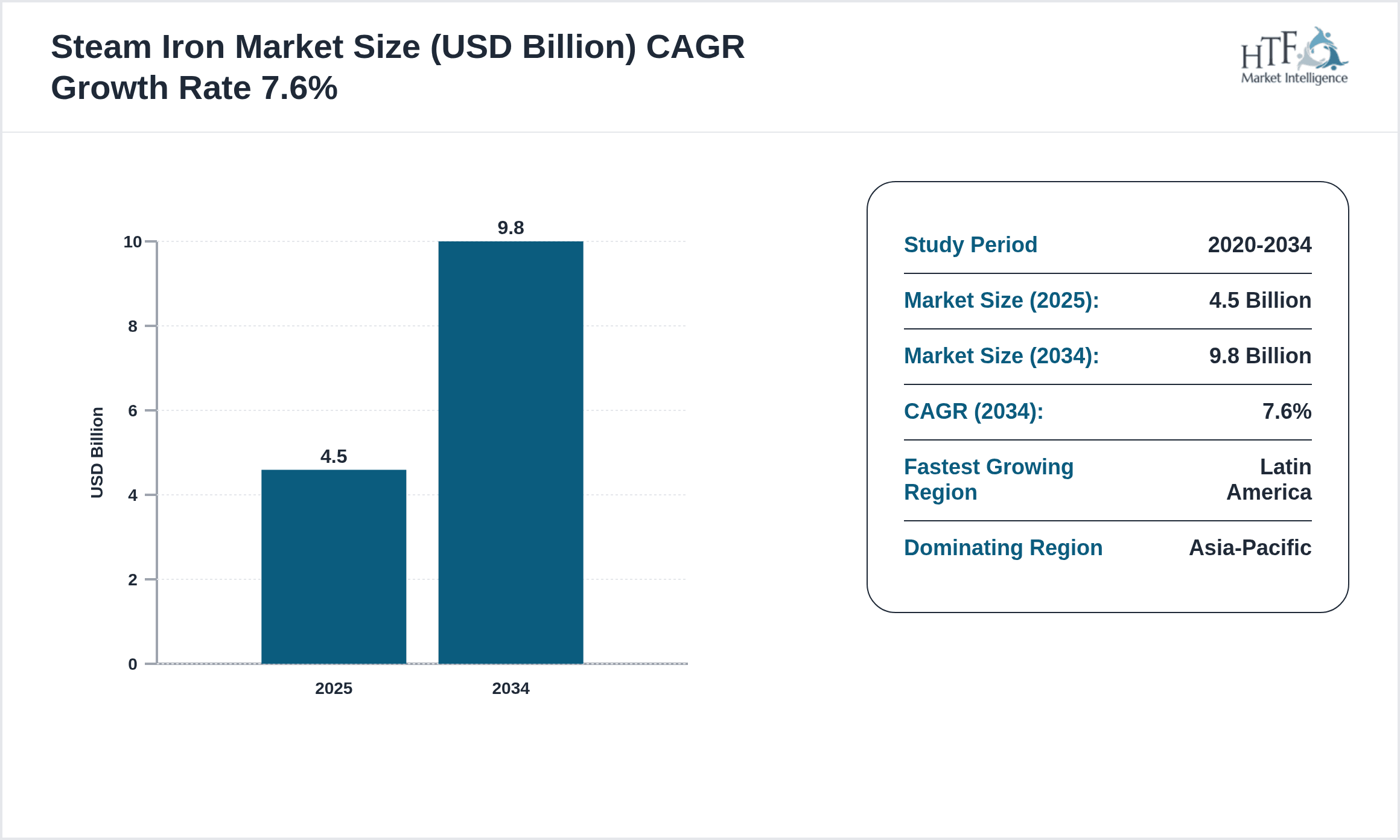
- •Significant market highlights include a base market size of USD 4.5 Billion in 2024 with a forecasted growth to USD 9.8 Billion by 2034, reflecting a CAGR of 7.6%. The Asia-Pacific region dominates in terms of market share due to rapid urbanization and increasing household appliance penetration. Corded steam irons maintain the leading product segment, while cordless steam irons exhibit the fastest growth trajectory. Applications in household settings dominate, with commercial and industrial sectors expanding steadily. The market demonstrates robust year-over-year growth averaging 7.3%, driven by technological innovations and increasing demand across developing economies. These factors underscore the steam iron market's strategic importance across the global textile care ecosystem.
- •The value proposition of steam irons lies in their ability to provide efficient, user-friendly fabric care solutions that save time and improve garment appearance. Strategically, the market supports multiple industries including textile manufacturing, hospitality, and retail, enabling enhanced customer satisfaction and operational efficiency. Stakeholders benefit from continuous product innovation, sustainable manufacturing practices, and expanding distribution networks. Additionally, the market’s integration with smart home technologies highlights its evolving role in modern households and commercial establishments. As a result, steam irons remain a pivotal appliance within global consumer electronics and home appliance sectors.
Competitive Landscape
The global Steam Iron market is characterized by intense competition among established multinational corporations and emerging regional players. Market dynamics are influenced by continuous innovation in product design, energy efficiency, and smart technology integration. Leading companies adopt competitive strategies including product differentiation, strategic partnerships, and extensive distribution channel expansion to maintain and grow market share. Innovation approaches focus on cordless technology, enhanced steam generation, and ergonomic improvements to cater to evolving consumer preferences. Rivalry is heightened by pricing strategies and brand loyalty, with companies investing in sustainable manufacturing processes to comply with regulatory requirements and consumer demand for eco-friendly products. Mergers and acquisitions serve as critical tactics to consolidate market position and expand geographic footprints. The competitive landscape also reflects shifting consumer demographics and regional preferences, shaping future growth trajectories and fostering the development of next-generation steam iron technologies.
Leading Companies in Steam Iron Market
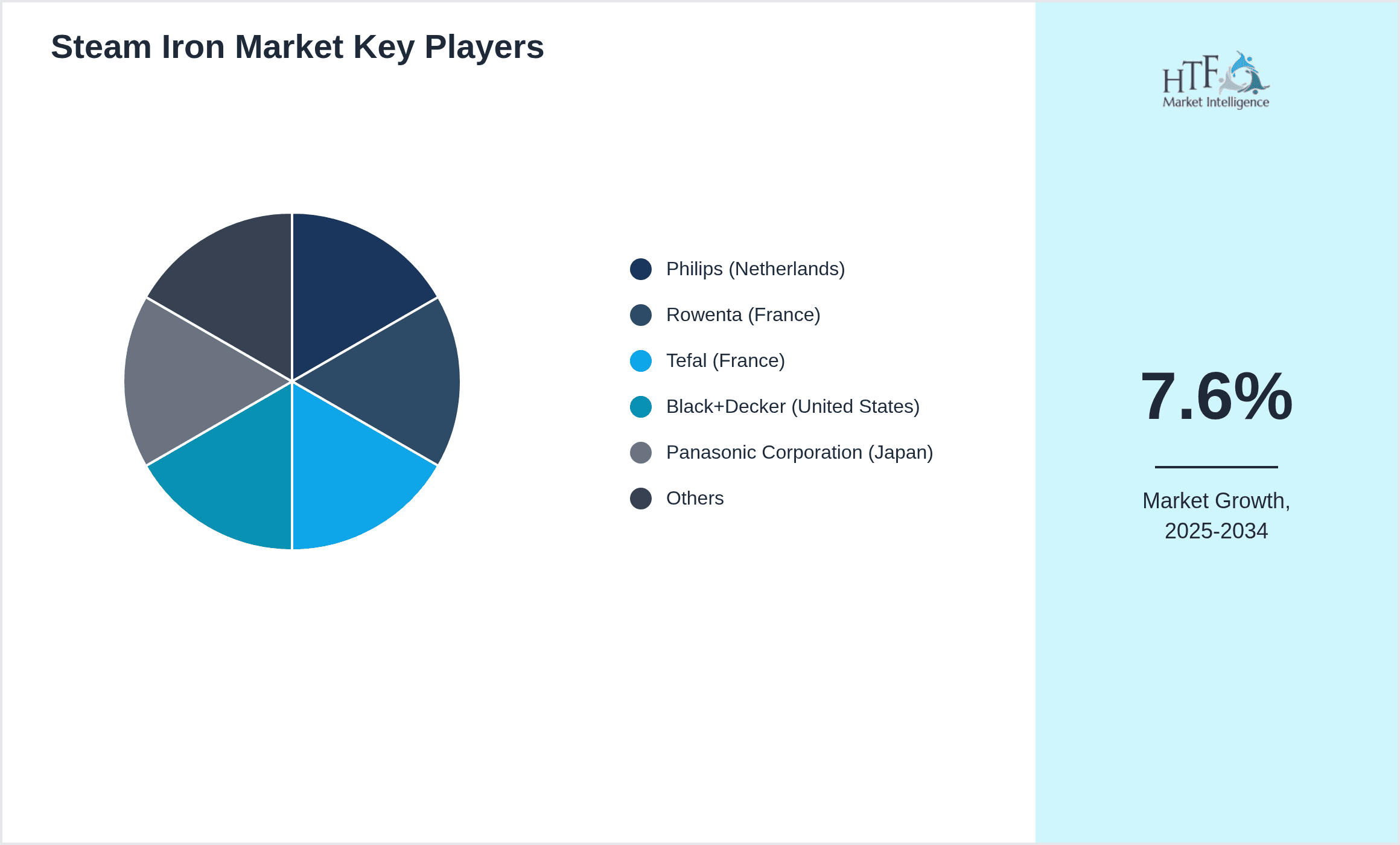
- •Philips (Netherlands)
- •Rowenta (France)
- •Tefal (France)
- •Black+Decker (United States)
- •Panasonic Corporation (Japan)
- •Bosch (Germany)
- •Braun GmbH (Germany)
- •Russell Hobbs (United Kingdom)
- •Miele (Germany)
- •Singer Corporation (United States)
- •SharkNinja (United States)
- •Morphy Richards (United Kingdom)
- •Sunbeam Products (United States)
- •Electrolux (Sweden)
- •Sencor (Czech Republic)
- •Vitek (Czech Republic)
- •Rowenta (France)
- •Clatronic (Germany)
- •Toshiba (Japan)
- •Haier (China)
- •LG Electronics (South Korea)
- •Samsung Electronics (South Korea)
- •Delonghi (Italy)
- •Ariete (Italy)
- •Bajaj Electricals (India)
Market Breakdown
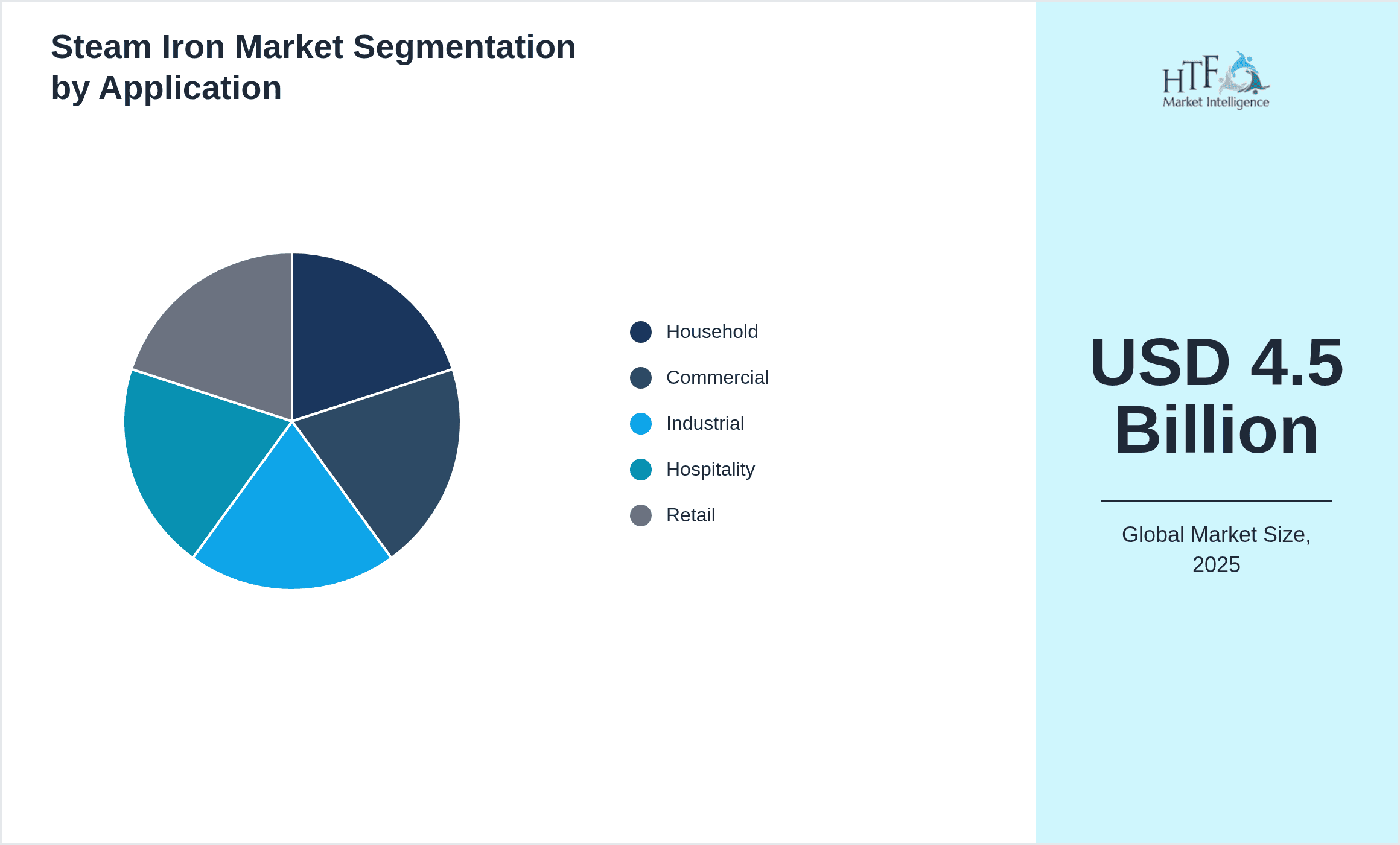
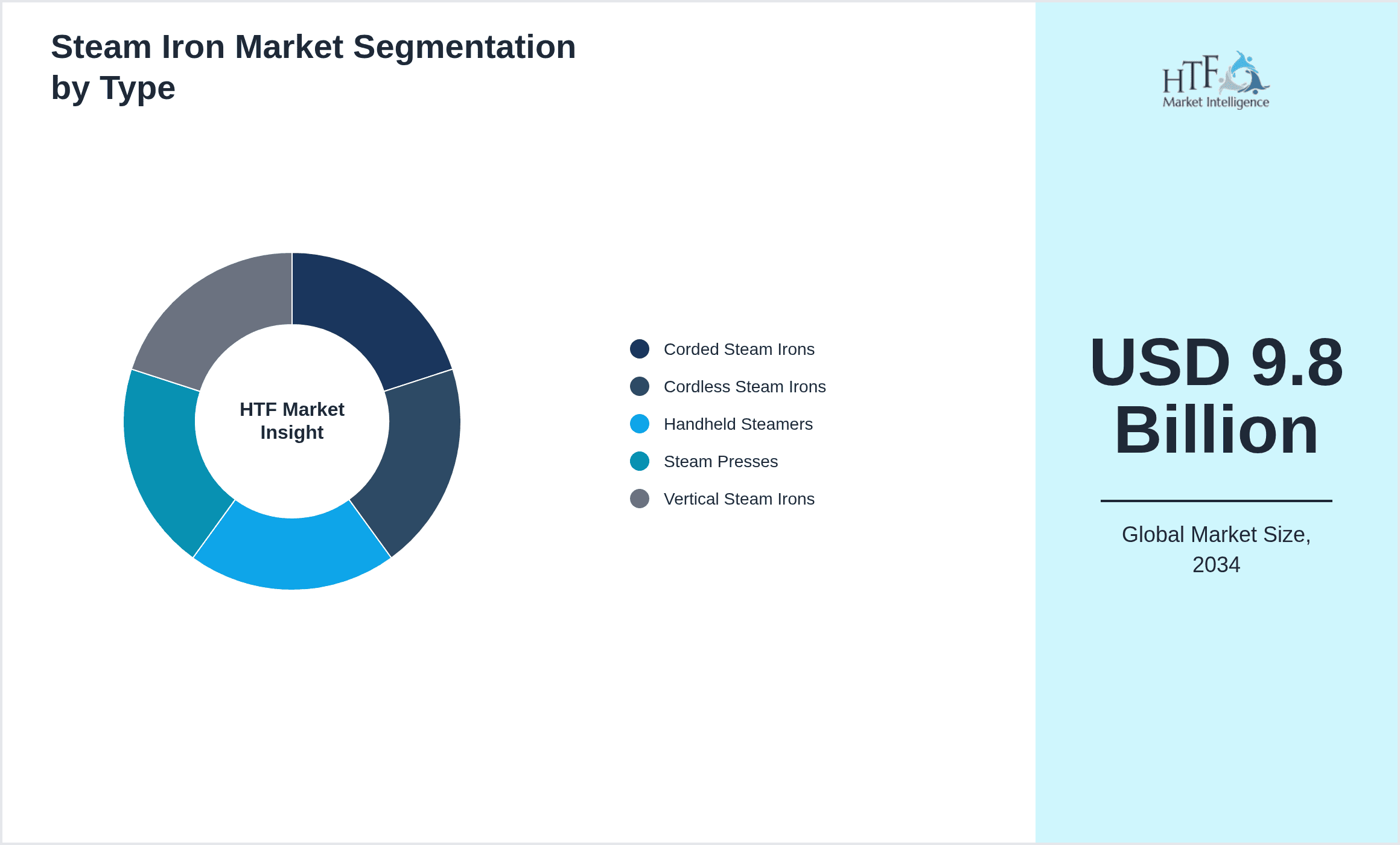
- •By Product Type
- ◦Corded Steam Irons
- ◦Cordless Steam Irons
- ◦Handheld Steamers
- ◦Steam Presses
- ◦Vertical Steam Irons
- •By Application
- ◦Household
- ◦Commercial
- ◦Industrial
- ◦Hospitality
- ◦Retail
- •By End-Use Industry
- ◦Textile Manufacturing
- ◦Hospitality Industry
- ◦Retail Stores
- ◦Laundry Services
- •By Distribution Channel
- ◦Online Retail
- ◦Specialty Stores
- ◦Supermarkets/Hypermarkets
Growth Dynamics
- •Increasing urbanization and rising disposable incomes in developing economies are driving demand for advanced steam irons, as consumers seek efficient fabric care solutions that fit modern lifestyles.
- •Technological advances such as cordless functionality, smart sensors, and eco-friendly steam generation have enhanced product appeal, encouraging adoption across both household and commercial segments.
- •Growth in the hospitality and textile sectors globally boosts demand for industrial-grade steam irons that provide quick and reliable wrinkle removal, supporting operational efficiency.
- •Government initiatives promoting energy-efficient appliances are accelerating the development and consumer preference for steam irons with reduced power consumption and sustainable manufacturing processes.
- •Rising consumer awareness regarding fabric care and garment longevity is motivating increased purchase of premium steam irons with advanced features, fostering market expansion.
- •Expansion of e-commerce platforms globally has improved accessibility and variety, enabling manufacturers to reach wider audiences and stimulate market growth.
- •Collaborations between appliance manufacturers and textile companies are fostering innovation and customized product offerings, further driving market demand.
Market Trends
- •The integration of smart technology in steam irons, including app connectivity and automatic fabric detection, is reshaping consumer expectations and product standards.
- •There is a growing trend towards cordless steam irons offering enhanced portability and convenience, especially for travel and quick touch-ups.
- •Sustainability initiatives are influencing product design, with manufacturers incorporating recyclable materials and energy-saving technologies to cater to eco-conscious consumers.
- •The shift towards online retailing is impacting distribution strategies, with companies expanding digital marketing and direct-to-consumer sales channels.
- •Customization and multifunctionality, such as combined steaming and pressing capabilities, are gaining popularity to meet diverse consumer needs.
- •Emergence of vertical steam irons for delicate fabrics is opening new application segments within both residential and commercial markets.
- •Collaborative innovation between technology firms and traditional appliance manufacturers is accelerating the development of next-generation steam irons.
Market Opportunities
- •Emerging markets in Latin America and Middle East & Africa present significant growth potential due to rising urbanization and increasing consumer spending on home appliances.
- •Innovations in cordless and battery-operated steam irons offer opportunities for product differentiation and penetration in travel and compact living segments.
- •Expansion of the hospitality and textile industries provides opportunities for specialized industrial steam irons tailored to large-scale fabric care needs.
- •Integration of IoT and AI technologies can create smart steam irons that adjust settings automatically, enhancing user experience and energy efficiency.
- •Rising demand for eco-friendly and sustainable appliances opens avenues for developing green steam irons with reduced environmental impact.
- •Strategic partnerships with e-commerce platforms can enhance market reach and customer engagement globally.
- •Customization in design and multifunctional products can attract niche consumer segments seeking tailored fabric care solutions.
Market Challenges
- •High price sensitivity among consumers in developing regions limits the adoption of premium and technologically advanced steam irons.
- •Competition from alternative fabric care methods such as garment steamers and professional laundry services poses challenges to market growth.
- •Regulatory compliance related to safety and energy efficiency varies across regions, increasing costs and complexity for manufacturers entering multiple markets.
- •Supply chain disruptions and rising raw material costs impact production schedules and pricing strategies adversely.
- •Limited consumer awareness about product features and benefits restricts market penetration in some regions.
- •Technological obsolescence requires continuous innovation investments, posing risks to manufacturers with limited R&D capabilities.
- •Environmental concerns over appliance disposal and electronic waste management challenge manufacturers to adopt sustainable practices.
Regulatory Framework
- •Between 2019 and 2024, several regions implemented stricter energy efficiency standards for electric appliances, including steam irons, mandating manufacturers to reduce power consumption and enhance eco-design.
- •The EU's Ecodesign Directive introduced mandatory labeling and minimum efficiency requirements for household electric irons, influencing product development and market competitiveness.
- •North American safety standards, including UL certification, require compliance with electrical safety and user protection protocols, ensuring market entry barriers for non-compliant products.
- •Emerging regulations in Asia-Pacific countries focus on reducing hazardous substances in appliance manufacturing, aligning with global RoHS directives to minimize environmental impact.
- •Government incentives and subsidy programs in various regions promote the adoption of energy-efficient household appliances, boosting demand for compliant steam irons.
Market Intelligence
- •15th January 2025, Philips launched its latest cordless steam iron model featuring an advanced steam boost system and integrated smart fabric sensor technology. Designed for enhanced user convenience and energy savings, this product targets urban households seeking premium fabric care solutions, reinforcing Philips' leadership in innovation. The launch includes an eco-friendly design with recyclable materials, aligning with sustainability trends.
- •20th March 2025, Rowenta introduced the 'EcoSteam Pro' vertical steam iron, integrating rapid heating technology and anti-drip features aimed at commercial and hospitality sectors. This innovation addresses the demand for efficient fabric care in professional settings, improving operational workflow and reducing energy consumption.
- •10th July 2024, Black+Decker announced a strategic partnership with leading e-commerce platforms to expand its global distribution of cordless steam irons. This initiative enhances market penetration and accessibility, leveraging digital sales growth and increasing brand visibility worldwide.
- •5th November 2024, Panasonic Corporation completed the acquisition of a European fabric care startup specializing in smart steam iron technologies. This move strengthens Panasonic's R&D capabilities and broadens its product portfolio in the competitive global market, fostering innovation and enhanced customer offerings.
- •Source: Official company press releases, Industry publications
Regional Outlook
The Asia-Pacific currently holds a significant share of the market, primarily due to several key factors: increasing consumption rates, a burgeoning population, and robust economic momentum. These elements collectively drive demand, positioning this region as a leader in the market. On the other hand, Latin America is rapidly emerging as the fastest-growing area within the industry. This remarkable growth can be attributed to swift infrastructure development, the expansion of various industrial sectors, and a marked increase in consumer demand. These dynamics make this region a crucial player in shaping future market growth.
In our report, we cover a comprehensive analysis of the following regions and countries:
- North America
- LATAM
- West Europe
- Central & Eastern Europe
- Northern Europe
- Southern Europe
- East Asia
- Southeast Asia
- South Asia
- Central Asia
- Oceania
- MEA
| Feature | Details |
|---|---|
| Base Year Market Size | USD 4.5 Billion |
| Forecast Year Market Size | USD 9.8 Billion |
| CAGR | 7.6% |
| Forecast Period | 2026 to 2033 |
| YoY Growth | 7.3% |
| Scope of Report | Market is segmented by Product Type (Corded Steam Irons, Cordless Steam Irons, Handheld Steamers, Steam Presses, Vertical Steam Irons), Application (Household, Commercial, Industrial, Hospitality, Retail), End-Use Industry (Textile Manufacturing, Hospitality Industry, Retail Stores, Laundry Services), Distribution Channel (Online Retail, Specialty Stores, Supermarkets/Hypermarkets) |
| Regions Covered | North America, LATAM, West Europe, Central & Eastern Europe, Northern Europe, Southern Europe, East Asia, Southeast Asia, South Asia, Central Asia, Oceania, MEA |
| Key Companies | Philips (Netherlands), Rowenta (France), Tefal (France), Black+Decker (United States), Panasonic Corporation (Japan), Bosch (Germany), Braun GmbH (Germany), Russell Hobbs (United Kingdom), Miele (Germany), Singer Corporation (United States), SharkNinja (United States), Morphy Richards (United Kingdom), Sunbeam Products (United States), Electrolux (Sweden), Sencor (Czech Republic), Vitek (Czech Republic), Rowenta (France), Clatronic (Germany), Toshiba (Japan), Haier (China), LG Electronics (South Korea), Samsung Electronics (South Korea), Delonghi (Italy), Ariete (Italy), Bajaj Electricals (India) |
Global Steam Iron Market Size, Growth & Revenue 2024-2034 - Table of Contents
Frequently Asked Questions (FAQ):
The Compact Track Loaders market is projected to grow at a CAGR of 6.8% from 2025 to 2030, driven by increasing demand in construction and agricultural sectors.
North America currently leads the market with approximately 45% market share, followed by Europe at 28% and Asia-Pacific at 22%. The remaining regions account for 5% of the global market.
Key growth drivers include increasing construction activities, rising demand for versatile equipment in agriculture, technological advancements in track loader design, and growing preference for compact equipment in urban construction projects.