
Global Hair Accessories Market Size, Growth & Revenue 2024-2034
Global Hair Accessories Market is segmented by Product Type (Hair Clips, Hair Bands, Hair Combs, Hair Pins, Others), Application (Casual Wear, Formal Wear, Sports & Outdoor, Bridal, Others), End-Use Industry (Fashion & Apparel, Beauty & Personal Care, Sports & Fitness, Wedding & Events), Distribution Channel (Online Retail, Specialty Stores, Department Stores), and Geography (North America, LATAM, West Europe, Central & Eastern Europe, Northern Europe, Southern Europe, East Asia, Southeast Asia, South Asia, Central Asia, Oceania, MEA)
Pricing
Report Overview
Executive Summary
- •The global Hair Accessories Market represents a dynamic and evolving segment within the personal care and fashion industries, characterized by a diverse range of products including hair clips, bands, combs, pins, and other decorative items. These accessories serve both functional purposes, such as securing hair during daily activities and sports, and aesthetic functions, enhancing personal style across casual, formal, and bridal applications. The market's scope extends worldwide, encompassing varied consumer demographics and cultural styles, supported by advances in material innovation and manufacturing techniques. Increasing consumer focus on grooming, fashion trends, and sustainable product options further fuels market growth. Strategic partnerships between fashion brands and accessory manufacturers, alongside omni-channel distribution, have expanded market reach internationally. Key drivers include rising disposable income, urbanization, and social media influence promoting hair styling trends. Challenges such as fluctuating raw material costs and competition from counterfeit products persist. Nevertheless, opportunities arise from emerging markets, digital marketing, and the integration of smart accessories, positioning the market for robust growth through 2034.
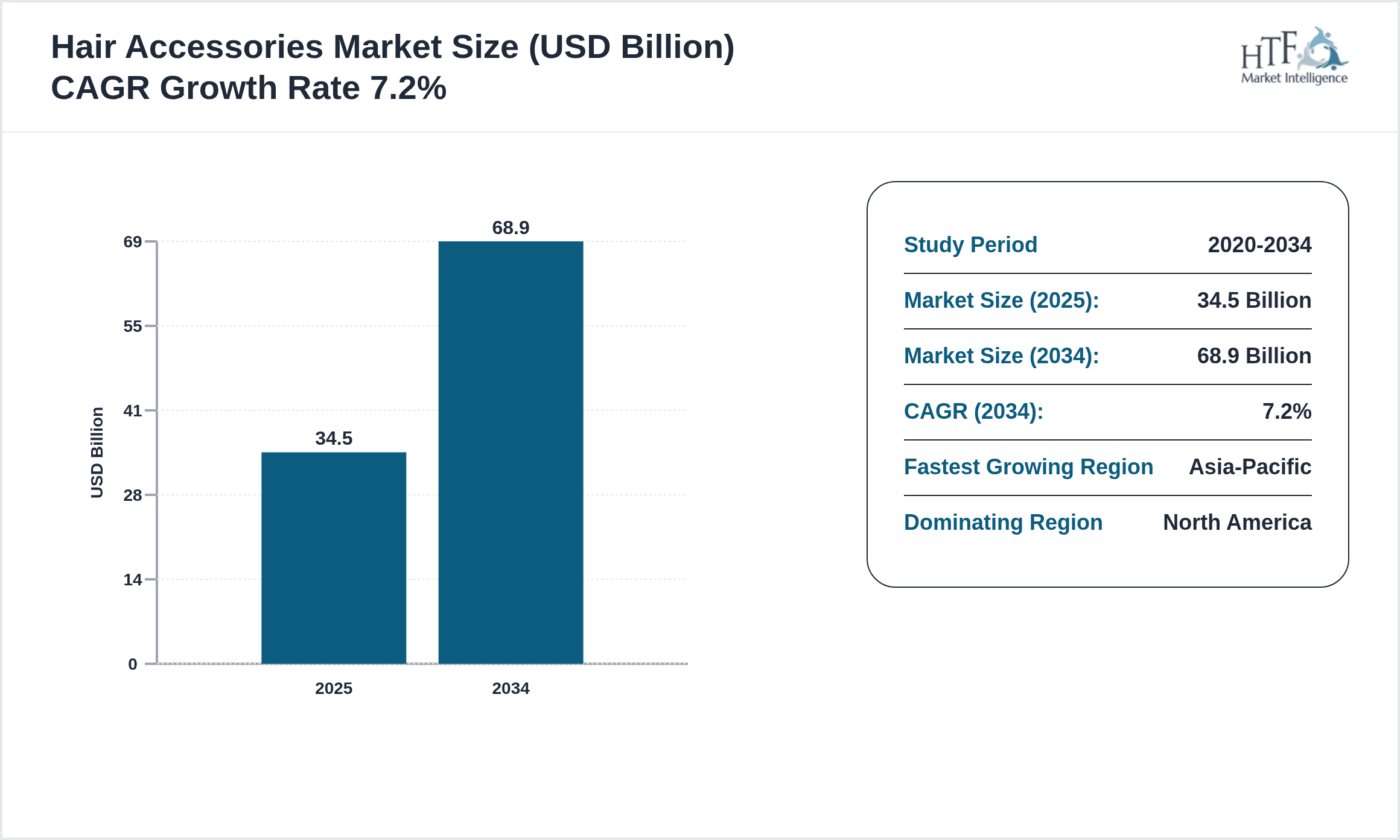
- •Key market highlights indicate a projected compound annual growth rate (CAGR) of 7.2% from 2024 to 2034, with the market size expected to nearly double from USD 34.5 billion in 2024 to USD 68.9 billion by 2034. North America currently dominates the market due to high fashion consciousness and established retail infrastructure, while Asia-Pacific is identified as the fastest-growing region driven by increasing urban populations, rising disposable incomes, and growing fashion awareness. Hair clips lead the product segment owing to their versatility and affordability, whereas hair bands are the fastest growing due to trends in active lifestyles and multifunctional designs. Casual wear applications hold the largest share, reflecting widespread daily use, followed by formal wear and bridal occasions. Year-over-year growth remains strong at approximately 7.0%, supported by expanding e-commerce channels and innovative product launches.
- •The global Hair Accessories Market offers significant value propositions to stakeholders across fashion, beauty, and retail sectors. Products enhance consumer self-expression and confidence while addressing practical needs, fueling demand in both mature and emerging markets. Strategic importance lies in the market’s responsiveness to shifting consumer preferences, technological advancements in materials, and sustainability initiatives, which together influence product development and marketing strategies. Retailers benefit from diversified product portfolios that appeal to broad demographic profiles, while manufacturers capitalize on innovation in design and eco-friendly materials to differentiate offerings. The market's growth trajectory is also shaped by social media trends and influencer endorsements, which amplify brand visibility and consumer engagement globally. Consequently, the hair accessories sector represents a lucrative avenue for investment, innovation, and market expansion through the next decade.
Competitive Landscape
The global hair accessories market exhibits a highly competitive landscape characterized by a mix of established multinational corporations and nimble regional manufacturers. Market players focus on product innovation, expanding distribution networks, and brand differentiation to capture market share. Competitive strategies include the development of eco-friendly and multifunctional products, collaborations with fashion designers, and leveraging digital marketing to enhance consumer engagement. Pricing strategies vary widely, enabling access to diverse consumer segments from premium to mass-market categories. Mergers and acquisitions have become strategic tools to consolidate market presence and access new geographies. Additionally, companies invest in research to improve material quality and design aesthetics, responding to fast-changing fashion trends. Market rivalry intensifies with the entry of private labels and counterfeit products, compelling established firms to strengthen intellectual property protections and supply chain efficiencies. Regional competition is significant, especially in Asia-Pacific where local brands adapt quickly to cultural styles. Future trends point toward increased adoption of smart accessories and customization, which are expected to reshape competitive dynamics.
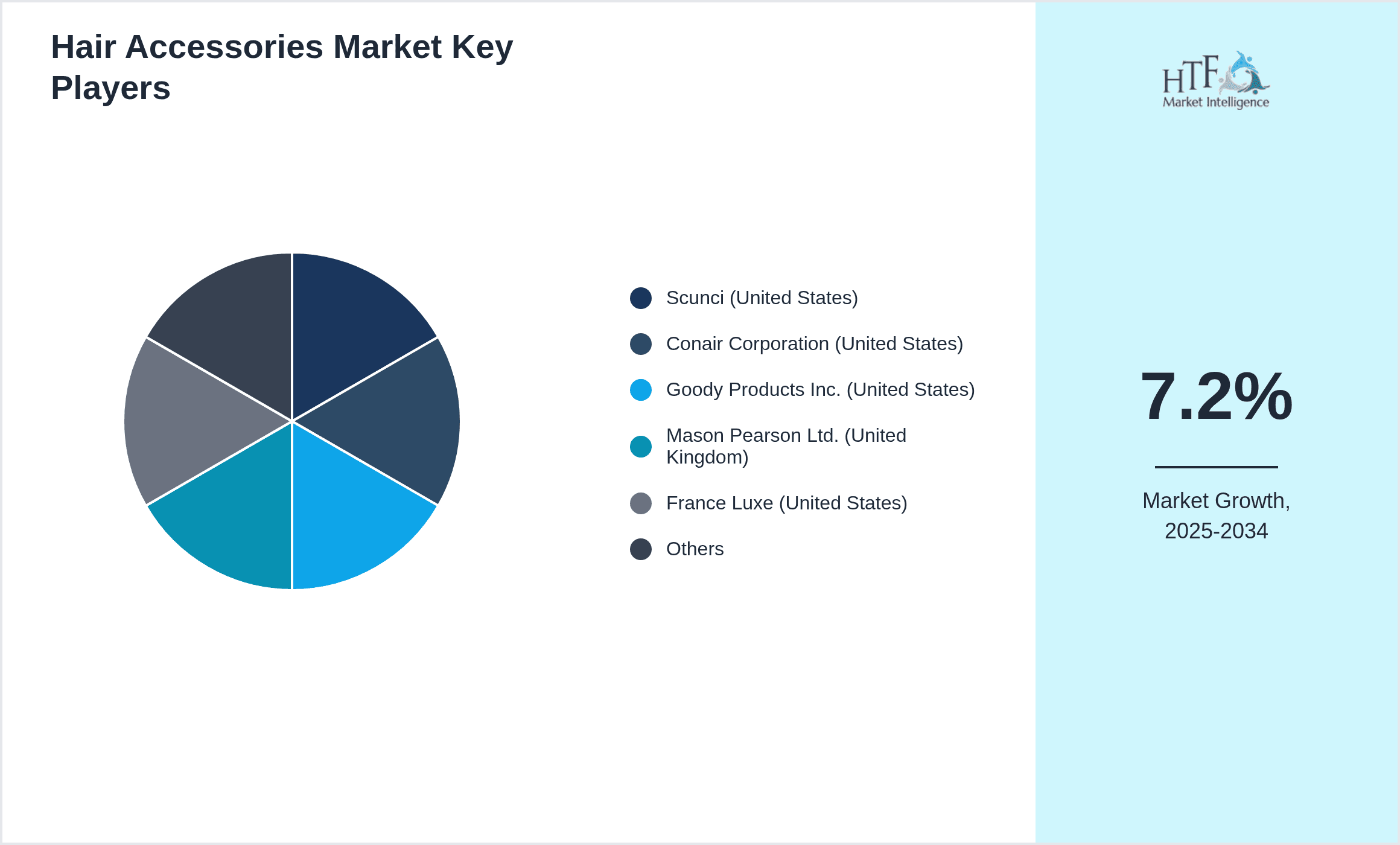
Key Players in Hair Accessories Market
- •Scunci (United States)
- •Conair Corporation (United States)
- •Goody Products Inc. (United States)
- •Mason Pearson Ltd. (United Kingdom)
- •France Luxe (United States)
- •Alexandre de Paris (France)
- •Kitsch Inc. (United States)
- •Invisibobble (Germany)
- •L. Erickson (United States)
- •Mason Pearson Ltd. (United Kingdom)
- •Slip Silk (United States)
- •France Luxe (United States)
- •Accessorize (United Kingdom)
- •Claire's Stores Inc. (United States)
- •Lovisa Holdings (Australia)
- •The Wet Brush (United States)
- •H&M Hair Accessories (Sweden)
- •Anthropologie (United States)
- •Urban Outfitters (United States)
- •J.Crew (United States)
- •Frends Beauty (United States)
- •Etsy Sellers (Global)
- •Swarovski (Austria)
- •Forever 21 (United States)
- •L’Oréal Accessories (France)
Market Breakdown
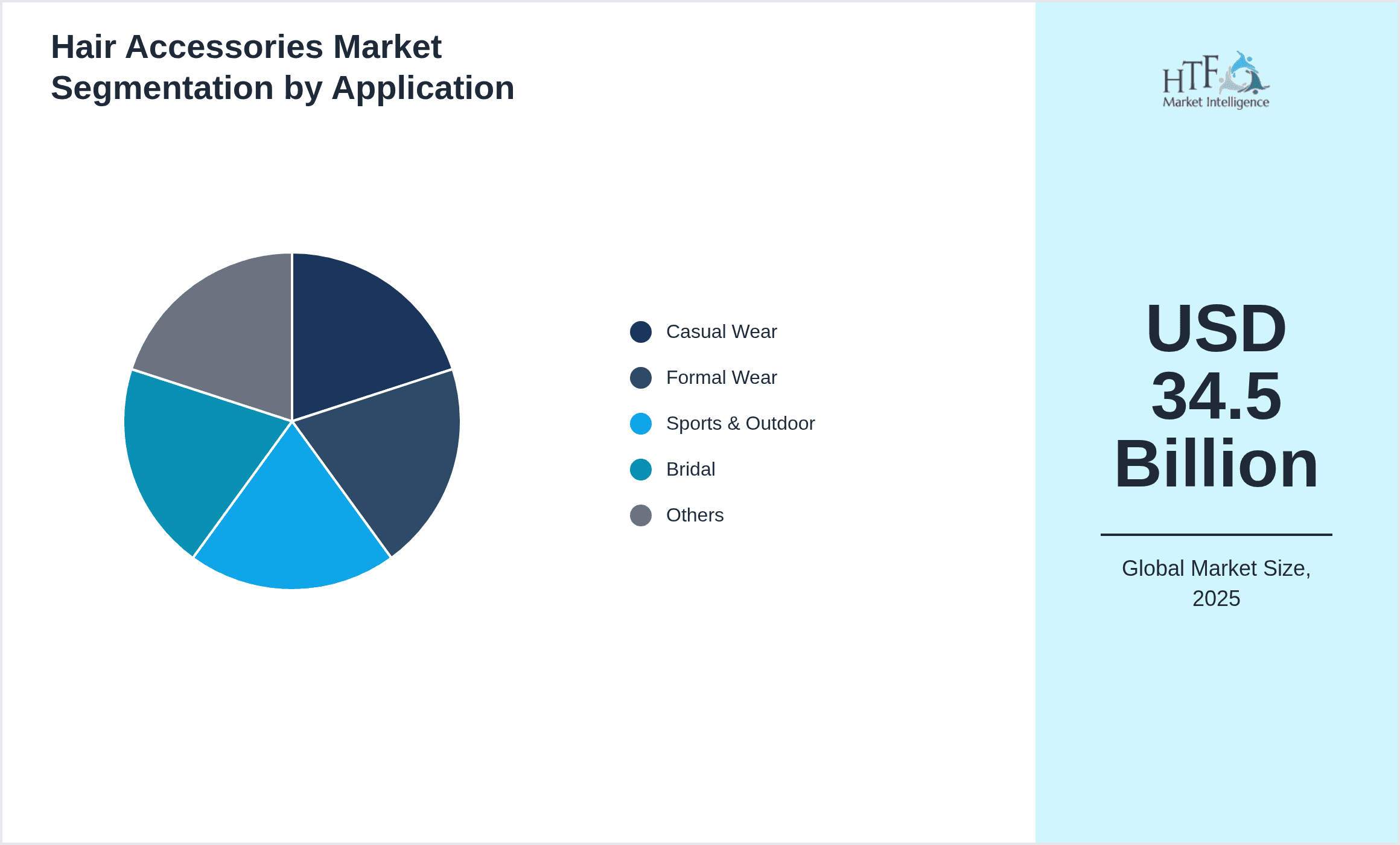
- •By Product Type
- ◦Hair Clips
- ◦Hair Bands
- ◦Hair Combs
- ◦Hair Pins
- ◦Others
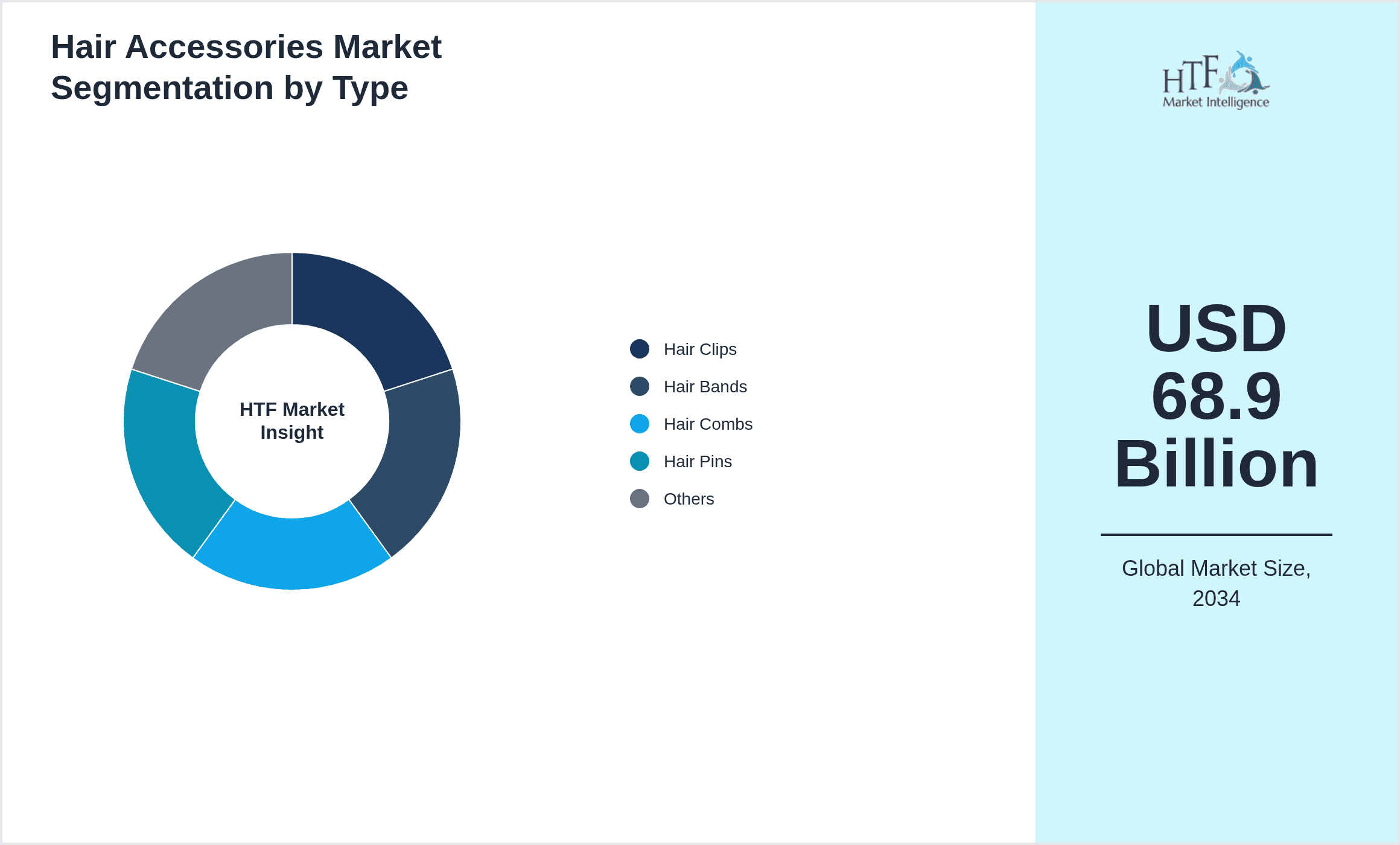
- •By Application
- ◦Casual Wear
- ◦Formal Wear
- ◦Sports & Outdoor
- ◦Bridal
- ◦Others
- •By End-Use Industry
- ◦Fashion & Apparel
- ◦Beauty & Personal Care
- ◦Sports & Fitness
- ◦Wedding & Events
- •By Distribution Channel
- ◦Online Retail
- ◦Specialty Stores
- ◦Department Stores
Growth Dynamics
The global hair accessories market is propelled by rising consumer awareness of personal grooming and fashion trends, augmented by social media influencers who popularize diverse styling options. Increasing disposable incomes in emerging economies enable greater spending on beauty and fashion products, driving demand for innovative and premium hair accessories. Additionally, the growing participation of women in the workforce increases the need for practical yet stylish hair solutions suitable for professional settings. Technological advancements in eco-friendly materials and sustainable manufacturing processes appeal to environmentally conscious consumers, further expanding market potential. The rise of e-commerce platforms facilitates wider product accessibility globally, allowing brands to reach a broader audience and tailor offerings based on regional preferences and trends. This convergence of factors underpins a robust growth trajectory for the hair accessories market through 2034.
Market Trends
Recent market trends highlight a surge in demand for sustainable and eco-conscious hair accessories made from biodegradable and recycled materials. Consumers increasingly prefer multifunctional accessories that combine style with utility, such as hair bands doubling as wristbands. There is a notable shift towards customization and personalized styling, with brands offering bespoke designs to cater to individual preferences. Digital marketing and influencer collaborations amplify trend adoption, particularly among millennials and Gen Z demographics. Moreover, the integration of smart technology into hair accessories, like embedded sensors for health monitoring, is an emerging trend that signals future innovation pathways. The growing popularity of retro and vintage-inspired designs also revives classic accessories with modern twists, appealing to diverse consumer segments worldwide.
Market Opportunities
Expanding urbanization in Asia-Pacific and Latin America presents significant opportunities for market players to introduce affordable yet stylish hair accessories to a growing middle-class population. The increasing adoption of online retail channels offers a cost-effective platform for brands to launch new products and engage with younger consumers globally. There is untapped potential in developing smart hair accessories that integrate health and fitness tracking, positioning the market at the intersection of fashion and technology. Collaborations with fashion designers and celebrity endorsements can enhance brand visibility and appeal. Additionally, the rising demand for sustainable and cruelty-free products opens avenues for innovation in materials and ethical manufacturing practices, aligning with consumer values and regulatory expectations.
Market Challenges
The hair accessories market faces challenges including volatility in raw material prices, which impacts manufacturing costs and profitability. Counterfeit products and unorganized market players exert pricing pressure and dilute brand equity, complicating efforts to maintain quality standards. Regulatory compliance related to material safety and environmental impact requires continuous adaptation and investment. Rapidly changing fashion trends demand agile product development cycles, straining supply chains and inventory management. Additionally, market saturation in developed regions limits growth potential, necessitating innovation and diversification. The COVID-19 pandemic also disrupted supply chains and altered consumer spending patterns, creating uncertainties in demand forecasting. Addressing these challenges requires strategic planning, technological investment, and enhanced consumer engagement.
Regulatory Framework
Between 2019 and 2024, the hair accessories market has been influenced by increasing regulatory focus on product safety, environmental sustainability, and chemical usage restrictions. Key regulations require manufacturers to ensure that materials used in hair accessories comply with international safety standards to prevent allergic reactions or toxic exposure. Environmental mandates urge the use of biodegradable and recyclable materials, promoting a shift away from single-use plastics. Regional directives such as the EU’s REACH regulation and the U.S. Consumer Product Safety Improvement Act have imposed stringent testing and documentation requirements. These regulations necessitate transparency in supply chains and increased investment in research for safer alternatives. Compliance with these evolving frameworks has become critical for market access and competitive advantage globally.
Market Intelligence
- •15th March 2025, Scunci launched a new range of eco-friendly hair clips made from recycled ocean plastics targeting environmentally conscious consumers globally. These products feature durable designs and vibrant colors, aiming to reduce plastic waste while appealing to fashion-forward customers. The launch aligns with growing consumer demand for sustainable accessories and positions Scunci as a leader in eco-innovation within the market. This strategic move is expected to enhance brand loyalty and expand market share, particularly in North America and Europe. Source: Official Scunci Press Release.
- •10th January 2025, Goody Products Inc. introduced a multifunctional hair band that doubles as a fitness tracker, incorporating health-monitoring sensors compatible with leading mobile apps. This innovation targets the active lifestyle segment, combining fashion with technology to meet evolving consumer needs. The product launch marks a significant step in smart accessory integration and is poised to capture a niche market segment globally, especially within Asia-Pacific’s tech-savvy populations. Source: Goody Corporate News.
- •20th June 2024, France Luxe announced a strategic partnership with a leading European designer to develop a luxury bridal hair accessory collection featuring handcrafted materials and exclusive designs. The collaboration aims to capitalize on the high-end wedding market and expand France Luxe’s presence in Europe and North America. This initiative is expected to drive premium product sales and enhance brand prestige. Source: France Luxe Corporate Announcement.
- •5th February 2025, Kitsch Inc. completed the acquisition of a specialty hair accessory brand focusing on organic and vegan products, strengthening its portfolio and entry into the sustainable beauty segment. This acquisition allows Kitsch to leverage existing distribution channels and consumer base while addressing rising demand for ethical products globally. The move reflects consolidation trends within the industry, aiming to boost innovation and market penetration. Source: Kitsch Investor Relations.
Regional Outlook
The North America currently holds a significant share of the market, primarily due to several key factors: increasing consumption rates, a burgeoning population, and robust economic momentum. These elements collectively drive demand, positioning this region as a leader in the market. On the other hand, Asia-Pacific is rapidly emerging as the fastest-growing area within the industry. This remarkable growth can be attributed to swift infrastructure development, the expansion of various industrial sectors, and a marked increase in consumer demand. These dynamics make this region a crucial player in shaping future market growth.
In our report, we cover a comprehensive analysis of the following regions and countries:
- North America
- LATAM
- West Europe
- Central & Eastern Europe
- Northern Europe
- Southern Europe
- East Asia
- Southeast Asia
- South Asia
- Central Asia
- Oceania
- MEA
| Feature | Details |
|---|---|
| Base Year Market Size | USD 34.5 Billion |
| Forecast Year Market Size | USD 68.9 Billion |
| CAGR | 7.2% |
| Forecast Period | 2026 to 2033 |
| YoY Growth | 7% |
| Scope of Report | Market is segmented by Product Type (Hair Clips, Hair Bands, Hair Combs, Hair Pins, Others), Application (Casual Wear, Formal Wear, Sports & Outdoor, Bridal, Others), End-Use Industry (Fashion & Apparel, Beauty & Personal Care, Sports & Fitness, Wedding & Events), Distribution Channel (Online Retail, Specialty Stores, Department Stores) |
| Regions Covered | North America, LATAM, West Europe, Central & Eastern Europe, Northern Europe, Southern Europe, East Asia, Southeast Asia, South Asia, Central Asia, Oceania, MEA |
| Key Companies | Scunci (United States), Conair Corporation (United States), Goody Products Inc. (United States), Mason Pearson Ltd. (United Kingdom), France Luxe (United States), Alexandre de Paris (France), Kitsch Inc. (United States), Invisibobble (Germany), L. Erickson (United States), Mason Pearson Ltd. (United Kingdom), Slip Silk (United States), France Luxe (United States), Accessorize (United Kingdom), Claire's Stores Inc. (United States), Lovisa Holdings (Australia), The Wet Brush (United States), H&M Hair Accessories (Sweden), Anthropologie (United States), Urban Outfitters (United States), J.Crew (United States), Frends Beauty (United States), Etsy Sellers (Global), Swarovski (Austria), Forever 21 (United States), L’Oréal Accessories (France) |
Global Hair Accessories Market Size, Growth & Revenue 2024-2034 - Table of Contents
Research enthusiast focused on transforming data uncovering into actionable insights through data-driven decision-making.
Frequently Asked Questions (FAQ):
The Compact Track Loaders market is expected to see value worth 5.3 Billion in 2025.
North America currently leads the market with approximately 45% market share, followed by Europe at 28% and Asia-Pacific at 22%. The remaining regions account for 5% of the global market.
Key growth drivers include increasing construction activities, rising demand for versatile equipment in agriculture, technological advancements in track loader design, and growing preference for compact equipment in urban construction projects.