
Global Plastic Bottle Recycling Market Size, Growth & Revenue 2025-2034
Global Plastic Bottle Recycling Market is segmented by Type (Polyethylene Terephthalate (PET) Bottles, High-Density Polyethylene (HDPE) Bottles, Polyvinyl Chloride (PVC) Bottles, Low-Density Polyethylene (LDPE) Bottles, Polypropylene (PP) Bottles), Application (Beverage Industry, Food Packaging, Personal Care, Pharmaceutical, Household Products), End-Use Industry (Consumer Goods, Healthcare, Food & Beverage, Chemical Manufacturing), Distribution Channel (Direct Sales, Third-Party Distributors, Online Channels), and Geography (North America, LATAM, West Europe, Central & Eastern Europe, Northern Europe, Southern Europe, East Asia, Southeast Asia, South Asia, Central Asia, Oceania, MEA)
Pricing
Report Overview
Executive Summary
- •Plastic bottle recycling involves the systematic recovery and reprocessing of plastic bottles made predominantly from polymers like PET and HDPE. This market facilitates the transformation of waste plastic bottles into valuable raw materials utilized across various industries such as beverage, food packaging, personal care, pharmaceuticals, and household products. The scope of this market spans collection, sorting, cleaning, and re-manufacturing processes that promote sustainability by reducing landfill waste and lowering carbon footprint related to virgin plastic production. Increasing environmental regulations and growing consumer demand for eco-friendly packaging underscore the market’s critical role in advancing circular economy initiatives globally. The integration of advanced recycling technologies and rising investments in infrastructure further expand market opportunities, positioning plastic bottle recycling as a pivotal element in plastic waste management strategies worldwide.
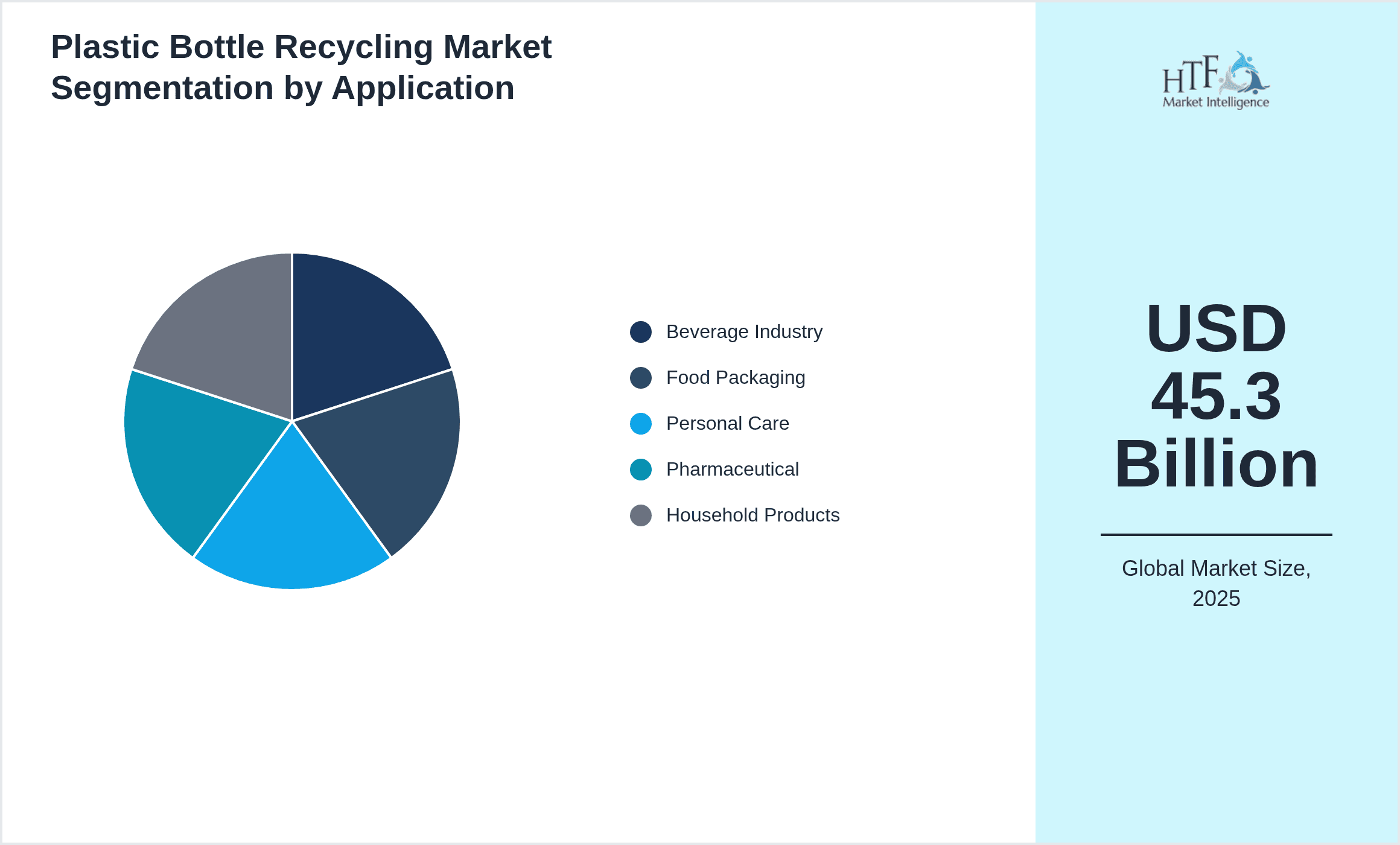
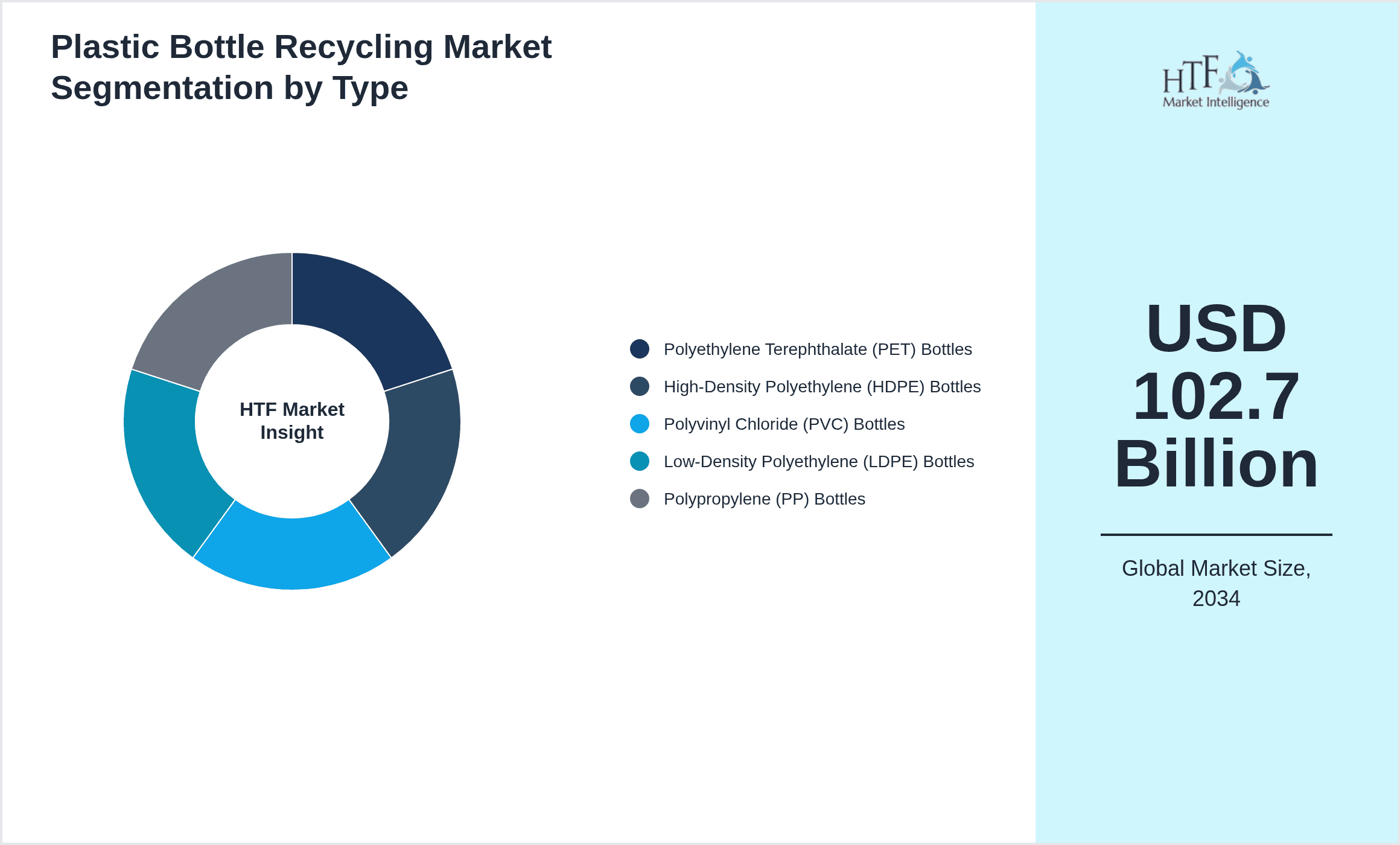
- •The global plastic bottle recycling market reached a base value of USD 45.3 Billion in 2025 and is projected to reach USD 102.7 Billion by 2034, exhibiting a compound annual growth rate of 9.2%. North America dominates the market accounting for the largest share, driven by stringent environmental policies and high recycling rates. Asia-Pacific emerges as the fastest-growing region due to escalating plastic consumption and expanding recycling infrastructure. PET bottles remain the leading product type due to widespread usage in the beverage industry, while HDPE bottles demonstrate the highest growth rate fueled by demand from personal care and household sectors. Increasing adoption of sustainable packaging solutions and regulatory pressure on plastic waste disposal fuel market expansion across regions.
- •Plastic bottle recycling offers significant value to manufacturers, consumers, and policymakers by enabling resource conservation and waste reduction. Its strategic importance spans environmental impact mitigation, cost savings in raw materials, and compliance with circular economy frameworks. Stakeholders benefit from enhanced brand reputation through sustainability commitments, while governments achieve waste management targets. Moreover, innovation in recycling technologies and collaborations among industry players further catalyze market growth. This market plays a fundamental role in the global transition towards sustainable packaging and responsible consumption patterns, thereby supporting long-term economic and ecological resilience.

Competitive Landscape
The plastic bottle recycling market exhibits intense competition characterized by strategic partnerships, global expansion of recycling facilities, and technological innovation. Leading companies focus on enhancing operational efficiencies through automation and advanced sorting technologies to improve yield and product quality. Emphasis on R&D drives the development of novel recycling methods such as chemical recycling to complement mechanical processes, addressing mixed and contaminated plastics. Companies pursue collaborations with beverage and packaging manufacturers to secure feedstock supply and develop recycled content products, strengthening market positioning. Geographic expansion into emerging regions such as Asia-Pacific and Latin America aligns with growing demand and regulatory pressures. Pricing strategies reflect raw material cost volatility and competitive dynamics, while sustainability commitments shape product portfolios. Consolidation through mergers and acquisitions further intensifies competition, enabling scale advantages and broader market access. Future competitive trends include digitalization of supply chains, enhanced traceability, and integration of circular economy principles to maintain relevance and drive growth.
Leading Companies in Plastic Bottle Recycling Market
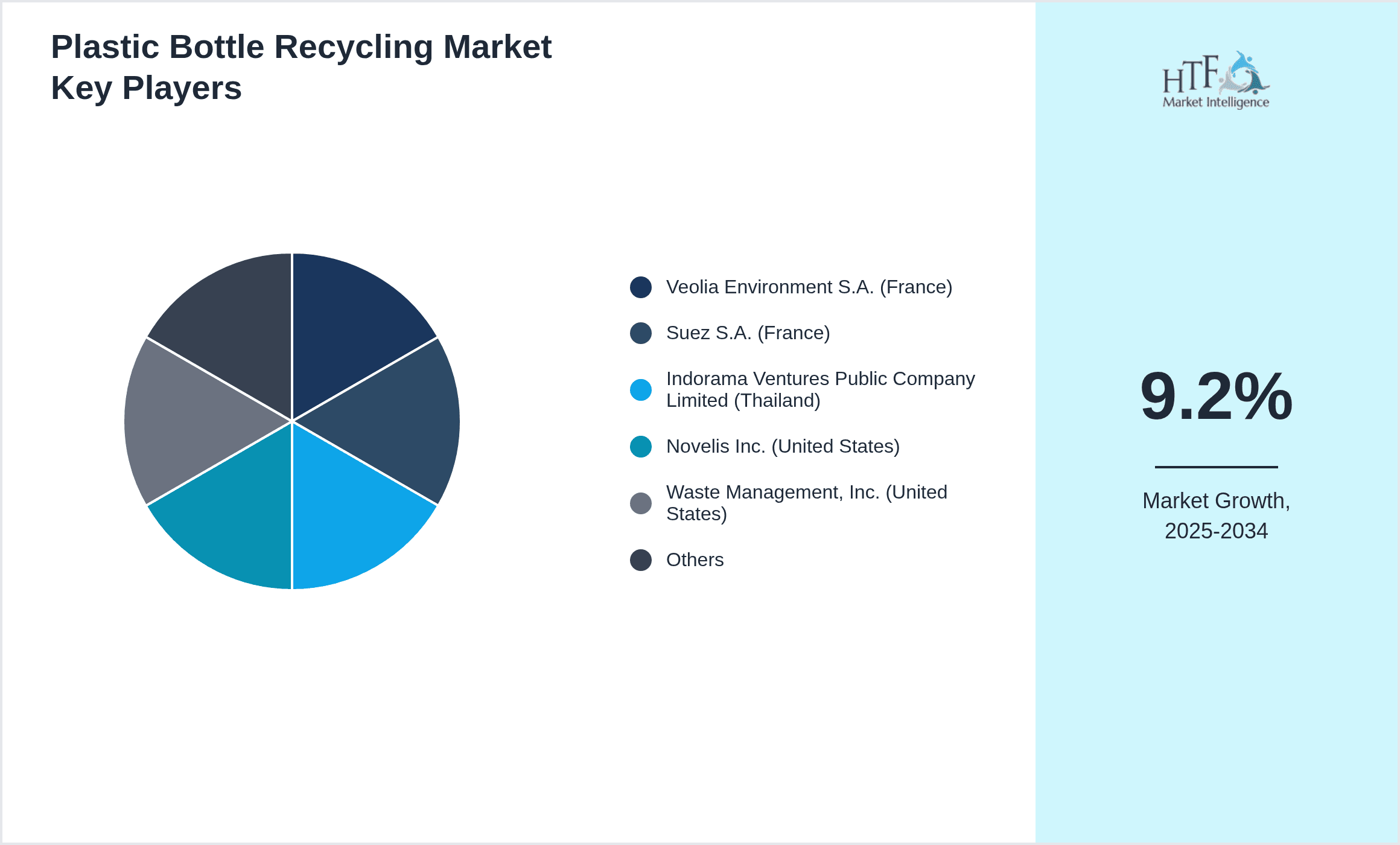
- •Veolia Environment S.A. (France)
- •Suez S.A. (France)
- •Indorama Ventures Public Company Limited (Thailand)
- •Novelis Inc. (United States)
- •Waste Management, Inc. (United States)
- •Cleanaway Waste Management Limited (Australia)
- •Tomra Systems ASA (Norway)
- •Envision Plastics, Inc. (United States)
- •Plastipak Holdings, Inc. (United States)
- •KW Plastics (United States)
- •Recycling Technologies Ltd. (United Kingdom)
- •MBA Polymers (United States)
- •ECO Plastics Recycling (India)
- •MBA Polymers (United States)
- •Greenpath Recovery (United States)
- •Plasgran Ltd. (United Kingdom)
- •Mura Technology Ltd. (United Kingdom)
- •Saperatec GmbH (Germany)
- •Brightmark LLC (United States)
- •Erema Engineering Recycling Maschinen und Anlagen Ges.m.b.H. (Austria)
- •GreenMantra Technologies Ltd. (Canada)
- •Agilyx Corporation (United States)
- •Plastics Recycling Inc. (United States)
- •RePlanet, Inc. (United States)
- •Clean Harbors, Inc. (United States)
Market Breakdown
- •By Type
- ◦Polyethylene Terephthalate (PET) Bottles
- ◦High-Density Polyethylene (HDPE) Bottles
- ◦Polyvinyl Chloride (PVC) Bottles
- ◦Low-Density Polyethylene (LDPE) Bottles
- ◦Polypropylene (PP) Bottles
- •By Application
- ◦Beverage Industry
- ◦Food Packaging
- ◦Personal Care
- ◦Pharmaceutical
- ◦Household Products
- •By End-Use Industry
- ◦Consumer Goods
- ◦Healthcare
- ◦Food & Beverage
- ◦Chemical Manufacturing
- •By Distribution Channel
- ◦Direct Sales
- ◦Third-Party Distributors
- ◦Online Channels
Growth Dynamics
The plastic bottle recycling market experiences robust growth driven by increasing environmental awareness and stringent government regulations globally. Recent mandates such as extended producer responsibility policies compel manufacturers to incorporate recycled content, boosting demand for recycled plastic bottles. For instance, the European Union’s Circular Economy Action Plan enforces ambitious recycling targets, encouraging investment in recycling infrastructure. Technological advancements like chemical recycling improve processing efficiency and expand feedstock possibilities, attracting significant capital inflows. Corporate sustainability commitments from major beverage companies create steady demand for recycled PET, further catalyzing market expansion. Additionally, rising consumer preference for eco-friendly packaging accelerates adoption. Strategic collaborations between recyclers and manufacturers facilitate closed-loop recycling systems, enhancing resource efficiency. The growth trajectory is reinforced by increasing urbanization and plastic consumption in emerging economies, where expanding recycling networks address escalating waste volumes, ensuring sustainable growth through 2034.
Market Trends
Future trends in the plastic bottle recycling market emphasize innovation in recycling technologies and expansion of circular economy models. Chemical recycling is gaining traction as it enables processing of contaminated and mixed plastic waste, overcoming limitations of mechanical recycling. Companies are integrating digital technologies such as blockchain for supply chain transparency and to verify recycled content authenticity. Growing adoption of bio-based and biodegradable plastics generates new recycling challenges and opportunities, prompting research into hybrid recycling solutions. Industry collaborations and public-private partnerships are accelerating development of collection infrastructure in underpenetrated regions, particularly in Asia-Pacific and Latin America. Increasing consumer demand for sustainable packaging drives investment in high-quality recycled materials with enhanced performance. Additionally, regulatory frameworks are evolving to incentivize recycled content usage, fostering innovation and market diversification. These trends collectively position the market for sustained growth and transformation towards a more circular and sustainable plastic economy.
Market Opportunities
Expanding recycling infrastructure in developing regions presents substantial growth opportunities for the plastic bottle recycling market. Rising plastic consumption combined with nascent waste management systems in Asia-Pacific, Latin America, and Middle East & Africa creates demand for advanced recycling technologies and efficient collection networks. Innovations in chemical recycling open avenues for processing previously unrecyclable plastics, enabling greater material recovery and value creation. Increasing corporate commitments to sustainability and net-zero targets stimulate demand for recycled content across beverage and packaging sectors. Government incentives and subsidies aimed at circular economy adoption further enhance investment attractiveness. Collaborations between recyclers, manufacturers, and policymakers foster development of closed-loop systems, ensuring supply chain resilience. Emerging digital solutions for waste traceability and consumer engagement improve collection rates and material quality. These factors collectively create a conducive environment for market players to capitalize on untapped segments, driving expansion and profitability through 2034.
Market Challenges
The plastic bottle recycling market faces significant challenges stemming from contamination, collection inefficiencies, and fluctuating raw material prices. Contamination of plastic waste with food residues and mixed polymers reduces recycling efficiency and product quality, limiting the application scope of recycled materials. Collection infrastructure remains underdeveloped in many emerging economies, resulting in low recovery rates and high operational costs. Market volatility in virgin plastic prices affects the competitiveness of recycled products, sometimes leading to reduced demand. Regulatory fragmentation across regions complicates compliance and standardization efforts. Additionally, technological limitations in processing certain plastics, such as colored or multi-layer bottles, constrain recycling potential. Recent reports highlight difficulties encountered by recyclers in scaling chemical recycling commercially due to high capital expenditure and energy consumption. These challenges necessitate continuous innovation and collaboration among stakeholders to ensure sustainable market growth and environmental benefits.
Regulatory Framework
In the last five years, regulatory developments have significantly shaped the plastic bottle recycling market globally. The European Union implemented the Single-Use Plastics Directive and revised Packaging and Packaging Waste Directive mandating minimum recycled content and enhanced collection targets. The United States introduced the Break Free From Plastic Pollution Act aiming to improve recycling infrastructure and reduce plastic waste. China’s National Sword policy tightened import restrictions on plastic waste, prompting domestic recycling capacity expansion. India’s Plastic Waste Management Rules increased responsibilities for producers and waste handlers to improve recycling rates. These regulations enforce compliance through penalties and incentives, driving investments in recycling technologies and infrastructure. Harmonization of standards and extended producer responsibility frameworks worldwide encourage circular economy adoption, fostering sustainable growth while mitigating environmental impact.
Recent Industry Insights
Recent Merger and Acquisition
Regional Outlook
The North America currently holds a significant share of the market, primarily due to several key factors: increasing consumption rates, a burgeoning population, and robust economic momentum. These elements collectively drive demand, positioning this region as a leader in the market. On the other hand, Asia-Pacific is rapidly emerging as the fastest-growing area within the industry. This remarkable growth can be attributed to swift infrastructure development, the expansion of various industrial sectors, and a marked increase in consumer demand. These dynamics make this region a crucial player in shaping future market growth.
In our report, we cover a comprehensive analysis of the following regions and countries:
- North America
- LATAM
- West Europe
- Central & Eastern Europe
- Northern Europe
- Southern Europe
- East Asia
- Southeast Asia
- South Asia
- Central Asia
- Oceania
- MEA
| Feature | Details |
|---|---|
| Base Year Market Size | USD 45.3 Billion |
| Forecast Year Market Size | USD 102.7 Billion |
| CAGR | 9.2% |
| Forecast Period | 2026 to 2033 |
| YoY Growth | 9.1% |
| Scope of Report | Market is segmented by Type (Polyethylene Terephthalate (PET) Bottles, High-Density Polyethylene (HDPE) Bottles, Polyvinyl Chloride (PVC) Bottles, Low-Density Polyethylene (LDPE) Bottles, Polypropylene (PP) Bottles), Application (Beverage Industry, Food Packaging, Personal Care, Pharmaceutical, Household Products), End-Use Industry (Consumer Goods, Healthcare, Food & Beverage, Chemical Manufacturing), Distribution Channel (Direct Sales, Third-Party Distributors, Online Channels) |
| Regions Covered | North America, LATAM, West Europe, Central & Eastern Europe, Northern Europe, Southern Europe, East Asia, Southeast Asia, South Asia, Central Asia, Oceania, MEA |
| Key Companies | Veolia Environment S.A. (France), Suez S.A. (France), Indorama Ventures Public Company Limited (Thailand), Novelis Inc. (United States), Waste Management, Inc. (United States), Cleanaway Waste Management Limited (Australia), Tomra Systems ASA (Norway), Envision Plastics, Inc. (United States), Plastipak Holdings, Inc. (United States), KW Plastics (United States), Recycling Technologies Ltd. (United Kingdom), MBA Polymers (United States), ECO Plastics Recycling (India), MBA Polymers (United States), Greenpath Recovery (United States), Plasgran Ltd. (United Kingdom), Mura Technology Ltd. (United Kingdom), Saperatec GmbH (Germany), Brightmark LLC (United States), Erema Engineering Recycling Maschinen und Anlagen Ges.m.b.H. (Austria), GreenMantra Technologies Ltd. (Canada), Agilyx Corporation (United States), Plastics Recycling Inc. (United States), RePlanet, Inc. (United States), Clean Harbors, Inc. (United States) |
Global Plastic Bottle Recycling Market Size, Growth & Revenue 2025-2034 - Table of Contents
Multidisciplinary researcher with 10+ years of experience uncovering insights across diverse domains focused on uncovering insights that drive informed decisions.
Frequently Asked Questions (FAQ):
The Compact Track Loaders market is expected to see value worth 5.3 Billion in 2025.
North America currently leads the market with approximately 45% market share, followed by Europe at 28% and Asia-Pacific at 22%. The remaining regions account for 5% of the global market.
Key growth drivers include increasing construction activities, rising demand for versatile equipment in agriculture, technological advancements in track loader design, and growing preference for compact equipment in urban construction projects.