
Global Asset Finance and Leasing Software Market Roadmap to 2034
Global Asset Finance and Leasing Software Market Breakdown by Application (Equipment Leasing, Vehicle Leasing, Real Estate Leasing, IT Asset Financing, Others) by Type (On-Premise, Cloud-Based, Hybrid) by Deployment Model (SaaS, On-Premise, Managed Services) by End-User (Financial Institutions, Leasing Companies, Corporate Lessees, SMEs) by Geography (North America, LATAM, West Europe, Central & Eastern Europe, Northern Europe, Southern Europe, East Asia, Southeast Asia, South Asia, Central Asia, Oceania, MEA)
Pricing
Report Overview
Market Scope
The Global Asset Finance and Leasing Software market includes comprehensive software platforms that facilitate the financing, management, and administration of leased or financed assets. These solutions encompass contract lifecycle management, lease accounting, asset tracking, payment processing, risk assessment, and compliance with international financial standards such as IFRS 16 and ASC 842. The scope covers software deployed in various models including cloud-based, on-premise, and hybrid to serve diverse end users such as financial institutions, leasing companies, corporate lessees, and SMEs globally. The market excludes generic financial or ERP systems that do not specifically cater to asset finance or leasing functionalities. Additionally, non-software leasing support services and hardware-only asset management tools are outside the purview of this analysis. The report delineates the evolving technology landscape, regulatory impacts, and operational efficiencies enabled by these specialized software solutions, emphasizing their role in optimizing capital utilization, enhancing compliance, and facilitating scalable leasing operations.
Regional Performance Analysis
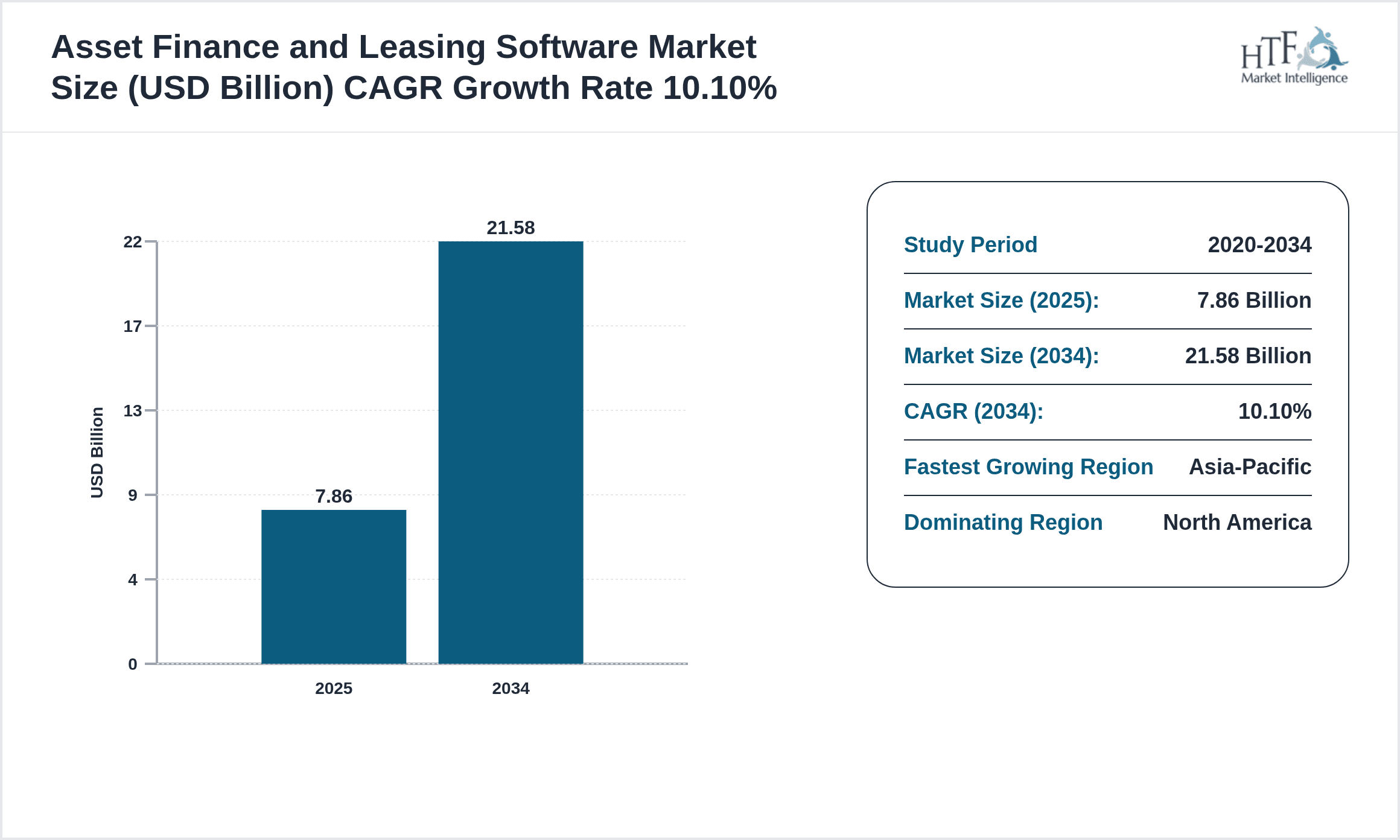
North America remains the dominant market for Asset Finance and Leasing Software, driven by robust financial services infrastructure, high adoption of cloud-based solutions, and stringent regulatory compliance requirements. The region benefits from advanced production capabilities of software vendors and strong consumption patterns among leasing companies and financial institutions. The mature market exhibits intensive investment activity, with significant mergers and acquisitions fueling innovation and expansion. Supply-chain and data center infrastructure support rapid deployment and scalability, ensuring competitive advantage for regional players. Europe follows closely with a diverse industrial ecosystem, strong regulatory mandates such as GDPR and IFRS adherence, and increasing demand from SMEs adopting digital leasing solutions. Asia-Pacific represents the fastest-growing region propelled by rapid industrialization, expanding leasing markets, and government initiatives supporting fintech innovation. Countries within this region are investing heavily in cloud infrastructure and digital transformation, which underpin growth trajectories. Latin America and Middle East & Africa show emerging growth opportunities supported by increasing financial inclusion, expanding SME sectors, and adoption of mobile-enabled leasing platforms, albeit with challenges related to infrastructural maturity and regulatory heterogeneity.
Players Coverage
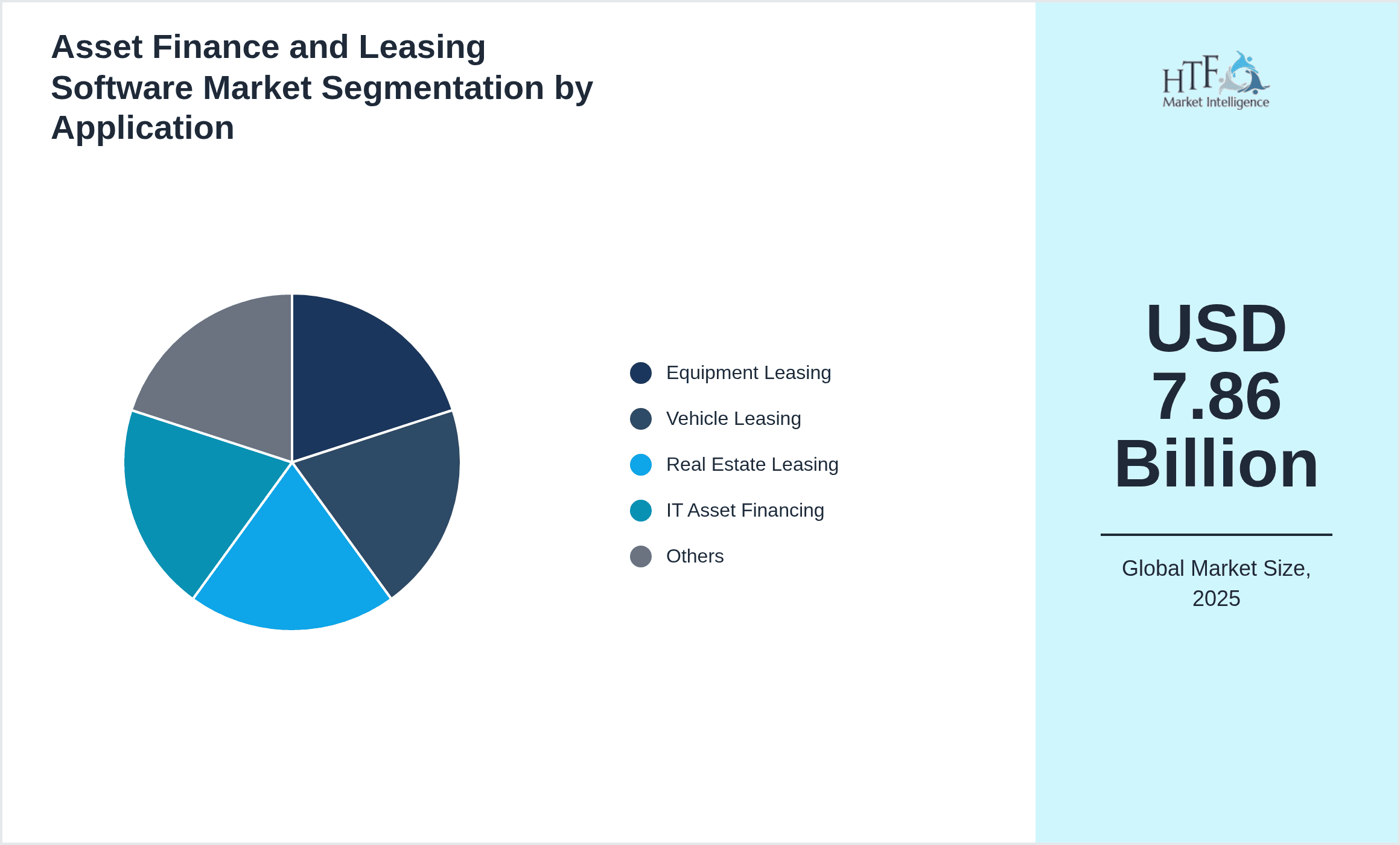
- •SAP SE (Germany)
- •Oracle Corporation (United States)
- •Infor Inc. (United States)
- •FIS Global (United States)
- •LeaseWave (United States)
- •Capterra Inc (United States)
- •AssetWorks LLC (United States)
- •Global Lease Management Solutions (Canada)
- •Mercury Commerce (Australia)
- •Sage Group PLC (United Kingdom)
Competition Analysis
The competitive landscape of the Global Asset Finance and Leasing Software market is characterized by high intensity with numerous players vying for market share through technological innovation and strategic partnerships. The sector is undergoing a significant transformation driven by the adoption of cloud computing and AI capabilities, enabling enhanced automation, predictive analytics, and regulatory compliance. Industry leaders invest heavily in R&D to differentiate their offerings through modular, scalable solutions tailored to various leasing verticals. Mergers and acquisitions remain a pivotal strategy for expanding geographic reach and technological capabilities, while partnerships with fintech startups accelerate innovation cycles. Pricing strategies have shifted towards subscription-based SaaS models, reducing buyer entry barriers and fostering recurring revenue streams. Distribution strategies emphasize direct sales complemented by channel partnerships to penetrate diverse end-user segments globally. Entry barriers include the need for compliance expertise, integration with legacy systems, and data security assurances, which favor established incumbents. The outlook anticipates intensified competition as emerging players leverage cloud-native architectures and AI to disrupt traditional offerings, compelling incumbents to continuously innovate and invest in customer-centric solutions.
Growth Drivers & Demand Determinants
- •Government regulations and standards such as IFRS 16 and ASC 842 have mandated transparency and accuracy in lease accounting, driving adoption of specialized asset finance software.
- •Strategic partnerships between software vendors and financial institutions enhance product capability, market access, and accelerate digital transformation initiatives.
- •Technological innovations, including AI, machine learning, and cloud computing, improve operational efficiency, predictive analytics, and scalability of leasing software solutions.

Dominant Segments
- •Cloud-based asset finance and leasing software solutions currently lead the market due to their scalability, cost-efficiency, and ease of integration with existing IT ecosystems. They enable real-time data access, automated compliance updates, and seamless upgrade cycles, making them preferred among financial institutions and leasing companies seeking operational agility. On-premise solutions maintain relevance in sectors requiring stringent data control and customization, such as government-related leasing portfolios. Hybrid deployment models are emerging as the fastest growing segment by providing a balance between control and flexibility, catering to organizations transitioning from legacy systems to cloud platforms.
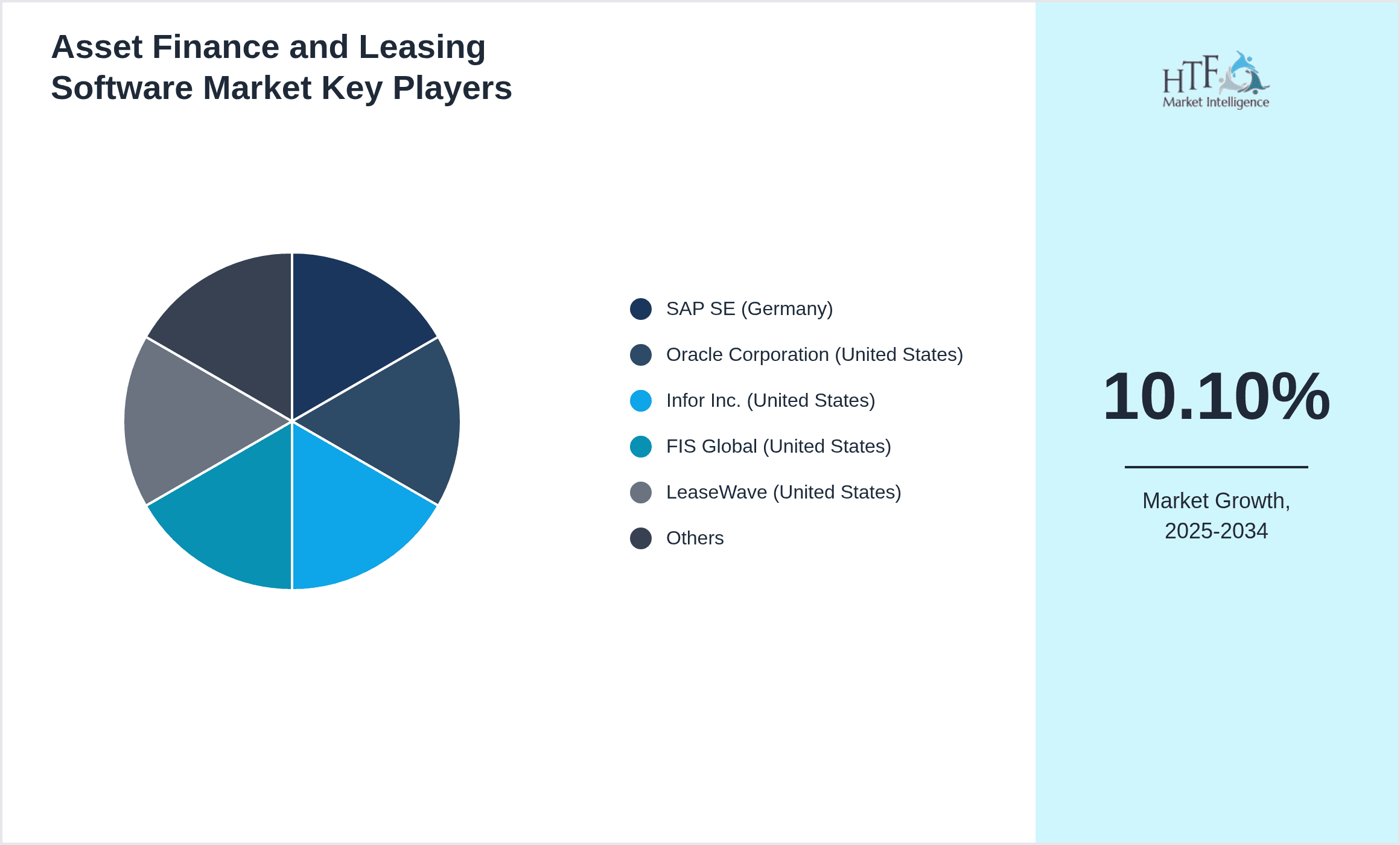
- •In terms of application, equipment leasing software dominates due to the extensive use of leased industrial machinery across manufacturing and infrastructure sectors globally. Vehicle leasing software also holds significant share, propelled by the burgeoning personal and commercial vehicle leasing markets. Real estate leasing and IT asset financing represent growing niches, fueled by digital transformation and the rise of flexible workspace models. Business models focusing on SaaS deployments coupled with managed services provide end-users with comprehensive lifecycle support, driving higher retention and recurring revenue streams for providers.
Market Segments & Classification
- •By Type
- ◦On-Premise
- ◦Cloud-Based
- ◦Hybrid
- •By Application
- ◦Equipment Leasing
- ◦Vehicle Leasing
- ◦Real Estate Leasing
- ◦IT Asset Financing
- ◦Others
- •By Deployment Model
- ◦SaaS
- ◦On-Premise
- ◦Managed Services
- •By End-User
- ◦Financial Institutions
- ◦Leasing Companies
- ◦Corporate Lessees
- ◦Small and Medium Enterprises
Regulatory Constraints
- •Environmental regulations and sustainability mandates increasingly influence asset leasing decisions, requiring software solutions to incorporate compliance tracking and reporting capabilities that align with green finance principles and carbon footprint management.
- •Trade restrictions and geopolitical tensions impose constraints on cross-border leasing operations, necessitating robust software features for multi-jurisdictional compliance, tax implications, and currency risk management.
- •Industry certification standards such as SOC 2, ISO 27001, and GDPR compliance create operational demands on software providers to ensure data security, privacy, and audit readiness, adding complexity and cost to development and deployment.
- •Inflationary pressures elevate operational costs for software vendors and end-users, influencing pricing strategies and investment decisions within the asset finance software ecosystem.
- •Product substitution trends, including the rise of integrated ERP modules and fintech embedded leasing platforms, pose competitive challenges requiring continuous innovation and differentiation by traditional asset finance software vendors.
Future Outlook of Asset Finance and Leasing Software Market
- •Expansion into emerging markets with nascent leasing industries will be pivotal, driven by increasing digital infrastructure investments and rising demand for asset financing solutions tailored to local market conditions.
- •North America is projected to maintain dominance due to its mature financial ecosystem, regulatory rigor, and ongoing technology adoption, while Asia-Pacific will continue as the fastest growing region with substantial growth in SME leasing.
- •Long-term industry transformation will be shaped by continued integration of AI, blockchain, and IoT technologies, fostering automated contract management, enhanced asset tracking, and predictive maintenance capabilities.
The Road Ahead: Digital Transformation Revolution
- •The asset finance and leasing software industry is undergoing a profound digital transformation, driven by cloud adoption, AI integration, and regulatory imperatives that collectively enhance operational efficiency, risk management, and customer experience.
- •This revolution will redefine market dynamics, enabling ecosystem-wide connectivity, real-time data analytics, and flexible financing models that empower stakeholders to optimize asset utilization and unlock new revenue streams sustainably over the next decade.
Regional Outlook
The North America currently holds a significant share of the market, primarily due to several key factors: increasing consumption rates, a burgeoning population, and robust economic momentum. These elements collectively drive demand, positioning this region as a leader in the market. On the other hand, Asia-Pacific is rapidly emerging as the fastest-growing area within the industry. This remarkable growth can be attributed to swift infrastructure development, the expansion of various industrial sectors, and a marked increase in consumer demand. These dynamics make this region a crucial player in shaping future market growth.
In our report, we cover a comprehensive analysis of the following regions and countries:
- North America
- LATAM
- West Europe
- Central & Eastern Europe
- Northern Europe
- Southern Europe
- East Asia
- Southeast Asia
- South Asia
- Central Asia
- Oceania
- MEA
| Feature | Details |
|---|---|
| Base Year Market Size | USD 7.86 Billion |
| Forecast Year Market Size | USD 21.58 Billion |
| CAGR | 10.1% |
| Forecast Period | 2026 to 2033 |
| YoY Growth | 9.7% |
| Regions Covered | North America, LATAM, West Europe, Central & Eastern Europe, Northern Europe, Southern Europe, East Asia, Southeast Asia, South Asia, Central Asia, Oceania, MEA |
| Key Companies | SAP SE (Germany), Oracle Corporation (United States), Infor Inc. (United States), FIS Global (United States), LeaseWave (United States), Capterra Inc (United States), AssetWorks LLC (United States), Global Lease Management Solutions (Canada), Mercury Commerce (Australia), Sage Group PLC (United Kingdom) |
Global Asset Finance and Leasing Software Market Roadmap to 2034 - Table of Contents
Research enthusiast focused on transforming data uncovering into actionable insights through data-driven decision-making.
Frequently Asked Questions (FAQ):
The Compact Track Loaders market is expected to see value worth 5.3 Billion in 2025.
North America currently leads the market with approximately 45% market share, followed by Europe at 28% and Asia-Pacific at 22%. The remaining regions account for 5% of the global market.
Key growth drivers include increasing construction activities, rising demand for versatile equipment in agriculture, technological advancements in track loader design, and growing preference for compact equipment in urban construction projects.