
Global Web Hosting Service Market Size, Growth & Revenue 2025-2034
Global Web Hosting Service Market is segmented by Type (Shared Hosting, VPS Hosting, Dedicated Hosting, Cloud Hosting, Managed Hosting), Application (E-Commerce, Business Websites, Personal Websites, Media & Entertainment, Educational Platforms), End-Use Industry (Retail, Information Technology, Education, Media & Entertainment), Distribution Channel (Direct Sales, Online Channels, Value-Added Resellers), and Geography (North America, LATAM, West Europe, Central & Eastern Europe, Northern Europe, Southern Europe, East Asia, Southeast Asia, South Asia, Central Asia, Oceania, MEA)
Pricing
Report Overview
Executive Summary
- •The global web hosting service market represents a critical foundation for the digital economy, offering essential infrastructure and services that support website accessibility and online operations. This market includes diverse hosting types such as shared, VPS, dedicated, cloud, and managed hosting, each catering to unique business and personal needs. The services enable seamless deployment of websites and applications, ensuring performance, security, and scalability, essential for sectors ranging from e-commerce to education. The expanding internet user base, surge in online businesses, and the shift towards cloud computing are key factors broadening the market scope. Providers invest in advanced technologies like virtualization, automation, and cybersecurity to meet growing demands and regulatory compliance. Strategic partnerships and innovations are reshaping competitive dynamics, creating a robust ecosystem of global and regional players. This market’s growth trajectory aligns with digital transformation trends, making it indispensable for enterprises aiming to establish and maintain a strong online presence worldwide.
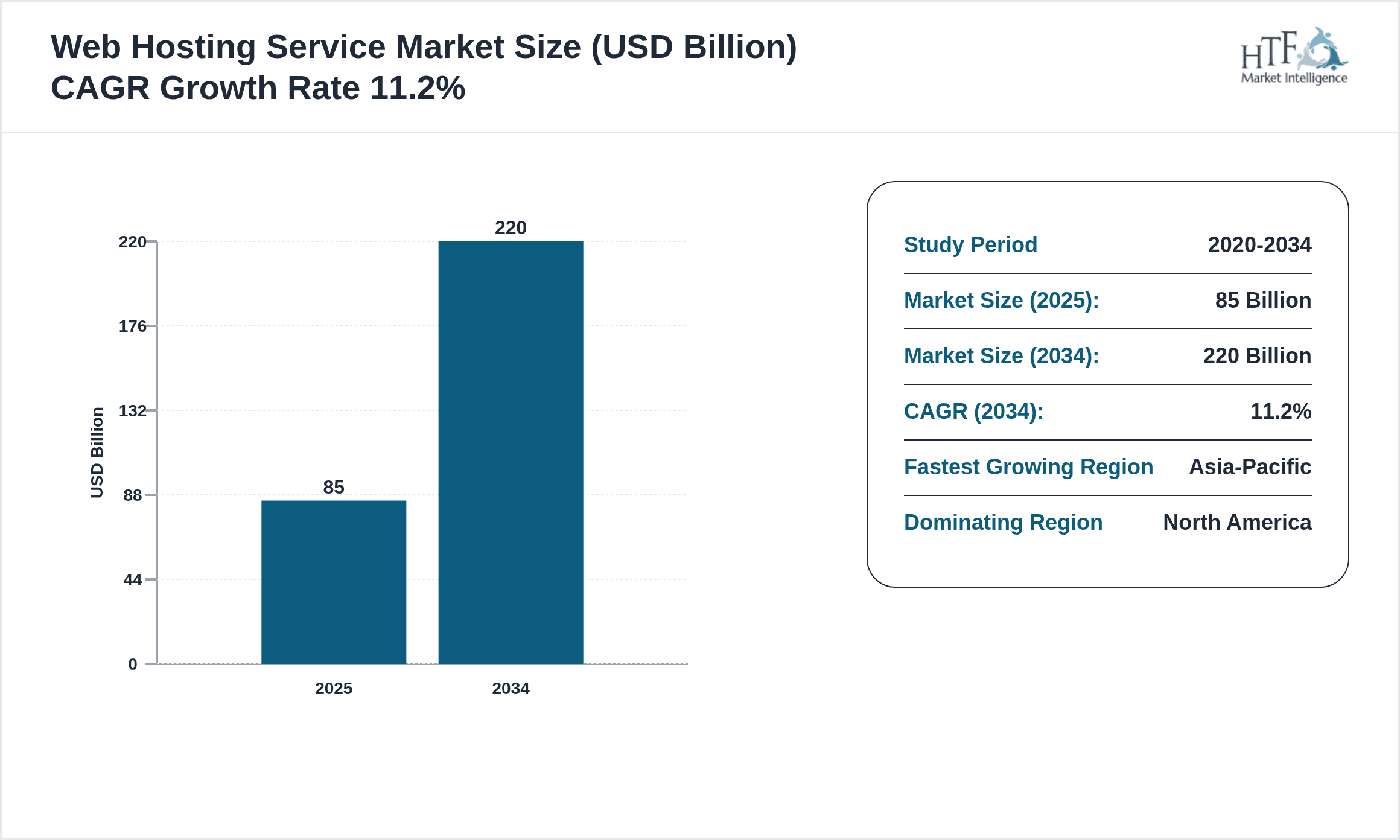
- •Key market highlights include a base market valuation of USD 85 Billion in 2025 with a forecast to reach USD 220 Billion by 2034, reflecting a robust CAGR of 11.2%. North America currently dominates the market due to early technology adoption and a mature digital infrastructure, whereas Asia-Pacific emerges as the fastest-growing region driven by rising internet penetration and cloud service adoption. Cloud hosting leads product types owing to its scalability and cost-effectiveness, while managed hosting records the highest growth rate fueled by demand for comprehensive service solutions. E-commerce and business websites remain dominant applications, reflecting the increasing digitalization of commerce and enterprises globally. Market expansion is supported by ongoing technological advancements, regulatory frameworks promoting data security, and growing consumer reliance on internet-based services.
- •The web hosting service market delivers significant value to various stakeholders by enabling robust, secure, and scalable online platforms essential for digital business operations. It supports innovation and growth across industries by providing reliable infrastructure and services that facilitate customer engagement, data management, and content delivery. For investors and service providers, the market offers lucrative opportunities through new technologies like cloud and managed hosting, driving competitive differentiation. Enterprises benefit from enhanced operational efficiency and expanded reach through tailored hosting solutions, while end-users gain from improved website performance and security. The strategic importance of web hosting services continues to rise with the increasing emphasis on digital transformation, omnichannel marketing, and global e-commerce expansion, solidifying its role as a cornerstone of the modern digital ecosystem.
Competitive Landscape
Companies in the global web hosting service market pursue diverse strategies to sustain and enhance their market presence, including technology innovation, strategic partnerships, and global expansion. Leading players focus on cloud-based solutions and managed services to address complex customer needs, investing heavily in infrastructure scalability and security enhancements. Alliances with technology vendors and data center operators strengthen service portfolios and geographic reach. Product innovation centers on automation, AI integration, and enhanced cybersecurity features to improve customer experience and operational efficiency. Mergers and acquisitions serve as key tactics to consolidate market share and expand capabilities, enabling rapid entry into emerging segments and regions. Competitors differentiate through pricing models, hybrid hosting options, and value-added services, while emphasizing compliance with global data protection regulations. Regional players leverage local market knowledge and tailor services to specific industry requirements, fostering competitive diversity and market dynamism.
Leading Companies in Web Hosting Service Market
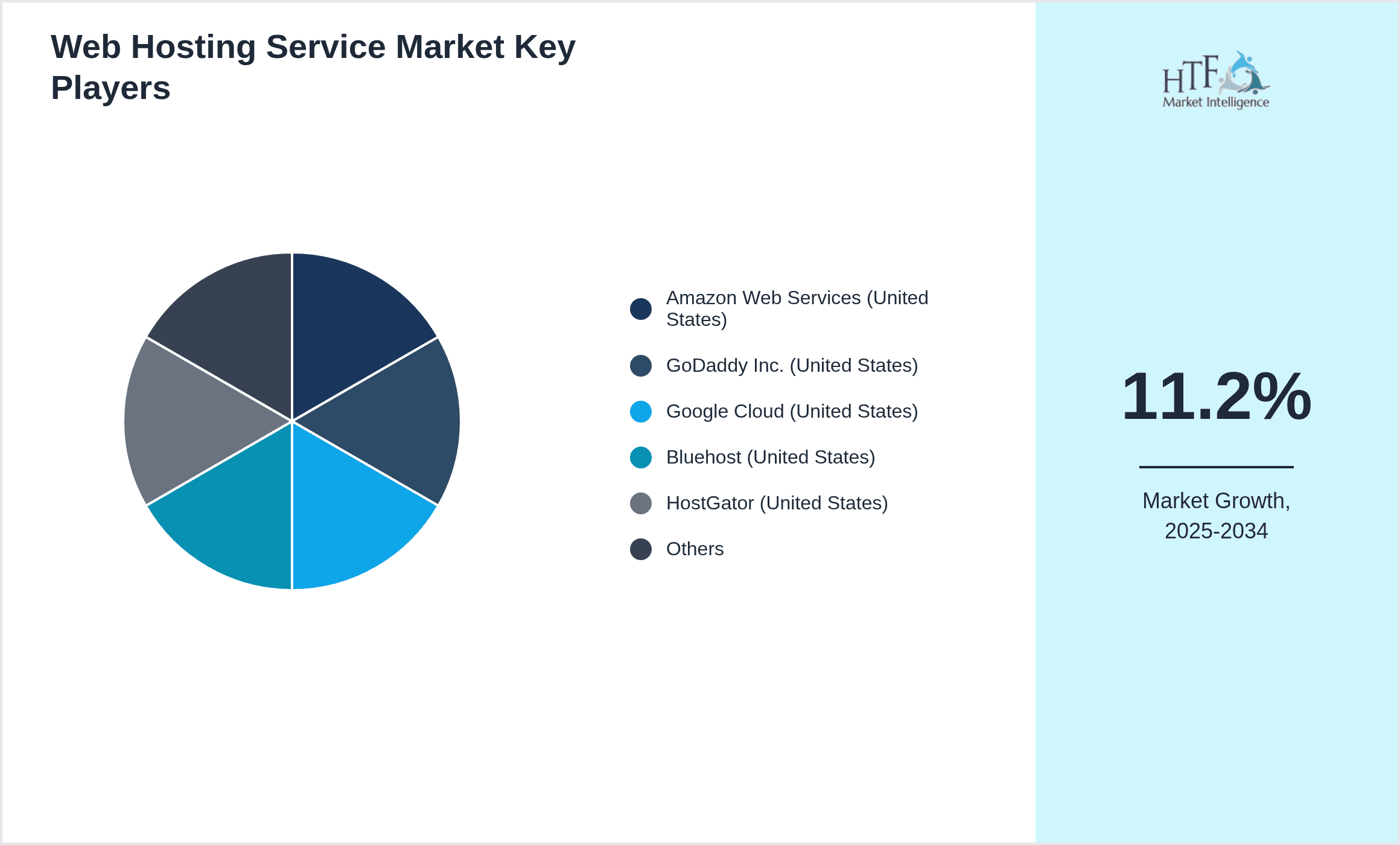
- •Amazon Web Services (United States)
- •GoDaddy Inc. (United States)
- •Google Cloud (United States)
- •Bluehost (United States)
- •HostGator (United States)
- •Alibaba Cloud (China)
- •DigitalOcean (United States)
- •SiteGround (Bulgaria)
- •IONOS by 1&1 (Germany)
- •DreamHost (United States)
- •A2 Hosting (United States)
- •WP Engine (United States)
- •Liquid Web (United States)
- •OVHcloud (France)
- •HostPapa (Canada)
- •GreenGeeks (United States)
- •InMotion Hosting (United States)
- •Namecheap (United States)
- •Kinsta (United States)
- •FastComet (United States)
Market Breakdown
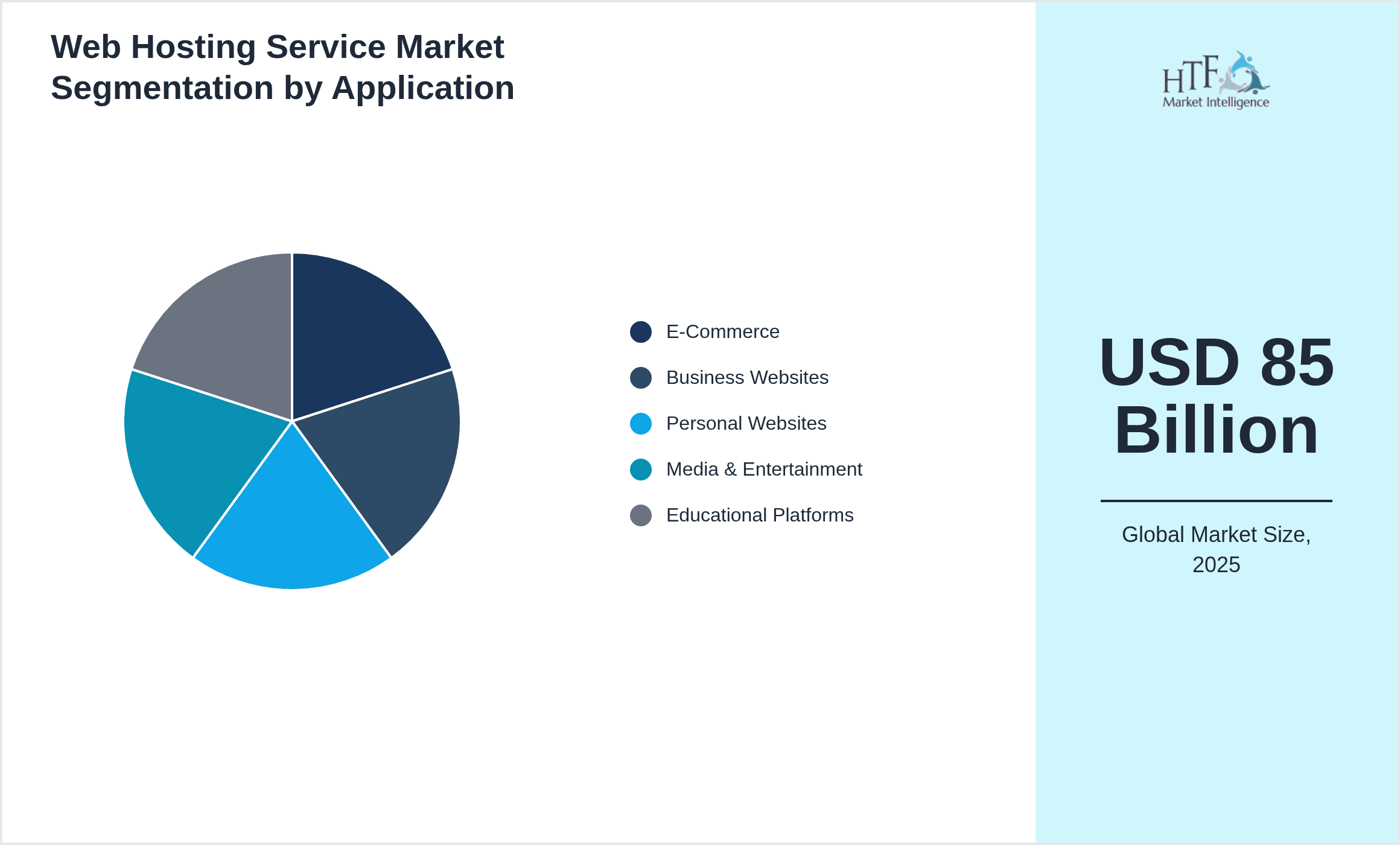
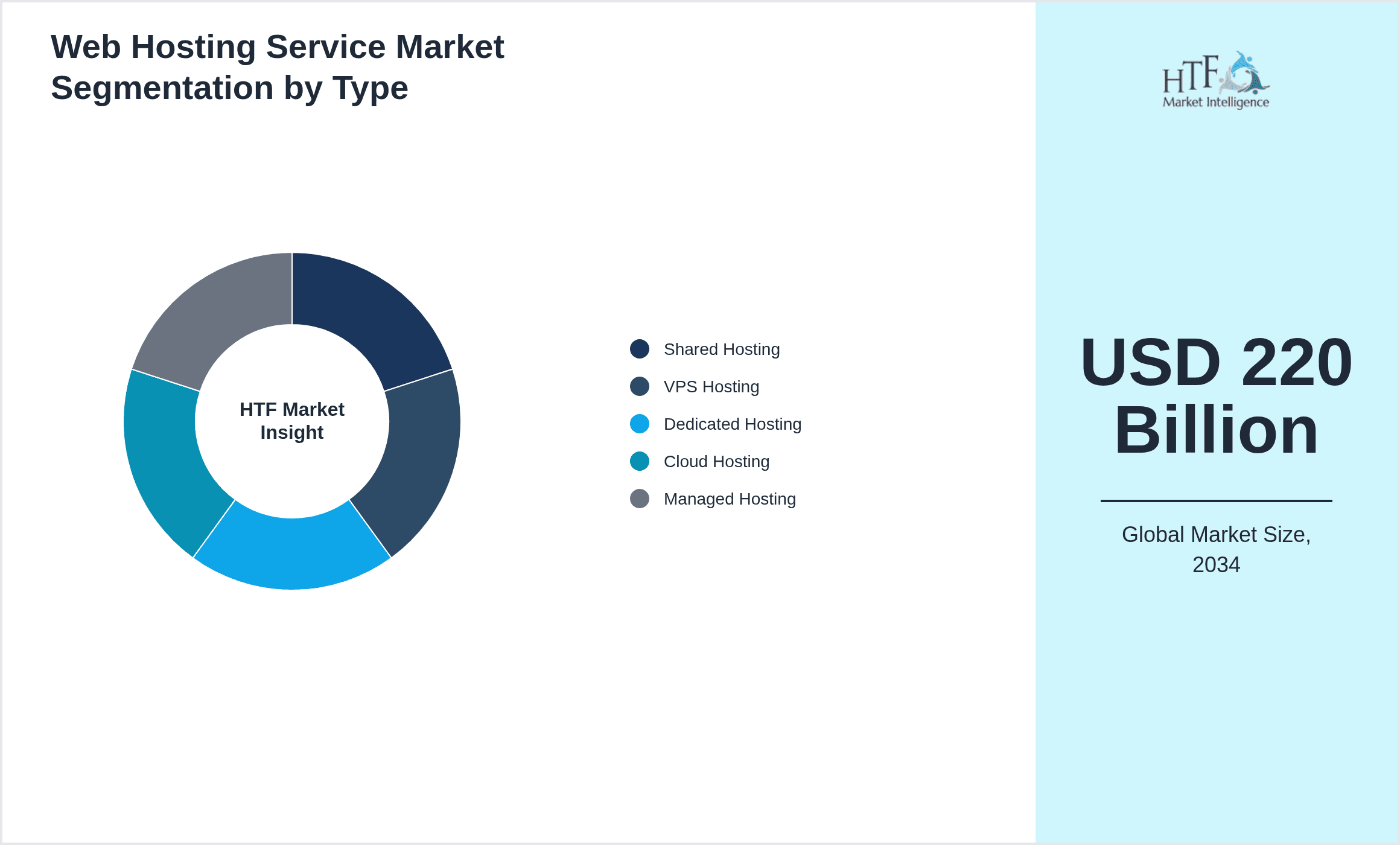
- •By Type
- ◦Shared Hosting
- ◦VPS Hosting
- ◦Dedicated Hosting
- ◦Cloud Hosting
- ◦Managed Hosting
- •By Application
- ◦E-Commerce
- ◦Business Websites
- ◦Personal Websites
- ◦Media & Entertainment
- ◦Educational Platforms
- •By End-Use Industry
- ◦Retail
- ◦Information Technology
- ◦Education
- ◦Media & Entertainment
- •By Distribution Channel
- ◦Direct Sales
- ◦Online Channels
- ◦Value-Added Resellers
Growth Dynamics
The global web hosting service market is propelled by the accelerated adoption of cloud computing across enterprises, which demands scalable and flexible hosting solutions. Increasing digital transformation initiatives across industries drive demand for reliable hosting that supports high traffic and data-intensive applications. The surge in e-commerce activities globally necessitates robust web hosting to maintain uptime and secure transactions. Recent developments such as AWS expanding its global infrastructure and Google Cloud enhancing managed hosting offerings exemplify industry momentum. Regulatory mandates on data security and privacy push providers to innovate with compliant hosting solutions, thereby expanding the market. Furthermore, the rise of remote work and online education intensifies the need for diverse hosting services, creating broad-based growth opportunities. Investments in infrastructure upgrades and AI-driven automation by key players improve operational efficiency and customer experience, reinforcing growth trajectories in this dynamic market.
Market Trends
The web hosting service market is gravitating towards hybrid and multi-cloud solutions, enabling businesses to optimize performance and cost while enhancing redundancy. Innovative technologies such as containerization and edge computing are gaining traction, allowing faster content delivery and improved user experiences. Providers increasingly integrate AI and machine learning to automate server management, security monitoring, and customer support, reducing operational overheads. Sustainability initiatives are influencing data center operations, with companies investing in green energy and efficient cooling systems. Recent launches by leading firms focusing on managed hosting highlight a strategic shift towards offering comprehensive service packages that include security, backups, and technical support. Market players also explore blockchain-based hosting for enhanced transparency and security. These trends collectively shape a future-ready hosting ecosystem aligned with evolving enterprise needs and technological advancements.
Market Opportunities
Expanding internet penetration in emerging economies presents significant opportunities for web hosting providers to tap new customer bases, particularly in Asia-Pacific and Latin America. The rising adoption of IoT and AI applications demands hosting platforms that support real-time data processing and high availability, creating niche growth areas. Increasing demand for managed hosting services offers providers avenues to differentiate through value-added offerings that simplify IT management for businesses. The proliferation of mobile internet and the growth of digital content consumption drive the need for optimized hosting solutions tailored for diverse devices and high traffic loads. Strategic partnerships between hosting providers and cloud service vendors enable bundled solutions that enhance market reach and customer retention. Additionally, government initiatives promoting digital infrastructure development and data localization create favorable environments for market expansion. These opportunities, coupled with technological innovation, promise sustained growth and diversification in the web hosting service market.
Market Challenges
Intense competition among established global players and numerous regional providers exerts pricing pressure, impacting profitability across the web hosting service industry. Security threats such as DDoS attacks and data breaches necessitate continuous investment in advanced cybersecurity measures, increasing operational costs. Regulatory complexities arising from diverse data protection laws across regions pose compliance challenges, requiring adaptable and localized hosting solutions. Infrastructure costs, especially for data centers with high energy consumption, affect scalability and sustainability efforts. Smaller providers struggle with technological advancements and customer acquisition due to limited resources, slowing market penetration. Examples include service outages experienced by major providers leading to customer dissatisfaction and reputational damage. Additionally, rapid technological changes demand ongoing innovation, which can be resource-intensive. These challenges necessitate strategic focus on differentiation, compliance, and operational efficiency to maintain competitiveness and market relevance.
Regulatory Framework
In recent years, regulations such as the General Data Protection Regulation have significantly influenced the web hosting service market by imposing stringent data privacy and security requirements. Hosting providers must comply with regional mandates such as data localization laws in various countries, necessitating investments in local data centers and infrastructure. Cybersecurity standards have been enhanced globally, with regulations mandating advanced protection mechanisms and incident reporting. Furthermore, governments have introduced policies promoting sustainable IT practices, encouraging providers to adopt energy-efficient technologies and renewable energy sources. Compliance with standards such as ISO/IEC 27001 has become essential for market credibility and customer trust. These regulatory frameworks shape operational strategies and drive innovations in hosting services to ensure legal conformity and competitive advantage in the global marketplace.
Market Intelligence
- •
- •
- •
- •
- •
Regional Outlook
The North America currently holds a significant share of the market, primarily due to several key factors: increasing consumption rates, a burgeoning population, and robust economic momentum. These elements collectively drive demand, positioning this region as a leader in the market. On the other hand, Asia-Pacific is rapidly emerging as the fastest-growing area within the industry. This remarkable growth can be attributed to swift infrastructure development, the expansion of various industrial sectors, and a marked increase in consumer demand. These dynamics make this region a crucial player in shaping future market growth.
In our report, we cover a comprehensive analysis of the following regions and countries:
- North America
- LATAM
- West Europe
- Central & Eastern Europe
- Northern Europe
- Southern Europe
- East Asia
- Southeast Asia
- South Asia
- Central Asia
- Oceania
- MEA
| Feature | Details |
|---|---|
| Base Year Market Size | USD 85 Billion |
| Forecast Year Market Size | USD 220 Billion |
| CAGR | 11.2% |
| Forecast Period | 2026 to 2033 |
| YoY Growth | 11% |
| Scope of Report | Market is segmented by Type (Shared Hosting, VPS Hosting, Dedicated Hosting, Cloud Hosting, Managed Hosting), Application (E-Commerce, Business Websites, Personal Websites, Media & Entertainment, Educational Platforms), End-Use Industry (Retail, Information Technology, Education, Media & Entertainment), Distribution Channel (Direct Sales, Online Channels, Value-Added Resellers) |
| Regions Covered | North America, LATAM, West Europe, Central & Eastern Europe, Northern Europe, Southern Europe, East Asia, Southeast Asia, South Asia, Central Asia, Oceania, MEA |
| Key Companies | Amazon Web Services (United States), GoDaddy Inc. (United States), Google Cloud (United States), Bluehost (United States), HostGator (United States), Alibaba Cloud (China), DigitalOcean (United States), SiteGround (Bulgaria), IONOS by 1&1 (Germany), DreamHost (United States), A2 Hosting (United States), WP Engine (United States), Liquid Web (United States), OVHcloud (France), HostPapa (Canada), GreenGeeks (United States), InMotion Hosting (United States), Namecheap (United States), Kinsta (United States), FastComet (United States) |
Global Web Hosting Service Market Size, Growth & Revenue 2025-2034 - Table of Contents
Research enthusiast focused on transforming data uncovering into actionable insights through data-driven decision-making.
Frequently Asked Questions (FAQ):
The Compact Track Loaders market is expected to see value worth 5.3 Billion in 2025.
North America currently leads the market with approximately 45% market share, followed by Europe at 28% and Asia-Pacific at 22%. The remaining regions account for 5% of the global market.
Key growth drivers include increasing construction activities, rising demand for versatile equipment in agriculture, technological advancements in track loader design, and growing preference for compact equipment in urban construction projects.