
Global Tennis Racquet String Market Scope & Changing Dynamics 2025-2034
Global Tennis Racquet String Market Breakdown by Type (Natural Gut, Synthetic Gut, Polyester, Multifilament, Kevlar) by Application (Professional Tennis, Recreational Tennis, Training, Others) by Distribution Channel (Specialty Stores, Online Retail, Sports Goods Retailers, Direct Sales) by Technology (Traditional Stringing, Pre-Strung, Hybrid Stringing) Geography (North America, LATAM, West Europe, Central & Eastern Europe, Northern Europe, Southern Europe, East Asia, Southeast Asia, South Asia, Central Asia, Oceania, MEA)
Pricing
Report Overview
Market Snapshot
- •The Global Tennis Racquet String Market embodies the comprehensive ecosystem of manufacturing, distribution, and sales of diverse string types integral to tennis racquets. Encompassing natural gut, synthetic gut, polyester, multifilament, and Kevlar strings, the market serves professional athletes, recreational players, and training academies worldwide. This market excludes tennis racquets themselves and related stringing equipment, focusing strictly on string materials and related stringing technologies. The industry is influenced by factors such as material innovation, player preferences, and supply chain dynamics. It operates within a global framework, addressing demand from established markets like North America and Europe, as well as rapidly expanding regions such as Asia-Pacific and Latin America. The market's scope includes traditional stringing methods, hybrid configurations combining multiple string types, and pre-strung racquet offerings, reflecting the increasing customization and performance orientation in tennis equipment.
- •The market boundaries are defined by the types of strings produced and their applications across different player segments, emphasizing product performance attributes like elasticity, durability, and spin control. Manufacturing economics hinge upon raw material sourcing, primarily natural gut from animal intestines and synthetic polymers such as nylon and polyester, coupled with advanced extrusion and weaving technologies. Operational sophistication manifests in automated string production lines, quality control systems, and energy-efficient manufacturing processes. Supply chain intelligence is critical due to the global dispersion of raw material suppliers, production facilities predominantly located in Europe and Asia, and distribution networks spanning specialty retail, online platforms, and direct sales channels.
- •The market addresses the evolving commercial realism of consumer preferences, with a growing shift towards synthetic and hybrid strings that balance cost, durability, and performance. Investment intelligence highlights increasing R&D expenditure by key players to develop strings with enhanced tension retention and environmental sustainability. Regulatory interpretations focus on material compliance and environmental impact mitigation, while technology transformations include smart string integration and eco-friendly material adoption. Together, these factors delineate an operationally detailed and strategically consistent global tennis racquet string market poised for growth through 2034.
Market Segmentation
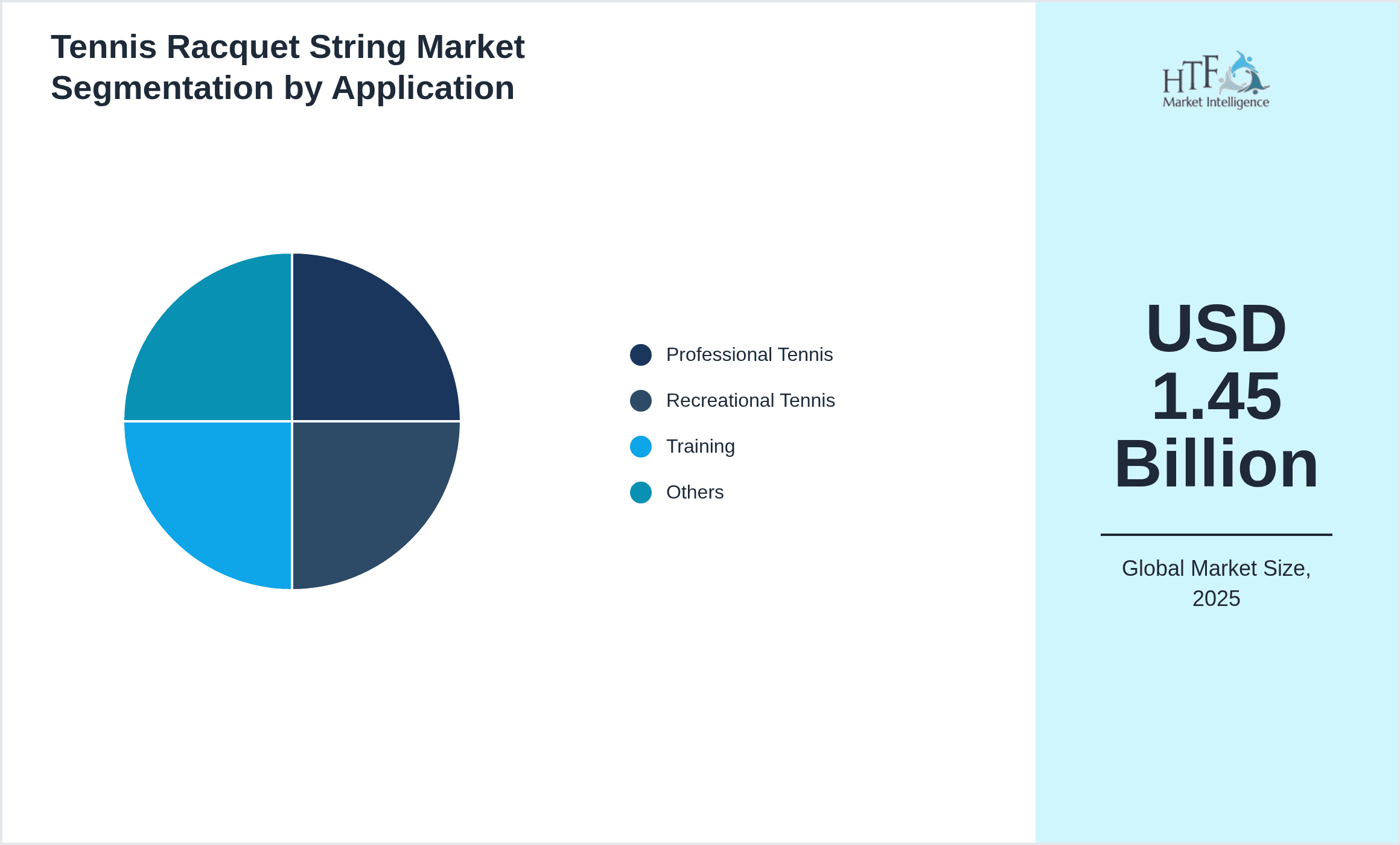
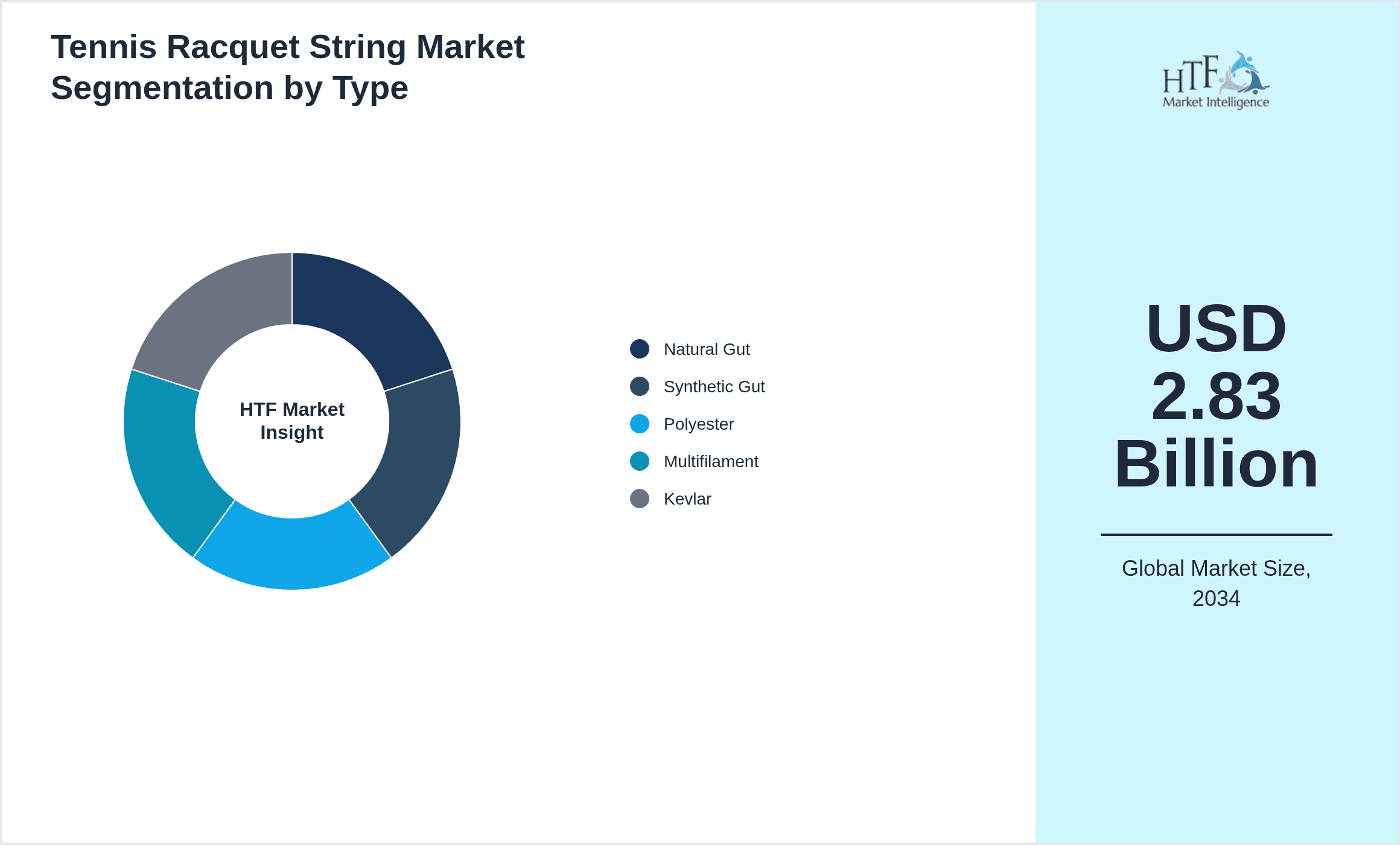
- •By Type
- ◦Natural Gut
- ◦Synthetic Gut
- ◦Polyester
- ◦Multifilament
- ◦Kevlar
- •By Application
- ◦Professional Tennis
- ◦Recreational Tennis
- ◦Training
- ◦Others
- •By Distribution Channel
- ◦Specialty Stores
- ◦Online Retail
- ◦Sports Goods Retailers
- ◦Direct Sales
- •By Technology
- ◦Traditional Stringing
- ◦Pre-Strung
- ◦Hybrid Stringing
Market Dynamics
- •Growth Drivers: The global Tennis Racquet String market is propelled by the increasing popularity of tennis as a sport worldwide, driven by initiatives to promote physical fitness and sports participation across various demographics. Technological advancements in string materials, such as enhanced polyester and multifilament designs, have significantly improved durability and performance, attracting both professional and amateur players. Rising disposable incomes, particularly in emerging markets, enable greater consumer spend on premium sports equipment. Additionally, the expansion of online retail channels has facilitated broader accessibility and direct engagement with end-users, boosting sales volumes. Sponsorships and endorsements by professional athletes further elevate market demand and brand visibility.
- •Trends: The market exhibits a pronounced shift towards hybrid stringing technologies that combine different string types to optimize tension, power, and control. There is an increasing consumer preference for strings that offer both performance and sustainability, resulting in the gradual adoption of eco-friendly materials. Digital transformation has influenced the retail landscape, with e-commerce platforms gaining significant traction for tennis strings sales. Furthermore, innovation in smart string technology, enabling real-time tension and performance analytics, is emerging. The proliferation of professional tennis tournaments globally continues to stimulate demand for high-quality strings tailored to elite performance requirements.
- •Restraints: The market faces challenges due to high price sensitivity among recreational users, limiting the penetration of premium strings. Raw material price volatility, especially for natural gut derived from animal sources and synthetic polymers, imposes cost pressures on manufacturers. The supply chain complexity, exacerbated by global logistics disruptions, affects timely delivery and inventory management. Environmental regulations aimed at reducing polymer waste and promoting sustainable production methods increase compliance costs. Additionally, the presence of numerous small-scale manufacturers leads to market fragmentation and intense pricing competition, impacting profitability.
- •Opportunities: Advancements in synthetic polymer formulations offer opportunities for developing strings with superior elasticity and durability tailored to diverse playing styles. Emerging markets, particularly in Asia-Pacific, present significant growth potential driven by rising tennis participation and infrastructure development. Strategic collaborations with professional players for product co-development and endorsements enhance innovation and market penetration. The integration of sensor technologies within strings for performance tracking opens new avenues for product differentiation. Customization services enabling players to select string type and tension based on individual preferences create additional revenue streams.
- •Challenges: Maintaining consistent raw material quality amidst fluctuating supply conditions remains a significant operational challenge. Scaling sustainable production while controlling costs requires substantial capital investment and process optimization. The competitive landscape is marked by rapid technological shifts necessitating continuous R&D to avoid obsolescence. Consumer education regarding the benefits of advanced string technologies is limited, hindering adoption rates. Furthermore, regulatory constraints on polymer use and waste disposal compel manufacturers to innovate responsibly without compromising product performance.
Industry Insights
- •The Tennis Racquet String market has witnessed notable technological innovations, including the launch of eco-friendly synthetic strings that reduce environmental impact without compromising performance. In September 2024, a leading manufacturer introduced a biodegradable multifilament string leveraging plant-based polymers, signaling a shift towards sustainability. Additionally, in January 2025, major players have intensified collaborations with elite tennis academies to co-develop strings tailored for high-performance training. These initiatives demonstrate the industry's commitment to integrating technological advancements with market demands, bolstering both product differentiation and consumer loyalty.
- •Operationally, manufacturers have optimized production lines by incorporating automation and energy-efficient processes, reducing costs and enhancing output consistency. The adoption of digital inventory and supply chain management systems has improved responsiveness to market fluctuations. Furthermore, the expansion of direct-to-consumer online platforms has enabled brands to streamline distribution while gathering actionable consumer insights. These strategic moves collectively enhance competitive positioning and underpin the sustained growth trajectory of the global tennis racquet string market.
Regulatory Overview
- •The Tennis Racquet String market is subject to a variety of international and regional regulations primarily focused on material safety, environmental impact, and chemical usage. Regulations such as the European Union’s REACH framework impose strict limits on hazardous substances in synthetic polymers used in strings. Additionally, increasing global emphasis on sustainability mandates manufacturers to comply with waste reduction and recycling norms, prompting a shift toward biodegradable and recyclable materials. Trade policies and import-export tariffs also influence the global supply chain, requiring manufacturers to strategically manage cross-border operations. Compliance with these evolving regulations necessitates continuous monitoring and adaptation to maintain market access and reputational integrity.
- •Beyond material regulations, labor and occupational safety standards impact manufacturing facilities, especially in regions with stringent enforcement. Energy efficiency mandates have driven investments in greener production technologies. Moreover, intellectual property laws governing string design and technology protect innovation but also introduce complexities in global licensing and partnerships. Regulatory bodies in major markets such as North America, Europe, and Asia-Pacific collaborate with industry stakeholders to ensure balanced policies that support both environmental stewardship and commercial viability, shaping the long-term landscape for tennis racquet string manufacturers.
- •Recent updates include enhanced documentation requirements for chemical composition disclosures and lifecycle assessments, increasing transparency and consumer confidence. These regulatory trends underscore the importance of sustainability and compliance as strategic imperatives for market participants aiming for long-term growth.
Players Profiled
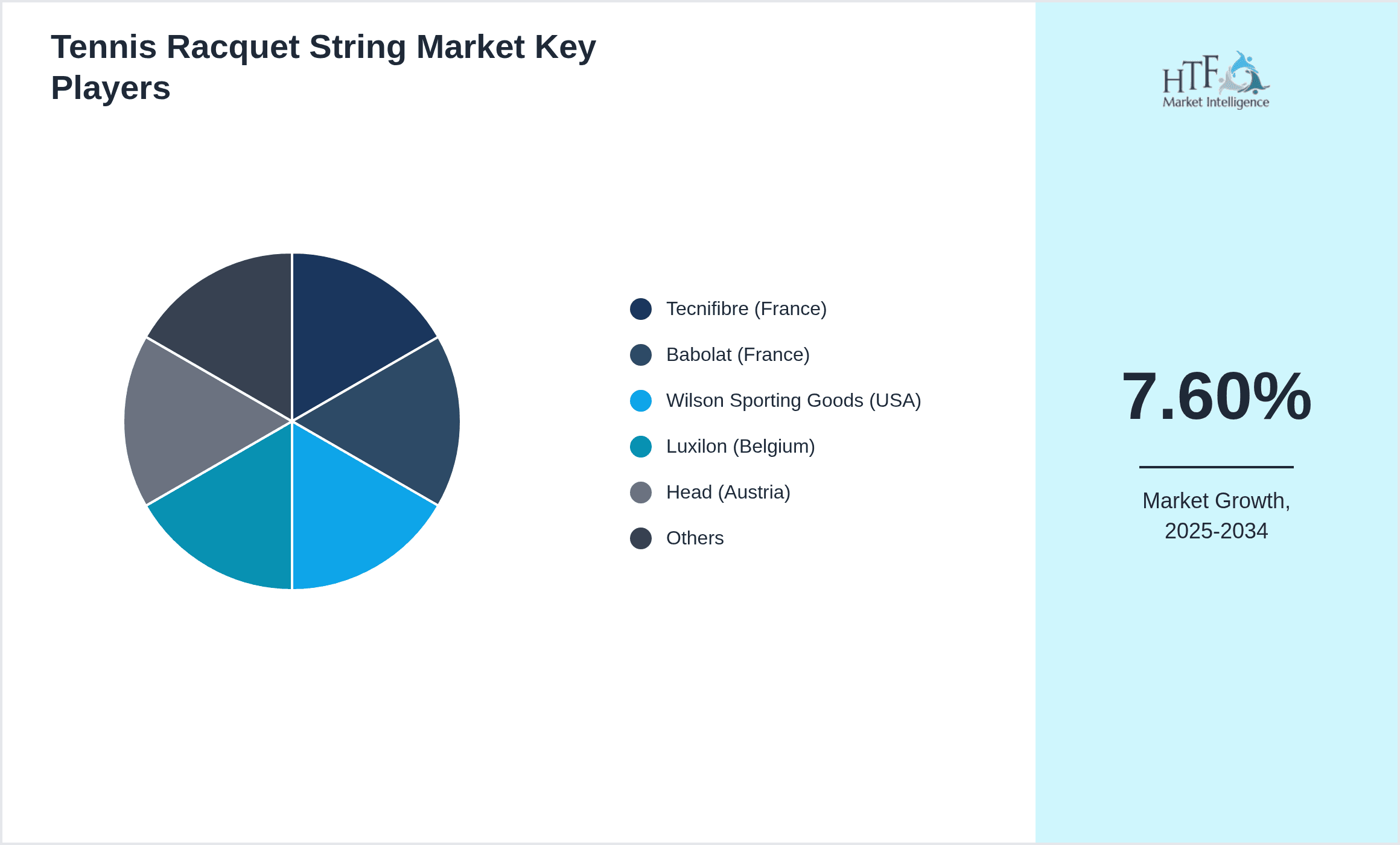
- •Tecnifibre (France)
- ◦Pioneer in multifilament and natural gut string innovation with strong R&D capabilities.
- ◦Expanded production footprint in Europe and Asia to enhance supply chain resilience.
- •Babolat (France)
- ◦Leader in polyester string technology with premium product lines favored by professionals.
- ◦Invested in digital direct-to-consumer platforms to strengthen market reach.
- •Wilson Sporting Goods (USA)
- ◦Introduced hybrid stringing kits combining synthetic gut and polyester strings.
- ◦Focused on sustainability initiatives integrating recycled materials in strings.
- •Luxilon (Belgium)
- ◦Renowned for high-performance polyester strings with patented durability technology.
- ◦Strategic partnerships with top-tier tennis players for product endorsement.
- •Head (Austria)
- ◦Innovator in pre-strung racquets featuring proprietary string technology.
- ◦Expanded R&D investments targeting smart string integration.
- •Yonex (Japan)
- ◦Developed advanced multifilament strings with enhanced elasticity and spin control.
- ◦Strengthened presence in Asia-Pacific through localized production and marketing.
- •Gamma Sports (USA)
- ◦Specialist in synthetic gut and multifilament strings focusing on recreational players.
- ◦Launched customization services allowing tailored string tension options.
- •Prince Global Sports (USA)
- ◦Innovated hybrid stringing solutions combining Kevlar and polyester for durability.
- ◦Enhanced distribution via specialty sports retailers and online channels.
- •Ashaway (USA)
- ◦Leader in natural gut string production with heritage dating back decades.
- ◦Invested in automation technologies to improve manufacturing efficiency.
- •Kirschbaum (Germany)
- ◦Provider of premium polyester strings with focus on professional market segment.
- ◦Pursued sustainable manufacturing practices aligned with European regulations.
Competitive Landscape
The global Tennis Racquet String market is characterized by intense competition among established multinational corporations and numerous regional players, resulting in a highly fragmented industry landscape. Market leaders maintain their positions through continuous innovation in string materials and manufacturing technologies, enabling differentiation on performance attributes such as durability, elasticity, and spin potential. Pricing strategies are carefully calibrated to balance premium product positioning and competitive affordability, especially within recreational segments. Strategic mergers and acquisitions have been employed to consolidate market share and expand geographic footprints, while partnerships with professional athletes and tennis academies enhance brand credibility and consumer engagement. Distribution strategies are evolving with a pronounced shift towards omnichannel approaches combining specialty retail, online platforms, and direct sales, optimizing reach and customer experience. Entry barriers remain significant due to the necessity for advanced R&D capabilities, stringent quality standards, and complex supply chains. Emerging technologies such as smart string sensors and eco-friendly materials are anticipated to redefine competitive dynamics, fostering innovation-led growth. The outlook suggests sustained rivalry driven by technological differentiation, evolving consumer preferences, and expanding global tennis participation.
Market Development Activities
- •In March 2025, a leading tennis equipment manufacturer finalized the acquisition of a premium string technology startup specializing in biodegradable multifilament strings. This strategic move aims to integrate sustainable materials into the acquirer's product portfolio, augmenting its innovation pipeline and addressing growing consumer demand for eco-friendly sports equipment. The acquisition strengthens the company’s R&D capabilities and accelerates time-to-market for next-generation strings, positioning it advantageously in markets with stringent environmental regulations.
- •In June 2025, a major global player announced the establishment of a state-of-the-art string manufacturing facility in Southeast Asia, targeting improved supply chain efficiency and cost optimization. This new plant leverages automation and energy-efficient processes to enhance production capacity by 30%, enabling faster responsiveness to regional demand surges. The expansion supports the company’s strategic objective to deepen its presence in high-growth Asia-Pacific markets, while reducing lead times and logistics complexities.
Recent Industry News
- •In January 2025, Wilson Sporting Goods launched a new line of hybrid tennis racquet strings combining polyester and synthetic gut materials, delivering improved spin and durability. The product launch was accompanied by a global marketing campaign featuring top-ranked professional players, enhancing brand visibility and consumer engagement. This initiative reflects Wilson’s commitment to innovation and market leadership. Source: Wilson Sporting Goods press release.
- •In February 2025, Babolat expanded its distribution agreement with a major global e-commerce platform to enhance online sales accessibility in emerging markets. This partnership aims to leverage digital marketing and direct-to-consumer logistics to capture growing demand for premium tennis strings. The collaboration is expected to significantly boost sales volumes and market penetration. Source: Babolat corporate announcement.
- •In April 2025, Tecnifibre unveiled an innovative string tension monitoring system integrated with mobile app technology, allowing players to track string wear and optimize replacement timing. This product innovation addresses performance analytics trends and caters to professional and amateur players seeking data-driven equipment management. Source: Tecnifibre official release.
- •In May 2025, Luxilon announced a strategic joint venture with a polymer research institute to develop next-generation polyester strings with enhanced elasticity and environmental sustainability. This collaboration aims to accelerate R&D efforts and introduce breakthrough products to market by 2027. Source: Luxilon press briefing.
Key Market Stats
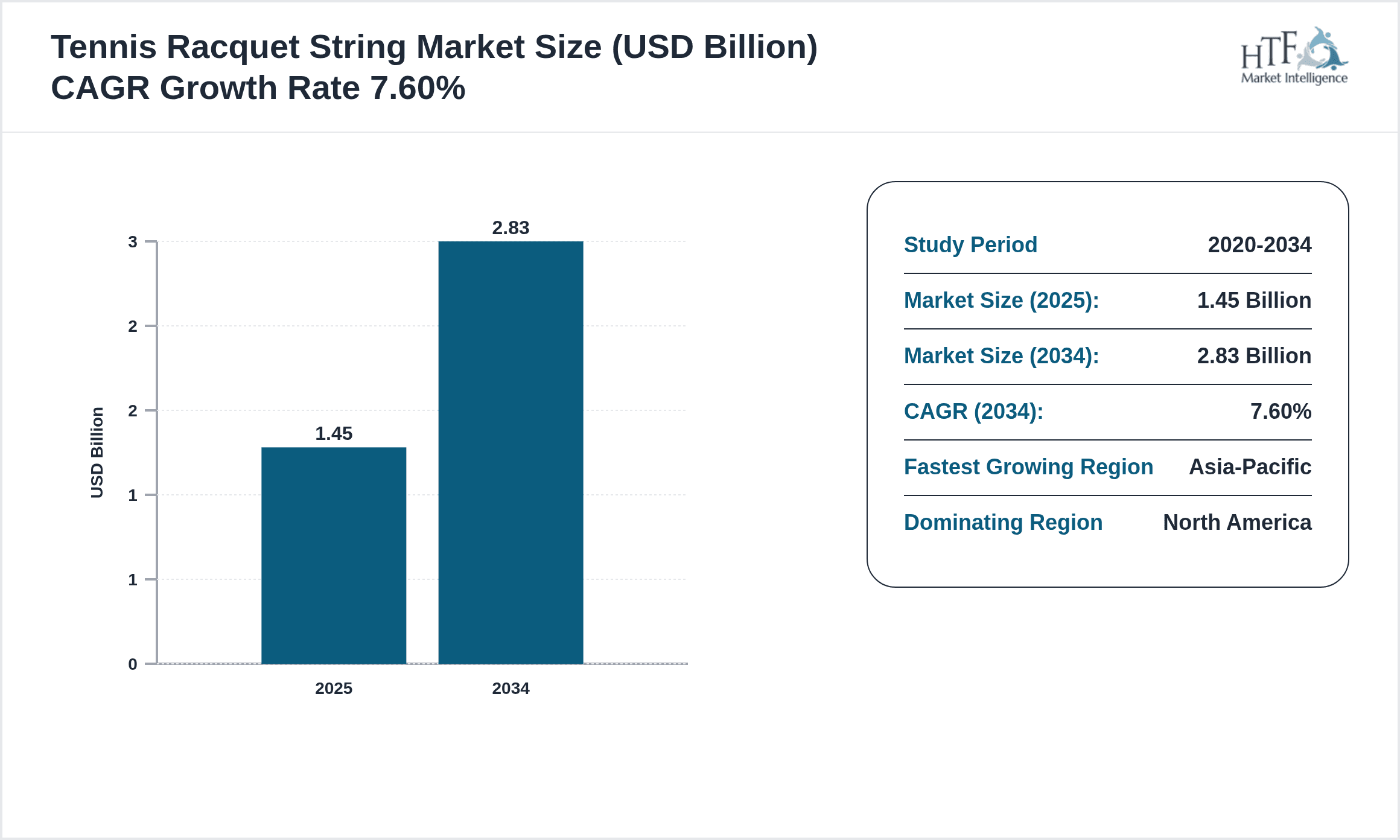
- •CAGR by 2034: 7.6%
- •Market Size by 2034: USD 2.83 Billion
- •Market Size in 2025: USD 1.45 Billion
- •Dominating Type: Polyester; Next-Following Type: Multifilament
- •Dominating Application: Professional Tennis; Next-Following Application: Recreational Tennis
- •Dominating Region: North America; Second-Leading Region: Asia-Pacific with Highest Growth Rate
- •Market Share of Dominating Type vs Followed Type: 45% vs 25%
- •Market Share of Dominating Application vs Followed Application: 40% vs 30%
- •Growth Rate of Dominating Type vs Followed Type: 6.5% vs 9.0%
- •Growth Rate of Dominating Application vs Followed Application: 6.2% vs 8.8%
Analyst View on Tennis Racquet String Market
- •The Tennis Racquet String market is poised for substantial expansion, particularly driven by emerging markets in Asia-Pacific and Latin America where tennis participation is rapidly increasing. Innovations in hybrid and eco-friendly string technologies will open new growth avenues, attracting both professional and recreational players.
- •North America is expected to maintain its dominant position due to established professional circuits, high consumer spending, and concentrated manufacturing capabilities, while Asia-Pacific will emerge as the fastest-growing region supported by infrastructural investments and rising sports culture.
- •Long-term industry transformation will be shaped by sustainability imperatives, digitization of product performance analytics, and personalized string customization, driving differentiation and higher consumer engagement. These factors will redefine competitive strategies and operational models in the decade ahead.
Regional Outlook
The North America currently holds a significant share of the market, primarily due to several key factors: increasing consumption rates, a burgeoning population, and robust economic momentum. These elements collectively drive demand, positioning this region as a leader in the market. On the other hand, Asia-Pacific is rapidly emerging as the fastest-growing area within the industry. This remarkable growth can be attributed to swift infrastructure development, the expansion of various industrial sectors, and a marked increase in consumer demand. These dynamics make this region a crucial player in shaping future market growth.
In our report, we cover a comprehensive analysis of the following regions and countries:
- North America
- LATAM
- West Europe
- Central & Eastern Europe
- Northern Europe
- Southern Europe
- East Asia
- Southeast Asia
- South Asia
- Central Asia
- Oceania
- MEA
| Feature | Details |
|---|---|
| Base Year Market Size | USD 1.45 Billion |
| Forecast Year Market Size | USD 2.83 Billion |
| CAGR | 7.6% |
| Forecast Period | 2026 to 2033 |
| YoY Growth | 7.6% |
| Regions Covered | North America, LATAM, West Europe, Central & Eastern Europe, Northern Europe, Southern Europe, East Asia, Southeast Asia, South Asia, Central Asia, Oceania, MEA |
| Key Companies | Tecnifibre (France), Babolat (France), Wilson Sporting Goods (USA), Luxilon (Belgium), Head (Austria), Yonex (Japan), Gamma Sports (USA), Prince Global Sports (USA), Ashaway (USA), Kirschbaum (Germany) |
Global Tennis Racquet String Market Scope & Changing Dynamics 2025-2034 - Table of Contents
Research enthusiast focused on transforming data uncovering into actionable insights through data-driven decision-making.
Frequently Asked Questions (FAQ):
The Compact Track Loaders market is projected to grow at a CAGR of 6.8% from 2025 to 2030, driven by increasing demand in construction and agricultural sectors.
North America currently leads the market with approximately 45% market share, followed by Europe at 28% and Asia-Pacific at 22%. The remaining regions account for 5% of the global market.
Key growth drivers include increasing construction activities, rising demand for versatile equipment in agriculture, technological advancements in track loader design, and growing preference for compact equipment in urban construction projects.