
Global Aero Engineering Service Market - Outlook 2020-2034
Global Aero Engineering Service Market is segmented by Product Type (Structural Engineering, Systems Engineering, Propulsion Engineering, Avionics Engineering, Materials Engineering), Application (Maintenance, Repair & Overhaul, Engineering Design, Testing & Certification, Component Manufacturing, Training & Simulation), End-Use Industry (Commercial Aviation, Defense & Military, Space Exploration, General Aviation), Distribution Channel (Direct Contracts, Third-Party Service Providers, OEM Partnerships), and Geography (North America, LATAM, West Europe, Central & Eastern Europe, Northern Europe, Southern Europe, East Asia, Southeast Asia, South Asia, Central Asia, Oceania, MEA)
Pricing
Report Overview
Executive Summary
- •The Global Aero Engineering Service Market is a dynamic and multifaceted industry segment that provides essential engineering services to aerospace manufacturers, airlines, defense, and space agencies. This market includes a wide range of services such as maintenance, repair & overhaul (MRO), engineering design, testing & certification, component manufacturing, and training & simulation. It supports the entire aerospace value chain by enhancing aircraft performance, safety, and compliance with stringent international aviation standards. Key applications span commercial aviation, military aircraft, space exploration, and general aviation, with end users ranging from OEMs to airline operators and government defense organizations. The value chain integrates cutting-edge technologies such as advanced materials, avionics, propulsion systems, and simulation tools to optimize design, manufacturing, and maintenance processes. Market growth is fueled by increasing air travel demand, fleet modernization, and regulatory pressures to improve environmental performance. Innovations in digital engineering and additive manufacturing are reshaping service delivery models, enabling faster turnaround times and reduced operational costs. Strategic partnerships and government investments further bolster market expansion, positioning aero engineering services as critical enablers of aerospace industry advancement globally.
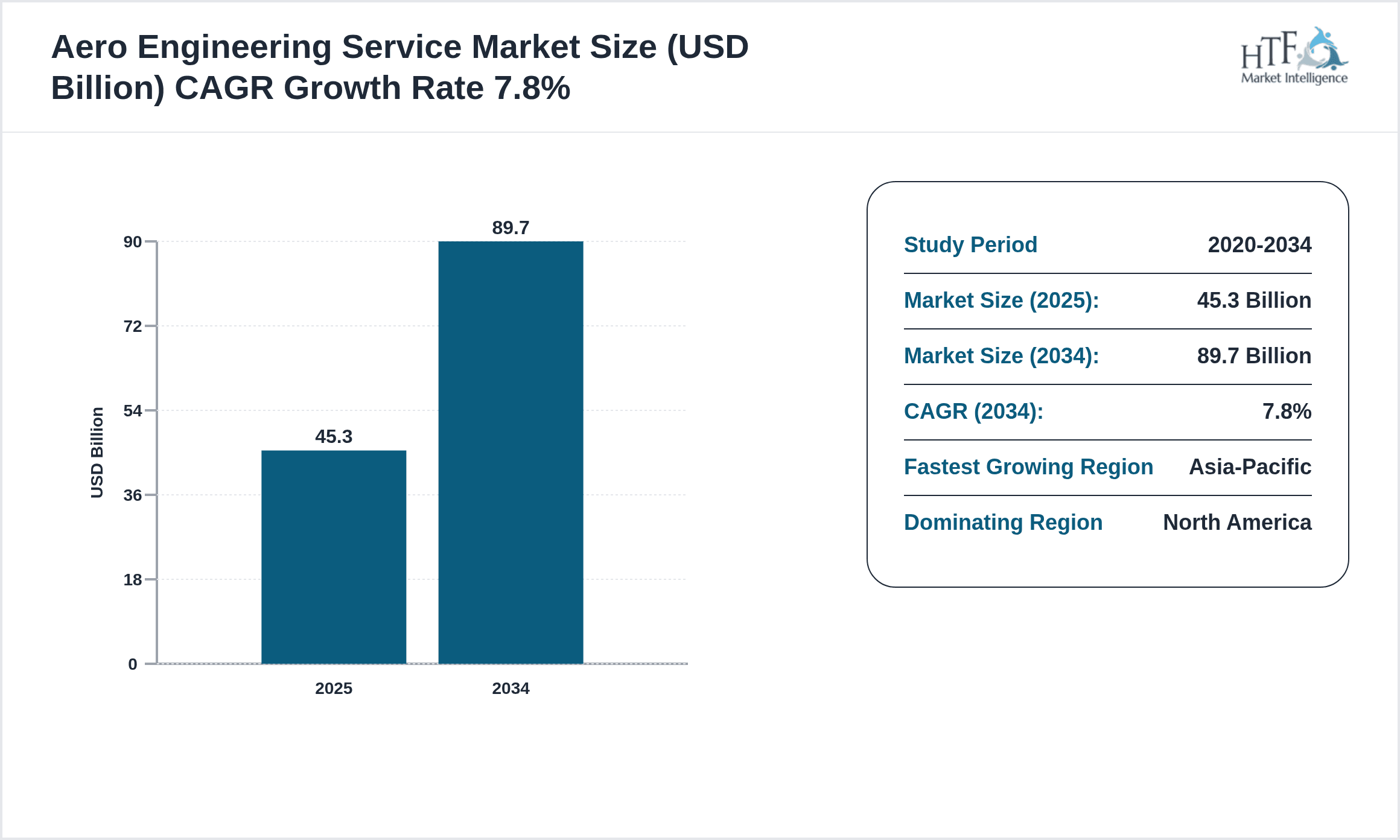
- •Key market highlights include a base year market size of USD 45.3 Billion in 2025, with a forecast to reach USD 89.7 Billion by 2034, reflecting a robust CAGR of 7.8%. The market exhibits a steady year-on-year growth rate of approximately 7.5%, driven by rising demand for fuel-efficient and technologically advanced aircraft, increased defense spending, and expansion of space exploration initiatives. North America currently dominates the market, supported by well-established aerospace hubs and high R&D investments. Asia-Pacific is identified as the fastest-growing region, fueled by rapid industrialization, increasing air traffic, and government support in countries like China and India.
- •The value proposition of the aero engineering services market lies in its ability to deliver specialized, technologically advanced solutions that ensure aircraft safety, reliability, and performance optimization. This market is strategically important for manufacturers and operators seeking to extend aircraft lifecycle, comply with evolving regulations, and adopt innovative aerospace technologies. The sector also drives economic growth by fostering skilled employment, technological innovation, and international collaboration. Stakeholders including OEMs, MRO providers, regulatory bodies, and governments benefit from enhanced operational efficiencies and competitive advantages enabled by comprehensive aero engineering services.
Competitive Landscape
The competitive environment of the Global Aero Engineering Service Market is shaped by intense rivalry among leading aerospace engineering firms, MRO providers, and specialized service companies. Market players employ differentiated strategies including innovation investment, strategic alliances, mergers and acquisitions, and geographic expansion to enhance their market position. The adoption of digital technologies such as AI-enabled predictive maintenance, digital twins, and additive manufacturing is a key differentiator, enabling companies to provide more efficient, cost-effective, and customized solutions. Pricing strategies vary across regions, influenced by labor costs, regulatory compliance expenses, and technology integration levels. Distribution channels encompass direct contracts with OEMs, airlines, and defense agencies, as well as collaborations with third-party service providers. Barriers to entry are significant due to high capital requirements, stringent certification processes, and the need for skilled labor. Regional competition is notable, with North America and Europe hosting well-established incumbents, while Asia-Pacific presents emerging players leveraging favorable economic conditions. Future trends indicate consolidation through M&A activities, increased focus on sustainability, and enhanced customer-centric service models, all of which will redefine the competitive landscape.
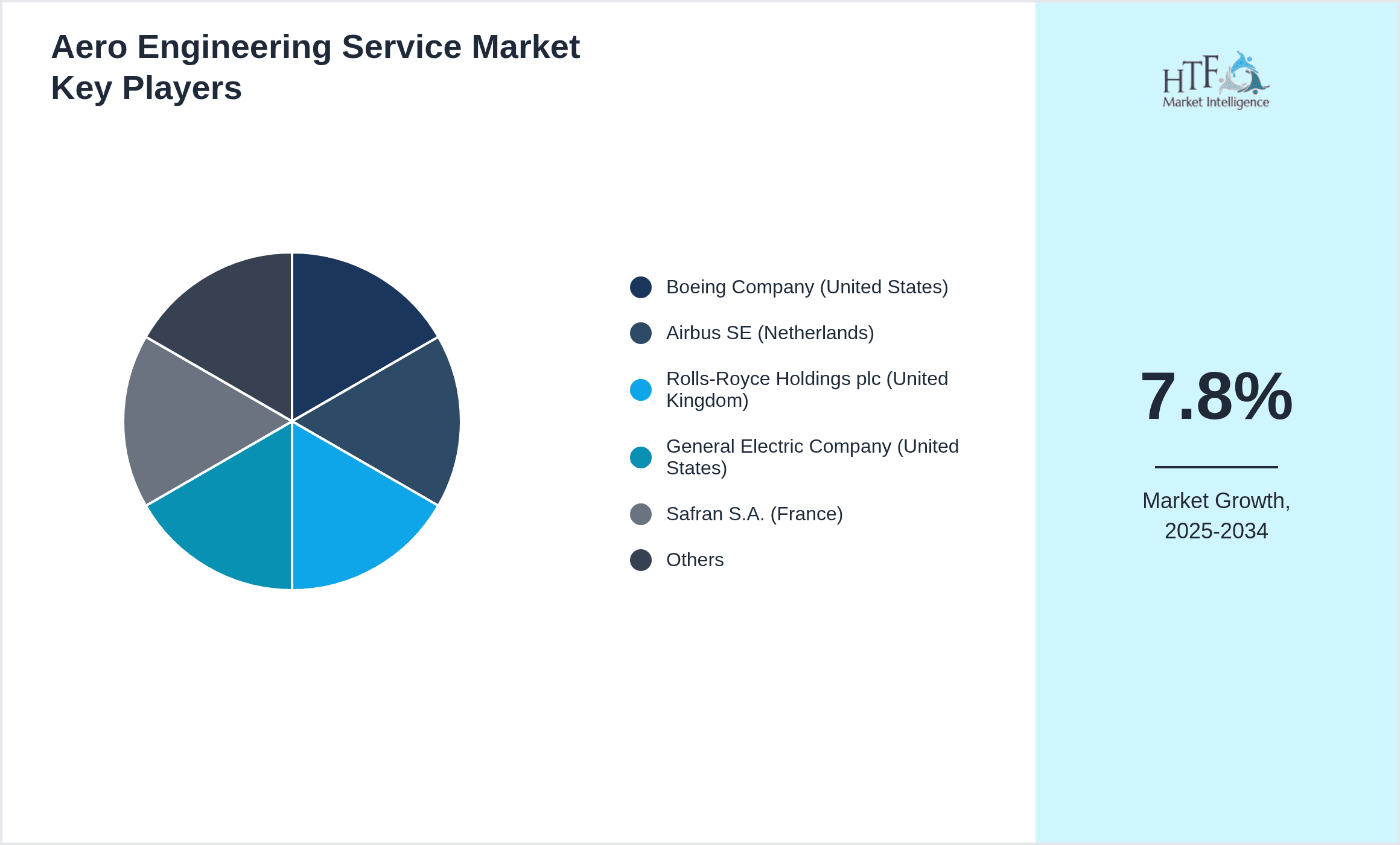
Leading Companies in Aero Engineering Service Market
- •Boeing Company (United States)
- •Airbus SE (Netherlands)
- •Rolls-Royce Holdings plc (United Kingdom)
- •General Electric Company (United States)
- •Safran S.A. (France)
- •Honeywell International Inc. (United States)
- •MTU Aero Engines AG (Germany)
- •L3Harris Technologies, Inc. (United States)
- •Lockheed Martin Corporation (United States)
- •Thales Group (France)
- •General Dynamics Corporation (United States)
- •Bombardier Inc. (Canada)
- •Leonardo S.p.A. (Italy)
- •Textron Inc. (United States)
- •Spirit AeroSystems Holdings, Inc. (United States)
- •Kongsberg Gruppen ASA (Norway)
- •GE Aviation (United States)
- •BAE Systems plc (United Kingdom)
- •Collins Aerospace (United States)
- •Honeywell Aerospace (United States)
- •Safran Engineering Services (France)
- •UTC Aerospace Systems (United States)
- •Mitsubishi Heavy Industries, Ltd. (Japan)
- •Dassault Aviation SA (France)
- •COMAC (Commercial Aircraft Corporation of China) (China)
Market Breakdown
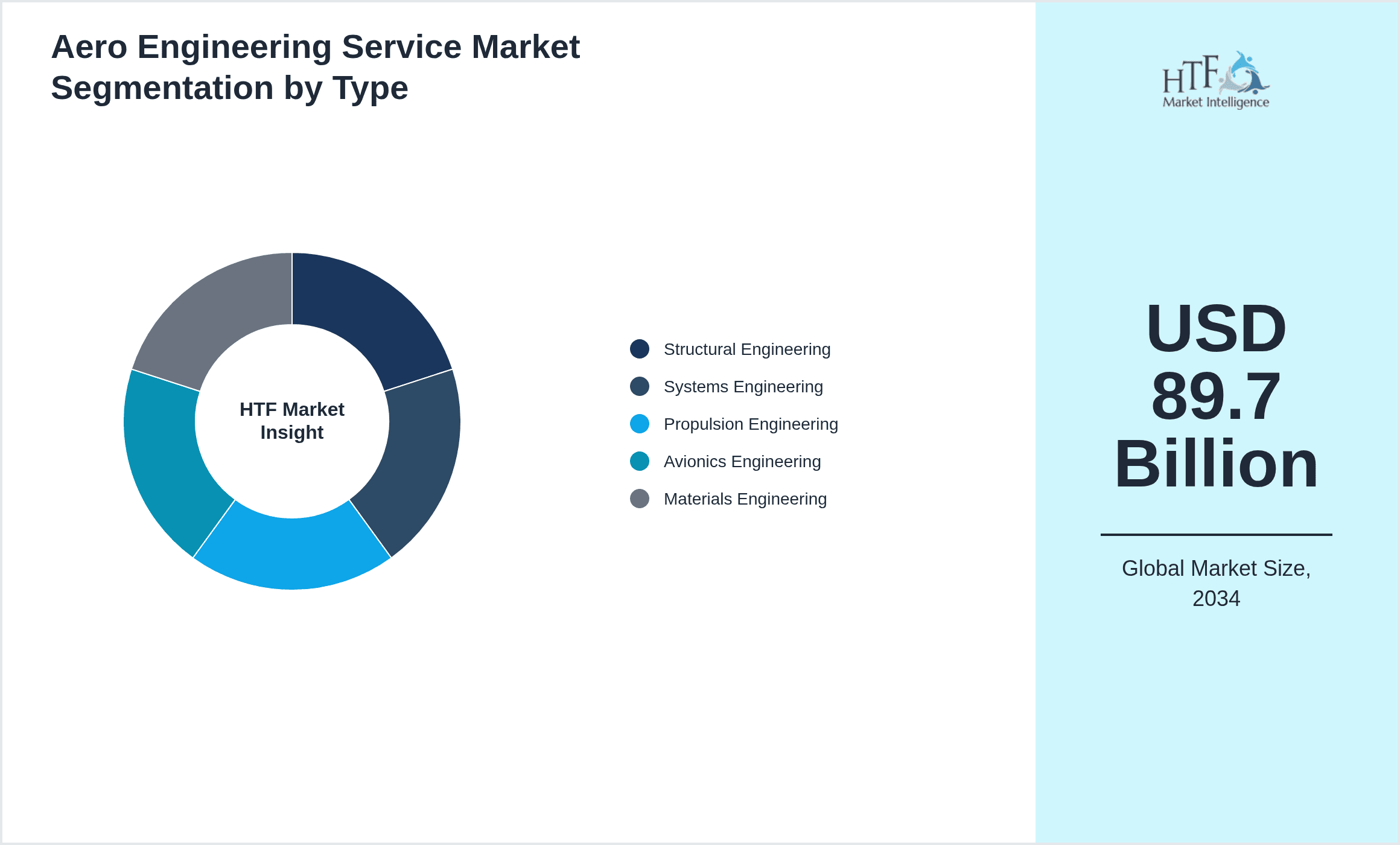
- •By Product Type
- ◦Structural Engineering
- ◦Systems Engineering
- ◦Propulsion Engineering
- ◦Avionics Engineering
- ◦Materials Engineering
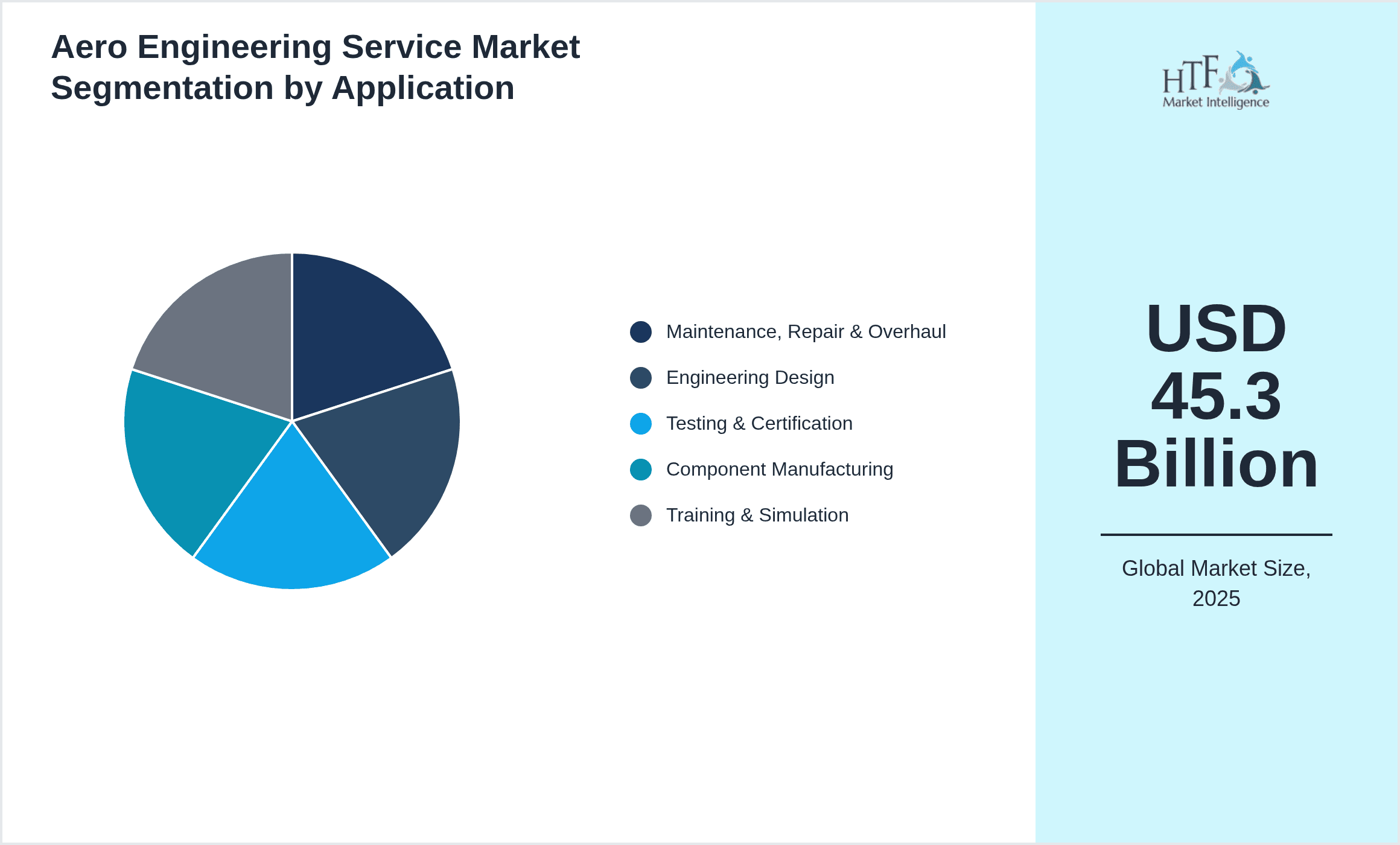
- •By Application
- ◦Maintenance, Repair & Overhaul
- ◦Engineering Design
- ◦Testing & Certification
- ◦Component Manufacturing
- ◦Training & Simulation
- •By End-Use Industry
- ◦Commercial Aviation
- ◦Defense & Military
- ◦Space Exploration
- ◦General Aviation
- •By Distribution Channel
- ◦Direct Contracts
- ◦Third-Party Service Providers
- ◦OEM Partnerships
Growth Dynamics
- •Increasing air travel demand globally, particularly in emerging economies, drives expansion in aircraft fleet size, necessitating extensive aero engineering services to support maintenance and modernization efforts.
- •Advancements in propulsion technology, including sustainable fuel engines and hybrid-electric designs, create new engineering service requirements for design, testing, and certification.
- •Regulatory mandates on safety, emissions, and noise reduction compel aerospace companies to adopt advanced materials and structural engineering services to meet compliance standards.
- •Digital transformation, including adoption of AI, IoT, and digital twins, enhances predictive maintenance capabilities, reducing downtime and operational costs for airlines and defense agencies.
- •Government investments in space exploration and defense modernization programs significantly boost demand for specialized engineering services in propulsion, avionics, and systems engineering.
- •Growth in low-cost carriers and regional airlines increases pressure on MRO service providers to deliver cost-efficient, rapid turnaround engineering solutions.
- •Strategic collaborations between OEMs and engineering service providers foster innovation and accelerate development cycles, creating competitive differentiation.
Market Trends
- •There is a rising trend toward integration of additive manufacturing techniques within aero engineering services to produce lightweight components with complex geometries, improving fuel efficiency.
- •The shift toward digital engineering platforms enables real-time collaboration across global teams, reducing design errors and accelerating certification processes.
- •Sustainability initiatives are driving innovation in materials engineering, focusing on eco-friendly composites and recycling methods within aerospace manufacturing and maintenance services.
- •Increasing adoption of predictive analytics and AI-driven diagnostics in MRO operations enhances aircraft availability and reduces maintenance costs.
- •The growing demand for unmanned aerial vehicles (UAVs) and urban air mobility solutions is expanding the scope of aero engineering services to new aircraft categories.
- •Cross-industry collaborations between aerospace and automotive sectors are emerging, especially in propulsion and avionics engineering, fostering technology transfer and innovation.
- •Cybersecurity in avionics systems is gaining prominence, with engineering services incorporating robust security protocols to protect aircraft systems against emerging threats.
Market Opportunities
- •Expansion into emerging markets with growing commercial aviation sectors offers significant opportunities for aero engineering service providers to establish early presence and partnerships.
- •Development of specialized services for electric and hybrid propulsion systems presents a high-growth niche aligned with industry decarbonization goals.
- •Investment in digital twin technology and virtual testing platforms can reduce certification times and lower costs, providing competitive advantage to service providers.
- •Increasing demand for MRO services for aging aircraft fleets worldwide creates opportunities for service expansion and innovation in maintenance solutions.
- •Collaborations with space agencies for lunar and Mars mission support open new frontiers for aerospace engineering services in propulsion and systems integration.
- •Customization of engineering services tailored to UAV and urban air mobility manufacturers addresses a rapidly evolving market segment with diverse needs.
- •Strategic acquisitions and partnerships can accelerate market entry and technology portfolio diversification, enhancing service offerings and client base.
Market Challenges
- •High capital expenditure and long certification cycles pose significant barriers for new entrants and slow down innovation adoption within the aero engineering service market.
- •Shortage of skilled aerospace engineers and technicians globally limits capacity expansion and threatens timely project delivery for service providers.
- •Stringent regulatory compliance requirements across multiple jurisdictions increase complexity and operational costs for global service providers.
- •Volatility in raw material prices and supply chain disruptions impact cost structures and project timelines adversely.
- •Competitive pressure from low-cost regional players challenges established companies to continuously innovate and optimize pricing strategies.
- •Integration challenges related to legacy systems and new digital technologies can hinder operational efficiency gains and data security.
- •Economic uncertainties and geopolitical tensions may affect defense spending and space exploration budgets, impacting market growth.
Regulatory Framework
- •The Federal Aviation Administration (FAA) implemented the Aviation Safety Enhancement Act between 2020 and 2025, mandating rigorous certification processes and enhancing safety oversight, significantly impacting engineering service providers.
- •The European Union Aviation Safety Agency (EASA) introduced the Environmental Standards Directive in 2023, enforcing stricter emissions and noise regulations, driving innovation in materials and propulsion engineering.
- •The International Civil Aviation Organization (ICAO) updated global safety and environmental guidelines in 2021, requiring compliance from aerospace engineering firms worldwide, fostering harmonized operational standards.
- •China's Civil Aviation Administration (CAAC) enacted the Aerospace Industry Compliance Framework in 2024, focusing on quality control and certification efficiency to support rapid industry growth.
- •The U.S. Department of Defense revised its Defense Acquisition Regulations in 2022, emphasizing cybersecurity and supply chain resilience in aerospace engineering contracts, influencing market dynamics.
Market Intelligence
- •15th January 2025, Boeing Company launched an advanced digital twin platform for aero engineering services that enables real-time monitoring and predictive maintenance of commercial aircraft fleets. This platform integrates AI and IoT technologies to optimize maintenance schedules, reduce downtime, and enhance safety. Targeting major airline operators globally, Boeing aims to expand its service portfolio and strengthen customer relationships through this innovation. The strategic objective is to capitalize on the growing demand for digital transformation in aerospace maintenance and engineering domains. Source: Boeing Official Press Release
- •3rd March 2025, Airbus SE introduced a next-generation composite materials certification process that significantly shortens design-to-market timeframes for aircraft components. This innovation leverages machine learning algorithms to simulate material behavior under various conditions, enhancing accuracy and compliance with international standards. Airbus positions this development as a competitive advantage in lightweight aircraft manufacturing, responding to sustainability and fuel efficiency trends. The rollout is expected to impact commercial and defense aerospace segments positively. Source: Airbus Industry Publication
- •20th June 2025, General Electric Company announced a strategic partnership with a leading AI firm to co-develop propulsion system diagnostics that use big data analytics for early fault detection. The collaboration aims to improve engine reliability and reduce maintenance costs for commercial and military aircraft. This initiative aligns with GE’s strategic focus on digitalization and sustainability in aero engineering services. The partnership is expected to catalyze further innovation across GE’s global aerospace service operations. Source: General Electric Corporate News
- •10th September 2025, Safran S.A. completed the acquisition of a specialized avionics engineering firm to enhance its technological capabilities and expand its market footprint in Asia-Pacific. The acquisition strengthens Safran’s portfolio in digital avionics and integrated systems, meeting rising demand for advanced aircraft electronics. This move supports Safran’s growth strategy focused on regional expansion and innovation leadership in aerospace engineering services. Market analysts view this as a significant consolidation in the competitive landscape. Source: Safran Official Announcement
- •Source: Official press releases, company websites, and industry publications
Regional Outlook
The North America currently holds a significant share of the market, primarily due to several key factors: increasing consumption rates, a burgeoning population, and robust economic momentum. These elements collectively drive demand, positioning this region as a leader in the market. On the other hand, Asia-Pacific is rapidly emerging as the fastest-growing area within the industry. This remarkable growth can be attributed to swift infrastructure development, the expansion of various industrial sectors, and a marked increase in consumer demand. These dynamics make this region a crucial player in shaping future market growth.
In our report, we cover a comprehensive analysis of the following regions and countries:
- North America
- LATAM
- West Europe
- Central & Eastern Europe
- Northern Europe
- Southern Europe
- East Asia
- Southeast Asia
- South Asia
- Central Asia
- Oceania
- MEA
| Feature | Details |
|---|---|
| Base Year Market Size | USD 45.3 Billion |
| Forecast Year Market Size | USD 89.7 Billion |
| CAGR | 7.8% |
| Forecast Period | 2026 to 2033 |
| YoY Growth | 7.5% |
| Scope of Report | Market is segmented by Product Type (Structural Engineering, Systems Engineering, Propulsion Engineering, Avionics Engineering, Materials Engineering), Application (Maintenance, Repair & Overhaul, Engineering Design, Testing & Certification, Component Manufacturing, Training & Simulation), End-Use Industry (Commercial Aviation, Defense & Military, Space Exploration, General Aviation), Distribution Channel (Direct Contracts, Third-Party Service Providers, OEM Partnerships) |
| Regions Covered | North America, LATAM, West Europe, Central & Eastern Europe, Northern Europe, Southern Europe, East Asia, Southeast Asia, South Asia, Central Asia, Oceania, MEA |
| Key Companies | Boeing Company (United States), Airbus SE (Netherlands), Rolls-Royce Holdings plc (United Kingdom), General Electric Company (United States), Safran S.A. (France), Honeywell International Inc. (United States), MTU Aero Engines AG (Germany), L3Harris Technologies, Inc. (United States), Lockheed Martin Corporation (United States), Thales Group (France), General Dynamics Corporation (United States), Bombardier Inc. (Canada), Leonardo S.p.A. (Italy), Textron Inc. (United States), Spirit AeroSystems Holdings, Inc. (United States), Kongsberg Gruppen ASA (Norway), GE Aviation (United States), BAE Systems plc (United Kingdom), Collins Aerospace (United States), Honeywell Aerospace (United States), Safran Engineering Services (France), UTC Aerospace Systems (United States), Mitsubishi Heavy Industries, Ltd. (Japan), Dassault Aviation SA (France), COMAC (Commercial Aircraft Corporation of China) (China) |
Global Aero Engineering Service Market - Outlook 2020-2034 - Table of Contents
Research enthusiast focused on transforming data uncovering into actionable insights through data-driven decision-making.
Frequently Asked Questions (FAQ):
The Market market is projected to grow at a steady CAGR from 2025 to 2030, driven by increasing demand and expansion in various applications.
North America currently leads the market, followed by Europe and Asia-Pacific.
Key growth drivers include increasing activities, rising demand for innovative solutions, technological advancements, and growing preference for efficient products.