
Global Commercial Juicer Market Size, Growth & Revenue 2024-2034
Global Commercial Juicer Market is segmented by Product Type (Centrifugal Juicers, Masticating Juicers, Triturating Juicers, Citrus Juicers, Hydraulic Press Juicers), Application (Restaurants, Hotels, Juice Bars, Cafeterias, Catering Services), End-Use Industry (Hospitality, Foodservice, Retail Juice Outlets, Healthcare & Wellness Centers), Distribution Channel (Direct Sales, Online Retail, Distributors & Wholesalers), and Geography (North America, LATAM, West Europe, Central & Eastern Europe, Northern Europe, Southern Europe, East Asia, Southeast Asia, South Asia, Central Asia, Oceania, MEA)
Pricing
Report Overview
Executive Summary
- •The global commercial juicer market represents a vital segment within the commercial kitchen appliance industry, focusing on high-performance juicing equipment used in professional foodservice settings. It includes a variety of juicer types such as centrifugal, masticating, triturating, citrus, and hydraulic press juicers, each designed to meet specific operational needs related to juice extraction efficiency, volume capacity, and nutritional preservation. The market caters predominantly to establishments like restaurants, hotels, juice bars, cafeterias, and catering services, where freshness, speed, and hygiene are critical. Fueled by growing health awareness and consumer preference for fresh juices, alongside increasing investment in foodservice infrastructure worldwide, the market has witnessed substantial growth. Technological advancements, including automation and improved cleaning mechanisms, have further propelled adoption. Geographically, North America leads due to established foodservice industries, while Asia-Pacific shows the fastest expansion driven by urbanization and evolving dietary preferences. This report analyzes market dynamics, trends, challenges, and competitive landscapes to provide a comprehensive overview for stakeholders.
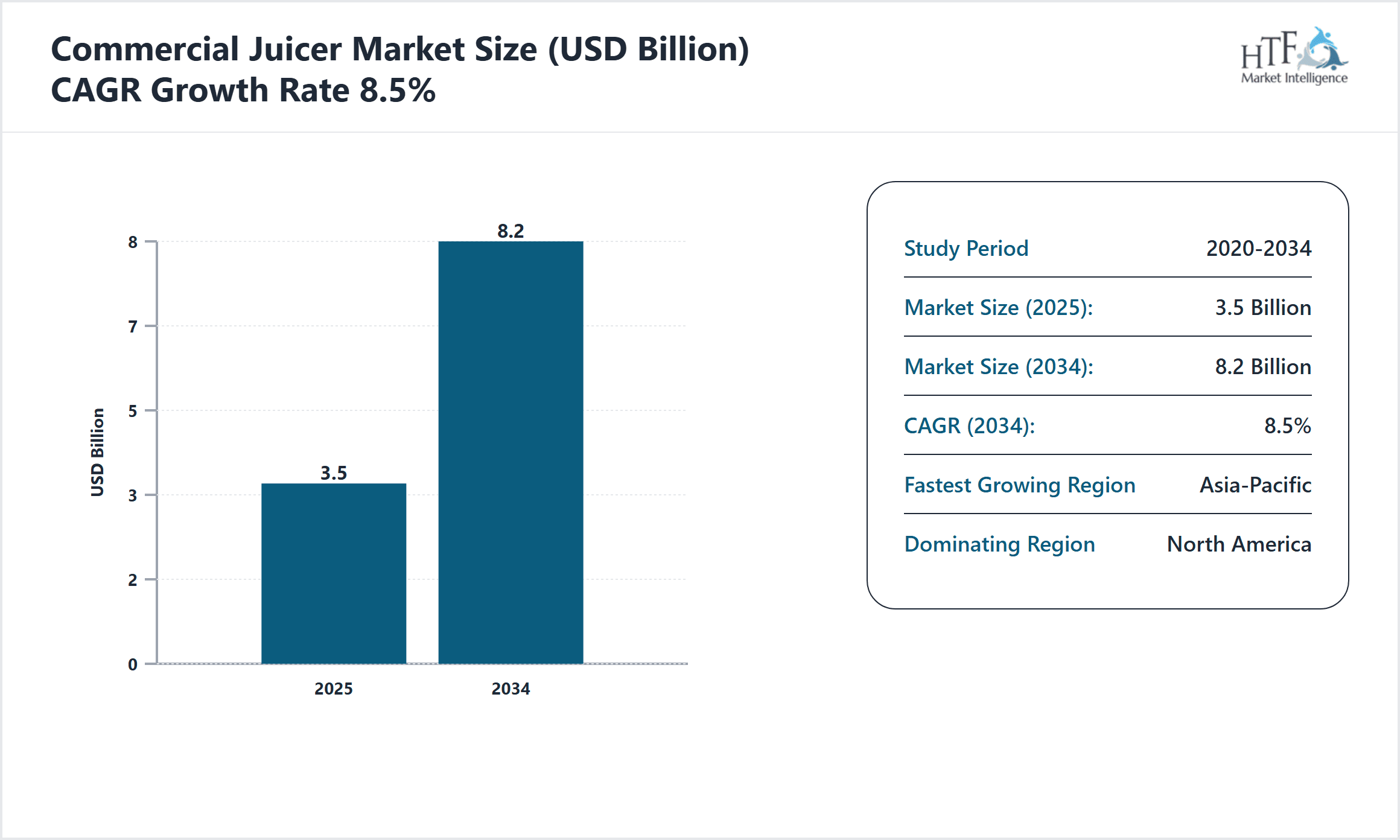
- •Key highlights include a robust CAGR of 8.5% projected from 2024 to 2034, expanding the market size from USD 3.5 billion in 2024 to an anticipated USD 8.2 billion by 2034. Centrifugal juicers dominate the product segment due to their efficiency and cost-effectiveness, while hydraulic press juicers are the fastest growing, favored for juice quality and nutrient retention. Applications in restaurants and juice bars lead consumption, reflecting rising demand for fresh beverage options. North America holds the largest market share, driven by technological maturity and high consumer spending, whereas Asia-Pacific is the fastest growing region, propelled by expanding hospitality sectors and increasing health consciousness. The market environment is characterized by intensifying competition, continuous innovation, and evolving regulatory frameworks aimed at food safety and energy efficiency.
- •The commercial juicer market offers significant value propositions to foodservice stakeholders by enhancing operational efficiency, ensuring product consistency, and supporting health-oriented menu diversification. For manufacturers and distributors, the market presents opportunities for product innovation, geographic expansion, and strategic partnerships. The increasing consumer shift towards natural and fresh juices underlines the strategic importance of this market across multiple industries including hospitality, retail, and wellness sectors. With rising investments in foodservice infrastructure globally, particularly in emerging economies, the market is poised for sustained growth and technological advancement, making it an attractive domain for investors, manufacturers, and service providers.
Competitive Landscape
The global commercial juicer market is highly competitive, with numerous players focusing on innovation, product differentiation, and strategic partnerships to capture market share. Leading manufacturers invest heavily in R&D to enhance juicer efficiency, durability, and user-friendliness, incorporating automation and hygienic features to meet stringent food safety standards. Market rivalry is intensified by the presence of both established multinational corporations and emerging regional players aiming to capitalize on localized demand and cost advantages. Competitive strategies include expanding product portfolios, optimizing distribution networks, and leveraging digital marketing to enhance brand visibility. Mergers and acquisitions have been pivotal, enabling companies to consolidate market positions and access new technologies. Pricing strategies vary by region and product sophistication, with premium juicers targeting upscale hospitality segments and economical models serving smaller establishments. Future competition will likely focus on sustainability, energy efficiency, and integration with smart kitchen ecosystems.
Leading Companies in Commercial Juicer Market
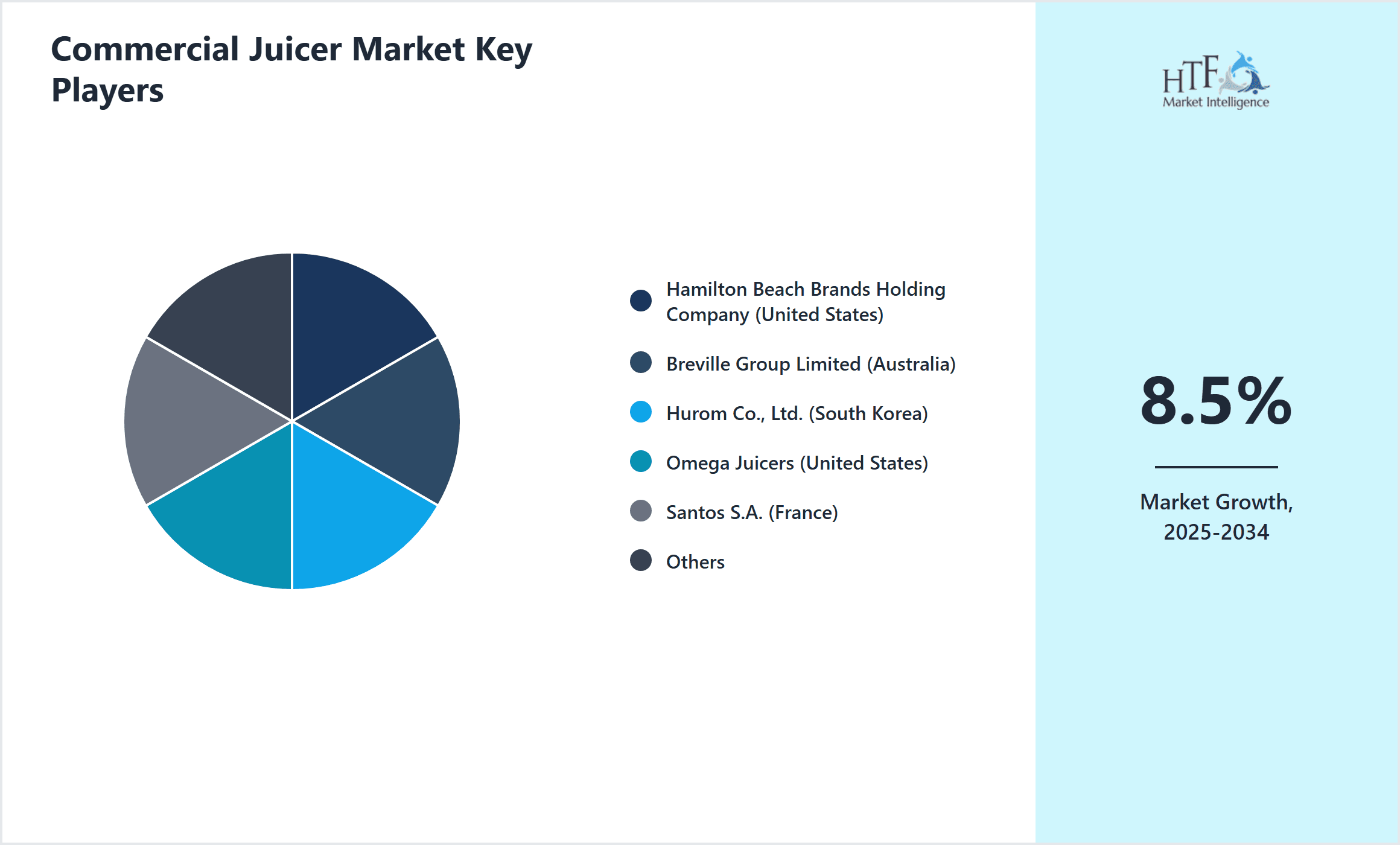
- •Hamilton Beach Brands Holding Company (United States)
- •Breville Group Limited (Australia)
- •Hurom Co., Ltd. (South Korea)
- •Omega Juicers (United States)
- •Santos S.A. (France)
- •Kuvings Co., Ltd. (South Korea)
- •Tribest Corporation (United States)
- •Braun GmbH (Germany)
- •Philips N.V. (Netherlands)
- •Panasonic Corporation (Japan)
- •Cuisinart (United States)
- •Hurom America (United States)
- •Jamba Juice Company (United States)
- •Vitamix Corporation (United States)
- •Breville USA (United States)
- •Severin Elektrogeräte GmbH (Germany)
- •Aicok (China)
- •Joyoung Co., Ltd. (China)
- •Zummo Electro S.L. (Spain)
- •Russell Hobbs (United Kingdom)
- •Kitchenaid (United States)
- •Smeg S.p.A. (Italy)
- •Hurom Europe (Germany)
- •Severin USA (United States)
- •Bamix (Switzerland)
Market Breakdown
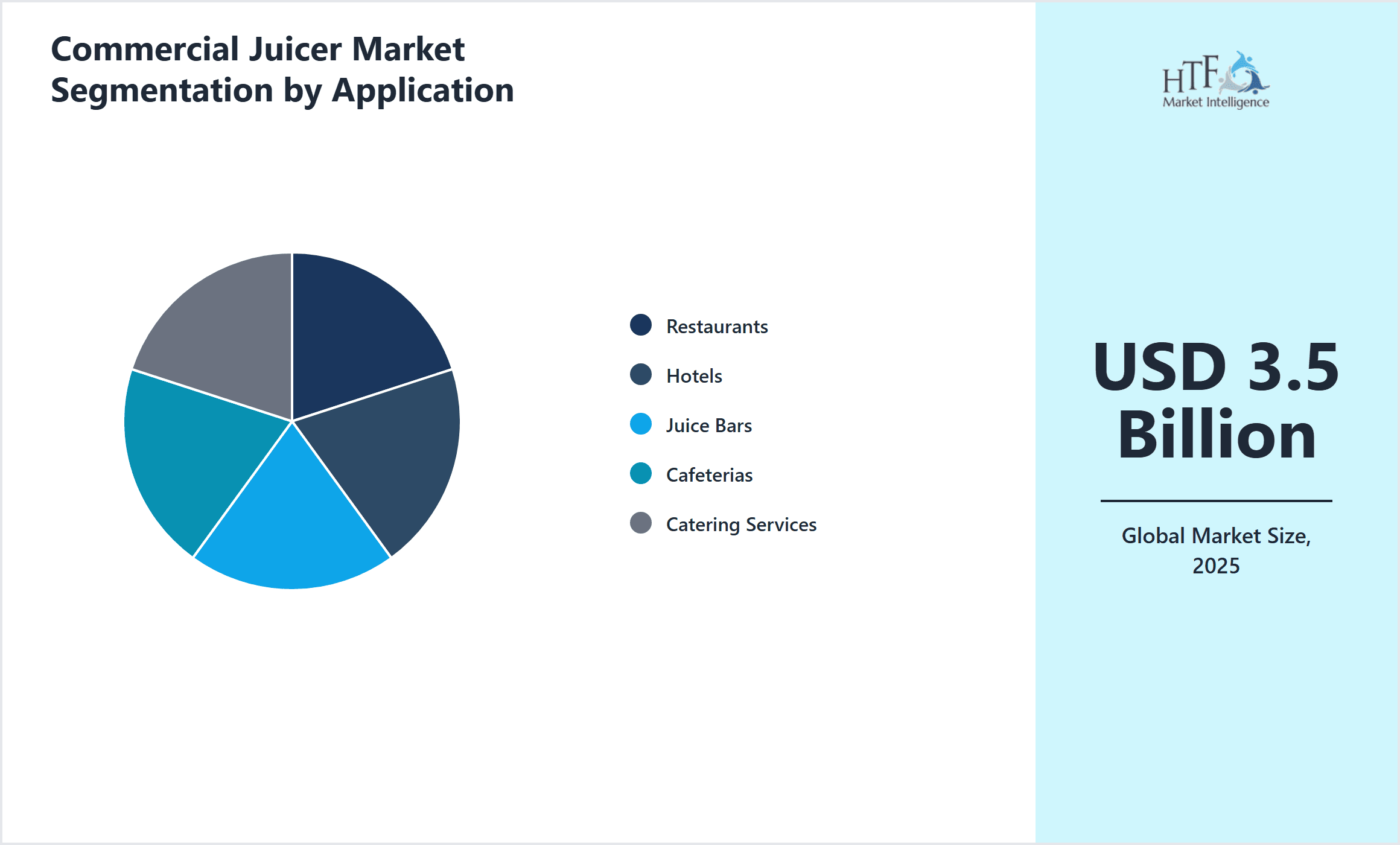
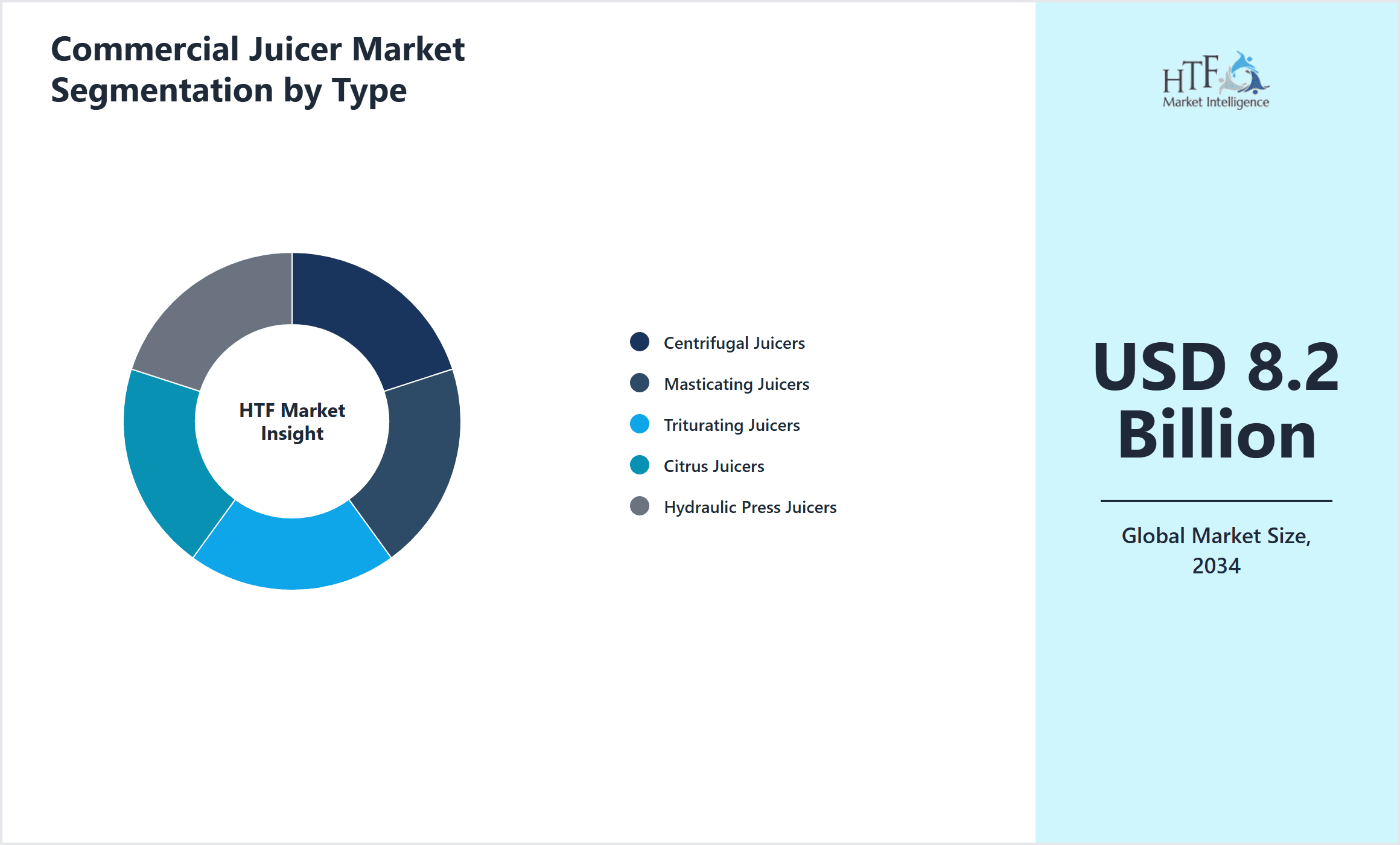
- •By Product Type
- ◦Centrifugal Juicers
- ◦Masticating Juicers
- ◦Triturating Juicers
- ◦Citrus Juicers
- ◦Hydraulic Press Juicers
- •By Application
- ◦Restaurants
- ◦Hotels
- ◦Juice Bars
- ◦Cafeterias
- ◦Catering Services
- •By End-Use Industry
- ◦Hospitality
- ◦Foodservice
- ◦Retail Juice Outlets
- ◦Healthcare & Wellness Centers
- •By Distribution Channel
- ◦Direct Sales
- ◦Online Retail
- ◦Distributors & Wholesalers
Growth Dynamics
- •Increasing consumer preference for fresh and healthy beverages is a primary growth driver, pushing foodservice providers to adopt efficient commercial juicers that ensure quality and speed. This trend is supported by rising awareness of nutrition and wellness globally.
- •Advancements in juicing technology, such as improved motor efficiency, automated cleaning systems, and noise reduction, have made commercial juicers more appealing and cost-effective for high-volume operations, boosting market adoption.
- •Expansion of the hospitality industry, especially in emerging economies within Asia-Pacific and Latin America, is driving demand for commercial juicers as restaurants and hotels diversify their beverage offerings to attract health-conscious consumers.
- •Regulatory emphasis on food safety and hygiene standards is prompting commercial kitchens to upgrade to juicing equipment that complies with stringent sanitation requirements, supporting market growth.
- •E-commerce growth has simplified procurement channels for commercial juicers, enabling smaller operators to access advanced equipment and thereby broadening the market base.
Market Trends
- •A notable trend is the shift towards hydraulic press juicers, favored for their superior juice yield and nutrient retention, which is influencing product development and consumer preferences in the commercial segment.
- •Sustainability is becoming central, with manufacturers introducing energy-efficient models and recyclable materials to meet environmental standards and consumer expectations for green products.
- •Integration of smart technology in commercial juicers, including IoT-enabled monitoring and remote diagnostics, is enhancing operational efficiency and predictive maintenance in foodservice establishments.
- •The rise of boutique juice bars and wellness cafes globally is driving demand for compact, versatile juicers that combine aesthetics with functionality.
- •Collaborative innovation between juicer manufacturers and hospitality chains is enabling customized solutions tailored to specific operational needs and menu requirements.
Market Opportunities
- •Emerging markets in Asia-Pacific and Latin America present significant growth opportunities due to increasing urbanization, disposable income, and growing health awareness among consumers.
- •Development of multifunctional juicing equipment that can process a wider range of fruits and vegetables caters to diverse consumer tastes and can open new revenue streams for manufacturers.
- •Strategic partnerships with hospitality chains and retail juice outlets offer opportunities for manufacturers to scale distribution and enhance brand visibility globally.
- •Innovation in portable and energy-efficient commercial juicers can tap into growing demand from mobile foodservice operators and event caterers seeking convenience and sustainability.
- •Expansion of online sales platforms and digital marketing can enable manufacturers to reach niche segments and smaller commercial operators more effectively.
Market Challenges
- •High initial investment and maintenance costs for advanced commercial juicing equipment can deter small and medium-sized enterprises from adopting top-tier products.
- •The fragmented nature of the market with numerous small manufacturers leads to intense price competition and challenges in establishing brand loyalty.
- •Strict regulatory compliance and certification requirements across different regions increase complexity and cost for manufacturers seeking global market penetration.
- •Supply chain disruptions, especially for specialized components and materials, can impact production schedules and market availability.
- •Rapid technological changes necessitate continuous innovation, requiring significant R&D investment which may be challenging for smaller players.
Regulatory Framework
- •Between 2019 and 2024, several regions implemented enhanced food safety regulations mandating stricter sanitation protocols for commercial kitchen equipment, including commercial juicers. Compliance requires use of materials resistant to contamination and designs that facilitate easy cleaning, impacting product development.
- •Energy efficiency standards introduced in North America and Europe during 2021-2023 require commercial juicers to meet specific power consumption thresholds, promoting the adoption of eco-friendly models and incentivizing manufacturers to innovate energy-saving technologies.
- •The European Union enforced the Restriction of Hazardous Substances Directive (RoHS) on juicing equipment from 2020, limiting use of hazardous materials to reduce environmental impact and ensure user safety.
- •In Asia-Pacific, countries have increasingly adopted international quality certifications such as ISO and NSF for foodservice equipment between 2019 and 2024, facilitating cross-border trade and consumer confidence in commercial juicers.
- •Government incentives and subsidies targeting energy-efficient commercial appliances have been introduced in various regions, including North America and Europe, encouraging manufacturers and buyers to adopt compliant commercial juicers and reduce operational costs.
Market Intelligence
- •15th January 2025, Breville Group Limited launched its latest centrifugal commercial juicer model featuring enhanced motor efficiency and noise reduction technology aimed at upscale restaurants and juice bars. The product integrates smart sensors to optimize juice extraction and cleaning cycles, reflecting Breville's commitment to innovation and sustainability. This launch strengthens Breville’s market position especially in North America and Europe, targeting growing demand for high-performance juicing equipment.
- •10th March 2025, Hurom Co., Ltd. introduced a new hydraulic press juicer designed for high-volume commercial use with improved nutrient retention and minimal oxidation. Targeted at premium juice bars and wellness centers, the product incorporates IoT-enabled features for remote monitoring and maintenance, positioning Hurom as a technology leader in the commercial juicer market.
- •22nd May 2024, Hamilton Beach Brands Holding Company announced a strategic partnership with a major hospitality group to supply centrifugal and masticating juicers across multiple hotel chains in Asia-Pacific. This collaboration aims to expand Hamilton Beach’s footprint in emerging markets by leveraging the partner’s extensive regional presence and expertise in foodservice equipment distribution.
- •30th August 2024, Philips N.V. completed acquisition of a regional juicer manufacturer specializing in citrus juicers, enhancing Philips’ commercial product portfolio and enabling entry into the Latin American market. The acquisition is expected to accelerate innovation and provide access to new customer segments focused on fresh citrus juice offerings.
- •Source: Official company press releases and industry publications
Regional Outlook
The North America currently holds a significant share of the market, primarily due to several key factors: increasing consumption rates, a burgeoning population, and robust economic momentum. These elements collectively drive demand, positioning this region as a leader in the market. On the other hand, Asia-Pacific is rapidly emerging as the fastest-growing area within the industry. This remarkable growth can be attributed to swift infrastructure development, the expansion of various industrial sectors, and a marked increase in consumer demand. These dynamics make this region a crucial player in shaping future market growth.
In our report, we cover a comprehensive analysis of the following regions and countries:
- North America
- LATAM
- West Europe
- Central & Eastern Europe
- Northern Europe
- Southern Europe
- East Asia
- Southeast Asia
- South Asia
- Central Asia
- Oceania
- MEA
| Feature | Details |
|---|---|
| Base Year Market Size | USD 3.5 Billion |
| Forecast Year Market Size | USD 8.2 Billion |
| CAGR | 8.5% |
| Forecast Period | 2026 to 2033 |
| YoY Growth | 8.2% |
| Scope of Report | Market is segmented by Product Type (Centrifugal Juicers, Masticating Juicers, Triturating Juicers, Citrus Juicers, Hydraulic Press Juicers), Application (Restaurants, Hotels, Juice Bars, Cafeterias, Catering Services), End-Use Industry (Hospitality, Foodservice, Retail Juice Outlets, Healthcare & Wellness Centers), Distribution Channel (Direct Sales, Online Retail, Distributors & Wholesalers) |
| Regions Covered | North America, LATAM, West Europe, Central & Eastern Europe, Northern Europe, Southern Europe, East Asia, Southeast Asia, South Asia, Central Asia, Oceania, MEA |
| Key Companies | Hamilton Beach Brands Holding Company (United States), Breville Group Limited (Australia), Hurom Co., Ltd. (South Korea), Omega Juicers (United States), Santos S.A. (France), Kuvings Co., Ltd. (South Korea), Tribest Corporation (United States), Braun GmbH (Germany), Philips N.V. (Netherlands), Panasonic Corporation (Japan), Cuisinart (United States), Hurom America (United States), Jamba Juice Company (United States), Vitamix Corporation (United States), Breville USA (United States), Severin Elektrogeräte GmbH (Germany), Aicok (China), Joyoung Co., Ltd. (China), Zummo Electro S.L. (Spain), Russell Hobbs (United Kingdom), Kitchenaid (United States), Smeg S.p.A. (Italy), Hurom Europe (Germany), Severin USA (United States), Bamix (Switzerland) |
Global Commercial Juicer Market Size, Growth & Revenue 2024-2034 - Table of Contents
Frequently Asked Questions (FAQ):
The Compact Track Loaders market is expected to see value worth 5.3 Billion in 2025.
North America currently leads the market with approximately 45% market share, followed by Europe at 28% and Asia-Pacific at 22%. The remaining regions account for 5% of the global market.
Key growth drivers include increasing construction activities, rising demand for versatile equipment in agriculture, technological advancements in track loader design, and growing preference for compact equipment in urban construction projects.