
Global Magnesium Chloride Hexahydrate Flakes Market Size, Growth & Revenue 2025-2034
Global Magnesium Chloride Hexahydrate Flakes Market is segmented by Product Type (Flakes, Granules, Brine, Powder, Solution), Application (Deicing Agents, Dust Control, Industrial Water Treatment, Food Additives, Pharmaceuticals), End-Use Industry (Chemical Manufacturing, Construction, Food & Beverage, Pharmaceuticals), Distribution Channel (Direct Sales, Distributors, E-commerce), and Geography (North America, LATAM, West Europe, Central & Eastern Europe, Northern Europe, Southern Europe, East Asia, Southeast Asia, South Asia, Central Asia, Oceania, MEA)
Pricing
Report Overview
Executive Summary
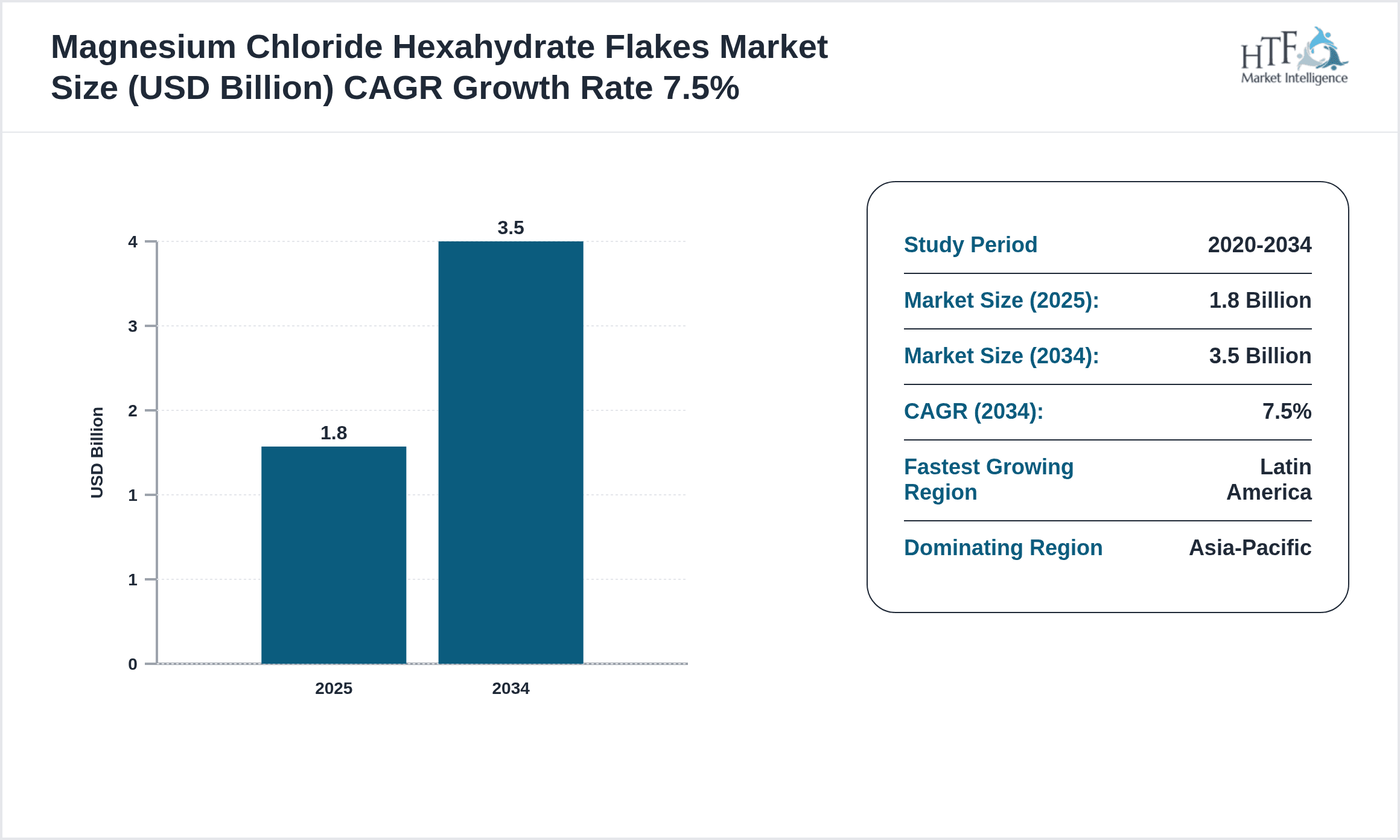
- •The global Magnesium Chloride Hexahydrate Flakes market represents a vital segment of the chemical industry, characterized by the production and application of magnesium chloride with six water molecules in flake form. This product is utilized extensively in sectors such as deicing, dust control, water treatment, food additives, and pharmaceuticals due to its hygroscopic and chemical properties. Innovations in manufacturing processes and growing environmental concerns have catalyzed demand for high-purity flakes, especially in developing regions with increasing infrastructure development. The market is shaped by the interplay of raw material sourcing, regulatory frameworks, and end-user adoption patterns across multiple geographic regions including North America, Europe, Asia-Pacific, Latin America, and the Middle East & Africa. Increasing infrastructure projects, coupled with rising demand for eco-friendly dust suppression and anti-icing agents, underpin steady market expansion. Additionally, the expanding pharmaceutical and food industries are integrating magnesium chloride flakes for their preservative and medicinal properties, further driving growth. Competitive dynamics include a mix of global chemical manufacturers and regional producers leveraging technological advancements and strategic partnerships to enhance market penetration. Overall, the market is forecasted to grow at a CAGR of 7.5% from 2025 to 2034, with notable growth in Latin America and Asia-Pacific regions. This comprehensive report delivers detailed insights into market drivers, trends, challenges, and opportunities, supporting strategic decision-making for industry stakeholders worldwide.
- •Key market highlights include a base market size of USD 1.8 Billion in 2025, projected to reach USD 3.5 Billion by 2034, reflecting robust growth driven by infrastructure development and environmental regulations globally. The flake form remains the leading product segment due to ease of handling and high purity, while powder types exhibit the fastest growth due to expanding pharmaceutical applications. Asia-Pacific dominates the market with extensive industrial use and resource availability, whereas Latin America is the fastest growing region propelled by mining and agriculture sectors. Year-on-year growth is steady at approximately 7.3%, indicating sustained market momentum. These data points underscore the strategic importance of magnesium chloride flakes in various applications and the evolving competitive landscape.
- •The value proposition of magnesium chloride hexahydrate flakes lies in their multifunctionality and cost-effectiveness, serving as a superior alternative to other chlorides in deicing and dust control. The strategic importance extends to chemical manufacturers, infrastructure developers, food and pharmaceutical industries, and environmental regulators aiming for sustainable practices. The market offers opportunities for innovation in product formulation, expansion into emerging geographies, and integration with green technologies. Stakeholders benefit from insights addressing raw material sourcing, regulatory compliance, and end-use industry requirements, enabling optimized investment and operational strategies in a competitive global environment.
Competitive Landscape
The global Magnesium Chloride Hexahydrate Flakes market features a competitive environment marked by a mix of multinational corporations and regional manufacturers striving for market share through innovation, strategic alliances, and capacity expansion. Market players differentiate by product quality, technological capabilities, and distribution reach, leveraging advanced extraction and purification technologies to enhance product performance and environmental compliance. Competitive strategies include vertical integration, mergers and acquisitions, and expansion into emerging markets to capture growth opportunities. The market also exhibits pricing competitiveness influenced by raw material availability and geopolitical factors. Distribution channels are evolving with increased penetration of digital platforms, facilitating wider accessibility. Regulatory compliance and sustainability initiatives play a critical role in shaping competitive dynamics, as companies invest in eco-friendly processes and certifications. Future trends point towards increased consolidation, product diversification, and strategic partnerships to address regional demand fluctuations and technological advancements, all contributing to a dynamic and evolving global marketplace.
Leading Companies in Magnesium Chloride Hexahydrate Flakes Market
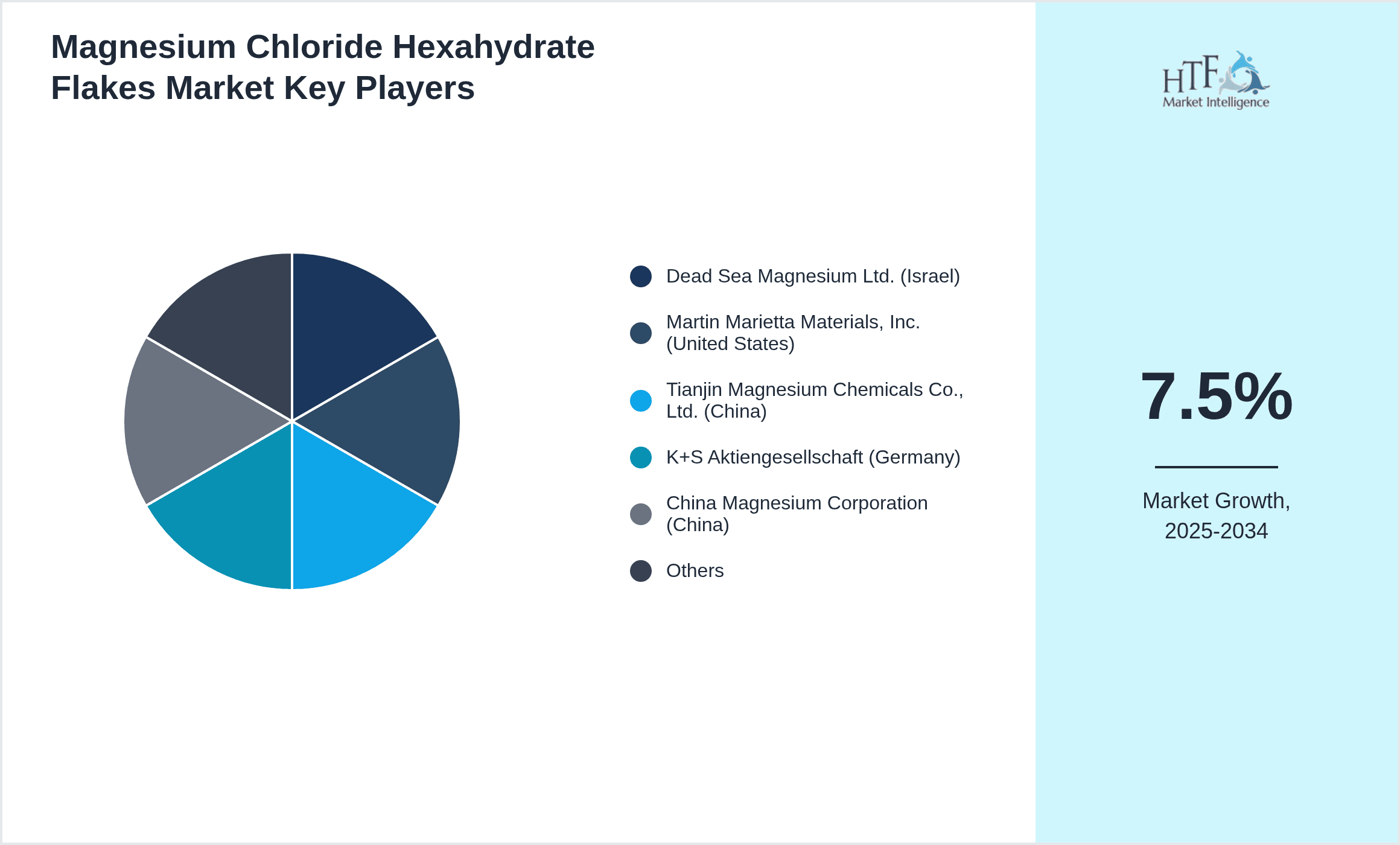
- •Dead Sea Magnesium Ltd. (Israel)
- •Martin Marietta Materials, Inc. (United States)
- •Tianjin Magnesium Chemicals Co., Ltd. (China)
- •K+S Aktiengesellschaft (Germany)
- •China Magnesium Corporation (China)
- •Mitsubishi Corporation (Japan)
- •Cargill, Incorporated (United States)
- •Magnesium Products Ltd. (United Kingdom)
- •Qinghai Salt Lake Industry Co., Ltd. (China)
- •Hubei Xingfa Chemicals Group Co., Ltd. (China)
- •Tata Chemicals Limited (India)
- •BASF SE (Germany)
- •Ocean Minerals LLC (United States)
- •Nippon Chemical Industrial Co., Ltd. (Japan)
- •Dead Sea Works Ltd. (Israel)
- •Magnesium Chloride Limited (Australia)
- •General Chemical Corporation (United States)
- •Solar Salt Company (United States)
- •Magnesium Chloride Industries (Canada)
- •China National Salt Industry Corporation (China)
- •Rio Tinto Group (United Kingdom)
- •Koch Industries, Inc. (United States)
- •Mosaic Company (United States)
- •Tosoh Corporation (Japan)
- •AkzoNobel N.V. (Netherlands)
Market Breakdown
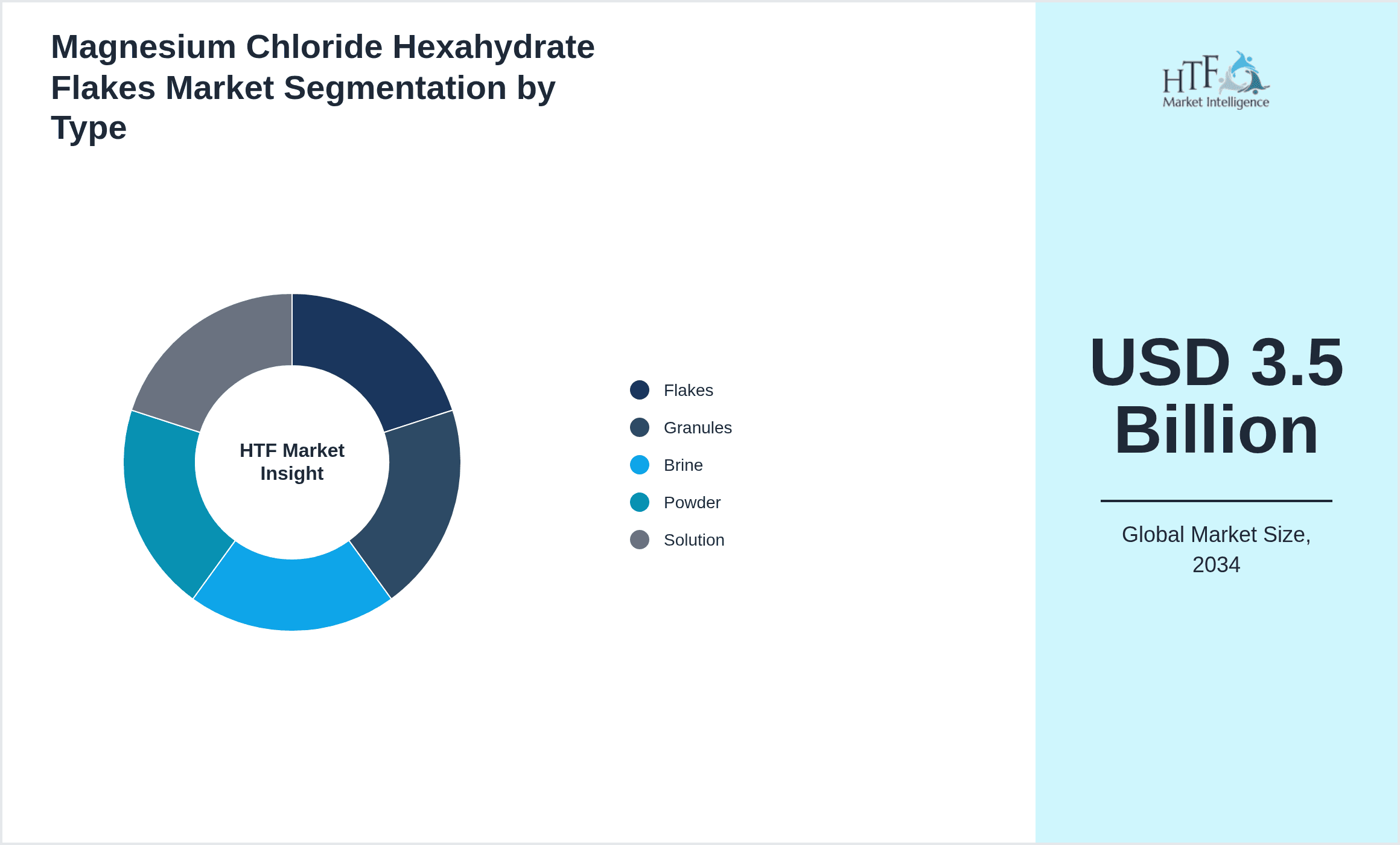
- •By Product Type
- ◦Flakes
- ◦Granules
- ◦Brine
- ◦Powder
- ◦Solution
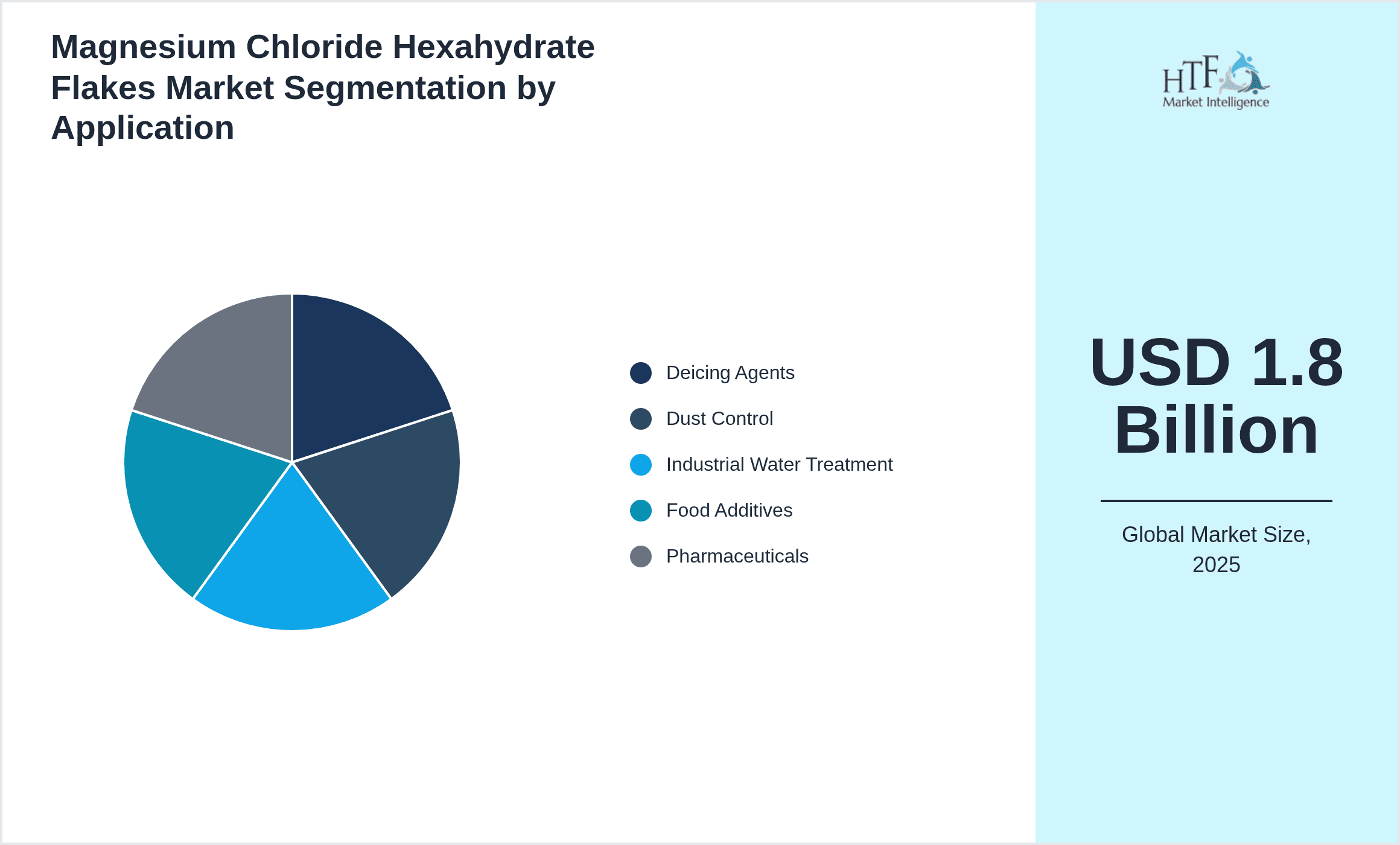
- •By Application
- ◦Deicing Agents
- ◦Dust Control
- ◦Industrial Water Treatment
- ◦Food Additives
- ◦Pharmaceuticals
- •By End-Use Industry
- ◦Chemical Manufacturing
- ◦Construction
- ◦Food & Beverage
- ◦Pharmaceuticals
- •By Distribution Channel
- ◦Direct Sales
- ◦Distributors
- ◦E-commerce
Growth Dynamics
The global Magnesium Chloride Hexahydrate Flakes market growth is primarily driven by expanding infrastructure projects in developing economies, which require effective deicing and dust control solutions to maintain operational efficiency and safety. Additionally, increasing environmental regulations in developed countries promote the use of magnesium chloride as an eco-friendly alternative to traditional chlorides, enhancing demand. The growing pharmaceutical and food industries also contribute to market expansion through the use of magnesium chloride flakes as a preservative and medicinal component. Technological advancements in manufacturing processes have improved product quality and reduced production costs, facilitating broader adoption. Furthermore, rising investments in water treatment infrastructure globally drive demand for industrial-grade magnesium chloride products. The synergy of these factors, combined with growing awareness of product benefits, sustains a positive growth trajectory across key regions such as Asia-Pacific and Latin America.
Market Trends
One significant trend in the Magnesium Chloride Hexahydrate Flakes market is the increasing shift towards sustainable and environmentally friendly products in deicing and dust control applications. Companies are innovating to reduce environmental impact and comply with stricter regulations. Another emerging trend is the growing use of magnesium chloride in pharmaceutical formulations due to its therapeutic properties, driving new product development. Digitization of supply chains and increased e-commerce penetration are changing distribution models, enabling wider geographic reach and customer access. Additionally, the integration of automated production technologies enhances efficiency and product consistency, positioning manufacturers competitively. These trends collectively shape the market’s evolution and present new opportunities for stakeholders.
Market Opportunities
The global Magnesium Chloride Hexahydrate Flakes market offers significant opportunities in emerging regions where infrastructure development and industrialization are accelerating, such as Latin America and parts of Asia-Pacific. Untapped applications in pharmaceuticals and food preservation present avenues for product diversification and value addition. Innovations in environmentally sustainable production methods can capture growing demand for green chemicals, enhancing market share. Expansion through strategic partnerships and acquisitions can facilitate entry into new markets and strengthen distribution networks. Moreover, rising awareness about the benefits of magnesium chloride in water treatment and agriculture opens further growth prospects. These opportunities, if leveraged effectively, can drive long-term market growth and profitability.
Market Challenges
The Magnesium Chloride Hexahydrate Flakes market faces challenges including volatility in raw material prices and availability, which can impact production costs and supply chain stability. Regulatory complexities across different regions create compliance burdens and may delay product approvals or market entry. Additionally, competition from alternative chemical compounds, such as calcium chloride, limits pricing power and market share expansion. Environmental concerns regarding chloride runoff and its effects on ecosystems require manufacturers to invest in mitigation technologies, increasing operational expenses. Market fragmentation with numerous small-scale producers also intensifies price competition and limits economies of scale. Addressing these challenges requires strategic focus on innovation, compliance, and cost management to sustain growth.
Regulatory Framework
Between 2020 and 2025, global regulatory frameworks have increasingly emphasized environmental protection and chemical safety, influencing the Magnesium Chloride Hexahydrate Flakes market significantly. Key regulations such as the European Union’s REACH (Registration, Evaluation, Authorization, and Restriction of Chemicals) require comprehensive safety data and restrict hazardous substances, impacting manufacturing and distribution practices. The U.S. Environmental Protection Agency (EPA) has established guidelines for chemical runoff from deicing agents, mandating stricter application controls and environmental monitoring. Countries in Asia-Pacific have adopted similar policies aimed at reducing soil and water contamination, promoting the use of eco-friendly magnesium chloride products. Additionally, food and pharmaceutical applications are governed by rigorous quality and purity standards set by authorities like the U.S. FDA and EFSA, ensuring product safety. These regulations have led to increased investment in compliance infrastructure and innovation in product formulations to meet evolving standards. Industry stakeholders must navigate diverse regulatory landscapes while aligning production and marketing strategies to maintain competitiveness and market access globally.
Market Intelligence
- •15th March 2025, Dead Sea Magnesium Ltd. announced the launch of a new high-purity magnesium chloride hexahydrate flakes product designed specifically for pharmaceutical applications. This product offers enhanced solubility and purity levels exceeding industry standards, targeting global pharmaceutical manufacturers seeking reliable raw materials. The initiative aligns with increasing demand for pharmaceutical-grade magnesium chloride and reflects the company’s strategic focus on innovation and market diversification. This launch is expected to strengthen the company’s market position in the Asia-Pacific and European regions due to rising healthcare sector investments. Source: Official Dead Sea Magnesium Ltd. press release.
- •12th June 2025, Tianjin Magnesium Chemicals Co., Ltd. introduced an automated production line incorporating advanced purification technology that improves product consistency and reduces waste by 15%. The innovation is poised to enhance operational efficiency and lower production costs, enabling competitive pricing in international markets. This strategic advancement supports the company’s expansion plans in Latin America and North America, regions identified for rapid market growth. The new technology also meets stringent environmental regulations, underscoring the company’s commitment to sustainable manufacturing. Source: Tianjin Magnesium Chemicals official announcement.
- •22nd September 2025, Martin Marietta Materials, Inc. completed a strategic acquisition of a regional magnesium chloride producer in South America, aiming to increase its footprint in the fastest growing Latin American market. The acquisition includes expanded production capacity and access to established distribution networks, facilitating faster market penetration. The move reflects growing demand for magnesium chloride flakes in construction and dust control applications across the region. Synergies from this deal are expected to improve supply chain efficiencies and product availability. Source: Martin Marietta Materials press release.
- •8th November 2025, BASF SE announced a partnership with technology firms to develop sustainable magnesium chloride extraction processes from brine sources. This initiative focuses on reducing environmental impact and water usage, aligning with global sustainability trends and regulatory demands. The collaboration aims to commercialize pilot projects by 2027, promoting greener chemistry solutions. This innovation could redefine competitive dynamics by offering eco-friendly products with reduced carbon footprint. Source: BASF official communication.
Regional Outlook
The Asia-Pacific currently holds a significant share of the market, primarily due to several key factors: increasing consumption rates, a burgeoning population, and robust economic momentum. These elements collectively drive demand, positioning this region as a leader in the market. On the other hand, Latin America is rapidly emerging as the fastest-growing area within the industry. This remarkable growth can be attributed to swift infrastructure development, the expansion of various industrial sectors, and a marked increase in consumer demand. These dynamics make this region a crucial player in shaping future market growth.
In our report, we cover a comprehensive analysis of the following regions and countries:
- North America
- LATAM
- West Europe
- Central & Eastern Europe
- Northern Europe
- Southern Europe
- East Asia
- Southeast Asia
- South Asia
- Central Asia
- Oceania
- MEA
| Feature | Details |
|---|---|
| Base Year Market Size | USD 1.8 Billion |
| Forecast Year Market Size | USD 3.5 Billion |
| CAGR | 7.5% |
| Forecast Period | 2026 to 2033 |
| YoY Growth | 7.3% |
| Scope of Report | Market is segmented by Product Type (Flakes, Granules, Brine, Powder, Solution), Application (Deicing Agents, Dust Control, Industrial Water Treatment, Food Additives, Pharmaceuticals), End-Use Industry (Chemical Manufacturing, Construction, Food & Beverage, Pharmaceuticals), Distribution Channel (Direct Sales, Distributors, E-commerce) |
| Regions Covered | North America, LATAM, West Europe, Central & Eastern Europe, Northern Europe, Southern Europe, East Asia, Southeast Asia, South Asia, Central Asia, Oceania, MEA |
| Key Companies | Dead Sea Magnesium Ltd. (Israel), Martin Marietta Materials, Inc. (United States), Tianjin Magnesium Chemicals Co., Ltd. (China), K+S Aktiengesellschaft (Germany), China Magnesium Corporation (China), Mitsubishi Corporation (Japan), Cargill, Incorporated (United States), Magnesium Products Ltd. (United Kingdom), Qinghai Salt Lake Industry Co., Ltd. (China), Hubei Xingfa Chemicals Group Co., Ltd. (China), Tata Chemicals Limited (India), BASF SE (Germany), Ocean Minerals LLC (United States), Nippon Chemical Industrial Co., Ltd. (Japan), Dead Sea Works Ltd. (Israel), Magnesium Chloride Limited (Australia), General Chemical Corporation (United States), Solar Salt Company (United States), Magnesium Chloride Industries (Canada), China National Salt Industry Corporation (China), Rio Tinto Group (United Kingdom), Koch Industries, Inc. (United States), Mosaic Company (United States), Tosoh Corporation (Japan), AkzoNobel N.V. (Netherlands) |
Global Magnesium Chloride Hexahydrate Flakes Market Size, Growth & Revenue 2025-2034 - Table of Contents
Frequently Asked Questions (FAQ):
The Compact Track Loaders market is expected to see value worth 5.3 Billion in 2025.
North America currently leads the market with approximately 45% market share, followed by Europe at 28% and Asia-Pacific at 22%. The remaining regions account for 5% of the global market.
Key growth drivers include increasing construction activities, rising demand for versatile equipment in agriculture, technological advancements in track loader design, and growing preference for compact equipment in urban construction projects.