
Global Trailer Telematics Market Size, Growth & Revenue 2025-2034
Global Trailer Telematics Market is segmented by Type (GPS Tracking Devices, Sensors, Communication Modules, Software Platforms, Data Analytics Tools), Application (Fleet Management, Cargo Monitoring, Maintenance & Diagnostics, Security & Theft Prevention, Driver Behavior Analysis), End-Use Industry (Transportation & Logistics, Retail & E-commerce, Manufacturing, Cold Chain & Food Distribution), Distribution Channel (Direct Sales, Channel Partners, Online Platforms), and Geography (North America, LATAM, West Europe, Central & Eastern Europe, Northern Europe, Southern Europe, East Asia, Southeast Asia, South Asia, Central Asia, Oceania, MEA)
Pricing
Report Overview
Executive Summary
- •The Global Trailer Telematics Market integrates advanced telecommunication and tracking technologies to provide comprehensive monitoring and management of trailers used in freight and logistics. This market covers an array of solutions including GPS tracking devices, sensors for cargo and environmental conditions, communication modules enabling real-time data transmission, and sophisticated software platforms that analyze vast datasets to optimize fleet operations. Trailer telematics solutions facilitate enhanced security through theft prevention, improve maintenance scheduling via predictive diagnostics, and support efficient route planning and driver behavior monitoring. The market’s scope spans various applications such as fleet management, cargo monitoring, maintenance and diagnostics, security, and driver behavior analysis, serving industries like transportation, logistics, retail, and manufacturing. The rising adoption of IoT-enabled devices and cloud-based analytics platforms is transforming traditional trailer operations into connected, data-driven systems, thereby driving operational excellence and compliance with evolving regulatory requirements globally. Market expansion is fueled by increasing demand for supply chain visibility, cost reduction, and safety enhancements, underscoring the critical role of trailer telematics in modern logistics ecosystems.
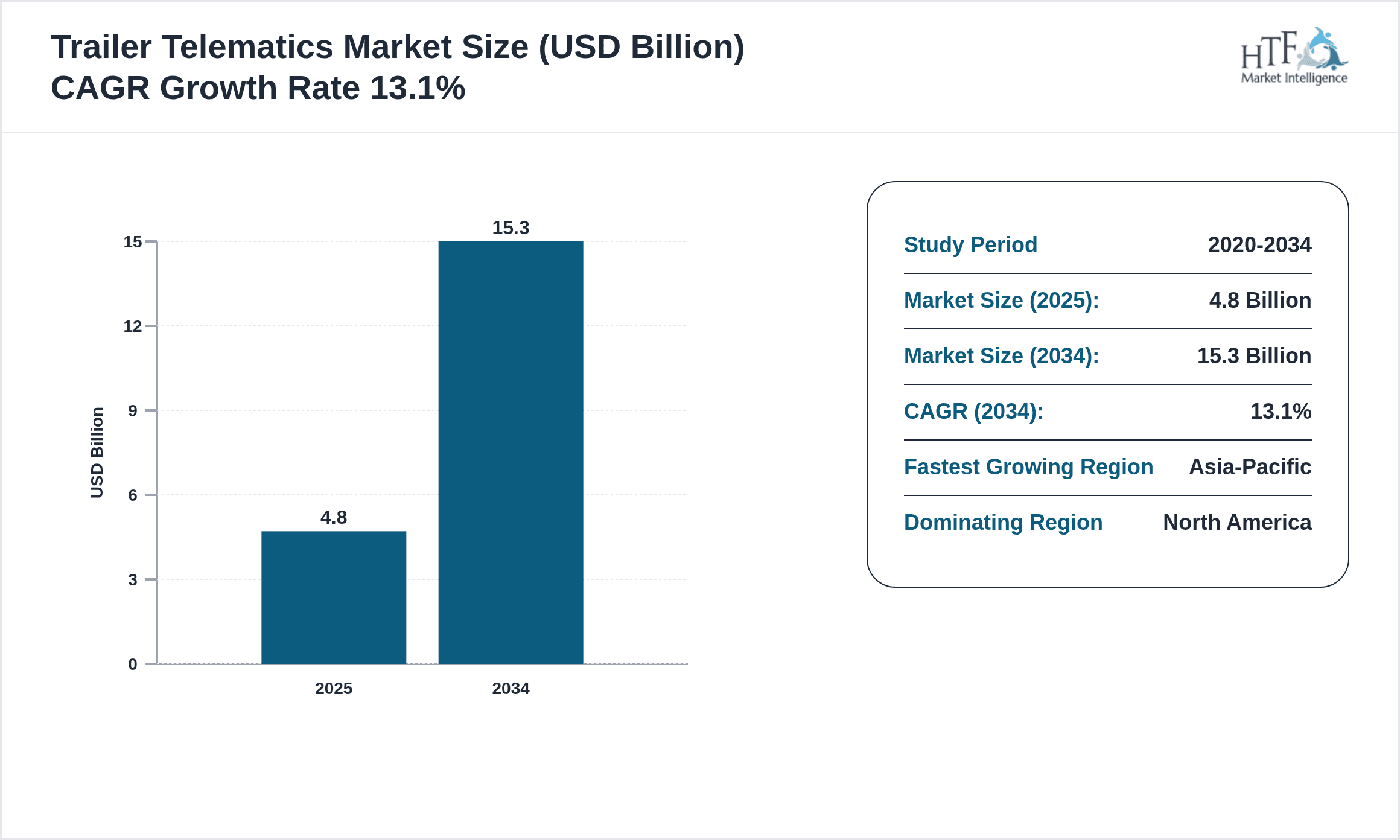
- •The Global Trailer Telematics Market is projected to grow from USD 4.8 Billion in 2025 to USD 15.3 Billion by 2034, exhibiting a robust CAGR of 13.1%. North America currently dominates with a 35% market share owing to advanced transportation infrastructure and regulatory mandates. Asia-Pacific is the fastest-growing region driven by escalating logistics activities and smart transportation initiatives. GPS tracking devices hold the largest product segment share, while data analytics tools are poised for the highest growth due to increasing demand for actionable insights. Key applications like fleet management and cargo monitoring continue to drive revenue streams. CAGR and year-over-year growth rates reflect strong market momentum fueled by technological innovations and increasing fleet digitization worldwide.
- •Trailer telematics offers strategic value by enhancing fleet visibility, reducing operational costs, and improving asset utilization for logistics providers, fleet operators, and manufacturers. This technology enables stakeholders to comply with stringent safety and environmental regulations while enhancing customer satisfaction through timely deliveries and real-time cargo condition updates. The integration of telematics data with enterprise systems supports data-driven decision-making and predictive maintenance, offering competitive advantages in efficiency and reliability. As global trade intensifies and e-commerce grows, trailer telematics becomes indispensable for optimizing complex supply chains and mitigating risks associated with theft, damage, and downtime. Industry players leverage partnerships, technology advancements, and regional expansions to capitalize on emerging market opportunities, making trailer telematics a critical component of modern transportation management strategies.
Competitive Landscape
Companies in the Global Trailer Telematics Market employ multifaceted strategies to maintain and enhance their market positions. Strategic partnerships with technology providers and fleet operators enable comprehensive solution offerings and broaden market reach. Global expansion initiatives target emerging regions with growing logistics infrastructure to capture new customer bases. Product innovation focuses on integrating IoT, AI, and cloud computing to develop advanced telematics platforms offering predictive analytics, enhanced security features, and seamless connectivity. Technological adoption includes leveraging 5G networks and edge computing for real-time data processing and improved accuracy. Competitive pricing strategies and customizable solutions cater to diverse customer needs, while mergers and acquisitions facilitate portfolio expansion and market consolidation. Companies also emphasize regulatory compliance and data security to build trust and meet evolving standards. These approaches collectively foster sustained growth and differentiation in a dynamic market environment.
Leading Companies in Trailer Telematics Market
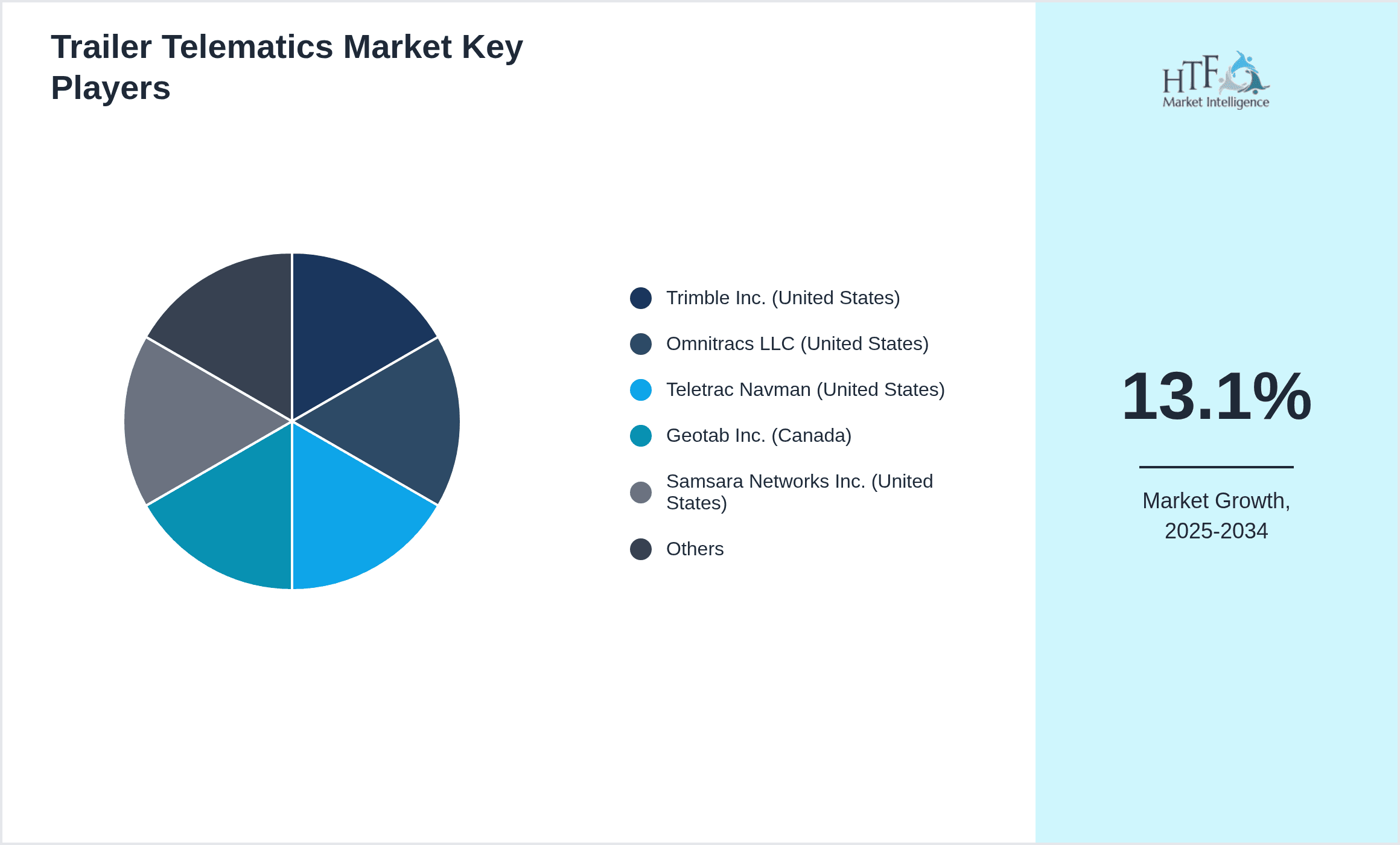
- •Trimble Inc. (United States)
- •Omnitracs LLC (United States)
- •Teletrac Navman (United States)
- •Geotab Inc. (Canada)
- •Samsara Networks Inc. (United States)
- •Zonar Systems Corp. (United States)
- •Daimler AG (Germany)
- •Octo Telematics Ltd. (Italy)
- •CalAmp Corp. (United States)
- •Fleet Complete Inc. (Canada)
- •Nauto Inc. (United States)
- •Mix Telematics Ltd. (South Africa)
- •Telematics Wireless Inc. (United States)
- •Bosch Connected Devices and Solutions GmbH (Germany)
- •Donlen Corporation (United States)
- •Lytx Inc. (United States)
- •Verizon Connect (United States)
- •TomTom Telematics (Netherlands)
- •Fleetmatics Group PLC (United Kingdom)
- •Geotab Inc. (Canada)
Market Breakdown
- •By Type
- ◦GPS Tracking Devices
- ◦Sensors
- ◦Communication Modules
- ◦Software Platforms
- ◦Data Analytics Tools
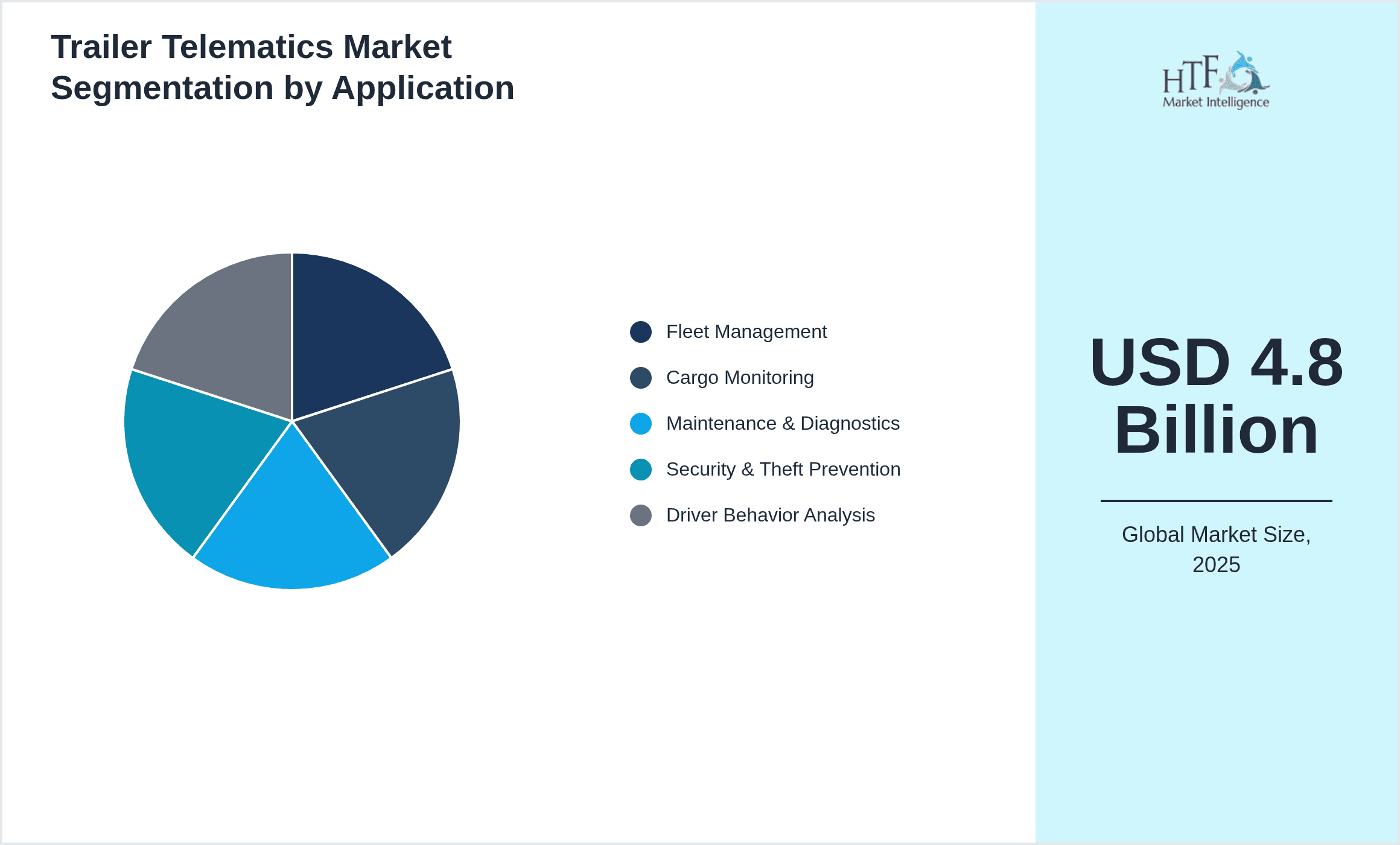
- •By Application
- ◦Fleet Management
- ◦Cargo Monitoring
- ◦Maintenance & Diagnostics
- ◦Security & Theft Prevention
- ◦Driver Behavior Analysis
- •By End-Use Industry
- ◦Transportation & Logistics
- ◦Retail & E-commerce
- ◦Manufacturing
- ◦Cold Chain & Food Distribution
- •By Distribution Channel
- ◦Direct Sales
- ◦Channel Partners
- ◦Online Platforms
Growth Dynamics
The Global Trailer Telematics Market is propelled by increasing demand for real-time fleet visibility and operational efficiency across transportation and logistics sectors. Regulatory mandates for vehicle tracking and cargo security intensify adoption, while advancements in IoT and cloud computing enable seamless data integration and actionable insights. Strategic collaborations between telematics providers and fleet operators facilitate comprehensive offerings tailored to diverse end-use industries. Growing e-commerce volumes and last-mile delivery complexities further drive the deployment of telematics solutions. Recent launches of AI-powered analytics platforms and integration of 5G connectivity enhance data processing speed and accuracy, supporting predictive maintenance and reducing downtime. For instance, Samsara Networks’ introduction of AI dash cams in 2024 exemplifies innovation fostering safety and efficiency. These factors collectively expand market penetration and foster technological evolution in trailer telematics globally.

Market Trends
Emerging trends in the Global Trailer Telematics Market include the integration of artificial intelligence and machine learning to enable predictive analytics and automated decision-making processes. The shift towards cloud-based telematics platforms enhances scalability and remote accessibility, facilitating seamless data sharing among stakeholders. Increasing use of sensor fusion technology improves cargo monitoring accuracy by combining data from multiple sensor types. The adoption of 5G networks accelerates data transmission speeds, supporting real-time monitoring and enhanced security features. Recent industry examples include Trimble’s 2024 launch of a cloud-native telematics platform that provides unified fleet insights. Sustainability trends push for eco-driving analytics to reduce fuel consumption and emissions, aligning with global environmental goals. These developments position trailer telematics as a critical enabler of smart logistics and supply chain resilience.
Market Opportunities
Significant growth opportunities in the trailer telematics market arise from the increasing digitization of supply chains and rising demand for predictive maintenance solutions. Expanding infrastructure in emerging economies presents untapped markets for telematics adoption. Integration of telematics data with blockchain technology offers enhanced transparency and security in cargo tracking, opening new application avenues. The growing trend of autonomous and semi-autonomous trailers creates demand for advanced telematics systems capable of supporting vehicle-to-everything communication. Strategic partnerships between telematics providers and OEMs enable embedded solutions, broadening market reach. Recent investments, such as Verizon Connect’s 2025 venture into AI-driven telematics analytics, underscore innovation momentum. These opportunities enable companies to diversify offerings, optimize fleet operations, and capture value from evolving transportation paradigms.
Market Challenges
Key challenges confronting the Global Trailer Telematics Market include high initial deployment costs and complexity of integrating telematics solutions with existing fleet management systems. Data privacy and security concerns pose significant barriers, with regulatory compliance requiring continuous updates to safeguard sensitive information. Variability in telecommunication infrastructure across regions impedes consistent real-time data transmission, limiting solution effectiveness. Fragmented standards and lack of interoperability among telematics devices create integration difficulties. Market players face intense competition driving pricing pressures that affect profitability. For example, smaller fleet operators often delay adoption due to cost constraints despite recognizing operational benefits. Additionally, shortage of skilled personnel to manage and analyze telematics data restricts full utilization of available technologies. Addressing these challenges requires coordinated industry efforts, technological innovation, and supportive policy frameworks.
Regulatory Framework
In the last five years, several regulations have shaped the trailer telematics landscape globally. The North American Electronic Logging Device (ELD) mandate enforced in 2022 requires commercial vehicles to implement tracking systems for driver hours and vehicle operation, significantly boosting telematics adoption. The European Union’s General Data Protection Regulation (GDPR) since 2018 enforces stringent data privacy requirements impacting telematics data handling. Additionally, the EU’s Intelligent Transport Systems Directive mandates integration of telematics for enhanced freight monitoring and safety. Asia-Pacific countries have introduced smart transportation policies promoting telematics for logistics efficiency and environmental compliance. These regulatory frameworks drive market growth by mandating safety, data security, and operational transparency, compelling fleet operators to deploy compliant telematics solutions and fostering innovation among providers.
Market Intelligence
- •Recent market developments and strategic initiatives are continuously tracked through industry publications, company announcements, and regulatory filings. For the most current information, stakeholders are advised to monitor official corporate communications and recognized market intelligence platforms.
- •Recent market developments and strategic initiatives are continuously tracked through industry publications, company announcements, and regulatory filings. For the most current information, stakeholders are advised to monitor official corporate communications and recognized market intelligence platforms.
- •Recent market developments and strategic initiatives are continuously tracked through industry publications, company announcements, and regulatory filings. For the most current information, stakeholders are advised to monitor official corporate communications and recognized market intelligence platforms.
- •Recent market developments and strategic initiatives are continuously tracked through industry publications, company announcements, and regulatory filings. For the most current information, stakeholders are advised to monitor official corporate communications and recognized market intelligence platforms.
- •Source: Industry publications, Company announcements, Regulatory filings
Regional Outlook
The North America currently holds a significant share of the market, primarily due to several key factors: increasing consumption rates, a burgeoning population, and robust economic momentum. These elements collectively drive demand, positioning this region as a leader in the market. On the other hand, Asia-Pacific is rapidly emerging as the fastest-growing area within the industry. This remarkable growth can be attributed to swift infrastructure development, the expansion of various industrial sectors, and a marked increase in consumer demand. These dynamics make this region a crucial player in shaping future market growth.
In our report, we cover a comprehensive analysis of the following regions and countries:
- North America
- LATAM
- West Europe
- Central & Eastern Europe
- Northern Europe
- Southern Europe
- East Asia
- Southeast Asia
- South Asia
- Central Asia
- Oceania
- MEA
| Feature | Details |
|---|---|
| Base Year Market Size | USD 4.8 Billion |
| Forecast Year Market Size | USD 15.3 Billion |
| CAGR | 13.1% |
| Forecast Period | 2026 to 2033 |
| YoY Growth | 12.3% |
| Scope of Report | Market is segmented by Type (GPS Tracking Devices, Sensors, Communication Modules, Software Platforms, Data Analytics Tools), Application (Fleet Management, Cargo Monitoring, Maintenance & Diagnostics, Security & Theft Prevention, Driver Behavior Analysis), End-Use Industry (Transportation & Logistics, Retail & E-commerce, Manufacturing, Cold Chain & Food Distribution), Distribution Channel (Direct Sales, Channel Partners, Online Platforms) |
| Regions Covered | North America, LATAM, West Europe, Central & Eastern Europe, Northern Europe, Southern Europe, East Asia, Southeast Asia, South Asia, Central Asia, Oceania, MEA |
| Key Companies | Trimble Inc. (United States), Omnitracs LLC (United States), Teletrac Navman (United States), Geotab Inc. (Canada), Samsara Networks Inc. (United States), Zonar Systems Corp. (United States), Daimler AG (Germany), Octo Telematics Ltd. (Italy), CalAmp Corp. (United States), Fleet Complete Inc. (Canada), Nauto Inc. (United States), Mix Telematics Ltd. (South Africa), Telematics Wireless Inc. (United States), Bosch Connected Devices and Solutions GmbH (Germany), Donlen Corporation (United States), Lytx Inc. (United States), Verizon Connect (United States), TomTom Telematics (Netherlands), Fleetmatics Group PLC (United Kingdom), Geotab Inc. (Canada) |
Global Trailer Telematics Market Size, Growth & Revenue 2025-2034 - Table of Contents
Frequently Asked Questions (FAQ):
The Compact Track Loaders market is expected to see value worth 5.3 Billion in 2025.
North America currently leads the market with approximately 45% market share, followed by Europe at 28% and Asia-Pacific at 22%. The remaining regions account for 5% of the global market.
Key growth drivers include increasing construction activities, rising demand for versatile equipment in agriculture, technological advancements in track loader design, and growing preference for compact equipment in urban construction projects.