
Global Ladies Handbag Market - Outlook 2025-2034
Global Ladies Handbag Market is segmented by Product Type (Leather Handbags, Synthetic Handbags, Fabric Handbags, PU Handbags, Other Material Handbags), Application (Casual, Formal, Travel, Party, Work), End-Use Industry (Fashion & Apparel, Luxury Goods, Retail, E-Commerce), Distribution Channel (Specialty Stores, Online Retail, Department Stores), and Geography (North America, LATAM, West Europe, Central & Eastern Europe, Northern Europe, Southern Europe, East Asia, Southeast Asia, South Asia, Central Asia, Oceania, MEA)
Pricing
Report Overview
Executive Summary
- •The Global Ladies Handbag Market is a dynamic and evolving segment within the fashion accessories industry, encompassing a broad spectrum of products crafted for women’s everyday use and special occasions. This market includes a variety of handbag types such as leather, synthetic, fabric, PU, and other materials, each catering to diverse consumer preferences and lifestyle needs. Applications range from casual day-to-day use to formal events, travel, parties, and professional settings, reflecting the multifunctional nature of handbags. The market’s scope spans global regions including North America, Europe, Asia-Pacific, Latin America, and the Middle East & Africa, each presenting unique demand drivers and consumer behaviors. Innovations in design, sustainable material adoption, and digital retail channels are reshaping market dynamics. Increasing urbanization, rising disposable income, and growing fashion consciousness among women worldwide propel the market forward. This report offers a comprehensive analysis of market trends, growth drivers, restraints, opportunities, competitive landscape, and regulatory frameworks shaping the global ladies handbag industry.
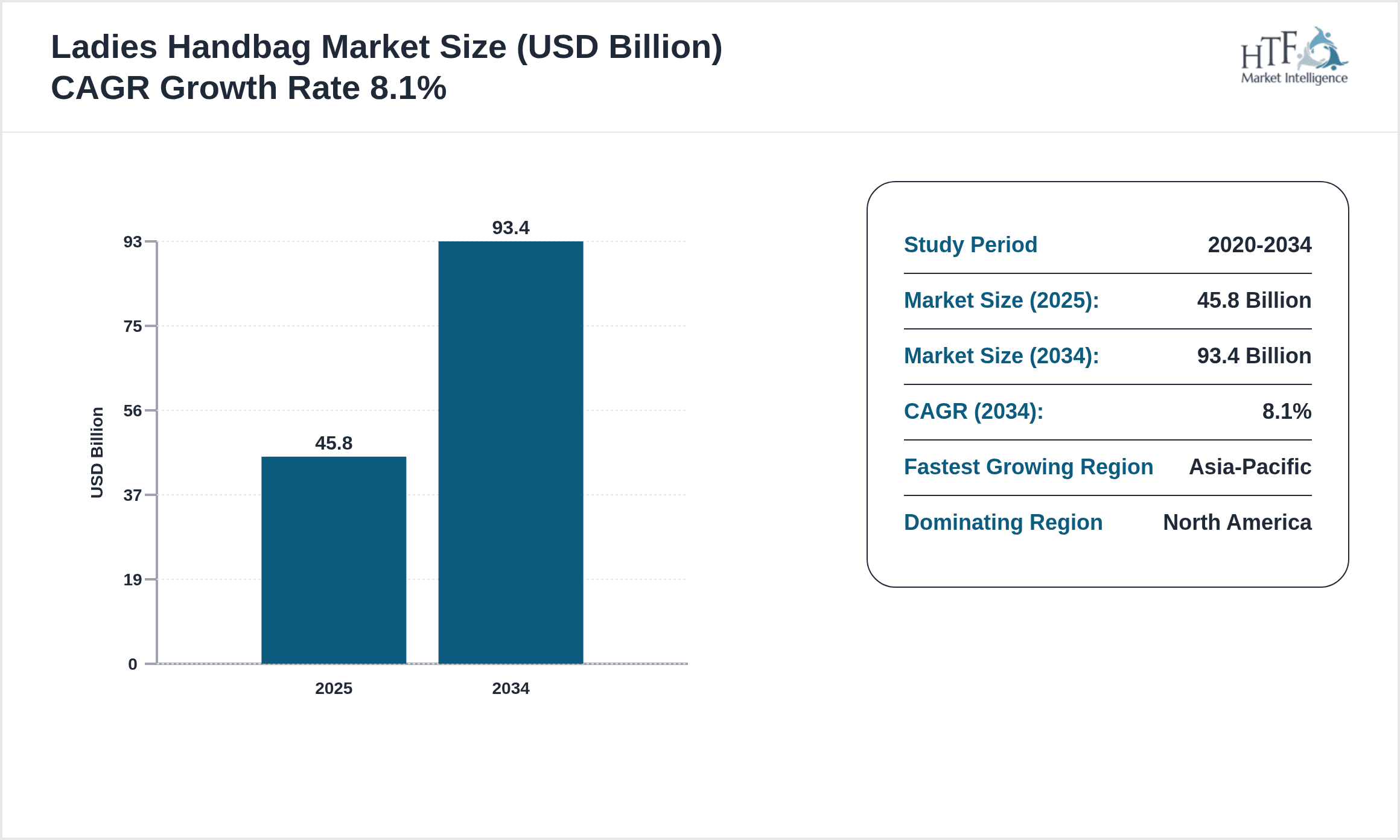
- •Key highlights indicate a robust CAGR of 8.1% projected between 2025 and 2034, with the market size expected to more than double from USD 45.8 billion in 2025 to USD 93.4 billion by 2034. Leather handbags dominate the product type segment, while PU handbags are witnessing the fastest growth due to affordability and stylistic versatility. Casual and formal applications lead consumer usage, reflecting trends in lifestyle and professional markets. North America maintains the largest market share, driven by high consumer spending and luxury brand presence, whereas Asia-Pacific is the fastest growing region fueled by expanding middle-class populations and increasing e-commerce penetration. These growth indicators underscore the market’s expansion potential and evolving consumer preferences.
- •The value proposition of the Global Ladies Handbag Market lies in its strong alignment with fashion trends, technological advancements in materials, and the growing emphasis on sustainable and ethical production practices. It holds strategic importance for manufacturers, retailers, and designers aiming to capitalize on increasing global demand for stylish, durable, and multifunctional handbags. The market’s growth is augmented by digital transformation, enabling broader reach and customization options for consumers. Stakeholders benefit from diversified product portfolios, regional market penetration, and innovation-driven differentiation, positioning the market as a critical component within the global fashion ecosystem.
Competitive Landscape
The competitive environment in the global ladies handbag market is characterized by intense rivalry among established luxury brands, mid-tier manufacturers, and emerging fast-fashion companies. Market participants leverage product innovation, brand equity, and strategic marketing to capture consumer attention and loyalty. Innovation in materials, such as sustainable leather alternatives and high-performance synthetics, plays a pivotal role in differentiation, alongside collaborations with designers and influencers to enhance brand visibility. Pricing strategies vary from premium positioning to value-based offerings to address diverse consumer segments worldwide. Distribution channels, including brick-and-mortar retail, e-commerce platforms, and omni-channel approaches, significantly influence competitive dynamics. Mergers and acquisitions, strategic partnerships, and regional expansions are common tactics to consolidate market presence and access new customer bases. Additionally, companies invest heavily in digital marketing and personalized customer experiences to sustain growth and adapt to shifting consumer behaviors in a rapidly evolving marketplace.
Companies Shaping the Ladies Handbag Market
- •LVMH Moët Hennessy Louis Vuitton (France)
- •Kering (France)
- •Coach, Inc. (United States)
- •Michael Kors Holdings Limited (United States)
- •Hermès International S.A. (France)
- •Prada S.p.A. (Italy)
- •Gucci (Italy)
- •Fossil Group, Inc. (United States)
- •Caprese (India)
- •Tapestry, Inc. (United States)
- •Kate Spade & Company (United States)
- •Longchamp (France)
- •Coach New York (United States)
- •Calvin Klein (United States)
- •Guess?, Inc. (United States)
- •Bally (Switzerland)
- •MCM Worldwide (Germany)
- •Ted Baker plc (United Kingdom)
- •Tumi Holdings, Inc. (United States)
- •Samsonite International S.A. (Luxembourg)
- •Zara (Spain)
- •Aldo Group (Canada)
- •Chanel S.A. (France)
- •Balenciaga (France)
- •Salvatore Ferragamo S.p.A. (Italy)
Market Breakdown
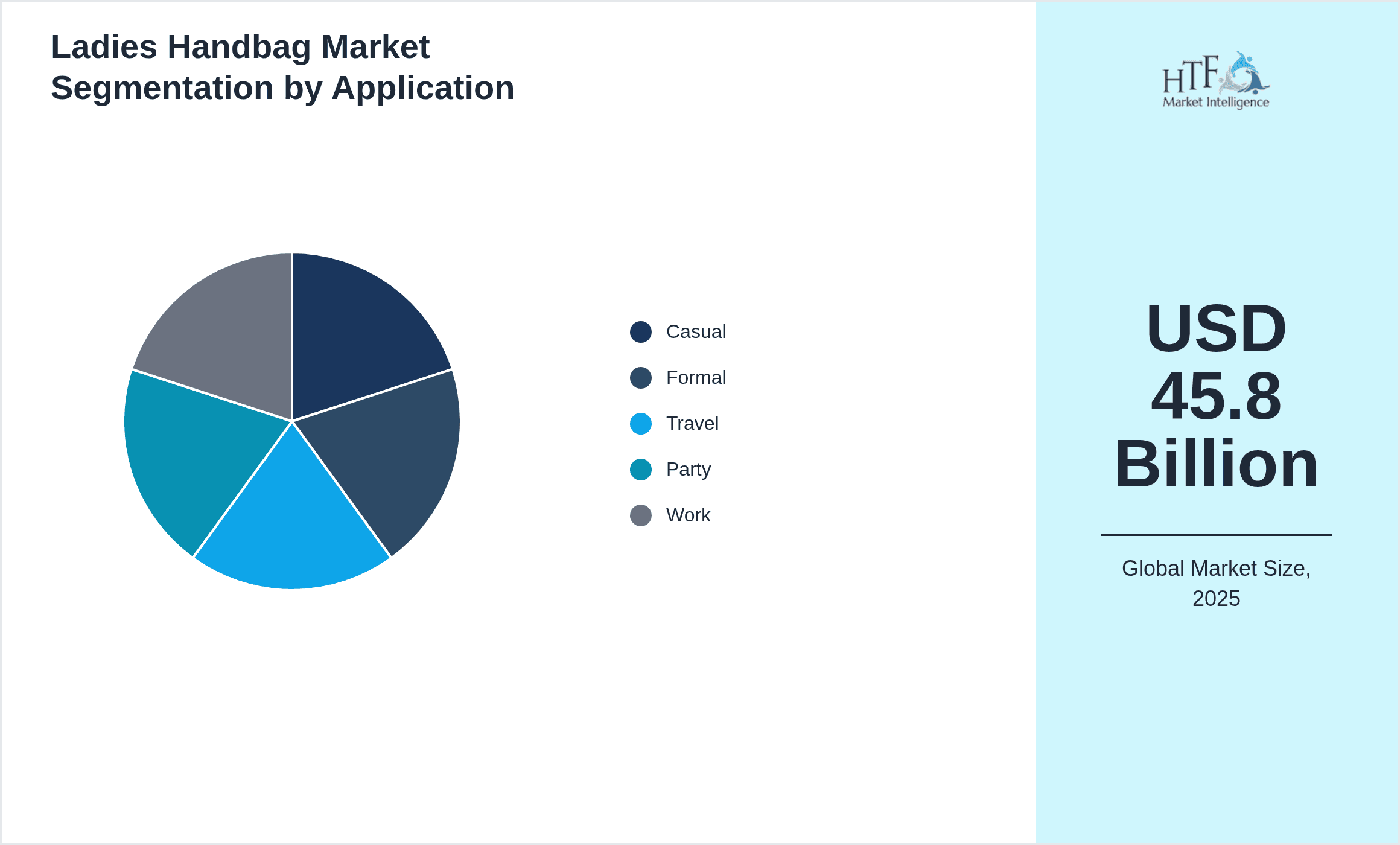
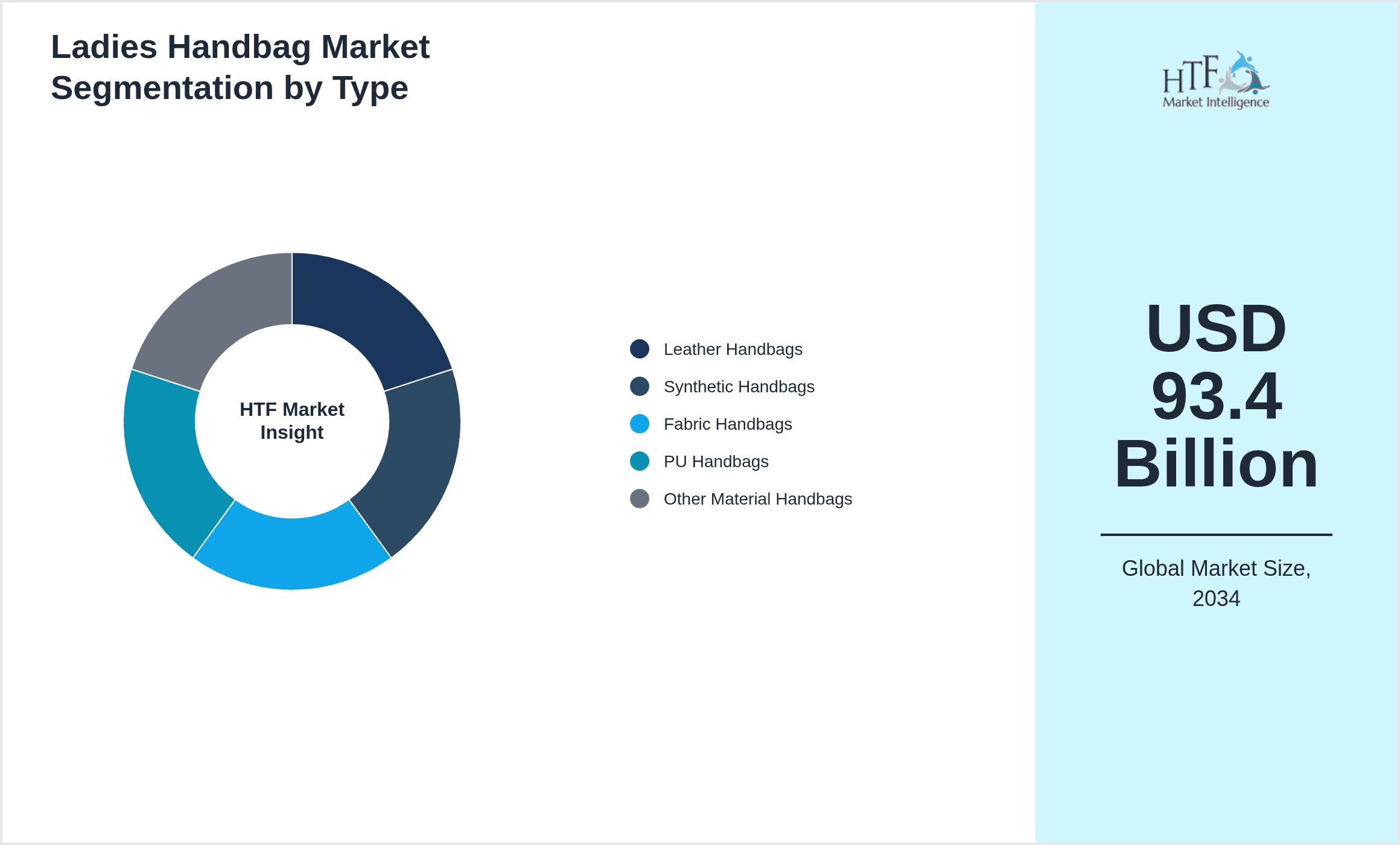
- •By Product Type
- ◦Leather Handbags
- ◦Synthetic Handbags
- ◦Fabric Handbags
- ◦PU Handbags
- ◦Other Material Handbags
- •By Application
- ◦Casual
- ◦Formal
- ◦Travel
- ◦Party
- ◦Work
- •By End-Use Industry
- ◦Fashion & Apparel
- ◦Luxury Goods
- ◦Retail
- ◦E-Commerce
- •By Distribution Channel
- ◦Specialty Stores
- ◦Online Retail
- ◦Department Stores
Growth Dynamics
- •Rising urbanization and increasing disposable income in emerging economies are key drivers fostering demand for ladies handbags, especially in Asia-Pacific and Latin America. Consumers are gravitating towards premium and designer handbags as status symbols, which propels market expansion.
- •The surge in e-commerce platforms and digital marketing has revolutionized distribution channels, enabling brands to reach a wider audience with personalized shopping experiences. This shift significantly enhances market accessibility and growth opportunities.
- •Innovation in materials, including sustainable and vegan leather alternatives, addresses growing environmental concerns and aligns with consumer preferences for eco-friendly fashion, stimulating market growth and product diversification.
- •Collaborations between handbag manufacturers and renowned fashion designers or celebrities create exclusive collections, increasing brand appeal and driving sales in competitive markets.
- •Growing fashion consciousness among millennial and Gen Z consumers encourages frequent handbag purchases and experimentation with styles, fueling continuous demand and market dynamism.
Market Trends
- •There is an increasing trend towards smart handbags integrated with technology such as wireless charging and GPS tracking, enhancing product functionality and consumer convenience.
- •Sustainability remains a dominant trend, with many brands adopting recycled materials and environmentally friendly manufacturing processes to attract eco-conscious consumers.
- •Customization and personalization options have gained traction, allowing consumers to tailor handbag designs, colors, and monograms, which boosts engagement and brand loyalty.
- •Minimalist and versatile handbag designs are trending, reflecting consumer preferences for practical yet stylish accessories that suit multiple occasions.
- •The rise of resale and vintage handbag markets indicates growing consumer interest in sustainable fashion and value retention, influencing new product launches and marketing strategies.

Market Opportunities
- •Expanding penetration in emerging markets presents significant opportunities for handbag brands to tap into new customer segments with tailored product offerings and pricing strategies.
- •Advancements in smart handbag technology offer opportunities for innovation and differentiation, appealing to tech-savvy consumers seeking multifunctional accessories.
- •Collaborations with influencers and digital campaigns can enhance brand visibility and attract younger demographics, expanding market share.
- •Developing sustainable product lines and transparent supply chains can strengthen brand reputation and meet rising consumer demand for ethical fashion.
- •Growth in online retail and direct-to-consumer models provides opportunities for brands to optimize pricing, improve margins, and build stronger customer relationships.
Market Challenges
- •High costs associated with premium materials and skilled craftsmanship can limit market accessibility and constrain growth in price-sensitive regions.
- •Intense competition and market saturation, especially in developed regions, create challenges for new entrants and smaller brands to gain visibility and market share.
- •Counterfeit products and brand piracy undermine brand equity and result in revenue losses for authentic handbag manufacturers.
- •Rapidly changing fashion trends require continuous innovation and inventory management, posing operational challenges for manufacturers and retailers.
- •Supply chain disruptions and raw material price volatility impact production costs and delivery timelines, affecting profitability and customer satisfaction.
Regulatory Framework
- •Between 2020 and 2025, multiple regions have implemented stricter regulations on the use of animal-derived materials, promoting the adoption of synthetic and vegan alternatives in handbag production. Compliance with these regulations necessitates supply chain adjustments and certification processes impacting production costs.
- •Environmental protection laws introduced in Europe and North America mandate reduced carbon footprints and waste management protocols for handbag manufacturers, fostering sustainable practices and innovation in material sourcing.
- •Consumer safety standards have been enhanced globally, requiring handbag products to meet specific quality and durability criteria, influencing design and manufacturing standards across the industry.
- •Trade policies and tariffs between major markets, including Asia-Pacific and North America, have undergone revisions since 2021, affecting import/export costs and prompting companies to reconsider manufacturing locations and supply chain strategies.
- •Government incentives and support programs for sustainable fashion enterprises, particularly in Europe and Asia-Pacific, have encouraged investment in eco-friendly handbag production technologies and processes.
Market Intelligence
- •15th January 2025, LVMH Moët Hennessy Louis Vuitton launched a new eco-friendly handbag collection featuring high-quality vegan leather and recycled materials. Targeting environmentally conscious consumers, the collection integrates innovative manufacturing techniques to reduce carbon footprint while maintaining luxury standards, aiming to capture growing demand for sustainable fashion accessories. This strategic move aligns with global sustainability trends and positions the company as a leader in responsible luxury products. Source: Official LVMH Press Release
- •10th March 2025, Kering announced a strategic partnership with a leading tech firm to develop smart handbags equipped with wireless charging and anti-theft GPS tracking features. This collaboration targets tech-savvy urban consumers seeking multifunctional fashion accessories, combining luxury with modern technology. The initiative exemplifies a trend towards innovation-driven product differentiation in the competitive handbag market. Source: Kering Corporate Communications
- •22nd February 2025, Coach, Inc. completed the acquisition of a sustainable handbag startup specializing in recycled materials and ethical production. The acquisition aims to enhance Coach's portfolio with environmentally friendly products and appeal to conscious consumers. This move reflects growing industry focus on sustainability and diversification. Source: Industry Publication
- •8th April 2025, Prada S.p.A. introduced a customizable handbag line allowing customers to personalize designs, colors, and monograms via an online platform. This innovation responds to increasing demand for personalized luxury goods and enhances customer engagement through digital channels. The launch is expected to boost brand loyalty and sales. Source: Prada Official Website
Regional Outlook
The North America currently holds a significant share of the market, primarily due to several key factors: increasing consumption rates, a burgeoning population, and robust economic momentum. These elements collectively drive demand, positioning this region as a leader in the market. On the other hand, Asia-Pacific is rapidly emerging as the fastest-growing area within the industry. This remarkable growth can be attributed to swift infrastructure development, the expansion of various industrial sectors, and a marked increase in consumer demand. These dynamics make this region a crucial player in shaping future market growth.
In our report, we cover a comprehensive analysis of the following regions and countries:
- North America
- LATAM
- West Europe
- Central & Eastern Europe
- Northern Europe
- Southern Europe
- East Asia
- Southeast Asia
- South Asia
- Central Asia
- Oceania
- MEA
| Feature | Details |
|---|---|
| Base Year Market Size | USD 45.8 Billion |
| Forecast Year Market Size | USD 93.4 Billion |
| CAGR | 8.1% |
| Forecast Period | 2026 to 2033 |
| YoY Growth | 7.8% |
| Scope of Report | Market is segmented by Product Type (Leather Handbags, Synthetic Handbags, Fabric Handbags, PU Handbags, Other Material Handbags), Application (Casual, Formal, Travel, Party, Work), End-Use Industry (Fashion & Apparel, Luxury Goods, Retail, E-Commerce), Distribution Channel (Specialty Stores, Online Retail, Department Stores) |
| Regions Covered | North America, LATAM, West Europe, Central & Eastern Europe, Northern Europe, Southern Europe, East Asia, Southeast Asia, South Asia, Central Asia, Oceania, MEA |
| Key Companies | LVMH Moët Hennessy Louis Vuitton (France), Kering (France), Coach, Inc. (United States), Michael Kors Holdings Limited (United States), Hermès International S.A. (France), Prada S.p.A. (Italy), Gucci (Italy), Fossil Group, Inc. (United States), Caprese (India), Tapestry, Inc. (United States), Kate Spade & Company (United States), Longchamp (France), Coach New York (United States), Calvin Klein (United States), Guess?, Inc. (United States), Bally (Switzerland), MCM Worldwide (Germany), Ted Baker plc (United Kingdom), Tumi Holdings, Inc. (United States), Samsonite International S.A. (Luxembourg), Zara (Spain), Aldo Group (Canada), Chanel S.A. (France), Balenciaga (France), Salvatore Ferragamo S.p.A. (Italy) |
Global Ladies Handbag Market - Outlook 2025-2034 - Table of Contents
Frequently Asked Questions (FAQ):
The Compact Track Loaders market is projected to grow at a CAGR of 6.8% from 2025 to 2030, driven by increasing demand in construction and agricultural sectors.
North America currently leads the market with approximately 45% market share, followed by Europe at 28% and Asia-Pacific at 22%. The remaining regions account for 5% of the global market.
Key growth drivers include increasing construction activities, rising demand for versatile equipment in agriculture, technological advancements in track loader design, and growing preference for compact equipment in urban construction projects.