
Global Mycorrhizal Inoculants Market Size, Growth & Revenue 2024-2034
Global Mycorrhizal Inoculants Market is segmented by Product Type (Arbuscular Mycorrhizal Fungi, Ectomycorrhizal Fungi, Ericoid Mycorrhizal Fungi, Orchid Mycorrhizal Fungi, Others), Application (Agriculture, Horticulture, Forestry, Landscaping, Turf Management), End-Use Industry (Commercial Farming, Organic Farming, Forestry Management, Landscaping Services), Distribution Channel (Direct Sales, Agro-Dealers, E-commerce), and Geography (North America, LATAM, West Europe, Central & Eastern Europe, Northern Europe, Southern Europe, East Asia, Southeast Asia, South Asia, Central Asia, Oceania, MEA)
Pricing
Report Overview
Executive Summary
- •The global Mycorrhizal Inoculants Market represents a critical segment of the biofertilizer industry, focusing on symbiotic fungi that enhance plant nutrient absorption and soil vitality. This market includes key fungal types such as Arbuscular, Ectomycorrhizal, Ericoid, and Orchid fungi, which are utilized across agriculture, horticulture, forestry, landscaping, and turf management. Driven by rising environmental concerns and a shift towards sustainable farming, the demand for eco-friendly inoculants has surged, promoting soil health and crop yields while reducing chemical fertilizer dependency. Technological innovations in fungal strain selection, formulation, and application methods continuously reshape the market landscape. Despite challenges like strain specificity, shelf-life limitations, and regional regulatory complexities, the market maintains robust expansion prospects, reinforced by global initiatives supporting organic agriculture and ecosystem restoration. As a result, mycorrhizal inoculants are becoming indispensable in modern agroecosystems worldwide.
- •Key market highlights include a projected CAGR of 14.5% from 2024 to 2034, with the market size expected to grow from USD 1.2 billion in 2024 to USD 4.8 billion by 2034. North America currently dominates the market, holding the largest share due to advanced agricultural practices and regulatory support, while Asia-Pacific is identified as the fastest-growing region driven by expanding agricultural activities and increasing awareness of soil health. Arbuscular Mycorrhizal Fungi lead the product segment, attributed to their broad host range and effectiveness, whereas Ectomycorrhizal Fungi exhibit the highest growth rates facilitated by rising forestry applications. Agriculture remains the dominant application, followed by horticulture, reflecting increasing adoption of biofertilizers to improve crop productivity sustainably.
- •The market's value proposition lies in its strategic importance to sustainable agriculture and environmental conservation, enabling stakeholders such as farmers, agrochemical companies, and policymakers to transition towards greener alternatives. Mycorrhizal inoculants enhance nutrient efficiency, reduce environmental footprint, and promote resilient crop systems, aligning with global sustainability goals. This positions the market as a vital contributor to food security, climate mitigation, and biodiversity preservation, fostering long-term growth and investment opportunities.
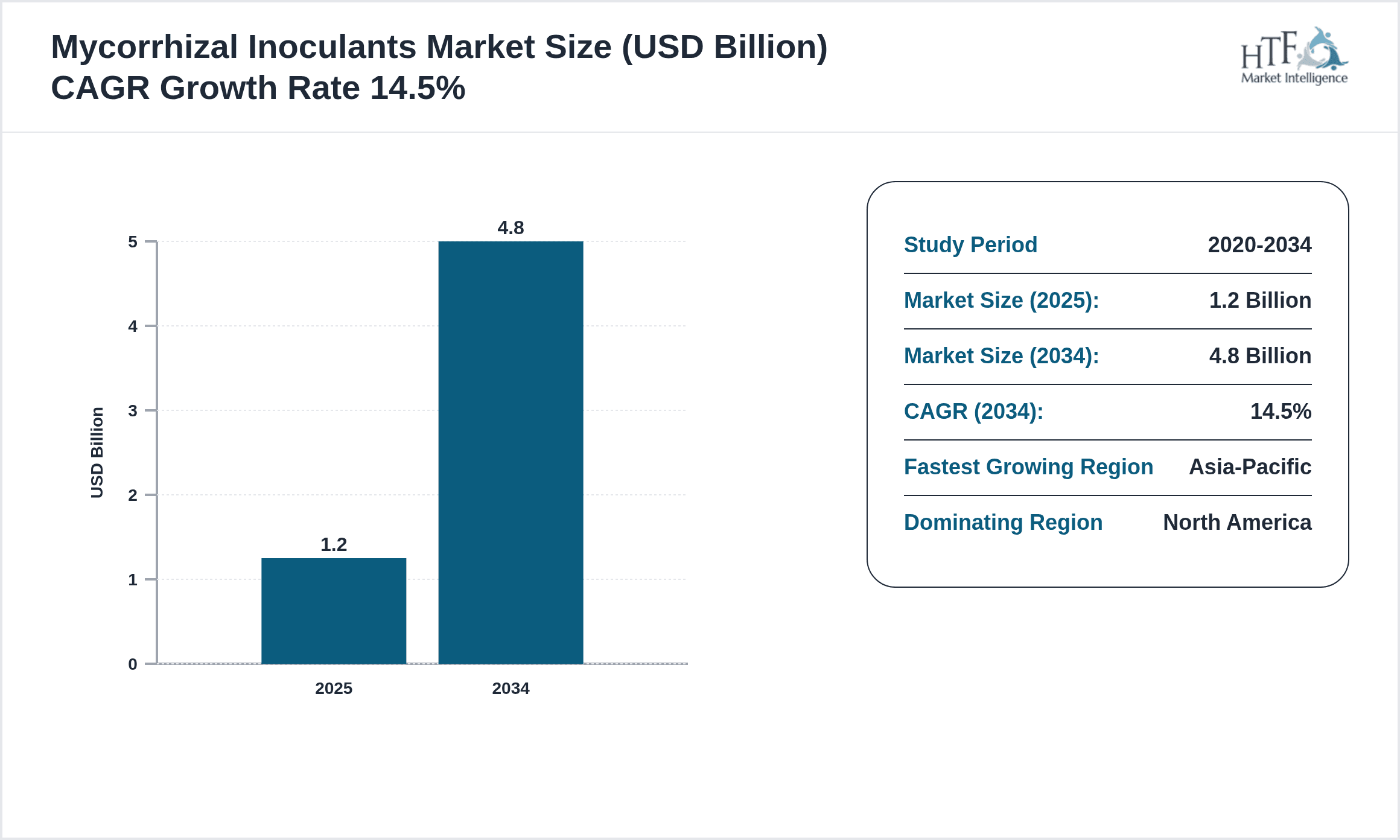
Competitive Landscape
The competitive environment in the global Mycorrhizal Inoculants Market is characterized by a mix of established multinational corporations and emerging regional players focusing on innovation and market penetration. Companies invest heavily in research and development to enhance fungal strain efficacy, formulation stability, and delivery technologies, thereby differentiating their offerings. Strategic collaborations, mergers, and acquisitions are common to expand geographical reach and product portfolios. Market rivalry intensifies as firms compete on quality, cost-effectiveness, and regulatory compliance. Distribution channels including direct sales, agro-dealers, and e-commerce platforms are continuously optimized to enhance market access. The increasing adoption of sustainable agricultural practices and government incentives further stimulate competitive dynamics, encouraging continuous product innovation and strategic positioning to capture growing market opportunities globally.
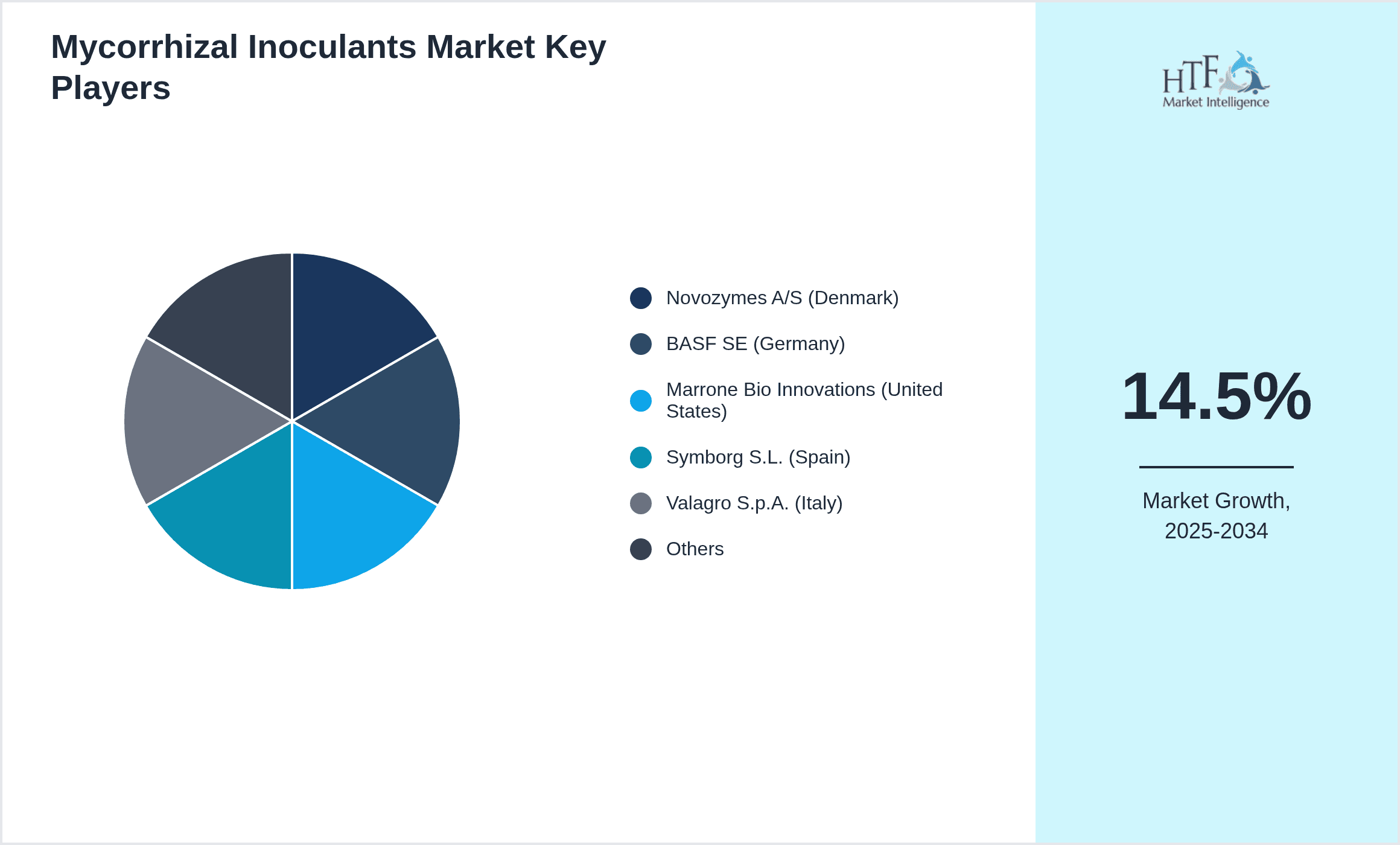
Leading Companies in Mycorrhizal Inoculants Market
- •Novozymes A/S (Denmark)
- •BASF SE (Germany)
- •Marrone Bio Innovations (United States)
- •Symborg S.L. (Spain)
- •Valagro S.p.A. (Italy)
- •Agrinos AS (Norway)
- •Isagro S.p.A. (Italy)
- •UPL Limited (India)
- •Mycorrhizal Applications, Inc. (United States)
- •Biostadt India Limited (India)
- •INOQ GmbH (Germany)
- •AgBiome (United States)
- •Terramera Inc. (Canada)
- •Green Biotech Ltd. (India)
- •Koppert Biological Systems (Netherlands)
- •Groupe Roullier (France)
- •Valent BioSciences Corporation (United States)
- •Veseys Seeds Ltd. (Canada)
- •Agrauxine (France)
- •BioWorks, Inc. (United States)
- •Symbiom Ltd. (Czech Republic)
- •Solufeed Ltd. (United Kingdom)
- •Bioline AgroSciences Ltd. (United Kingdom)
- •BioConsortia, Inc. (United States)
- •Agricen Sciences, Inc. (United States)
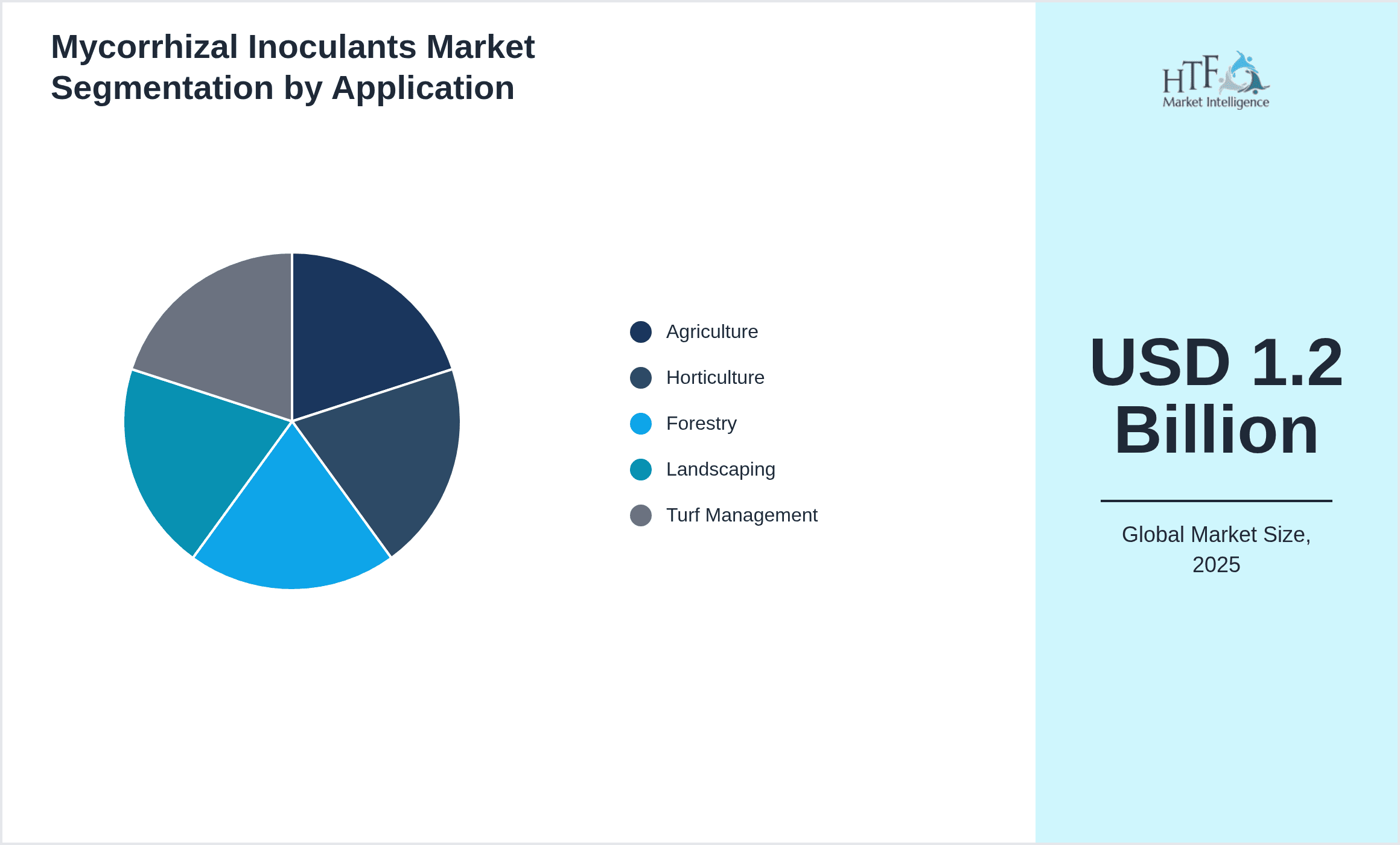
Market Breakdown
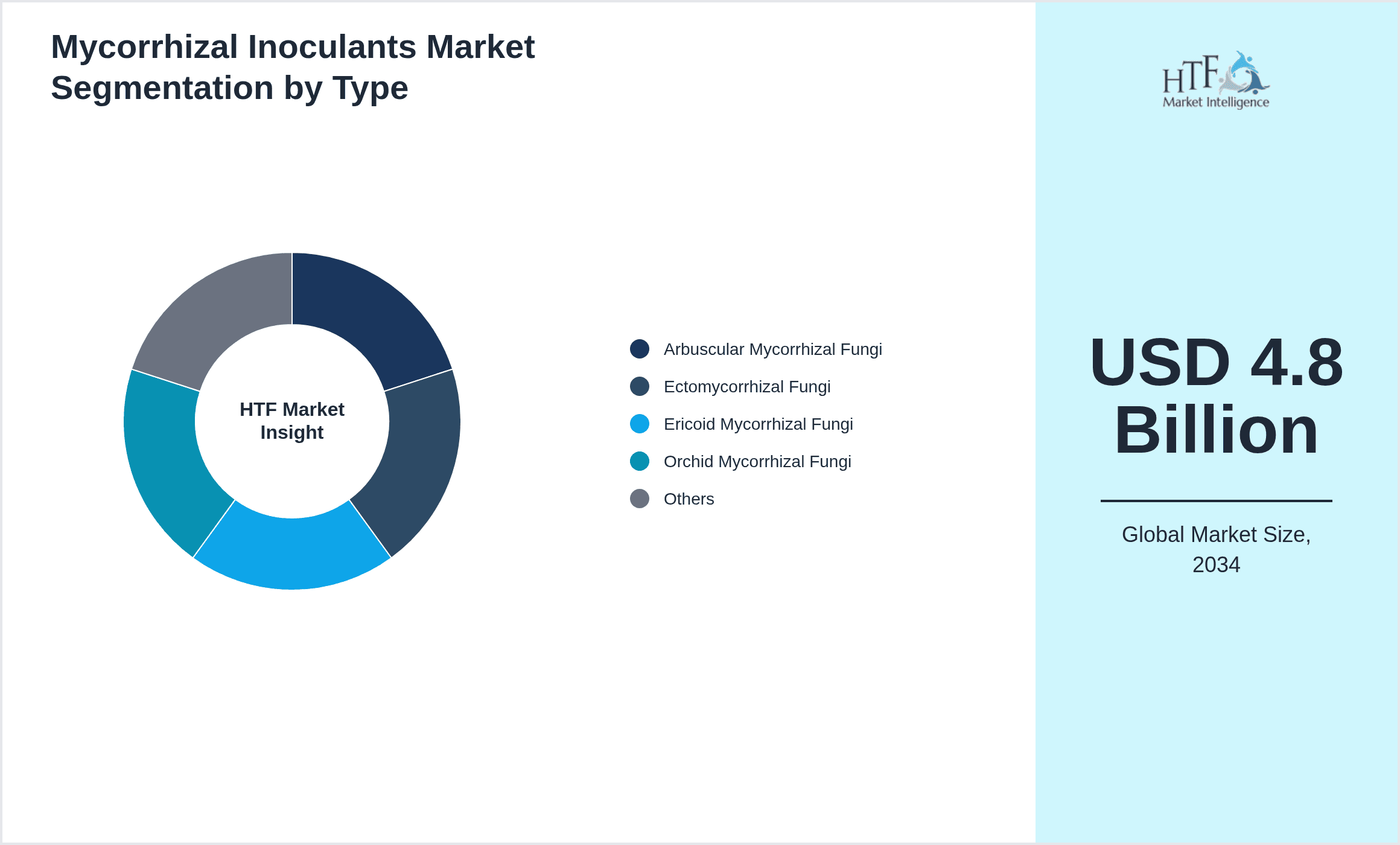
- •By Product Type
- ◦Arbuscular Mycorrhizal Fungi
- ◦Ectomycorrhizal Fungi
- ◦Ericoid Mycorrhizal Fungi
- ◦Orchid Mycorrhizal Fungi
- ◦Others
- •By Application
- ◦Agriculture
- ◦Horticulture
- ◦Forestry
- ◦Landscaping
- ◦Turf Management
- •By End-Use Industry
- ◦Commercial Farming
- ◦Organic Farming
- ◦Forestry Management
- ◦Landscaping Services
- •By Distribution Channel
- ◦Direct Sales
- ◦Agro-Dealers
- ◦E-commerce
Growth Dynamics
- •Rising global demand for sustainable agricultural practices is a key growth driver, as farmers increasingly adopt mycorrhizal inoculants to reduce chemical fertilizer use and improve soil health, enhancing crop productivity and environmental sustainability.
- •Technological advancements in fungal strain development and formulation techniques have improved inoculant efficacy and shelf-life, driving wider acceptance in diverse climatic and soil conditions worldwide.
- •Government incentives and regulatory frameworks promoting organic farming and biofertilizer adoption significantly stimulate market growth by providing financial support and easing market entry barriers for manufacturers.
- •Increasing awareness among end-users about the benefits of mycorrhizal inoculants in enhancing nutrient uptake and disease resistance is boosting demand across agriculture, horticulture, and forestry sectors.
- •Expansion of distribution networks, including digital platforms, facilitates broader market penetration and accessibility, especially in emerging economies with growing agricultural sectors.
- •Collaborations between research institutions and industry players to develop region-specific inoculant solutions accelerate market adoption by addressing local agronomic challenges effectively.
- •Increasing investments in sustainable agriculture by private and public sectors are creating favorable conditions for market expansion and innovation in mycorrhizal inoculant products.
Market Trends
- •The integration of mycorrhizal inoculants with precision agriculture technologies enables targeted application, optimizing resource use and maximizing crop yield improvements while minimizing environmental impact.
- •Emerging trend of combining multi-strain and multi-species inoculants is gaining traction to enhance synergistic effects on plant growth and stress tolerance, broadening application scope.
- •Sustainable packaging innovations focusing on biodegradable and eco-friendly materials are being adopted to reduce the carbon footprint associated with mycorrhizal inoculant products.
- •Strategic partnerships between biofertilizer manufacturers and agricultural cooperatives are expanding market reach and facilitating farmer education on inoculant benefits.
- •Increasing regulatory support for organic certification standards globally is encouraging the use of mycorrhizal inoculants in certified organic farming systems.
- •Growing consumer demand for organic and sustainably produced food products is indirectly driving mycorrhizal inoculant adoption by encouraging eco-friendly cultivation methods.
- •Expansion of application into non-traditional sectors like landscaping and turf management reflects diversification and increasing awareness of soil microbiome benefits beyond agriculture.
Market Opportunities
- •Expanding organic farming sectors in Asia-Pacific and Latin America present significant opportunities for market players to introduce tailored mycorrhizal inoculant solutions addressing region-specific soil challenges.
- •Development of formulation technologies enhancing inoculant stability and compatibility with other agro-inputs opens new avenues for product innovation and market differentiation.
- •Increasing adoption of integrated nutrient management practices combining biofertilizers with conventional fertilizers offers potential to capture hybrid market segments seeking balanced approaches.
- •Collaborations with governmental and non-governmental organizations to promote sustainable agriculture can facilitate market penetration and awareness in underdeveloped regions.
- •Emerging markets in Middle East & Africa with rising agricultural investment and soil degradation concerns represent untapped potential for mycorrhizal inoculant applications.
- •Digital marketing platforms and e-commerce expansion offer scalable channels for direct farmer engagement and education, increasing product accessibility and adoption rates.
- •Application diversification into landscaping and turf management sectors provides additional revenue streams and enhances overall market resilience.
Market Challenges
- •Variability in inoculant performance due to differing soil types, climatic conditions, and plant species specificity poses a significant challenge to market standardization and customer confidence.
- •Limited shelf-life and storage requirements of fungal inoculants restrict distribution efficiency, increasing costs and complicating supply chain logistics particularly in remote areas.
- •Lack of widespread farmer awareness and technical knowledge on inoculant application techniques hinders optimal utilization and market expansion in developing regions.
- •Competition from conventional chemical fertilizers and synthetic growth enhancers remains strong due to established usage patterns and immediate visible benefits.
- •Regulatory heterogeneity and complex approval processes across different countries delay product launches and increase compliance costs for manufacturers.
- •Challenges in large-scale production of high-quality fungal spores with consistent efficacy impact supply stability and scalability of inoculant products.
- •Price sensitivity among end-users in emerging economies limits premium product adoption despite demonstrated long-term benefits of mycorrhizal inoculants.
Regulatory Framework
- •Between 2019 and 2024, several countries implemented biofertilizer registration regulations requiring rigorous efficacy and safety data, improving product reliability but increasing time to market and compliance costs for manufacturers.
- •Enforcement of organic certification standards globally, such as USDA Organic and EU Organic, mandates use of approved biofertilizers including mycorrhizal inoculants, enhancing market legitimacy and demand.
- •New safety and environmental regulations introduced in key markets address microbial product handling, labeling, and disposal to mitigate ecological risks and protect consumer health.
- •Region-specific mandates in North America and Europe require traceability and quality assurance protocols for biofertilizers, fostering transparency and consumer confidence in the inoculant market.
- •Government initiatives promoting sustainable agriculture, including subsidies and tax incentives for biofertilizer adoption, have been established across Asia-Pacific and Latin America to boost market growth.
Market Intelligence
- •15th January 2025, Novozymes A/S launched a next-generation Arbuscular Mycorrhizal inoculant formulation with enhanced spore viability and broader crop compatibility aimed at improving nutrient uptake efficiency in large-scale agriculture. The product features a proprietary encapsulation technology that extends shelf-life and allows for easy soil application, targeting both conventional and organic farming sectors worldwide. This launch is expected to reinforce Novozymes’ leadership position and respond to increasing demand for sustainable biofertilizer solutions.
- •10th March 2025, BASF SE introduced an innovative Ectomycorrhizal fungi-based inoculant designed specifically for commercial forestry applications. The product optimizes tree root growth and resilience against abiotic stress, supporting reforestation and timber production initiatives globally. By integrating advanced microbial strain selection and sustainable sourcing of raw materials, BASF aims to expand its biofertilizer portfolio and strengthen its presence in emerging markets with forestry potential.
- •22nd August 2024, Marrone Bio Innovations announced a strategic partnership with regional agricultural cooperatives in Asia-Pacific to promote adoption of mycorrhizal inoculants among smallholder farmers. The collaboration includes farmer education programs, supply chain enhancement, and co-development of region-specific inoculant blends. This initiative is projected to accelerate market penetration in key growth regions and support sustainable farming practices at the grassroots level.
- •Market Intelligence: Recent developments and strategic initiatives are continuously tracked through industry publications, company announcements, and regulatory filings. For the most current information, stakeholders are advised to monitor official corporate communications and recognized market intelligence platforms.
Regional Outlook
The North America currently holds a significant share of the market, primarily due to several key factors: increasing consumption rates, a burgeoning population, and robust economic momentum. These elements collectively drive demand, positioning this region as a leader in the market. On the other hand, Asia-Pacific is rapidly emerging as the fastest-growing area within the industry. This remarkable growth can be attributed to swift infrastructure development, the expansion of various industrial sectors, and a marked increase in consumer demand. These dynamics make this region a crucial player in shaping future market growth.
In our report, we cover a comprehensive analysis of the following regions and countries:
- North America
- LATAM
- West Europe
- Central & Eastern Europe
- Northern Europe
- Southern Europe
- East Asia
- Southeast Asia
- South Asia
- Central Asia
- Oceania
- MEA
| Feature | Details |
|---|---|
| Base Year Market Size | USD 1.2 Billion |
| Forecast Year Market Size | USD 4.8 Billion |
| CAGR | 14.5% |
| Forecast Period | 2026 to 2033 |
| YoY Growth | 14% |
| Scope of Report | Market is segmented by Product Type (Arbuscular Mycorrhizal Fungi, Ectomycorrhizal Fungi, Ericoid Mycorrhizal Fungi, Orchid Mycorrhizal Fungi, Others), Application (Agriculture, Horticulture, Forestry, Landscaping, Turf Management), End-Use Industry (Commercial Farming, Organic Farming, Forestry Management, Landscaping Services), Distribution Channel (Direct Sales, Agro-Dealers, E-commerce) |
| Regions Covered | North America, LATAM, West Europe, Central & Eastern Europe, Northern Europe, Southern Europe, East Asia, Southeast Asia, South Asia, Central Asia, Oceania, MEA |
| Key Companies | Novozymes A/S (Denmark), BASF SE (Germany), Marrone Bio Innovations (United States), Symborg S.L. (Spain), Valagro S.p.A. (Italy), Agrinos AS (Norway), Isagro S.p.A. (Italy), UPL Limited (India), Mycorrhizal Applications, Inc. (United States), Biostadt India Limited (India), INOQ GmbH (Germany), AgBiome (United States), Terramera Inc. (Canada), Green Biotech Ltd. (India), Koppert Biological Systems (Netherlands), Groupe Roullier (France), Valent BioSciences Corporation (United States), Veseys Seeds Ltd. (Canada), Agrauxine (France), BioWorks, Inc. (United States), Symbiom Ltd. (Czech Republic), Solufeed Ltd. (United Kingdom), Bioline AgroSciences Ltd. (United Kingdom), BioConsortia, Inc. (United States), Agricen Sciences, Inc. (United States) |
Global Mycorrhizal Inoculants Market Size, Growth & Revenue 2024-2034 - Table of Contents
Multidisciplinary researcher with 10+ years of experience uncovering insights across diverse domains focused on uncovering insights that drive informed decisions.
Frequently Asked Questions (FAQ):
The Market market is projected to grow at a steady CAGR from 2025 to 2030, driven by increasing demand and expansion in various applications.
North America currently leads the market, followed by Europe and Asia-Pacific.
Key growth drivers include increasing activities, rising demand for innovative solutions, technological advancements, and growing preference for efficient products.